• About The Alternate Path

The Alternate Path

~ Thoughts on Walking the Path of Christian Discipleship

The Alternate Path

Category Archives: Uncategorized

Learning from Eli and Samuel in the Church’s ministry to youth and young adults

01 Friday Feb 2013

Posted by mcummins2172 in Uncategorized

≈ Leave a comment

st1\:*{behavior:url(#ieooui) }

Eli and Samuel

On January 31st, the Church celebrated the Feast of St. John Bosco – a saint who devoted his life to helping young people.  This saint and his feast day has led me to reflect on my own experience of ministering to youth and young adults, especially in a time and culture that is “youth obsessed”.  We can readily see how this obsession is played out in all areas of society – the entertainment and news media industry, politics, sports, education, relationships – just to name a few.  Yet, my own reflection led me to wonder how might this obsession with youth bleed into and perhaps even negatively influence the Church’s ministry to youth and young adults as they seek to claim their own Christian faith and spirituality?

I will start by stating that one of the core convictions I have gained in my ministry with youth and young adults is that young people do not benefit from older people trying to act young; rather young people benefit when their elders remember their own age and are authentic to whom they, themselves, are.  
To use the language of Scripture: in our culture today, our young Samuels need the guidance of older and wiser Elis.  For any person involved with young people, 1 Samuel 2-3 is a must read.  I have returned again and again to this Scripture passage for wisdom and I have come to believe that Eli is an often unsung hero in Scripture.  I would like to use this encounter between the young Samuel and the elder Eli as a means to share some thoughts. 
 
In the second chapter of 1 Samuel we are told that the Lord had withdrawn his favor from the house of the priest Eli due to the corrupt actions of his two sons, Hophni and Phinehas.  Yet the young Samuel “continued to grow both in stature and favor with the Lord and with men.” (1 Samuel 2:26)  In the third chapter we find the famous scene of the young Samuel hearing the voice of the Lord, mistaking it for the voice of the old priest and going each time to the sleeping Eli until finally Eli catches on to what is happening and instructs the young man in how to respond. 
 
For our purposes here I would like to focus more on Eli than Samuel.  There are four things that Eli does which are worthy of reflection and emulation.

  1. Eli has a relationship with the young Samuel while not pretending to be Samuel’s peer.
  2. Eli was a man of prayer who was able to eventually recognize what was occurring and give good instruction to the young man.  
  3. Eli put what was in Samuel’s best interest before his own.  
  4. Eli trusted in God.  

The fact that the young Samuel is comfortable in seeking out the elder Eli each time he hears the voice of the Lord witnesses to an established relationship between the two persons yet nowhere is there expressed any confusion between their differing roles.  Eli knows who he is and therefore he is comfortable in his own skin and he has no need to pretend to be something that he is not.  An approach to Christian faith and ministry that needs to abandon itself and our great Christian heritage in order to chase after the world in the hopes of being relevant lacks maturity and therefore any real depth of insight to offer a young person who is searching.  It might be flashy in the moment but beyond that there is just really not that much there.

   
What enabled Eli to be comfortable in his own skin and act out of his own authenticity was that he was a man of prayer.  Like any true discipline, the fruit of prayer is only born after the establishment of a hard-fought for habit and practice.  I would hazard to guess that what enabled Eli to finally recognize what was occurring for the young Samuel was a lifetime spent devoted to the often daily and mundane work of prayer.  An approach to Christian faith and prayer which seeks to manufacture “spiritual highs” at all times rather than developing the daily discipline of prayer is more about addiction than honest Christian spirituality.  Such an approach is in fact a disservice.  The life of Christian faith more often than not grows gradually and through daily habit.
 
Eli knew not only what the Lord’s call for Samuel meant for the young man, he also knew what it meant for him and his family.  Frankly, God’s calling of Samuel meant the end of the road for Eli and his own sons.  I do not think it out of place to believe that this thought must have crossed Eli’s mind along with the temptation to intentionally misguide the youth.  Yet, Eli did no such thing.  Eli put Samuel’s best interest before his and his own sons’ interest.  This will forever be in Eli’s favor.  To let go of self for the good of another takes a mature and wise heart.  My experience has been that wisdom is sorely lacking in our world today and one way that this can sadly be witnessed is when members of an older generation cannot let go of their own interests, needs and particular viewpoints in deference to what is in the best interest of the younger generation.  I would hazard to guess that one of the reasons behind many younger people no longer defining themselves as religious is their own experience of their elders’ inability to put the needs of others before their own.  The “elders” in this context tending to be a generation of people, I would think, that would more readily define themselves in terms of being “religious”.  When young people no longer define themselves as religious are they forsaking religion per se or are they reacting against impoverished examples of religion being lived which they have experienced?  True maturity is found in not always needing to put oneself first in order to seek and value the good of the other.  It is this type of maturity that truly aids the next generation as we witness in this encounter between the elder Eli and the young Samuel. 
  
What enables this letting go is a profound trust in God.  Eli had such a trust.  Following upon God’s revelation to Samuel; Eli requests that the young Samuel inform him of all that had been spoken by the Lord, holding nothing back.  Samuel shares all, including the ending of Eli’s house.  Eli responds, “It is the Lord, let him do what seems good to him.” (1 Samuel 3:18)  Eli’s trust in the Lord was perhaps one of his greatest gifts to the young Samuel.  A faith obsessed with pursuing youth and relevancy lacks this depth of trust because it is a depth that can only be achieved by negation and passing through the dark night of the senses.  At this point, everything Eli had been about was negated yet he is able to offer this profound statement of trust in the Lord.  In the end, may God’s will be done.
A friend of mine once shared that it does the Church no good to chase after the world.  Yes, we live in the world and we must seek to encounter and dialogue with it but it does no good if we are co-opted and lose our own soul in the process.  Eli, I believe, has a lot to teach us about helping the young to find and know God while, at the same time, remaining authentic to who we ourselves are.     

Once again, to the "great shlep"

24 Thursday Jan 2013

Posted by mcummins2172 in Uncategorized

≈ 1 Comment

2012 March for Life in Washington, D.C.

This afternoon I will leave with eleven college students from the Catholic Center at ETSU to attend the national March for Life in Washington, D.C.  This will be the fifteenth time that I have attended the March.  Last year, after returning from the march a friend shared an editorial from a person who is pro-choice and who happens to have a comfortable office overlooking the march route.  She disdainfully referred to the march in her column as the “great shlep” – looking down on the march goers from her office window.  As you might imagine her article was not very complimentary.  In honor of her though, I now refer to the March (at least in my own mind) as the “great shlep”.

I googled definitions for “shlep” and this is what I found in the “Urban Dictionary website”:

“shlep”
1. To carry something heavy.
2. To carry something in a dragging fashion, as if tired.
3. To go somewhere, particularly somewhere far away or otherwise difficult to reach; often implies resentment of putting forth such effort.

The elevator was broken, so I had to shlep the TV set up five flights of stairs.
I shlepped my book bag behind me.
I shlepped all the way out here from downtown so you could tell me you feel like staying in tonight?

I think that the word fits.  The marchers do carry something heavy – they carry the conscience of a nation.  It is a conscience that is hurting yet not silenced.  It is a conscience that affirms that there is dignity to all human life which must be upheld.  It is a conscience which recognizes that whenever life is devalued in one area then all life is wounded and devalued.  It is a conscience which recognizes that there is great harm in abortion – to the beauty of a child lost, to the soul and psyche of the mother and the father and to society as a whole.

This year is the fortieth anniversary of Roe v. Wade.  The millions of lives lost is staggering.  In so many ways unimaginable.  We are tired yet we will continue the shlep.  Why?  Because it is the right thing to do.  History will judge every generation for what it stands for and as our knowledge grows regarding life in the womb I predict that future generations will look on ours and wonder how we could have ever allowed such a thing to happen; just as today we look on past generations and wonder how could slavery and the oppression of women have ever been justified.  As we have seen before; just because something is the law of the land that does not make it right.  Roe v. Wade is bad law which has wounded, weakened and impoverished the heart of our nation.

In the “great shlep” we are going somewhere – not just to our nation’s capital for a one day event but to the future, to the point where the dignity of all life (from natural birth to natural death) is affirmed and valued.  In the language of religion; we are marching to the Kingdom of God.  For me, the March for Life is a continuation of the civil rights marches of the sixties.  The paraphrase Dr. Martin Luther King Jr., the arc of history bends toward justice and that which is right.  This is the objective truth that energized and fortified the civil rights movement of the sixties and their great work and it is the same objective truth which emboldens the pro-life movement.  There is truth and it will not be denied and all which is untrue will eventually fall away.  We are marching toward the future.

So, once again, with prayer and humility I go to the “great shlep”.  If I happen to see a woman disdainfully looking down on me and the crowds from her office perch I will smile and wave at her and maybe one day she will come and join us.               


St. John, apostle and evangelist

27 Thursday Dec 2012

Posted by mcummins2172 in Uncategorized

≈ Leave a comment

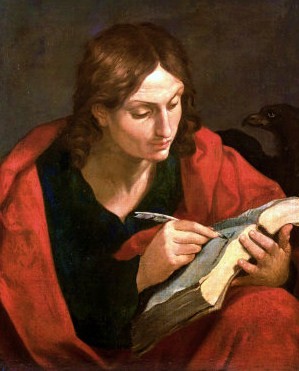
St. John the Evangelist

Two days after Christmas, the Church celebrates the Feast of St. John, apostle and evangelist.  John is the apostle who stood by the Cross of Christ and received Mary into his home.  The gospel attributed to John was the last of the four canonical gospels to be written and contains the most explicitly developed and exalted understanding (Christology) of who Christ is.  This can be seen in the very first verse of the first chapter of John: In the beginning was the Word, and the Word was with God, and the Word was God.  John wastes no time in presenting the great mystery of Christ as fully God and fully human!

Here, I think it is helpful to distinguish the Church’s understanding of mystery as contrasted to our pragmatic American mindset.  Often, in our American understanding, we view mystery as a problem to be solved and then moved on from.  The Church’s understanding is different.  The Church invites us to view mystery as a reality to be lived and encountered.  As we continually live and encounter this great mystery we are brought to truer understanding and deeper conversion.  The mystery of Christian faith is not a problem to be solved and left behind but rather a living reality to continually be returned to and a reality which does not fail to nourish us. 

Perhaps this understanding of mystery (and specifically the mystery of Christ as fully God and fully human) is why the Church has placed this Feast of St. John just two days after our celebration of Christmas.  On Christmas we celebrate the incarnation of the Word made flesh; today we are invited to live and encounter this mystery whom we name Jesus, Lord and Savior. 

In light of this understanding of mystery, I think it appropriate to share a few verses from John’s gospel that might assist our prayer and reflection during these first days of the Christmas season.
(I would invite any who might read these words to spend some time in the practice of Lectio Divina with these words during these first days of the Christmas season.  Sit with these words from John’s gospel and note what strikes your heart.) 
The verses are from Chapter 1 of John:
The true light that enlightens every man was coming into the world.  He was in the world, and the world was made through him, yet the world knew him not.  He came to his own home, and his own people received him not.  But to all who received him, who believed in his name, he gave power to become children of God, who were born, not of blood nor of the will of the flesh nor of the will of man, but of God.
And the Word became flesh and dwelt among us, full of grace and truth; we have beheld his glory, glory as of the only Son from the Father.  (John 1:9-14)
The Word came to his own home…  What a marvelous and also tender thing!  God created the world and prepared the people of Israel that He might have a “home” to come to.  Creation (and therefore we) are of primary concern to our God!  God is not content to let us be lost in sin and death so he prepares a home.  The Word becomes flesh!
“Home” is a powerful word, a word laden with meaning and symbolism.  John is opening for us a great truth of our Christian faith.   God, it seems, does not just want to save us and correct our erring ways while at the same time remaining distant and removed; rather He wants to make a home with us.  God wants to make a home with us!  This truly gives an added dimension to the manger scene!
How might this “home” be made?  But to all who received him, who believed in his name, he gave power to become children of God; who were born … of God.  When we open our own hearts to receive Christ then our Lord enters and makes of our own hearts a home where he might dwell.  And as we receive Christ then he makes of our hearts a place of welcome (a “home”) for others.
The Church and the apostle John are giving us a great truth to chew on these first days of Christmas – the birth of Christ both makes possible our own birth and give us a true home.  As we encounter and receive Christ who is the Word made flesh then we, ourselves, are made children of God and members of the household of God! 
God comes to make a home with us!

Why I dislike the "Coexist" Bumper-Sticker

12 Monday Nov 2012

Posted by mcummins2172 in Uncategorized

≈ 3 Comments

Here are a few reasons why I dislike the “Coexist” bumper-sticker.
The narrative of the bumper sticker implies that all violence and injustice in our world today is the result of religious difference and that religion is just a source of violence.  This is patently untrue.  How much violence and injustice in our world today is actually linked to greed, power and pride?  These are not the sole provenance of the religious person but rather the weakness of all human conscience.  The dictates of religion when authentically lived actually seek to curb these baser human tendencies.  It should also be noted that the twentieth century was the bloodiest in human history and the majority of blood spilled was by ideologies that were anti-religion.
The bumper-sticker implies that all these religious traditions are fundamentally the same and that any person who seeks to honor his or her tradition uniquely and live by its teachings is some form of extremist.  Again, this is not true.  Lived faith does not equate to extremism.  Respect for one’s own religious faith does not automatically mean a demeaning of another’s faith tradition.  It has been my experience over and over again that one of the hallmarks of the truly religious man or woman is a deep respect for the dignity of the other person and his or her beliefs.  I would even go on to say that religion truly lived gives access to a deeper and more profound respect for the human person than that which is possible through a bland secularism because through religion one can recognize the presence of the infinite in the other person – a reality that is deliberately denied through secularism.
The bumper-sticker seeks to establish a background narrative that people of different faith traditions cannot talk with one another nor get along.  Not true.  A number of times I have been able to attend the annual Prayer for Peace gathering organized by the Community of Sant’Egidio.  This annual event carries on the vision of Bl. John Paul II who brought together the leaders of all the world’s great religions to dialogue together and pray for peace according to the dictates of their own religion.  The Prayer for Peace does not propose a bland synchronism nor a diminishing (in Bl. John Paul’s case) of Christianity but rather an authentic living of one’s own faith as the true path toward encountering the other and the true path toward peace.
The bumper-sticker implies that peace can only be imposed on religions from without.  This is not true.  Any honest study and knowledge of the world’s great religious traditions will show that the seeds of peace and reconciliation are found within religious tradition and it is there that these seeds must be cultivated and are being cultivated.
Like the book and subsequent movie, “Eat, Pray, Love”; the bumper-sticker implies that any true and acceptable practice of religion in today’s world (if one must practice religion) will consist in a sampling and “picking-and-choosing” approach to religions and religious tradition that is more about confirming what I like and my preferences and ideologies rather than being challenged by a truth greater than me that will enable me to overcome my sinfulness and grow beyond my weakness.  
What surrounds the arrangements of the symbols of religion that make up the bumper-sticker is the bland, empty vacuum of a shallow secularism.  This is what we are left with when religion is diminished and derided.  The bumper-sticker in fact proposes a diminishment of the human person by seeking to truncate the capacity for religion and the desire for the transcendent.  Humanity is reduced (not achieved) when religion is reduced.  For full disclosure I will share that I am not a secularist nor do I find secularism appealing.  
Has great harm been done in the name of God and religion?  Yes, it has.  I am not seeking to deny this.  What I am seeking to say is that these acts of violence in the name of God are not the essence of religion and are, in fact, themselves a sin against religion and God.  To summarily equate religion with violence is itself an act of violence and disrespect.  It is also a profound act of ingratitude toward all the good that religion has done and continues to do in the lives of individual people and in the history and contemporary culture of our world.
Finally, to quote a college student at the Catholic Center where I minister who probably better summarized in one sentence the fallacy of the “Coexist” bumper-sticker than all that I have tried to share above.  “The ‘Coexist’ bumper-sticker says that all religions are the same and that they are all equally unimportant.”
I agree.          

Rome visit

14 Sunday Oct 2012

Posted by mcummins2172 in Uncategorized

≈ 1 Comment

Today (Sunday, October 14th) I am heading to Rome for a week-long visit.  During the week I will visit with our seminarian Michael Hendershott studying at the Pontifical North American College and with the faculty at the seminary.  As Vocation Director, I visit each seminary our diocese uses at least once a year to check on our men.  I told Bishop Stika that this visit to Rome is a cross that I am willing to suffer.  Lol! 

Following the visit I will spend some days visiting with my friends in the Community of Sant’Egidio.  It will be good to catch up with them and join the community’s prayer. 

The day before my return I will be attending the canonization ceremony set for October 21st at St. Peter’s.  Six men and women are to be canonized, one of these being Bl. Kateri Tekakwitha who will be the first Native American saint proclaimed by the Church.  I was able to get a ticket that will allow me to participate in the ceremony by assisting with the distribution of communion.  I have never been to a canonization ceremony before and am excited for the opportunity!  Part of this being that my own family heritage is part Native American (Choctaw to be exact).

I am looking forward to a great visit!   

A life lesson

05 Friday Oct 2012

Posted by mcummins2172 in Uncategorized

≈ Leave a comment

A life lesson I have gained: 

If people speak ill of you and this leads to others avoiding you just because of what they have heard, then give thanks to God for the ones who speak ill. 

They are doing you a great favor. 

They are helping to sift out the fools from your life so you do not have to suffer them.

Rest in peace Mom

23 Sunday Sep 2012

Posted by mcummins2172 in Uncategorized

≈ 1 Comment

Around 12:40 a.m. this past Thursday morning, my mother Betty passed from this life into eternity.  She had been dealing with the effects of COPD for a number of years but things took a turn for the worse about a month and a half ago.  Last Monday was another crisis point and things quickly went downhill beginning Wednesday afternoon. 

I had stayed with my mom Tuesday night and was planning to do the same for Wednesday.  I had dozed off in my chair and it was the caregiver who woke me up to tell me that my mother had passed. 

The hospice nurse said that is often the case.  The one who is dying (it seems) actually waits until either the loved one(s) leaves the room for a minute or dozes off to pass.  A friend told me that he thought it might be my mother’s last gift to me – not having to see her struggle to take her last breath.  A mother’s love…

When I left my mom’s room at the health care center Thursday morning and drove home I was certainly burdened with sadness but I also had a sense of peace.  My mother had struggled and fought for so long and at the end she was in such pain, there really was no way that she could recover.  There is a peace in knowing that she is no longer suffering. 

I am confident that my mother knew the mercy and love of God when she departed this life and that she knew she was loved by her family and friends.  I told her that she had done a good job in raising her boys and that we were all okay and not to worry. 

I know that I will see my mother again because I know that our Redeemer lives. 

It still hurts though…

Rest in peace Mom.  You have earned it.  We love you.   

“May the angels lead you into paradise, may the martyrs come to welcome you and take you to the holy city, the new and eternal Jerusalem.”

The Vatican/LCWR dialogue: The Church reflecting on itself

15 Friday Jun 2012

Posted by mcummins2172 in Uncategorized

≈ Leave a comment

Members of the leadership of the LCWR

Today as I was driving around town running errands I found myself listening to the Diane Rehm Show on NPR.  The topic was the Vatican and LCWR dialogue that is occurring and garnering much media attention.  I found the discussion and insights of the different guests on the show to be very insightful as they moved beyond a superficial understanding of the issue.  It was a good “give and take”.  Each guest certainly had his or her own particular perspective on the issue but they were willing to acknowledge the valid points of the other guests and did not succumb to the very common temptation of denigrating and belittling the other person and his or her position.  Because of this it was quite refreshing.  (It is always nice to hear mature people discussing an issue.) 

One of the statements that struck me and that I think also allowed for this balanced and respectful approach toward a very complicated issue was when one commentator stated that in regards to Church issues we need to avoid the temptation of thinking in exclusive political terms which tend to divide and separate.  He went on to remind all who were listening that the Church itself does not think in such terms. 

Archbishop Peter Sartain

The Vatican/LCWR dialogue is not about men vs. women nor liberal vs. conservative.  It is a disservice to reduce what is occurring to those stale dichotomies.  This tendency to do so also demonstrates a lack of understanding about the reality of church.  Life and Church are both more than politics.  Sometimes how we view things says more about our own perspectives and biases than it does about the reality of the situation itself.  Maybe people can only see this exchange in political terms not because that is actually what is occurring but because that is how they have chosen to structure (and limit) their own view of reality.   

I would say that this dialogue is about the Church reflecting on what it means to be authentically Church.  In the Catholic Church the Magisterium has a specific role and raising doctrinal concerns is within that role.  In the Catholic Church the Leadership Conference of Women Religious also has a role and purpose as a canonically recognized entity.  But it must be noted that this role and purpose does not put it beyond what it means to be Church in the Catholic sense.  This is what is at issue and from what I have read of the ongoing discussion I believe that both sides are sincere in their desire to authentically dialogue and be brought to greater understanding.

Maybe I am demonstrating my own naive bias here but I believe that the Spirit is at work in this and I think one of the by-products of this discussion between the Vatican and the LCWR could very well be a witness being given to a very polarized and divided society that dialogue and respect is possible.  Mature people can talk to one another while holding to their core convictions and through this exchange be brought to a greater understanding by the movement of the Holy Spirit.  This is what it means to be Church.

Let the secular media and society (very much formed in and fond of the political worldview) keep watching this.  What they witness might very well come to surprise them.             

Fourth Sunday of Easter (B): The act of love begets love

28 Saturday Apr 2012

Posted by mcummins2172 in Uncategorized

≈ Leave a comment

Anonymous – Christ as the Good Shepherd,
Vatican Museum

As opposed to the good shepherd, the hired man is marked by two similar yet distinct traits: self-interest and disinterest in others.  A focus on self above all and a turning away from others.  When the wolf comes, our Lord says, the hired man runs away.  His one concern is about saving himself while he also has no concern for the defenseless sheep.

Yet Christ is the good shepherd who loves his sheep.  The good shepherd, in stark contrast to the hired man who works only for pay, is free.  The good shepherd is not imprisoned by the narrow confines of self-interest and therefore he has true concern for the others.  “I am the good shepherd, and I know mine and mine know me, just as the Father knows me and I know the Father; and I will lay down my life for the sheep.” (John 10:14)

We can say that Christ is, indeed, the freest person that ever walked the earth.  Jesus’ freedom is not based in the grasping of pride (the sin of Adam and Eve) and the exerting of ones will over the other but in obedience to the Father.  “…the Father knows me and I know the Father…”  Jesus let go of the glory of God that was his due (Phil. 2:6-8) and, clinging to the guidance and movement of the Holy Spirit, aligned himself fully to the will of the Father. 

Jesus knew that true freedom that each one of us at our core and in those silent and alone moments in our lives both yearn for and know that we are indeed meant for.  This is the freedom that is able to say in regards to laying down ones own life, “No one takes it from me, but I lay it down on my own.”  This is the essence of true freedom: the ability and willingness to lay down ones life on ones own.

How might we gain this true freedom?  How might we be freed from the twin imprisonments of self-interest and disinterest in others?  One word: “love” but here I want to make a qualification because this word is so bandied about in our day that it easily loses any real substance.  It is worthy of note that the word “love” is used only once in today’s gospel passage (John 10:11-18) and it is not used in designating Jesus’ action toward the sheep.  The words used in that regard are “knowing” and “laying down ones life”.  The word “love” in this passage designates the Father’s response to the Son, “This is why the Father loves me, because I lay down my life in order to take it up again.”

The action of letting go of self, the action of turning toward the other in his or her need begets love.  It helps to heal what is wounded within and it moves us toward that true freedom that is the defining characteristic of the good shepherd.  There is a tried and true spiritual principle in this: if we find ourselves imprisoned in self-interest and disinterest then perform an act of gratuitous love, even the simplest of things and for even the briefest moment.  In other words, for a moment turn your gaze away from yourself.

Love begets love and it brings healing and freedom.  It also brings hope.

There is a very contemporary portrayal of this currently playing in movie theaters across our country.  I have not yet read the books but last Thursday I saw the movie, The Hunger Games.  At the heart of the movie (at least as I saw it) there is a moment where a young girl is killed in this competition that pits child fighting against child to the death.  The heroine, who was trying to protect this young girl is heartbroken.  But even in her pain and grief she does a tender thing.  She gathers flowers and places them around the body of the young girl lying dead on the forest floor.  In the cold world depicted in this story where, I would say, the sense of God has been lost (a world that at best can only say, “May the odds continually be in your favor.” rather than, “God be with you.”) the heroine performs a corporal work of mercy.  She buries the dead and she does it in love.  Via video cameras the nation watches this and in response in an imprisoned part of the country a riot against the injustice of the oppressors breaks out all because the heroine performed this simple act of taking the time to acknowledge the humanity and the dignity of this young girl.  A humanity and dignity that all the “powers that be” were trying their best to negate. 

The act of love itself begets love which brings healing, freedom and hope.  “A good shepherd lays down his life for his sheep.”

This Sunday is Good Shepherd Sunday and a day when the Church asks us to pray in a special way for vocations to priesthood and religious life.  Our world needs all Christians to learn the love and the true freedom of the good shepherd and to be set free from the prison of self-interest and disinterest.  But our world and our church also needs men and women specifically willing to answer the call to love and lay down their lives as priests and men and women living the consecrated life.  To our young people in a special way I want to say this: know that this type of love and the freedom it brings is possible.  We can live free of self-interest and disinterest.

The act of love begets love.

Christ has loved us to the end and we live in the grace of that love.       


Third Sunday of Easter (B): "Something Happened"

21 Saturday Apr 2012

Posted by mcummins2172 in Uncategorized

≈ Leave a comment

“Peter Preaching at Pentecost” by Benjamin West

When I was a college student at East Tennessee State University and just starting to come back to Church I took a college class on the history of Christianity.  When we got to the subject of the resurrection I remember our professor stating (much to the chagrin of the more fundamentalist Christian students) that the academic discipline of history could not make a conclusive statement either for or against the resurrection.  But what the discipline could say is that “something happened” that enabled those first disciples to move from remaining behind locked doors in fear as we find in today’s gospel (Lk. 24:35-48); “But they were startled and terrified and thought that they were seeing a ghost.” to boldly proclaiming Christ as Messiah in the public square as we find Peter doing in today’s first reading (Acts 3:13-15, 17-19); “You denied the Holy and Righteous One and asked that a murderer be released to you … Repent, therefore, and be converted…” 

That class and I would say specifically that statement “something happened” was one of the key components of my returning to the Church and the active practice of the faith.  What enabled Peter (the one who had denied knowing Jesus) and those first disciples (the ones who had run away) the ability to move from fear to being bold proclaimers of Christ and the resurrection?  Was it just a hoax they cooked up in their minds to steal the body away and see how long they could ride the “Jesus as Messiah” train?  Hoaxes do not last so long (two thousand plus years) nor show such continued vitality.  Was it that the “spirit” of Jesus had risen – his vision of the world and living together in harmony – while his body remained dead.  But who willingly chooses martyrdom rather than denial for an idea (as we see throughout history beginning with those first fearful disciples)?

In today’s gospel we are given some specifics about the resurrection that are worthy of note.  Jesus again appears to his disciples.  Again he say, “Peace be with you.”  Knowing their fear and their uncertainty he says,

“Why are you troubled?  And why do questions arise in your hearts?  Look at my hands and my feet, that it is I myself.  Touch me and see, because a ghost does not have flesh and bones that you can see I have.”  And as he said this, he showed them his hands and his feet.  While they were still incredulous for joy and were amazed, he asked them, “Have you anything here to eat?”  They gave him a piece of baked fish; he took it and ate it in front of them.” 

Neither hoaxes nor ideas ask for a piece of fish to eat.

There are many ways to run from the scandal of the resurrection.  We are all quite adept at it; both without and even within the Church.  One such way (often touted as being an “enlightened” approach) is to see the resurrection as a nice idea – Jesus’ spirit continuing to live on.  But today’s gospel is quite clear.  Jesus is not a ghost.  Jesus is risen – body and soul.  He is the firstborn from the dead.  Jesus is risen and he has not risen in vain. 

If we are to be christian then we must be willing to encounter the fullness of the resurrection; that “something that happened” as my professor said so many years ago and in that encounter we must be willing to make a fundamental faith statement, “I believe”.   Only this will move us from fear to peace.

This encounter and the peace and courage it alone brings continues today.  Recently Pope Benedict (who is Peter in our midst) travelled to Mexico and Cuba.  In the face of the chaotic violence of the drug trade engulfing Mexico (estimates of around fifty thousand people killed) this eighty-five year old man proclaimed firmly and resolutely that drug trafficking is a sin and it is wrong.  Then going to Cuba at a Mass where the very Cuban government sat in the front rows, again this elderly man who has no armies behind him nor economic might called for greater freedom.  What enables him to do this?  If one reads his two books on Jesus of Nazareth or listens to any of his words one quickly realizes the answer.  This man has encountered Christ risen and alive – not an idea of Christ, not just the spirit of Christ – but Jesus Christ himself and he has made his faith statement.

The peace is there if we are willing to encounter and if we are willing to profess. 


← Older posts
Newer posts →
Follow The Alternate Path on WordPress.com

Enter your email address to follow this blog and receive notifications of new posts by email.

Previous Posts

  • May 2026
  • April 2026
  • March 2026
  • December 2025
  • November 2025
  • August 2025
  • April 2025
  • February 2025
  • January 2025
  • December 2024
  • August 2024
  • July 2024
  • June 2024
  • May 2024
  • April 2024
  • March 2024
  • February 2024
  • January 2024
  • December 2023
  • November 2023
  • October 2023
  • August 2023
  • July 2023
  • May 2023
  • February 2023
  • January 2023
  • December 2022
  • August 2022
  • July 2022
  • April 2022
  • January 2022
  • December 2021
  • September 2021
  • August 2021
  • July 2021
  • May 2021
  • April 2021
  • January 2021
  • December 2020
  • November 2020
  • October 2020
  • August 2020
  • July 2020
  • May 2020
  • April 2020
  • March 2020
  • February 2020
  • December 2019
  • October 2019
  • September 2019
  • August 2019
  • July 2019
  • May 2019
  • April 2019
  • March 2019
  • February 2019
  • December 2018
  • November 2018
  • October 2018
  • August 2018
  • July 2018
  • June 2018
  • April 2018
  • March 2018
  • February 2018
  • January 2018
  • December 2017
  • November 2017
  • September 2017
  • August 2017
  • July 2017
  • June 2017
  • May 2017
  • April 2017
  • March 2017
  • February 2017
  • January 2017
  • December 2016
  • November 2016
  • October 2016
  • September 2016
  • August 2016
  • July 2016
  • June 2016
  • May 2016
  • April 2016
  • March 2016
  • February 2016
  • January 2016
  • December 2015
  • November 2015
  • October 2015
  • September 2015
  • August 2015
  • June 2015
  • May 2015
  • April 2015
  • March 2015
  • February 2015
  • January 2015
  • December 2014
  • November 2014
  • October 2014
  • September 2014
  • August 2014
  • July 2014
  • June 2014
  • May 2014
  • April 2014
  • March 2014
  • February 2014
  • January 2014
  • December 2013
  • November 2013
  • October 2013
  • September 2013
  • August 2013
  • July 2013
  • June 2013
  • May 2013
  • April 2013
  • March 2013
  • February 2013
  • January 2013
  • December 2012
  • November 2012
  • October 2012
  • September 2012
  • August 2012
  • July 2012
  • June 2012
  • May 2012
  • April 2012
  • March 2012
  • February 2012
  • January 2012
  • December 2011
  • November 2011
  • October 2011
  • September 2011
  • August 2011
  • July 2011
  • June 2011
  • May 2011
  • April 2011
  • March 2011
  • February 2011
  • January 2011
  • December 2010
  • November 2010
  • October 2010
  • September 2010
  • August 2010
  • July 2010
  • September 2008
  • August 2008
  • April 2008
  • March 2008
  • February 2008
  • January 2008
  • December 2007
  • November 2007
  • October 2007
  • September 2007

Popular Posts

  • thealternatepath.org/wp-c…
  • thealternatepath.org/wp-c…
  • thealternatepath.org/wp-c…

Blog at WordPress.com.

  • Subscribe Subscribed
    • The Alternate Path
    • Join 156 other subscribers
    • Already have a WordPress.com account? Log in now.
    • The Alternate Path
    • Subscribe Subscribed
    • Sign up
    • Log in
    • Report this content
    • View site in Reader
    • Manage subscriptions
    • Collapse this bar