• About The Alternate Path

The Alternate Path

~ Thoughts on Walking the Path of Christian Discipleship

The Alternate Path

Category Archives: Uncategorized

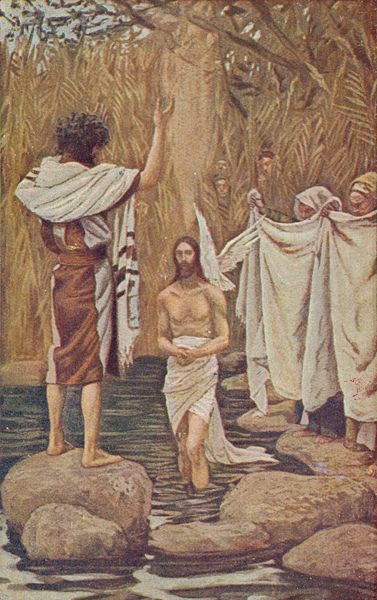
The Feast of the Baptism of the Lord: "Jesus is Lord"

06 Thursday Jan 2011

Posted by mcummins2172 in Uncategorized

≈ Leave a comment

About ten years ago now, the U.S. Bishops issued a document entitled “Our Hearts Were Burning Within Us: A Pastoral Plan for Adult Faith Formation”. In the plan the bishops invite us to re-imagine the place of adult faith formation in our parishes. More often than not, faith formation in our churches is focused on our young people with any continuing adult faith formation viewed more as a by-product and not the real heart of the ministry. The bishop’s document invites us to turn that perception around. Our churches need to recognize that formation in our faith needs to be seen and promoted as a lifelong journey and not just the “convenience-store mentality” of an occasional visit when necessary; “Okay, we will be ready to get you confirmed and then we hope to see you again when you get married and as children come into the scene and sacraments are needed we will do the formation needed for those also. Come back when you need us.”

The bishops’ plan goes on to even make the rather revolutionary appeal to shift the structure of faith formation in parishes from being centrally focused on our young people to that of a view encompassing the whole of life where adult faith formation opportunities bear just as much weight as religious education for our young people.

Faith formation is a lifelong journey of encountering Jesus and coming to know him more deeply as our risen Lord and Savior.

In a spirit of continuing formation I took some time during this Christmas break (from ministry at the university while the students are away) to read up on the Gospel of Matthew. (Matthew is the gospel that we read from during this year’s cycle A of the Sunday Mass readings.) I learned more about Matthew’s proclamation of the good news of Jesus Christ during this time of study and reflection and realize that I still have much more to learn.

There is one thing that I would like to share though that I learned from this time of study and reflection. We know that the gospels work on a variety of levels in their proclamation of Jesus Christ and some levels are more subtle than others. In Matthew’s gospel there is a distinction in the titles different groups of people use in addressing Jesus. Those who stand outside of belief in Jesus – the Jewish authorities, Roman authorities, those who scoff and question – address Jesus either as “master” or “teacher”, a human title of civility and etiquette. Those who believe – the disciples, the sick who have faith, the poor and outcasts – address Jesus as “lord”, a proclamation of faith. To further underscore this distinction; Matthew in his gospel has Judas address Jesus only twice and each time Judas uses the title “master” – unlike the other disciples – he does not use the term “lord”. The title “lord” can assume both of the other titles: “master” and “teacher” but neither of these two can automatically assume the title “lord” because “lord” moves beyond mere human custom and etiquette into the realm of faith.

On the Feast of the Baptism of the Lord and throughout Matthew’s gospel the fundamental proclamation of faith is put before us: “Jesus is Lord!”

In the first reading for the Feast we hear these words, “Thus says the Lord: Here is my servant whom I uphold, my chosen one with whom I am pleased, upon whom I have put my spirit…” (Isaiah 42:1) In the second reading from Acts we find Peter in the house of Cornelius saying these words, “You know the word that he sent to the Israelites as he proclaimed peace through Jesus Christ, who is Lord of all…” (Acts 10:36) In the gospel we hear the very voice of the Father proclaiming, “This is my beloved Son, with whom I am well pleased.” (Mt. 3:17)

Human custom can bring us to “master” (i.e. the title “sensei” in Japanese culture). Etiquette can bring us to “teacher”. Faith alone brings us to “Lord”. It is more than a title; it is a proclamation and a cry from the depth of our being and behind it stands all of salvation history and the fullness of God’s Kingdom that is coming. Jesus Christ is the first of the new creation – of which we are all a part through baptism and God’s grace. When we say, “Jesus is Lord” we say all of this … and all the powers of hell shall not prevail against it.

The bishops – in their teaching authority – are right. It is a lifelong journey to come to know Jesus Christ and to fully realize what the title “lord” truly means.
Holy Gratitude

05 Wednesday Jan 2011

Posted by mcummins2172 in Uncategorized

≈ Leave a comment

“Welcome Morning” by Anne Sexton

There is joy
in all:
in the hair I brush each morning,
in the Cannon towel, newly washed,
that I rub my body with each morning,
in the chapel of eggs I cook
each morning,
in the outcry from the kettle
that heats my coffee
each morning,
in the spoon and the chair
that cry “hello there, Anne”
each morning,
in the godhead of the table
that I set my silver, plate, cup upon
each morning.

All this is God,
right here in my pea-green house
each morning
and I mean,
though often forget,
to give thanks,
to faint down by the kitchen table
in a prayer of rejoicing
as the holy birds at the kitchen window
peck into their marriage of seeds.

So while I think of it,
let me paint a thank-you on my palm
for this God, this laughter of the morning,
lest it go unspoken.

The Joy that isn’t shared, I’ve heard,
dies young.

The Feast of the Epiphany and the Legend of the Three Wise Men

01 Saturday Jan 2011

Posted by mcummins2172 in Uncategorized

≈ 2 Comments

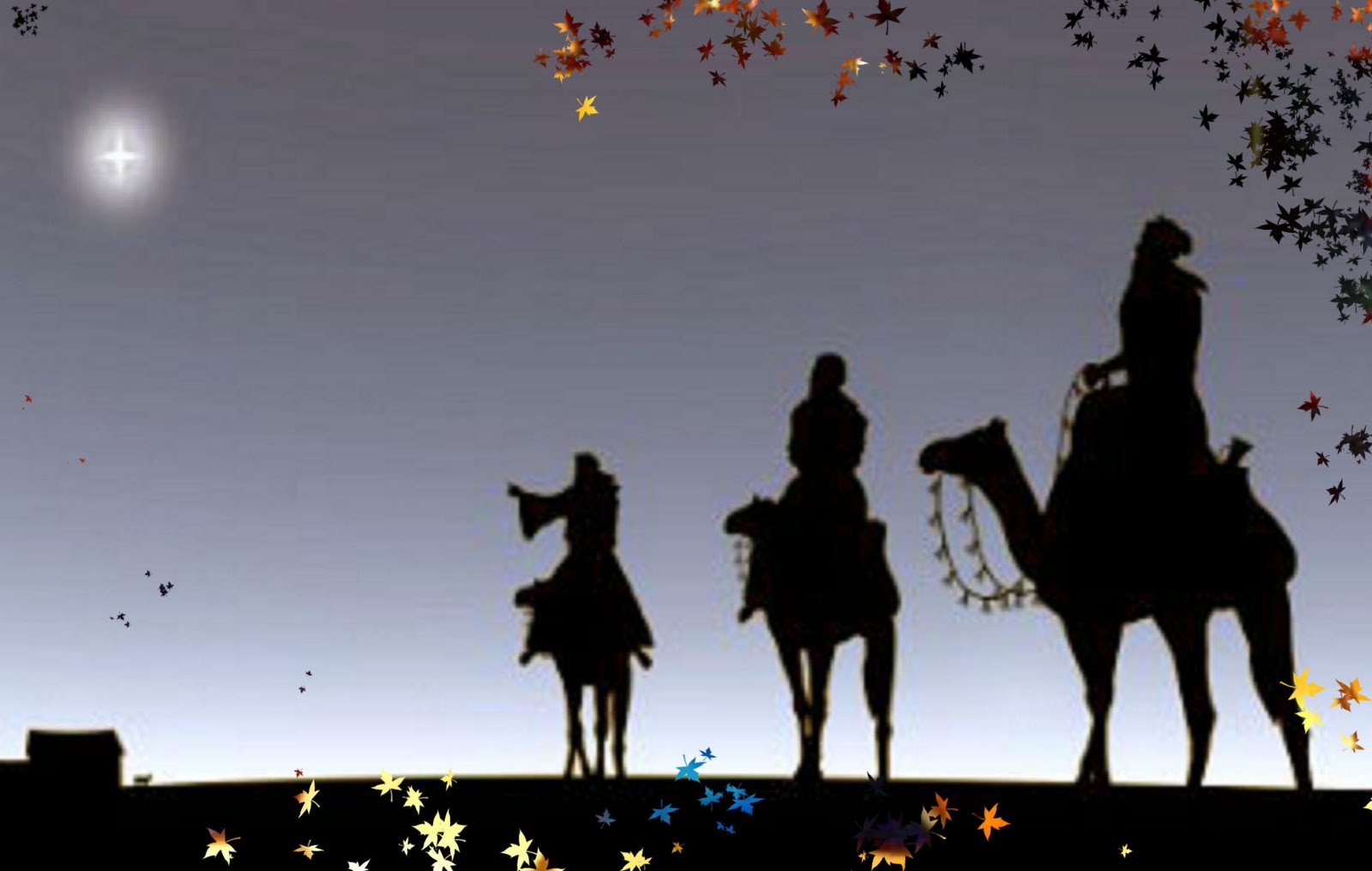
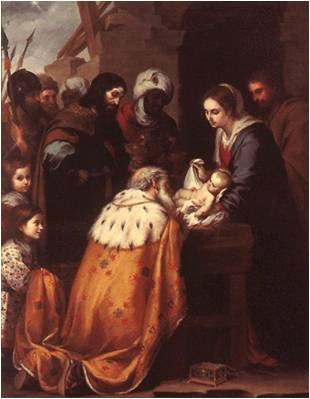
There is a legend that says the wise men from the gospel nativity story were of three different ages. Caspar was a very young man, Balthazar was in his middle age, and Melchior was an old man. When they arrived in Bethlehem they went to the cave of the Savior’s birth and once there they went in one at a time.

When Melchior, the old man, went into the cave, there was no one there but a very old man his own age with whom he was quickly at home. They spoke together of memory and gratitude. The middle-age Balthazar encountered a middle-aged teacher when he went into the cave, and they talked passionately of leadership and responsibility. When young Caspar entered, he met a young prophet and they spoke words of reform and promise.

When they had all gone outside after going in one by one, the three of them took their gifts and went in together. This time, when they went in, there was nobody but a twelve-day-old infant. Later on they understood. The Savior speaks to every stage of life. The old hear the call to integrity and wisdom. The middle-aged hear the call to generativity and responsibility. And the young hear the call to identity and intimacy.

The Savior speaks to every stage of life. At different times in my ministry I have heard people talk about different times in their lives when they felt closer to God and more engaged in their faith and how they now wish they could “get back” to that time. I wonder – is the goal to get back to a certain time and experience or is it to discover, anew, who Christ is for us now, today? Maybe the reason we cannot get back to a previous experience of God and faith is not because God is no longer there but because we are no longer there. We have changed, our world has changed – we must discover anew who Christ is for us today. The Savior speaks to every stage of life. This is the wisdom of the wise men.

Further, the wise men teach us another lesson – they show us the method of how to find out who Christ is for us when we are searching. We bring to God the gifts of who we are – the gold of the blessings and joys of our lives, the frankincense of our prayers and faith (no matter how simple and small), the myrrh of our sufferings and pains. When we bring these gifts in humility and trust to Christ, He will show us who He is for us today.

World Day of Peace: Pope Benedict and Elvis Costello

30 Thursday Dec 2010

Posted by mcummins2172 in Uncategorized

≈ Leave a comment

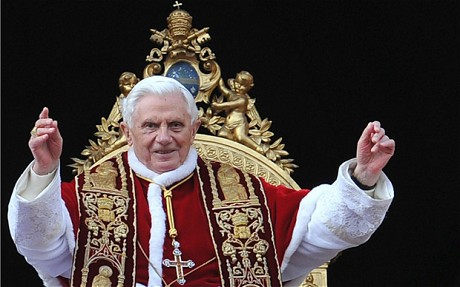
Every January 1st the Pope offers a message to encourage peace in our world.  This year’s message focuses on religious freedom as a path to peace. 

“Religious freedom, like every freedom, proceeds from the personal sphere and is achieved in relationship with others. Freedom without relationship is not full freedom. Religious freedom is not limited to the individual dimension alone, but is attained within one’s community and in society, in a way consistent with the relational being of the person and the public nature of religion.”

In the message the Holy Father emphasizes the full dignity of the human person which much continually be maintained and safeguarded (a dignity which includes religious expression) while calling to task both secular regimes and politically oppressive regimes that subvert this basic freedom.  Below is the full text. 

The Pope’s message is followed by the vocal stylings of Elvis Costello and friends singing, “Whats so funny about peace, love and understanding?”. 

Lets just hope and pray that the world, nations, governments and peoples pay heed as we begin this new year…

http://zohoviewer.com/embed.jsp?f=hPUada

Pope Benedict’s Christmas message: A reflection on love

25 Saturday Dec 2010

Posted by mcummins2172 in Uncategorized

≈ Leave a comment

Earlier today, Pope Benedict offered the traditional “Urbi et Orbi” Christmas message and blessing.  It is a wonderful reflection on love and is well worth the read.  Below is the full text of the message.

“Verbum caro factum est” – “The Word became flesh” (Jn 1:14).

Dear brothers and sisters listening to me here in Rome and throughout the world, I joyfully proclaim the message of Christmas: God became man; he came to dwell among us. God is not distant: he is “Emmanuel”, God-with-us. He is no stranger: he has a face, the face of Jesus.

This message is ever new, ever surprising, for it surpasses even our most daring hope. First of all, because it is not merely a proclamation: it is an event, a happening, which credible witnesses saw, heard and touched in the person of Jesus of Nazareth! Being in his presence, observing his works and hearing his words, they recognized in Jesus the Messiah; and seeing him risen, after his crucifixion, they were certain that he was true man and true God, the only-begotten Son come from the Father, full of grace and truth (cf. Jn 1:14).

“The Word became flesh”. Before this revelation we once more wonder: how can this be? The Word and the flesh are mutually opposed realities; how can the eternal and almighty Word become a frail and mortal man? There is only one answer: Love. Those who love desire to share with the beloved, they want to be one with the beloved, and Sacred Scripture shows us the great love story of God for his people which culminated in Jesus Christ.

God in fact does not change: he is faithful to himself. He who created the world is the same one who called Abraham and revealed his name to Moses: “I am who I am … the God of Abraham, Isaac and Jacob … a God merciful and gracious, abounding in steadfast love and faithfulness (cf. Ex 3:14-15; 34:6). God does not change; he is Love, ever and always. In himself he is communion, unity in Trinity, and all his words and works are directed to communion. The Incarnation is the culmination of creation. When Jesus, the Son of God incarnate, was formed in the womb of Mary by the will of the Father and the working of the Holy Spirit, creation reached its high point. The ordering principle of the universe, the Logos, began to exist in the world, in a certain time and space.

“The Word became flesh”. The light of this truth is revealed to those who receive it in faith, for it is a mystery of love. Only those who are open to love are enveloped in the light of Christmas. So it was on that night in Bethlehem, and so it is today. The Incarnation of the Son of God is an event which occurred within history, while at the same time transcending history. In the night of the world a new light was kindled, one which lets itself be seen by the simple eyes of faith, by the meek and humble hearts of those who await the Saviour. If the truth were a mere mathematical formula, in some sense it would impose itself by its own power. But if Truth is Love, it calls for faith, for the “yes” of our hearts.

And what do our hearts, in effect, seek, if not a Truth which is also Love? Children seek it with their questions, so disarming and stimulating; young people seek it in their eagerness to discover the deepest meaning of their life; adults seek it in order to guide and sustain their commitments in the family and the workplace; the elderly seek it in order to grant completion to their earthly existence.

“The Word became flesh”. The proclamation of Christmas is also a light for all peoples, for the collective journey of humanity. “Emmanuel”, God-with-us, has come as King of justice and peace. We know that his Kingdom is not of this world, and yet it is more important than all the kingdoms of this world. It is like the leaven of humanity: were it lacking, the energy to work for true development would flag: the impulse to work together for the common good, in the disinterested service of our neighbour, in the peaceful struggle for justice. Belief in the God who desired to share in our history constantly encourages us in our own commitment to that history, for all its contradictions. It is a source of hope for everyone whose dignity is offended and violated, since the one born in Bethlehem came to set every man and woman free from the source of all enslavement.

May the light of Christmas shine forth anew in the Land where Jesus was born, and inspire Israelis and Palestinians to strive for a just and peaceful coexistence. May the comforting message of the coming of Emmanuel ease the pain and bring consolation amid their trials to the beloved Christian communities in Iraq and throughout the Middle East; may it bring them comfort and hope for the future and bring the leaders of nations to show them effective solidarity. May it also be so for those in Haiti who still suffer in the aftermath of the devastating earthquake and the recent cholera epidemic. May the same hold true not only for those in Colombia and Venezuela, but also in Guatemala and Costa Rica, who recently suffered natural disasters.

May the birth of the Saviour open horizons of lasting peace and authentic progress for the peoples of Somalia, Darfur and Côte d’Ivoire; may it promote political and social stability in Madagascar; may it bring security and respect for human rights in Afghanistan and in Pakistan; may it encourage dialogue between Nicaragua and Costa Rica; and may it advance reconciliation on the Korean peninsula.

May the birth of the Saviour strengthen the spirit of faith, patience and courage of the faithful of the Church in mainland China, that they may not lose heart through the limitations imposed on their freedom of religion and conscience but, persevering in fidelity to Christ and his Church, may keep alive the flame of hope. May the love of “God-with-us” grant perseverance to all those Christian communities enduring discrimination and persecution, and inspire political and religious leaders to be committed to full respect for the religious freedom of all.

Dear brothers and sisters, “the Word became flesh”; he came to dwell among us; he is Emmanuel, the God who became close to us. Together let us contemplate this great mystery of love; let our hearts be filled with the light which shines in the stable of Bethlehem! To everyone, a Merry Christmas!

Merry Christmas!

25 Saturday Dec 2010

Posted by mcummins2172 in Uncategorized

≈ Leave a comment

In the lowliness of the manger we see that “love and humility have more in common than love and majesty” (St. Bernard of Clairvaux).  Merry Christmas everyone!

Christmas and the Humility Equation

23 Thursday Dec 2010

Posted by mcummins2172 in Uncategorized

≈ Leave a comment

The Christmas tree is up and decorated.  The nativity scene is out.  The Advent wreath is about to be put away.  The Christmas cards that are going out this year have been sent.  Gifts are wrapped.  The stockings are hung (Bailey’s and Maxine’s already have doggie treats in them).  What else is needed to make this a perfect Christmas?  Oh, yes … a healthy dose of humility!

In the Office of Readings for December 22nd I was struck by these words by Venerable Bede: “Those who refuse to be humble cannot be saved.  They cannot say with the prophet: See, God comes to my aid; the Lord is the helper of my soul.  But anyone who makes himself humble like a little child is greater in the kingdom of heaven.” 

I began this season of Advent reflecting on the “sign” of the miners trapped underground in Chile and the three young men rescued from being lost at sea.  I remain convinced that we are the miners and we are those who are lost.  We cannot save ourselves.  We stand in need of a savior.

A common reflection for Christmas is the revelation of the humility of God.  God humbles himself to be born a child.  God does this for us and it is indeed good news!  But there is another side to the equation of humility: if God has humbled himself to come to us then we, in turn, must humble ourselves in order to receive and welcome him.  If the stable is good enough for God then it is good enough for us!

We must make of our lives and our hearts a stable that is fit for the King of creation.  This can only be done through humility.  We must acknowledge who we indeed are and who we need.  We are sinners and we stand in need of a savior.  This acknowledgement does not deny our worth nor belittle the human spirit (as some “puffs of wind” in our world contend). 

Humility is the path to true dignity – a dignity founded not in the illusion of pride and self but in the reality of communion with God and communion with one another.  God is completely at home in the humility and poverty of the stable – it is there that we find Him and that we discover the truth of who we ourselves are.

O come, o come Emmanuel!  Our world needs you.  Our church needs you.  I need you.  And may we each make of our hearts a humble and poor stable worthy to receive and welcome you!  Come Emmanuel and we shall rejoice! 


A further thought: God is indeed at home in the stables of our world – the poor, humble, lowly and put-away places of our world.  If you are searching for God, if you are no longer comfortable with the void that this world offers – go (with a discerning and humble heart) to the stables of the world and there you will encounter God.  An important note though – you must remain faithful.  Once or twice is not enough, God wants to know that your heart is sincere.  If you remain faithful in visiting the poor places, God will speak to your heart. 

Cracking the "O Antiphons" code

22 Wednesday Dec 2010

Posted by mcummins2172 in Uncategorized

≈ Leave a comment

In this age of conspiracy theories and cracking hidden codes I thought people might find this interesting. 

On each day from December 17-23, the antiphon proclaimed before the reciting of the Magnificat in the evening prayer of the Church’s Liturgy of the Hours refers to a different title for Christ.  Each title is preceded by “O” – hence the designation “O Antiphons”. 

The antiphons help to focus the expectation of the waiting Church on the coming feast of the Birth of Christ while presenting an aspect of who the Messiah is.  Each antiphon also refers to a specific prophecy by Isaiah regarding the coming Messiah.

No one knows the exact origins of the “O Antiphons” – they are referred to by Boethius (c. 480-524) in his writings and by the eighth century they are in common use in the liturgical celebrations in Rome.  Following this they become common throughout the universal church.

Below are the antiphons and the scripture passage(s) from Isaiah that they refer to: 

December 17th – O Sapientia: “O Wisdom, O holy Word of God, you govern all creation with your strong yet tender care.  Come and show your people the way to salvation.”  Isaiah 11:2-3, 28:29.

December 18th – O Adonai: “O sacred Lord of ancient Israel, who showed yourself to Moses in the burning bush, who gave him the holy law on Sinai mountain: come, stretch out your mighty hand to set us free.”  Isaiah 11:4-5, 33:22.

December 19th – O Radix Jesse: “O Flower of Jesse’s stem, you have been raised up as a sign for all peoples; kings stand silent in your presence; the nations bow down in worship before you.  Come, let nothing keep you from coming to our aid.”  Isaiah 11:1, 10 and Micah 5:1.

December 20th – O Clavis David: “O Key of David, O royal Power of Israel controlling at your will the gate of heaven: come, break down the prison walls of death for those who dwell in darkness and the shadow of death; and lead your captive people into freedom.”  Isaiah 9:6, 22:22.

December 21st – O Oriens: “O Radiant Dawn, splendor of eternal light, sun of justice: come, shine on those who dwell in darkness and the shadow of death.”  Isaiah 9:1.

December 22nd – O Rex Gentium: “O King of all the nations, the only joy of every human heart; O Keystone of the mighty arch of man, come and save the creatures you fashioned from the dust.”  Isaiah 2:4, 9:5.

December 23rd – O Emmanuel: “O Emmanuel, king and lawgiver, desire of the nations, Savior of all people, come and set us free, Lord our God.” Isaiah 7:13-15

Now, some scholars point out that if you take the first letter of each title in Latin, starting from Dec. 23rd and working back to the 17th (Emmanuel, Rex, Oriens, Clavis, Radix, Adonai, Sapientia), you can form the Latin words “ero cras” which translates, “Tomorrow, I will come.”  “Tomorrow” being the 24th and the beginning of the Church’s celebration of the birth of Christ.


The Cherry Tree carol and words from Pope Benedict on Joseph

20 Monday Dec 2010

Posted by mcummins2172 in Uncategorized

≈ Leave a comment

Fourth Sunday of Advent: St. Joseph the quiet saint

18 Saturday Dec 2010

Posted by mcummins2172 in Uncategorized

≈ 1 Comment

In all of the gospel story Joseph does not say one word yet his actions speak volumes.  In fact, Joseph is not mentioned at all in the Gospels of Mark and John and just in passing in the Gospel of Luke.  It is in Matthew’s gospel that we encounter this quiet saint.

Four times in the first two chapters of Matthew’s Gospel, Joseph receives divine instruction in a dream.  Each time he trusts and he obeys.  On the surface one could easily call Joseph a fool and I am sure some did.  He must have been ridiculed when it became known that he took Mary in even though she was already with child.  But he trusted and it was this trust that enabled him to weather the storms of ridicule and difficulty that he had to endure following each divine instruction (taking Mary in, picking up everything and heading to Egypt, returning and finally being led to settle in Galilee).

All of this begs the question, “What was it that enabled this depth of trust and certainty in Joseph?”  There is one simple description of Joseph at the beginning of it all in Matthew’s gospel that points to the answer.  After the revelation of Mary’s pregnancy, Matthew writes, “Joseph, her husband, since he was a righteous man, yet unwilling to expose her to shame, decided to divorce her quietly.” (Mt. 1:19)  Joseph, simply put, was a good man.  He did the right thing because it was the right thing to do.

Here I would like to make a point about Joseph that I fear is being lost in our day.  In iconography it has been the tradition to portray Joseph as an elderly man.  In fact, it is a more recent adaptation that tends to portray him as a contemporary (age-wise) of Mary.

This is important, I believe, because we live in a time that overvalues youth and devalues age.  Might the need to portray Joseph as a young and robust man be a subtle form of age-ism?  My question is this; would a younger man have had the wisdom and the life awareness needed for the depth of trust required to face what Joseph had to face?  Matthew specifies that Joseph was a “righteous man” – my experience is that one does not just wake up one day “righteous” but that righteousness is gained through a long process of living in right relationship with God and neighbor.  Righteousness takes time. 

In a world of Percy Jackson and the Lightning Thief and Harry Potter we like the idea of the young person waking up one day to an understanding of his or her uniqueness and wealth of powers and abilities (with very little mentoring and training involved – if any) yet how realistic is this?  I don’t think it is very realistic in terms of righteousness and the moral life nor anything else for that matter.  Somethings take time – developing skills, knowledge and ability takes time, being righteous before God and neighbor takes time. 

I have no problem picturing Joseph as older than Mary and in fact I think this portrayal of Joseph offers an important instruction for us regarding the journey of faith and discipleship and a needed corrective for our time. 

It was a common practice in their day for an older widower to take in a younger bride.  With this understanding the siblings of Jesus referred to later in the gospel story can be seen as step-brothers and sisters.  Children of a previous marriage of Joseph.

(An aside offered here – some would point to these siblings of Jesus as full brothers and sisters thus denying the Church’s long standing teaching regarding the perpetual virginity of Mary.  My question is this, if Jesus had brothers and sisters why then from the cross did he commend Mary to the care and protection of John the beloved disciple? (John 19: 25-27)  If Mary had other children it would have been their duty to care for their mother.  It is worthy to note that our Lord does a very tender thing here as he is dying on the cross: he finds his mother a home and he gives his church a mother.)

Joseph – the quiet saint – has much to teach us if we just have the ears to listen.

← Older posts
Newer posts →
Follow The Alternate Path on WordPress.com

Enter your email address to follow this blog and receive notifications of new posts by email.

Previous Posts

  • August 2026
  • July 2026
  • May 2026
  • April 2026
  • March 2026
  • December 2025
  • November 2025
  • August 2025
  • April 2025
  • February 2025
  • January 2025
  • December 2024
  • August 2024
  • July 2024
  • June 2024
  • May 2024
  • April 2024
  • March 2024
  • February 2024
  • January 2024
  • December 2023
  • November 2023
  • October 2023
  • August 2023
  • July 2023
  • May 2023
  • February 2023
  • January 2023
  • December 2022
  • August 2022
  • July 2022
  • April 2022
  • January 2022
  • December 2021
  • September 2021
  • August 2021
  • July 2021
  • May 2021
  • April 2021
  • January 2021
  • December 2020
  • November 2020
  • October 2020
  • August 2020
  • July 2020
  • May 2020
  • April 2020
  • March 2020
  • February 2020
  • December 2019
  • October 2019
  • September 2019
  • August 2019
  • July 2019
  • May 2019
  • April 2019
  • March 2019
  • February 2019
  • December 2018
  • November 2018
  • October 2018
  • August 2018
  • July 2018
  • June 2018
  • April 2018
  • March 2018
  • February 2018
  • January 2018
  • December 2017
  • November 2017
  • September 2017
  • August 2017
  • July 2017
  • June 2017
  • May 2017
  • April 2017
  • March 2017
  • February 2017
  • January 2017
  • December 2016
  • November 2016
  • October 2016
  • September 2016
  • August 2016
  • July 2016
  • June 2016
  • May 2016
  • April 2016
  • March 2016
  • February 2016
  • January 2016
  • December 2015
  • November 2015
  • October 2015
  • September 2015
  • August 2015
  • June 2015
  • May 2015
  • April 2015
  • March 2015
  • February 2015
  • January 2015
  • December 2014
  • November 2014
  • October 2014
  • September 2014
  • August 2014
  • July 2014
  • June 2014
  • May 2014
  • April 2014
  • March 2014
  • February 2014
  • January 2014
  • December 2013
  • November 2013
  • October 2013
  • September 2013
  • August 2013
  • July 2013
  • June 2013
  • May 2013
  • April 2013
  • March 2013
  • February 2013
  • January 2013
  • December 2012
  • November 2012
  • October 2012
  • September 2012
  • August 2012
  • July 2012
  • June 2012
  • May 2012
  • April 2012
  • March 2012
  • February 2012
  • January 2012
  • December 2011
  • November 2011
  • October 2011
  • September 2011
  • August 2011
  • July 2011
  • June 2011
  • May 2011
  • April 2011
  • March 2011
  • February 2011
  • January 2011
  • December 2010
  • November 2010
  • October 2010
  • September 2010
  • August 2010
  • July 2010
  • September 2008
  • August 2008
  • April 2008
  • March 2008
  • February 2008
  • January 2008
  • December 2007
  • November 2007
  • October 2007
  • September 2007

Popular Posts

  • thealternatepath.org/wp-c…
  • thealternatepath.org/wp-c…

Blog at WordPress.com.

  • Subscribe Subscribed
    • The Alternate Path
    • Join 172 other subscribers
    • Already have a WordPress.com account? Log in now.
    • The Alternate Path
    • Subscribe Subscribed
    • Sign up
    • Log in
    • Report this content
    • View site in Reader
    • Manage subscriptions
    • Collapse this bar