Christ awaits and gratitude

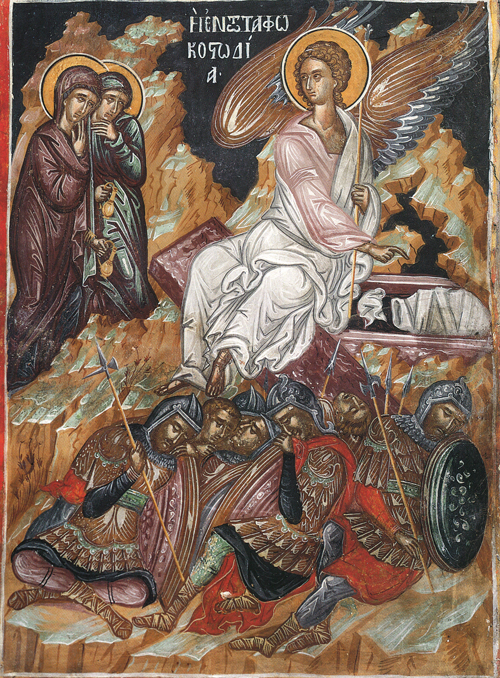
“…go quickly and tell his disciples that he has risen from the dead, and behold, he is going before you to Galilee; there you will see him.” (Mt. 28:7)

These words spoken to the women by the angel at the empty tomb of Jesus have been echoing in my heart these first days of the Easter season. 

I believe that the message of the angel has added weight for me this Easter because this coming July 1st I will be moving to Chattanooga to begin a new chapter in my ministry as a priest and I will be bringing to an end my six years as chaplain to the Catholic Center at East Tennessee State University.

In the life of Christian discipleship the risen Lord always goes before us and he awaits us just as he awaited his first disciples in Galilee.  Six years ago the Lord awaited me here at the Catholic Center after five years of serving as pastor of St. Mary Parish in Athens, TN.  I am grateful to God for these six years at the Center just as I was for my time in Athens. 

I am grateful to God for the ministry that has been built at the Catholic Center these years.  I am grateful that we have built a ministry that is solid in our Catholic faith, in community and in service to the poor.  I am grateful that the ministry that we have operated out of at the Center is a ministry that is respectful of the dignity and worth of people and that does not need to manipulate people nor ridicule the cherished beliefs of others nor engage in rumors even as so often seems to be the case in our world today.  My experience on campus is that despite all the talk about respecting differing viewpoints; people and groups on college campuses are extremely eager to form other people in their own image.  I take pride in saying that at the Catholic Center we have sought to respect the image of God found in the person rather than seeking to form the other in our image.  Some people might view this deference to the image of God found in the other person a form of weakness worthy of ridicule. I disagree, it is not a sign of weakness.  It is a sign of strength, a confident humility, that in the long run shows true respect and care for the other person as a human being.

I am grateful for the students who have made the Catholic Center their spiritual home these past six years.  I am grateful for and inspired by your willingness to live, wrestle with and witness to your Catholic faith.  I honestly believe and hope that you will be leaders in your faith communities one day.  To the students who have been committed to the Center and who strive to live your faith while on campus; please know that I will always be willing to help you in any way and at any point that I can. 

I am grateful for the friends that I have made both within the university community and in the larger Johnson City and St. Mary Parish community.  Friendship is a blessing and a source of joy and comfort.  I thank God for each of my friends.

I am grateful for the years I had with my mother as her caregiver.  The last five years of her life were not easy for her or for me to watch and I cannot count the number of times I left Colonial Hills and the local hospital emergency room with tears in my eyes and in my heart but I am grateful that I was able to walk these years with her.  Rest in peace Mom. 

I am grateful to the Community of Sant’Egidio who continually teaches me to find Christ in the Gospel and in the poor.  I am grateful to my friends at the John Sevier Center.  Over and over again I have seen Christ in their faces and they have taught me about faith, trust, hope and friendship.  I look forward to living the charism of Sant’Egidio in Chattanooga and to friendship with the poor there.   

I am grateful for Fr. Christian Mathis.  He is a good friend and good priest and I know that he will bring an energy, enthusiasm and love to this ministry of the Catholic Center.  I am hopeful that he will take the Center ministry to the next level.   

I am grateful to Bishop Richard Stika who is now calling me to Chattanooga and I am grateful to the gift of obedience.  Eighteen years ago on my ordination day I promised obedience to the Bishop of Knoxville and ever since then I have experienced again and again that obedience is a font of unexpected graces and growth in life.  I am hopeful for this new call to serve.

Six years ago, Christ awaited me at the Catholic Center at ETSU.  Now, Christ awaits me in Chattanooga.  The joy of discipleship is found in following Christ wherever he might lead. 


Easter Sunday concluded … now what?

It is now the quiet time…  The Triduum services are completed.  The Easter Vigil (the “mother” of all vigils) has been concluded for another year – to varying degrees of liturgical success in each individual parish I am sure.  The crowds that seem to magically appear and arrive for Easter Sunday Mass have come and gone.  Candidates and catechumens have been received into the Church.  Easter Egg hunts are wrapped up as well as family Easter gatherings.  Now what?

Is Easter Sunday, 2013 to now be shelved away as a nice memory testified to by photos posted on facebook?  An opportunity for people to dress up and have good family time?  Does the message of Easter end with the last Easter Sunday Mass?  Liturgically the Church says “no”.  We have the Easter Season – a needed time to reflect on the truth of the resurrection and to look to the coming of the Holy Spirit at Pentecost.  “Liturgical” here is important and it does certainly influence who we are but here I am specifically wondering about our day-to-day life outside the parish walls.  Does Easter affect and shape who we are or does it remain a beautiful annual ritual that is left behind in the crowded Easter Sunday church parking-lot?  Do we take Easter with us into the streets of our lives and of our world or do we keep it hidden away behind locked doors – doors of a private faith, spirituality and morality, doors of our resignations and sense of hopelessness in the face of the pain of our world, doors of our fear to offend the accepted norm. 

Easter cannot stay hidden away.  Easter demands that we go into the streets – no matter how uncomfortable it makes us or others. 

In Matthew’s account of the resurrection there is an interesting instruction that is given to the women who came to the tomb early that morning by the angel sitting on top of the rolled-away heavy stone that had been used to seal the tomb.  “…go quickly and tell his disciples that he has risen from the dead, and behold, he is going before you to Galilee; there you will see him.” (Mt. 28:7) 

The resurrected Lord does not fear the world and its violence and sad resignation because he has overcome all the sin of the world through the love of the Father.  The resurrected Lord goes before you to Galilee.  He goes into the streets of the world and the expectation and instruction given by the angel of the resurrection is that the followers of Christ do the same! 

Easter, if it is to be authentic and be more than a nice memory, cannot stay hidden behind any locked door and neither will it allow us to remain hidden.

There is a culture of fear that continually whispers to us that nothing can change, that we cannot really do anything in the face of the injustice of our world, that we should look upon ourselves and our world with hopeless eyes.  The culture of fear is arrogant in its pride and thinks that it alone has words to speak.  The culture of fear lies.  The culture of fear would convince us that we are its children. 

We are not children of the culture of fear.  We are children of the resurrection!  We are sons and daughters of God!  We have nothing to fear and we have words, new words to speak to our world and to one another!  The angel announces that the risen Lord is going to Galilee and that there the disciples will see him.  The implication is more than apparent, the disciples are meant to go and meet the Lord who goes ahead of them.  (The Lord always goes ahead of us.)  They are meant to go out into the street and carry the truth of the resurrection into the world! 

It is not enough to stay behind locked doors, no matter how pretty and gilded those doors may be and no matter how many other people may also be content to remain there also.  If we do so then the culture of fear wins and our lives become exceedingly small, constrained and life-denying.  Joy is found only in following the risen Lord to wherever he might lead.

One further thought: there is no time to waste.  The angel instructs the women: go quickly.  We are each allotted only a certain number of Easters in our lives here on earth.  There is no time to lose, both for the work needing to be done in our own hearts as well as the work needing to be done in our world.  In the light of the resurrection we must make use of every moment given to us.  When all is said and done, we will each have to give an accounting of how we have lived the Easters we have been given in our lifetime. 

We are sons and daughters of the resurrection of our Lord!  The Easter mystery is placed in our hearts and entrusted to us and it cannot remain behind locked doors, it demands to be taken out to the streets of our world!                           
 

Friendship with Christ and the journey to Jerusalem

A while back an Italian friend of mine observed that we Americans grossly underestimate the power of friendship.  We focus in on our projects and plans individually and even collectively as a people (we like our meetings to give us a sense of productivity), while often failing to notice the gift and possibilities found within friendship itself.  I think that my friend is correct in this assessment.  Certainly, we Americans value friendship in life yet I do believe we often underestimate the basic human need for friendship, how it shapes who we are and all the good that friendship, by its very nature, can accomplish in life and even in our larger world.

Since my friend’s observation I have even found myself wondering about the role of friendship in our Lord’s life.  Correct me if I am wrong but I cannot call to mind a book that truly explores this dynamic in the life of Jesus.  We know that Jesus had friends (Martha, Mary and Lazarus seem to hold a special place for our Lord) and we know, through the gospel accounts, that Christ continually gathered people around himself.  We often reflect on how encounter with Christ and discipleship to Christ transformed the apostles and disciples and how it transforms people throughout history (ourselves included) but how did our Lord’s own honest human need for friendship affect him and his own understanding of himself and his mission?

Any honest examination of the human condition reveals that friendship is a prime mover in the development of the understanding of a human person.  We can all probably point to experiences in friendship (some truly positive and some truly negative) that have helped to shape who we ourselves are and have brought insight and understanding.  We hold in the mystery of the incarnation that Jesus is fully human and fully God.  We profess that the divinity in Christ has not swallowed up his humanity nor has his humanity excluded the divinity.  If Christ is “fully human” then isn’t a part of being human this amazing and complex dynamic of friendship?   

I think that we often keep Christ removed.  I think we are often more comfortable with Jesus as a stoic philosopher/savior whom we can learn from and receive salvation through but who had no real human needs or, if he did, transcended them in such a way that those needs were mitigated almost to the point of being nonexistent.

I do not believe that this does justice to our Lord, to the incarnation nor even to ourselves in the long run.  To be human means to grow in awareness; to be human means to be affected by relationship with another.  Yes, the foundational relationship that Christ had (which we see time and time again in the gospel) was his relationship with the Father but relationship with the Father does not negate relationship with other people and often it is through relationships with other people (friendship included) that God’s will is revealed in one’s life.  I think of the not-so-subtle nudging of Mary at the wedding in Cana that, perhaps, helped our Lord to realize that yes, the time had come to begin his mission in earnest.  I wonder how often those times spent in the home of Martha, Mary and Lazarus helped our Lord to clarify his own thoughts and his own understanding.  It seems that Peter, James and John had a unique relationship with our Lord even among his most immediate group of followers.   

Friendship is one of the most beautiful gifts of the human life.  Why would our Lord and Savior be denied this gift?  It makes no sense that he would but often it has remained an area unexplored.  We live in a time where factors and influences continually separate and isolate people.  It is my belief that people are hungering for true and authentic friendship.  I think that it is time that we followers of Christ earnestly explore the graced reality of friendship in the life of our Lord. 

As Church, we are now entering into Holy Week and it is right that we go with our Lord to Jerusalem and here I would add emphasis to “go with” and specifically I would say, “go with as friends”.  The gospel invites us to walk this way in the gift of friendship with Christ.  There is a Lenten hymn that says that Jesus walked this way alone and that is true to some extent but we as Church are now called to walk this way to Jerusalem in the ever-deepening reality of friendship with Christ and we are invited to make note of how friendship and honest human contact touched our Lord on his journey to the cross.  There are friends who loved our Lord yet turned away in fear.  There is the mother who walked every step with her son.  There is the friend who betrayed our Lord.  There is the man who allowed a place for our Lord to be buried and there is one who came to our Lord under the cover of night.  There is the woman who anointed our Lord in preparation for his burial.  There is the man who helped our Lord to carry his cross.  There are the women who met our Lord and wept for him on the street.  There are the women and the one male disciple who stood with Mary at the cross.  Where are we on this journey?  How did these moments touch the heart of our Lord?

In Holy Week, we walk to Jerusalem with our Lord and we walk the way in friendship. 


"Be Merciful" – Fifth Sunday of Lent (C)

Woman Caught in Adultery by John Martin Borg

“…be merciful, the souls of the faithful need your mercy.”  These are the words given by newly elected Pope Francis to a group of confessors at St. Mary Major Basilica in Rome the day after he was elected Bishop of Rome.

These words, I believe, catch the heart of our Lord in today’s gospel passage regarding the woman caught in adultery (John 8:1-11).  We often refer to this passage as “the woman caught in adultery” but it could just as easily be titled, “woman being played by the powers-that-be”.  The scribes and the Pharisees have no regard for this woman nor are they really concerned about the integrity of the Law at this point.  The scribes and the Pharisees rush to Jesus full of energy and accusation with this woman in tow in order to catch our Lord in a trap.  The woman is powerless and she is being played by the powers-that-be.  This is often the situation of the poor in our world.  The poor know this game well.

So does our Lord.  Our Lord refuses the energy and the accusation of the narrative of the scribes and the Pharisees and he re-directs it in an almost aikido-like fashion.  Our Lord bends down and he writes on the ground with his finger.  He lets the energy and accusation of the mob pass over him.  Once the energy and accusation of the crowd is spent and has no effect, our Lord responds with a new and surprising energy.  It is an energy rooted in God himself.  It is the energy of mercy.

Once again, our Lord is giving us an instruction in mercy.  In last Sunday’s gospel (Lk. 15:1-3,11-32) our Lord answers the accusation of the scribes and Pharisees not by pointing to his own righteousness but by pointing to the mercy of the Father.  This Sunday, our Lord answers the accusation of the powers-that-be by speaking truth and sharing mercy.  Let the one among you who is without sin be the first to throw a stone at her.  None of us are without sin.  Christ alone is without sin but instead of accusation he offers mercy.

In this Sunday’s first reading (Isaiah 43:16-21) we are told that our Lord opens a way in the sea and a path in the mighty waters.  In and through the gospel, Jesus overcomes the strength of accusation and abuse of power that can often inflame and harden the human heart and he opens a new way – the way of mercy and reconciliation!  Remember not the events of the past, the things of long ago consider not; see, I am doing something new!  Now it springs forth, do you not perceive it?  In the desert I make a way, in the wasteland, rivers.  

On Tuesday, newly-elected Pope Francis will be installed as Bishop of Rome and successor to St. Peter.  Much is being made of his humility and simplicity.  Pope Francis knows the lesson of mercy because he is a friend of the poor.  When we become friends with the poor we learn their story and we learn the lessons that only they can teach.  Christ is with the poor in a unique way.  Friendship with the poor is friendship with Christ.  There is no true new evangelization without friendship with the poor.

In a special way this Sunday we pray for newly-elected Pope Francis, may he in his unique role as successor to St. Peter, help all the Church learn the lessons of mercy and walk together in the ever-newness of the Gospel!     

Christ the Gardener: Third Sunday of Lent (C)

In this Sunday’s gospel (Lk. 13:1-9) we are given an image that is worthy of reflecting upon. Christ presents himself as the gardener – the one who patiently and humbly works in the situations of our lives to bring forth life and healing. In the parable offered by our Lord we are told that the owner of an orchard wants a fig tree that is not bearing fruit cut down yet the gardener intercedes on behalf of the tree. He will cultivate the ground and fertilize it and then see what will happen. Then it will be decided whether to cut down the tree or not. It is interesting to note that the parable ends here – left unfinished. This in intentional, I believe, on our Lord’s part because by leaving it unfinished we are brought into the parable. We cannot avoid the conclusion that we are the fig tree.

The question is raised though as to our willingness and ability to recognize the cultivation of the gardener in our lives and how to respond to that cultivation.

To begin to recognize the work of the gardener we must acknowledge and admit that we are not the gardener. In other words, we are not necessary. In today’s first reading (Ex. 3;1-8a, 13-15) when Moses asks what name he should give the Israelites for this deity who is speaking to him from the burning bush, God responds with, I am who am. God is the one necessary thing, God is being itself. All of creation (including you and me) exists solely because God wills it. This might be a terrifying thought were it not for the fact that God is love, pure and simple.

The gardener we have is one who carefully and patiently cultivates and fertilizes the terrain of our lives and our hearts. The gardener wants the tree to bear fruit! God wants nothing other than the good for us! Just as the gardener wants the tree to flourish, so God want us to flourish! Any image, any thought of a God who is jealous of his power, or vindictive or wrath-filled must be discarded if we are to truly advance in the Christian life.

Neither is God absent nor uncaring. Any gardener worth his or her salt is very attentive to the garden. But a gardener knows that there are moments to cultivate, fertilize and water as well as moments to let be and even weed and prune if necessary – all for the good of the tree. Sometimes God’s seeming absence might be the work of the attentive gardener.  Sometimes the pains of life might be the needed action of pruning.

The gardener is also dedicated.  The gardener is willing to remain and work with his or her garden both in and out of season, both in times of growth and times when the land lies fallow.  This dedication and persistence proves the devotion of the gardener to the garden.  God says to Moses, The Lord, the God of your fathers, the God of Abraham, the God of Isaac, the God of Jacob…  In our life and in the history of creation, God is persistent in his love and in his mercy.  We can have confidence in this.  Our name is included in this litany. 

As we learn the action of the gardener in our lives we come to recognize the holy ground on which we stand – both the moments of joy and sorrow, the moments of triumph and of loss.  All become holy ground and moments of encounter with God who is love.  Remove the sandals from your feet for the place where you stand is holy ground. 

The audacity of Pope Benedict and our young people


When I walk across the campus at ETSU I sometimes wonder about how this generation of college students and young adults has experienced religion.  Yes, they each have their unique experiences both positive and negative and these certainly fundamentally guide them but, as a whole, they also have some defining experiences.  Two of which are particularly negative.  As pre-teens this generation witnessed 9/11 – a horrific and violent abuse of power and religion.  This generation has also grown up in the midst of the clergy abuse scandal – again, another horrific abuse of power.  These events being held together, this generation has witnessed, in a defining and particular way, abuse of power in the religious context. 
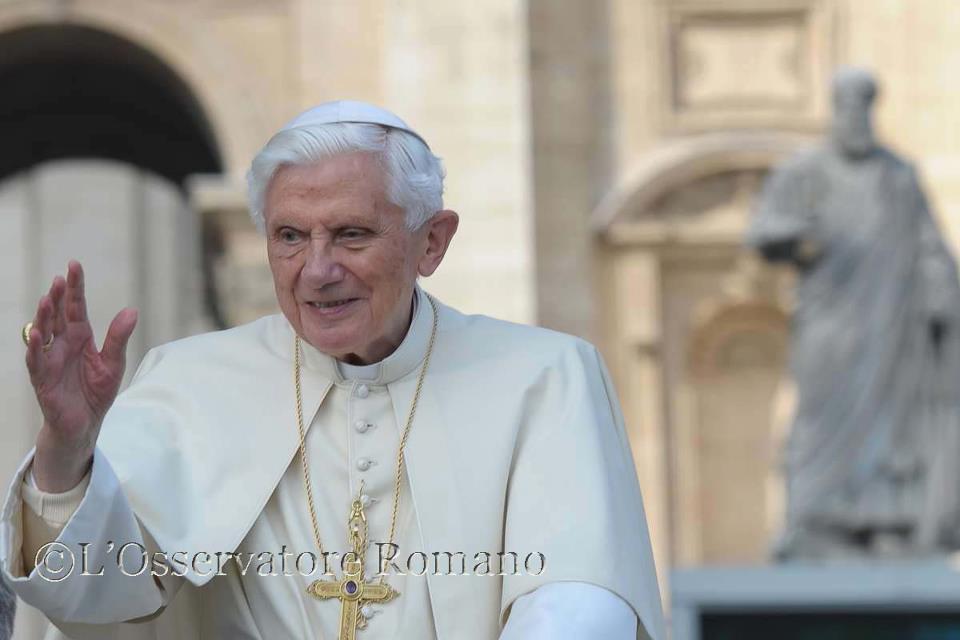
In light of this, I find Pope Benedict XVI’s audacious decision to resign from his ministry as the successor to St. Peter to be truly prophetic.  The papacy is the quintessential symbol of religious authority and power in our world and I cannot help but wonder how his resignation is speaking to the younger generation.  I do not presume to know the mind of Pope Benedict and I can only go on his own comments as to why he has decided to step away from the Petrine ministry and devote the remainder of his life to prayer and study and I certainly take him at his word but I wonder (and hope) if the eighty-five year old pontiff has in his heart a pastoral lesson he wants to offer the world and young people in particular.  By his resignation, Pope Benedict is offering a lesson that power does not have to control and that power can also be stepped away from for the interest of the whole and the common good.  In this lesson there is also the recognition that there is value to humility and to prayer.
I think that this younger generation has a deep yearning to see religious people willing to step away from the trappings of power.  Yes, there is an authentic role and need for power and authority in religion.  Authority is certainly needed and I do not here argue against the authentic exercise of power to help grow the faith but it must be recognized that power which is abused leaves deep and long lasting scars and that power, by its very nature, can also create distance between those who hold power and those who do not.
One reason I think that this generation yearns for religious authorities who can step away from power is because they are, in many ways, a generation without power.  By stepping away from power, religious authorities can go and meet the younger generation where they are at.  It has been said that this younger generation of Americans will probably be the first to financially make less than their parents.  It is not their fault.  It is the cards that they have been dealt primarily due (in all honesty) to the greed and narcissism of older generations.  Theirs is a generation that cannot find jobs once they graduate college (partly because older generations are not retiring).  They are weighed down by exorbitant student loans due partly to the fact that benefits afforded previous generations have not been passed down to them.  They are not planning on social security being around once they retire.  Many are facing unemployment or underemployment.  One student recently told me that out of five of her friends who just graduated college, four have had to return home to live with their parents.  If we as ministers can step away from the security of power we can go a long way in meeting these young people where they are at.
This calls for a creativity in ministry, because it means “going to” rather than “waiting for them to come to us” – which has been the dominant model in ministry for a long time.  But it should be recognized that this dominant model is a model of power.  When “they” need to come to “us” a power dynamic is immediately set up.  We know how things operate, we know how things should be done in the church.  In other words, we have the power and they do not.  The Catholic Church is a church of weighty institutions – we have schools and universities, we have hospitals and far-reaching charity organizations, we have large and expansive parishes – these all have a role and they are not going away and neither should they but we should recognize that sometimes the maintaining of institutions diverts energy away from the needed work of evangelizing and the very ability to go outside the walls of the institution. We need to creatively think a space apart from these weighty institutions where we can meet and welcome this generation without power.
To find a space and a means to step away from this model of weighty institution and power means to embrace a form of evangelical poverty.  It means to let go of control.  I think, in my heart, that Pope Benedict is witnessing this for us.   We need to be a more humble church with ministers inspired by an evangelical poverty and a missionary zeal.  We can see to the needs of the weighty institutions but we do not have to be so weighed down by these institutions that we cannot do what the gospel demands.  We need the audacity of a Pope Benedict who at eighty-five and at the pinnacle of church power and politic can step away from that very power and say, “God is calling me to prayer for the Church.” 
Our young people – who are a generation without power – are watching.     

The Ordinary Extraordinary of Lent: Second Sunday of Lent (C)

Lent is not an ordinary time.  It is a period in which we are called to reconsider our relationship with God while we go on living our “ordinary” lives.  We are asked to fast from ordinary things, to nourish ourselves more from the Gospel, to strengthen our prayer, to intensify our charity towards the weak and to convert our hearts to the Lord just as we also go about the regular routine of our lives these forty days. 

In many ways this ordinary extraordinary is given full expression in the story of the Transfiguration (Lk. 9:28b-36).  Jesus invites Peter, James and John to journey with him up the mountain to pray and there he is transfigured before them yet they must return back down the mountain when it is all over to the ordinary of their lives.  It does raise the question of how much of a separation there really is between the “ordinary” and the “extraordinary” in life – maybe not as much as we often suppose.  Today’s Gospel teaches us that the key to life is learning and being enabled to see the extraordinary in the ordinary.  In other words; to see with transfigured eyes. 

The Catholic Center where I minister is situated in a large and old house.  The chapel is located in the basement.  A few years back we placed a simple icon of the Transfiguration (pictured) in the stairwell leading down to the chapel.  The icon is not there just to fill in a blank wall.  It has a purpose.  The visual theology of the icon instructs all who enter into the chapel for liturgy and prayer that we are entering into a place of transfiguration.  Here, in the Mass and in quiet prayer, Christ is truly present and he reveals himself to us. 

There are a number of dynamics present in the movement of Transfiguration.  The first and primary movement is that God comes to us.  Before Christ takes the three disciples up the mountain to pray, the Son of God who, though he was in the form of God, did not count equality with God a thing to be grasped, … emptied himself, taking the form of a slave… (Philippians 2:6-7).  This is always the first move. 

The second movement is that Christ tears us away from the selfish and mean habits that keep us so often bound.  Christ tears us away from our selfishness and carries us higher.  Here, let us avoid the danger of self-congratulatory pop therapeutic lingo which is really just a manifestation of spiritual sloth.  Each and every one of us has selfish attitudes which we need to be torn away from.  If the very disciples who walked with our Lord in the flesh needed to be pulled away from their selfish and mean habits then so do we.  Today’s Gospel says, Jesus took Peter, John and James and went up the mountain to pray.  The operative word here is “took”.  He did not ask, he did not request.  He took.

Every time we gather for the Sunday liturgy, we encounter Christ who takes us from our own little preoccupations, worries and sad divisions and are drawn into the life of Christ himself – his vocation, his mission and his journey!  Talk about an adventure!  We are drawn into the very life of God and the mission of the Kingdom!  This is the third movement.   

This brings us to an important point which is so often misunderstood in our day, both by those who have not encountered Christ as well as many who profess Christ.  Jesus does not like to walk alone.  Jesus does not see himself as the solitary action movie hero, almost condemned to be superior to everyone else.  Christ binds himself to that first little group of followers and he kneads his very life into theirs even though he knows they are weak and limited.  Throughout history Christ has continued to knead his very life into the life of his Church and he does so today even as he is aware of our weaknesses and limits.  Jesus is that true shepherd who never grows tired of his friends and who always takes them with him.  When we enter into the Eucharistic celebration not only do we receive the Body and Blood of Christ but we ourselves are also kneaded more deeply into the very life of Christ and into a life of communion with others. 

As we live this mystery of the God who comes to us, who tears us away from our selfish and mean habits and who kneads his very life into ours we are brought more into the very Kingdom of God and we begin to recognize that the ordinary and the extraordinary are really not that far apart after all.     


Temptation and Sin: First Sunday of Lent (C)

Temptation of Christ by Eric Armusik

In the Gospel story of Jesus being tempted in the wilderness (Lk. 4:1-13) we are given a dramatic portrayal of the movement of temptation in life and also the corrosiveness of sin. 

Luke writes that it was only after Jesus had fasted for forty days and he was in a weakened state that the devil came to tempt him.  This is worthy of note.  Temptation insinuates itself into the folds of our weaknesses and our fragility and it is from there that it seeks to carry out its destructive work.  Do we carry fears within us?  Then grasp for power at all costs!  Are we insecure in our understanding of self?  Then run after the approval of others!  Do we covet?  Then deny the dignity and rights of the other person!  Do we envy?  Then put down the other person!  Do we doubt?  Then shut out the love of God and other persons!

All temptations insinuate themselves into the folds of our weaknesses and frailties.  Part of the spiritual journey is coming to recognize and accept this.  A very holy and honest priest once told me that at one point in his faith journey he came to the realization that he was capable of about every sinful act imaginable.  The truth is, we all are.  We mark ourselves with ashes at the beginning of Lent for a number of reasons – one of these being the recognition and acceptance of our own weakness.  Holiness is not achieved by denying or masking weakness.  Authentic holiness comes about only through accepted weakness being transformed by God’s grace. 

In my own spiritual journey as well as in my experience as a confessor I have come to the awareness that one of the most corrosive effects of sin in our lives is that sin plants a kernel of doubt in our thoughts that can easily and quickly fester into a debilitating and ever-present accusation.  The accusation comes in a variety of voices: “Who do you think you are?”, “If people only knew the real you.”, “How can you believe that you are worth love?”, “Do you think God loves you or even cares?”  Throughout the temptation scene in today’s gospel the devil continually tries to plant this kernel of accusation in the thought of our Lord.  If you are the Son of God…  Yet, Christ does not sin, he does not turn away from the Father and therefore the devil is unable to plant this kernel of doubt and despair.  Christ triumphs over the devil in the desert not by his own strength and self-sufficiency but rather by clinging in obedience to the will and love of the Father and by calling to mind the Word of God and being strengthened by that Word.

The answer to both the insinuation of temptation as well as the corrosiveness of sin is in essence the same – to trust and truly hold to the reality that we are sons and daughters of God and that God is nothing other than love.  God does not disdain us in our weakness.  The truth is that his love and grace are all the more present.  The Christian sense of being perfect is not that we have it all together but rather that we are being perfected in and through our cooperation with God’s love and mercy.  In the face of the accusation of sin we remember that we are indeed loved by God and if we cannot remember then God will remember for us.  I have seen this first-hand as a confessor.  This is one of deep truths of the sacrament of reconciliation.  When we have forgotten who we are through sin, God (in his mercy) remembers for us.  God, in his forgiveness, calls forth the truth that we are his sons and daughters. 

We all know how temptation insinuates itself into our weaknesses and we know how sin accuses us.  This Lent and Easter may we hopefully come to know in a deeper way how God’s love and the truth of our being his sons and daughters sets us free.                 

"Put out into the deep water": Fifth Sunday in Ordinary Time (C)


How and where do I find life?  How do I live the life I have been given?  These are perennial questions and for our purpose here at this university Newman Center these are the questions that many in our community are being called to take up and begin to wrestle with, perhaps for the first time.  The questions can be summarized in our Lord’s invitation to Simon Peter, “Put out into deep water…”

This invitation and the questions are daunting and even frightening.  There are many voices in our world that continually encourage us to stay on the shore, to ignore the invitation to set out into the deep water.  This encouragement comes in a variety of forms: to live a distracted existence focused solely on self and ones own entertainment, to not question too deeply or to only question in an approved manner, to silence ones conscience and only live within the bubble of ones own ego.  These voices call to us continually – subtle and not so subtle.  They have a surface appeal but in the end they are deadening.

Our Lord invites Simon Peter (and us) to “put out into the deep water” exactly because he knows the depth of being that resides within every man and woman.  Christ will not let us sell ourselves short in contrast to the voices that encourage us to stay on the shore.  Our Lord knows that deep calls upon deep and that an isolated, self-absorbed existence is an impoverished existence.

Yet, not only does our Lord invite, he also empowers and this is the good news proclaimed for us today.  In today’s gospel (Lk. 5:1-11) we find the means given by which we might set out into the deep. 

The first is that we are never alone.  We are not orphans left to our own devices in a senseless world.  There is a creator, there is a purpose for creation and there is a purpose for each of our lives.  Not only this but God walks with us.  That day, Jesus came to the Lake of Gennesaret – to where Peter, James and John were – and when he instructs them to “put out into the deep water” he is in the boat with them.  God never abandons us.  As we put out into the deep of our lives we must continually trust that God is with us. 

This leads us to the second means given us by God.  The Lord’s instruction to Peter to put out into the deep comes after the Lord’s proclamation and teaching to the crowds from the boat. This is not incidental.  We have been given the gospels and all the scripture as a means by which to live our lives and to set out into the deep waters and navigate these waters.  We must develop the discipline of turning again and again to God’s word, especially the gospels, in order to truly live the life we each have been given.

The final means given us by God in this gospel passage is mercy and forgiveness.  Peter’s immediate reaction upon the great catch of fish demonstrates our common human condition, “Depart from me, Lord, for I am a sinful man.”  We all know our weaknesses, we all know our sins and our failings but that does not mean we have to remain in them and we do not have to let them dictate who we can ultimately become.  It is worthy to note that Christ does not depart.  He remains and in his love and mercy patiently given he offers Peter a different vision for his life, “Do not be afraid; from now on you will be catching men.”  Do not deny the forgiveness and mercy of God. 

When Simon Peter and the others answered and obeyed the Lord’s invitation and instruction they made a great haul of fish.  Here, I will not go down the road of the gospel of success and its error of material blessings for a life of faith.  Rather, I interpret the great haul of fish as a life well lived which is abundant in joy, relationships, integrity and love.

“Put out into the deep water” instructs our Lord.  Develop the means given and know a life well lived.    


Learning from Eli and Samuel in the Church’s ministry to youth and young adults

st1\:*{behavior:url(#ieooui) }

Eli and Samuel

On January 31st, the Church celebrated the Feast of St. John Bosco – a saint who devoted his life to helping young people.  This saint and his feast day has led me to reflect on my own experience of ministering to youth and young adults, especially in a time and culture that is “youth obsessed”.  We can readily see how this obsession is played out in all areas of society – the entertainment and news media industry, politics, sports, education, relationships – just to name a few.  Yet, my own reflection led me to wonder how might this obsession with youth bleed into and perhaps even negatively influence the Church’s ministry to youth and young adults as they seek to claim their own Christian faith and spirituality?

I will start by stating that one of the core convictions I have gained in my ministry with youth and young adults is that young people do not benefit from older people trying to act young; rather young people benefit when their elders remember their own age and are authentic to whom they, themselves, are.  
To use the language of Scripture: in our culture today, our young Samuels need the guidance of older and wiser Elis.  For any person involved with young people, 1 Samuel 2-3 is a must read.  I have returned again and again to this Scripture passage for wisdom and I have come to believe that Eli is an often unsung hero in Scripture.  I would like to use this encounter between the young Samuel and the elder Eli as a means to share some thoughts. 
 
In the second chapter of 1 Samuel we are told that the Lord had withdrawn his favor from the house of the priest Eli due to the corrupt actions of his two sons, Hophni and Phinehas.  Yet the young Samuel “continued to grow both in stature and favor with the Lord and with men.” (1 Samuel 2:26)  In the third chapter we find the famous scene of the young Samuel hearing the voice of the Lord, mistaking it for the voice of the old priest and going each time to the sleeping Eli until finally Eli catches on to what is happening and instructs the young man in how to respond. 
 
For our purposes here I would like to focus more on Eli than Samuel.  There are four things that Eli does which are worthy of reflection and emulation.

  1. Eli has a relationship with the young Samuel while not pretending to be Samuel’s peer.
  2. Eli was a man of prayer who was able to eventually recognize what was occurring and give good instruction to the young man.  
  3. Eli put what was in Samuel’s best interest before his own.  
  4. Eli trusted in God.  

The fact that the young Samuel is comfortable in seeking out the elder Eli each time he hears the voice of the Lord witnesses to an established relationship between the two persons yet nowhere is there expressed any confusion between their differing roles.  Eli knows who he is and therefore he is comfortable in his own skin and he has no need to pretend to be something that he is not.  An approach to Christian faith and ministry that needs to abandon itself and our great Christian heritage in order to chase after the world in the hopes of being relevant lacks maturity and therefore any real depth of insight to offer a young person who is searching.  It might be flashy in the moment but beyond that there is just really not that much there.

   
What enabled Eli to be comfortable in his own skin and act out of his own authenticity was that he was a man of prayer.  Like any true discipline, the fruit of prayer is only born after the establishment of a hard-fought for habit and practice.  I would hazard to guess that what enabled Eli to finally recognize what was occurring for the young Samuel was a lifetime spent devoted to the often daily and mundane work of prayer.  An approach to Christian faith and prayer which seeks to manufacture “spiritual highs” at all times rather than developing the daily discipline of prayer is more about addiction than honest Christian spirituality.  Such an approach is in fact a disservice.  The life of Christian faith more often than not grows gradually and through daily habit.
 
Eli knew not only what the Lord’s call for Samuel meant for the young man, he also knew what it meant for him and his family.  Frankly, God’s calling of Samuel meant the end of the road for Eli and his own sons.  I do not think it out of place to believe that this thought must have crossed Eli’s mind along with the temptation to intentionally misguide the youth.  Yet, Eli did no such thing.  Eli put Samuel’s best interest before his and his own sons’ interest.  This will forever be in Eli’s favor.  To let go of self for the good of another takes a mature and wise heart.  My experience has been that wisdom is sorely lacking in our world today and one way that this can sadly be witnessed is when members of an older generation cannot let go of their own interests, needs and particular viewpoints in deference to what is in the best interest of the younger generation.  I would hazard to guess that one of the reasons behind many younger people no longer defining themselves as religious is their own experience of their elders’ inability to put the needs of others before their own.  The “elders” in this context tending to be a generation of people, I would think, that would more readily define themselves in terms of being “religious”.  When young people no longer define themselves as religious are they forsaking religion per se or are they reacting against impoverished examples of religion being lived which they have experienced?  True maturity is found in not always needing to put oneself first in order to seek and value the good of the other.  It is this type of maturity that truly aids the next generation as we witness in this encounter between the elder Eli and the young Samuel. 
  
What enables this letting go is a profound trust in God.  Eli had such a trust.  Following upon God’s revelation to Samuel; Eli requests that the young Samuel inform him of all that had been spoken by the Lord, holding nothing back.  Samuel shares all, including the ending of Eli’s house.  Eli responds, “It is the Lord, let him do what seems good to him.” (1 Samuel 3:18)  Eli’s trust in the Lord was perhaps one of his greatest gifts to the young Samuel.  A faith obsessed with pursuing youth and relevancy lacks this depth of trust because it is a depth that can only be achieved by negation and passing through the dark night of the senses.  At this point, everything Eli had been about was negated yet he is able to offer this profound statement of trust in the Lord.  In the end, may God’s will be done.
A friend of mine once shared that it does the Church no good to chase after the world.  Yes, we live in the world and we must seek to encounter and dialogue with it but it does no good if we are co-opted and lose our own soul in the process.  Eli, I believe, has a lot to teach us about helping the young to find and know God while, at the same time, remaining authentic to who we ourselves are.