The Sistine Chapel

If a picture is worth a thousand words then the Sistine Chapel is nothing short of the full proclamation of the history of salvation! 

A few times now, I have known the experience of standing in the chapel and staring speechless at the beauty surrounding me.

I just found out about a part of the Vatican website that allows one to do just that (minus the crowds and the guards shouting “Silence” every few minutes)!  Move your cursor and the view moves with you. 

Below is the link.  Check it out.

  http://www.vatican.va/various/cappelle/sistina_vr/index.html

Edgar Allan Poe’s Hymn to Mary

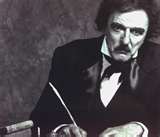
It is well known that Edgar Allan Poe lived a tortured life.  His writings reflect this dark reality.  There is one poem though that stands out as an exception.  The story behind the poem is that one day over the noisy din and clamor of the street Poe heard the clear ringing of a church bell.  Intrigued, he followed the noise and arrived at a church staffed by the Jesuits.  Going inside he asked the reason for the ringing of the bell.  He was informed that the bell was being rung to signal the Angelus – the traditional noon-time prayer which reflects on Mary’s “yes” to the announcement of the archangel Gabriel.  Inspired by this, he wrote the following poem.

“Hymn”

At morn–at noon–at twilight dim–
Maria! thou hast heard my hymn!
In joy and woe–in good and ill–
Mother of God, be with me still!
When the Hours flew brightly by,
And not a cloud obscured the sky,
My soul, lest it should truant be,
Thy grace did guide to thine and thee
Now, when storms of Fate o’ercast
Darkly my Present and my Past,
Let my future radiant shine
With sweet hopes of thee and thine. 

On tomorrow’s feast of the Immaculate Conception (Dec. 8th) and also on the upcoming feast of Our Lady of Guadalupe (Dec. 12th) the Church, once again, rings the bell for the Angelus in the midst of the deafening din and clamor of our world; calling us to remember the truth and the precious beauty of the hope that has been given our world by the incarnation of our Lord and by Mary’s simple “yes”.

Secular regimes, Christians, Muslims, Christmas and the call to be peacemakers

Below is another worthy reflection offered by the preacher to the Papal household – Fr. Rainero Cantalamessa.  It is taken from the “Blessed are the Peacemakers” chapter in “Beatitudes: Eight Steps to Happiness.”

The Pope’s message (Pope Benedict XVI’s message for World Day of Peace, 2007: “The Human Person, the Heart of Peace.”) dedicates a paragraph to the difficulty that we meet today in the relationship between religion and the secular world:

“As far as the free expression of personal faith is concerned, another disturbing symptom of lack of peace in the world is represented by the difficulties that both Christians and the followers of other religions frequently encounter in publicly and freely professing their religious convictions.  There are regimes that impose a single religion upon everyone, while secular regimes often lead not so much to violent persecution as to systematic cultural denigration of religious beliefs.  In both instances, a fundamental human right is not being respected, with serious repercussions for peaceful coexistence.”

There is a sign of this attempt to marginalize religious beliefs every December, namely, the campaign in America and various countries of Europe against the religious symbols of Christmas.  The reason cited is the desire not to offend people of other religions who live among us, especially Muslims.  But this is only a pretext.  It is actually part of secularized society – not the Muslims – who do not want these symbols.  Muslims have nothing against Christian Christmas, which they also honor.  In the Koran there is a sura dedicated to the birth of Jesus that is worth knowing about and that could encourage dialogue and friendship among religions. 

Behold!  The angel said:
“O Mary!  Allah giveth thee
Glad tidings of a Word
From Him: his name
Will be Christ Jesus. 
The son of Mary, held in honour
In this world and the Hereafter
And of (the company of) those
Nearest to Allah. 

She said: “O my Lord!
How shall I have a son
When no man hath touched me?”
He said: “Even so:
Allah createth
What He willeth:
When He hath decreed
A Plan, He but saith
To it, ‘Be,’ and it is!”     (The Holy Qur’an, sura 3)

We have reached the height of absurdity when some Muslims celebrate the birth of Christ and tell us that “it is not Muslims who do not believe in the miraculous birth of Christ,” while people who call themselves Christians want to make Christmas a winter festival populated only by reindeer and teddy bears.

We Christians cannot, however, let ourselves become resentful and argumentative with the secular world.  Alongside the dialogue and the peace among religions, there is another task for the peacemaker: peace between believers and nonbelievers, between religious people and the secular world that is dismissive or hostile to religion.  We need to give a reason, with firmness, for the hope that is in us but to do so, as the First Letter of Peter exhorts, “with gentleness and reverence” (1 Peter 3:15-16). 

“Reverence” in this case does not mean a human respect that keeps Jesus hidden to avoid arousing reactions.  It means a respect for the interior life that is known only to God and that no one can violate or force to change.  It does not mean putting Jesus aside but demonstrating Jesus and the gospel by our lives.  We only hope that equal respect will by shown by others toward Christians, which unfortunately has often been lacking up until now. 

Second Sunday of Advent: The call to personhood

John the Baptist knew exactly why the Pharisees and the Sadducees were seeking his baptism.  They were there because it looked good.  These religious authorities recognized that the people respected John and were following him.  The crowds were with John.  The Pharisees and Sadducees wanted to cash in on this.  Appearance-wise, public relations-wise it looked good to be there.  But their hearts were not there (in fact their hearts were far removed) and John recognized this. 

“When he (John) saw many of the Pharisees and Sadducees coming to his baptism, he said to them, ‘You brood of vipers!  Who warned you to flee from the coming wrath?  Produce good fruit as evidence of your repentance…”  (Matthew 3:6)

Despite the appearance these men were not open to the truth of what John was proclaiming.  They were not open to the call of conversion. 

They were hypocrites.  Here, it is helpful to note that the word “hypocrisy” has its origin in the theater arts.  Hypocrisy simply meant “to recite”, to represent something on a stage, but not truly “to be”.  A hypocrite is a pretender who wears a mask and not an authentic person.  In hypocrisy we cease being persons and we become characters. 

I recently read the following distinction which I find helpful:

A fictive character is nothing more than the corruption of an authentic person.  A person has a face; a character wears a mask.  A person is drastically naked; a character is only clothing.  A person loves authenticity and reality; a character lives a life of make-believe and artifice.  A person lives his or her own convictions; a character follows a script.  A person is humble and light; a character is cumbersome and unwieldy. 

Enlightened by this distinction between the person and the character it can be seen that John’s denouncing of the hypocrisy of the Pharisees and Sadducees is a denouncing of that temptation we all know; the temptation to live life merely as a character rather than as a person.  Fundamentally, it is the all-to-common temptation to be complacent and satisfied with being less than what we are indeed meant to be.  Further, John’s denouncing is also a pointing and a proclamation: a pointing to the coming messiah as the “true person”, “the fully authentic one” and a proclamation of the good news that it is by our encounter with this messiah who comes to us that we ourselves can cease being mere characters and begin to become persons. We can know authenticity. 

But, our spirits are weak and this journey to becoming an authentic person frightens just as it also beckons.  On our own we cannot achieve it but … we are not meant to make it alone.  We must remember that we are Christians and not stoics. 

“I,” says John “am baptizing you with water, for repentance, but the one who is coming after me is mightier than I.  I am not worthy to carry his sandals.  He will baptize you with the Holy Spirit and fire.” (Matthew 3:10)

It is the Holy Spirit – active in our lives and in the life of the Church – who calls us to authentic personhood.  The Holy Spirit is that fire that purifies just as it burns. 

The work of the Holy Spirit is indeed a true mystery in the life of each believer but its fruit is evident – going where we did not think we could go, achieving what we never believed we could achieve, giving of self like we never thought we could and becoming who we are truly meant to be. 

John’s denouncing of the hypocrisy of the Pharisees and Sadducees is both a pointing and a proclamation for us.  In his denouncing, this “greatest of all the prophets” points ahead to Jesus alone as the truly authentic person and he proclaims that it is in our encounter with him and in our baptism with the Holy Spirit that we, ourselves, also become persons and not merely just another character reciting on a stage. 

Below are found the lyrics for the classic Advent hymn, “On Jordan’s Bank, The Baptist’s Cry”.  Notice the call to authentic personhood that is only found in the advent of our Lord.  “…Stretch forth thine hand, to heal our sore, And make us rise to fall no more…”

On Jordan’s Bank, The Baptist’s Cry

On Jordan’s bank, the Baptist’s cry
Announces that the Lord is nigh;
Awake, and hearken, for he brings
Glad tidings of the King of kings!

Then cleansed be every breast from sin;
Make straight the way for God within;
Prepare we in our hearts a home
Where such a mighty Guest may come.

For Thou art our Salvation, Lord,
Our Refuge, and our great Reward.
Without Thy grace we waste away,
Like flowers that wither and decay.


To heal the sick stretch out Thine hand,
And bid the fallen sinner stand;
Shine forth, and let Thy light restore
Earth’s own true lovliness once more.

Stretch forth thine hand, to heal our sore,
And make us rise to fall no more;
Once more upon thy people shine,
And fill the world with love divine.


All praise, eternal Son, to Thee
Whose advent sets Thy people free,
Whom, with the Father, we adore,
And Holy Ghost, forevermore   
Cities for Life: Prayer for Life on Death Row

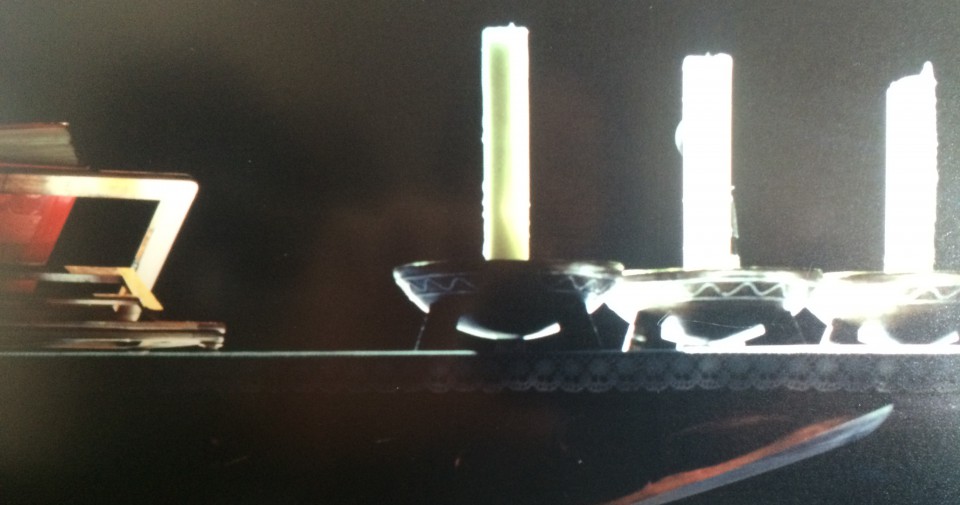
Every year on November 29/30 the Community of Sant’Egidio organizes “Cities for Life” – an international witness calling for the end of the use of the death penalty.  Cities around the world light up one of their city’s most notable landmarks (in Rome it is the Colosseum) as a visual witness calling for the respect for life in all circumstances.  Also there are various prayer services, conferences, forums and other forms of witness given on these days. 

Tonight at the Catholic Center (6:30 p.m.) we will host a “Prayer for Life on Death Row” as our way of joining in prayer with this international witness. 

Gentleness

“Here is my servant whom I uphold, my chosen one with whom I am pleased, upon whom I have put my spirit; he shall bring forth justice to the nations, not crying out, not shouting, not making his voice heard in the street.  A bruised reed he shall not break, and a smoldering wick he shall not quench, until he establishes justice on the earth; the coastlands will wait for his teaching.”  (Isaiah 42:1-3) 

Throughout these weeks of Advent we are given visions of the coming Kingdom of God and of the long awaited messiah who will usher in this kingdom.  Many of these visions that we hear from and reflect upon these next few weeks as Church are from the prophet Isaiah.  It is interesting to note how much the quality of gentleness figures into the description of the God’s Kingdom and the very character of the messiah himself.  Isaiah, again and again in a variety of ways, gives voice to this characteristic. 

I am currently reading “Beatitudes: Eight Steps to Happiness” by Rainero Cantalamessa.  In the chapter entitled, “Blessed are the Meek, for They shall inherit the Earth“, Cantalamessa offers these words which I believe are worthy of consideration and reflection:

…Violence is not just physical but mental as well.  Within ourselves, if we pay attention, there are almost continuous prosecutions conducted “behind closed doors.”

I said that in some English translations of the beatitudes, we find the word “gentle” instead of “meek”.  There is a nuance about meekness in that word that is important to understand.  Saint Paul made this recommendation to the Christians at Philippi: “Let all men know your forbearance” (Philippians 4:5).  The Greek word that is translated “forbearance” indicates a whole conglomeration of attitudes that range from clemency to the ability to yield and to show oneself friendly, tolerant and welcoming.  This is not far from what we mean today by “gentleness”.

It is necessary first of all to rediscover the human value of this virtue.  Gentleness is a virtue at risk even of extinction in the society in which we live.  Gratuitous violence in films and television, deliberately vulgar language and the competition to push beyond the limits of the tolerable in public venues in terms of violence and explicit sex has accustomed us to all kinds of expressions of brutality and vulgarity. 

Gentleness is a balm in human relations.  I am convinced that people would be much happier in families if they were a bit gentler in their actions, in their words and above all in their hearts.  Nothing spoils the joy of being together as much as rough treatment. 

“A soft answer turns away wrath, but a harsh word stirs up anger.” (Proverbs 15:1)

“A gentle tongue is a tree of life.” (Proverbs 15:4)

“A pleasant voice multiplies friends and softens enemies, and a gracious tongue multiplies courtesies.” (Sirach 6:5)

A gentle person leaves behind a wave of affection and admiration wherever he or she goes.  “What a nice person!” is the first thing others say as soon as he or she is out of earshot. 

In addition to the human value of this virtue, we need to rediscover the gospel value of gentleness, which goes beyond a good upbringing and good manners.  In the Bible the words “meek” and “gentle” do not convey a passive meaning of “submissive” but rather a sense of someone acting with respect, courtesy and mercy toward others. 

Paul places gentleness among the fruits of the Spirit when he says that the fruit of the Spirit is “love, joy, peace, patience, kindness, goodness, faithfulness, gentleness, self-control” (Galatians 5:22-23).  For Saint Thomas Aquinas, gentleness is one of the characteristics of charity.  It does not exclude righteous anger, but it is able to moderate anger in a way that does not prevent a person from evaluating circumstances with peace and justice.  The clearest sign of its presence is that we respectfully acknowledge whoever is before us as a human being, with his or her sensitivity and dignity, and that we do not consider ourselves superior. 


First Sunday of Advent: Advent as teacher

On Thanksgiving day I took some time to take stock of all the blessings I have known in my life and as I did this I came to realize that one of the truest blessings for me has been the gift of having good teachers throughout my life.  These teachers through their effort and patience have helped to instill within me a love for learning that continues to this day.  I can easily call to mind each of these men and women from elementary school at St. Mary’s to high school at Science Hill, classes at ETSU, seminary at Conception Seminary College and Mundelein Seminary and now teachers that I encounter in life.  A good teacher leaves a lifelong impression.   

As I reflected on these men and women who have taught me so much I came to realize that there are three things that each was able to do; three things that I would say are the mark of a good teacher.  A good teacher helps the student to be aware; secondly, helps the student to think for him or herself and finally, encourages the student, therefore helping the student to find hope.  

Mrs. Transou taught history at Science Hill High School when I was a student and she had a way of making history come alive in her classroom.  The lesson in her class was not just, “remember these dates and spit them out on the exam!” but rather, see and understand how all these events, all these movements, factors and ideas have worked through time to bring us to where we are now.  In other words, be aware of both where we find ourselves and of all that has led to where we are now. 

Secondly, a good teacher (in my estimation) does not just tell the pupil what to think but aids the student in discovering and developing within herself or himself the very tools and insights needed to think for oneself.  It is easy to tell a student what to think (it is also safer), but to help another person think for oneself takes great skill and also implies a fundamental respect for the student as a human person.  There is an appropriate time and space for the teacher to give information and knowledge but there is also an appropriate time and space for the teacher to back off in order to let the student wrestle with what has been given.  A wise teacher is able to navigate and hold this balance. 

Finally, a good teacher encourages and gives hope.  It must be noted though that this hope is not unrealistic wishful thinking about a fanciful future but rather, is a hope solidly grounded and achieved only through the student’s mastering of the first two lessons already discussed.  It is precisely because the teacher sees that awareness is developing and that the student’s own abilities to wrestle with knowledge and shape his or her own opinion is being gained that hope for the future is found.  The good teacher encourages through realism and offers a “hard-fought for” hope based in reality.

Now, the reason why I think I have been led into this reflection on the gift of teachers in life is the recognition that the season of Advent – these four Sundays leading up to Christmas – can be the best of teachers for us on living discipleship if we let it.  We all know how busy this time of year can be and, in one form or another, every year we hear the same admonition from the pulpit – “Don’t rush to Christmas; learn the lessons of Advent!”  Well … it is true.  So I will say it again this year.  Advent is the best of teachers and it has so much to offer us … if we let it.

“Be aware!”  Advent is not naive about the human condition.  If, in this season, we have visions of peace (…the mountain of the Lord’s house being established … swords being beaten into plowshares…) it is because we do not know peace.  There is violence in our world and in our hearts.  There is sin and suffering, there is pain, hardship and injustice.  We have become problems to ourselves.  We yearn for peace because we do not yet know peace.  In Advent there is the honest recognition that we find ourselves, in our world and in our psyches, lacking peace.  The world recently has been given two powerful images that truly illustrate for us the situation in which we find ourselves and that therefore are powerful Advent images worthy of our continued reflection throughout this season.  The images are those of the Chilean miners trapped underground and rescued and the three teenagers just rescued from being adrift at sea for over fifty days.  These two events have much to teach us if we take the time to listen… 

If we become aware, if we come to recognize the situation in which we find ourselves, then the question arises, “What are we going to do about it?”  In the light of God’s grace what can we do?  It is not just enough to dream of peace, to dream of a better world, we have to do something about it.  This is the whole thrust of the second reading.  “Wake up!” says St. Paul, “…throw off the deeds of darkness … put on the armor of light; let us conduct ourselves properly as in the day...”  The work of Advent, which is the work of the Kingdom, if it is to be authentic must first begin and take root in the heart of each disciple, in our very lives – with the aid of God’s grace.  Just as the world claims that the cry of “Save yourself” is the only real choice to make in life; we, as Christians formed in the truth of the gospel, need to stand up and say, “No, you are wrong.  There is another choice – the choice to love, to serve and to let go of self.  The choice that our Lord himself made and it is in this choice where true life is found!”

Finally, Advent gives us a hope and encouragement founded in the ultimate reality and recognition that before we ever even begin to turn to God; God has already come to us.  Even as we light the candles of the Advent wreath we realize that Christmas has already come.  Christ is teacher, but even more fundamentally, Christ is savior!

When we listen to the accounts of the miners trapped underground and the three youths lost at sea we hear a common theme that they all express – their faith in God gave them hope.  This is not a trivial statement nor should it be passed over unheedingly.  In Christ, we have the surest hope.

Advent is the best of teachers.  Come, Lord Jesus!   

Thanksgiving

As this is Thanksgiving please indulge me in my litany of thanks. 

I am grateful for my parents.  They gave my brothers and I so much and sacrificed for us in ways that we will never know.  I pray that my father rest in the peace of Christ.  I am grateful for the time I have with my mother – she continues to teach and inspire me. 

I am grateful for my brothers and all my family, even though I don’t see them much I know that they are there and that there is much that we share. 

I am grateful for my family that is the Church.  The beauty of this human, blessed, sometimes convoluted and confusing reality that is the Church continues to awe me.  The communion of the Church (pilgrim and triumphant) is indeed a holy mystery. 

I am grateful for the Catholic Center community – at which I now serve.  Yes, they continue to turn my hair gray(er) but there is much love.  I am very proud of our little community and the witness we give.

I am grateful for our seminarians and the men in our diocese who are discerning with whom I am privileged to work as vocation director.  It continually inspires me to see a fine group of men honestly discerning God’s call in their lives.

I am grateful for all the assignments I have been privileged to serve at as a priest – All Saints Church, Knoxville Catholic High School, Diocesan Youth Ministry, the Deaf community, St. Mary Church in Athens, St. Mary Church in Johnson City.  These communities have helped to form me in my priesthood and my discipleship.

I am grateful for the three bishops I have been privileged to serve with: O’Connell, Kurtz and Stika.  Each man is different in his skills and abilities and each one truly loves the Lord.

I am grateful for my priest friends in and outside the diocese – we are a mixed lot, but so were the original twelve! 

I am grateful for the Community of Sant’Egidio and all my friends in the community.  The community continues to introduce me to metro and transportation systems around the world – lol!  Most importantly they have helped to further introduce me to Christ and the basic truths of discipleship.  To quote a friend – the community helps me to live the resurrection.

I am grateful for my education and the gift of having great teachers all throughout my life.

I am grateful for my two pups – Bailey and Maxine – they remind me to be human.

I am grateful for all the good people I continue to meet in my life (christians, non-christians, believers, non-believers).  It is a reminder of the mystery of it all and the basic humanity we all share.

I am grateful for the beauty of East Tennessee and the beauty of our world – with all its peoples and cultures.

I am grateful for this country in which I was born – all the good it has achieved and all of its possibility.

I am grateful for all my friends (the youngest to the oldest, the nearest to the farthest).

I am grateful for my lord and master Jesus Christ, whom I have met and continue to meet.  I am grateful for how he will not let me go (sometimes even despite my hard-headedness).  I am grateful for the truth of the Catholic faith that continually leads me to a deeper encounter with Christ.  I am grateful for the truth of God who is Father, Son and Holy Spirit and who, in infinite mercy, invites us into communion.  “All creation is charged with the grandeur of God!”

I am grateful for the beauty of it all. 

I am grateful…


Christ the King: the choice to love

There is a story told about the temple mount in Jerusalem.  Before there was a temple.  Before there was even a city, there were two brothers that lived on either side of the hill.  One brother was wealthy yet he had no family.  The other brother had very limited resources but he had a large family.  One evening the wealthy brother was thinking of his brother on the other side of the hill.  “My brother,” he thought “does not have much and he has many mouths to feed and here I am with all my wealth.  I know what I shall do, every night under the cover of darkness I will take one sack of grain from my granary and carry it over to my brother’s and place it in his granary.”  Now, that very same evening the other brother was thinking of his wealthy sibling.  “My brother,” he thought “does not have the blessing of a family but he does have riches, I might as well help him grow even more in his riches.  I will take a sack of grain from my granary every night and carry it to my brother’s granary and place it with his grain.”  The brothers began to do this every night, all the time not saying a word to the other about what they were doing.  They were both amazed to see every morning that the number of sacks in their granaries remained the same although they had taken away a sack the previous evening.  This all continued for a while until one night they met one another at the crest of the hill carrying their sacks of grain.  Upon seeing one another they immediately realized what had been transpiring and they embraced one another in love.  And upon their embrace the voice of God sounded from heaven, “This is where I will build my house upon earth!” 

The moral of the tale, I believe, is this: when we make the choice to love and to give then we open our hearts that God might come in and make a dwelling place within us.  When we choose to love, God makes his home within and with us.

The latest Harry Potter movie is out and it is quite good but here I would like to share a quote from a previous movie (I cannot remember which one).  At one point in the whole story Dumbledore, the wise wizard, shares this insight with the young Harry, “Harry, it is neither our abilities nor our skills that define our character, rather it is the choices we make that truly define who we are.”  It is when we make a choice, when we exercise our will, that we truly define and determine who we are.

One of the beautiful aspects of our Christian faith tradition is the assertion and belief that every human person is made in the very image and likeness of God – the “imago Dei”.  As we proclaim this, it is understandable to then ask how we are made in God’s image.  Is it in our bodies, our physical makeup, that we image God?  No, because God is pure spirit and does not have a body.  Is it in our abilities or our skills that we image God?  Well, not really, our skills and abilities (no matter how impressive they might be) are not really all that much compared to the truth of God.  How are we made in God’s image?  Many of the greatest thinkers and saints of our faith tradition have answered this question by saying that it is in our will where we find most fully the image of God.  It is by our choosing the good that we show forth God’s image in which we are made.  When we, aided by God’s grace, make the choice to love, the choice to give, the choice to let go of self, the choice to forgive, to show mercy then we truly reveal the image of God in which we are made.  Our character is defined and determined by the choices that we make.

On this feast of Christ the King we proclaim that Christ is indeed Lord and King of all creation.  He is master.  Christ is the one who was dead but who is now risen and alive.  He is the firstborn.  As we proclaim Christ as King it is fair to ask what type of king do we have?  What is our king’s character?

The Gospel reading for this feast (Lk. 23: 35-43) tells us something truly important about the king we have and proclaim and it is revealed in the choice he made.  It is important to note that in the space of just eight verses, as our Lord is being crucified, he is presented with the same temptation three times; three times from different groups: the rulers, the Roman soldiers and the criminal hanging next to him.  The temptation is simple, “Save yourself!”  Rulers: “He saved others, let him save himself if he is the chosen one, the Christ of God.”  Soldiers: “If you are King of the Jews, save yourself.”  Criminal: “Are you not the Christ?  Save yourself and us.”  Three times this temptation is presented before our Lord and he could have chosen to save himself … but he did not.  Rather, he made a different choice.  He choose to obey the Father’s will; he choose to love both God and us, he choose to give of himself even unto death.

This is the king we have, the king that we proclaim and that we glorify!  Our character is defined by our choices and our king’s character is revealed in his choice here at the end of Luke’s gospel.  In the face of all the world’s temptation, Christ made a different choice – he made the choice of love.  Today we glorify Christ as king and as we do the same gospel truth is now put before us.  We all have the same temptation that our Lord faced and we know this.  In so many varied ways the world continues to put the same temptation before every disciple of Christ – sometimes subtly sometimes very blatantly.  “Save yourself!  Do not care about others.  Do not think of others.  Who cares about them?  Think only of yourself.  Save yourself!” 

But Christ our King shows us that there is a different way, a different choice can always be made.

When the world says, “Save yourself!” we, with God’s grace, can make a different choice.  We can make the choice to love.  We can choose to serve and to give of self.  We can forgive and offer mercy.  “Save yourself,” is not the only option we have.  Like Christ, our king, we can make the choice to love and to give.  We can always make the choice for the good regardless of the situation or the context in which we find ourselves.     

And the gospel truth is this: it is when we choose to love and to give (even when it seemingly leads to more hardship, more pain, difficulties and even death) that new and more abundant life is found and known.  More abundant than we could ever possibly imagine!  This is the truth of the cross and the resurrection – the seed of the glory of the resurrection is always found in the loss of the cross!

Today we celebrate Christ as King of Creation and we recognize the gospel truth that he puts before us.  As the world loudly proclaims, “Save yourself” to be the only option we know this not to be true.  Our king has shown us a different way.  There is always another choice that can be made – the choice to love – and it is in this choice that we find new and more abundant life.                   

Simple Gifts

Sorry that I have not written much lately.  I am learning that the job of Vocation Director entails a good bit of travelling.  I was in Leon, Mexico for Fr. Moises Moreno’s ordination (it was a great celebration) last weekend and tomorrow I leave for Philadelphia to visit our seminarians at St. Charles Borromeo.  I return Friday and begin a full weekend of activities.  Plus, I have had a head cold which began in Mexico and which has kept me running a little more sluggish than usual. 

Hopefully, by next week I will have a little more breathing space and will have something to offer. 

Anyway, below is a rendition of “Simple Gifts” by Yo-Yo Ma and Allison Krauss – a good preparation, I believe, for our upcoming national feast of Thanksgiving!  Peace.