• About The Alternate Path

The Alternate Path

~ Thoughts on Walking the Path of Christian Discipleship

The Alternate Path

Category Archives: Uncategorized

The Holy Face of Manoppello: some further thoughts on the scandal of the particular

02 Saturday Jul 2011

Posted by mcummins2172 in Uncategorized

≈ Leave a comment

Often, it seems to me, the particular and universal are held in stark opposition and contrast – especially in terms of religion.  Many would contend (both inside and outside of faith) that a devout Christian, Muslim, Jew or whatever cannot really have love and respect for others of a differing creed and therefore the most “Godly” thing to do would be to put away any form of restrictive creed in order to just love all people.  My own experience though leads me to believe differently.  The particular leads one to the universal rather than away from it and to try to achieve the universal without the particular is to end up with just a whispy sentimentalism. 

It is the fact that I am a disciple of Christ and that I have encountered the risen Lord that both leads me and challenges me to an authentic awareness of the dignity of all peoples (even those who stand opposed to me).

In his writings – specifically The Grammar of Assent – Blessed John Henry Cardinal Newman wrestles with the question of what truly leads one to make an assent of ones whole self (body, mind and spirit) to a proposition, any proposition.  In this he distinguishes two modes of apprehending: notional and real.  Both are needed, he asserts, in the attaining of the mature mind and each strengthens the other rather than being opposed.   

Notional apprehending occurs in the intellect in terms of abstractions and ideas.  This is the realm of philosophies and worldviews.  This type of apprehending is important.  Here is often where the guiding principles of our lives are thrashed out, determined and set forth. 

Real apprehending occurs in the particular and concrete.  My daily encounters, experiences, loves and loses are the stuff of this apprehending.  Here also is included memory and imagination.  It is important to point out that Newman demonstrates that it is real apprehension alone – as opposed to notional – which leads to passion and action in our lives. 

This coming Monday here in the United States we will celebrate the fourth of July – our national holiday.  It is often remarked that this country was founded on certain core principles and that our founding fathers fought for these principles.  This is true but it is important to note that these principles were held so dear precisely because they were enfleshed for the founding fathers in the lives of their children and fellow citizens.  “We the people … secure domestic tranquility, provide for the common defense, promote the general welfare and secure the blessings of liberty for ourselves and our posterity…” (Emphasis mine.)  The founding principles of this nation are rooted in the enfleshed lives of its people.  To separate the two is to fall into a form of national schizophrenia as Dr. King was able to recognize. 

Sorry, I digress a bit.  

The point is this: the real and the notional are not opposed and neither is the particular and the universal.  Yes, they rub against one another and sometimes even collide and seemingly contradict but that does not mean they are opposed. 

Further, to separate the two is a great disservice.  Either you are the most “particular of particularists” in terms of faith, creed, politics or whatever or you are the most ephemeral of universalists.  Neither extreme leads to the attaining of a mature mind.  Both, in my opinion, are copouts.

In his address to those at the shrine of the Holy Face of Manoppello (see previous post), Pope Benedict reminds us that when we serve the poor, the elderly, the disadvantaged and marginalized then we see the face of Christ and also in the face of Christ we recognize the face of all other people as brother and sister.  I can honestly say (real apprehension) that this is true. 

When I love my neighbor I learn how to love all people more deeply.  As I encounter and love Christ I am led to an authentic and true love for all people.      

The Holy Face of Manoppello and the scandal of the particular

02 Saturday Jul 2011

Posted by mcummins2172 in Uncategorized

≈ Leave a comment

God has a face! 

This is an utterly unique Christian claim.  Only Christianity makes this claim among all the world’s religions and it is a claim made possible only through Jesus Christ – who is God incarnate for us.

In many ways this claim hits on the scandal of the particular that is at the heart of our faith.  It is a scandal that can never quite be shaken from the Christian message although many have tried.  It is one thing to talk of “God” in a general and (often for many people) abstract sense.  But to really say that God walked among us, talked to us, ate, slept, laughed, that he even looked a certain way … well, this all starts to make quite a few people antsy and uncomfortable.  Often many people will scoff at this point and respond to what they determine to be the the naivety and even childishness of the faith but I have come to realize that this is often just a cover for their own nervousness. 

Why is this?

I think that part of it might be rooted in the old saying that the eyes are the windows to the soul.  When God is held in the abstract there are no eyes to look into.  Yes, God has his decrees and commandments and these bring life but there is still fundamentally a safe and semi-comfortable distance between me and the Divine.  But, when God has a human face all of a sudden the safe distance is gone.  It means that I have to look into his eyes (into his soul) and he into mine… 

Jesus Christ had a human soul.  This is a truth of the faith that was thrashed out in the great christological controversies of the Church.  The soul is that place of volition within the human person where will is found and choices are determined.  In the eyes of Christ we see the soul of someone who lived completely in obedience to the will of the Father.  For us, this is both beautiful and utterly terrifying at the same time.

When God is particular that means that God can and will make particular demands on me.  When God is abstract and general then it is enough to be guided solely by “principles” which are also easy enough to dismiss if one so determines.  But there is a trade-off.  A God in the abstract can neither warm nor inflame the heart.  Life remains quite cold.  Only in a God with a human face can we be caught up in the gaze of infinite love and tender mercy.

I just finished reading, “The Face of God: The Rediscovery of the True Face of Jesus” by Paul Badde.  In the book Badde carefully lays out the argument that the relic of the Holy Face of Manoppello (a small city in Italy) is in fact the veil laid over the burial shroud of Jesus in the tomb.  The image on the veil (seen above) matches that found on the Shroud of Turin and likewise is inexplicable in its making.  This veil is what came to be known over time as the Veil of Veronica.  It is all quite intriguing.

I am making no claims here in this blog.  I will leave that to those with more knowledge than I.  But I now hope that if one day (God willing) I am able to travel back to Italy I will plan on a visit to the now minor papal basilica of the Volto Santo di Manoppello. 

(On September 1, 2006 Pope Benedict XVI travelled to Manoppello to personally view the image and pray before it.  Two weeks after his visit he elevated the church to the level of a minor papal basilica.  Below is an excerpt of the Holy Father’s address on this occasion.)

What I can say for now is that this book has brought out for me the unique beauty of the particular that is at the heart of our faith as Christians. 

God has a human face!  It is Jesus Christ!

PILGRIMAGE TO THE SHRINE OF THE HOLY FACE IN MANOPPELLO (ITALY)

ADDRESS OF HIS HOLINESS BENEDICT XVI

Friday, 1 September 2006

Dear Brothers and Sisters,

First of all, I must once again say a heartfelt “thank you” for this welcome, for your words, Your Excellency, so profound, so friendly, for the expression of your friendship and for the deeply meaningful gifts: the Face of Christ venerated here, for me, for my house, and then the gifts of your land that express the beauty and generosity of the earth, of the people who live and work here, and the goodness of the Creator himself. I simply want to thank the Lord for today’s simple, family meeting in a place where we can meditate on the mystery of divine love, contemplating the image of the Holy Face.

…

During my pause for prayer just now, I was thinking of the first two Apostles who, urged by John the Baptist, followed Jesus to the banks of the Jordan River, as we read at the beginning of John’s Gospel (cf. 1: 35-37).

The Evangelist recounts that Jesus turned around and asked them: “”What do you seek?’. And they answered him, “Rabbi… where are you staying?'”. And he said to them, “Come and see” (cf. Jn 1: 38-39).

That very same day, the two who were following him had an unforgettable experience which prompted them to say: “We have found the Messiah” (Jn 1: 41).

The One whom a few hours earlier they had thought of as a simple “rabbi” had acquired a very precise identity: the identity of Christ who had been awaited for centuries.

But, in fact, what a long journey still lay ahead of those disciples!

They could not even imagine how profound the mystery of Jesus of Nazareth could be or how unfathomable, inscrutable, his “Face” would prove, so that even after living with Jesus for three years, Philip, who was one of them, was to hear him say at the Last Supper: “Have I been with you so long, and yet you do not know me, Philip?”. And then the words that sum up the novelty of Jesus’ revelation: “He who has seen me has seen the Father” (Jn 14: 9).

Only after his Passion when they encountered him Risen, when the Spirit enlightened their minds and their hearts, would the Apostles understand the significance of the words Jesus had spoken and recognize him as the Son of God, the Messiah promised for the world’s redemption. They were then to become his unflagging messengers, courageous witnesses even to martyrdom.

“He who has seen me has seen the Father”. Yes, dear brothers and sisters, to “see God” it is necessary to know Christ and to let oneself be moulded by his Spirit who guides believers “into all the truth” (cf. Jn 16: 13). Those who meet Jesus, who let themselves be attracted by him and are prepared to follow him even to the point of sacrificing their lives, personally experience, as he did on the Cross, that only the “grain of wheat” that falls into the earth and dies, bears “much fruit” (Jn 12: 24).

This is the path of Christ, the way of total love that overcomes death: he who takes it and “hates his life in this world will keep it for eternal life” (Jn 12: 25). In other words, he lives in God already on this earth, attracted and transformed by the dazzling brightness of his Face.

This is the experience of God’s true friends, the saints who, in the brethren, especially the poorest and neediest, recognized and loved the Face of that God, lovingly contemplated for hours in prayer. For us they are encouraging examples to imitate; they assure us that if we follow this path, the way of love, with fidelity, we too, as the Psalmist sings, will be satisfied with God’s presence (cf. Ps 17[16]: 15).

“Jesu… quam bonus te quaerentibus! – How kind you are, Jesus, to those who seek you!”. This is what we have just sung in the ancient hymn “Jesu, dulcis memoria” [Jesus, the very thought of you], which some people attribute to St Bernard.

It is a hymn that acquires rare eloquence in the Shrine dedicated to the Holy Face, which calls to mind Psalm 24[23]: “Such is the generation of those who seek him, who seek the face of the God of Jacob” (v. 6).

But which is “the generation” of those who seek the Face of God, which generation deserves to “ascend the hill of the Lord” and “stand in his holy place”?

The Psalmist explains: it consists of those who have “clean hands and a pure heart”, who do not speak falsehoods, who do not “swear deceitfully” to their neighbour (cf. vv. 3-4). Therefore, in order to enter into communion with Christ and to contemplate his Face, to recognize the Lord’s Face in the faces of the brethren and in daily events, we require “clean hands and a pure heart”.

Clean hands, that is, a life illumined by the truth of love that overcomes indifference, doubt, falsehood and selfishness; and pure hearts are essential too, hearts enraptured by divine beauty, as the Little Teresa of Lisieux says in her prayer to the Holy Face, hearts stamped with the hallmark of the Face of Christ.

Dear priests, if the holiness of the Face of Christ remains impressed within you, pastors of Christ’s flock, do not fear: the faithful entrusted to your care will also be infected with it and transformed.

And you, seminarians, who are training to be responsible guides of the Christian people, do not allow yourselves to be attracted by anything other than Jesus and the desire to serve his Church.

I would like to say as much to you, men and women religious, so that your activities may be a visible reflection of divine goodness and mercy.

“Your Face, O Lord, I seek”: seeking the Face of Jesus must be the longing of all of us Christians; indeed, we are “the generation” which seeks his Face in our day, the Face of the “God of Jacob”. If we persevere in our quest for the Face of the Lord, at the end of our earthly pilgrimage, he, Jesus, will be our eternal joy, our reward and glory for ever: “Sis Jesu nostrum gaudium, qui es futurus praemium: sit nostra in te gloria, per cuncta semper saecula”…

© Copyright 2006 – Libreria Editrice Vaticana
   

The Feast of the Body and Blood of Christ

25 Saturday Jun 2011

Posted by mcummins2172 in Uncategorized

≈ Leave a comment

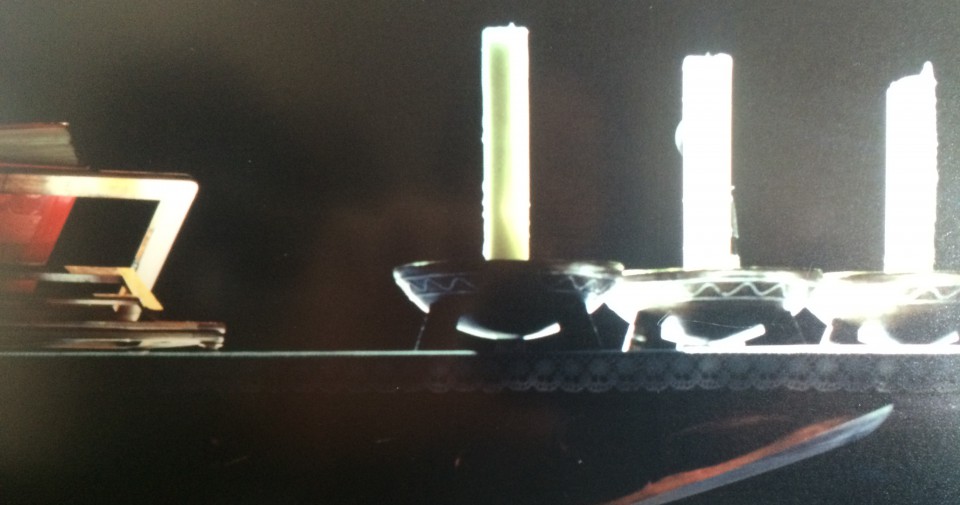
In Scripture we hear those words which stand at the center of today’s feast – “This is my body”, “This is my blood.” These words have echoed down through the centuries and will continue to the end of the world. Here in the most unique, continuous and particular way Christ is present to us, His Church. Not by our effort but by His gift – Christ is present in order to nourish and to strengthen us. Here, we receive the very life and love of God. The mystery of the Eucharist is beyond our comprehension and it is a mystery in the true sense of the term; not a puzzle to be figured out in order to then be discarded but a mystery to be lived and appreciated.

But as we reflect today we must remember another key component to this reality of the Eucharist; not only is Christ present in the Eucharist but He is present as a “broken body” and as blood “poured out”. Christ is not present in just any manner in the Eucharist but ultimately as a friend who gives his life for those whom he loves. To have a true awareness of the Eucharist means to be aware of this reality – Christ broken and poured out. And to live as a disciple means to receive this amazing grace and to strive to live the same reality as our Eucharistic Lord – to be broken and to be poured out for others. This is what fulfills the Church’s adoration of the Eucharist.

The Church guards the concreteness of Jesus’ words and venerates his body and blood in the bread and wine, so that He can still be encountered today. We could add that Jesus is not present in the bread and wine in just any way; he is present there as a “broken” body and wine “poured out”, that is, as the one who passes among men and women and does not save himself but gives his entire life, to the point of dying on the cross, until “blood and water” come out from his heart. He held back nothing of himself. He kept nothing for himself, to the very end. That broken body and that poured out wine are a scandal for each one of us and for the entire world, accustomed as we are to living for ourselves and holding back as much as possible of our lives. The bread and wine that are shown to us several times during the holy liturgy contrast with our love for ourselves, with the scrupulous attention we give to our bodies, and with the meticulous care we take to spare ourselves and avoid commitments and exertion. Nonetheless, they are given to us and continue to be broken and poured out so that we might be freed from our slaveries, so that our harshness may be transformed, our greed crumbled, and our self-love scratched. As the bread and wine draw us out of a world turned in on itself and condemned to loneliness, they gather us together and transform us into the one body of Christ. (Quote from Bishop Vincenzo Paglia)

Saint John Chrysostom once wrote, “If you want to honor the body of Christ, do not disdain it when it is nude. Do not honor the Eucharistic Lord with silken vestments, while outside of the church you neglect that other Christ who is naked and afflicted by the cold.” As disciples, we try to live these words, we know we fall short and we pray for forgiveness. Here we pray the words of the two disciples on the road to Emmaus as the risen Lord (his glory hidden) attempts to go a separate way. “Stay with us, because it is almost evening.”

The story of Emmaus (which is a Eucharistic story) reminds us that Christ has made himself humanity’s companion on our long journey through history. Christ walks with us – each and every one of us and us as Church. We are not alone. Christ is among us to comfort, to instruct, to correct; and when we fall short, to forgive. In this awareness of the Eucharist and in this awareness of our own frailty and weakness the most honest prayer we can utter is “Lord, stay with us, because it is almost evening.”

Mother Teresa: "be love for others"

23 Thursday Jun 2011

Posted by mcummins2172 in Uncategorized

≈ 1 Comment

In this video, Mother Teresa reflects on the joyful mystery of the Nativity. 

It is good to ask the question how might Christ be born through me and my actions? 

St. Josephine Bakhita: a doorkeeper saint

21 Tuesday Jun 2011

Posted by mcummins2172 in Uncategorized

≈ 1 Comment

It is a wonderful thing to develop a new friendship with a saint. 

A while back I came across a reference to St. Josephine Bakhita and following that I kept running into her again and again in my reading.  I have learned over time that when this happens it is something to pay attention to.  (It can be likened to the the saint tapping you on your shoulder; trying to get your attention.)  Eventually I took the hint and I began searching out information on this patron saint of the Sudan.

This last weekend I watched an Italian movie on her life. 

There are many things that strike me about Bakhita’s life but one of the most striking elements is her ability to open hearts.  (Because of this ability it is fitting that Bakhita served as the portress – or doorkeeper – of her community’s house for years.)

St. Bakhita endured great cruelty and prejudice during her life and she overcame it all but she also won over the hearts of many of the very people who caused her suffering.  She did not do this by clever argument or debate or vitriol but by the witness of love and the willingness to forgive.

This ability to open hearts is greatly needed in our world today.  Hearts are closed and fearful. 

We need the doorkeeper saints such as St. Bakhita and also Blessed Andre Bessette to teach us how to open hearts through the witness of love and humility. 

I pray that we as Church have hearts open to learn what the doorkeeper saints have to teach us. 


Christ the Tree of Life icon

18 Saturday Jun 2011

Posted by mcummins2172 in Uncategorized

≈ Leave a comment

I have just completed writing an icon that I began a year and a half ago. 

The term “write” is used in regards to icons rather than “painting” because icons are considerd visual theology. 

The icon is of Christ the Tree of Life.  I first encountered this icon through the Community of Sant”Egidio – both on the Community’s website and in its chapel in Rome.  I do not know how old the original image is but I find it be a very powerful and holy image. 

Christ sits surrounded by the twelve apostles.  Christ is the Word of life and the passage that is opened for contemplation is, “I am the vine and you are the branches.”  Some of the apostles hold open books while others hold rolled up scrolls.  To the open books I added scripture passages that speak to the reality of Christ living in us and our life in Christ: Colossians 3:14-15, Ephesians 3:20-21, 1 Corinthians 12;12-13, 1 John 4:14-15 and 1 Peter 1:22-23.

Christ surrounded by his apostles within the context of a “living tree” is, I believe, a wonderful image of Church.  All is focused on Christ who is central and the branches strain toward heaven and the Father.  The twelve apostles remind us of the apostolic nature of the Church – a mark of the Church often unreflected upon in our day.  Christ retains the wounds of the crucifixion as the resurrection experiences recalled in scripture testify.  Even in his glory Christ remains united to the suffering of his Church and all creation.    

In the original icon the Father was pictured at the top of the icon in human form and there was a more ornate and detailed depiction of the Holy Spirit in the form of a dove.  In the Orthodox Church there has been an instruction that the Father should not be pictured in human form and I agree with this.  We can depict the Son because of the incarnation – the “Word become flesh ” – and we can use the images of the dove, tongues of fire and celestial light for the Holy Spirit but the Father remains beyond our imagings.  In this icon I replaced the image of the Father with rays of light streaming from a central point.  The rays also draw our attention to that point. 

The Holy Spirit unites the Father and the Son.  I simplified the image of the Holy Spirit in this icon.  The living reality of the Church gathered around Christ also exists and grows under the care and empowerment of the Holy Spirit. 

Trinity Sunday: God as Trinity and how we live our lives

17 Friday Jun 2011

Posted by mcummins2172 in Uncategorized

≈ Leave a comment

Reflecting on the reality of baptism, Diadochus – a theologian of the early church – writes, “Before a person comes to be baptized, grace is at work, from without, encouraging the soul toward the good, while Satan is at work, from within. After baptism, the contrary is the case. Grace works from within and the demons from without. These continue their work, and work even more evilly than before, but not as present together with grace. The only way they can work is through the promptings of the flesh.”

Today, we as church, reflect on that most profound of mysteries – the Trinity. As Christians we believe and we profess that God is one and that God is three. We are not Unitarians and neither are we Jehovah Witnesses – both of which deny the Trinity. Through the revelation of Jesus Christ and the outpouring of the Holy Spirit we have been brought to the realization that Father, Son and Holy Spirit are one God.

I believe that the quote by Diadochus concerning baptism can help bring us to the only point by which we can begin to contemplate this mystery – from within. The mystery of the Trinity is not a problem to be objectively solved or a riddle that can be puzzled through by our wits alone. The Trinity is a mystery to be lived. This mystery demands the involvement and engagement of the whole person – mind, body and spirit.

God began the invitation to this mystery. In John’s gospel we are reminded that, “God so loved the world that he gave his only Son … For God did not send his Son into the world to condemn the world, but that the world might be saved through him.” (John 3:16-17) Through God’s love and God’s initiative (as known in baptism) we are brought into communion with God and into the relationship that is the Trinity.

It is here, in this reality of lived relationship, that we begin our awareness of God as three. Paul – in his second Letter to the Corinthians – writes, “Mend your ways, encourage one another, agree with one another, live in peace, and the God of love and peace will be with you.” (2 Cor. 13:12) Paul firmly connects how we live our lives with the presence of God: “Mend your ways … and the God of love and peace will be with you.” Awareness and knowledge of God can only begin from within. Paul is calling for a sincere examination of conscience here. Are we living our lives in such way that Father, Son and Spirit are welcome to come, reside and be present?

In God’s great revelation to Moses the Lord defines himself by proclaiming, “The Lord, the Lord, a merciful and gracious God, slow to anger and rich in kindness and fidelity.” (Ex. 34:6) Again, awareness and knowledge of God can only begin from within. If God defines himself as “merciful” and “slow to anger and rich in kindness and fidelity” then why would he make himself present and known in a heart that lacks these qualities?

God has taken the initiative and invites us into relationship with himself as Father, Son and Holy Spirit but this mystery, to be authentically known, must be lived.

It has to begin from within; from how we choose to live our lives.

God’s grace – restoring this "old house"

14 Tuesday Jun 2011

Posted by mcummins2172 in Uncategorized

≈ Leave a comment

We are taking a few days this week to do some renovation work here at the Catholic Center.  We are tearing down wall paper, repainting some rooms, doing some minor electrical and general repair work, planting some pompous grass and doing other yardwork. 

Yesterday we did quite a bit of work and have more to do the next couple of days.  But it is coming along. 

Looking at the stripped down walls and the ladders propped here and there I have been reminded of an insight of one of my professors in seminary (Sr. Sara Butler) on the Catholic understanding of the work of God’s grace in our lives: grace rather than being seen as just a “covering over” of self and sin is in fact better likened to the action of renovating a house from within.

God’s grace works from the inside out and, bit by bit in God’s time, it restores and reclaims the whole person – scrubbing down and fixing what needs to be fixed.  All done, in order to make of our whole selves a worthy and welcoming home for the Lord to come and dwell within.   

God wants all of who we are restored to full relationship with him and nothing less, it seems, will do. 

I find this quite comforting.   

Pentecost continued: St. Anthony of Padua

13 Monday Jun 2011

Posted by mcummins2172 in Uncategorized

≈ Leave a comment

On June 13th the Church celebrates the feast of St. Anthony of Padua.  This year’s feast falls the day after our celebration of Pentecost and I found the excerpt from a sermon by the saint offered in today’s Office of Readings to be a great reflection on how to keep the outpouring of the Holy Spirit active in our lives.  Below is the excerpt.

From a sermon by Saint Anthony of Padua, priest

Actions speak louder than words

The man who is filled with the Holy Spirit speaks in different languages. These different languages are different ways of witnessing to Christ, such as humility, poverty, patience and obedience; we speak in those languages when we reveal in ourselves these virtues to others. Actions speak louder than words; let your words teach and your actions speak. We are full of words but empty of actions, and therefore are cursed by the Lord, since he himself cursed the fig tree when he found no fruit but only leaves. Gregory says: “A law is laid upon the preacher to practice what he preaches.” It is useless for a man to flaunt his knowledge of the law if he undermines its teaching by his actions.

But the apostles spoke as the Spirit gave them the gift of speech. Happy the man whose words issue from the Holy Spirit and not from himself! For some men speak as their own character dictates, but steal the words of others and present them as their own and claim the credit for them. The Lord refers to such men and others like them in Jeremiah: So, then, I have a quarrel with the prophets that steal my words from each other. I have a quarrel with the prophets, says the Lord, who have only to move their tongues to utter oracles. I have a quarrel with the prophets who make prophecies out of lying dreams, who recount them and lead my people astray with their lies and their pretensions. I certainly never sent them or commissioned them, and they serve no good purpose for this people, says the Lord.

We should speak, then, as the Holy Spirit gives us the gift of speech. Our humble and sincere request to the Spirit for ourselves should be that we may bring the day of Pentecost to fulfillment, insofar as he infuses us with his grace, by using our bodily senses in a perfect manner and by keeping the commandments. Likewise we shall request that we may be filled with a keen sense of sorrow and with fiery tongues for confessing the faith, so that our deserved reward may be to stand in the blazing splendor of the saints and to look upon the triune God.

St. Anthony, pray with us and for us!

Pentecost Sunday with a touch of green

11 Saturday Jun 2011

Posted by mcummins2172 in Uncategorized

≈ Leave a comment

Here is a thought experiment: picture yourself as a parent looking upon your child.  (For those of you blessed with this role this should be easy.)  As you look upon your child imagine all the love and care that is present in your heart.  Now, multiply this by infinity.  This is what God feels when God looks upon you and me – love multiplied by infinity.  Yet, this depth of love (God to us and us to one another) is so easy to overlook and even forget in the rush and stumblings of life. 

Today we celebrate Pentecost Sunday – the coming of the Holy Spirit upon the Church.  In our western Christian tradition we often associate the color red with the Holy Spirit (i.e. the “tongues of fire” that come upon those gathered for Pentecost).  Red is indeed a powerful color.  It is a color that flashes and holds ones attention.  In the Orthodox Christian tradition another color associated with the Holy Spirit is green.  If we reflect here for a moment this makes perfect sense.  In the creed we profess our belief in the Holy Spirit as “the Lord, the giver of life”.  Here, in East Tennessee, all we have to do is look around at the myriad shades of green to recognize it as indeed a color which signifies life.

But, just as the depth of love is so present that it is easy to overlook in our lives so is the presence of green easy to take for granted (until, that is, life becomes dry). 

I share this because I believe it is helpful when we think of the Holy Spirit to allow some shadings of green into the equation.  I believe this allowance may expand our thoughts of how God works and even enable us to come to a deeper awareness of true power. 

Today, in our society we like our heroes and superheroes.  It seems that every other movie marketed out of Hollywood is based on some comic book hero (i.e. Superman, Spider-man, Batman, X-men, Thor, Green Lantern) and the plot line remains the same.  In all the scenarios power is strength and determination and it is exercised through brute force and clashes that are anything but subtle and easily overlooked.  In fact, it seems that in every story the whole world both hangs in the balance and holds its collective breath as it stands by and watches the great clash … just hoping for the best.  Power is strength and it forces attention.

But, is this how God (the creator of all and also the “all-powerful”) works?  It does not seem so.  At least, this is not my reading of Christ hanging on the cross.  God’s power does not need to point to itself nor force attention, it seems.  Powerful nations have clashed with great armies throughout the centuries but can any nation cause the sun to rise or set?  Can any nation or science create from nothing even the smallest form of life?  It seems that God’s power is humble – not found in clash and conflict demanding attention – but in love and in life.  That which is easily overlooked.

The gospel today tells us that the disciples had locked themselves in the room out of fear.  But that Christ, risen from the dead, came to them demonstrating a different form of power than that of the world.  This is not a power that points to itself and demands attention but rather one easily overlooked yet it is the power that overcomes fear and brings life and love.  Then Christ breathed on the Church and said, “receive the gift of the Holy Spirit.”  God’s own power, God’s own Spirit – so much at work, so present and yes, so easily overlooked.

“Come, Holy Spirit and enkindle in us the fire of your love!”  

← Older posts
Newer posts →
Follow The Alternate Path on WordPress.com

Enter your email address to follow this blog and receive notifications of new posts by email.

Previous Posts

  • May 2026
  • April 2026
  • March 2026
  • December 2025
  • November 2025
  • August 2025
  • April 2025
  • February 2025
  • January 2025
  • December 2024
  • August 2024
  • July 2024
  • June 2024
  • May 2024
  • April 2024
  • March 2024
  • February 2024
  • January 2024
  • December 2023
  • November 2023
  • October 2023
  • August 2023
  • July 2023
  • May 2023
  • February 2023
  • January 2023
  • December 2022
  • August 2022
  • July 2022
  • April 2022
  • January 2022
  • December 2021
  • September 2021
  • August 2021
  • July 2021
  • May 2021
  • April 2021
  • January 2021
  • December 2020
  • November 2020
  • October 2020
  • August 2020
  • July 2020
  • May 2020
  • April 2020
  • March 2020
  • February 2020
  • December 2019
  • October 2019
  • September 2019
  • August 2019
  • July 2019
  • May 2019
  • April 2019
  • March 2019
  • February 2019
  • December 2018
  • November 2018
  • October 2018
  • August 2018
  • July 2018
  • June 2018
  • April 2018
  • March 2018
  • February 2018
  • January 2018
  • December 2017
  • November 2017
  • September 2017
  • August 2017
  • July 2017
  • June 2017
  • May 2017
  • April 2017
  • March 2017
  • February 2017
  • January 2017
  • December 2016
  • November 2016
  • October 2016
  • September 2016
  • August 2016
  • July 2016
  • June 2016
  • May 2016
  • April 2016
  • March 2016
  • February 2016
  • January 2016
  • December 2015
  • November 2015
  • October 2015
  • September 2015
  • August 2015
  • June 2015
  • May 2015
  • April 2015
  • March 2015
  • February 2015
  • January 2015
  • December 2014
  • November 2014
  • October 2014
  • September 2014
  • August 2014
  • July 2014
  • June 2014
  • May 2014
  • April 2014
  • March 2014
  • February 2014
  • January 2014
  • December 2013
  • November 2013
  • October 2013
  • September 2013
  • August 2013
  • July 2013
  • June 2013
  • May 2013
  • April 2013
  • March 2013
  • February 2013
  • January 2013
  • December 2012
  • November 2012
  • October 2012
  • September 2012
  • August 2012
  • July 2012
  • June 2012
  • May 2012
  • April 2012
  • March 2012
  • February 2012
  • January 2012
  • December 2011
  • November 2011
  • October 2011
  • September 2011
  • August 2011
  • July 2011
  • June 2011
  • May 2011
  • April 2011
  • March 2011
  • February 2011
  • January 2011
  • December 2010
  • November 2010
  • October 2010
  • September 2010
  • August 2010
  • July 2010
  • September 2008
  • August 2008
  • April 2008
  • March 2008
  • February 2008
  • January 2008
  • December 2007
  • November 2007
  • October 2007
  • September 2007

Popular Posts

  • thealternatepath.org/wp-c…
  • thealternatepath.org/wp-c…
  • thealternatepath.org/wp-c…

Blog at WordPress.com.

  • Subscribe Subscribed
    • The Alternate Path
    • Join 156 other subscribers
    • Already have a WordPress.com account? Log in now.
    • The Alternate Path
    • Subscribe Subscribed
    • Sign up
    • Log in
    • Report this content
    • View site in Reader
    • Manage subscriptions
    • Collapse this bar