St. Teresa Benedicta of the Cross (Edith Stein)
09 Tuesday Aug 2011
Posted in Uncategorized
09 Tuesday Aug 2011
Posted in Uncategorized
07 Sunday Aug 2011
Posted in Uncategorized
01 Monday Aug 2011
Posted in Uncategorized
“Blessed are the merciful, for they will receive mercy.” (Mt. 5:7)
30 Saturday Jul 2011
Posted in Uncategorized
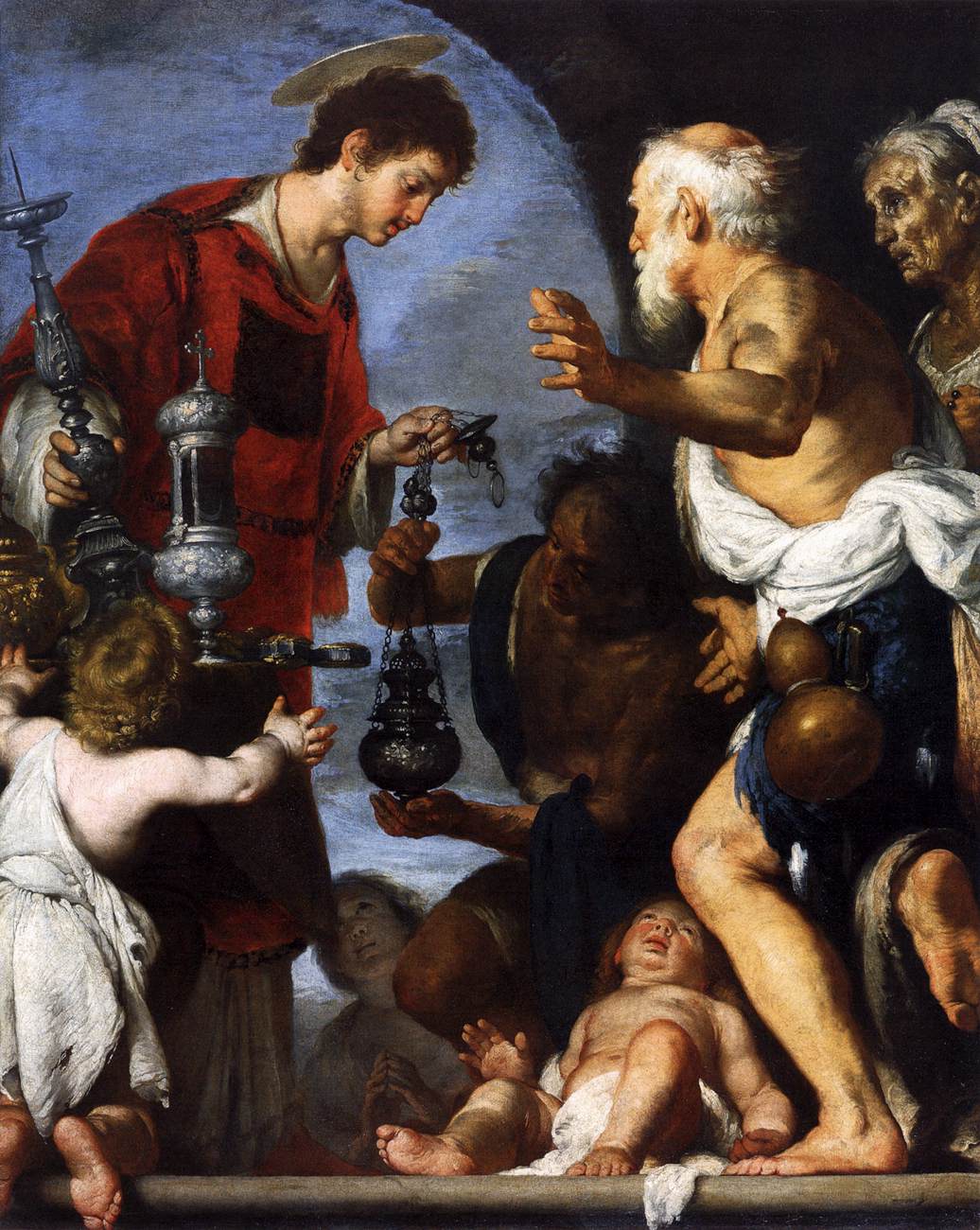
God does indeed care for us, God does have a heart that can be moved with pity and it is through this that we also realize how we, in turn, are to care for one another as disciples of Christ.
28 Thursday Jul 2011
Posted in Uncategorized
I spent all morning in the ER with her.
We believe and hold that our suffering can be a sharing in the suffering of Christ and that God himself has entered into the suffering of humanity. Therefore we have a hope that moves beyond fear. Because of this Christianity is not naive about suffering – even finding a grace within it.
14 Thursday Jul 2011
Posted in Uncategorized
As we face the social issues of our day (i.e. marriage and gay rights, the dignity of women and the priesthood) people both without and within the Catholic Church often question the teaching of the Church and ask why doesn’t the Church just change its teaching to be more in step with the times. Another area which may not be so pressing as far as secular culture is concerned but is of unique importance among the different branches of Christianity and, at least from my experience, often an issue on the local level in the parish is that of sharing communion with other Christians. Why does the Catholic Church teach what it does in these regards; often to the marked disagreement, frustration and even open hostility of others?
I would like to offer a reflection on this issue and from the start I believe it important to state that the position of the Catholic Church in these matters is not so much about being against others (although it is often interpreted and portrayed this way) as it is about the Church being true to its own identity and authority and, in fact, actually recognizing the limits of the authority that it has been given.
I would like to explain by beginning with an allusion to the tragic figure of Denethor in J.R.R. Tolkein’s “Lord of the Rings” trilogy.
Denethor is the Lord of Gondor but it is specified throughout the trilogy that the ruling house that Denethor and his sons Boromir and Faramir represent is meant to be a House of Stewards. The House of Anarion cannot claim the throne, in fact their purpose is to hold the kingdom until the return of the true king. But Denethor oversteps his bounds – forgetting the role of the steward and claiming the authority that belongs to the king alone – and as Gondor is besieged and seems to be falling, he himself falls into despair.. Denethor fails to recognize the true king himself (Aragorn) when he is present before him while only seeing doom and destruction. Finally, in this nihilistic madness Denethor attempts to set fire to his one remaining son Faramir. When this is thwarted he leaps upon the pyre and destroys himself.
Right before this act of suicide Denethor despairs in the fall of the city and the loss of his power, “I would have things as they were in all the days of my life and in the days of my longfathers before me: to be the Lord of this City in peace, and leave my chair to a son after me, who would be his own master and no wizard’s pupil. But if doom denies this to me, then I will have naught: neither life diminished, nor love halved, nor honor abated.”
In an attempt to break through the madness, Gandalf challenges the despairing Denethor with a summons back to truth and clarity, “To me it would not seem that a Steward who faithfully surrenders his charge is diminished in love or in honor…” Tragically, Denethor cannot recognize this.
Later, in contrast to Denethor’s folly and miserable end, we are given the image of the true king: “But when Aragorn arose all that beheld him gazed in silence, for it seemed to them that he was revealed to them now for the first time. Tall as the sea-kings of old, he stood above all that were near; ancient of days he seemed and yet in the flower of manhood; and wisdom sat upon his brow, and strength and healing were in his hands, and a light was about him. And then Faramir cried: “Behold the King!”
The Catechism of the Catholic Church offer these words concerning the sacraments:
“Adhering to the teaching of the Holy Scriptures, to the apostolic traditions, and to the consensus … of the Fathers,” we profess that “sacraments of the new law were … all instituted by Jesus Christ our Lord.” (CCC 1114)
Sacraments are “powers that come forth” from the Body of Christ, which is ever-living and life-giving. They are actions of the Holy Spirit at work in his Body, the Church. They are “the masterworks of God” in the new and everlasting covenant. (CCC 1116)
As she has done for the canon of Sacred Scripture and for the doctrine of the faith, the Church, by the power of the Spirit who guides her “into all truth,” has gradually recognized this treasure received from Christ and, as the faithful steward of God’s mysteries, has determined its “dispensation.” Thus the Church has discerned over the centuries that among liturgical celebrations there are seven that are, in the strict sense of the term, sacraments instituted by the Lord. (CCC 1117)
The Catholic Church is the “faithful steward of God’s mysteries.” The Church is neither the owner nor the one who holds authority over the sacraments. This authority rests with Christ alone – the one who instituted the sacraments. The quotes above clearly demonstrate that the Catholic Church did not invent the sacraments of its own accord but rather “gradually recognized this treasure received from Christ.”
When the Catholic Church approaches the issues of what marriage is, who is called to serve the community in ordained ministry or what must the authentic reception of communion entail it does so from the understanding of a steward and not that of the creator. This is an important distinction between the Catholic Church and other Christian faith traditions and also secular society – both of which approach these issues from the standpoint of having legitimate authority over these realities.
This is critical in understanding the Catholic Church’s approach to these realities. Despite what is often interpreted – that the Catholic Church does have the authority and can change these teachings but chooses not to because we are opposed to one group or another – the Church, in fact, cannot change the sacraments precisely because it lacks the authority to change them.
Here, I would like to make a theological note of distinction that also factors into this issue. When people often wonder why the Catholic Church does not allow female ordained ministers while many Protestant traditions do or why the Church is opposed to redefining marriage while other faith traditions do or why the Catholic Church does not celebrate open communion while others do they do not realize that they are in fact comparing apples to oranges.
One of the moves of the Protestant reformation was to redefine and also reduce the number of sacraments and, in essence, transfer the authority of who governs the sacraments to the church community. This is an aspect of Protestant ecclesiology and with this understanding it is perfectly understandable to then adjust the sacraments to different times and needs. With this ecclesiology one can ordain women, open communion to all or alter marriage because the authority does rest (in this scenario) with the church community.
This is not the Catholic understanding and whether one agrees with it or not (I personally agree) you cannot authentically equate the Protestant approach with the Catholic as the two are coming from different starting points.
But, often we do not recognize this and therefore many people insist on comparing apples and oranges thinking all the time that both are apples.
The Catholic Church must be true to its origins and foundation – to do otherwise would be to enter into a schizophrenic state which would ultimately lead only to despair and madness.
The Catholic Church is, in these regards, first and foremost, “the faithful steward of God’s mysteries.”
The Church, guided by the Holy Spirit, will not allow itself to fall into Denethor’s folly.
09 Saturday Jul 2011
Posted in Uncategorized
I recently heard of an interesting TV commercial that had been put out by Catholic Charities in the Philippines a while back. The commercial begins with a businessman walking into a crowded subway. He is rushed and he is carrying his lunch in a bag. As he is hurrying to catch his train he notices a homeless man sitting on the ground in a corner. The man is dirty and obviously in need. At first the businessman makes to walk on by but then he stops, walks over to the homeless man and gives him his sack lunch.
Now, a second scene – it is the next day – once again, the businessman enters the busy subway station carrying his lunch and again he sees the homeless man. He tries to walk by but once more his conscience calls and he heads over to give his lunch to the homeless man. Things change though and this time the homeless man’s face changes to that of the face of Christ.
Finally, a third scene. This time we see from the viewpoint of the homeless man sitting in the subway station watching as people rush by. We see the businessman once again coming forward with his lunch but the face of the businessman changes to that of the face of Christ.
In this short commercial we find a fine portrayal of both the dynamic of Christian giving and receiving and also the dynamic of encounter with Christ and transformation in the Christian life.
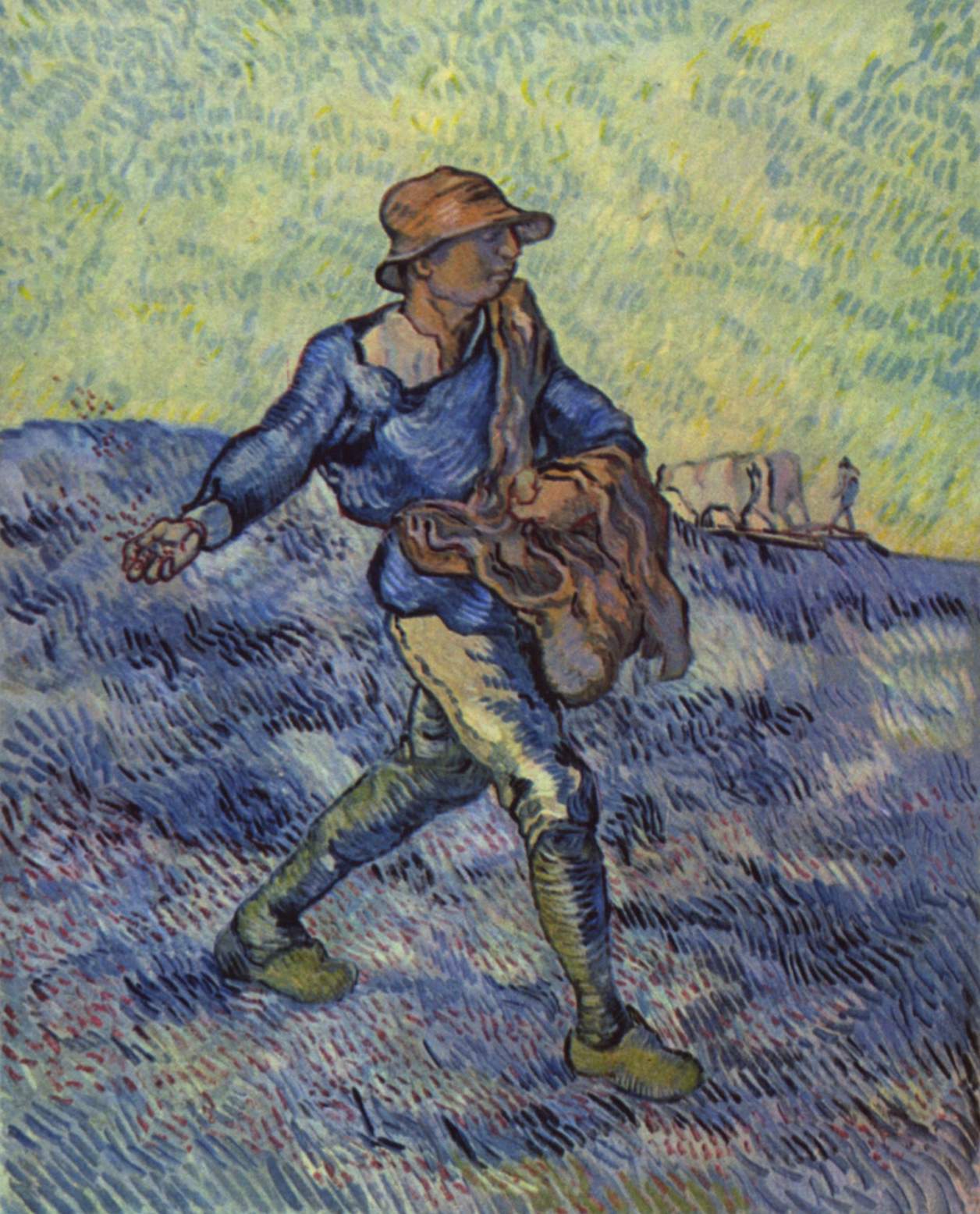
An interesting point of reflection regarding the parable of the sower and the seed that we are given in this Sunday’s gospel (Mt. 13:1-23) is the almost remarkable carelessness of the sower. He certainly does not discriminate in the scattering of the seed.
The sower goes out to sow and, with broad sweeping arms, copiously disseminates his seeds. He does not seem concerned about selecting the terrain, since many of the seeds are lost. Only those seeds that fall on good earth bear fruit. Jesus, even if he does not say it, is comparing himself to the sower. His generosity in sowing seeds is entirely his, not ours. The sower does not calculate nor measure his generosity. All the more! He seems to place his faith also in trampled soil – rocky soil as much as in the yielding, ploughed earth. The sower tosses his seed even in the bad earth, hoping that it will take root and sprout. The whole range of soils is important for the sower. In fact, there is no part of the soil that he does not consider worthy of attention. Not a single portion is discarded. The terrain is the world, even that part of the world that is each one of us. It is not difficult to recognize in the diversity of the soils the complexity of situations in the world and in each one of us. Jesus does not want to divide men and women in two categories, those who represent fertile soil and those who represent arid soil. (Quote taken from Bishop Vincenzo Paglia)
There is, at heart, a mystery to the encounter with Christ and the movement of God’s gratuitous grace in our lives. This encounter is something that can neither be programmed nor predicted – although, we, as church, often try our hardest it seems. The inner terrain of each of our hearts seems to be the determining factor when the possibility of encounter with Christ draws near. This openness to possibility, this being “good soil” can occur anywhere and at anytime – from the pew of a church to a busy subway station.
It is helpful to note that parables are not meant to be likened to engineering manuals which give precise directions and formulations. Rather, the dynamic of the parable is better likened to an invitation to a feast. We receive the invitation, we go and enter into the feast and it is within the feast that we encounter others and form relationships; all of a sudden there are new possibilities which we might never have expected and, in all of this, we come to know more deeply and live more authentically the mystery of Christian discipleship. We are meant to “sit” in the parable and let it speak to us rather than trying to pry and wring out its truths by our own effort. Through this parable of the sower and the seed our Lord is inviting us into the mystery of encounter with himself and the mystery of keeping our hearts open and cultivated.
The commercial noted above is powerful by the very fact that it does not need nor seek to explain anything. It just portrays a moment. A man made a decision and in that decision the Kingdom was able to break through and there was transformation.
A parable is an invitation. “A sower went out to sow…”
08 Friday Jul 2011
Posted in Uncategorized
Below is a good reflection offered by Pope Benedict XVI on what it means to be “Church”.
In an age and time that seeks to separate and isolate people from one another, one of the greatest witnesses we can give as Church is life lived in communion and unity.
05 Tuesday Jul 2011
Posted in Uncategorized
One might wonder why a professed celibate is writing on sex and sexuality. After all, isn’t this kind of out of my element?
Well, a couple of things first. Sexuality and intimacy are not just genital. This is being realized and comprehended more and more in the development of psycho-sexual understanding. The desire for intimacy, relationship, communion, creativity and living passionately are all part of the human makeup and are also linked into sexuality. Professed celibates promise to forego marriage and therefore the possibility of a committed relationship with another person thus denying, for the sake of the Kingdom, genital expression of intimacy and love. But these other components are not meant to be denied nor cut off from the celibate’s life. Therefore the celibate can talk authentically about intimacy and relationship as well as communion, creativity and living life passionately. In fact, the challenge and calling of the celibate is to fully live these dimensions while foregoing the genital expression of sexuality. Further, I would add that the celibate has a needed and unique perspective to share.
My second thought comes out of this unique perspective that the celibate has and it is specifically an awareness that comes out of negation. Authentic knowledge does not come just from participation but also negation. Here, I would like to use a comparison.
A number of people reading these words have probably gone on a diet at one time or another or have participated in some form of fasting from food. My experience when I go without food (and I do not believe that I am unique in this) is that it is exactly when I go without that I realize how deeply – often on a subconscious level – food has an influence and even control in my life. One day when I was fasting I was travelling and therefore walking through an airport terminal; now I had been in terminals hundreds of times prior to this but it was on this day that I first really came to see how food (in a plethora of options) is thrown at the traveller in these terminals. Food is everywhere in the airport terminal and it often works on a subconscious level! My experience this day in the terminal allowed for this (at that time) new awareness of how food operates in life and it was the fasting that provided the context for this awareness to come forth.
In fasting one starts to realize how food can operate on a variety of levels in life, i.e. as a coping mechanism to deal with stress, loneliness or anger. This is more on the negative side of things. But, also one becomes more aware of the positive dimensions of food; i.e. the value of a leisured non-rushed simple meal or the experience of joy that comes from a wonderful meal shared with friends where relationship is also nourished.
Using this common example of dieting or fasting as a basis and recognizing the authentic knowledge acquired through negation, it can then be said that the renunciation which the celibate undertakes in regards to sexual expression also leads to an authentic and valid knowledge about the dimensions of sex and how it also operates in our lives (often unconsciously) both negatively and positively. You start to see how sex can and is used in our day as a coping mechanism for such things as stress, loneliness and pain. You also gain a greater awareness and regard for the truly positive nature of the authentic sex act as a unique union of two persons that connects with the very mystery of creation itself and bringing forth new life.
So, I believe that the celibate does have a unique perspective and authentic knowledge to share regarding sex and sexuality.
With all this being said I would like to share some insights that I have gained regarding sex and sexuality in our culture.
“We are a nation that is addicted to sex.” This was an insight shared by Msgr. Steven Rosetti in our recent summer priest gathering for the Knoxville and Nashville dioceses and I am in full agreement. “Addiction” is a heavy word and it is not used lightly. Addiction by its very definition implies both a serious lack of control and also limited to no true freedom in choices that are made. This addiction must be acknowledged as well as the factors that promote “sexuality as addiction” and the use of sexuality as a coping mechanism. Also, the powers that benefit from sex as addiction need to be brought to light and held accountable. Sex sales; there is money to be made in sex as addiction – a great deal of money in fact. It seems to me that one of the primary sins behind the selling of sex in our day – that needs to be ranked in there with impurity and the objectification of the human person – is just plain old-fashioned greed.
The addiction to sex in our culture and time has a particular voyeuristic strain to it. We all buy into this. Whether it is the lone figure slipping into the peep show or society being amused by the latest indiscretion of a political figure, clergyman or celebrity. We fixate on this. Pornography is an epidemic in our time whether it is visual (appealing to men) mainly via the internet or verbal (appealing to women) via gossip and “romance” novels. I believe that this voyeuristic strain to our culture’s addiction to sex has something to say about a deep isolation being experienced in our society. We are cut off from one another and this is becoming even more so. We want relationship but we do not know how to go about it. We want connection with others yet we substitute this with fixation and fantasy.
In one form or another in my sixteen years as a priest I have been involved in ministry with youth and young adults (i.e. parish and diocesan youth ministry, high school chaplain, college chaplain) and I have come to believe that America has an unhealthy fixation on the high school and early college years. Take some time and just consider currently how many TV shows, how many movies, how many books and articles are devoted to these years – often with a voyeuristic slant and connotation. I have been in both settings and believe me it is neither that epic nor filled with the deep angst as often portrayed by Hollywood and society. Just because young people are forced to appear adult (which means sexual) by society that does not mean they are adults nor are they sexual. They are kids. They are young people. The rest of society needs to get a clue and move on with life and let our young people be young people. When I hear adults encourage young people to enjoy these years because they are the “best years of your life” I shake my head and think how particularly sad a statement that is.
Success does not always equal personal integration. We cannot seem to get this through our heads as a nation. Time and time again we are shocked with the revelation of the latest sexual undoing of an otherwise very successful figure in society (i.e. Gov. Schwarzenegger, Congressman Weiner – the two most recent examples in the political theater but there are ministerial and other societal examples as well). At the root of these undoings, it seems to me, is the unwillingness to look within and really be serious about the inward and introspective journey. These figures may have been very successful on the outside but obviously they were being chased by some inner demons that were never confronted. Maybe these examples can help call for a redefining of what true “success” in the human life really entails.
Do not look for prophets among the therapeutic set. We are a therapeutic society but the therapeutic by its very structure does not contain the charism of prophetic witness. The therapeutic does not necessarily ask if the societal context is either wrong or good rather it seeks to give the client the skills needed to navigate and even prosper in the given context. But what does it mean to “prosper” if the given context is unhealthy? For example, (in an addictive context that promotes uninhibited sexual expression as the norm) it is very easy to begin to view celibacy, modesty and virginity as deviant, repressive and unhealthy. Is this true or is the perspective more of a reflection of the current and unexamined bias of society?
Yes, there is certainly a healing value to the therapeutic in situations of life but the therapeutic cannot authentically judge societal contexts – that is outside of its purview. If it does attempt to do so then it is fair to question if it is overreaching its bounds. This does not mean that there is not a place for authentic judgement and assessment (there is); it just means we ought not look to the therapeutic to do it. Although it must be admitted that we do this all the time – just look at the self-help and therapeutic sections in any bookstore. But it is fair to ask how far this has really gotten us and is this seemingly automatic conditioned turn to the therapeutic the only alternative available in assessing the contexts and circumstances of life?
Now, what does faith have to offer in navigating the context of sex and sexuality that we find ourselves in today? Here are some things that I find helpful.
“Custody of the eyes.” There is an older priest of my diocese that often uses this as a catchphrase which he learned back in his seminary training and it is just as true today as it was then. There are some images that just cry for our attention and as soon as we look they have won. We are not cameras, mechanisms that can look on any image whether it be sexual, violent, manipulative, etc. and remain unaffected. What we see, what we look upon effects us and also remains within us. Prudential judgment regarding custody of the eyes is a good thing and it also demonstrates an advanced awareness of self. We learn that there are some paths we just do not need to go down. In this regard I would like to offer another thought. If what we gaze upon effects us then this is just as true for the positive as it is for the negative. When we learn to look upon and cultivate an appreciation of true beauty then we are nourished within. (I personally believe that religious iconography has a profound role to play in this regard.)
Humility. Just because I find another person attractive that does not mean that the attraction is mutual. This can be a very humbling realization. We are not the center of the world (despite what our desires, imaginings and sometimes even voices in society tell us) nor are we God’s greatest gift to creation. We are one creature in a whole creation given us by the Creator and this is a good thing. I can learn to enjoy what I have been given and let others things just pass on by.
Prayer, fasting and almsgiving – they are not just for Lent anymore. There is a profound value to these tried and true spiritual practices as noted in the example of fasting above. These practices move us beyond a myopic view of self and help us glimpse the truly larger context of life. It is worthwhile to continually develop these spiritual disciplines throughout all the seasons of our lives.
Modesty remains a virtue even when it is derided by some corners of society. I find that modesty rather than being a sign of prudishness is in fact a witness to ones sense of self-worth and dignity. We are not just physical beings and this is not just a material world, sorry Madonna and your latest personification: Lady Gaga. We are body, mind and spirit – each one of us. Modesty safeguards this true understanding of the human person. I have great respect for the person who cultivates modesty in his or her life.
Community and service. We crave relationship and communion. This is a need that is hardwired into our very makeup. There seems to currently be a development in the theological understanding of what it means to be made in the image of a God who is a communion of persons. I think that this will prove very beneficial not just for a deeper understanding of God but for a deeper understanding of ourselves and how relationship is at the root of who we are. I believe it to be very important to seek both community and ways to serve in life and both of these can prove to be helpful buffers against the hypersexualized context of our times.
Humor, which is closely tied to humility. We need to laugh at ourselves sometimes and this includes all the dimensions of life – including the sexual. Our particular attractions, foibles and neuroses in things sexual can be quite entertaining. Laughter is indeed a medicine and it can be a gift that really alleviates any oppressive weight. It is okay to laugh and chuckle every now and then.
I hope that this is helpful. I do not pretend that these thoughts are in anyway exhaustive in any sense nor the end of the discussion.
Just the musings of one celibate as he ponders the context in which we live and the signs of the times.
03 Sunday Jul 2011
Posted in Uncategorized
Below are the two options in our current Sacramentary for the opening prayer for Masses on Independence Day and other Civic Observances. They are both worth reading and reflecting upon as we remember our founding as a nation.
Opening Prayer
All-powerful Father,
today we rededicate ourselves to your service,
and to the works of justice and freedom for all.
As you have called us from many people
to be one nation,
help us to give witness in our lives
and in our life as a nation
to the rich diversity of your gifts.
We ask this through our Lord Jesus Christ, your Son,
who lives and reigns with you and the Holy Spirit,
one God, for ever and ever.
Alternative Opening Prayer
Father of all nations and ages,
we recall the day when our country
claimed its place among the family of nations.
For what has been achieved we give you thanks;
for the work that still remains we ask your help.
Grant that under your providence
our country may share your blessings
with all the peoples of the earth.
We ask this through Christ our Lord.