Third Sunday of Easter (A):The Road to Emmaus

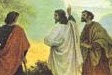
There is a famous painting of the road to Emmaus experience by the artist Robert Zund (posted above).  In the painting you see three men walking through a towering forest.  Their backs are to you – almost as if the viewer is walking the path behind them.  The man in the middle (the risen Lord) is talking and gesturing while the other two are in rapt attention.  You can almost hear Jesus explaining the Scriptures and feel the breeze of the day as you enter into the scene. 

In my vocation work I have often thought that a good vocation/discipleship poster would be to cut out the images of the three men walking, then find some black and white photos of everyday life (i.e. a busy city street scene, people going to a ball game or attending a fair or festival, etc.) and splice (keeping proportions correct) the image of the risen Lord and two disciples into the heart of the crowd.  Then add a catchy phrase like: “The call continues.” or “Do you also want your heart to ‘burn within you’?”

Why the poster?  Because it is in the everyday that Christ comes to us and it is here in the Mass – in the opening of Scripture and in the breaking of bread – when our eyes are opened to recognize and name those moments when our hearts burned within us in our encounters with the Lord.  As disciples we need both and we are meant for both – not just one or the other (either the everyday or the liturgical). 

The Mass is the Emmaus road encounter.

For six days we have walked through our lives in a variety of settings and ways – as parents, as young person, as an elderly person, maybe married, maybe single.  For six days we have walked as a teacher or a nurse, a lawyer or doctor, as a person in the business world.  We may have known joy these days.  We may have known defeats.  Daily life can often be a defeat, “the defeat of the Gospel in the lives of Christians and in human life, the defeat of the Gospel in the lives of those who are persecuted, who are poor, in those effected by war and violence, loneliness and abandonment.”  Like the two disciples are lives might be saddened by defeat.  

But, the risen Lord comes to us.  This is important to note.  When we gather on Sunday for Mass, when all of our Emmaus walks converge, we do not just remember the past or tell stories of a time long ago.  Christ is here.  Christ in his grace and revelation opens the Scriptures to us.  Christ himself breaks the bread (his body and his blood) for us.  When we gather for Mass on our Emmaus road we do not just reflect on an idea.  Here, we encounter the risen Lord and he speaks to our hearts and he shares his very self. 

“Were not our hearts burning within us?” 

Sabbath rest and the danger of activism

Maybe it is because the semester has finished here at the university and things are quiet at the Catholic Center and I am anticipating the slower pace of the summer months but my soul recently has been reflecting on the need to rest and recoup. 

I have noticed that in more than a few of his writings, interviews and reflections Pope Benedict talks about the danger of “activism”.  A danger that is very rampant in our day and age.  Activism is that tendency to think we always have to be active; we always have to be doing something if life is going to be worthwhile and we are going to “make our mark” in history.  Of all people certainly it is a pope who could be tempted to activism as he looks at the needs of the world and the pulpit he alone has to address those needs.  A pope, he notes, could continually be active – twenty four hours and seven days a week.  But, wisely the Holy Father cautions us and himself against this temptation and he does this because he is a humble man who knows that the job of Savior of the world has already been filled.  Activism (he knows) is rooted in hubris, in pride.  The antidote to activism is the humble realization that we are creature and not Creator and also the willingness to enjoy this realization. 

Further, not only does activism puff us up it also wears us down.  We cannot go twenty four and seven.  We need rest and specifically sabbath rest.  Paradoxically activism even warps the arena and space of rest.  Rest rather than standing on its own with its own value becomes, under the tyranny of activism, just an allotted time and space only begrudgingly allowed in order to rest up for more work!  The day off is allowed only in order that we might be better workers not because the day off itself (leisure) has its own value and its own nourishment that the human soul stands in need of.

Under activism rest itself becomes shallow, superficial and tiresome. 

Sabbath rest is different.  Here is a quote from the treatise, “Flight from the World” by St. Ambrose that helps to bring out the unique character of sabbath rest. 

Let us take refuge from this world. You can do this in spirit, even if you are kept here in the body. You can at the same time be here and present to the Lord. Your soul must hold fast to him, you must follow after him in your thoughts, you must tread his ways by faith, not in outward show. You must take refuge in him. He is your refuge and your strength. David addresses him in these words: I fled to you for refuge, and I was not disappointed.

Since God is our refuge, God who is in heaven and above the heavens, we must take refuge from this world in that place where there is peace, where there is rest from toil, where we can celebrate the great sabbath, as Moses said: The sabbaths of the land will provide you with food. To rest in the Lord and to see his joy is like a banquet, and full of gladness and tranquility.

Sabbath rest is “like a banquet … full of gladness and tranquility.”  Rather than emptying and depleting the soul; Sabbath rest nourishes and fulfills and it enables us to put things in proper perspective. 

We are made and meant for sabbath rest; for the banquet that nourishes, fulfills and restores relationship.  We are not made to just work and work and hopefully maybe catch a day off here and there. 

“The sabbaths of the land will provide you with food.” 

It would do us all well to be attentive to this truth.   

Second Sunday of Easter (A): Divine Mercy Sunday

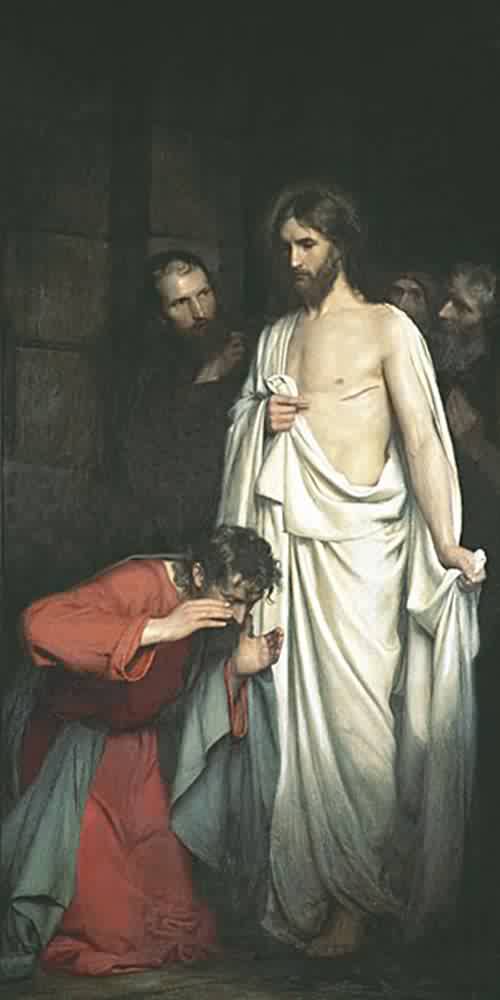
Thomas was not a bad man nor was he a mediocre disciple.  I believe that sometimes we can read today’s gospel (John 20:19-31) and think to ourselves, “Tsk, tsk if only you didn’t doubt and had more faith Thomas.”  But Thomas did have faith and he did have a great love for our Lord.  We need to remember that it was Thomas who said, “Let us also go, that we may die with him.” when Jesus decided to go to his friend Lazarus despite the fact that the authorities were seeking to kill him.  These are not the words of a half-hearted disciple.  Thomas had great faith, he had great love for our Lord but he also had a broken heart.  The crucifixion and all of sin’s “No!” that it contained had broken Thomas’ heart.  All of Thomas’ love for the Lord, his hope and faith in the Lord had been broken by the wood of the cross. 

Thomas’ heart was broken.  So, when the other ten announced the Lord as risen (the Easter gospel); Thomas replied with his own “creed” (which is in essence a “non-creed”).  “Unless I see … unless I put my finger in the mark of the nails and my hand in his side, I will not believe.”  This is the “non-creed” not of a man who is bad or mediocre but rather generous and loving yet profoundly and deeply broken-hearted.

There are many non-creeds in our world today proclaimed by people who are not bad people or even mediocre (quite the contrary) but people who are broken, who are hurting.  And there is a danger to the non-creed because it is limiting, it does close one in on one-self.  Life is limited and because of this isolation occurs – leading to further violence and further pain. 

But our Lord is risen.  In his divine mercy he comes to the disciples (even through the locked doors of their fear and isolation), he comes to Thomas and in the tenderest way reproaches Thomas and his non-creed.  In fact, in response to Thomas’ non-creed it could be said that our Lord speaks his own creed, “Peace be with you.”  As disciples we live in the ever-newness of the creed of our risen Lord.  In all times and all seasons, we cling and hold fast to it.  This is what we do and who we are as Church, we remain faithful.  “Peace be with you.”

Today, Shawn (a young man being received into the Catholic Church at the Center) through your baptism, confirmation, first communion and entrance into the Church step into this living creed of our risen Lord.  This is a new day, an Easter day for you!  We celebrate with you and we thank you because today you remind us that we are each only allotted so many Easters in our lives.  We are each given only so many days and opportunities to encounter the risen Lord and to step away from the non-creeds and into the fullness of our Lord’s peace! 

In a special way I want to say a word to your sponsors and your Catholic friends because in our meetings you have said, time and time again, that it is they who have been the strongest influence in your desire to join the Church.  Dear friends, please recognize this.  You have lived the creed for Shawn – the peace that only our Lord can give – through your friendship, through your love, through your faith, through your being family.  The creed we profess is not meant to be a static formula but a lived reality.  Let us all recognize this.

Our risen Lord gathers his family of disciples together and he speaks to our hearts. 

“Peace be with you.”

Easter, 2011 – tens of thousands plus one

Mark Twain once remarked that the reports, present in his day, of the imminent demise of the Catholic Church were similar to being invited to a funeral that keeps getting postponed. 

The numbers are still coming in but in the United States this last weekend it looks like tens of thousands were received into the Catholic Church.  For 2010, the U.S. Conference of Catholic Bishops reports that there were over 43,000 adult baptisms and more than 75,000 people received into full communion with the Church in the U.S. alone (this also does not count the over 830,000 infant baptisms reported for that year).  It is safe to assume, I believe, that the numbers for 2011 will be consistent with this trend. 

What seems to be striking for commentators this year is the wide variety of people who are entering the Church.  There are people from all walks of life and all socio-economic-cultural distinctions and people brought up in different faith traditions (Christian and non-Christian) and ethnic groups.  People are entering the Church individually and also as families. 

One newly minted Catholic – since last Easter Sunday – who is receiving attention is Abby Johnson.  Mrs. Johnson is a former Planned Parenthood clinic director who had a conversion after witnessing an ultrasound-guided abortion in fall of 2009.  She is the author of the bestselling book “Unplanned”.

These men and women have been studying, learning, reflecting and praying about entering the Church for months through the Rite of Christian Initiation for Adults (RCIA) program present in Catholic parishes.  Ahdija Cheumbike Baker (a former Muslim) from New Orleans, LA remarks on the value of an extensive preparation program for entrance into the Church, “If I had gone to a church that gets you in and out in 45 minutes, I probably wouldn’t have changed my religion; but at St. Peter Claver I feel a deep connection.” 

We celebrate with these new members of the Church!  They witness to us the vitality and true life of the Christian faith and we pray that they will now continue to grow in their Catholic faith.  For them (as for all of us) Easter of 2011 rather than being the end of a journey is really just a beginning…

In this post’s title I wrote “plus one” for a valid reason.  This coming Sunday at our last spring semester Mass, Shawn Stewart will be baptized, confirmed and receive first communion at the Catholic Center!  Shawn and I have been meeting for months now in preparation but his more fundamental preparation and witnessing of the faith has been through all the Catholic friends whom he has known over his life.  Please keep Shawn in your prayers as this Sunday approaches.

The Church continues to be church…

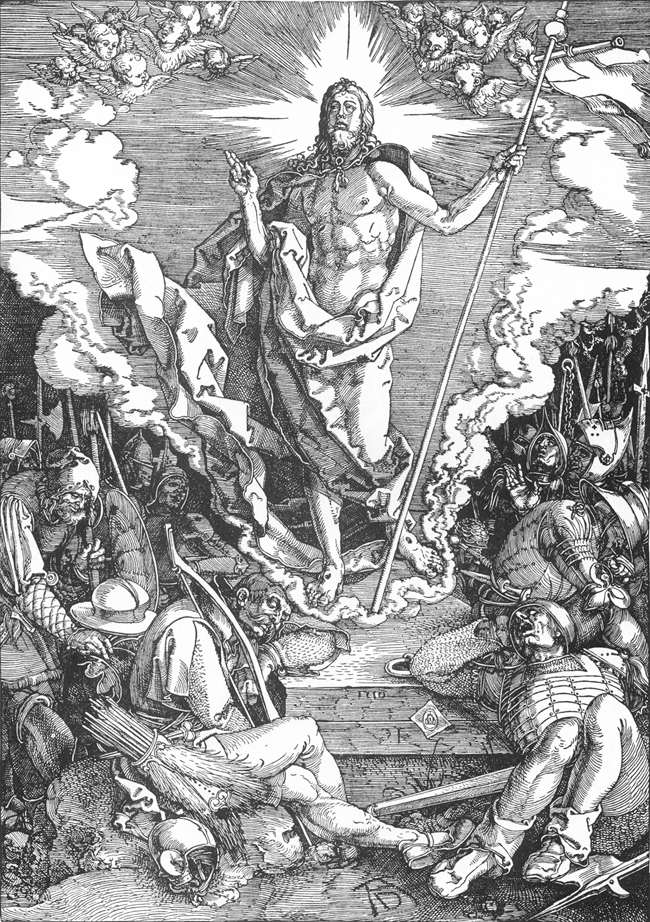
Christ is risen!  Very truly he is risen! 

Humming "All Glory, Laud and Honor" – Palm Sunday and the Triduum

For about a week now I have been humming, “All Glory, Laud, and Honor” – the traditional hymn associated with Palm Sunday.  The hymn is usually sung after the distribution of palms and as the congregation enters into the church calling to mind our Lord’s entrance into Jerusalem. 

Since Ash Wednesday we as the Church have been preparing for the celebrations of the upcoming week. 

I do not preach on Palm Sunday (which is an option for the priest and deacon).  I believe that the reading of our Lord’s passion and death says it all and sometimes the best thing that a preacher of the word can do is know when to remain silent.

At the end of the Mass though I do share some words regarding what we as Church will be about this next week.

In our diocese, the Tuesday of Holy Week is when we celebrate the Chrism Mass at the cathedral in Knoxville.  At the Mass the whole diocese comes together under the unity of our bishop and the oils to be used in sacramental celebrations throughout the next year are blessed and distributed – the oil of the sick, the oil of the catechumens and the sacred chrism.  Also, at this Mass, both the priests of the diocese and the bishop recommit ourselves to service within the Church.

I also note that the season of Lent ends with the beginning of the celebration of the Lord’s supper on Holy Thursday.  (We fast and abstain on Good Friday because it is “Good Friday” not be because it is another Friday in Lent.)  Actually, with the beginning of the Holy Thursday Mass we enter not only into the shortest season of the year – Holy Thursday, Good Friday and the Easter Vigil – but also one celebration.  This is testified to by the fact that we as a community make the sign of the cross at the beginning of the Holy Thursday celebration and do not make it again until the conclusion of the Easter Vigil Mass.  As Catholics, we begin and end prayer with the sign of the cross.  The fact that we do not make the sign of the cross as church again until the end of the vigil demonstrates that these three days are to be seen as one celebration marking the life, suffering, death and resurrection of our Lord.

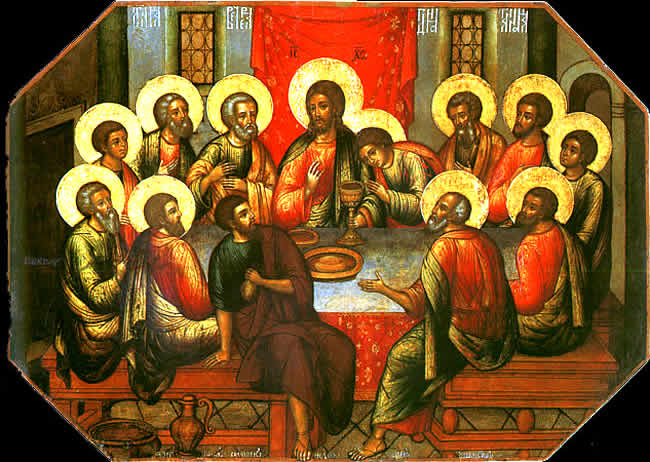
On Holy Thursday we remember and reflect upon the institution of the Eucharist.  “This is my body … This is my blood … Do this in remembrance of me,” says our Lord.  The centrality of the eucharist to the life of christian discipleship is witnessed to by the fact that our Lord’s instituting of the eucharist is found in each of the three synoptic gospels (Mt. 26:26-30, Mk. 14:22-25, Lk. 22:14-23) and where John in his account of the Last Supper chooses to focus on the washing of feet (also remembered in the Holy Thursday celebration) he elsewhere reminds us of the specific instruction of our Lord, “I am the bread of life.  Your ancestors at the manna in the wilderness, and they died.  This is the bread that comes down from heaven, so that one may eat of it and not die.  I am the living bread that came down from heaven.  Whoever eats of this bread will live for ever; and the bread that I will give for the life of the world is my flesh.” (John 6:48-51)

At the conclusion of the Holy Thurday celebration the sanctuary of the church is made bare and the Blessed Sacrament is removed in preparation for Good Friday when all creation is in hushed silence in remembrance of our Lord’s suffering, death and three days in the tomb. 
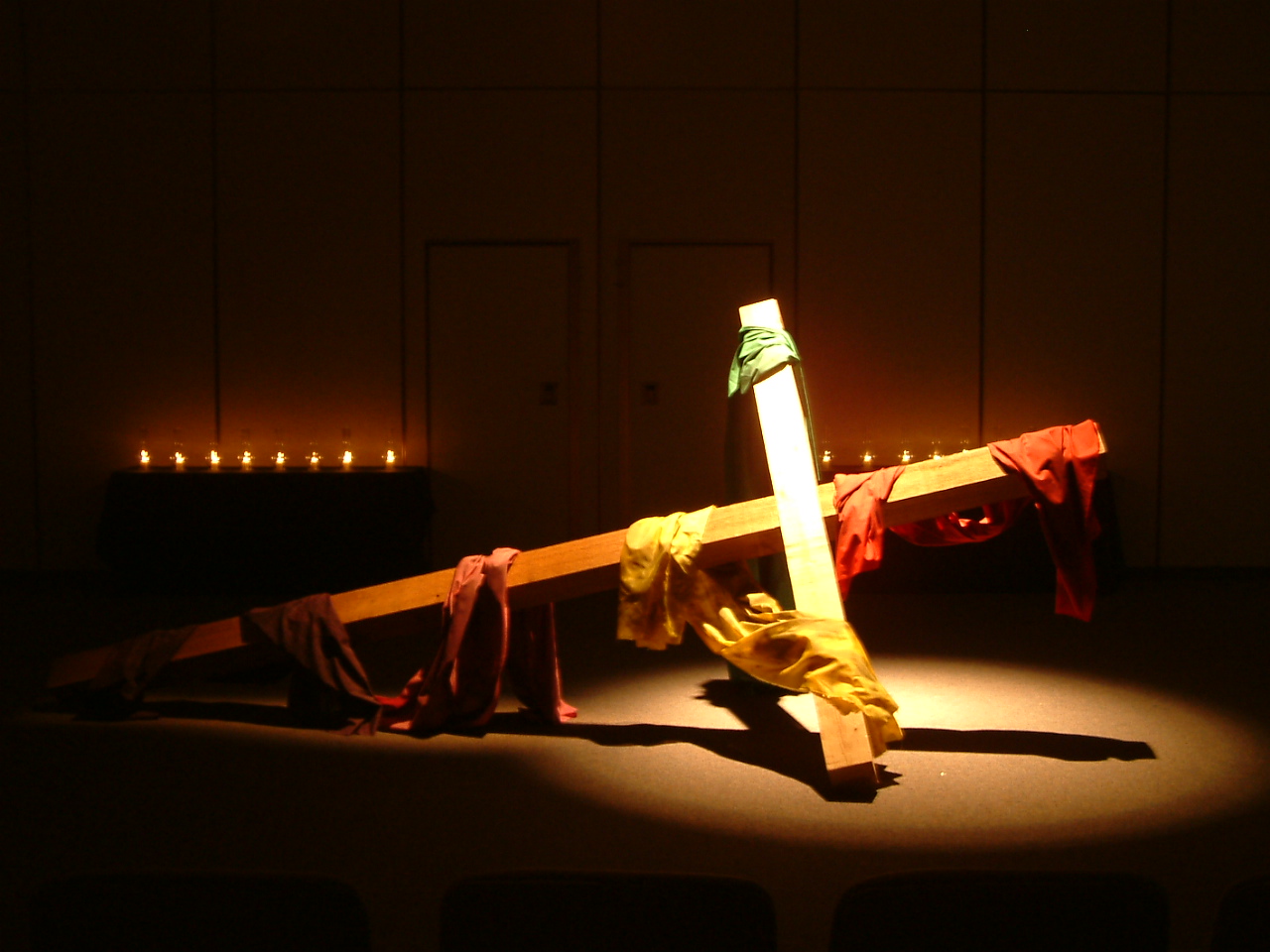
On the evening of Good Friday, the community gathers to pray for the Church and our world and to reverence the wood of the Cross by which we all are set free.  At this service we also share communion reserved since the Holy Thursday celebration.
Holy Saturday we remain with Christ in the tomb.
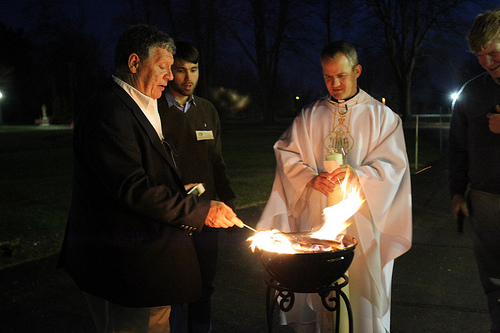
At sundown on Holy Saturday, the Easter fire is lit and the Easter Vigil begins.  The Church throughout the world gathers to celebrate the Lord’s resurrection!  The paschal candle (representing the light of Christ) is blessed and processed into a darkened church and as the procession makes it way along; all those who are present light their own candles from that of the paschal candle (the light of the resurrection grows).  Once gathered in the church the community of the faithful hear readings from all of Sacred Scripture, reflecting the whole scope of salvation history which proclaims God’s goodness and works; culminating in the resurrection of Christ by which death itself is vanquished!  Men and women who have been preparing for months to receive the sacraments and enter into the Catholic Church are welcomed into the fullness of the Body of Christ through sacramental ritual following the homily.  Communion is shared and the church once darkened is now fully lit, reflecting the splendor of the risen Christ in the lives of his people – the church gathered in worship!
At the conclusion of the Easter Vigil the community once again marks itself with the sign of the cross bringing an end to the celebration of the Triduum and a beginning to the celebration of the Easter season! 
          

True Freedom

The readings for this past Wednesday’s Mass have much to say about true freedom. 

The first reading (Daniel 3:14-20, 91-92, 95) recounted the story of the three young men (Shadrach, Meshach, and Abednego) thrown into the furnace for refusing to bend their knees in homage to the false idol of the king.  “Be ready now to fall down and worship the statue I have made, whenever you hear the sound of the trumpet, flute, lyre, harp, psaltery, bagpipe, and all the other musical instruments…”  Yet, even though thrown into the furnace, the three youths were preserved by the grace of God and became a witness even unto the king.

The Gospel reading (John 8:31-42) also invites us into a reflection on true freedom.  It is important to note that our Lord does not locate freedom within our own narrow wills (doing whatever we want) but rather in a lived relationship to truth and obedience to God.  “If you remain in my word, you will truly be my disciples, and you will know the truth, and the truth will set you free … Amen, amen, I say to you, everyone who commits sin is a slave of sin.  A slave does not remain in a household forever, but a son always remains.  So if the Son frees you, then you will truly be free.”

We might tend to think of the story of the three youths as a quaint story of the past, vivid in detail for children’s Bible study, but my experience has demonstrated that there are many “musical instruments” calling us in our day and age to bend the knee in homage to a whole host of false idols … and there are many people more than willing, it seems, to bend the knee.  My experience also has shown me that these people who so easily bend the knee tend to also be the ones who so vocally both proclaim and demand their freedom to do whatsoever they please.  Yet our Lord points out, “everyone who commits sin is a slave of sin”.  Freedom is not gained when truth and God are abandoned, what is really attained is a mass conformity that lies under an illusion of freedom – it is, in fact, a form of slavery. 

Shadrach, Meshach and Abednego stand out because they would not bend their knees.  They would not fall down in an automatic conditioned response to the powers of their time.  The truth had set them free and they were the only ones truly free enough to make a free choice.  We do not remember those who bend their knees to the powers of their time.  We remember those (free in relation to truth and obedience to God) who choose to not bend the knee and remain standing.  These are the ones who have fought the hard fought fight.  They cannot bend their knee because they have come to know their own and everyone else’s true worth.  They will not deny the truth and because of this they are truly free. 

“If you remain in my word … you will know the truth, and the truth will set you free.”

"In the palm of your hand" – St. Peter’s truth

I sought the Lord, and afterward I knew
He moved my soul to seek him, seeking me.
It was not I that found, O Savior true;
No, I was found of thee.

Thou didst reach forth thy hand and mine enfold;
I walked and sank not on the storm-vexed sea.
‘Twas not so much that I on thee took hold,
As thou, dear Lord, on me.

I find, I walk, I love, but oh, the whole
Of love is but my answer, Lord, to thee!
For thou wert long beforehand with my soul;
Always thou lovedst me.

Fifth Sunday of Lent (A): "Do you believe?"

It is interesting to note how in this gospel passage of the raising of Lazarus (John 11:1-45) Jesus is met with confusion, contradiction, shock, grief, regret and fear (a whole gamut of reactions) as he journeys toward the tomb of his friend.  The disciples do not understand – thinking Lazarus was only asleep.  Both Martha and Mary at separate instances remark, “Lord, if you had been here…” voicing the regret so common at the death of a loved one.  The weeping of the crowd and the tears of the family giving expression to the death of hope when faced with the starkness of the tomb.  “Why roll back the stone?  It will be awful and certainly useless.”  Is all of this not the human condition as we stand before the tombs of our lives and all the tombs of our world?

But the gospel message is this: Christ enters into all of this.  Our Lord does not deny any of these reactions to death and to the tomb.  Neither does he ask us to pretend that these reactions on our part do not exist.  We are fearful before the tombs of our world!  We are lost and confused!  Death does not make sense!  We do know grief and regret!  Our Lord does not deny any of this but what he does do is that he comes to us in the very face of the tomb and all that it stirs up within us and asks, “Do you believe?”  Not, “Believe and you will never know hurt nor loss nor pain.” but “Even now when faced with the tomb, do you believe?”


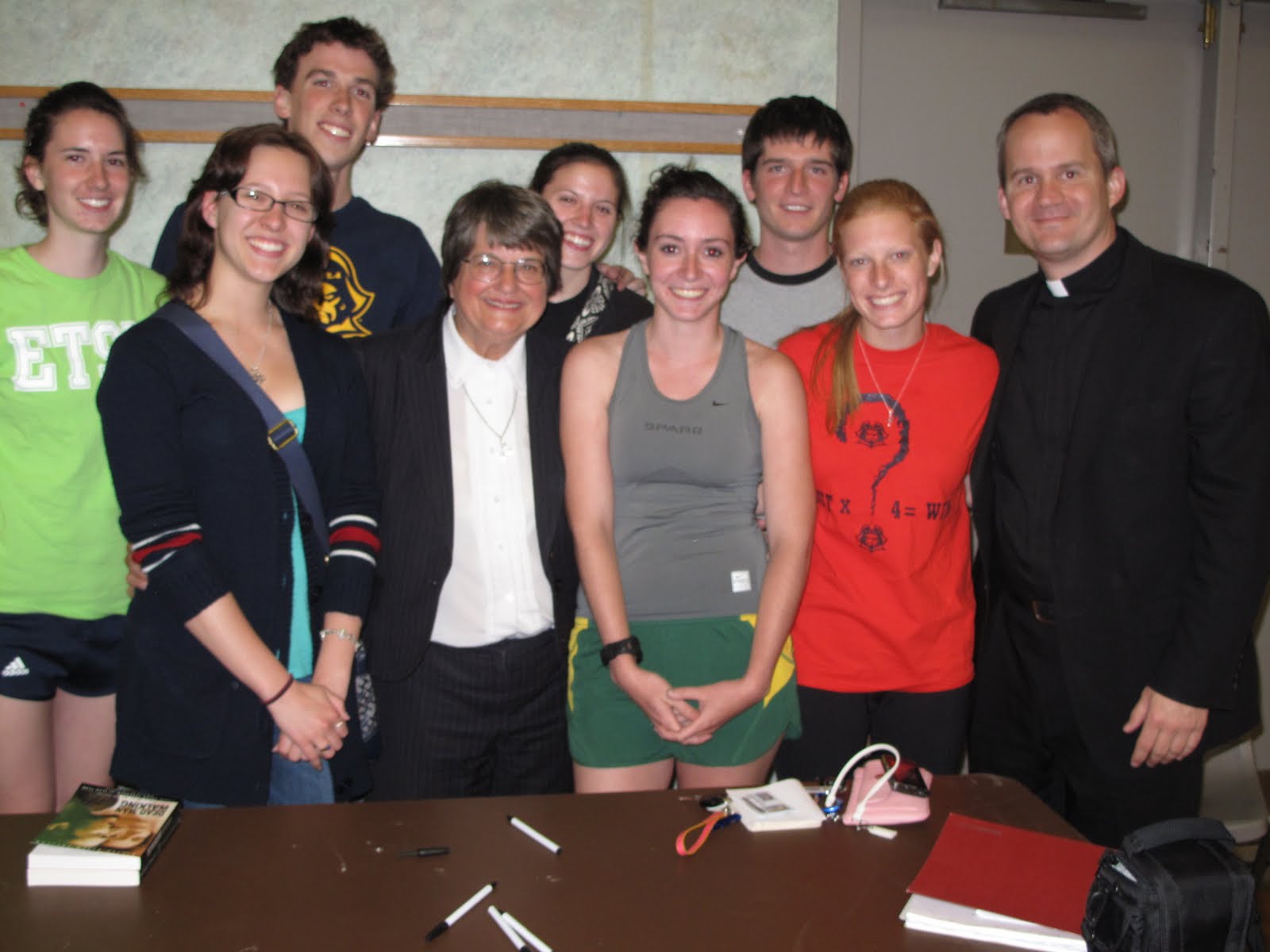
Sr. Helen Prejean and members of the Catholic Center community


This last week Sr. Helen Prejean gave a lecture on the death penalty at ETSU.  Sr. Helen has devoted her life and energy to ministering to people on death row as well as the families of victims of unimaginably horrific crimes.  This little Cajun nun with a broad smile and an easy-going nature stands before the tombs of our world.  How does she do that?  Where does she find the strength?  As I listened to her talk I heard her say in her own way that she has met Christ on death row and that she as a disciple has given her own answer to his question, “Do you believe?”

Some have referred to religion as an “opiate for the masses” – a way to avoid the stark realities of existence.  True Christianity is not an opiate.  Are there false versions of Christianity?  Yes, it is easy to see them at work in our time.  In these false versions of Christianity true faith means worldly success, wealth, getting what you want and never knowing true suffering.  It promotes a praise/paid mentality – the more you praise, the more you get paid.  This false reading of the Scriptures does seek to reduce the Christian message to an opiate for the masses but it is not the true gospel.  (Also, in fairness, I would contend that there are also a plethora of secular “opiates for the masses” that are at work in our world.  Lets not fool ourselves – these secular opiates also, through their own mechanisms, seek to numb people to the stark realities of existence.)

True Christianity acknowledges the tombs of our lives and our world.  The disciple is able to go to the tomb and even there (in the very midst of all that the tomb stirs up within us) is able to live an answer to that fundamental question of our Lord, “Do you believe?”  And it is in the living of the mystery that the disciple is brought to an awareness that in our belief we will indeed see and know the glory of God. 

Celibacy and Chastity

In our age of hyper-sexuality I would like to offer a few thoughts on celibacy and chastity.  I offer these thoughts as a publicly professed celibate of fifteen years and someone who has remained chaste throughout my life. 

We know the scandals that have rocked the Catholic Church as of late and we hear from some corners the (seemingly) automatic and almost knee-jerk equating of celibacy with sex abuse. 

Also, there are many voices in our culture that promote sexual acting out before marriage as the healthy norm and any attempt to curtail, moderate or even abstain from this acting out as unhealthy, repressive and deviant. 

To the first concern (and as a way of entering into this discussion) I would like to share some thoughts taken from a recent article by Archbishop Timothy Dolan of New York City in which he shares an encounter in an airport.  (A link to the full article is found after the quote.)

As I (Archbiship Dolan) was waiting with the others for the electronic train to take me to the terminal, a man, maybe in his mid-forties, waiting as well, came closer to me.

“Are you a Catholic priest?” he kindly asked.

“Sure am. Nice to meet you,” says I, as I offered my hand.

He ignored it. “I was raised a Catholic,” he replied, almost always a hint of a cut to come, but I was not prepared for the razor sharpness of the stiletto, as he went on, “and now, as a father of two boys, I can’t look at you or any other priest without thinking of a sexual abuser.”

What to respond? Yell at him? Cuss him out? Apologize? Deck him? Express understanding? I must admit all such reactions came to mind as I staggered with shame and anger from the damage of the wound he had inflicted with those stinging words.

“Well,” I recovered enough to remark, “I’m sure sorry you feel that way. But, let me ask you, do you automatically presume a sexual abuser when you see a Rabbi or Protestant minister?”

“Not at all,” he came back through gritted teeth as we both boarded the train.

“How about when you see a coach, or a boy scout leader, or a foster parent, or a counsellor, or physician?” I continued.

“Of course not!” he came back. “What’s all that got to do with it?”

“A lot,” I stayed with him, “because each of those professions have as high a percentage of sexual abuse, if not even higher, than that of priests.”

“Well, that may be,” he retorted. “But the Church is the only group that knew it was going on, did nothing about it, and kept transferring the perverts around.”

“You obviously never heard the stats on public school teachers,” I observed. “In my home town of New York City alone, experts say the rate of sexual abuse among public school teachers is ten times higher than that of priests, and these abusers just get transferred around.” (Had I known at that time the news in in last Sunday’s New York Times about the high rate of abuse of the most helpless in state supervised homes, with reported abusers simply transferred to another home, I would have mentioned that, too.)

To that he said nothing, so I went in for a further charge.

“Pardon me for being so blunt, but you sure were with me, so, let me ask: when you look at yourself in a mirror, do you see a sex abuser?”

Now he was as taken aback as I had been two-minutes before. “What the hell are you talking about?”

“Sadly,” I answered, “studies tell us that most children sexually abused are victims of their own fathers or other family members.”

Enough of the debate, I concluded, as I saw him dazed. So I tried to calm it down.

“So, I tell you what: when I look at you, I won’t see a sex abuser, and I would appreciate the same consideration from you.”  (http://blog.archny.org/?p=1127)

The statistics are there for all to see, the percentage of sex abusers among celibate clergy is not any higher and in most cases is lower than other professions and lifestyles.  To automatically determine celibacy as the determining factor in a priest who is a sexual abuser is similar to automatically assuming marriage as the determining factor for a married man or woman who sexually abuses another.  If we cannot say that the whole institution of marriage is corrupt because of the sins of some married persons then we cannot say that celibacy is inherently corrupt or deviant either.  It is not the state of life that is at fault in these cases; it is the failure to live them out authentically and truthfully.  This is important precisely because this is an extremely sensitive issue that cuts across all gamuts of society and is causing great pain and suffering, so we must be precise in our determinations.  Generalizations do no good in this regard; they muddy the waters and in fact cause more harm than healing in this wound affecting all of society.

Many voices in our society claim that sexual activity before marriage is to be encouraged and seen as healthy (therefore promoted) where any attempt whatsoever to curtail or abstain from sexual activity is repressive, unhealthy and should be viewed with suspicion.  Often, proponents of this view will point to religion (specifically Christianity) and its guilt mechanism as the main culprit in an unhealthy and deviant denial of sexuality.

I agree that religion (here I will speak to Christianity, being that this is my own faith) has been used and continues to be used by some in an unhealthy repressive way in terms of sexuality.  But as a chaste and celibate person I believe this repressive use of Christianity vis-a-vis sexuality is in fact a misuse of the faith and demonstrates a profound misunderstanding in regards to what the Christian faith actually says regarding what sexuality is and also the truth of the human person. 

Christianity teaches abstinence before marriage for all persons precisely because it holds sexual intimacy as something profound and beautiful (not negative) – an utterly unique and intimate sharing of a man and woman that needs to be safeguarded, honored and protected.  Christianity also teaches abstinence before marriage because we deeply hold to the dignity of the human person.  To be very blunt in order to make an important contrast – we are not dogs in heat; we are human persons.  We are more than just pure instinctual and physical desire.  To recognize this does not deny the power or validity of these movements within our persons but locates them within a larger and needed context.  Further, because of the awareness of this larger context people are never to be used as mere objects for ones own pleasure.  Lets explore a recent occurance that I think demonstrates a breakdown of this larger context. 

Recently there has been a story (and video thanks to our digitalized age) of two college students having sex in public.  Now, are we made better by this or are we lessened?  Lets approach it this way and lets be honest, would we want our five year old niece or nephew watching this video or playing outside one day and seeing this?  If uninhibited sexual activity is the healthy norm then we should have no problem with a child seeing this type of activity.  But we do – our conscience reacts – now is that reaction repressive or is it an honest recognition that we human beings are made and meant for something more and better and that the context (or really lack of context) in which this activity occurred offends precisely because in fact it cheapens and makes squalid something meant to be beautiful?

The truth that I have come to realize is that celibacy and chastity, when authentically and truthfully lived, are not denials of living but are in fact expressions of passionate and authentic living.  Celibacy and chastity do this by witnessing to a great truth regarding sexuality and the human person that a casual approach to sexual activity can never attain to.  The truth being this: we are body and spirit.  Why would we do with our body what we are not ready to do with our spirit?  It is a question of authenticity.  Further, if body and spirit are ready to unite with another person shouldn’t it be held within a context that honors and nourishes that union?  Don’t we protect our most valued possessions?  Chastity does not negate sexuality, the opposite is in fact the case – it upholds the dignity of sexuality by upholding the dignity of the human person. 

But sometimes we stumble.  The physical passions can be very strong and sometimes we can sin against chastity.  As a confessor I recognize this and also as a human man who also knows temptation.  Here, our honest guilt must come into an honest encounter with God’s grace and mercy.  Forgiveness and healing is possible.  But it is important to note here the same assertion made above – our stumbling and sometimes less than authentic living out of chastity reflects on our weakness rather than on any presumed unhealthiness or deviancy of the chaste state. 
                    
A further thought on celibacy. 

I have come to believe that celibacy scares the holy bejeebers out of some people.  Why?  In the Christian understanding celibacy makes absolutely no sense apart from an awareness of the dawning of the Kingdom of God. 

His disciples said to him, “If such is the case of a man with his wife, it is better not to marry.”  But he said to them, “Not everyone can accept this teaching, but only those to whom it is given.  For there are eunuchs who have been so from birth, and there are eunuchs who have been made eunuchs by others, and there are eunuchs who have made themselves eunuchs for the sake of the kingdom of heaven.  Let anyone accept this who can.”  (Mt. 19:10-12) 

The celibate by his or her very life witnesses to something more than this world.  The celibate’s very life offered in this call of grace points to the dawning of God’s Kingdom where all sin, injustice, falsities, lies and oppression will be met and will be vanquished.  The Christian celibate foregoes marriage not because marriage and sexual activity are evil or of lesser value but because his or her very life is to be a witness to the inbreaking of the Kingdom of God in our world.  This is a frightening prospect for some people and some worldviews and well it should be.  For the believer it is the great hope and assurance.  Simply put, celibacy challenges worldly assumptions. 

I know that these are complicated issues and I know that we live in turbulent and confusing times.  I offer these thoughts in the humility of a disciple living his own life day by day calling upon God’s grace and mercy and also as a priest concerned for the true good of others and who grows weary of seeing others (especially our young people) sold a cheap bill of false goods that, in fact, end up hurting rather than liberating.     
The "God as a genie in a bottle" mentality

St. Theophilus of Antioch offers these words for reflection:

If you say, “Show me your God,” I will say to you, “Show me what kind of person you are, and I will show you my God.”  Show me then whether the eyes of your mind can see, and the ears of your heart hear.

It is like this.  Those who can see with the eyes of their bodies are aware of what is happening in this life on earth.  They get to know things that are different from each other.  They distinguish light and darkness, black and white, ugliness and beauty, elegance and inelegance, proportion and lack of proportion, excess and defect.  The same is true of the sounds we hear: high or low or pleasant.  So it is with the ears of our heart and the eyes of our mind in their capacity to hear or see God.

God is seen by those who have the capacity to see him, provided that they keep the eyes of their mind open.  All have eyes, but some have eyes that are shrouded in darkness, unable to see the light of the sun.  Because the blind cannot see it, it does not follow that the sun does not shine.  The blind must trace the cause back to themselves and their eyes.  In the same way, you have eyes in your mind that are shrouded in darkness because of your sins and evil deeds.

A person’s soul should be clean, like a mirror reflecting light.  If there is rust on the mirror his face cannot by seen in it.  In the same way, no one who has sin within him can see God.

But if you will you can be healed.  Hand yourself over to the doctor, and he will open the eyes of your mind and heart.  Who is the doctor?  It is God, who heals and gives life through his Word and wisdom.

Today there is a “genie in the bottle” approach to God.  If God exists then God needs to reveal himself to me; according to my will and my expectations.  So we rub our bottle and when God does not pop out like an obedient little genie we conclude there is no God.

We are getting it wrong.  God is not a genie waiting and hoping to appear according to our wills and in our image.  God is God.  Further, God owes nothing to us.

The key to seeing and knowing God is not to have God appear according to our will but rather to submit our wills to God.  This is the truth that St. Theophilus recognizes.  God wants to be known by us, God yearns for relationship with us but the lack in this equation is not on God’s part.  The lack is on our part.  Just because a blind person cannot see the sun that does not mean that the sun does not exist. 

We fool ourselves into thinking that we can hold on to our little sins and know God at the same time!  In this case we might have an “idea” of “a God” somewhere out there but we do not know God.

In the fourth chapter of Deuteronomy we hear Moses speaking to the people of Israel,

Now, Israel, hear the statutes and decrees which I am teaching you to observe, that you may live and may enter in and take possession of the land which the Lord, the God of your fathers, is giving you.  Therefore, I teach you the statutes and decrees as the Lord, my God, has commanded me, that you may observe them in the land you are entering to occupy.  Observe them carefully, for thus will you give evidence of your wisdom and intelligence to the nations, who will hear of all these statutes and say, “This great nation is truly a wise and intelligent people.”  For what great nation is there that has gods so close to it as the Lord, our God, is to us whenever we call upon him?

True knowledge of God is not a headtrip.  Knowledge of God does not consist in saying the right and accepted thing in a religious studies class on a university campus on a weekday (nothing against religious studies per se) and then acting as if God does not exist over the weekend.  We darken our own vision, we limit our own capacity to see and then we get offended when God does not appear to our liking!  How dare He!  Who does He think He is?! 

Knowledge of God is true knowledge which means that all of ones life, all of who one is, must be involved in the encounter with God.  To know God means we have to look inward and at ourselves and at our actions and be willing to bring it all before God – the good, the bad and the ugly.  The blind must trace the cause back to themselves and their eyes.

We are not good at this depth of knowledge in our day and age and frankly we are not encouraged in it.  (People who are not “conscience aware” are more easily controlled and manipulated.  They also make for great consumers!)  We are getting to a point where the blind are happily leading the blind – who are happily led – while all concerned are resentful of God because God will not play along.  Again, how dare He!  Who does He think He is?!

But God is God and we are not and I am convinced that we keep God continually amused.

God is nobody’s genie.  If we want to know God, which is another way of saying if we want to know true joy and fulfillment in life rather than frustration and despair, then we must play by God’s rules.  Not because God is some spoiled overgrown kid demanding his way or no way but because God is the source of all that is good, true and beautiful and God cannot deny himself.  When we come to know God we come to know and experience all of this.

“This great nation is truly a wise and intelligent people.”  For what great nation is there that has gods so close to it as the Lord, our God, is to us whenever we call upon him?