The Cherry Tree carol and words from Pope Benedict on Joseph
20 Monday Dec 2010
Posted in Uncategorized
20 Monday Dec 2010
Posted in Uncategorized
18 Saturday Dec 2010
Posted in Uncategorized

In all of the gospel story Joseph does not say one word yet his actions speak volumes. In fact, Joseph is not mentioned at all in the Gospels of Mark and John and just in passing in the Gospel of Luke. It is in Matthew’s gospel that we encounter this quiet saint.
Four times in the first two chapters of Matthew’s Gospel, Joseph receives divine instruction in a dream. Each time he trusts and he obeys. On the surface one could easily call Joseph a fool and I am sure some did. He must have been ridiculed when it became known that he took Mary in even though she was already with child. But he trusted and it was this trust that enabled him to weather the storms of ridicule and difficulty that he had to endure following each divine instruction (taking Mary in, picking up everything and heading to Egypt, returning and finally being led to settle in Galilee).
All of this begs the question, “What was it that enabled this depth of trust and certainty in Joseph?” There is one simple description of Joseph at the beginning of it all in Matthew’s gospel that points to the answer. After the revelation of Mary’s pregnancy, Matthew writes, “Joseph, her husband, since he was a righteous man, yet unwilling to expose her to shame, decided to divorce her quietly.” (Mt. 1:19) Joseph, simply put, was a good man. He did the right thing because it was the right thing to do.

Here I would like to make a point about Joseph that I fear is being lost in our day. In iconography it has been the tradition to portray Joseph as an elderly man. In fact, it is a more recent adaptation that tends to portray him as a contemporary (age-wise) of Mary.
This is important, I believe, because we live in a time that overvalues youth and devalues age. Might the need to portray Joseph as a young and robust man be a subtle form of age-ism? My question is this; would a younger man have had the wisdom and the life awareness needed for the depth of trust required to face what Joseph had to face? Matthew specifies that Joseph was a “righteous man” – my experience is that one does not just wake up one day “righteous” but that righteousness is gained through a long process of living in right relationship with God and neighbor. Righteousness takes time.
In a world of Percy Jackson and the Lightning Thief and Harry Potter we like the idea of the young person waking up one day to an understanding of his or her uniqueness and wealth of powers and abilities (with very little mentoring and training involved – if any) yet how realistic is this? I don’t think it is very realistic in terms of righteousness and the moral life nor anything else for that matter. Somethings take time – developing skills, knowledge and ability takes time, being righteous before God and neighbor takes time.
I have no problem picturing Joseph as older than Mary and in fact I think this portrayal of Joseph offers an important instruction for us regarding the journey of faith and discipleship and a needed corrective for our time.
It was a common practice in their day for an older widower to take in a younger bride. With this understanding the siblings of Jesus referred to later in the gospel story can be seen as step-brothers and sisters. Children of a previous marriage of Joseph.
(An aside offered here – some would point to these siblings of Jesus as full brothers and sisters thus denying the Church’s long standing teaching regarding the perpetual virginity of Mary. My question is this, if Jesus had brothers and sisters why then from the cross did he commend Mary to the care and protection of John the beloved disciple? (John 19: 25-27) If Mary had other children it would have been their duty to care for their mother. It is worthy to note that our Lord does a very tender thing here as he is dying on the cross: he finds his mother a home and he gives his church a mother.)
Joseph – the quiet saint – has much to teach us if we just have the ears to listen.
17 Friday Dec 2010
Posted in Uncategorized
There is some good spiritual advice that I once was given: don’t try to judge what is in the heart of another person – only God can see into the heart – when we attempt to read the heart of another we, in fact, just reveal what lies in our own hearts.
I have often found that the secular media’s coverage of Church and papal events falls short – revealing not so much the story or the honest truth but rather something much less. One does sometimes wonder if the coverage is in fact more of a reflection of the media and its concerns than that of the Church itself.
Now, here I think it important to make a specific point, the Church is not above the purview of the media. The media in our society does have the right to consider, evaluate and put forward news regarding all institutions in society. This is the role of the media. It must be acknowledged that the role of the media in bringing to light the abuses and institutional mismanagement in the sex abuse scandals has been critical in providing the momentum needed for honest scrutiny and reform of standing practices.
But there is a nuance to Church “news” that often the mainstream media seems to just miss. Recently, Archbishop Claudio Maria Celli, president of the Pontifical Council for Social Communications, sent an advent message to those involved in social communications in Latin America with the invitation to consider the value of silence in helping to frame an approach to the news. Obviously, the message is written from a Christian viewpoint and makes use of Christian imagery but the value of the discipline of silence to help bring balance speaks across all lines.
Below are some quotes from Archbishop Celli’s message. The quotes are taken from a summation of the Archbishop’s message found at zenit.org. (Full text: www.zenit.org/article-31238?l=english)
The Vatican official recommended hushing the “flood of concerns and noises that so often drag us endlessly.”
“Silence,” he said, “is like a blank screen on which we can project the film of our daily life to see it clearly. If we project it on a wall full of pictures, books and objects, with a background of noise, we will understand little. […] In silence we hear the voice of God. In this way we will be able to be genuine bearers of his Word — as Mary who, ‘kept all these things in her heart.'” ...
“However,” he said, “if we dedicate time to choose the ingredients and to prepare the dinners and meals we will share over the holidays, must we not also prepare, and even more so, what we will communicate through radios, newspapers, television programs and Web sites? What can we give that is substantial, if our life is filled only with repeated words, with little depth and contents? Let us dedicate time to the Lord whom we are awaiting this Advent.”
It is good advice. The discipline of silence helps to bring balance and a deeper awareness to all the stories of life.
For people seeking a more balanced and knowledgeable presentation of the Catholic Church I would recommend supplementing what they hear and see on mainline news shows with other resources. One of the great values of our internet age is that we are no longer limited to the mainline media and its approach.
Two good internet resources that I find helpful are:
http://www.zenit.org (a daily or weekly internet dispatch on Church news)
Catholic TV – videos from events in the Church – primarily papal and Vatican events. These can be accessed and subscribed to via http://www.youtube.com/.
I am sure that there are many other fine resources out there that help to give a more balanced perspective.
Below is a clip from Catholic TV on the perseverance of patience in this world. It is a good message for our day.
16 Thursday Dec 2010
Posted in Uncategorized
15 Wednesday Dec 2010
Posted in Uncategorized

Since the 2003 invasion of Iraq by United States led forces the situation of the Christian community in that nation has become very dire. The Christian community in Iraq is one of the oldest in the Church and yet today the community is on the brink of being non-existent with many members fleeing the country in a search for safety. Although in no way connected with the invasion of their country, Christians in Iraq have become equated in the minds of Muslim extremists with the invaders and therefore have become the target of acts of violence and of prejudice.
During this season when we await the coming of the Prince of Peace please remember our Christian brothers and sisters in Iraq and their beautiful and ancient community. Please pray for peace among all peoples in that land and that any form of violence in the name of God cease and be recognized as a sin offensive to God, the Creator of all peoples.
Below are two articles related to the situation of the Christian community in Iraq. The first is written by Barbara Surk of the Associated Press (Nov. 2, 2010) and it tells the story of the devastating terrorist attack against Christians during Mass at Our Lady of Salvation Catholic Church. The attack left 58 persons dead and 78 wounded. The second article is from Zenit.com and it tells of an initiative to work to protect all religious minorities in Iraq.
Militants stage deadliest attack on Iraqi Christians
Despite rescue attempt, 58 die at Baghdad church
By Barbara Surk
Associated Press / November 2, 2010
Iraq’s dwindling Christian community was grieving and afraid yesterday after militants seized a Baghdad church during evening Mass, held the congregation hostage, and triggered a raid by Iraqi security forces. The bloodbath left at least 58 people dead and 78 wounded — nearly everyone inside.
The attack, claimed by an organization linked to Al Qaeda, was the deadliest ever recorded against Iraq’s Christians, whose numbers have plummeted since the 2003 US-led invasion as the community has fled to other countries.
Outside Our Lady of Salvation church, Raed Hadi leaned against the car carrying his cousin’s coffin, waiting for the police to let him bury him on church grounds. “We Christians don’t have enough protection,’’ he said. “What shall I do now? Leave and ask for asylum?’’
Pope Benedict XVI denounced the assault as “ferocious’’ and called for renewed international efforts to broker peace in the region.
Prime Minister Nouri al-Maliki also condemned the siege, saying it was an attempt to drive more Christians out of the country.
Islamic militants have systematically attacked Christians in Iraq since the collapse of Saddam Hussein’s regime, effectively chasing more than 1 million people out of the country, according to estimates from an adviser to Iraq’s top Catholic prelate, Chaldean Cardinal Emmanuel III Delly.
In an interview, the cardinal encouraged the country’s remaining 1.5 million Christians not to be driven off by the militants.
Sunday’s carnage began at dusk, when a deadly car bomb went off in the area. Militants wearing suicide vests and armed with grenades then attacked the Iraqi stock exchange, injuring two guards.
The attacks may have been an attempt by the militants to divert attention from their real target — the nearby church in an upscale Baghdad neighborhood.
The assault on the church soon followed. The gunmen went inside the structure and took about 120 worshippers hostage.
The dead included 12 police officers and five bystanders thought to have been killed by the blasts outside the church before the attackers stormed inside. Forty-one Christians inside the church also died, including two priests. Iraqi officials had initially provided a much lower death toll.
A statement posted late Sunday on a militant website, allegedly by the Islamic State of Iraq, appeared to claim responsibility for the attack. The group, which is linked to Al Qaeda in Iraq, said it would “exterminate Iraqi Christians’’ if Muslim women in Egypt were not freed.
Witnesses said hostages died both before and during the rescue. They described a terrifying scene in which they desperately tried to shield themselves from the violence.
One parishioner, Rauf Naamat, said militants began by throwing several grenades and spraying the crowd inside the church with gunfire. After the initial violence and chaos died down, the militants walked up to the priest celebrating the Mass, told him to lie down, and shot him, he said.
Naamat said he heard one of the attackers talking to what he thought was Iraqi security, threatening to blow themselves up if Iraqi forces stormed the building.
An Iraqi official said he had a phone conversation with a militant, who demanded that authorities release all Al Qaeda-linked prisoners starting with the women. The official said he judged by the militant’s accent and speech that he was not Iraqi.
When Iraqi special forces joined police and other officials already on the scene, they heard gunshots and decided to enter the church “to prevent the further loss of innocent lives,’’ said Lieutenant Colonel Terry L. Conder, a spokesman for US special forces.
The Iraqi official said that when the security forces stormed the church, the militants were shooting at the hostages.
US Commission Wants UN to Help Iraqi Christians
Urges Government to Address Issue at Security Council Meeting
WASHINGTON, D.C., DEC. 14, 2010 (Zenit.org).- The U.S. federal government Commission on International Religious Freedom is urging a redoubling of efforts to protect Iraqi Christians, and requesting that the U.N. Security Council be used as a forum to address the situation of Christians and other minorities in Iraq.
Leading up to Wednesday’s U.N. Security Council meeting regarding Iraq, the U.S. Commission on International Religious Freedom (USCIRF) released a statement today.
The commission stated that the “recent upsurge in attacks against Christians” is a clear indication that “the country’s most vulnerable religious minorities remain in peril.”
They “face targeted violence, including murders and attacks on their places of worship and religious leaders, intimidation, and forced displacement; they also experience discrimination, marginalization, and neglect.”
“As a result, these ancient communities’ very existence in the country is now threatened,” the USCIRF statement warned. “The loss of the diversity and human capital these groups represent would be a terrible blow to Iraq’s future as a secure, stable, and pluralistic democracy.”
The commission “urged the U.S. government to redouble its efforts, and use the international forum as an opportunity, to address the grave situation facing that country’s Christians and other imperiled religious minorities.”
Before it’s too late
The USCIRF recommended three steps to aid Iraqi Christians and other minorities.
The members called on the U.S. government to “identify the places throughout Iraq where these targeted minorities worship, congregate, and live, and work with the Iraqi government to assess security needs and develop and implement a comprehensive and effective plan for dedicated Iraqi military protection of these sites and areas.”
They requested a periodic update for Congress on the progress of this process.
The commission further recommended working with the Iraqi government and minorities “to establish, fund, train, and deploy representative local police units to provide additional protection in areas where these communities are concentrated.”
And, the USCIRF urged ensuring that U.S. development assistance “prioritizes areas where these vulnerable communities are concentrated.”
Referring to a Dec. 4 plea for help from a group of 16 Iraqi Christian parties and organizations, the USCIRF urged both U.S. and Iraqi governments to “heed this call and work with these leaders, as well as the leaders of the other small endangered groups in Iraq, on implementing these and other measures to protect and assist these communities before it is too late.”
13 Monday Dec 2010
Posted in Uncategorized
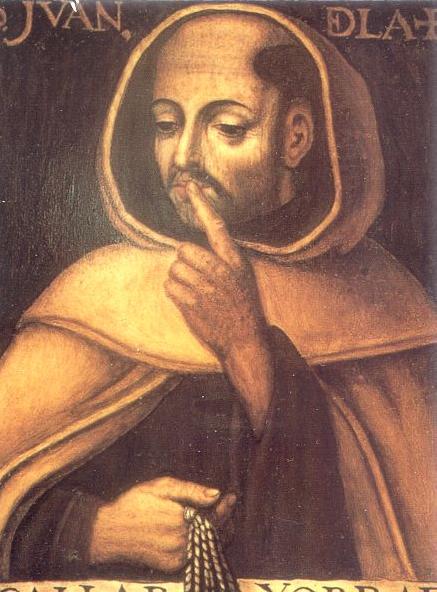
On December 14th the Church celebrates the Feast of St. John of the Cross. Encouraged by St. Teresa of Avila, John helped to lead a reform of the Carmelite Order. He remains renowned for his wisdom and sanctity. He died in 1591. Below is a selection from one of his writings that is the second reading for the Church’s Office of Readings for the feast.
Though holy doctors have uncovered many mysteries and wonders, and devout souls have understood them in this earthly condition of ours, yet the greater part still remains to be unfolded by them, and even to be understood by them.
We must dig deeply in Christ. He is like a rich mine with many pockets containing treasures: however deep we dig we will never find their end or their limit. Indeed, in every pocket new seams of fresh riches are discovered on all sides.
For this reason the apostle Paul said of Christ: “In him are hidden all the treasures of the wisdom and knowledge of God.” The soul cannot enter into these treasures, nor attain them, unless it first crosses into and enters the thicket of suffering, enduring interior and exterior labors, and unless it first receives from God very many blessings in the intellect and in the senses, and has undergone long spiritual training.
All these are lesser things, disposing the soul for the lofty sanctuary of the knowledge of the mysteries of Christ: this is the highest wisdom attainable in this life.

Would that men might come at last to see that it is quite impossible to reach the thicket of the riches and wisdom of God except by first entering the thicket of much suffering, in such a way that the soul finds there its consolation and desire. The soul that longs for divine wisdom chooses first, and in truth, to enter the thicket of the cross.
Saint Paul therefore urges the Ephesians, “…not to grow weary in the midst of tribulations, but to be rooted and grounded in love, so that they may know with all the saints the breadth, the length, the height and the depth – to know what is beyond knowledge, the love of Christ, so as to be filled with all the fullness of God.”
The gate that gives entry into these riches of his wisdom is the cross; because it is a narrow gate, while many seek the joys that can be gained through it, it is given to few to desire to pass through it.
12 Sunday Dec 2010
Posted in Uncategorized

“What is the context?” This is a critically important question that moves across all fields of study and inquiry. In scientific work – what are all the variables (the context) of an experiment or observation? In the discipline of sociology – what is the context of the lived situations of peoples or a specific grouping? In literature – what is the context in which an author wrote? In the study of Scripture – what is the full context of a particular verse? The awareness of context is a critical component needed in order to fully understand a situation or even a person.
“What did you go out to the desert to see?” asks our Lord – referring to John the Baptist – in today’s gospel (Mt. 11:2-11). “A reed swayed by the wind? … Someone dressed in fine clothing? Those who wear fine clothing are in royal palaces. Then why did you go out? To see a prophet?” John indeed was a prophet says our Lord precisely because – the gospel reveals – he lived not just in one but in two contexts.
John lived fully in the context of our world and he did not seek to escape it. He was not naive in any sense of the term – this realism, in fact, is what eventually brought him to being imprisoned and finally executed. John recognized the sinfulness of his time and the abuses of power which were occurring. He did not feign ignorance, turn a blind eye nor wrap himself up in a cocoon of entertainment. John saw the reality of the limited human condition but his perception did not end there – rather, he saw further. (This is the saving grace which set John apart and which in fact sets all prophets apart.) John perceived the deeper reality at work; a more fundamental context possible to choose.
John saw the dawning of the Kingdom of God and he made the choice – even while living within the context of this world – to set his life by the context and the horizon of the Kingdom of God. “What did you go out to see…?” asks our Lord. “A reed swayed by the wind?” “No,” the gospel concludes for us, “you went to see a prophet.” So, when John’s disciples arrive and ask Jesus, “Are you the one who is to come…?” Jesus answers by pointing to that which John has been living his whole life in anticipation of – the very Kingdom of God. “Go and tell John what you hear and see: the blind regain their sight, the lame walk, lepers are cleansed, the deaf hear, the dead are raised, and the poor have the good news proclaimed to them. And blessed is the one who takes no offense at me.”
The prophet lives fully aware of the context of this world; but fully guided by the context of the Kingdom of God. This is why the prophet is anything but a “reed swayed by the wind”; precisely because he or she lives by that which is greater than this world. The prophet sees the coming of God’s Kingdom shining through and transforming the very weak and limited context of this world.
“In Christ, God works his plan,” I recently read, “not in the extra-ordinariness of the miracles or in the mystery of esoteric magic, but in the ordinariness of mercy and in the mystery of compassion.” When good news is announced to the poor, when miracles of charity and justice are worked, when life is found exactly where there was thought only to be death, when self is forgotten in order to serve the poor and the weak – the Kingdom of God shines forth and is present.
The Kingdom of God – this is the true and real context for us who are in Christ Jesus. We do indeed live fully in the context of this world but we are continually guided and formed by the context and horizon of God’s Kingdom. Like our brother John the Baptist – who was greatest of those born of women yet less than the one who is least in the kingdom of heaven – we too are meant to be more than mere “reeds swayed by the wind…”
10 Friday Dec 2010
Posted in Uncategorized

If a picture is worth a thousand words then the Sistine Chapel is nothing short of the full proclamation of the history of salvation!
A few times now, I have known the experience of standing in the chapel and staring speechless at the beauty surrounding me.
I just found out about a part of the Vatican website that allows one to do just that (minus the crowds and the guards shouting “Silence” every few minutes)! Move your cursor and the view moves with you.
Below is the link. Check it out.
http://www.vatican.va/various/cappelle/sistina_vr/index.html
07 Tuesday Dec 2010
Posted in Uncategorized
It is well known that Edgar Allan Poe lived a tortured life. His writings reflect this dark reality. There is one poem though that stands out as an exception. The story behind the poem is that one day over the noisy din and clamor of the street Poe heard the clear ringing of a church bell. Intrigued, he followed the noise and arrived at a church staffed by the Jesuits. Going inside he asked the reason for the ringing of the bell. He was informed that the bell was being rung to signal the Angelus – the traditional noon-time prayer which reflects on Mary’s “yes” to the announcement of the archangel Gabriel. Inspired by this, he wrote the following poem.
“Hymn”
At morn–at noon–at twilight dim–
Maria! thou hast heard my hymn!
In joy and woe–in good and ill–
Mother of God, be with me still!
When the Hours flew brightly by,
And not a cloud obscured the sky,
My soul, lest it should truant be,
Thy grace did guide to thine and thee
Now, when storms of Fate o’ercast
Darkly my Present and my Past,
Let my future radiant shine
With sweet hopes of thee and thine.
On tomorrow’s feast of the Immaculate Conception (Dec. 8th) and also on the upcoming feast of Our Lady of Guadalupe (Dec. 12th) the Church, once again, rings the bell for the Angelus in the midst of the deafening din and clamor of our world; calling us to remember the truth and the precious beauty of the hope that has been given our world by the incarnation of our Lord and by Mary’s simple “yes”.
06 Monday Dec 2010
Posted in Uncategorized
Below is another worthy reflection offered by the preacher to the Papal household – Fr. Rainero Cantalamessa. It is taken from the “Blessed are the Peacemakers” chapter in “Beatitudes: Eight Steps to Happiness.”
The Pope’s message (Pope Benedict XVI’s message for World Day of Peace, 2007: “The Human Person, the Heart of Peace.”) dedicates a paragraph to the difficulty that we meet today in the relationship between religion and the secular world:
“As far as the free expression of personal faith is concerned, another disturbing symptom of lack of peace in the world is represented by the difficulties that both Christians and the followers of other religions frequently encounter in publicly and freely professing their religious convictions. There are regimes that impose a single religion upon everyone, while secular regimes often lead not so much to violent persecution as to systematic cultural denigration of religious beliefs. In both instances, a fundamental human right is not being respected, with serious repercussions for peaceful coexistence.”
There is a sign of this attempt to marginalize religious beliefs every December, namely, the campaign in America and various countries of Europe against the religious symbols of Christmas. The reason cited is the desire not to offend people of other religions who live among us, especially Muslims. But this is only a pretext. It is actually part of secularized society – not the Muslims – who do not want these symbols. Muslims have nothing against Christian Christmas, which they also honor. In the Koran there is a sura dedicated to the birth of Jesus that is worth knowing about and that could encourage dialogue and friendship among religions.
Behold! The angel said:
“O Mary! Allah giveth thee
Glad tidings of a Word
From Him: his name
Will be Christ Jesus.
The son of Mary, held in honour
In this world and the Hereafter
And of (the company of) those
Nearest to Allah.
…
She said: “O my Lord!
How shall I have a son
When no man hath touched me?”
He said: “Even so:
Allah createth
What He willeth:
When He hath decreed
A Plan, He but saith
To it, ‘Be,’ and it is!” (The Holy Qur’an, sura 3)
We have reached the height of absurdity when some Muslims celebrate the birth of Christ and tell us that “it is not Muslims who do not believe in the miraculous birth of Christ,” while people who call themselves Christians want to make Christmas a winter festival populated only by reindeer and teddy bears.
We Christians cannot, however, let ourselves become resentful and argumentative with the secular world. Alongside the dialogue and the peace among religions, there is another task for the peacemaker: peace between believers and nonbelievers, between religious people and the secular world that is dismissive or hostile to religion. We need to give a reason, with firmness, for the hope that is in us but to do so, as the First Letter of Peter exhorts, “with gentleness and reverence” (1 Peter 3:15-16).
“Reverence” in this case does not mean a human respect that keeps Jesus hidden to avoid arousing reactions. It means a respect for the interior life that is known only to God and that no one can violate or force to change. It does not mean putting Jesus aside but demonstrating Jesus and the gospel by our lives. We only hope that equal respect will by shown by others toward Christians, which unfortunately has often been lacking up until now.
 The Alternate Path