Some people have asked about the use of the term “write” in relation to the drawing and painting of an icon.
A note on terminology
07 Friday Dec 2007
Posted in Uncategorized
07 Friday Dec 2007
Posted in Uncategorized
Some people have asked about the use of the term “write” in relation to the drawing and painting of an icon.
07 Friday Dec 2007
Posted in Uncategorized
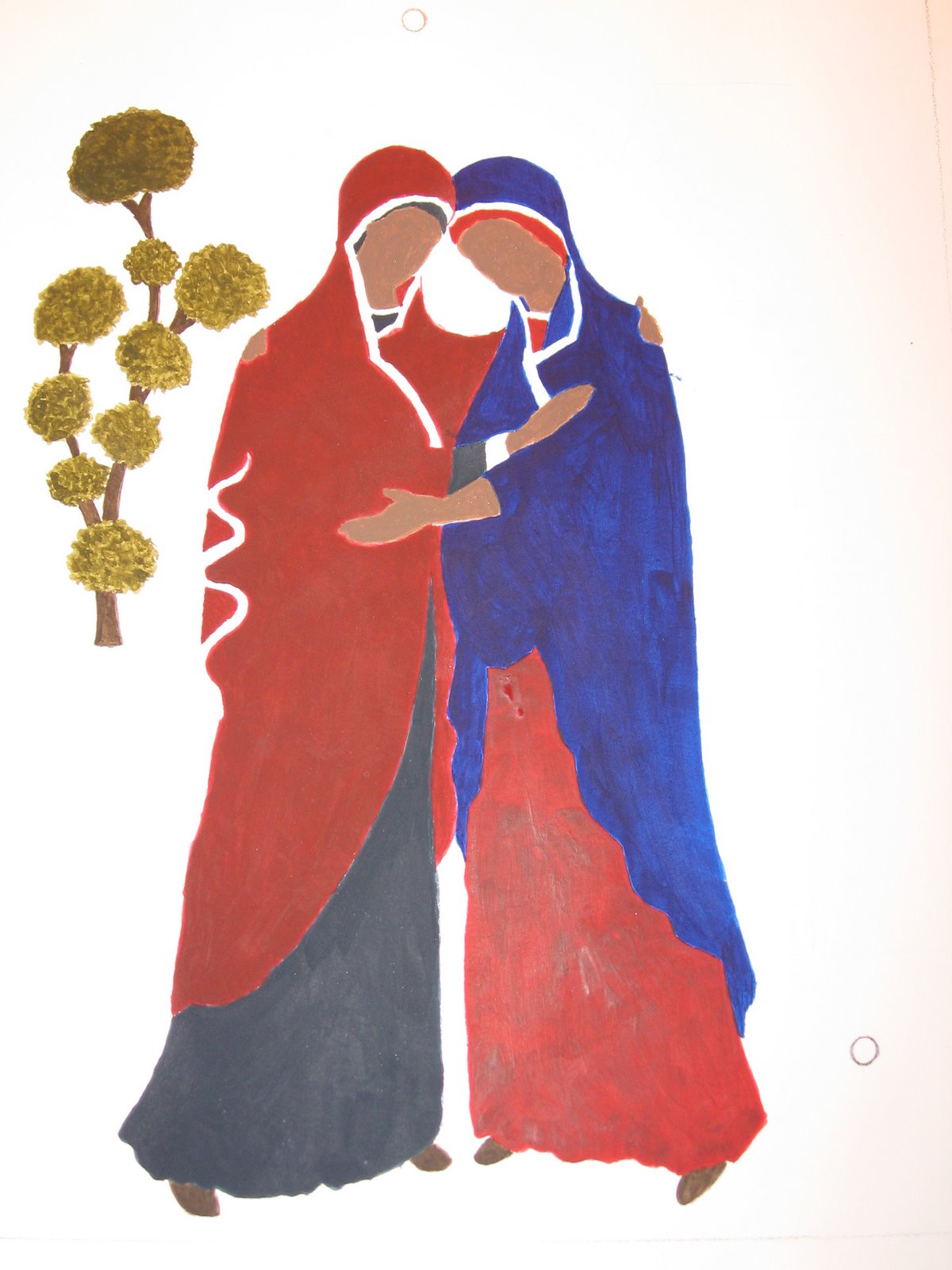
The scene portrayed is actually quite common. It is nothing really extraordinary – two friends embracing. The spectacle is repeated each day in a thousand different ways and contexts. It happens at airports, in driveways, at parties – to mention just a few contexts. In fact the occurrence is so common as often to be overlooked and passed over by the bystander.
06 Thursday Dec 2007
Posted in Uncategorized
Mary’s visit to Elizabeth is found only in Luke’s gospel. The passage begins after Gabriel’s announcement and Mary’s “yes” to God’s will and it concludes with Mary’s great canticle and her staying for three months with her cousin (Lk. 1:39-56).
05 Wednesday Dec 2007
Posted in Uncategorized
I am not a trained artist in any sense of the term. Although both my father and mother drew and painted when they were younger. I remember as a young boy watching as my mother drew flowers and people’s faces – maybe an interest was gained through this. (A hope I have during my time here at the university is to take some drawing classes.)
03 Monday Dec 2007
Posted in Uncategorized
The place of writing an icon is important, at least it has become so for me. On the surface with paint tubes, brushes and papers strewn everywhere the place can appear to be nothing more than a cluttered mess. In fact though it is a place of prayer and reflection – a place of encounter between one human soul and that which is much deeper and more true – the Divine.
24 Saturday Nov 2007
Posted in Uncategorized
16 Friday Nov 2007
Posted in Uncategorized
When we approach this passage of Luke’s gospel with a thought to the final days we tend to do so with an interpretation that is “writ large” I believe. All the great structures of humankind – we reflect – from the Temple in Jerusalem to the Taj Mahal to the Eiffel Tower to the latest skyscraper of capitalism will be torn down, will crumble before the approach of God. All the great accomplishments of humankind – as many and as varied as they are – are as dust before God and his Kingdom. In other words, look to what is happening without (most notably in the big events of the day’s news) in order to see the approach of God’s Kingdom, to predict the “End Times” and therefore to best be ready.
I wonder though if Jesus’ summons to be vigilant for the coming of the Kingdom might not be so much one of prediction and looking without to the “big” events of the world as more of a call of preparation and looking within – in humility and in truth. Through my relationship with Jesus, is the Kingdom being born within my life? Is the Kingdom witnessed to by my life and my actions? With this turn within we are led to ask what are those “costly stones and votive offerings” that we cling to in our lives – those attitudes and objects that we want to think offer protection, security and a sense of forever but which, in fact, really offer nothing in the end but imprisoning walls?
Here, the Litany of Humility prayed each week by Mother Teresa’s Missionaries of Charity might help open our eyes to the “costly stones and votive offerings” of our own lives.
From the desire of being esteemed,
From the desire of being loved,
From the desire of being extolled,
From the desire of being honored,
From the desire of being praised,
From the desire of being preferred,
From the desire of being approved,
From the desire of being consulted,
Deliver me, O Jesus.
From the fear of being humiliated,
From the fear of being despised,
From the fear of suffering rebukes,
From the fear of being calumniated,
From the fear of being forgotten,
From the fear of being wronged,
From the fear of being ridiculed,
From the fear of being suspected,
Deliver me, O Jesus.
Deliver us, O Lord, from our own costly stones and votive offerings – all those objects and attitudes that seek to stand in the way and prohibit the inbreaking of your Kingdom, your light and your truth into our lives! Lord, throw down the stones of these walls in order that your Kingdom and its life will grow within our hearts! The “stone not left on another stone” in the life of the disciple is a testament not of woe and doom but of the emergence of true life. As we grow in the Kingdom we learn to value less all those costly stones and votive offerings of our lives that we can so readily cling to.
We best ready ourselves for the coming of the Lord by looking within in a spirit of humble preparation and welcome and not by looking without in a false spirit of prediction.
07 Wednesday Nov 2007
Posted in Uncategorized
02 Friday Nov 2007
Posted in Uncategorized
31 Wednesday Oct 2007
Posted in Uncategorized