• About The Alternate Path

The Alternate Path

~ Thoughts on Walking the Path of Christian Discipleship

The Alternate Path

Tag Archives: Christ

Thoughts on the Sunday readings: Love and Friendship (6th Sunday of Easter – B)

10 Sunday May 2015

Posted by mcummins2172 in friendship, homily, life in Christ, love

≈ Leave a comment

Tags

Christ, friendship, love

Rue_dyingEarlier this week I was channel surfing and came across a broadcast of the first of the “Hunger Games” movies.  I have to admit that when the books and movies initially came out I was skeptical and avoided them altogether but then one day, kind of on a whim, I joined some friends who had decided to see the movie.  I am now a fan.  At the heart of that first movie (which I saw again this last week) is a scene where a young girl is killed in these games that pits child fighting against child to the death.  The heroine, who was trying to protect this young girl is heartbroken.  But in her pain and grief she does a tender thing.  She gathers flowers and places them around the body of the young girl lying dead on the forest floor.

In the cold world depicted in this story where, I would say, the sense of God has been lost (a world that at best can only say, “May the odds continually be in your favor.” rather than, “God be with you.”) the heroine performs a corporal work of mercy.  She buries the dead and she does it in love and friendship.  Via video cameras the nation silently watches and in response, in an imprisoned part of the country, a fight against the injustice of the oppressors breaks out! All because the heroine performed this simple act of taking the time to acknowledge the humanity and the dignity of this young girl … a humanity and dignity that all the “powers that be” were trying their best to negate.

There is a power to love and friendship. You know, if you think of all the great stories – whether they are expressed in movies, plays, literature, opera, whatever medium – a common element that runs throughout them all is the exploration of love and friendship. The settings both geographical and in time may be worlds apart. The characters and plot may be very different but in any good story there is an underlying story and exploration of the dynamics of love and friendship in life. The reader or viewer might not know what it is like to fly a bomber in WWII or stare at the walls of Troy or fight off zombies but everyone knows what it is like to yearn to give love and receive love and to desire friendship and remain in friendship.

Part of the essence of love and friendship is that it does not have to be flashy in order to be true. I thought of this yesterday in our parish’s celebration of first communion. Christ gives us himself (his body and blood) in the form of bread and wine – two things so utterly common. God does not need flash, God does not need smoke and mirrors and God does not need the latest fad in order to accomplish his plan in our lives. We might believe we need these things but God does not. Think of moments of friendship or moments when you gave or received authentic love … I would wager that the memories that come to mind are anything but flashy, more than likely they are common even to the point of being unnoticed by others – laughing with a friend, holding a loved one’s hand, comforting a child…

In today’s gospel (Jn. 15:9-17), Jesus says, As the Father loves me, so I also love you. Remain in my love … love one another as I love you … You are my friends if you do what I command you. I no longer call you slaves, because a slave does not know what his master is doing. I have called you friends, because I have told you everything I have heard from my Father. 

What does Christ give us and what does Christ call us to? Love and friendship. We must not pass this over, because this is the heart of it all! What unites all the great stories? What speaks to the depth of universal human existence? What does Christ give us? What truly transforms our lives and our world? Love and friendship. And the gospel message is that it is both love and friendship with one another and, through Christ, love and friendship with God! Christ calls us his friends; we need to take this to heart. We can never be friends in a sense of peer to peer with Christ but, nonetheless, he calls us friends. We need to pray on this truth and therefore on the great power of friendship that our Lord himself alludes to in this passage.

We should never underestimate the power of love nor the power of friendship.

…love one another as I love you.

I no longer call you slaves … I have called you friends…

Thoughts on the Sunday readings: “Remain” (5th Sunday of Easter – B)

02 Saturday May 2015

Posted by mcummins2172 in discipleship, homily, life in Christ, vine and branches

≈ Leave a comment

Tags

Christ, discipleship, homily, I am the vine you are the branches, martyrs

Vine1Like me, this past week, you may have been saddened by the rioting occurring in Baltimore.  Now that it has been determined that there is need for a criminal investigation we pray for justice and peace in that city.  In the midst of the rioting though, I was personally moved by the report of the gathering of clergy of many different denominations also marching through the streets calling for peace.  These clergy have chosen to remain.  You may also remember not long ago reports of Orthodox priests literally placing themselves between the warring factions in the Ukraine also praying for peace.  These priests chose to remain.  Recently, there were doctors and nurses who chose not to leave the different regions of Africa that were struck by Ebola rather they stayed to help the ill.  They chose to remain.  Every day, unnoticed and unreported, men and women help the elderly, the homeless, the addicted, the imprisoned and the ill.  These men and women choose to remain.

In today’s gospel (Jn. 15:1-8) our Lord specifically uses this word “remain” over and over again.  Remain in me, as I remain in you. Just as a branch cannot bear fruit on its own unless it remains on the vine, so neither can you unless you remain in me … Whoever remains in me and I in him will bear much fruit … If you remain in me and my words remain in you, ask for whatever you want and it will be done for you.

True strength is found not in violence, or insults, or in making a scene or calling attention to oneself but rather in the choice to remain.  The choice to persevere.  The choice to trust.  The choice not to live a distracted and self-focused life.  The choice to trust in the good of the other person.  The choice to bear patiently the injustices of our world and even wrongs endured.

No Christian is nor can ever be an isolated island.  The Christian life, by its very nature, must be rooted in the very life of Christ.  For us, Christ is not just a nice idea or ideal or great teacher; for the disciple Christ is Lord and our very lives must be rooted in his.  We must remain in Christ.  The Christian can be thrown into different raging fires of our world and not be burned, not wither precisely because the Christian is rooted in Christ who has overcome the world.  This has been seen throughout history and it continues to be seen in our world today.

A prized part of this “remaining” in Christ is found in the power of his words.  Our Lord says specifically to his disciples, You are already pruned because of the word that I spoke to you.  Later he says, If you remain in me and my words remain in you, ask for whatever you want and it will be done for you.  God’s word prunes but it prunes for life – it cuts off that which corrupts and that which stunts life.  When we begin to live God’s word then we remain in Christ.  St. John knew this and it is what he shares in his letter (1 Jn. 3:18-24), Those who keep his commandments remain in him, and he in them… 

Every day we need to pick up and read God’s word!  Every day we need to let these words sink into our hearts and every day we need to strive to live these words!

Christ never says that his disciples will not experience the fires and troubles of this world.  What he does say is that the one who remains in him will not wither, will not burn even in the midst of the fires of our world precisely because he or she is rooted in the very one who has overcome this world!  The Coptic Christians martyred by ISIS died saying the name of Jesus.  They did not wither in this fire of brutality, they remained in Christ, they endured and witnessed the hope we have in Christ and from their witness new life will emerge.  This has been seen throughout history and we see it in our world today.  We are today, and have always been, a church of martyrs.

Christ is Lord!  We remain in him.

The Preacher as Servant to Dialogue – Insights from Bl. Pope Paul VI

23 Thursday Apr 2015

Posted by mcummins2172 in dialogue, gospel, homily, Pope Paul VI, preaching

≈ 1 Comment

Tags

Christ, Dialogue, gospel, homily, Pope Paul VI, Preaching

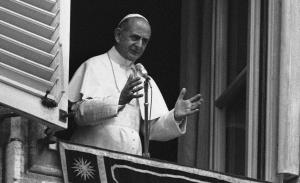
Pope Paul VIIt is always helpful to notice references in writings, especially papal writings, and then be willing to explore those writings referenced.  With a little digging you can be brought to some insightful, advantageous and even saving information.  Since I wrote my post on the preacher as servant of dialogue I have done some digging into the writings of Bl. Pope Paul VI.  Pope Francis references Paul VI quite extensively in Evangelii Gaudium.  Specifically referenced is Paul VI’s 1975 Apostolic Exhortation Evangelii Nuntiandi where the pontiff reflects on the Church’s responsibility of evangelization in the modern world.  What I have found of interest though (and the purpose for this post) is an earlier writing of Pope Paul VI – his first encyclical, Ecclesiam Suam (ES) and its section on the work of dialogue.

In this encyclical, Paul VI explores how the world and the Catholic Church can meet one another and even get to know and love one another.  (ES, 3)  When considering how the Church should engage the world, Paul VI quickly discards the ever-present temptation to focus solely on the evils of the world and crusade against them as well as the desire to subjugate the world in a form of theocracy.  Neither of these approaches will work.  Rather, Bl. Paul VI concludes; …it seems to Us that the sort of relationship for the Church to establish with the world should be more in the nature of a dialogue, though theoretically other methods are not excluded.  We do not mean unrealistic dialogue.  It must be adapted to the intelligences of those to whom it is addressed, and it must take account of circumstances. (ES, 78)

Paul VI then goes on to stress that this form of encounter is demanded due to dynamics prevalent within modern society – the understanding of the relationship between the sacred and profane, the pluralism of society and the maturity of thought men and women have attained in our modern world.  I think it safe to say that gone are the days (at least here in the U.S.) when the priest is the most educated person in the room.  But there is a deeper impetus for the discipline of dialogue and that is the respect it demonstrates.  The willingness to dialogue by its very nature witnesses to a person’s esteem for the other as well as one’s own understanding and kindness.  These are attitudes that every disciple of Christ, especially those called to the task of preaching, should cultivate and exemplify in life.

Our dialogue, therefore, presupposes that there exists in us a state of mind which we wish to communicate and to foster in those around us.  It is the state of mind which characterizes the man who realizes the seriousness of the apostolic mission and who sees his own salvation as inseparable from the salvation of others. (ES, 80)

If we want dialogue then we, ourselves, must be willing to dialogue authentically and, not only that, the discipline of dialogue builds on dialogue. The preacher, as servant to dialogue, must be willing and, in fact, is duty-bound to work at fostering this discipline in our world today.  Our world needs the discipline of dialogue.

Bl. Paul VI roots preaching in this greater task of the Church’s dialogue with our world.  Preaching is the primary apostolate … We must return to the study, not of human eloquence of empty rhetoric, but of the genuine art of proclaiming the Word of God.  We must search for the principles which make for simplicity, clarity, effectiveness and authority, and so overcome our natural ineptitude in the use of this great and mysterious instrument of the divine Word, and be a worthy match for those whose skill in the use of words makes them so influential in the world today and gives them access to the organs of public opinion.  We must pray to the Lord for this vital, soul-stirring gift… (ES, 90-91)

Paul VI then goes on to list out the proper characteristics of dialogue and, if proper for dialogue, then proper for preaching as the preaching task flows by nature out of the greater work of the Church’s dialogue with our world.

Clarity before all else; the dialogue demands that what is said should be intelligible. (ES, 81)  The caliber of an artist is found not in a work of art standing alone and isolated as if in a vacuum but in the ability of a work of art to engage people where they are at in their lives, to move them and to call forth a response, a dialogue.  If there is no engagement, it is fair to question if it is true art.  Striving for clarity in dialogue and striving for clarity in preaching matters.  Let there be no mistake, this takes work and practice but this ability to translate the realities of faith and gospel into the language of where people are at is extremely important and it marks authentic preaching.

Our dialogue must be accompanied by that meekness which Christ bade us learn from Himself: “Learn of me, for I am meek and humble of heart.” (ES, 81)  Our dialogue and our preaching must not be marked by arrogance or bitterness.  We must learn the meekness of Christ himself because in this lies the power of the gospel.  This “meekness of Christ” sets the words of the Church apart from all the other words that continuously wash over people in their everyday lives.  We should not underestimate this characteristic of meekness in the lives of people who are daily inundated and even assaulted by words wrapped in bias, anger, coercion and manipulation.

Our dialogue must have a confidence not just in the power of our own words (which could easily lead to arrogance) but also in the good will of both parties to the dialogue. (ES 81)  We must continually seek the good in the other and this must mark the words that we use and the dialogue we engage in.  To be a good preacher one must be convinced that people are yearning for the Word of God … and they are.  It might not be fully expressed, the desire might even be distorted, hidden or stunted but it is there and the preacher must learn to both listen for that desire and speak to that truth within the heart of people. This is not an easy discipline to acquire in a world that continually seeks to isolate and separate people but it is essential and is truly a counter-cultural witness.

Authentic dialogue must have the prudence of a teacher who is most careful to make allowances for the psychological and moral circumstances of his hearer … The person who speaks is always at pains to learn the sensitivities of his audience, and if reason demands it, he adapts himself and the manner of his presentation to the susceptibilities and the degree of intelligence of his hearers. (ES, 81)  Prudence is a cardinal virtue and can be practiced and developed by any person.  The virtue of prudence is fulfilled in the supernatural virtue of Counsel, one of the seven gifts of the Holy Spirit.  Prudence seeks to be aware of the other person(s).  The good shepherd knows his sheep.  Prudence can be seen as a proactive movement of respect.  It is not learning the sensitivities of the other in order to manipulate with the intent of achieving some desired result but learning about the other person in order to meet that person where he or she is at.  Authentic preaching must always avoid the temptation to manipulate.  I believe that Bl. Paul VI understood this because immediately after this reflection on prudence as a constitutive element of true dialogue he writes,

In a dialogue conducted with this kind of foresight, truth is wedded to charity and understanding to love.

And that is not all.  For it becomes obvious in a dialogue that there are various ways of coming to the light of faith and it is possible to make them all converge on the same goal.  However divergent these ways may be, they can often serve to complete each other.  They encourage us to think on different lines.  They force us to go more deeply into the subject of our investigations and to find better ways of expressing ourselves.  It will be a slow process of thought, but it will result in the discovery of elements of truth in the opinion of others and make us want to express our teaching with great fairness.  It will be set to our credit that we expound our doctrine in such a way that others can respond to it, if they will, and assimilate it gradually.  It will make us wise; it will make us teachers. (ES, 82-83)

In the dynamic of manipulation, I try to force you to change, consciously or unconsciously.  Authentic dialogue stands opposed to manipulation in all its forms.  Authentic dialogue summons both parties to an honest investigation of the subject at hand as well as a fearless rooting out of the tendencies of manipulation that each one of us carry within ourselves.

Finally, the discipline of dialogue and preaching must begin in the witness of the preacher’s own life if it is to be authentic and salvific in the lives of other people.

Since the world cannot be saved from the outside, we must first of all identify ourselves with those whom we would bring the Christian message – like the Word of God who Himself became a man.  Next we must forego all privilege and the use of unintelligible language, and adopt the life of ordinary people in all that is human and honorable.  Indeed, we must adopt the way of life of the most humble people, if we wish to be listened to and understood.  Then, before speaking, we must take great care to listen not only to what men say, but more especially to what they have in their hearts to say.  Only then will we understand them and respect them, and even, as far as possible, agree with them. 

Furthermore, if we want to be men’s pastors, fathers and teachers, we must also behave as their brothers.  Dialogue thrives on friendship, and most especially on service. (ES, 87) 

Dialogue and preaching, if it is to be authentic, must become incarnate which means that the preacher’s life must also become incarnate within the life of his community just as the Word of God became incarnate.  We are told at different times in the gospel story that Jesus was aware of the thoughts of other people before they ever even expressed them.  This was no form of magical clairvoyance on the part of our Lord but the ability to listen to hearts.  The Church has been given this ability, the preacher must cultivate this ability.  “Heart speaks to heart” noted Bl. John Henry Cardinal Newman.  The preacher must learn how to listen to both the heart of God speaking to the heart of his people as well as to the reply and yearning of God’s people.

To end, I would like to share one further quote from Ecclesiam Suam. 

To this internal drive of charity (the gifts Christ has bestowed on the Church in abundance) which seeks expression in the external gift of charity, We will apply the word “dialogue.”

The Church must enter into dialogue with the world in which it lives.  It has something to say, a message to give, a communication to make. (ES, 64-65)

The preaching task is rooted in the greater task of the Church’s dialogue with the world.  As a servant to dialogue, the preacher shares intimately in this task.  Hopefully, we can learn from the insight and wisdom of Bl. Pope Paul VI.

Thoughts on the Sunday readings: “We would like to see Jesus.” (5th Sunday of Lent – B)

21 Saturday Mar 2015

Posted by mcummins2172 in Christ, faith, law of love, law of reciprocity, life in Christ, sad logic of sin and death, sad logic of violence

≈ Leave a comment

Tags

Christ, dying to self, faith, law of love, law of reciprocity, sad logic of sin and death, sad logic of violence, seeing Christ

face_of_jesus_610x300“We would like to see Jesus.”  This is the request of some Greeks from today’s gospel.  (Jn. 12:20-33)  “We would like to see” the one who teaches with authority.  “We would like to see” the one who is compassionate, who welcomes the sinner, who goes out to meet others, who weeps for his friend who has died.  “We would like to see” the one who has come not to judge but to save.  “We would like to see” this teacher who says that there is a different way to live.  “We would like to see” the one who says “no” to the logic of violence and isolation.  “We would like to see” the one who does not live according to the law of reciprocity but rather according to a different law – the law of love.

We all know the law of reciprocity.  It is so present, so seemingly uncontested, that we easily take it for granted that it is just the way things are.  The law of reciprocity says an eye for an eye and a tooth for a tooth!  If you do this to me then I can do that to you!  It is a law that perpetuates the cycle of violence.  It is a law of strict justice/retribution alone.  It is a law that leads one into viewing other people solely in terms of being competitors, even adversaries, rather than brothers and sisters.  Due to this, it is a law that isolates and breaks people, communities and nations into opposing camps.  It is also a law that ultimately binds and enslaves.  Jesus never lived according to the law of reciprocity, rather he lived according to the law of love and because of this Jesus is the freest person that has ever walked the face of the earth.

Behind this simple request of these Greeks is a profoundly fundamental yearning and recognition of the human heart – the desire to live differently, to escape the logic of violence and the tyranny of reciprocity.  We yearn for this.  On our own, we cannot achieve it.  “Sir, we would like to see Jesus.”  We need Jesus because he alone can forgive what needs to be forgiven within ourselves, because he alone can make new of what has been made old through sin.  Without Jesus we are left under the law of reciprocity – it is the best we can hope for.  With Jesus, we can learn and we can live the law of love and we can gain that freedom that Jesus himself knew.  We can be made free!

On the surface it seems that Jesus does not answer the request of the Greeks brought to him via Andrew and Philip.  Rather than saying, “Bring them here,” he goes off into a reflection on the Son of Man being glorified. But this reflection is his response!  “You want to see me?  You want to see the one who lives a different way, the one who does not live according to the logic of violence and the law of reciprocity?  You will see this and so much more!  Watch what happens on Golgotha, watch what happens within the tomb itself!  Watch what happens within “this hour”!

Then he give us God’s answer to that deepest disconnect of the human heart.  “You wish to see me because you also want to be free of the law of reciprocity, you also want to overcome the sad logic of violence and isolation.  You want to live differently.”  “Amen, amen, I say to you, unless a grain of wheat falls to the ground and dies, it remains just a grain of wheat; but if it dies, in produces much fruit.  Whoever loves his life loses it, and whoever hates his life in this world will preserve it for eternal life.”

Freedom, a different way to live other than the dictates of reciprocity, is found when a person lets go of self and lives for others … in Christ.  This last part is often overlooked.  Sadly, even by teachers of Christianity sometimes.  Jesus is not proposing a vague philosophy open to any person apart from him.  The request of the Greeks was, “We would like to see Jesus.”  Jesus – not his teachings, not his ideas but the person.  When we die to self and live for others within the reality of Christ’s own sacrifice then the logic of violence and isolation can be overcome.  Christ goes on to say, “Whoever serves me must follow me, and where I am, there also will my servant be.  The Father will honor whoever serves me.”  

Life can be lived in a different way.  The sad logic of violence and isolation is not inevitable.  The new law of love is possible!

“We would like to see Jesus.”

Newer posts →
Follow The Alternate Path on WordPress.com

Enter your email address to follow this blog and receive notifications of new posts by email.

Previous Posts

  • December 2025
  • November 2025
  • August 2025
  • April 2025
  • February 2025
  • January 2025
  • December 2024
  • August 2024
  • July 2024
  • June 2024
  • May 2024
  • April 2024
  • March 2024
  • February 2024
  • January 2024
  • December 2023
  • November 2023
  • October 2023
  • August 2023
  • July 2023
  • May 2023
  • February 2023
  • January 2023
  • December 2022
  • August 2022
  • July 2022
  • April 2022
  • January 2022
  • December 2021
  • September 2021
  • August 2021
  • July 2021
  • May 2021
  • April 2021
  • January 2021
  • December 2020
  • November 2020
  • October 2020
  • August 2020
  • July 2020
  • May 2020
  • April 2020
  • March 2020
  • February 2020
  • December 2019
  • October 2019
  • September 2019
  • August 2019
  • July 2019
  • May 2019
  • April 2019
  • March 2019
  • February 2019
  • December 2018
  • November 2018
  • October 2018
  • August 2018
  • July 2018
  • June 2018
  • April 2018
  • March 2018
  • February 2018
  • January 2018
  • December 2017
  • November 2017
  • September 2017
  • August 2017
  • July 2017
  • June 2017
  • May 2017
  • April 2017
  • March 2017
  • February 2017
  • January 2017
  • December 2016
  • November 2016
  • October 2016
  • September 2016
  • August 2016
  • July 2016
  • June 2016
  • May 2016
  • April 2016
  • March 2016
  • February 2016
  • January 2016
  • December 2015
  • November 2015
  • October 2015
  • September 2015
  • August 2015
  • June 2015
  • May 2015
  • April 2015
  • March 2015
  • February 2015
  • January 2015
  • December 2014
  • November 2014
  • October 2014
  • September 2014
  • August 2014
  • July 2014
  • June 2014
  • May 2014
  • April 2014
  • March 2014
  • February 2014
  • January 2014
  • December 2013
  • November 2013
  • October 2013
  • September 2013
  • August 2013
  • July 2013
  • June 2013
  • May 2013
  • April 2013
  • March 2013
  • February 2013
  • January 2013
  • December 2012
  • November 2012
  • October 2012
  • September 2012
  • August 2012
  • July 2012
  • June 2012
  • May 2012
  • April 2012
  • March 2012
  • February 2012
  • January 2012
  • December 2011
  • November 2011
  • October 2011
  • September 2011
  • August 2011
  • July 2011
  • June 2011
  • May 2011
  • April 2011
  • March 2011
  • February 2011
  • January 2011
  • December 2010
  • November 2010
  • October 2010
  • September 2010
  • August 2010
  • July 2010
  • September 2008
  • August 2008
  • April 2008
  • March 2008
  • February 2008
  • January 2008
  • December 2007
  • November 2007
  • October 2007
  • September 2007

Popular Posts

  • thealternatepath.org/wp-c…
  • thealternatepath.org/wp-c…
  • lh3.googleusercontent.com…
  • thealternatepath.org/wp-c…
  • thealternatepath.org/wp-c…
  • thealternatepath.org/wp-c…
  • thealternatepath.org/wp-c…
  • thealternatepath.org/wp-c…

Blog at WordPress.com.

  • Subscribe Subscribed
    • The Alternate Path
    • Join 156 other subscribers
    • Already have a WordPress.com account? Log in now.
    • The Alternate Path
    • Subscribe Subscribed
    • Sign up
    • Log in
    • Report this content
    • View site in Reader
    • Manage subscriptions
    • Collapse this bar
 

Loading Comments...