• About The Alternate Path

The Alternate Path

~ Thoughts on Walking the Path of Christian Discipleship

The Alternate Path

Author Archives: mcummins2172

Learning from Eli and Samuel in the Church’s ministry to youth and young adults

01 Friday Feb 2013

Posted by mcummins2172 in Uncategorized

≈ Leave a comment

st1\:*{behavior:url(#ieooui) }

Eli and Samuel

On January 31st, the Church celebrated the Feast of St. John Bosco – a saint who devoted his life to helping young people.  This saint and his feast day has led me to reflect on my own experience of ministering to youth and young adults, especially in a time and culture that is “youth obsessed”.  We can readily see how this obsession is played out in all areas of society – the entertainment and news media industry, politics, sports, education, relationships – just to name a few.  Yet, my own reflection led me to wonder how might this obsession with youth bleed into and perhaps even negatively influence the Church’s ministry to youth and young adults as they seek to claim their own Christian faith and spirituality?

I will start by stating that one of the core convictions I have gained in my ministry with youth and young adults is that young people do not benefit from older people trying to act young; rather young people benefit when their elders remember their own age and are authentic to whom they, themselves, are.  
To use the language of Scripture: in our culture today, our young Samuels need the guidance of older and wiser Elis.  For any person involved with young people, 1 Samuel 2-3 is a must read.  I have returned again and again to this Scripture passage for wisdom and I have come to believe that Eli is an often unsung hero in Scripture.  I would like to use this encounter between the young Samuel and the elder Eli as a means to share some thoughts. 
 
In the second chapter of 1 Samuel we are told that the Lord had withdrawn his favor from the house of the priest Eli due to the corrupt actions of his two sons, Hophni and Phinehas.  Yet the young Samuel “continued to grow both in stature and favor with the Lord and with men.” (1 Samuel 2:26)  In the third chapter we find the famous scene of the young Samuel hearing the voice of the Lord, mistaking it for the voice of the old priest and going each time to the sleeping Eli until finally Eli catches on to what is happening and instructs the young man in how to respond. 
 
For our purposes here I would like to focus more on Eli than Samuel.  There are four things that Eli does which are worthy of reflection and emulation.

  1. Eli has a relationship with the young Samuel while not pretending to be Samuel’s peer.
  2. Eli was a man of prayer who was able to eventually recognize what was occurring and give good instruction to the young man.  
  3. Eli put what was in Samuel’s best interest before his own.  
  4. Eli trusted in God.  

The fact that the young Samuel is comfortable in seeking out the elder Eli each time he hears the voice of the Lord witnesses to an established relationship between the two persons yet nowhere is there expressed any confusion between their differing roles.  Eli knows who he is and therefore he is comfortable in his own skin and he has no need to pretend to be something that he is not.  An approach to Christian faith and ministry that needs to abandon itself and our great Christian heritage in order to chase after the world in the hopes of being relevant lacks maturity and therefore any real depth of insight to offer a young person who is searching.  It might be flashy in the moment but beyond that there is just really not that much there.

   
What enabled Eli to be comfortable in his own skin and act out of his own authenticity was that he was a man of prayer.  Like any true discipline, the fruit of prayer is only born after the establishment of a hard-fought for habit and practice.  I would hazard to guess that what enabled Eli to finally recognize what was occurring for the young Samuel was a lifetime spent devoted to the often daily and mundane work of prayer.  An approach to Christian faith and prayer which seeks to manufacture “spiritual highs” at all times rather than developing the daily discipline of prayer is more about addiction than honest Christian spirituality.  Such an approach is in fact a disservice.  The life of Christian faith more often than not grows gradually and through daily habit.
 
Eli knew not only what the Lord’s call for Samuel meant for the young man, he also knew what it meant for him and his family.  Frankly, God’s calling of Samuel meant the end of the road for Eli and his own sons.  I do not think it out of place to believe that this thought must have crossed Eli’s mind along with the temptation to intentionally misguide the youth.  Yet, Eli did no such thing.  Eli put Samuel’s best interest before his and his own sons’ interest.  This will forever be in Eli’s favor.  To let go of self for the good of another takes a mature and wise heart.  My experience has been that wisdom is sorely lacking in our world today and one way that this can sadly be witnessed is when members of an older generation cannot let go of their own interests, needs and particular viewpoints in deference to what is in the best interest of the younger generation.  I would hazard to guess that one of the reasons behind many younger people no longer defining themselves as religious is their own experience of their elders’ inability to put the needs of others before their own.  The “elders” in this context tending to be a generation of people, I would think, that would more readily define themselves in terms of being “religious”.  When young people no longer define themselves as religious are they forsaking religion per se or are they reacting against impoverished examples of religion being lived which they have experienced?  True maturity is found in not always needing to put oneself first in order to seek and value the good of the other.  It is this type of maturity that truly aids the next generation as we witness in this encounter between the elder Eli and the young Samuel. 
  
What enables this letting go is a profound trust in God.  Eli had such a trust.  Following upon God’s revelation to Samuel; Eli requests that the young Samuel inform him of all that had been spoken by the Lord, holding nothing back.  Samuel shares all, including the ending of Eli’s house.  Eli responds, “It is the Lord, let him do what seems good to him.” (1 Samuel 3:18)  Eli’s trust in the Lord was perhaps one of his greatest gifts to the young Samuel.  A faith obsessed with pursuing youth and relevancy lacks this depth of trust because it is a depth that can only be achieved by negation and passing through the dark night of the senses.  At this point, everything Eli had been about was negated yet he is able to offer this profound statement of trust in the Lord.  In the end, may God’s will be done.
A friend of mine once shared that it does the Church no good to chase after the world.  Yes, we live in the world and we must seek to encounter and dialogue with it but it does no good if we are co-opted and lose our own soul in the process.  Eli, I believe, has a lot to teach us about helping the young to find and know God while, at the same time, remaining authentic to who we ourselves are.     
Once again, to the "great shlep"

24 Thursday Jan 2013

Posted by mcummins2172 in Uncategorized

≈ 1 Comment

2012 March for Life in Washington, D.C.

This afternoon I will leave with eleven college students from the Catholic Center at ETSU to attend the national March for Life in Washington, D.C.  This will be the fifteenth time that I have attended the March.  Last year, after returning from the march a friend shared an editorial from a person who is pro-choice and who happens to have a comfortable office overlooking the march route.  She disdainfully referred to the march in her column as the “great shlep” – looking down on the march goers from her office window.  As you might imagine her article was not very complimentary.  In honor of her though, I now refer to the March (at least in my own mind) as the “great shlep”.

I googled definitions for “shlep” and this is what I found in the “Urban Dictionary website”:

“shlep”
1. To carry something heavy.
2. To carry something in a dragging fashion, as if tired.
3. To go somewhere, particularly somewhere far away or otherwise difficult to reach; often implies resentment of putting forth such effort.

The elevator was broken, so I had to shlep the TV set up five flights of stairs.
I shlepped my book bag behind me.
I shlepped all the way out here from downtown so you could tell me you feel like staying in tonight?

I think that the word fits.  The marchers do carry something heavy – they carry the conscience of a nation.  It is a conscience that is hurting yet not silenced.  It is a conscience that affirms that there is dignity to all human life which must be upheld.  It is a conscience which recognizes that whenever life is devalued in one area then all life is wounded and devalued.  It is a conscience which recognizes that there is great harm in abortion – to the beauty of a child lost, to the soul and psyche of the mother and the father and to society as a whole.

This year is the fortieth anniversary of Roe v. Wade.  The millions of lives lost is staggering.  In so many ways unimaginable.  We are tired yet we will continue the shlep.  Why?  Because it is the right thing to do.  History will judge every generation for what it stands for and as our knowledge grows regarding life in the womb I predict that future generations will look on ours and wonder how we could have ever allowed such a thing to happen; just as today we look on past generations and wonder how could slavery and the oppression of women have ever been justified.  As we have seen before; just because something is the law of the land that does not make it right.  Roe v. Wade is bad law which has wounded, weakened and impoverished the heart of our nation.

In the “great shlep” we are going somewhere – not just to our nation’s capital for a one day event but to the future, to the point where the dignity of all life (from natural birth to natural death) is affirmed and valued.  In the language of religion; we are marching to the Kingdom of God.  For me, the March for Life is a continuation of the civil rights marches of the sixties.  The paraphrase Dr. Martin Luther King Jr., the arc of history bends toward justice and that which is right.  This is the objective truth that energized and fortified the civil rights movement of the sixties and their great work and it is the same objective truth which emboldens the pro-life movement.  There is truth and it will not be denied and all which is untrue will eventually fall away.  We are marching toward the future.

So, once again, with prayer and humility I go to the “great shlep”.  If I happen to see a woman disdainfully looking down on me and the crowds from her office perch I will smile and wave at her and maybe one day she will come and join us.               


The Wedding Banquet and Les Miserables

19 Saturday Jan 2013

Posted by mcummins2172 in face of God, Kingdom of God, love, mercy, wedding banquet

≈ 1 Comment

Jean Valjean and the Bishop (scene from Les Miserables)

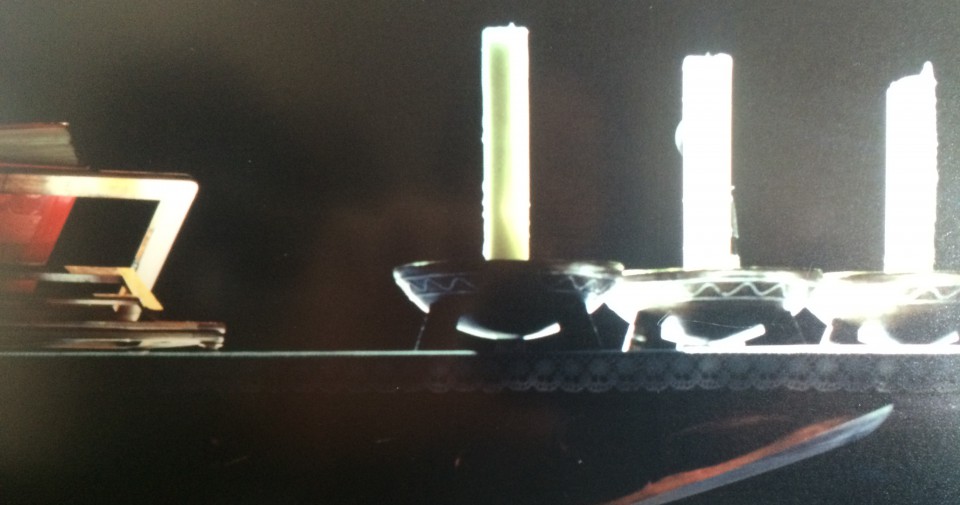
There is a scene found in the beginning of the story Les Miserables (currently playing at theaters as an award-winning movie) that is quite striking.  Jean Valjean has been freed from his twenty year imprisonment for stealing a loaf of bread yet he is still ostracized by society due to the identification papers he must carry on himself.  The papers testify that he is a former convict and therefore no one wants anything to do with him.  Embittered by this, not able to find work and left starving, Jean Valjean finds himself taken in one night by a Catholic bishop.  He is given a warm meal and a place to sleep.  Yet, in the middle of the night in an act of desperation and anger, Jean Valjean makes off with the bishop’s silverware.  He is caught by the local authorities and brought back, yet the bishop (at this point) does a truly remarkable thing.  Knowing full well what Jean Valjean has done, the bishop tells the officers that he freely gave him the silverware and he even tops this by giving him his last two candlesticks.  Jean Valjean is freed and by this act of charity is given a new life. 

In light of this Sunday’s gospel (Jn. 2:1-11) I would say that this bishop through his action of forgiveness and mercy not only gave Jean Valjean a new life but invited him into the wedding banquet.

The turning of water into wine is the first miracle of Jesus’ public ministry.  As Christians we rightly see this miracle and the context in which it occurs (the wedding banquet) as a foreshadowing of the coming Kingdom of God which Christ comes to inaugurate.  The wedding banquet is a celebration of great joy and union.  The Kingdom of God is the fulfillment of all humanity’s hope and yearning where heaven and earth are once more united.  At the wedding banquet water is turned into wine; in the Kingdom of God the daily and mundane is transformed into moments of rich encounter with the divine. 

The wedding banquet and its miracle is rich in typology and in symbols for Christians yet I would like to continue to hold this miracle story in dialogue with the action of the bishop from Victor Hugo’s book in order to bring out another dimension found within the gospel story.  As Christians, not only are we to rejoice in the banquet ourselves we are also meant to invite others within.  In truth, we cannot fully celebrate the banquet ourselves unless we see to the needs of others; unless we also invite others within through acts of mercy and love. 

Mary, as always, is the model in this for us.  Mary is a woman fully immersed in the culture of her time and she knows the importance of the wedding banquet.  She is concerned for the good of this young couple and she knows how poorly it might reflect on them if the wine runs out.  Possibly they were from poorer families who could not afford a lavish celebration.  It is Mary’s awareness of the need of this young couple and her concern for them that leads her to her son just as it is the bishop’s awareness of Jean Valjean’s need that leads him to mercy.  Confident in the mercy and love of her son, Mary does not even question or argue after making her request known rather she turns to the servers and simply says, Do whatever he tells you. 

The logic of the banquet (which is the logic of the Kingdom of God) is that mercy and love must be extended.  It is not enough to celebrate the banquet for ourselves; in fact that is a truly impoverished celebration.  To truly celebrate the banquet we must be willing to let go of ourselves – our needs and wants – and we must be willing to extend love and mercy to one another – to family, to friends and to strangers.  It is that simple.  This is the logic of the banquet and it is the logic of the Kingdom of God which overcomes all the false philosophies and sad divisions of our world.  As Christians, we are called to live the logic of the wedding banquet. 

At the end of the story when Jean Valjean is being led to eternal rest – a true father who gave of his life for his adopted daughter Cossette – he shares this wisdom, “To love another person is to see the very face of God.” 

To live a life in the logic of the banquet – helping to extend God’s love and mercy to all people – is to know God and to share already in joy of his Kingdom.     

The Baptism of the Lord: Scripture interprets Scripture

12 Saturday Jan 2013

Posted by mcummins2172 in Baptism of the Lord, humility, love, obedience

≈ 2 Comments

Baptism of the Lord, El Greco

Scripture interprets Scripture.  This is one of the principles of sound exegesis – passages of Scripture can be held together in dialogue to bring one to a deeper awareness of the Christian faith.  For this Sunday’s celebration of the Baptism of the Lord we are given Luke 3:15-16, 21-22.  In Luke’s presentation of the baptism of the Lord we find this written:

After all the people had been baptized and Jesus also had been baptized and was praying, heaven was opened and the Holy Spirit descended upon him in bodily form like a dove.  And a voice came from heaven, “You are my beloved Son, with you I am well pleased.”

In the second chapter of Paul’s Letter to the Philippians we read this:

Have this mind among yourselves, which was in Christ Jesus, who, though he was in the form of God, did not count equality with God a thing to be grasped, but emptied himself, taking the form of a servant, being born in the likeness of men.  And being found in human form he humbled himself and became obedient unto death, even death on a cross. 

These passages are important, I believe, because they can bring us into the mind of Christ and into a deeper awareness of how he accomplished his salvific mission.  In the Creed we profess the great mystery that Jesus is fully God and fully human – “God from God, Light from Light, True God from True God … and by the Holy Spirit was incarnate of the Virgin Mary, and became man”.  On the surface we can assume that Christ accomplishes his mission by the exercise of his unique power of being the Son of the Father, the second person of the Trinity.  Christ on his own, by his independent strength of will, accomplishes his task. 

I do not believe this is true and I point to the above passages quoted for a different interpretation.  In Philippians we are told that Christ emptied himself.  The Son of the Father lets go of his glory.  In the third chapter of Luke’s gospel we are told that heaven was opened and the Holy Spirit descended upon Christ.  By holding these passages together we are brought to the awareness that Christ does not accomplish his salvific mission through the sole exercise of his glory of being the Son of the Father; rather, the Son empties himself thus both allowing the full humanity of Christ to cling to the will of the Father and allowing the Holy Spirit to fully work through him.

Christ is not a lone cowboy who rides into town one day and by his own power gets rid of the bad guys.  Rather, in Christ, we find humility, obedience, joy and love at work.  The Son emptying himself, the full humanity of Christ clinging to the will of the Father, the joy of the Father in his Son, and the love of Holy Spirit flowing between Father and Son and through the Son to bring forth miracles and accomplish the salvific event.

It is not “will to power” that accomplishes the salvific event but rather humility and the obedience of love.

Wherever the Son is, there also is the Father and the Holy Spirit.  In Christ, we find the whole Trinity at play. 

Through our baptisms we are brought into the very life of the Trinity and we also are brought into this very dynamic.  What we can accomplish in our lives as Christians and as Church is not accomplished by what we can do on our own (the sad and tired logic of our world) but rather by learning to live as Christ lived – emptying ourselves of glory, clinging to the will of the Father, and receiving the love of the Holy Spirit.

 “You are my beloved Son, with you I am well pleased.”               

The Christmas Pranzo

02 Wednesday Jan 2013

Posted by mcummins2172 in Christmas, Community of Sant'Egidio, Pranzo

≈ Leave a comment

Basilica of Santa Maria in Trastevere

A good meal with friends creates a human space in one’s life that not only nourishes the body but also the soul and spirit of a person.  This is why feasts are so important.  For a special feast we set aside time from the rush of life, we give attention to decoration and setting, we invite those we love and care about and together we sit down for a fine meal and for valuable and rare time to be present to one another.  In the utilitarian rush of our world a feast can even be a subversive action where we conspire in love to say that there is so much more to life than what can be measured and commodified.

For thirty years now the Community of Sant’Egidio has been holding such a feast (the Pranzo) every Christmas day.  Thirty years ago the Community hosted around fifty friends made up of the poor, the elderly and the physically and mentally handicapped for the first Pranzo.  This year it has been determined that the Community hosted over one hundred and fifty thousand people around the world for the Pranzo.  At the Basilica of Santa Maria in Trastevere the pews inside the church were set aside and tables and chairs set up and friends gathered together for the meal.  In New York City a few Christmas dinners took place for the elderly in nursing homes and for the easily forgotten homeless.  In parts of Africa whole villages gathered together for the feast.  In Johnson City, TN the John Sevier Center (a low income housing center) provided the location for the Christmas Pranzo where fifty-five persons were served.
Burkina Faso
It is more than just a meal.  The Pranzo is a time to be human and to know that one is valued and loved and this applies both to those who are served the meal and to those who serve.  The Pranzo is a gathering of friends; friends who have been gathered together by the love of the incarnate Word who came to break down all barriers, to overcome all sad divisions and to gather all peoples into the love of the Father’s Kingdom.  As one homeless man noted while leaving Santa Maria in Trastevere after the feast, “When I think of the Kingdom of God I think of something like this!”
The Pranzo connects Christians once again with the ancient tradition within our Church of feeding the poor specifically on Christmas Day and the Pranzo flows directly from our celebration of the Eucharist.  We all are familiar with the image of the newborn Christ wrapped in swaddling clothes and lying in a manger (the place where animals are fed).  Christ is indeed the Bread of Life and as we are nourished by this Bread that is Christ himself then we, in turn, are to help in nourishing our world.  This nourishing is more than just the physical, it is also a spiritual nourishing that we are to assist by actions that remind us that yes, we are human, we have dignity and we are meant for more than an isolated existence.  In fact we are meant for relationship and friendship with one another and even with God!  Christ came, we are told, that we might have life and life to the full!  In many ways the Pranzo is a crèche for our modern and distracted world.  It is a continuation of the dream of St. Francis. 
Johnson City, Tennessee
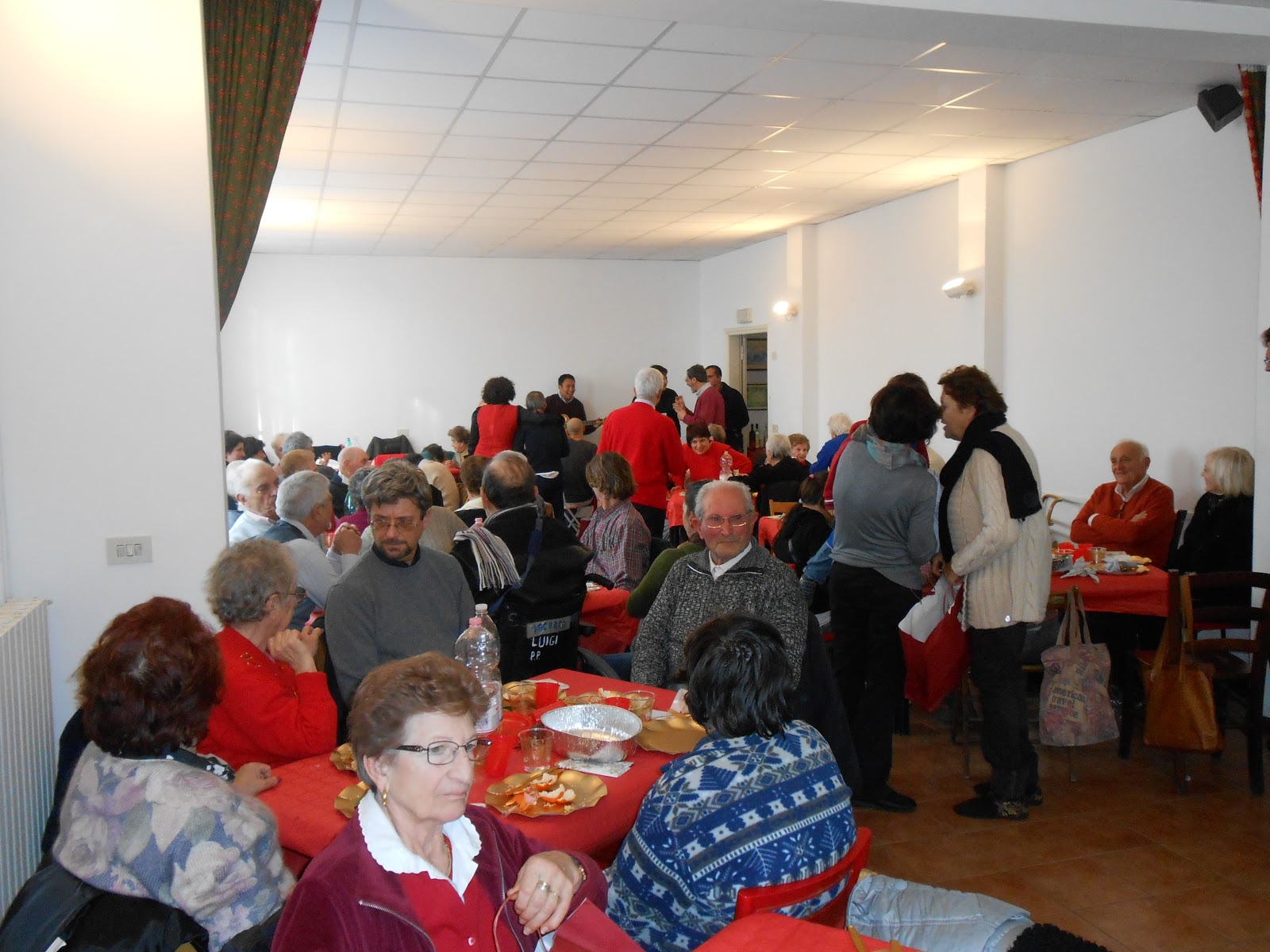
This year I was able to participate in the Pranzo at Primavalle on the periphery of Rome.  (In Rome alone this year there were over one hundred Christmas meals in churches and other locations.)  Primavalle is close to what we in America would term a “senior citizen center”.  The Community of Sant’Egidio runs various activities and prayer at Primavalle which touches and nourishes the lives of the elderly, the handicapped and the poor in the area.  For weeks the community worked and planned the Pranzo.  Gifts were purchased and wrapped, invitations were sent out, decorations were acquired and the multi-coursed meal was prepared.  On Christmas day following the Mass tables and chairs were set up and decorated and over one hundred people gathered together in friendship to celebrate the feast!  At one side of the room sat the image of the infant Christ in the manger; in many ways presiding over the feast! 
Primavalle in Rome
At the end of the meal each of the invited friends received an individual gift.  Afterwards the building was cleaned by many people and all involved were tired but I could not help but be struck by one person who was joyfully and unself-consciously whistling to himself while helping to clean. 
Joy, we are told, is the surest indicator of the presence of God.                

Feast of the Holy Family

30 Sunday Dec 2012

Posted by mcummins2172 in commnunity, God as Trinity, Holy Family

≈ 1 Comment


Happy Feast of the Holy Family!

“‘God is love and whoever abides in love abides in God.’ … God is not ‘falling in love,’ but family, shared existence. The God of the incarnation lives in a family, a trinity, a community of shared existence. Hence, to say that God is love is to say that God is community, family, shared existence, and whoever shares his or her existence inside of family and community experiences God and has the very life of God flow through him or her.” (Ronald Rolheiser, The Holy Longing)

St. John, apostle and evangelist

27 Thursday Dec 2012

Posted by mcummins2172 in Uncategorized

≈ Leave a comment

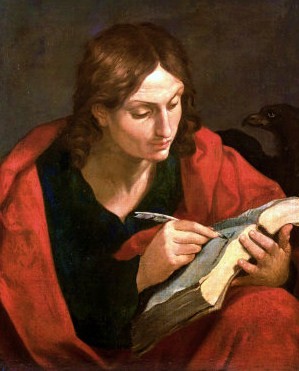
St. John the Evangelist

Two days after Christmas, the Church celebrates the Feast of St. John, apostle and evangelist.  John is the apostle who stood by the Cross of Christ and received Mary into his home.  The gospel attributed to John was the last of the four canonical gospels to be written and contains the most explicitly developed and exalted understanding (Christology) of who Christ is.  This can be seen in the very first verse of the first chapter of John: In the beginning was the Word, and the Word was with God, and the Word was God.  John wastes no time in presenting the great mystery of Christ as fully God and fully human!

Here, I think it is helpful to distinguish the Church’s understanding of mystery as contrasted to our pragmatic American mindset.  Often, in our American understanding, we view mystery as a problem to be solved and then moved on from.  The Church’s understanding is different.  The Church invites us to view mystery as a reality to be lived and encountered.  As we continually live and encounter this great mystery we are brought to truer understanding and deeper conversion.  The mystery of Christian faith is not a problem to be solved and left behind but rather a living reality to continually be returned to and a reality which does not fail to nourish us. 

Perhaps this understanding of mystery (and specifically the mystery of Christ as fully God and fully human) is why the Church has placed this Feast of St. John just two days after our celebration of Christmas.  On Christmas we celebrate the incarnation of the Word made flesh; today we are invited to live and encounter this mystery whom we name Jesus, Lord and Savior. 

In light of this understanding of mystery, I think it appropriate to share a few verses from John’s gospel that might assist our prayer and reflection during these first days of the Christmas season.
(I would invite any who might read these words to spend some time in the practice of Lectio Divina with these words during these first days of the Christmas season.  Sit with these words from John’s gospel and note what strikes your heart.) 
The verses are from Chapter 1 of John:
The true light that enlightens every man was coming into the world.  He was in the world, and the world was made through him, yet the world knew him not.  He came to his own home, and his own people received him not.  But to all who received him, who believed in his name, he gave power to become children of God, who were born, not of blood nor of the will of the flesh nor of the will of man, but of God.
And the Word became flesh and dwelt among us, full of grace and truth; we have beheld his glory, glory as of the only Son from the Father.  (John 1:9-14)
The Word came to his own home…  What a marvelous and also tender thing!  God created the world and prepared the people of Israel that He might have a “home” to come to.  Creation (and therefore we) are of primary concern to our God!  God is not content to let us be lost in sin and death so he prepares a home.  The Word becomes flesh!
“Home” is a powerful word, a word laden with meaning and symbolism.  John is opening for us a great truth of our Christian faith.   God, it seems, does not just want to save us and correct our erring ways while at the same time remaining distant and removed; rather He wants to make a home with us.  God wants to make a home with us!  This truly gives an added dimension to the manger scene!
How might this “home” be made?  But to all who received him, who believed in his name, he gave power to become children of God; who were born … of God.  When we open our own hearts to receive Christ then our Lord enters and makes of our own hearts a home where he might dwell.  And as we receive Christ then he makes of our hearts a place of welcome (a “home”) for others.
The Church and the apostle John are giving us a great truth to chew on these first days of Christmas – the birth of Christ both makes possible our own birth and give us a true home.  As we encounter and receive Christ who is the Word made flesh then we, ourselves, are made children of God and members of the household of God! 
God comes to make a home with us!

The "Perfect Storm" – the Sandy Hook Elementary School tragedy

17 Monday Dec 2012

Posted by mcummins2172 in build, evil, love, Sandy Hook Elementary school, shooting

≈ Leave a comment

I have been watching the news on the tragic shooting at Sandy Hook Elementary School in Newtown, Conneticut from Italy.  (I am in Rome studying Italian for three weeks and praying and working with the Community of Sant’Egidio.)  I first heard of the shooting through Fr. Francesco who made mention of it during his reflection for the community’s evening prayer last Friday.  Since then my heart has been hurting for all the victims and their families, for the community of Newtown, for our nation and even for the disturbed young man who committed this horrible act. 

Not that long ago our nation watched as different weather patterns and environmental factors came together to produce what we now call “Superstorm Sandy”.  A storm that devastated New York and New Jersey.  Rising sea levels combined with shifting air currents and warmer temperatures to produce the superstorm we saw wreck so much damage and take so many lives.  I find it ironic that Hurricane Sandy and this elementary school share the same first name. 

In many ways this is how I view what tragically happened last Friday – the coming together of so many fronts of different activity that produced an explosion of senseless violence and destruction – a “perfect storm” if you will.  What are these “fronts”?  I would list a few.  The glorification of violence in our society throughout all forms of media, entertainment and interaction.  The tearing down of social structures that have historically served as safety nets of support in our society (i.e. family, church, neighborhoods, community).  The isolation of the individual that is growing in our society.  The pressures laid on all people but especially the poorest due to the economic crisis.  The overuse and over-prescribing of medications that can actually hinder the development of proper life coping skills.  (There is a legitimate value to medication which I do not deny but I believe it a fair and needed question to ask if medications are overused and to question this overuse.)  The de-valuing of life in our day and time – life in the womb, life in prison, the dignity of the stranger, the life of the elderly.  A dismissal of any sense of the common good over a myopic focus on the individual.  A breakdown of mental health services in our society.  A destructive competitive edge to relationships and living and suceeding in life which permeates, it sometimes seems, even the very air which we breath.  An easy access to guns and truly excessive fire-power that I cannot honestly believe the Founding Fathers could foresee. 

I cannot help but believe that all these factors came together in a perfect storm in the life of that troubled young man – a perfect storm that exploded in Newtown. 

In the classic movie “A Man for All Seasons” there is a scene where the son-in-law and family of Thomas More argue with the sainted Chancellor of the Realm.  The impetuous young man wants to do away with the laws of the country in order to counter the unjust actions of the king and his agents.  More challenges him on this by asking when all the laws of the country have been laid low like the trees of the forest cut down what will then protect them when the devil comes ravaging?

It is a profound question.  When all has been cut down what will protect us when the devil comes ravaging?

Within all of this there is also the profound mystery of evil.  Evil is real and we are naive to pretend it does not exist.  As Christians though, we answer evil.  We answer evil with the story of the cross and the empty tomb.  Death and sorrow do not have the last word.  As Christians, we tell the story and we get up again.  In the face of evil we do good because God is love and love is the true center of life. 

We get up.

It is time to get up and time to start building again.  It is time for all of us to let go of the false philosophies that have torn down what once sheltered and protected us and have now come together to create the very factors that make the perfect storm real.

Why a school?  I do not know if this question has been answered yet or will ever be answered.  I will put forward one thought.  In the context of a barren landscape where all has been cut down, where is the last place standing where life is protected and nurtured?  I would say a school.  Who are the living embodiments of life and our hopes for the future?  I would say children. 

We need to stand up.  We need to start building again.  Each one of us needs to fiercely search our souls and let go of any lies that tear down and divide and we need to start building.  We need to live lives that counter violence, that overcome isolation, that seek relationship and that acknowledge both the dignity of the individual and the value of the common good.

If not us, then who?    

It is for our children.                               

John the Baptist: Second Sunday of Advent (C)

08 Saturday Dec 2012

Posted by mcummins2172 in homily, humility, John the Baptist, joy, poverty

≈ Leave a comment

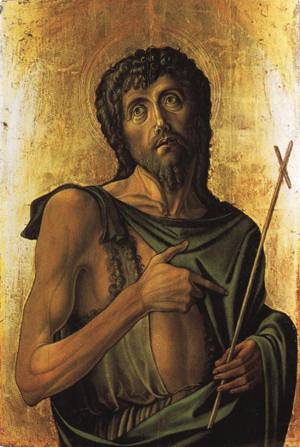
Icon of St. John the Baptist

The truth is that today the Word of God comes to us. 

We have two options: we can keep this Sunday’s gospel (Lk. 3:1-6) at a comfortable distance by thinking, “Oh, ‘in the reign of Tiberius Caesar‘ that is in the past.  Nice story.” or we can catch what Luke the evangelist is actually doing in his litany of specific names and titles.  For Luke the “word” is not some vague spiritual idea or inspiring myth.  No, the “word” is in fact a historical reality that “comes down” into the affairs of human nations and times and even into the stuff and routine of our daily lives.  The “word” chooses to be specific and to enter into particular times and places.  …the word of God came to John the son of Zechariah in the desert.  

John welcomed the word in the desert we are told.  Again, we cannot be comfortable here.  The desert is not some far off place on another continent with an exotic sounding name.  Despite the noise and amusements we are, in fact, right in the middle of the desert of our times where life is not truly lived nor joy truly found.  Elsewhere in the scriptures we are told that Herod was hateful of John’s denunciations of his actions yet, at the same time, drawn to his words. John, I think, was such a compelling figure for the ruler precisely because he was able to do what Herod was not.  John recognized the desert of his time and because of that he was able to live his life not lost in an endless series of amusements but rather authentically and fully.  John truly lived his life and he truly knew joy.

How did he do this and how might we?  Three lessons for us: poverty, humility and hospitality.

John was a poor man and he accepted his poverty.  We know that materially John had nothing (wearing only a camel-skin and a belt) but even more so John accepted the poverty of letting go of the myth of self-sufficiency.  John, in the depth of very being made a soul-searching inventory, and accepted the truth of dependence upon God in both its bitterness and sweetness.  We are told that John survived on locust and wild honey.  Because of his poverty, John is free.  Herod is not free.

John knew the joy of humility.  He does not need the illusion of the “royal palace” in whatever shape it may come and he cautions and chastises those who cluster around the palaces of our world.  John, in contrast to the false pride of our world, would be very comfortable (I think) with the saying, “Christian, remember your dignity.”  The school of humility leads one away from false pride yet it also leads one back to true pride.  We are children of Abraham, we are sons and daughters of the Father and even as we are not worthy to untie the thong of his sandal (Jn. 1:27) we are abundantly and immensely loved by our Lord and Savior!  Humility overcomes false pride because humility leads one to put trust in the Lord and the Lord alone.  Humility leads to joy. 

When the “word” came to John he welcomed it.  God loves us too much to let us remain comfortable and content in the false illusions of the desert of our world.  One way or another God is coming to us.  The key is to not fear but to welcome, to be hospitable.  What a great thing it is to have God come to us and to seek entrance into our hearts.  When we welcome Christ into our hearts then Christ will make his dwelling there and make of our own hearts a place of welcome for others. 

This, I think, is the surest “proof” if something is from God or not.  Is our heart becoming a place of welcome and hospitality for others or not?  Through his poverty and humility John did not become severe and distant.  Rather, the opposite.  If one reads further in this third chapter of Luke (and it will be proclaimed next Sunday), John knew the struggle and hardships of people and when the people asked the prophet what they should do he responded by keeping it simple.  Be good people, seek to do what is right and just, care for one another and recognize the coming of the Kingdom of God.  John’s heart was anything but distant and cold. 

John’s heart was a place of welcome and hospitality because he, himself, had welcomed the Word of God.   

The Humble God: Feast of Christ the King

24 Saturday Nov 2012

Posted by mcummins2172 in faith, gratitude, homily, humility, pride

≈ Leave a comment

At one point in his commentary on this Sunday’s Responsorial Psalm (Ps. 93), St. Augustine shares this observation: Humble people are like rock.  Rock is something you look down on, but it is solid.  What about the proud?  They are like smoke; they may be rising high, but they vanish as they rise.  

In the gospel for today’s Feast of Christ the King (Jn. 18:33b-37) we are given the humble God.  Pilate (representative of all the power of the world) questions Christ – a seemingly defeated and isolated man, abandoned by his friends and followers and mocked by his own people.

Pilate answered, “I am not a Jew, am I?  Your own nation and chief priests handed you over to me.  What have you done?”  Jesus answered, “My kingdom does not belong to this world.  If my kingdom did belong to this world, my attendants would be fighting to keep me from being handed over to the Jews.  But as it is, my kingdom is not here.”  So Pilate said to him, “Then you are a king?”  Jesus answered, “You say I am a king.  For this I was born and for this I came into the world, to testify to the truth.  Everyone who belongs to the truth listens to my voice.”  

Today, we as Church, proclaim Christ is King yet, like Pilate, our understanding and idea is limited.  It is interesting to note on this Feast of Christ the King that our Lord, himself, never took on the title of “king”.  Even on this most final and bitter of stages; when the fallen pride of our human condition would eagerly grasp onto a title of assertion to throw back into the face of the powers of this world (how often we see this exalted on our movie screens in the myth of redemptive violence) our Lord chooses a different path.  “You say I am king.  For this I was born and for this I came into the world, to testify to the truth.  Everyone who belongs to the truth listens to my voice.”

Our Lord rejects the title “king” and by so doing he forswears the fallen world and all it has to offer – self-indulgent pride, sad divisions and triumphalism and all forms of violence.  Our Lord chooses a different path – the path of humility.  “For this I was born and for this I came into the world, to testify to the truth.  Everyone who belongs to the truth listens to my voice.”  

Humility has more in common with truth than does pride and power.  In fact, humility is essential if there is to be any real understanding of truth.  If we would know the truth then any temptation to put ourselves at the center of creation (and these temptations come in all shapes and sizes: blue and red, enlightened secularist and righteous religious, male and female, rich and poor, all colors of skin and shades of culture) must be put aside.  Everyone (I repeat “Everyone”), needs to accept the purifying light of humility because the only constant, the only necessary is God – all else is contingent upon God’s will.  We are not necessary.  The more we realize this then the more we open ourselves to those moments when we catch a glimmer that God is indeed the “rock”, the only solid basis of all creation and then gratitude will grow in our hearts.

All is grace.

Do you want joy and gratitude?  Then look to the one we proclaim “king” yet who never sought that title for himself.  “For this I was born and for this I came into the world, to testify to the truth.  Everyone who belongs to the truth listens to my voice.”  Cultivate humility.  It will lead you to truth and truth will bring gratitude.              

← Older posts
Newer posts →
Follow The Alternate Path on WordPress.com

Enter your email address to follow this blog and receive notifications of new posts by email.

Previous Posts

  • March 2026
  • December 2025
  • November 2025
  • August 2025
  • April 2025
  • February 2025
  • January 2025
  • December 2024
  • August 2024
  • July 2024
  • June 2024
  • May 2024
  • April 2024
  • March 2024
  • February 2024
  • January 2024
  • December 2023
  • November 2023
  • October 2023
  • August 2023
  • July 2023
  • May 2023
  • February 2023
  • January 2023
  • December 2022
  • August 2022
  • July 2022
  • April 2022
  • January 2022
  • December 2021
  • September 2021
  • August 2021
  • July 2021
  • May 2021
  • April 2021
  • January 2021
  • December 2020
  • November 2020
  • October 2020
  • August 2020
  • July 2020
  • May 2020
  • April 2020
  • March 2020
  • February 2020
  • December 2019
  • October 2019
  • September 2019
  • August 2019
  • July 2019
  • May 2019
  • April 2019
  • March 2019
  • February 2019
  • December 2018
  • November 2018
  • October 2018
  • August 2018
  • July 2018
  • June 2018
  • April 2018
  • March 2018
  • February 2018
  • January 2018
  • December 2017
  • November 2017
  • September 2017
  • August 2017
  • July 2017
  • June 2017
  • May 2017
  • April 2017
  • March 2017
  • February 2017
  • January 2017
  • December 2016
  • November 2016
  • October 2016
  • September 2016
  • August 2016
  • July 2016
  • June 2016
  • May 2016
  • April 2016
  • March 2016
  • February 2016
  • January 2016
  • December 2015
  • November 2015
  • October 2015
  • September 2015
  • August 2015
  • June 2015
  • May 2015
  • April 2015
  • March 2015
  • February 2015
  • January 2015
  • December 2014
  • November 2014
  • October 2014
  • September 2014
  • August 2014
  • July 2014
  • June 2014
  • May 2014
  • April 2014
  • March 2014
  • February 2014
  • January 2014
  • December 2013
  • November 2013
  • October 2013
  • September 2013
  • August 2013
  • July 2013
  • June 2013
  • May 2013
  • April 2013
  • March 2013
  • February 2013
  • January 2013
  • December 2012
  • November 2012
  • October 2012
  • September 2012
  • August 2012
  • July 2012
  • June 2012
  • May 2012
  • April 2012
  • March 2012
  • February 2012
  • January 2012
  • December 2011
  • November 2011
  • October 2011
  • September 2011
  • August 2011
  • July 2011
  • June 2011
  • May 2011
  • April 2011
  • March 2011
  • February 2011
  • January 2011
  • December 2010
  • November 2010
  • October 2010
  • September 2010
  • August 2010
  • July 2010
  • September 2008
  • August 2008
  • April 2008
  • March 2008
  • February 2008
  • January 2008
  • December 2007
  • November 2007
  • October 2007
  • September 2007

Popular Posts

  • None

Blog at WordPress.com.

  • Subscribe Subscribed
    • The Alternate Path
    • Join 156 other subscribers
    • Already have a WordPress.com account? Log in now.
    • The Alternate Path
    • Subscribe Subscribed
    • Sign up
    • Log in
    • Report this content
    • View site in Reader
    • Manage subscriptions
    • Collapse this bar