• About The Alternate Path

The Alternate Path

~ Thoughts on Walking the Path of Christian Discipleship

The Alternate Path

Author Archives: mcummins2172

The "Perfect Storm" – the Sandy Hook Elementary School tragedy

17 Monday Dec 2012

Posted by mcummins2172 in build, evil, love, Sandy Hook Elementary school, shooting

≈ Leave a comment

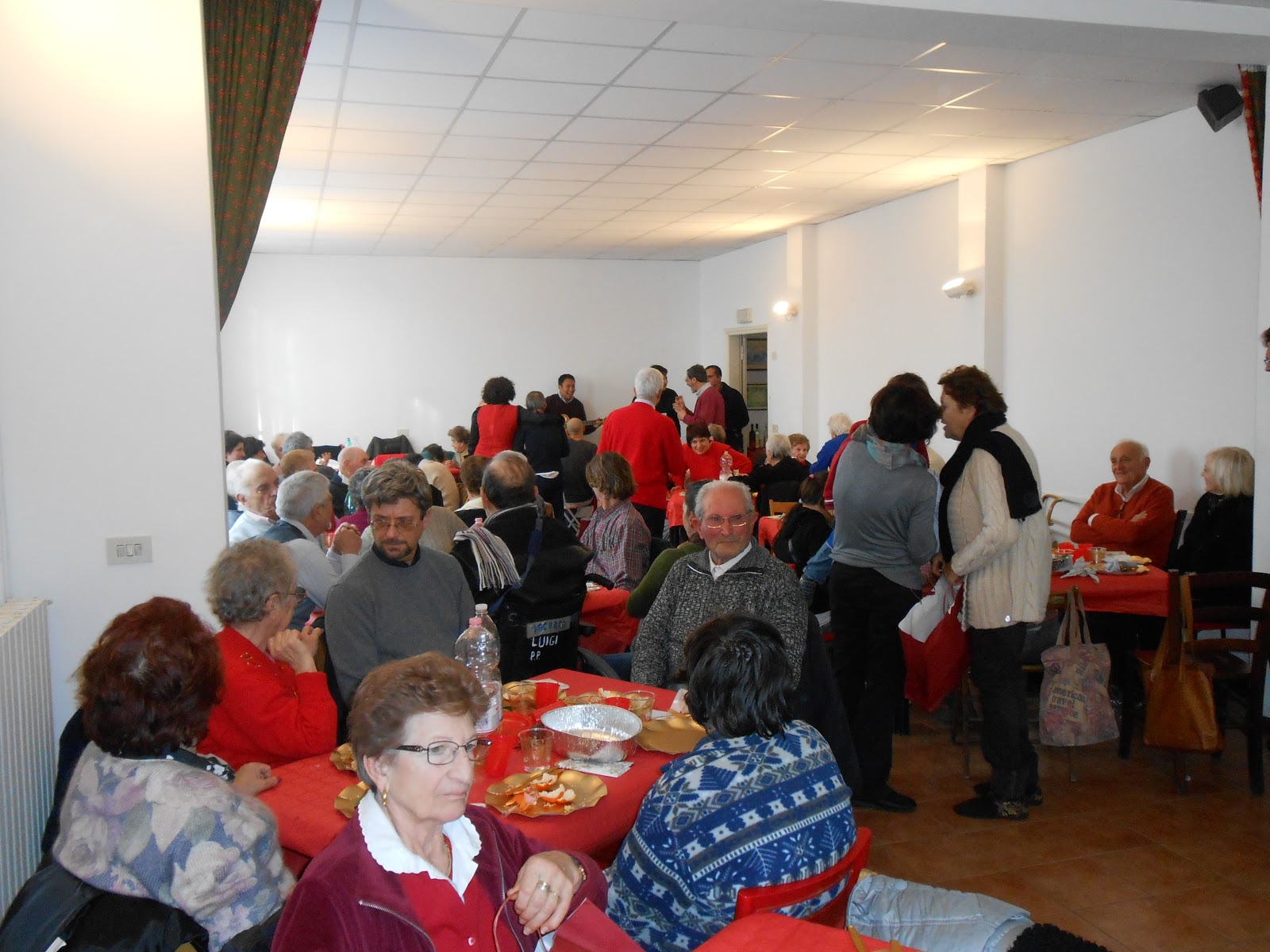
I have been watching the news on the tragic shooting at Sandy Hook Elementary School in Newtown, Conneticut from Italy.  (I am in Rome studying Italian for three weeks and praying and working with the Community of Sant’Egidio.)  I first heard of the shooting through Fr. Francesco who made mention of it during his reflection for the community’s evening prayer last Friday.  Since then my heart has been hurting for all the victims and their families, for the community of Newtown, for our nation and even for the disturbed young man who committed this horrible act. 

Not that long ago our nation watched as different weather patterns and environmental factors came together to produce what we now call “Superstorm Sandy”.  A storm that devastated New York and New Jersey.  Rising sea levels combined with shifting air currents and warmer temperatures to produce the superstorm we saw wreck so much damage and take so many lives.  I find it ironic that Hurricane Sandy and this elementary school share the same first name. 

In many ways this is how I view what tragically happened last Friday – the coming together of so many fronts of different activity that produced an explosion of senseless violence and destruction – a “perfect storm” if you will.  What are these “fronts”?  I would list a few.  The glorification of violence in our society throughout all forms of media, entertainment and interaction.  The tearing down of social structures that have historically served as safety nets of support in our society (i.e. family, church, neighborhoods, community).  The isolation of the individual that is growing in our society.  The pressures laid on all people but especially the poorest due to the economic crisis.  The overuse and over-prescribing of medications that can actually hinder the development of proper life coping skills.  (There is a legitimate value to medication which I do not deny but I believe it a fair and needed question to ask if medications are overused and to question this overuse.)  The de-valuing of life in our day and time – life in the womb, life in prison, the dignity of the stranger, the life of the elderly.  A dismissal of any sense of the common good over a myopic focus on the individual.  A breakdown of mental health services in our society.  A destructive competitive edge to relationships and living and suceeding in life which permeates, it sometimes seems, even the very air which we breath.  An easy access to guns and truly excessive fire-power that I cannot honestly believe the Founding Fathers could foresee. 

I cannot help but believe that all these factors came together in a perfect storm in the life of that troubled young man – a perfect storm that exploded in Newtown. 

In the classic movie “A Man for All Seasons” there is a scene where the son-in-law and family of Thomas More argue with the sainted Chancellor of the Realm.  The impetuous young man wants to do away with the laws of the country in order to counter the unjust actions of the king and his agents.  More challenges him on this by asking when all the laws of the country have been laid low like the trees of the forest cut down what will then protect them when the devil comes ravaging?

It is a profound question.  When all has been cut down what will protect us when the devil comes ravaging?

Within all of this there is also the profound mystery of evil.  Evil is real and we are naive to pretend it does not exist.  As Christians though, we answer evil.  We answer evil with the story of the cross and the empty tomb.  Death and sorrow do not have the last word.  As Christians, we tell the story and we get up again.  In the face of evil we do good because God is love and love is the true center of life. 

We get up.

It is time to get up and time to start building again.  It is time for all of us to let go of the false philosophies that have torn down what once sheltered and protected us and have now come together to create the very factors that make the perfect storm real.

Why a school?  I do not know if this question has been answered yet or will ever be answered.  I will put forward one thought.  In the context of a barren landscape where all has been cut down, where is the last place standing where life is protected and nurtured?  I would say a school.  Who are the living embodiments of life and our hopes for the future?  I would say children. 

We need to stand up.  We need to start building again.  Each one of us needs to fiercely search our souls and let go of any lies that tear down and divide and we need to start building.  We need to live lives that counter violence, that overcome isolation, that seek relationship and that acknowledge both the dignity of the individual and the value of the common good.

If not us, then who?    

It is for our children.                               

John the Baptist: Second Sunday of Advent (C)

08 Saturday Dec 2012

Posted by mcummins2172 in homily, humility, John the Baptist, joy, poverty

≈ Leave a comment

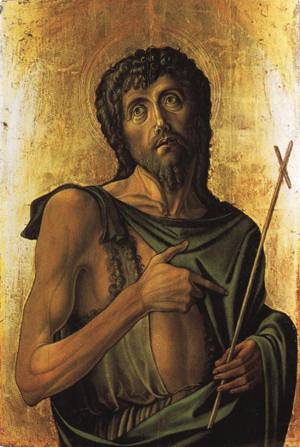
Icon of St. John the Baptist

The truth is that today the Word of God comes to us. 

We have two options: we can keep this Sunday’s gospel (Lk. 3:1-6) at a comfortable distance by thinking, “Oh, ‘in the reign of Tiberius Caesar‘ that is in the past.  Nice story.” or we can catch what Luke the evangelist is actually doing in his litany of specific names and titles.  For Luke the “word” is not some vague spiritual idea or inspiring myth.  No, the “word” is in fact a historical reality that “comes down” into the affairs of human nations and times and even into the stuff and routine of our daily lives.  The “word” chooses to be specific and to enter into particular times and places.  …the word of God came to John the son of Zechariah in the desert.  

John welcomed the word in the desert we are told.  Again, we cannot be comfortable here.  The desert is not some far off place on another continent with an exotic sounding name.  Despite the noise and amusements we are, in fact, right in the middle of the desert of our times where life is not truly lived nor joy truly found.  Elsewhere in the scriptures we are told that Herod was hateful of John’s denunciations of his actions yet, at the same time, drawn to his words. John, I think, was such a compelling figure for the ruler precisely because he was able to do what Herod was not.  John recognized the desert of his time and because of that he was able to live his life not lost in an endless series of amusements but rather authentically and fully.  John truly lived his life and he truly knew joy.

How did he do this and how might we?  Three lessons for us: poverty, humility and hospitality.

John was a poor man and he accepted his poverty.  We know that materially John had nothing (wearing only a camel-skin and a belt) but even more so John accepted the poverty of letting go of the myth of self-sufficiency.  John, in the depth of very being made a soul-searching inventory, and accepted the truth of dependence upon God in both its bitterness and sweetness.  We are told that John survived on locust and wild honey.  Because of his poverty, John is free.  Herod is not free.

John knew the joy of humility.  He does not need the illusion of the “royal palace” in whatever shape it may come and he cautions and chastises those who cluster around the palaces of our world.  John, in contrast to the false pride of our world, would be very comfortable (I think) with the saying, “Christian, remember your dignity.”  The school of humility leads one away from false pride yet it also leads one back to true pride.  We are children of Abraham, we are sons and daughters of the Father and even as we are not worthy to untie the thong of his sandal (Jn. 1:27) we are abundantly and immensely loved by our Lord and Savior!  Humility overcomes false pride because humility leads one to put trust in the Lord and the Lord alone.  Humility leads to joy. 

When the “word” came to John he welcomed it.  God loves us too much to let us remain comfortable and content in the false illusions of the desert of our world.  One way or another God is coming to us.  The key is to not fear but to welcome, to be hospitable.  What a great thing it is to have God come to us and to seek entrance into our hearts.  When we welcome Christ into our hearts then Christ will make his dwelling there and make of our own hearts a place of welcome for others. 

This, I think, is the surest “proof” if something is from God or not.  Is our heart becoming a place of welcome and hospitality for others or not?  Through his poverty and humility John did not become severe and distant.  Rather, the opposite.  If one reads further in this third chapter of Luke (and it will be proclaimed next Sunday), John knew the struggle and hardships of people and when the people asked the prophet what they should do he responded by keeping it simple.  Be good people, seek to do what is right and just, care for one another and recognize the coming of the Kingdom of God.  John’s heart was anything but distant and cold. 

John’s heart was a place of welcome and hospitality because he, himself, had welcomed the Word of God.   

The Humble God: Feast of Christ the King

24 Saturday Nov 2012

Posted by mcummins2172 in faith, gratitude, homily, humility, pride

≈ Leave a comment

At one point in his commentary on this Sunday’s Responsorial Psalm (Ps. 93), St. Augustine shares this observation: Humble people are like rock.  Rock is something you look down on, but it is solid.  What about the proud?  They are like smoke; they may be rising high, but they vanish as they rise.  

In the gospel for today’s Feast of Christ the King (Jn. 18:33b-37) we are given the humble God.  Pilate (representative of all the power of the world) questions Christ – a seemingly defeated and isolated man, abandoned by his friends and followers and mocked by his own people.

Pilate answered, “I am not a Jew, am I?  Your own nation and chief priests handed you over to me.  What have you done?”  Jesus answered, “My kingdom does not belong to this world.  If my kingdom did belong to this world, my attendants would be fighting to keep me from being handed over to the Jews.  But as it is, my kingdom is not here.”  So Pilate said to him, “Then you are a king?”  Jesus answered, “You say I am a king.  For this I was born and for this I came into the world, to testify to the truth.  Everyone who belongs to the truth listens to my voice.”  

Today, we as Church, proclaim Christ is King yet, like Pilate, our understanding and idea is limited.  It is interesting to note on this Feast of Christ the King that our Lord, himself, never took on the title of “king”.  Even on this most final and bitter of stages; when the fallen pride of our human condition would eagerly grasp onto a title of assertion to throw back into the face of the powers of this world (how often we see this exalted on our movie screens in the myth of redemptive violence) our Lord chooses a different path.  “You say I am king.  For this I was born and for this I came into the world, to testify to the truth.  Everyone who belongs to the truth listens to my voice.”

Our Lord rejects the title “king” and by so doing he forswears the fallen world and all it has to offer – self-indulgent pride, sad divisions and triumphalism and all forms of violence.  Our Lord chooses a different path – the path of humility.  “For this I was born and for this I came into the world, to testify to the truth.  Everyone who belongs to the truth listens to my voice.”  

Humility has more in common with truth than does pride and power.  In fact, humility is essential if there is to be any real understanding of truth.  If we would know the truth then any temptation to put ourselves at the center of creation (and these temptations come in all shapes and sizes: blue and red, enlightened secularist and righteous religious, male and female, rich and poor, all colors of skin and shades of culture) must be put aside.  Everyone (I repeat “Everyone”), needs to accept the purifying light of humility because the only constant, the only necessary is God – all else is contingent upon God’s will.  We are not necessary.  The more we realize this then the more we open ourselves to those moments when we catch a glimmer that God is indeed the “rock”, the only solid basis of all creation and then gratitude will grow in our hearts.

All is grace.

Do you want joy and gratitude?  Then look to the one we proclaim “king” yet who never sought that title for himself.  “For this I was born and for this I came into the world, to testify to the truth.  Everyone who belongs to the truth listens to my voice.”  Cultivate humility.  It will lead you to truth and truth will bring gratitude.              

Of the End Times: Thirty-Third Sunday in Ordinary Time (B)

17 Saturday Nov 2012

Posted by mcummins2172 in end times, faith, homily, hope, love

≈ Leave a comment

One of my professors in seminary once remarked that the events of the last days as portrayed in the Scriptures should be read like the labor pangs of birth rather than cataclysmic destruction.  In fact, the birth analogy is more in keeping with the fuller sense of Scripture than the “cataclysmic, world destroyed in a ravaging ball of fire, Hollywood 2012 movie” interpretation.

The texts of Scripture do not confirm, … a sort of “theory of catastrophes,” according to which there must first be a complete destruction of the world after which God can finally turn everything to good.  No, God does not arrive at the end, when all is lost.  He does not disown his own creation.  In the book of Revelation we read, “You created all things, and by your will they existed and were created” (4:11).
The “upheaval” expressed throughout the New Testament is that when the Son of Man comes, he comes not in the weariness of our habits nor does he insert himself passively into the natural course of things.  When Christ comes, he brings a radical change to the lives of men and women and it is always a change that brings the fullness of life.
Notice that in this Sunday’s gospel passage (Mk. 13:24-32) after our Lord speaks of the coming of the Son of Man with “great power” he goes on to state: Learn a lesson from the fig tree.  When its branch becomes tender and sprouts leaves, you know that summer is near.  In the same way, when you see these things happening, know that he is near, at the gates.  Our Lord does enter into our lives and the life of our world with “great power” but the upheaval he brings is an invitation to turn away from sin and the works of sin and to turn toward the fullness of life.
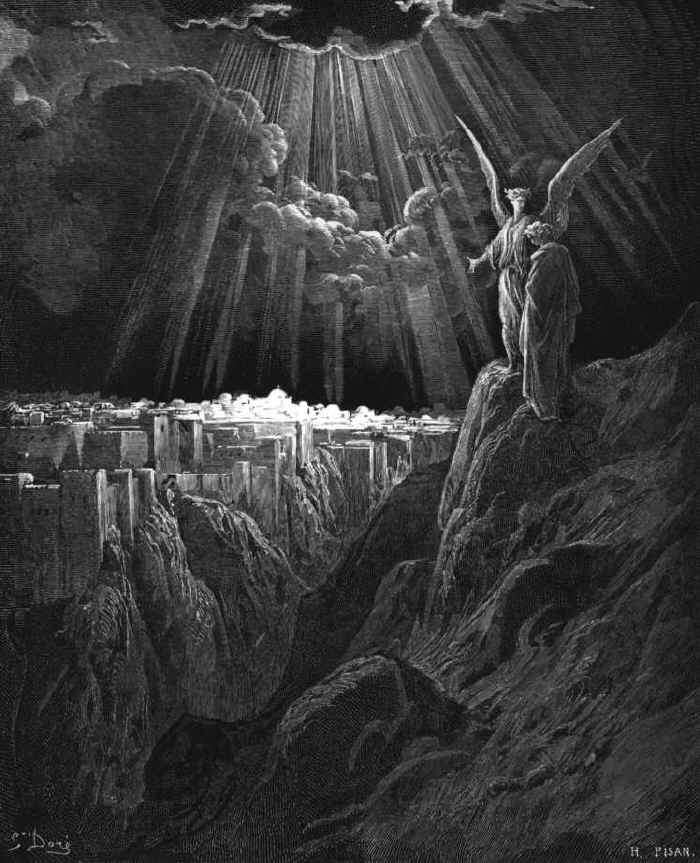
As Christians we are to live in this world not bound by the deadening works of sin and pride but rather in the upheaval and pangs of birth of the establishment of the Kingdom of God.  Because every day and in every situation Christ is near, at the gates.  The Book of Revelation gives us an image of this hope toward which we yearn and work.  Then I saw a new heaven and a new earth; for the first heaven and the first earth had passed away, and the sea was no more.  And I saw the holy city, the new Jerusalem, coming down out of heaven from God, prepared as a bride adorned for her husband (Rev. 21:1-2).  The great “Day of the Lord” is not yet to happen it has already happened!  God has entered into creation and history in the person of Christ, eternity has entered into time, and now this upheaval comes to every generation and even each day.  We are caught up in the great work of God where all peoples and nations will be gathered together into the new Jerusalem! 
The “end of the world” must come every day.  Every day, we must put an end to both the small or big pieces of the world’s evil and malevolence, but not by God but by people.  Moreover, the days that pass, end inexorably. Nothing remains of them, but the good fruit or, unfortunately, the hardships that we create for others.  Scripture invites us to keep the future, toward which we are led, in front of our eyes: the end of the world is not a catastrophe, but will in fact establish the holy city that comes down from heaven.  It is a city that is a concrete reality, not an abstract one, gathering all the people around their Lord.  This is the goal (and, in a sense also, the end) of history.  But his holy city must begin in our daily life now so that it may grow and transform the lives of men and women into God’s likeness.  It does not have to do with an easy and automatic grafting, but the common toil that every believer must fulfill, remembering what the Lord says, “Heaven and earth will pass away, but my words will not pass away.”
(Quotes taken from The Word of God Every Day by Vincenzo Paglia.)

Why I dislike the "Coexist" Bumper-Sticker

12 Monday Nov 2012

Posted by mcummins2172 in Uncategorized

≈ 3 Comments

Here are a few reasons why I dislike the “Coexist” bumper-sticker.
The narrative of the bumper sticker implies that all violence and injustice in our world today is the result of religious difference and that religion is just a source of violence.  This is patently untrue.  How much violence and injustice in our world today is actually linked to greed, power and pride?  These are not the sole provenance of the religious person but rather the weakness of all human conscience.  The dictates of religion when authentically lived actually seek to curb these baser human tendencies.  It should also be noted that the twentieth century was the bloodiest in human history and the majority of blood spilled was by ideologies that were anti-religion.
The bumper-sticker implies that all these religious traditions are fundamentally the same and that any person who seeks to honor his or her tradition uniquely and live by its teachings is some form of extremist.  Again, this is not true.  Lived faith does not equate to extremism.  Respect for one’s own religious faith does not automatically mean a demeaning of another’s faith tradition.  It has been my experience over and over again that one of the hallmarks of the truly religious man or woman is a deep respect for the dignity of the other person and his or her beliefs.  I would even go on to say that religion truly lived gives access to a deeper and more profound respect for the human person than that which is possible through a bland secularism because through religion one can recognize the presence of the infinite in the other person – a reality that is deliberately denied through secularism.
The bumper-sticker seeks to establish a background narrative that people of different faith traditions cannot talk with one another nor get along.  Not true.  A number of times I have been able to attend the annual Prayer for Peace gathering organized by the Community of Sant’Egidio.  This annual event carries on the vision of Bl. John Paul II who brought together the leaders of all the world’s great religions to dialogue together and pray for peace according to the dictates of their own religion.  The Prayer for Peace does not propose a bland synchronism nor a diminishing (in Bl. John Paul’s case) of Christianity but rather an authentic living of one’s own faith as the true path toward encountering the other and the true path toward peace.
The bumper-sticker implies that peace can only be imposed on religions from without.  This is not true.  Any honest study and knowledge of the world’s great religious traditions will show that the seeds of peace and reconciliation are found within religious tradition and it is there that these seeds must be cultivated and are being cultivated.
Like the book and subsequent movie, “Eat, Pray, Love”; the bumper-sticker implies that any true and acceptable practice of religion in today’s world (if one must practice religion) will consist in a sampling and “picking-and-choosing” approach to religions and religious tradition that is more about confirming what I like and my preferences and ideologies rather than being challenged by a truth greater than me that will enable me to overcome my sinfulness and grow beyond my weakness.  
What surrounds the arrangements of the symbols of religion that make up the bumper-sticker is the bland, empty vacuum of a shallow secularism.  This is what we are left with when religion is diminished and derided.  The bumper-sticker in fact proposes a diminishment of the human person by seeking to truncate the capacity for religion and the desire for the transcendent.  Humanity is reduced (not achieved) when religion is reduced.  For full disclosure I will share that I am not a secularist nor do I find secularism appealing.  
Has great harm been done in the name of God and religion?  Yes, it has.  I am not seeking to deny this.  What I am seeking to say is that these acts of violence in the name of God are not the essence of religion and are, in fact, themselves a sin against religion and God.  To summarily equate religion with violence is itself an act of violence and disrespect.  It is also a profound act of ingratitude toward all the good that religion has done and continues to do in the lives of individual people and in the history and contemporary culture of our world.
Finally, to quote a college student at the Catholic Center where I minister who probably better summarized in one sentence the fallacy of the “Coexist” bumper-sticker than all that I have tried to share above.  “The ‘Coexist’ bumper-sticker says that all religions are the same and that they are all equally unimportant.”
I agree.          

God truly present: Thirty-first Sunday in Ordinary Time (B)

03 Saturday Nov 2012

Posted by mcummins2172 in homily, love of God, love of neighbor, presence of God

≈ Leave a comment

Not long ago I had a conversation with a man who is a convert to Catholicism.  I asked him what was it that brought him into the faith.  He replied that when he was a young man the company he worked for got a job to do some restoration work in a Catholic Church.  When he and his boss met with the parish priest to go over the work needing to be done he was struck by the sight of the priest genuflecting before the tabernacle as they entered the church.  In that simple action he realized that God was present in that church.  This awareness remained with him and grew and it began the process and journey that eventually led him into the Catholic Church.  He told me, “Prior to that I had a notion that God was everywhere yet not really present.  In the Catholic Church I have found God truly present.”

God truly present!  This is the Catholic intuition.  It is what underlies our understanding of the sacraments, the reservation of the Blessed Sacrament in the tabernacle, the Catholic approach to prayer, mysticism and (in fact) the entire life of discipleship.  The understanding of God truly present is also foundational in our belief in the communion of saints which we just celebrated on November 1st with the Feast of All Saints.  It is not just that saints were good men and women who did good deeds (worthy of being nominated for CNN’s annual “Heroes” celebration).  God became truly present to the world in the lives of the saints and these men and women became truly transformed and reflective of the presence of God.  (The Catholic understanding of relics is rooted in this reality.)  The saints are, in fact, quite subversive because their very lives witness against a materialistic-only view of reality as well as a vague sense of the Divine that is content in keeping God removed and far off.  These are both tendencies seeking to be persuasive in our world today, yet the saints witness to something both different and real – the incarnational and sacramental truth of the Christian faith.     

God truly present as opposed to a vague sense of God who is everywhere but really nowhere. 

This awareness is not some “add-on” nor corruption of true Christianity.  It is the essence of true Christianity and it is grounded in creation through the Word of God and the very incarnation of the Word of God.  Throughout the whole of Scripture we find this awareness being revealed and proclaimed.   

In today’s gospel (Mk. 12:28b-34) Jesus (who is the Word made flesh) specifically holds together the love of God and the love of neighbor in such a unity that the two cannot be separated.  Love, if it is to be true, must be present and real.  In the first Letter of John we have a developed reflection on this twofold commandment to love God and neighbor: Those who say, “I love God”, and hate their brothers and sisters, are liars: for those who do not love a brother or sister whom they have seen, cannot love God whom they have not seen.  The commandment we have from him is this: those who love God must love their brothers and sisters also. (1 Jn. 4:20-21)

Love of God and neighbor, if it is to be real, must be present.  And where true love is, present is God.  The saints reveal this truth to us – not just through what they did but through their very lives transformed and reflective of a God not content to remain removed but continually seeking to be present.   


Learning to See: Thirtieth Sunday in Ordinary Time (B)

27 Saturday Oct 2012

Posted by mcummins2172 in Bartimaeus, blindness, healing, homily, sight

≈ 1 Comment

Eustache Le Sueur “Christ Healing the Blind Man”

At one point in his Catholicism series, Fr. Robert Barron reflects on Israel’s hopes for the coming messiah.  He lists out the expectations of what the messiah would accomplish and he demonstrates how Jesus fulfills all of these expectations yet in often unexpected ways.  One such example is the expectation that the messiah would restore the unity of Israel.  Fr. Barron points out that Jesus does in fact accomplish this but not through leading an army nor through political maneuvering.  Jesus accomplishes the expectation of restoring unity through his miracles of healing.  In their physical impairments; the blind, the lame, the mute and the leper were not only handicapped in body but were also cut off from the ritual life of Israel and therefore could not fully participate in their society.  By his acts of healing not only was Jesus curing the physical ailment of the person but he was also restoring him or her to full participation in the community. 

This Sunday’s gospel story of the blind beggar Bartimaeus (Mk. 10:46-52) is a case in point.  But, not only that, it must be noted that Jesus recognizes the separation and isolation present that was easily overlooked by the very people who were longing for the messiah.  Mark tells us that when Jesus left Jericho he was with a sizable crowd and that as this crowd surrounding Jesus draws near and begins to pass the blind beggar Bartimaeus (in his poverty it must be noted) weakly begins to call out: Jesus, Son of David, have pity on me.  Mark specifically then states: And many rebuked him, telling him to be silent.  The very ones who were yearning for the full restoration of Israel remained blind to this man’s (their fellow Israelite) separation and isolation. 

But, Jesus saw Bartimaeus and he heard his cry.  In this we are brought to the realization that not just the work of restoring unity but also the ability to first see isolation and separation is an aspect that also marks the long awaited messiah as anticipated in the writings of the prophet Jeremiah.  Part of which we hear in today’s first reading (Jeremiah 31: 7-9): Behold, I will bring them back from the land of the north; I will gather them from the ends of the world, with the blind and the lame in their midst, the mothers and those with child; they shall return as an immense throng. 

Through Christ, we have been made a priestly people and we now share in the High Priesthood of Christ (Hebrews 5:1-6).  As a nation of priests we are entrusted with the work of restoring unity to a divided and hurting world and the first step in this work (upon which the whole is based) is the ability to see and recognize separation and isolation.  Separation and isolation within our own world and within our own hearts.  For this, it is essential that we have the trust and faith of the blind beggar.  Like Bartimaeus, we too need to trust that our God is a loving and merciful God who hears the cry of his people. 

Jesus, Son of David, have pity on me.  This must be our prayer and we must let this prayer lead us to the separated and isolated places of our world and the separated and isolated places in our own hearts because it is there that we will encounter Christ and we will truly come to know him as messiah.

After hearing his request, Jesus says to Bartimaeus: Go your way; your faith has saved you.  Mark then writes, Immediately he (Bartimaeus) received his sight and followed him (Jesus) on the way.  Through this encounter in a place of isolation and separation, Bartimaeus came not just to be healed physically of his blindness but also to be healed spiritually as he came to recognize Jesus as both Messiah and Lord.  Today’s gospel calls us also to a healing just as it did that first crowd.  May our blindnesses also be healed and may we learn to see as our Lord sees in order that our work of restoring unity might be true.          

Rome visit

14 Sunday Oct 2012

Posted by mcummins2172 in Uncategorized

≈ 1 Comment

Today (Sunday, October 14th) I am heading to Rome for a week-long visit.  During the week I will visit with our seminarian Michael Hendershott studying at the Pontifical North American College and with the faculty at the seminary.  As Vocation Director, I visit each seminary our diocese uses at least once a year to check on our men.  I told Bishop Stika that this visit to Rome is a cross that I am willing to suffer.  Lol! 

Following the visit I will spend some days visiting with my friends in the Community of Sant’Egidio.  It will be good to catch up with them and join the community’s prayer. 

The day before my return I will be attending the canonization ceremony set for October 21st at St. Peter’s.  Six men and women are to be canonized, one of these being Bl. Kateri Tekakwitha who will be the first Native American saint proclaimed by the Church.  I was able to get a ticket that will allow me to participate in the ceremony by assisting with the distribution of communion.  I have never been to a canonization ceremony before and am excited for the opportunity!  Part of this being that my own family heritage is part Native American (Choctaw to be exact).

I am looking forward to a great visit!   

"It is not good for man to be alone.": Twenty-Seventh Sunday in Ordinary Time (B)

06 Saturday Oct 2012

Posted by mcummins2172 in creation, homily, love, marriage, sacrifice, union of man and woman

≈ Leave a comment

It is not good for man to be alone. 

These words spoken by God at the very dawn of creation bring forth a singular truth regarding the human condition.  Communion and relationship are at the very root of what it means to be human.  In one sense this should come as no surprise as we are made in the image and likeness of God who is a communion of persons – Father, Son and Holy Spirit.  God is not a “far-away and high loneliness” but rather a living relationship of three Persons.  It can be said that God does not live alone and therefore man and woman are not meant to live alone.  We are meant for communion and communion, solidarity and support are the root of every human vocation.  By living communion (whether that be the communion of friendship, of discipleship, of the common good, of church, of witness) we are being brought to that ultimate communion which will be the union of the human family with God. 

This Sunday we are asked to reflect on a specific kind of communion which originates from marriage – the union of man and woman. 

I wish that I could say that I get into our surrounding mountains here in East Tennessee more often than I do.  We are indeed blessed here with the beauty of God’s creation.  But, even if I cannot get away for a hike too often, I am pretty consistent about taking my two dogs for a walk at least every other day if not every day.  For a few minutes I step out from the office, I step away from the computer and from the Internet and facebook, I let go of whatever project is occupying my thoughts and I am able to be with my dogs and enjoy the beauty of the day and creation.  When I do this I am always better for it.  Creation and its structure and laws has a way of putting things right, speaking to the truth and depth of who we are and refreshing the soul.

In today’s gospel (Mk. 10:2-16) when our Lord is asked if it is lawful for a husband to divorce his wife he turns to creation when he gives his answer.  

But from the beginning of creation, ‘God made them male and female.  For this reason a man shall leave his father and mother and be joined to his wife, and the two shall become one flesh.’  So they are not longer two but one flesh.  Therefore what God has joined together, no human being must separate.  

This “turn to creation” on our Lord’s part is not an aside nor just a nice rhetorical device.  To truly understand marriage one must look to the laws of creation itself.  Marriage is not rooted in the laws of governments that come and go nor is it ultimately founded in the social values of any given time which, it must be acknowledged, are often biased toward the powerful and oppressive of the weak and poor.  Marriage even precedes the foundation of the Church herself, whose relation to marriage is that of steward and not creator.  Marriage, the union of man and woman, originates in creation itself.  It is even such a high display of love that it is presented as an image of God’s love for his people and Christ’s love as bridegroom for his bride, the Church.

That the two shall become one flesh testifies (probably more powerfully than anything else) to the reality that communion lies at the very foundation of human existence and human vocation.  This is a needed witness, if not the most important witness, to our day and age which is so dominated by a self-centered and self-seeking approach to human existence.  Marriage lived even in the struggles of human weakness yet open to God’s healing and sanctifying grace, witnesses to that fundamental law of creation that the two actually do become one flesh.  A law which can neither be faked nor manipulated because it is linked to truth itself.  Life is found through communion, through sacrifice and through love and not through a self-centered and isolated existence. 

This Sunday’s second reading from the Letter to the Hebrews (2:9-11) reminds us that when we were lost and isolated in sin and death, God stepped out of his glory and took on suffering for us.  In order that, He who consecrates and those who are being consecrated all have one origin.  (Notice again the use of the imagery of creation and origin.)  Our origin is God, a communion of Persons, who spoke forth creation in love and who let go of his glory in love that we might have life. 

In the love and sacrifice of communion we are rooted and we are fulfilled.  It is written into the very laws of creation and into creation being sanctified by grace.     


A life lesson

05 Friday Oct 2012

Posted by mcummins2172 in Uncategorized

≈ Leave a comment

A life lesson I have gained: 

If people speak ill of you and this leads to others avoiding you just because of what they have heard, then give thanks to God for the ones who speak ill. 

They are doing you a great favor. 

They are helping to sift out the fools from your life so you do not have to suffer them.

← Older posts
Newer posts →
Follow The Alternate Path on WordPress.com

Enter your email address to follow this blog and receive notifications of new posts by email.

Previous Posts

  • May 2026
  • April 2026
  • March 2026
  • December 2025
  • November 2025
  • August 2025
  • April 2025
  • February 2025
  • January 2025
  • December 2024
  • August 2024
  • July 2024
  • June 2024
  • May 2024
  • April 2024
  • March 2024
  • February 2024
  • January 2024
  • December 2023
  • November 2023
  • October 2023
  • August 2023
  • July 2023
  • May 2023
  • February 2023
  • January 2023
  • December 2022
  • August 2022
  • July 2022
  • April 2022
  • January 2022
  • December 2021
  • September 2021
  • August 2021
  • July 2021
  • May 2021
  • April 2021
  • January 2021
  • December 2020
  • November 2020
  • October 2020
  • August 2020
  • July 2020
  • May 2020
  • April 2020
  • March 2020
  • February 2020
  • December 2019
  • October 2019
  • September 2019
  • August 2019
  • July 2019
  • May 2019
  • April 2019
  • March 2019
  • February 2019
  • December 2018
  • November 2018
  • October 2018
  • August 2018
  • July 2018
  • June 2018
  • April 2018
  • March 2018
  • February 2018
  • January 2018
  • December 2017
  • November 2017
  • September 2017
  • August 2017
  • July 2017
  • June 2017
  • May 2017
  • April 2017
  • March 2017
  • February 2017
  • January 2017
  • December 2016
  • November 2016
  • October 2016
  • September 2016
  • August 2016
  • July 2016
  • June 2016
  • May 2016
  • April 2016
  • March 2016
  • February 2016
  • January 2016
  • December 2015
  • November 2015
  • October 2015
  • September 2015
  • August 2015
  • June 2015
  • May 2015
  • April 2015
  • March 2015
  • February 2015
  • January 2015
  • December 2014
  • November 2014
  • October 2014
  • September 2014
  • August 2014
  • July 2014
  • June 2014
  • May 2014
  • April 2014
  • March 2014
  • February 2014
  • January 2014
  • December 2013
  • November 2013
  • October 2013
  • September 2013
  • August 2013
  • July 2013
  • June 2013
  • May 2013
  • April 2013
  • March 2013
  • February 2013
  • January 2013
  • December 2012
  • November 2012
  • October 2012
  • September 2012
  • August 2012
  • July 2012
  • June 2012
  • May 2012
  • April 2012
  • March 2012
  • February 2012
  • January 2012
  • December 2011
  • November 2011
  • October 2011
  • September 2011
  • August 2011
  • July 2011
  • June 2011
  • May 2011
  • April 2011
  • March 2011
  • February 2011
  • January 2011
  • December 2010
  • November 2010
  • October 2010
  • September 2010
  • August 2010
  • July 2010
  • September 2008
  • August 2008
  • April 2008
  • March 2008
  • February 2008
  • January 2008
  • December 2007
  • November 2007
  • October 2007
  • September 2007

Popular Posts

  • thealternatepath.org/wp-c…
  • thealternatepath.org/wp-c…

Blog at WordPress.com.

  • Subscribe Subscribed
    • The Alternate Path
    • Join 156 other subscribers
    • Already have a WordPress.com account? Log in now.
    • The Alternate Path
    • Subscribe Subscribed
    • Sign up
    • Log in
    • Report this content
    • View site in Reader
    • Manage subscriptions
    • Collapse this bar