• About The Alternate Path

The Alternate Path

~ Thoughts on Walking the Path of Christian Discipleship

The Alternate Path

Category Archives: Uncategorized

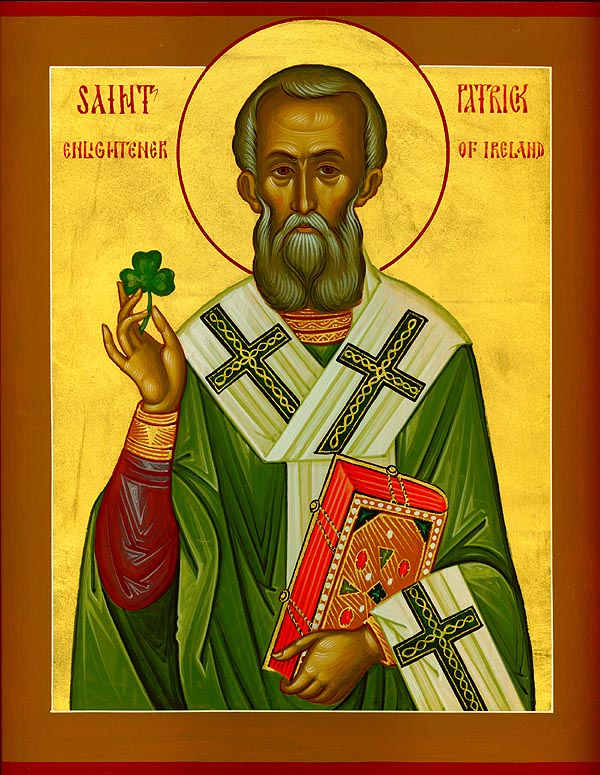
St. Patrick: "losing my birthright of freedom for the benefit of others"

17 Thursday Mar 2011

Posted by mcummins2172 in Uncategorized

≈ Leave a comment

“St. Patrick was born in Great Britain around the year 385.  As a young man he was captured and sold as a slave in Ireland where he had to tend sheep.  Having escaped from slavery, he chose to enter the priesthood, and later, as a bishop, he tirelessly preached the Gospel to the people of Ireland where he converted many to the faith and established the Church.  He died in 461.” (taken from Liturgy of the Hours)

Below is an excerpt taken from the Confessions of St. Patrick.  The words witness to a great depth of faith and offer much to reflect upon.   

I give unceasing thanks to my God, who kept me faithful in the day of my testing.  Today I can offer him sacrifice with confidence, giving myself as a living victim to Christ, my Lord, who kept me safe through all my trials.  I can say now: Who am I, Lord, and what is my calling, that you worked through me with such divine power?  You did all this so that today among the Gentiles I might constantly rejoice and glorify your name wherever I may be, both in prosperity and in adversity.  You did it so that, whatever happened to me, I might accept good and evil equally, always giving thanks to God.  God showed me how to have faith in him forever, as one who is never to be doubted.  He answered my prayer in such a way that in the last days, ignorant though I am, I might be bold enough to take up so holy and so wonderful a task, and imitate in some degree those whom the Lord had so long ago foretold as heralds of his Gospel, bearing witness to all nations. 

How did I get this wisdom, that was not mine before?  I did not know the number of my days, or have knowledge of God.  How did so great and salutary a gift come to me, the gift of knowing and loving God, though at the cost of homeland and family?  I came to the Irish peoples to preach the Gospel and endure the taunts of unbelievers, put up with reproaches about my earthly pilgrimage, suffering many persecutions, even bondage, and losing my birthright of freedom for the benefit of others. 

If I am worthy, I am ready also to give up my life, without hesitation and most willingly, for his name.  I want to spend myself in that country, even in death, if the Lord should grant me this favor.  I am deeply in his debt, for he gave me the great grace that through me many peoples should be reborn in God, and then made perfect by confirmation and everywhere among them clergy ordained for a people gathered by the Lord from the ends of the earth.  As God had prophesied of old through the prophets: “The nations shall come to you from the ends of the earth, and say: ‘How false are the idols made by our fathers: they are useless.'”  In another prophecy he said: “I have set you as a light among the nations, to bring salvation to the ends of the earth.”

It is among that people that I want to wait for the promise made by him, who assuredly never tells a lie.  He makes this promise in the Gospel: “They shall come from the east and the west, and sit down with Abraham, Isaac and Jacob.”  This is our faith: believers are to come from the whole world.

Prayer: the first work of faith

15 Tuesday Mar 2011

Posted by mcummins2172 in Uncategorized

≈ Leave a comment

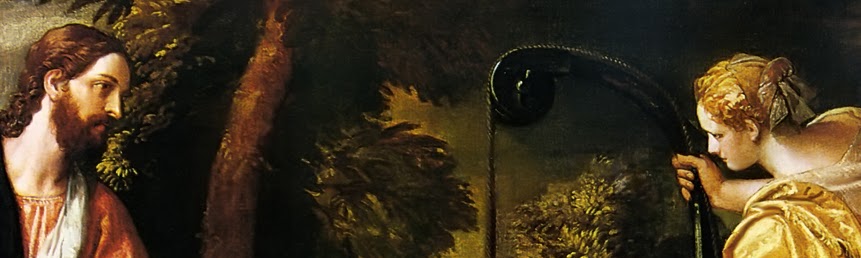
Jesus said to his disciples: “In praying, do not babble like the pagans, who think that they will be heard because of their many words.  Do not be like them.  Your Father knows what you need before you ask him.  “This is how you are to pray: Our Father who art in heaven, hallowed be thy name, thy Kingdom come, thy will be done, on earth as it is in heaven.  Give us this day our daily bread; and forgive us our trespasses, as we forgive those who trespass against us; and lead us not into temptation, but deliver us from evil.

If you forgive men their transgressions, your heavenly Father will forgive you.  But if you do not forgive men, neither will your Father forgive your transgressions.” (Mt. 6:7-15)

During this first week of Lent we are given this instruction by our Lord on prayer – which has often been considered the first “work” of faith.  It is important to note that all the works of faith (which includes the specific disciplines associated with the lenten season: prayer, fasting and almsgiving) are not ways that we earn our salvation.  These are not exercises of our will by which we conquer heaven.  Rather, the works of faith are ways by which we open our hearts to the grace and mercy of God which is already present and has been poured forth in abundance by the sacrifice of Christ. 

It is interesting to note how our Lord connects prayer with forgiveness in this passage from Matthew’s gospel.  This passage on forgiveness or its lack also reflects on the openness or hardness of the human heart.  In the forgiveness we offer we open our own hearts to God’s forgiveness; in the forgiveness we refuse to offer we harden our hearts to God’s forgiveness.    

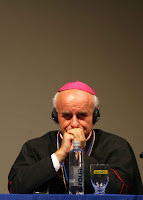
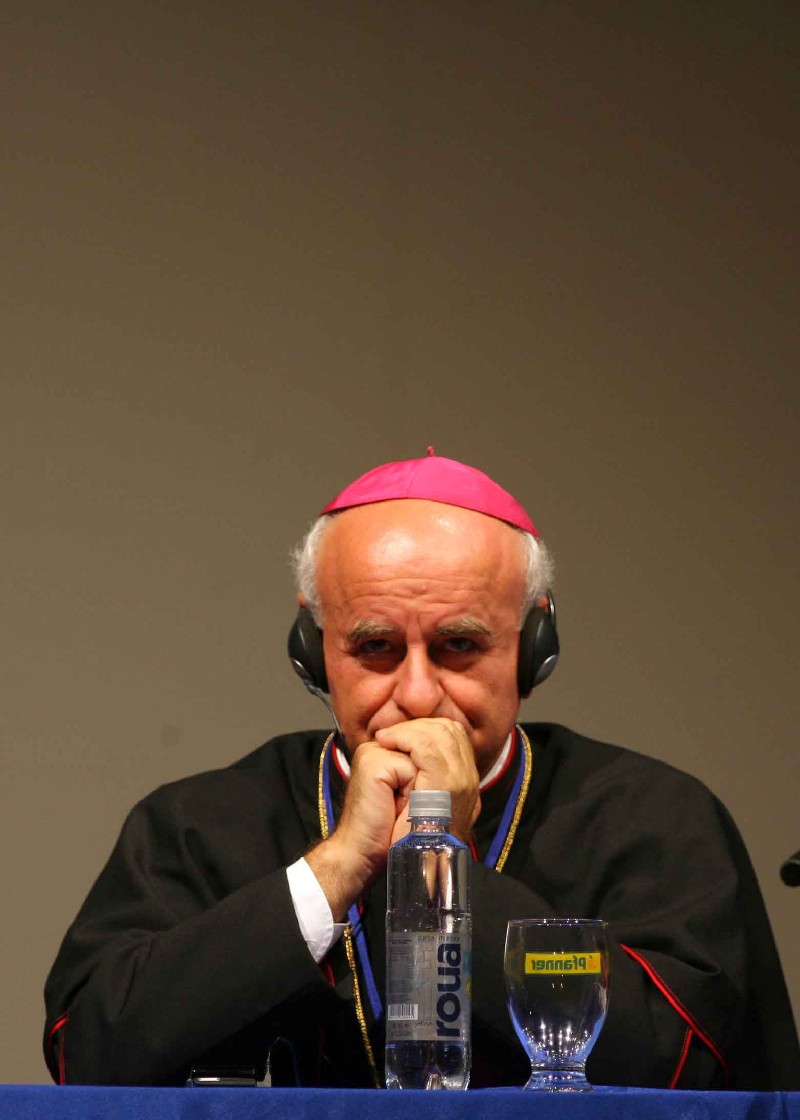
Bishop Vincenzo Paglia, in reflecting on this passage from Matthew’s gospel, offers these words:

“Today Jesus gives us his prayer, the Our Father. He first warns us that prayer is not just the multiplication of words, as if their quantity were what counted and not the heart with which they are pronounced. Instead he wants to show us the path of direct prayer, which immediately reaches God’s heart. He is the only one who could have taught this. He alone is the perfect Son who knows the Father deeply. Because of this, and because he loves his disciples with a limitless love, he teaches them the highest prayer, the prayer that God cannot help but hear. The character of this prayer can be understood from its first word, Abba (father). With this simple word – used by children everywhere when speaking to their own fathers – Jesus accomplishes a true revolution with respect to the Jewish tradition of never even speaking God’s holy name. He involves us in his own intimacy with the Father. It is not that he “lowers” God to us, but rather that we are raised up to the heavens, to the very heart of God, “who is in heaven” so that we can call him “father.” Even if the Father remains “in heaven” he is the One who embraces us. It is right to do the will of a Father like Him. It is right to ask for his kingdom to come soon, that is, the time when God’s holiness will finally be recognized.”

First Sunday of Lent (A): The big picture

12 Saturday Mar 2011

Posted by mcummins2172 in Uncategorized

≈ Leave a comment

As we begin this season of Lent the Church wisely (in the readings chosen for this Sunday) calls us back to the “big picture” because it is in the context of the “big picture” that we are to live these next forty days in preparation for the celebration of Easter.  The “big picture” is this: we are created good, marked by sin, redeemed by Christ.

There is a misunderstanding regarding Christianity present in our world and this misunderstanding has roots both in those who are opposed to Christianity and religion in general and also in some Christians themselves who lack a full understanding of the faith.  The misunderstanding is that Christianity holds creation in contempt and sees it of having little or no worth.  This notion flies directly in the face of biblical evidence.  This Sunday’s first reading from the Book of Genesis (Genesis 2:7-9,3:1-7) reminds us that after God created all, after God made man and woman in his own image then God says, “It is good!”  Further, Christianity alone among all the world’s religions has the Creator of the world himself entering into creation in the person of the Son.  No other religion has this movement; the Creator stepping into creation.  We are created good…

But there is a nuance, creation is marked by sin.  Here the Christian faith is realistic and not naive in its understanding of the whole of the human condition and even each of our own unique experiences.  We see it throughout history and we know it in our own lived experiences – that there is something fundamentally off-kilter in the human condition.  “Brothers and sisters,” writes Paul, “through one man sin entered the world, and through sin, death, and thus death came to all men, inasmuch as all sinned.” (Rom. 5:12)  Sin and its effects are present in our world and our lives but (and this is an extremely important qualification) sin is neither the first nor the last word. 

We are made good by God, we are marked by sin, we are redeemed by Christ.  In this Sunday’s gospel (Mt. 4:1-11) Christ the God-man, “who, though he was in the form of God … emptied himself, taking the form of a slave…” (Phil. 2:6-7), is led by the Spirit into the desert where he is tempted by the evil one.  It is important to note that Christ overcomes each temptation which he is presented with not by calling on his own will to power (remember in Christ the Son “emptied himself, taking the form of a slave…”) but rather, he overcomes each temptation by remaining and choosing to remain in relationship with the Father through the Holy Spirit in the very context of the weakness and need of his humanity.

Each of the devil’s temptations is at heart a temptation to doubt the love, presence and providence of the Father.  Christ will not give in to this, in fact he counters each temptation with a scripture passage that affirms both the love of the Father and his relationship with the Father.  Christ will not wound his relationship with the Father. 

We are redeemed in Christ.  In Christ we are, once again, brought into relationship with the Father and made sons and daughters of God and we are given the Holy Spirit that we might remain in relationship. 

As we begin this season of Lent (this time of preparation for Easter) we are given the big picture which should underlie and inform all that we are about these next forty days and in fact all our lives as Christians.   

Lent: a time to renew our hearts

12 Saturday Mar 2011

Posted by mcummins2172 in Uncategorized

≈ Leave a comment

“Create in me a clean heart, O God; renew in me a steadfast spirit…” 
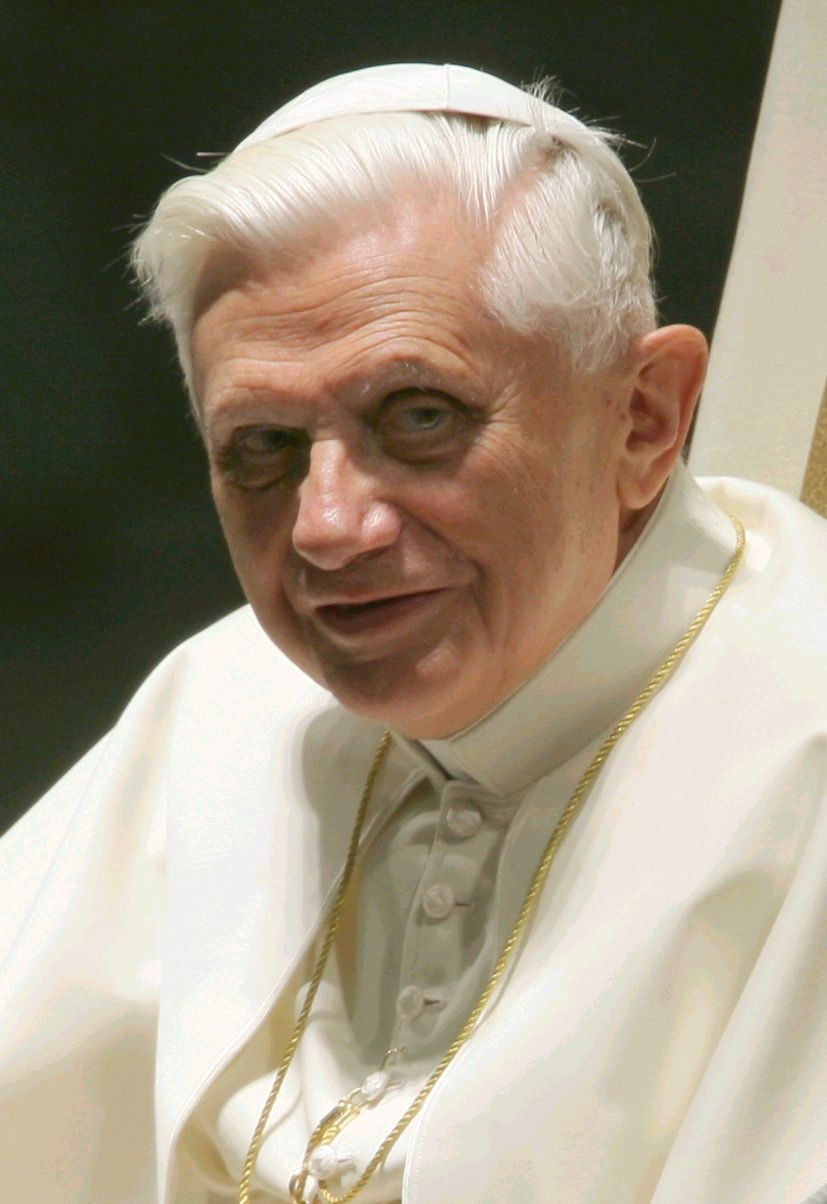
In his words for Ash Wednesday, Pope Benedict invites us to view Lent as an opportunity to renew our hearts – to set aside the old man (woman) burdened by sin in order to discover anew the new man (woman) who is grounded in the salvific event of Easter.  Lent, therefore is not a time of burden and hardship but rather renewal and an invitation to deepen ourselves in the new life that is received through Christ!
These are good words to reflect upon as we begin this time of Lent.

"Doing Lent" together

05 Saturday Mar 2011

Posted by mcummins2172 in Uncategorized

≈ Leave a comment

This coming Wednesday (March 9th) the Church celebrates Ash Wednesday – the beginning of the season of Lent.  Lent is a time of spiritual preparation (often achieved through the disciplines of fasting, prayer and almsgiving) for the celebration of Easter. 

It is helpful to note that we enter into Lent as “church” – we do not do this alone.  Together we mark ourselves with the ashes of Ash Wednesday and together we begin this period of the forty days of Lent.  Although we each have our own specific sacrifices that we make for the season we walk this journey together and there is something quite beautiful and profound about this.

This sense of doing Lent “together” is very Catholic I believe and really at the heart of what it means to be christian and what it means to be church.  Through our baptisms into the Body of Christ we are not set adrift and left to our own devices but in fact knit together into a profoundly intertwined spiritual reality – connected with God and connected with one another.  As Church we are indeed connected and we support one another in ways that we will never be fully aware of I believe until we all stand in the fullness of the Kingdom of God.

As we approach Ash Wednesday it is good to remember that we do Lent together.

Pope Benedict in his book “St. Paul” offers these words on the reality of Church:

“And finally, one last nuance.  In his Letter to Timothy Paul describes the Church as the ‘household of God’ (1 Tim. 3:15), and this is a truly original definition because it refers to the Church as a community structure in which warm, family-type interpersonal relations are lived.  The Apostle helps us to understand ever more deeply the mystery of the Church in her different dimensions as an assembly of God in the world.  This is the greatness of the Church and the greatness of our call; we are a temple of God in the world, a place in which God truly dwells, and at the same time we are a community, a family of God who is love.  As a family and home of God, we must practice God’s love in the world and thus, with the power that comes from faith, be a place and a sign of his presence.”    

The Simpsons – in their tongue-in-cheek way – also help us to grasp a little of this reality…

http://media.mtvnservices.com/player/loader/?v=1.0.10

Video Games


Simpsons Protestant Vs. Catholic He

Xbox 360
PlayStation 3
Nintendo Wii
PC Games

"Make Me a Channel of Your Peace" sung by Susan Boyle

04 Friday Mar 2011

Posted by mcummins2172 in Uncategorized

≈ Leave a comment

A beautiful person singing a beautiful prayer.  God-given talent is always beautiful and rings true!   

Eighth Sunday in Ordinary Time (A): sin and memory

27 Sunday Feb 2011

Posted by mcummins2172 in Uncategorized

≈ Leave a comment

After fifteen years of listening to confessions as a priest you begin to learn a few things about sin, grace and their effects in life.  Sin wounds us on a variety of levels but I believe that one of the most corrosive effects of sin is how it wounds our memory – individually and as community.  In sin we forget – we forget who God is and who we are. 

In sin we begin to forget who God is…  Throughout the gospels we see that Jesus continually puts before us a specific understanding of God the Father.  God is Abba, “daddy” – the one who loves unconditionally and who gives life abundantly.  In the gospel for today (Mt. 6:24-34) Jesus reminds us that God watches over the birds of the air and the flowers of the field.  God is the father who yearns for the return of the prodigal son and who loves his son just as much when he is lost as when he is found again.  God’s love remains constant.  But we forget.  In sin we quickly begin to think of God as distant, aloof – either a harshly judging and condemning God or so aloof as to be of no real consequence.  We easily replace “God is love” with “God helps those who help themselves” (a saying found nowhere in all of Scripture). 

In sin we begin to forget ourselves…  I have seen this dynamic again and again – the fruit of sin is that little voice in the back of our thoughts constantly murmuring: “Who do you really think you are?” “You are not worthy of love.”  “If people only knew the real you…” “You have no worth, no real value.”  Sin leads one down a very dark alley of self doubt and ultimately self hatred.  

In sin there is this double memory loss: the forgetting of God and the forgetting of self and I believe that this double memory loss is what is at the foundation of the worry that Jesus addresses in today’s gospel.  Throughout this passage our Lord makes clear statements both about our value and worth the very character of God in order to remind us of the truth.  “Look at the birds of the sky; they do now sow or reap … yet your heavenly Father feeds them.”  Then he asks, “Are you not more important than they?  Can any of you by worrying add a single moment to your life span?”

To address this worrying – rooted in the forgetfulness caused by sin – our Lord brings healing by calling us to memory; instructing us to remember both who God is (God is love.  God watches over all creation.  God seeks out and saves.  God is near.) and who we are (We are beloved of God.  “Look at the birds … are you not more important than they?”)

In today’s first reading we read from the forty-ninth chapter of the Book of the prophet Isaiah.  A few verses before this reading we find this, “The Lord called me before I was born, while I was in my mother’s womb he named me.”  God knows each one of us even more than we know ourselves.  I believe that one of the graces of the sacrament of reconciliation is that when we have forgotten who we are through sin and are lost God remembers for us and by so doing summons us to truth. 

“Do not worry about tomorrow,” says our Lord.  Be rooted in the sure knowledge and memory of love. 

St. Paul’s conversion and discernment

24 Thursday Feb 2011

Posted by mcummins2172 in Uncategorized

≈ Leave a comment

In his book “Saint Paul”, Pope Benedict offers the following thoughts on the experience that Paul had on the road to Damascus (Acts 9) and its implication for the Christian life:

“As can be seen, in all these passages Paul never once interprets this moment as an event of conversion.  Why?  There are many hypotheses, but for me the reason is very clear.  This turning point in his life, this transformation of his whole being was not the fruit of a psychological process, of a maturation or intellectual and moral development.  Rather it came from the outside: it was the fruit, not of his thought, but of his encounter with Jesus Christ.  In this sense it was not simply a conversion, a development of his ‘ego’, but rather a death and a resurrection for Paul himself.  One existence died, and another, new one was born with the Risen Christ…

We are only Christians if we encounter Christ.  Of course, he does not show himself to us in this overwhelming, luminous way, as he did to Paul to make him the Apostle to all peoples.  But we too can encounter Christ in reading Sacred Scripture, in prayer, in the liturgical life of the Church.  We can touch Christ’s Heart and feel him touching ours.  Only in this personal relationship with Christ, only in this encounter with the Risen One do we truly become Christians.  And in this way our reason opens, all Christ’s wisdom opens, as do all the riches of truth.”

Our Holy Father makes an important point when he reflects that the experience Paul had on the road to Damascus was not an inner psychological development on Paul’s part – a maturing of his ego – but rather an encounter with another, specifically the Risen Lord (the one who once was dead but who now lives).  It is this encounter from without that alone necessitates a dramatic death and resurrection in Saul’s own life.  The one who once was persecuting the Church becomes the Apostle to the Gentiles! 

The Pope then brings this very same dynamic to our doorstep.  “We are only Christian if we encounter Christ.”  The encounter we have may not be as dramatic as that of Paul on the Damascus road but it is just as true.  In our prayer, in Sacred Scripture, in the worship of the Church, in service to another we also encounter Christ.  In all these ways we “touch Christ’s Heart and feel him touching ours.”  The heart of all discipleship is encountering Christ. 

In this realization there is an implication for discerning ones vocation in life.  We cannot necessarily reason our way to a vocation in life!  Christian vocation is not the result of a inner and private process of ego maturation.  Christian vocation springs first and foremost from the encounter with Christ! 

This does not mean that our reason and intellect are unengaged in the process but it does mean putting first things first!  The encounter with Christ is primary and then from this reason is enlightened and fulfilled.  “Only in this personal relationship with Christ, only in this encounter with the Risen One do we truly become Christians. And in this way our reason opens, all Christ’s wisdom opens, as do all the riches of truth.”

We cannot reason our way to a vocation in the Christian life.  If we attempt this route we will just spin our wheels – expending a lot of energy but really going nowhere. 

If you want to know your vocation then go to Christ.  Approach him in the Blessed Sacrament, find him in the Scriptures, recognize him in the face of the poor, listen to him in the silent movement of your heart and will.  Allow Christ to encounter you and then your reason will be enlightened and all the riches of truth will be found.  And do not be afraid.  If Christ calls you then he will sustain you. 

“We are only Christian if we encounter Christ.” 


The Chair of St. Peter

22 Tuesday Feb 2011

Posted by mcummins2172 in Uncategorized

≈ Leave a comment

On February 22nd the Church celebrates the Feast of the Chair of St. Peter.  This feast (which can be traced back to the mid-fourth century) has its roots in an ancient Roman custom of keeping an empty chair in a home for deceased persons from February 13th to 22nd.  The exact date of St. Peter’s martyrdom is not known so custom has ascribed the date to February 22nd.  The bishop’s chair, or cathedra, is an expression of the bishop’s pastoral authority in a diocese.  On today’s feast the Church reflects on the unique authority of the Bishop of Rome as successor to Peter in the life of the Church. 

Below is a recent Angelus message offered by the current successor to Peter.

Sixth Sunday in Ordinary Time (A): Lived Knowledge

11 Friday Feb 2011

Posted by mcummins2172 in Uncategorized

≈ Leave a comment

In his fifth exposition on Psalm 119, St. Augustine reflects on learning the commandments of God both in and through practice.  Augustine writes, “(The psalmist) adds, therefore, ‘Blessed are you, O Lord: teach me your ways of justice.’  He prays, ‘Teach me’: let me learn them as people who carry them out learn them, (bold emphasis mine) not as those who simply memorize them in order to have something to say.”  Augustine then a little further goes on to reflect, “Why then does he go on to pray, ‘Teach me your ways of justice?’  It must be because he wants to learn them by putting them into practice, not merely by repeating them and committing them to memory.”  (Quotes taken from Expositions of the Psalms, New City Press, 2003)

Augustine here is hitting on a very important point.  There is a depth and authenticity of knowledge regarding God’s commandments that can only be gained by and through lived practice.  “…let me learn them as people who carry them out learn them…”  In this Sunday’s gospel (Mt. 5:17-37) our Lord says, “I tell you, unless your righteousness surpasses that of the scribes and Pharisees, you will not enter the Kingdom of heaven.” (Mt. 5:20)

The scribes and Pharisees certainly knew the words of God’s commandments and they could certainly quote the Scriptures and God’s law and prophets but they lacked that which is of of the utmost importance: the insight gained only through practice.  “…let me learn them as people who carry them out learn them…”  Therefore the righteousness of the scribes and Pharisees was lacking and our Lord recognized this. 

Our Lord in today’s gospel is calling for something much more deeper for us – his disciples.  The mere memorizing of words is not enough.  Our Lord, who comes “not to abolish but fulfill” (Mt. 5:17) the law and prophets greatly desires that we have a lived knowledge of God’s law so he steps it up by taking it to the heart – to that place within us where grace and our will interact. 

“You have heard is said, ‘You shall not kill’ …  But, I say to you, whoever is angry with his brother will be liable to judgment.”  (Mt. 5:21-22)  “You have heard that it was said, ‘You shall not commit adultery’ … But, I say to you, everyone who looks at a woman with lust has already committed adultery with her in his heart.”  (Mt. 5:27-28)  “Again, you have heard is said … ‘Do not take a false oath’ … But I say to you, do not swear at all.  Let your ‘Yes’ mean ‘Yes,’ and your ‘No’ mean ‘No’.”  (Mt. 5:33-37)

This knowledge which can only be gained through practice begins within – in that place where God’s grace and our will meet and the choice is made to carry out God’s commandment.  This is the knowledge which moves beyond the mere memorizing of words to that which is true, authentic and that which gives life and wisdom.  This is what our Lord greatly desires for us.  It is the only knowledge that can transform lives … beginning with our own.   

← Older posts
Newer posts →
Follow The Alternate Path on WordPress.com

Enter your email address to follow this blog and receive notifications of new posts by email.

Previous Posts

  • May 2026
  • April 2026
  • March 2026
  • December 2025
  • November 2025
  • August 2025
  • April 2025
  • February 2025
  • January 2025
  • December 2024
  • August 2024
  • July 2024
  • June 2024
  • May 2024
  • April 2024
  • March 2024
  • February 2024
  • January 2024
  • December 2023
  • November 2023
  • October 2023
  • August 2023
  • July 2023
  • May 2023
  • February 2023
  • January 2023
  • December 2022
  • August 2022
  • July 2022
  • April 2022
  • January 2022
  • December 2021
  • September 2021
  • August 2021
  • July 2021
  • May 2021
  • April 2021
  • January 2021
  • December 2020
  • November 2020
  • October 2020
  • August 2020
  • July 2020
  • May 2020
  • April 2020
  • March 2020
  • February 2020
  • December 2019
  • October 2019
  • September 2019
  • August 2019
  • July 2019
  • May 2019
  • April 2019
  • March 2019
  • February 2019
  • December 2018
  • November 2018
  • October 2018
  • August 2018
  • July 2018
  • June 2018
  • April 2018
  • March 2018
  • February 2018
  • January 2018
  • December 2017
  • November 2017
  • September 2017
  • August 2017
  • July 2017
  • June 2017
  • May 2017
  • April 2017
  • March 2017
  • February 2017
  • January 2017
  • December 2016
  • November 2016
  • October 2016
  • September 2016
  • August 2016
  • July 2016
  • June 2016
  • May 2016
  • April 2016
  • March 2016
  • February 2016
  • January 2016
  • December 2015
  • November 2015
  • October 2015
  • September 2015
  • August 2015
  • June 2015
  • May 2015
  • April 2015
  • March 2015
  • February 2015
  • January 2015
  • December 2014
  • November 2014
  • October 2014
  • September 2014
  • August 2014
  • July 2014
  • June 2014
  • May 2014
  • April 2014
  • March 2014
  • February 2014
  • January 2014
  • December 2013
  • November 2013
  • October 2013
  • September 2013
  • August 2013
  • July 2013
  • June 2013
  • May 2013
  • April 2013
  • March 2013
  • February 2013
  • January 2013
  • December 2012
  • November 2012
  • October 2012
  • September 2012
  • August 2012
  • July 2012
  • June 2012
  • May 2012
  • April 2012
  • March 2012
  • February 2012
  • January 2012
  • December 2011
  • November 2011
  • October 2011
  • September 2011
  • August 2011
  • July 2011
  • June 2011
  • May 2011
  • April 2011
  • March 2011
  • February 2011
  • January 2011
  • December 2010
  • November 2010
  • October 2010
  • September 2010
  • August 2010
  • July 2010
  • September 2008
  • August 2008
  • April 2008
  • March 2008
  • February 2008
  • January 2008
  • December 2007
  • November 2007
  • October 2007
  • September 2007

Popular Posts

  • thealternatepath.org/wp-c…
  • thealternatepath.org/wp-c…
  • thealternatepath.org/wp-c…

Blog at WordPress.com.

  • Subscribe Subscribed
    • The Alternate Path
    • Join 156 other subscribers
    • Already have a WordPress.com account? Log in now.
    • The Alternate Path
    • Subscribe Subscribed
    • Sign up
    • Log in
    • Report this content
    • View site in Reader
    • Manage subscriptions
    • Collapse this bar