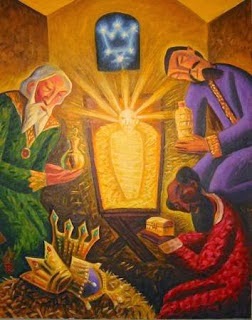
The Feast of the Presentation: a Sign that will be contradicted

Here is some sound advice from our Christian spiritual tradition.  “If you want to advance in the spiritual life and the life of faith then love what Christ loved from the cross and disdain what Christ disdained from the cross.”  
It is on the cross that Simeon’s words in today’s gospel (Lk. 2:22-40) reach their fulfillment.  The innocent child is revealed as the man of sorrows and the “Christ of the Lord” who takes on the weight of sin that we might know salvation.  
Since the children share in blood and flesh, Jesus likewise shared in them, that through death he might destroy the one who has the power of death, that is, the Devil, and free those who through fear of death had been subject to slavery all their life.  Surely he did not help angels but rather the descendants of Abraham; therefore, he had to become like his brothers and sisters in every way, that he might be a merciful and faithful high priest before God to expiate the sins of the people.  (Heb. 2:14-18)  
This is the salvation which God prepared in the sight of every people – Christ on the cross – and it continues to be a sign of contradiction and a sign of salvation to our world today. 
What did Christ disdain from the cross?  He disdained the lure of money, of power, of popularity and the ever present temptation to save oneself and all costs.  What did Christ love from the cross?  The will of the Father – that is all he had and it is all he wanted.   
If we learn to disdain what Christ disdained and love what Christ loved then we develop what the Christian spiritual tradition terms “detachment”.  Detachment is neither indifference nor ambivalence.  Both of these are kind of a negative “talk to the hand, I really don’t care” approach to life.  Detachment denies neither the energies nor the relationships of life rather it embraces them and rightly orders them.  
Fr. Robert Barron in his “Untold Blessings” series reflects on this sense of detachment and uses the Beatitudes as a way of recognizing all the things that we attach ourselves to and thereby become addicted to.  Here are just a couple of beatitudes from the sixth chapter of Luke for consideration in this regard.
Blessed are you poor…  How easily do we attach ourselves to material things?  We want the right house, the right bank account, the right toys to play with and our society tells us we should have these things – for ourselves and for those we love.  Now, look at the cross.  What did Christ have on the cross?  Nothing, all he had was the knowledge of doing the will of the Father and that was enough for Jesus.  Things are things – they are neither bad nor good in and of themselves – sometimes we will have things sometimes we won’t.  It doesn’t matter.  As we gain detachment we find joy not in things but in relationship with God and in doing his will.
Blessed are you when men hate you…  Here is a tricky one.  How easy it is to become addicted to approval.  We all want to be liked, we want to be accepted and belong.  But again, look at the cross – Jesus was hated; he was mocked and seen as a common criminal.  The same crowds that sang hosannas and waved palm branches when he entered Jerusalem were the ones that yelled “Crucify him!” to Pilate.  To Jesus it did not matter.  He loved just the same.  He was detached from the need for the approval of others.  He was focused on the will of the Father.  Neither praise nor disdain lessened the love of Christ.   There are times when we will be praised and times when we will be mocked or even condemned.  There are times we will succeed and times we will fail.  If we develop detachment it will not matter what time and situation we find ourselves in we will love just the same.
How do we gain this spiritual sense of detachment?  Do we isolate ourselves from others or do we repress all our feelings?  No, that is not the Christian way.  We look to Christ and we keep Christ at the center of our lives – just as Simeon did.  Even though he did not yet know him, Simeon awaited the coming Messiah.  He held that hope and that promise in his heart.  Behold, this child is destined for the fall and rise of many in Israel…
Love what Christ loved from the cross, disdain what Christ disdained from the cross.         

Francis: Pope of the Periphery

Pope Francis is on the cover of “Rolling Stone”.  I guess this is a good thing.  He has certainly caught the imagination of many people.  
For the record, I am a Pope Francis fan – just as I have been a Pope Emeritus Benedict fan and Bl. John Paul II fan – the popes during my lifetime.  I am a fan of the papacy and how each man, weak and limited in his own humanity as he is, brings his own gifts and personality to this institution and it is amazing to see how the Holy Spirit works through each one.  It does no good and, in fact, is a disservice to the Church to fall into a “red state”/”blue state” mentality when it comes to the papacy and the current inhabitant of the office.  The papacy transcends such misguided and ultimately dull attempts at division. 
Recently I was at a church meeting and much was being said about Pope Francis – specifically his simplicity and his call to help the poor.  I agree the Pope Francis has certainly highlighted the poor in his pontificate but I think his challenge goes further and I wonder if this is being picked up on or glossed over and, if so, why?  
Through words and deeds (many of the latter going viral in the visual world of social media), Pope Francis is preaching not just help for the poor but the willingness to go to the poor.  Picture his embrace of the disfigured man in St. Peter’s square.  This, I think, is a key element to his appeal.  Pope Francis is certainly not opposed to the important work of the parish or Church relief and charitable agencies but neither does he want these to become an end or a wall of separation.  I do not think that the Pope would be satisfied if he heard the following statement, “Yes, I support the poor.  I give to my parish and Catholic Charities and they help the poor.”  I think our Pope would respond by saying, “Yes, that is good but you also go to the poor.”  It seems that our current pope does not like any form of “middle-men”; whether they be social, organizational or ecclesial.  
Choices and even success have unintended consequences.  This being understood, might an unintended consequence of the success of the Church’s relief and charitable organizations be that they can help bolster the illusion (maybe even desire) of being a step removed from the poor and needy?   “I can give to the poor yet remain comfortable in my own bubble.”  “Yes, there are poor people but there are people whose work it is to see to their needs.”
I find it helpful to apply a term to the pope that I recently heard Prof. Andrea Riccardi (founder of the Community of Sant’Egidio) use; that term is periphery.  Pope Francis is a pope of the periphery.  This should come as no surprise.  The pope himself made allusion to this when he first walked out on the balcony of St. Peter’s to tell the whole Church that the cardinals of the conclave went to the far corners of the world to find the next bishop of Rome!  They went to the periphery.
Every city, every town, every society has a periphery.  It is where the poor live.  It is where people are marginalized and de-humanized.  It is the place often overlooked and forgotten and also where people fear to go.  Pope Francis is inviting the Church to a gospel awareness that it is just not enough to send money or aid or prayers or good intentions to the periphery.  We must go there ourselves!  Why?  Because Christ is there and wherever Christ is the disciple must follow. 
It has been my experience – limited as it is – that the periphery provides (when encountered consistently and authentically) a spiritual antidote to the stultifying effects of worldviews and ideologies turned in on themselves – which are multitude in our day and age.  The periphery can awaken one to the wonder of the Kingdom of God rather than the merely comfortable!  Again, to paraphrase some insights by Prof. Riccardi, in the periphery we learn that contrary to the dictates of the economy we do not have to substitute competition and rivalry for living together in friendship.  In the periphery we realize that the true history of the world often runs hidden and deep rather than in the illusion of the stages of the rich and powerful.  In the periphery hope can be found, take root and grow.  
The Church must allow herself to be evangelized by the periphery and the poor.  They know the suffering Christ.  
Last night, in the midst of the latest winter storm to hit the eastern U.S., members of the Community of Sant’Egidio in New York City took a warm meal and friendship to their homeless friends on the streets.  These men and women are not spiritual elites, they are not heroes.  They are simply disciples seeking to live their faith honestly and joyfully in friendship.  Wherever Christ is, there is life and wherever Christ is, the disciple must follow.  Pope Francis, as successor to Peter, knows this and he is pointing it out to the whole Church.  Hopefully, we will listen and respond to his invitation to the periphery.                                

Second Sunday in Ordinary Time (A): The Law of Foundation

In the readings for this Sunday we can detect a dynamic of moving, of straining forward into discipleship and identity with Christ.  In the gospel (Jn. 1:29-34), John points him out; Behold, the lamb of God…  Seek Christ!  Move toward Christ!  Paul in his letter to the church in Corinth (1 Cor. 1:1-3) reminds his listeners that they are indeed, called to be holy.  For the Christian, holiness can only be found through living in relationship with Christ and his body – the Church.  Isaiah (Is. 49:3, 5-6) prophesies that the true servant of the Lord will not just be a light for the tribes of Jacob but a light to the nations.  

This very moving and straining forward is the Church’s law of foundation.  There is a wonderful analogy used by St. Augustine in reflecting on Christ as the foundation of the Church and of our very lives. 
 

Foundations, Augustine points out, are usually at the bottom supporting a structure but Christ, as the head, is above.  How, therefore, can we call Christ the foundation?  There are two kinds of weight, observes Augustine, and here he defines “weight” as that force within a thing that seems to make it strain to finds its proper place.  For example, hold a stone in your hand – you feel its “weight” because it is “seeking” its proper place.  Take your hand away and the stone falls to the ground.  The stone has reached the goal it was tending toward.  It has found its proper place – its foundation.  Now (and here is where the poetry of Augustine’s analogy comes in), some weights find their proper place by pushing down and others by pushing upward.

Imagine, writes Augustine, a container of oil falling into the ocean, underneath the water and then rupturing.  The oil is not content to remain under the water, at the bottom.  It seeks its proper place so there is the ‘uneasy movement’ while the oil strains toward its proper place – its foundation – above.  
God’s Church – though established here below – strains toward heaven precisely because our foundation is found there – Christ and the fullness of God’s Kingdom.  The law of foundation says that objects strain toward their particular foundation and proper place.  This is why the Church throughout history and indeed the very life of every Christian strains forward – toward a more just and right existence.  This occurs because we seek our foundation.  The Church lives in the crucible of history but the Church always strives beyond the merely historical of our world because we seek our proper foundation which is not of the world.  If the Church (if we) fail to point and strive toward the Kingdom, if we just become self-referential and enclosed within our institutions then we have forgotten our truth.  Yes, there is ‘uneasy movement’ as we strain forward – we have to strain through the weight of this world and our false selves – but we do so in order to reach our true foundation which is more than this world.  Our foundation is the Kingdom of God and Christ himself! 
John points him out, Behold the lamb of God!  We are indeed, called to be holy.  This very dynamic of straining toward holiness (often turbulent and uneasy), itself witnesses to the law and truth of our foundation – who is Christ himself.  
St. Josephine Bakhita – a woman who was severely mistreated as a slave and who bore the scars of horrendous whippings on her body – implicitly knew this law of her true foundation.  She put it this way, “I am definitively loved and whatever happens to me – I am awaited by this love.  And so, my life is good.” 

P.S.  Technical issue – I am having trouble uploading photos onto my posts.  This has only happened recently.  If anyone has a suggestion on how to correct this please let me know. 

Sign language and "the hamburger of Christ" – NDHS homily on January 9th

I have been talking with Rosa.  Rosa is the lady who helps to keep the school clean.  You have probably seen her around during the day.  Rosa is deaf and she is helping me to re-learn sign language.  A while back I was chaplain to the deaf community in our diocese.  The ministry was always small – centering around a few Catholic students at Tennessee School of the Deaf and a few deaf adults.  Well, the students graduated, some of the adults passed away, others moved out of the diocese.  The ministry has been kind of shuttered for a few years now and I have not signed for a while.  
As I am re-learning my signs I have been reminded of my first few months signing and the mistakes I made along the way.  To begin learning sign I went to Camp Mark 7, a sign language learning camp in the Adirondack Mountains begun by the first deaf priest in the U.S.  I first learned how to sign the Mass.  I remember it was about six months into signing the Mass back in the diocese that a member of the deaf community came to me with a concern.  She signed, “Father, you keep making this sign (hands tightly clasped together) for ‘peace’ like when you say, ‘The peace of Christ.’  This is not correct.  This is the sign for peace (she held her hands together but then she moved them apart as if they were flowing out).  The sign which you keep making is the sign for ‘hamburger’.” So … for close to about six months I, throughout the Mass, kept wishing people the “hamburger of Christ!”
It seems to me that a couple of dynamics in learning a language are the rules and structure of the language (those things that must be memorized) as well as the willingness to just take a risk and, frankly, being okay with the fact that mistakes will be made and sometimes one will make a fool of himself or herself.  But, you know what – the world doesn’t end.  I can honestly say that I have learned enough now to make a fool of myself in multiple languages … not just in English!
In today’s first reading (1stLetter of John 4:19-5:4) we are given a bit of John’s wonderful reflection on what it means that God is love and that we have been loved by God.  (I really encourage all people to take some time to truly read and reflect upon John’s first letter.) 
Everyone who believes that Jesus is the Christ is begotten by God, and everyone who loves the Father loves also the one begotten by him.  In this way we know that we love the children of God when we love God and obey his commandments.  For the love of God is this, that we keep his commandments.  And his commandments are not burdensome, for whoever is begotten by God conquers the world.  And the victory that conquers the world is our faith.
The word “commandments” here seems quite heavy and (at least in the tenor of our day and age) not very thrilling.  But I think it helpful to hold this word together with an awareness of the role of rules and structure in language.  The rules and structure of language are means to an end.  We learn the rules that we might communicate, have relationship and friendship with another person, that we might be able to speak their language.  The “commandments” that John makes mention of are not just a set of arbitrary rules we are forced to follow just because; rather they are the specific means to an end.  Christianity, at its heart, is a way to live and to encounter God and one another.  Christianity is not so much rules as it is relationship.  In living our faith, in obeying God’s commandments, we begin to learn the language of God and enter into true relationship with him! 
And like any language, to learn it we have to be willing to take a risk, to step out and possibly even make a fool of oneself.  In today’s gospel reading (Lk. 4:14-22) Jesus took a risk.  This was his first act of public ministry.  “Today this Scripture passage is fulfilled in your hearing.”  I think he must have been nervous when he said that.  We need to be sincere when we profess that Jesus is fully human just as he is fully divine.  Part of the wonder of being human is sometimes being nervous, part of the wonder of being human is taking a risk.  Jesus is risking reaching out to us and to all of humanity in the language of God – a new way to communicate with God and one another, a new way to have relationship and friendship and a new and full way to live and experience life.
The rules and structure of language and the commandments of God which are not burdensome but give life and the willingness to take a risk, step out and live an ever-new relationship with God.   

The Feast of the Epiphany and a story by Franz Kafka

There is a short story told by Franz Kafka.  In the story there is an emperor who is on his deathbed and he wants to send a message to you alone.  Yes, you – poor, insignificant subject that you are – living at the furthest edge of the empire.  But the message is extremely important to the emperor, so important that he summons a messenger and even has the messenger repeat the message back twice to make sure he has it memorized correctly.  After the second time of checking the accuracy of the message the emperor nods his head approvingly.  Then in the presence of his entire court the emperor dismisses the messenger and sends him on his mission to bring you the emperor’s message.  Immediately the messenger sets out, he is a strong and vigorous man but immediately he encounters resistance – the members of the court are so packed around the emperor each vying for his attention.  Bit by bit the messenger has to elbow and squeeze his way through the crowd.  Finally, he makes his way out of the royal chamber but all the rooms of the palace are packed with people!  He shows the royal insignia and this clears the path for a few feet but then he is faced with a wall of people again.  But the messenger is determined; he keeps struggling against the crowd – one room after another, down stairways and inch by inch through the courtyard.  Eventually, after what seemed like an eternity of struggle, the messenger passes through the final gate of the palace.  But now what lies before him is the vast imperial city, piled high with mountains of its own rubbish through which no one can make headway.  You, meanwhile sit at your window and dream about the message, as evening falls.  

A strange story for the Feast of the Epiphany when we proclaim and celebrate in faith that the glory of the Lord shines forth in our world!  Magi from the East arrive in this Sunday’s gospel (Mt. 2:1-12) looking for the newborn king.  All nations and all peoples share in the light of Christ!  A strange story by Kafka but a story that raises an important question; on the Feast of the Epiphany as we proclaim the glory of Christ for all nations do we actually allow the light of that glory to reach us – poor, insignificant subjects that we are, seemingly living on the furthest edge of the empire?  Do we believe that the emperor has a concern for us and a message so important for each one of us that even on his deathbed he is determined that it be sent?   
The vastness of the crowd and rubbish that the messenger valiantly struggles against is a joint conspiracy of self and world – our world’s preoccupations, biases, prejudices and determinations in what it considers important as well as our own weaknesses, our sins and our fears.  Together these continually try to block and hinder the messenger who carries the emperor’s message for you.  “Joy is possible!  Sin is overcome!  Life can be different!  A child is born in Bethlehem!”  In the birth of Christ, God begins to whisper this one message for our world and meant for each one of us, “Tell the world that I love it and am dying for its sins!”  As we sit at our windows, thinking ourselves at the furthest edge of the empire, do we actually allow this message to reach us or are we content to just dream about it? 
Here is a new year’s resolution that I will bring to you just as it is has been laid on my own heart from this Sunday’s readings: this new year, let us pray God that by his grace (and it is only by his grace that this is possible) we come to recognize this conspiracy of self and world active in our lives that keeps the messenger distant and removed and let us, with every ounce of our ability, do all that is possible to overcome that conspiracy.  This year, let us not just proclaim that the glory of Lord shines forth, let us receive and welcome that glory into our own hearts and let us tear down whatever might separate the light of that glory from reaching us and reaching all of our brothers and sisters! 
“Tell the world that I love it and am dying for its sins!”

Notes on Preaching, #3 "The Joy of the Gospel"

The homily cannot be a form of enter­tainment like those presented by the media, yet it does need to give life and meaning to the celebra­tion. It is a distinctive genre, since it is preach­ing situated within the framework of a liturgical celebration; hence it should be brief and avoid taking on the semblance of a speech or a lecture. A preacher may be able to hold the attention of his listeners for a whole hour, but in this case his words become more important than the celebra­tion of faith. If the homily goes on too long, it will affect two characteristic elements of the liturgical celebration: its balance and its rhythm. When preaching takes place within the context of the liturgy, it is part of the offering made to the Father and a mediation of the grace which Christ pours out during the celebration. This context demands that preaching should guide the assembly, and the preacher, to a life-changing communion with Christ in the Eucharist. This means that the words of the preacher must be measured, so that the Lord, more than his minis­ter, will be the centre of attention.  (EG, 138)

I once heard a Benedictine monk compare good liturgy to a beautiful and precise dance.  Pope Francis is displaying this same sensibility in his reflection on preaching.  Liturgy has a specific rhythm and movement and the preached word is part of this greater whole.  If the sermon takes on too much emphasis, if it only becomes about entertaining, if the true focus of Christ’s continuing dialogue with his people is denied then the rhythm of the whole liturgy is thrown off-kilter if not entirely lost.  The balance and rhythm of the whole liturgy must be kept in mind and maintained during the crafting of a sermon.  Preaching is part of the offering made to the Father and a mediation of the grace which Christ pours out during the (entire) celebration.  (One internal way that I check to see if my homily maintained the rhythm of the liturgical celebration is if it corresponds with the music chosen for the liturgy – chosen separately by the music minister and, more often than not, not discussed or planned beforehand.)  
Pope Francis is making news for his “off-script” remarks but it has also been noted that his sermons are on the shorter side.  It seems that he practices what he preaches.  The homily is a distinctive genre, since it is preach­ing situated within the framework of a liturgical celebration; hence it should be brief and avoid taking on the semblance of a speech or a lecture.  It takes more effort to be brief, concise and measured in what one has to say.  This also requires a true knowledge of the distinctive genre that the sermon is and its scope and purpose.  Pope Francis, through his exhortation and his very own practice, is demonstrating that he knows both what a sermon is and what it is not.  The sermon is not a speech nor a lecture nor a moment to entertain.  (Maybe a worthy exercise for any preacher is to reflect on these three genres determining their purpose and method and then, by process of negation, try to then move toward and determine what is distinctive about the genre of the homily.) 
One word that comes to my mind regarding the distinctiveness of the homily, and it is a word used by the Holy Father himself, is measured.  The homily strives to be measured both within itself (in technique, in focus, in use of imagery, etc.), within the larger context of the whole liturgical celebration (again it is part of the offering made to the Father) and, I would say, in regard to the entire and ongoing dialogue between Christ and his Church (as a preacher it is essential to know that any particular sermon is a small part of something much bigger – this allows the preacher to be rooted in the true and abiding source of inspiration as well as freeing the preacher from the illusion that it is all on him, an unrealistic weight to bear).
In the section “Cross and Mission” in the book Open Mind, Faithful Heart, then Cardinal Bergoglio (now Pope Francis) reflects on the essential value of apostolic courage and constancy in regards to the mission of discipleship.  I would contend that these are two essential virtues necessary to the ability to be measured in the full act (as laid out above) of preaching.  
I want to mention now two attitudes that clearly reveal that a person has assumed the Lord’s mission on the cross.  The two attitudes are apostolic courage and constancy, and they go together.  They characterize the person who, having received the mission, seeks to have the same sentiments as the Lord who gives the mission.  The defects opposed to these attitudes are presumption and fear.  One woman devoted to the Church spoke thus: “Fearful people will never make great progress in virtue, nor will they ever accomplish anything great; those who are presumptuous will not persevere till the end.” Both attitudes, courage and constancy … go together and reinforce one another…  Cowardice means shrinking back toward perdition.  When we lack constancy and patience, the very first challenge makes us want to come down from the cross in order to fight our own battle and not the Lord’s.  Courage supposes constancy; it makes us persons who strive after an ideal.  To embrace the cross, we need courage, and, to remain on it, we need constancy.
Good preaching demands constancy and courage; it demands the lived asceticism that the homily is another instance of the continuing dialogue between Christ and his people and the awareness­­­­­­­­­­­­­­­­­­­­­­­­­­­­­­­­­­­­­­­­­­­­­­­­­­­­­­­­­­­­­­­­­­­­­­­­­­­­­­­­­­­­­­­­­­­­­­­­­­­­­­­­­­­­­­­­­­­­­­­­­­­­that the desire the preacher may face to either fight any of his own battles through the sermon or avoid the full demand of the gospel is, in fact, the temptation to abandon the cross. 
A life of faith, lived in constancy and courage, produces the wisdom necessary to know how to be measured in the proclamation of Christ’s gospel. 

The Gifts of Advent

Caravaggio – The Holy Family with the infant St. John the Baptist

It is easy to rush through Advent.  With department store Christmas decorations appearing earlier and earlier each year it is quite easy to jump straight into Christmas mode after the Thanksgiving Day meal it seems.  Why a time of waiting and anticipation?  What is that all about?  After all the big day is Christmas with its exchanging of gifts and (at least for the religiously minded) the beautiful liturgies and reflection on the birth of Christ.  Who needs Advent?

Well, we do and Advent has its own gifts to share if we just take the time to appreciate and receive them.  I can think of three gifts that Advent has to give (similar in number to the gifts of the Magi) and they are gifts brought to us by the key figures of the nativity story – St. Mary, St. John the Baptist and St. Joseph.  
In the first chapter of Luke’s gospel we are told that the angel Gabriel was sent to Mary.  
…he came to her and said, “Greetings, favored one!  The Lord is with you.”  But she was much perplexed by his words and pondered what sort of greeting this might be.  The angel said to her, “Do not be afraid, Mary, for you have found favor with God.  And now you will conceive in your womb and bear a son, and you will call him Jesus.  He will be great, and will be called the Son of the Most High, and the Lord God will give to him the throne of his ancestor David.  He will reign over the house of Jacob forever, and of his kingdom there will be no end.”  The angel said to her, “The Holy Spirit will come upon you, and the power of the Most High will overshadow you: therefore the child to be born will be holy; he will be called Son of God.  And now, your relative Elizabeth in her old age has also conceived a son; and this is the sixth month for her who was said to be barren.  For nothing will be impossible with God.”  Then Mary said, “Here am I, the servant of the Lord; let it be with me according to your word.”  Then the angel departed from her.  
Much has been written of Mary’s “yes” to the angel and to God’s will for her.  Saints have reflected upon how all heaven and creation waited in hushed silence for Mary’s response.  Mary certainly knew the hopes and dreams of her people.  She certainly knew and trusted how God acted throughout the history of Israel. That God could and would act in such a way would not necessarily be a surprise to her but where it would end and the sacrifice it would entail, Mary certainly had no way of knowing and the angel did not share much information in that regard.  Mary did not know that her “yes” that day would lead to her standing at the foot of the cross – the epicenter of God and humanity’s sacrifice for death and sin.  Mary did not know how it would all play out or even what it all meant but she said “yes”.  
Mary brings us the gift of trust and she demonstrates to us that this gift is born out of a sure knowledge and belief of faith and how God has acted throughout history.   In opposition to the primacy of fate lauded in the pagan world; Mary reveals providence.  God is at work and continues to be at work in history and in our lives.  The gift of Mary’s trust also reveals that God wants nothing but what is best for us.  The God of Israel is a loving God and all things in God’s plan lead to fullness of life.  Mary brings us the gift of trust. 
Luke portrays John the Baptist as a relative of Mary and Jesus’.  During the Sundays and weekdays of Advent we read the gospel accounts of John’s ministry.  The gospels tell us that people from all over Judea and Jerusalem were coming to hear John preach and be baptized in his baptism of repentance.  This popularity and esteem of the people is even confirmed by the Pharisees and Sadducees coming out to receive baptism, not because of true conversion but because it looked good before the people.  John sees through this and denounces it.  Not much escaped John the Baptist.  It is in this context of expectation that Luke writes,
As the people were filled with expectation, and all were questioning in their hearts concerning John, whether he might be the Messiah, John answered all of them by saying, “I baptize you with water; but one who is more powerful than I is coming; I am not worthy to untie the thong of his sandals.  He will baptize you with the Holy Spirit and fire.  
The power of the multitude is a great power.  This is lesson 101 in the handbook of politicians, demagogues and tyrants throughout history.  John knew the expectation of the people.  He knew, probably more than any other person, how they were yearning for change.  Probably, he alone at that time in Israel could have tapped into that power.  He could have claimed it for his own and therefore claimed massive power but he did not.  To the crowd and to their desire to proclaim him “messiah,” John simply and humbly said, “I am not he.”  John had the authenticity to know who he was and who he was not.  John the Baptist brings us the gift of humility.  
It is a gift sorely needed in our world today.  The message of our world today, in so many words, is, “Build yourself up.  Claim all that you can.  Focus on yourself, forget everyone else.”  Our world exalts and glamorizes overweening pride.  John, just as much today as in the story of the gospel, stands in contradistinction to this message.  His poverty, simplicity of life, and reliance on the word of God gave birth to a humility and authenticity of personhood that the world cannot give.  In Advent, John the Baptist brings us the gift of humility.  
We have no direct words of St. Joseph.  He is the silent saint but he speaks through his actions.  Matthew, in the first chapter of his gospel, shares this about Joseph, 
Now the birth of Jesus the Messiah took place in this way.  When his mother Mary had been engaged to Joseph, but before they lived together, she was found to be with child from the Holy Spirit.  Her husband Joseph, being a righteous man and unwilling to expose her to public disgrace, planned to dismiss her quietly.  But just when he had resolved to do this, an angel of the Lord appeared to him in a dream and said, “Joseph, son of David, do not be afraid to take Mary as your wife, for the child conceived in her is from the Holy Spirit…”
Notice that even before the first angelic visitation in a dream (there were to be a total of four) Joseph had already decided that he would not expose Mary to public shame and would dismiss her quietly.  This decision on Joseph’s part should not be passed over carelessly.  It reflects his character.  According to the laws and customs of the time, Joseph had every right to have Mary stoned and killed.  Joseph could have acted out of vengeance and hurt pride but he chose not to.  Joseph, at that moment, held the life of Mary and the incarnate Word in her womb in his hands.  Just as Mary’s “yes” allowed the incarnation, Joseph’s “no” to violence and vengeance and “yes” to mercy allowed the incarnation to continue.  Joseph brings us the gift of mercy. 
Matthew writes that Joseph was a righteous man.  Our Lord throughout his ministry and proclamation of the Kingdom of God will again and again proclaim that righteousness is not based on blind observance of the law but on mercy and love.  It was simple human mercy and care that allowed the incarnation to continue.  St. Joseph’s proclamation to us is the gift of mercy.  
The three gifts of Advent: trust, humility and mercy.  As Christians, we receive these gifts by living them out in our lives and extending them to one another.  
Ss. Mary, John the Baptist and Joseph please pray for us.       

Notes on Preaching, #2 "The Joy of the Gospel"

Let us renew our confidence in preaching, based on the conviction that it is God who seeks to reach out to others through the preacher, and that he displays his power through human words. (EG, 136)

Pope Francis calls preachers of the Word to a sacred remembering of the power of preaching.  Throughout Scripture we find, time and time again, God choosing to work with human beings in all of our limits to proclaim his plan and his grace.  From Moses through the Old Testament prophets to John the Baptist to the apostles and to the great missionary Paul – there is a need that the Word of God be proclaimed and the need continues in our day!  People need to encounter the Word of God in all its richness and challenging beauty!  
I find it interesting that Pope Francis, after making this bold and challenging proclamation, then moves to the almost seemingly mundane character of dialogue and conversation as the foundation of preaching. 
It is worth remembering that “the liturgical proclamation of the word of God, especially in the eucharistic assembly, is not so much a time for meditation and catechesis as a dialogue between God and his people, a dialogue in which the great deeds of salvation are proclaimed and the demands of the covenant are continually restated”.   The homily has special importance due to its eucharistic context: it surpasses all forms of catechesis as the supreme moment in the dialogue between God and his people which lead up to sacramental communion. The homily takes up once more the dialogue which the Lord has already established with his people. The preacher must know the heart of his community, in order to realize where its desire for God is alive and ardent, as well as where that dialogue, once loving, has been thwarted and is now barren. (EG, 137)
To help unpack this move toward dialogue and conversation I would like to quote in length a section out of Fr. Robert Barron’s book, The Priority of Christ: Toward a Postliberal Catholicism.  
At one point in his book, Fr. Barron is exploring intersubjectivity as a component of true knowledge. 
For the Christian, authentic knowledge comes not through isolation or objectification but rather through something like love.  Therefore it should not be surprising that the fullness of knowing would occur through an intersubjective process, with knowers, as it were, participating in one another as each participates in the thing to be known.  If, as the Johannine prologue implies, the ground of being is a conversation between two divine speakers, it seems only reasonable that the search for intelligibility here below takes place in the context of steady and loving conversation.  
In a lyrical and compelling section of “Truth and Method,” Hans-Georg Gadamer reminds us that a healthy conversation is something like a game.  As two players surrender to the movement and rules of the game of tennis, they are carried away beyond themselves in such a way that the game is playing them much more than they are playing it.  In a similar way, when two or more interlocutors enter into the rhythm of an intellectual exchange, respectful of its rules and of one another, they are quite often carried beyond their individual concerns and questions and taken somewhere they had not anticipated, the conversation having played them.  The fundamental requirement for this sort of shared self-transcendence is a moral one: each conversationalist has to surrender her need to dominate the play for her purposes; each must efface herself, not only before the others but, more importantly, before the transcendent goal that they all seek.  To have a conversation is humbly to accept the possibility that one’s take on things might be challenged or corrected, that the other’s perspective might be more relatively right than one’s own.  
Holding these thoughts with those of Pope Francis we can see that preaching has as its true basis the very common and universal reality of honest conversation and dialogue rather than the latest and currently trendy fad, philosophy or method.  Rather than belittling the preaching task these depth explorations of conversation and dialogue show forth the true richness of understanding afforded this important and critical task!
The homily takes up once more the dialogue which the Lord has already established with his people. The preacher of the Word, along with the people of God, is himself caught up in this ongoing conversation between the Lord and his people yet he has a truly unique and important role to play.  The preacher must allow himself to be caught up in the game and must constantly fight against the temptation to dominate the play for his purposes.  This is a renunciation and an asceticism that every preacher must develop in his life.  If a homily is too self-referential then it has missed the mark and probably most of the people of God have already tuned out.  To make use of the above analogy – a person cannot play a good and rousing game of tennis if he is more concerned about how he looks rather than the game!  To preach is to enter into the great game of the dialogue between our risen Lord and his people! 
The proper progress of the dialogue though is dependent upon respect of the rules given.  Here are a few that I find present and have sparked for me in the thoughts quoted above.  
Fundamentally, the dialogue is Christ’s and not my own.  If my preaching is to mean anything then somehow Christ must speak through my words to the heart of those who are gathered.  This means that I must learn how to get out of the way and not try to dominate the play for my own agenda or emotional needs.  My experience has taught me that this is not as easy to do as one might think but it is essential.
For my preaching to be effective I must be in dialogue with Christ myself and I must be in dialogue with the community of the Church.  The preacher must know Christ and allow himself to be known by Christ fully.   The preacher must know the heart of his community, in order to realize where its desire for God is alive and ardent, as well as where that dialogue, once loving, has been thwarted and is now barren.  In order to know his community, the preacher must be with his community.  He must have the “smell of his sheep” on him as Pope Francis has famously said.  When the community is not known there is always the danger of preaching at people rather than continuing the great dialogue that the Lord has begun.  Would it not be an extremely sad thing for a preacher to come before the gates of heaven only to there be brought to the realization that his preaching was more of an interruption and distraction to our Lord’s great dialogue with his people rather than an assistance?
If authentic preaching has as part of its basis knowledge of the community then homily preparation is just as much about visiting the homebound, celebrating with families, serving the poor and weeping with those who mourn as it is about studying the Scriptures and reflecting on Biblical commentaries.  The preacher who shuts himself away in a rectory or a parish office is stunting his preaching potential and doing a great disservice to his community.  Christ dwells in the midst of his people, especially the poor.  Whenever and wherever Christ is encountered deeper understanding of Sacred Scripture is gained.     
The homily is the ultimate moment of catechesis but it is not just catechesis.  Scriptural studies and commentaries can provide good and worthy insights for preaching but preaching should not just become a lecture on Scripture or the faith.  There are appropriate moments for that (i.e. Bible Studies or Faith formation) but it is not the homily.  The homily is not meant to give facts about Jesus or his time or a period in Israel’s history; the homily is meant to help people encounter Christ, right now in their lives!    
Another rule – the preacher must learn how to allow the dialogue to carry him!  As two players surrender to the movement and rules of the game of tennis, they are quite often carried beyond their individual concerns and questions and taken somewhere they had not anticipated, the conversation having played them.  In humble prayer, the preacher must first encounter the Word and let the Word speak to him, once something sparks then the preacher must let the Word carry him to where it wants him to go.  Again, this gets into not trying to dominate the conversation.  We need to trust that the Word of God is indeed active and alive and we need to trust that the Word will take us to what the community needs to hear.  I believe that it is the author Annie Dillard who once reflected that if you want to learn where a bee hive is (and hence find the honey) then you must first learn how to follow bees.  The preacher must learn how to be guided by what sparks for him from God’s holy Word.  The preacher must learn how to follow bees.
Some thoughts for consideration as this ongoing reflection on the importance of preaching to the great task of evangelization continues…                        

In Praise of the Imperfect: Lessons Learned from a Christmas Tree

I am from a family of four boys.  Usually around this time of year when we were growing up two of us would be given the task of getting the family Christmas tree down from the attic.  For us this was no small feat.  The tree was set in a large and heavy cardboard box.  Our main technique in regards to this task was shuffling the box to the top of the stairs, putting the front edge over the top step, lifting up the back of the box and then just letting it go!  The box would noisily slide down and come to a solid thump against the wall at the bottom of the stairway.  We would then wedge it out the doorway and into the hall.  This annual rite of retrieval gives an adequate portrayal of how this poor tree was treated over the years!  

It was the only tree I remember from my earliest Christmas’s and it remained a holiday fixture in my family’s home up until my first couple of years in college.  The tree consisted of a metal base, a three-piece wooden “trunk” with slots for the branches which varied in length.  The branches were made of a twisted metal with artificial, plastic needles comprising the greenery.  
It was never that beautiful of an artificial tree to begin with and over the years it became even less so.  One year a bird flew into the house immediately followed by our barking dog.  The bird landed in the tree; again, immediately followed by our barking dog!  This brought the tree down to a crashing thud, scattering ornaments everywhere!  The tree always had a bend to it after that year.  The ravages of Christmas wore on the tree.  After so many years there were just massive and solid wads of silver tinsel that could not be removed nor hidden.  Some branches gained bare spots as the plastic needles melted away after coming too close to the hot and large multi-colored Christmas lights.  At some point a couple of branches were lost.  (How do you misplace branches of a Christmas tree?)  It also did not seemingly help the cause that our parents made my brothers and I place tacky and not very attractive ornaments – made by ourselves as young children – on the tree each year.  All this being said; it was a wonder that we were able to assemble anything that even remotely resembled a Christmas tree each year.  
Yet we did and not only that, each year it somehow became quite beautiful.  After everything had been thrown on the tree – the new layer of tinsel, the ornaments, the lights, colored garlands – we would turn off the lights and stand back and gaze in wonder at the beauty of our tree!  When we were young, my brothers and I would lie under this very imperfect tree, with our heads touching the base and look up and it was beautiful – the lights, the ornaments, the branches…  It was like looking into a different world!  
Now that I am older I have come to realize something that my parents understood as they insisted that we not toss out the tree in favor of a “newer” and “more improved model”.  Our tree was made beautiful not in spite of its imperfections but because of its imperfections.  Somehow the tacky ornaments, the burnt branches, and the gobs of tinsel came together to make something quite beautiful and even magical each Christmas. 
This is a part of the great mystery; beauty and truth and goodness are found not in spite of our imperfections nor apart from them but in the very midst of our imperfections and even because of our imperfections.  This is an aspect of the mystery we await each Advent.  In the coming of Christ we realize that God does not abandon the imperfect.  We can often think that the contrary is the case.  Only when we are perfect will we then win affection and care!  Only when we are perfect will we achieve fulfillment!  The message so often told us, “Be perfect, or at least pretend to be, and abandon the imperfect!”  Yet, what a cold, lonely and ugly world that creates!
God does not abandon the imperfect and because of this Christians cannot abandon the imperfect and this includes even our very selves.  We are imperfect and God loves us.  God loves us and yet (at least in this world) we remain imperfect.  “My grace is made manifest in weakness,” says the Lord.  In other words, “God’s beauty shines forth!”
There is a freedom and a joy found here that the world just cannot match and also that the cultured despisers of Christianity fear (although they are loath to acknowledge it).  When we deny the Messiah and the need for one then we all must become messiahs unto ourselves.  We must be perfect!  What an unbearable weight to carry!      
When I acknowledge the Messiah, when I await his coming and realize my need then I realize that the job of “messiah” has already been filled.  I do not have to carry that weight!  I do not have to pretend to be perfect!  I can learn to be comfortable in my own skin and in who I am!  I can gain an authenticity that the world cannot afford because it is an authenticity rooted in the very fact that I am imperfect and yet I am beloved of the Father!   
As a priest of eighteen years now I am beginning to understand a little of the subversive nature of the sacrament of reconciliation.  In a time that cries out, “Be perfect!  Abandon, reject and distance yourself from the imperfect!” the Church quietly in reconciliation chapels and confessionals around the world provides a space (maybe for some the only space) where we can honestly acknowledge that we are not perfect, that we make mistakes – sometimes quite painful ones – and that we are loved by God even in our imperfections.  One fruit of true reconciliation is an authenticity that the world just cannot give.   
God does not abandon the imperfect and because of this; goodness, truth and beauty can be found not in spite of our imperfections but even in their very midst.            

Notes on Preaching, #1 "The Joy of the Gospel"

I have been told that I am a good preacher.  I am appreciative of this and take it both as a compliment and a responsibility to continually strive for but I have to admit that I sometimes wonder if people heard the same homily that I did when I preached at a Mass!  Fr. Mike Creson, a friend and priest in my diocese, once joked about given the same Sunday homily at a multitude of Masses (which can often be the case in my diocese), “The first time preached the homily is new and you stumble a little.  The second time you are more comfortable and it comes better.  The third time is good and you got it down although it is getting a little wearisome.  By the time of the fourth Mass, well … you wonder if even you believe it!” 

There are many factors that can affect the “effectiveness” of preaching (however one chooses to define that).  A number of which are out of the preacher’s control – factors going on in a parishioner’s life and in the life of a community, the attitude a person brings to church, the crying of a baby in a congregation and other distractions that can occur during Mass, duties and emergencies that can come up that limit homily preparation time and even just the temperature setting in a Church.  The list can go on and on.  All this being said though, the bishop, priest and deacon have a solemn duty to proclaim God’s Word faithfully to God’s people.  This is truly an important task and one every minister of the Word should give the utmost care and attention to; not least of all because we promised to do so at our ordinations!  
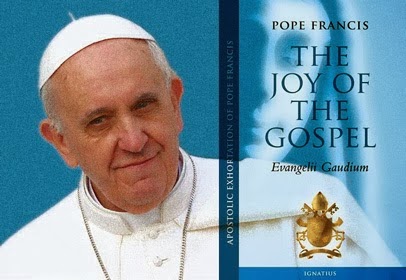
In his first Apostolic Exhortation, “The Joy of the Gospel” Pope Francis spends a good bit of time reflecting on the value and importance of preaching in the overall mission of the Church with its mandate to evangelize.  Using our Holy Father’s exhortation as a touchstone and guide, I would like to offer some thoughts on preaching.  I do not know how many posts I will devote to this topic nor do I claim that every post here on out will focus exclusively on preaching without interruption until completed but I want to spend some time reflecting on this invitation of our Holy Father because, I believe, preaching is truly important in the Christian life and frankly, when preaching is minimized, community suffers.  
I know not every bishop, priest or deacon will be a Bishop Fulton Sheen or a St. John Chrysostom and I believe that Pope Francis is aware of this also.  But, when ministers of the Word continually strive to be faithful and authentic to the call to preach the Good News (whether we be the most dynamic speaker or not) something important happens in people’s lives because it is not only us at work, the Spirit of God moves through us – often very poor vessels that we are.  We need to trust in this and truly recognize that just a God works through us in the sacraments of baptism, matrimony, reconciliation and Eucharist so also is God working through us in our sharing and breaking open of His word which is an essential part of every celebration of the Eucharist.
It is worthy to note where Pope Francis grounds his understanding of preaching as expressed in the the first chapters of “The Joy of the Gospel” – the ever-newness of Christ (chp. 11) and memory (chp. 13).
Christ is the “eternal Gospel” (Rev 14:6); he “is the same yesterday and today and forever” (Heb 13:8), yet his riches and beauty are inexhaustible. He is for ever young and a constant source of newness. The Church never fails to be amazed at “the depth of the riches and wisdom and knowledge of God” (Rom 11:33). 
Later in his Exhortation the Holy Father will reflect on every sermon as a continuation of the original dialogue begun by Christ with his disciples.  (The homily takes up once more the dialogue which the Lord has already established with his people. #137)  This is a wonderful understanding of the sermon and one I will reflect on in more detail in a later post but for our purposes here it is good to remind ourselves that we and our preaching are part of something much bigger.  Our preaching is not something separate from, nor just an add-on to the coming of the Kingdom of God; our preaching is part and parcel of this ongoing and ever new dialogue between Christ and his disciples!  For preaching to be truly effective and efficacious then the preacher himself must be ever immersed in an ongoing encounter and dialogue with Christ in his own heart.  The efficacious sermon will “tap into” this ever new and ongoing dialogue between Christ and his disciples. 
… as Saint Irenaeus writes: “By his coming, Christ brought with him all newness”.   With this newness he is always able to renew our lives and our com­munities, and even if the Christian message has known periods of darkness and ecclesial weak­ness, it will never grow old. Jesus can also break through the dull categories with which we would enclose him and he constantly amazes us by his divine creativity. Whenever we make the effort to return to the source and to recover the original freshness of the Gospel, new avenues arise, new paths of creativity open up, with different forms of expression, more eloquent signs and words with new meaning for today’s world. Every form of authentic evangelization is always “new”.
Yet the Holy Father goes on to caution that the “ever newness” of the Gospel does not negate memory rather, in the Gospel, memory is fulfilled and memory itself becomes a means of encountering the newness of Christ.  The apostles never forgot the moment when Jesus touched their hearts: “It was about four o’clock in the afternoon” (Jn 1:39).  A primary duty of the preacher is to call the community back to memory not in a sense of a mistaken nostalgia (“Things were so much better way back when…”) but in the depth of a sacramental sense.  When we remember, individually and communally, how Jesus has touched our hearts then we encounter Christ anew!  The preacher must preserve this deep sense of memory!  We live in a world that thrives on distraction and a glut of superficial information.  People are yearning for a depth to memory.  A sermon that just skims the surface of the superficial does no one any good! 
The believer is essentially “one who remembers”.    
Every sermon should call people back to this sense of memory and therefore to a new encounter with Christ.  People are starving for this!  They are not starving for the priest’s latest travelogue or the newest internet joke – that is the superficial they are fed every day of the week.  The Church truly nourishes and she does so through Word and Sacrament!  My spiritual director in seminary, Fr. Lou Cameli, once gave me a treasured piece of advice about preaching: “Just say something that invites people to prayer.”  It is about memory and the ever new encounter with Christ. 
Every Monday, I begin to pray over the readings for the upcoming Sunday and part of my prayer is a simple request to the Lord, “Jesus, let me know what you would have me say to your people.”