Why I dislike the "Coexist" Bumper-Sticker

Here are a few reasons why I dislike the “Coexist” bumper-sticker.
The narrative of the bumper sticker implies that all violence and injustice in our world today is the result of religious difference and that religion is just a source of violence.  This is patently untrue.  How much violence and injustice in our world today is actually linked to greed, power and pride?  These are not the sole provenance of the religious person but rather the weakness of all human conscience.  The dictates of religion when authentically lived actually seek to curb these baser human tendencies.  It should also be noted that the twentieth century was the bloodiest in human history and the majority of blood spilled was by ideologies that were anti-religion.
The bumper-sticker implies that all these religious traditions are fundamentally the same and that any person who seeks to honor his or her tradition uniquely and live by its teachings is some form of extremist.  Again, this is not true.  Lived faith does not equate to extremism.  Respect for one’s own religious faith does not automatically mean a demeaning of another’s faith tradition.  It has been my experience over and over again that one of the hallmarks of the truly religious man or woman is a deep respect for the dignity of the other person and his or her beliefs.  I would even go on to say that religion truly lived gives access to a deeper and more profound respect for the human person than that which is possible through a bland secularism because through religion one can recognize the presence of the infinite in the other person – a reality that is deliberately denied through secularism.
The bumper-sticker seeks to establish a background narrative that people of different faith traditions cannot talk with one another nor get along.  Not true.  A number of times I have been able to attend the annual Prayer for Peace gathering organized by the Community of Sant’Egidio.  This annual event carries on the vision of Bl. John Paul II who brought together the leaders of all the world’s great religions to dialogue together and pray for peace according to the dictates of their own religion.  The Prayer for Peace does not propose a bland synchronism nor a diminishing (in Bl. John Paul’s case) of Christianity but rather an authentic living of one’s own faith as the true path toward encountering the other and the true path toward peace.
The bumper-sticker implies that peace can only be imposed on religions from without.  This is not true.  Any honest study and knowledge of the world’s great religious traditions will show that the seeds of peace and reconciliation are found within religious tradition and it is there that these seeds must be cultivated and are being cultivated.
Like the book and subsequent movie, “Eat, Pray, Love”; the bumper-sticker implies that any true and acceptable practice of religion in today’s world (if one must practice religion) will consist in a sampling and “picking-and-choosing” approach to religions and religious tradition that is more about confirming what I like and my preferences and ideologies rather than being challenged by a truth greater than me that will enable me to overcome my sinfulness and grow beyond my weakness.  
What surrounds the arrangements of the symbols of religion that make up the bumper-sticker is the bland, empty vacuum of a shallow secularism.  This is what we are left with when religion is diminished and derided.  The bumper-sticker in fact proposes a diminishment of the human person by seeking to truncate the capacity for religion and the desire for the transcendent.  Humanity is reduced (not achieved) when religion is reduced.  For full disclosure I will share that I am not a secularist nor do I find secularism appealing.  
Has great harm been done in the name of God and religion?  Yes, it has.  I am not seeking to deny this.  What I am seeking to say is that these acts of violence in the name of God are not the essence of religion and are, in fact, themselves a sin against religion and God.  To summarily equate religion with violence is itself an act of violence and disrespect.  It is also a profound act of ingratitude toward all the good that religion has done and continues to do in the lives of individual people and in the history and contemporary culture of our world.
Finally, to quote a college student at the Catholic Center where I minister who probably better summarized in one sentence the fallacy of the “Coexist” bumper-sticker than all that I have tried to share above.  “The ‘Coexist’ bumper-sticker says that all religions are the same and that they are all equally unimportant.”
I agree.          
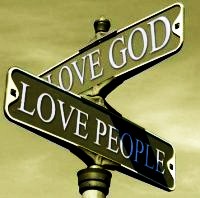
God truly present: Thirty-first Sunday in Ordinary Time (B)

Not long ago I had a conversation with a man who is a convert to Catholicism.  I asked him what was it that brought him into the faith.  He replied that when he was a young man the company he worked for got a job to do some restoration work in a Catholic Church.  When he and his boss met with the parish priest to go over the work needing to be done he was struck by the sight of the priest genuflecting before the tabernacle as they entered the church.  In that simple action he realized that God was present in that church.  This awareness remained with him and grew and it began the process and journey that eventually led him into the Catholic Church.  He told me, “Prior to that I had a notion that God was everywhere yet not really present.  In the Catholic Church I have found God truly present.”

God truly present!  This is the Catholic intuition.  It is what underlies our understanding of the sacraments, the reservation of the Blessed Sacrament in the tabernacle, the Catholic approach to prayer, mysticism and (in fact) the entire life of discipleship.  The understanding of God truly present is also foundational in our belief in the communion of saints which we just celebrated on November 1st with the Feast of All Saints.  It is not just that saints were good men and women who did good deeds (worthy of being nominated for CNN’s annual “Heroes” celebration).  God became truly present to the world in the lives of the saints and these men and women became truly transformed and reflective of the presence of God.  (The Catholic understanding of relics is rooted in this reality.)  The saints are, in fact, quite subversive because their very lives witness against a materialistic-only view of reality as well as a vague sense of the Divine that is content in keeping God removed and far off.  These are both tendencies seeking to be persuasive in our world today, yet the saints witness to something both different and real – the incarnational and sacramental truth of the Christian faith.     

God truly present as opposed to a vague sense of God who is everywhere but really nowhere. 

This awareness is not some “add-on” nor corruption of true Christianity.  It is the essence of true Christianity and it is grounded in creation through the Word of God and the very incarnation of the Word of God.  Throughout the whole of Scripture we find this awareness being revealed and proclaimed.   

In today’s gospel (Mk. 12:28b-34) Jesus (who is the Word made flesh) specifically holds together the love of God and the love of neighbor in such a unity that the two cannot be separated.  Love, if it is to be true, must be present and real.  In the first Letter of John we have a developed reflection on this twofold commandment to love God and neighbor: Those who say, “I love God”, and hate their brothers and sisters, are liars: for those who do not love a brother or sister whom they have seen, cannot love God whom they have not seen.  The commandment we have from him is this: those who love God must love their brothers and sisters also. (1 Jn. 4:20-21)

Love of God and neighbor, if it is to be real, must be present.  And where true love is, present is God.  The saints reveal this truth to us – not just through what they did but through their very lives transformed and reflective of a God not content to remain removed but continually seeking to be present.   


Learning to See: Thirtieth Sunday in Ordinary Time (B)

Eustache Le Sueur “Christ Healing the Blind Man”

At one point in his Catholicism series, Fr. Robert Barron reflects on Israel’s hopes for the coming messiah.  He lists out the expectations of what the messiah would accomplish and he demonstrates how Jesus fulfills all of these expectations yet in often unexpected ways.  One such example is the expectation that the messiah would restore the unity of Israel.  Fr. Barron points out that Jesus does in fact accomplish this but not through leading an army nor through political maneuvering.  Jesus accomplishes the expectation of restoring unity through his miracles of healing.  In their physical impairments; the blind, the lame, the mute and the leper were not only handicapped in body but were also cut off from the ritual life of Israel and therefore could not fully participate in their society.  By his acts of healing not only was Jesus curing the physical ailment of the person but he was also restoring him or her to full participation in the community. 

This Sunday’s gospel story of the blind beggar Bartimaeus (Mk. 10:46-52) is a case in point.  But, not only that, it must be noted that Jesus recognizes the separation and isolation present that was easily overlooked by the very people who were longing for the messiah.  Mark tells us that when Jesus left Jericho he was with a sizable crowd and that as this crowd surrounding Jesus draws near and begins to pass the blind beggar Bartimaeus (in his poverty it must be noted) weakly begins to call out: Jesus, Son of David, have pity on me.  Mark specifically then states: And many rebuked him, telling him to be silent.  The very ones who were yearning for the full restoration of Israel remained blind to this man’s (their fellow Israelite) separation and isolation. 

But, Jesus saw Bartimaeus and he heard his cry.  In this we are brought to the realization that not just the work of restoring unity but also the ability to first see isolation and separation is an aspect that also marks the long awaited messiah as anticipated in the writings of the prophet Jeremiah.  Part of which we hear in today’s first reading (Jeremiah 31: 7-9): Behold, I will bring them back from the land of the north; I will gather them from the ends of the world, with the blind and the lame in their midst, the mothers and those with child; they shall return as an immense throng. 

Through Christ, we have been made a priestly people and we now share in the High Priesthood of Christ (Hebrews 5:1-6).  As a nation of priests we are entrusted with the work of restoring unity to a divided and hurting world and the first step in this work (upon which the whole is based) is the ability to see and recognize separation and isolation.  Separation and isolation within our own world and within our own hearts.  For this, it is essential that we have the trust and faith of the blind beggar.  Like Bartimaeus, we too need to trust that our God is a loving and merciful God who hears the cry of his people

Jesus, Son of David, have pity on me.  This must be our prayer and we must let this prayer lead us to the separated and isolated places of our world and the separated and isolated places in our own hearts because it is there that we will encounter Christ and we will truly come to know him as messiah.

After hearing his request, Jesus says to Bartimaeus: Go your way; your faith has saved you.  Mark then writes, Immediately he (Bartimaeus) received his sight and followed him (Jesus) on the way.  Through this encounter in a place of isolation and separation, Bartimaeus came not just to be healed physically of his blindness but also to be healed spiritually as he came to recognize Jesus as both Messiah and Lord.  Today’s gospel calls us also to a healing just as it did that first crowd.  May our blindnesses also be healed and may we learn to see as our Lord sees in order that our work of restoring unity might be true.          

Rome visit

Today (Sunday, October 14th) I am heading to Rome for a week-long visit.  During the week I will visit with our seminarian Michael Hendershott studying at the Pontifical North American College and with the faculty at the seminary.  As Vocation Director, I visit each seminary our diocese uses at least once a year to check on our men.  I told Bishop Stika that this visit to Rome is a cross that I am willing to suffer.  Lol! 

Following the visit I will spend some days visiting with my friends in the Community of Sant’Egidio.  It will be good to catch up with them and join the community’s prayer. 

The day before my return I will be attending the canonization ceremony set for October 21st at St. Peter’s.  Six men and women are to be canonized, one of these being Bl. Kateri Tekakwitha who will be the first Native American saint proclaimed by the Church.  I was able to get a ticket that will allow me to participate in the ceremony by assisting with the distribution of communion.  I have never been to a canonization ceremony before and am excited for the opportunity!  Part of this being that my own family heritage is part Native American (Choctaw and Cherokee to be exact).

I am looking forward to a great visit!   

"It is not good for man to be alone.": Twenty-Seventh Sunday in Ordinary Time (B)

It is not good for man to be alone. 

These words spoken by God at the very dawn of creation bring forth a singular truth regarding the human condition.  Communion and relationship are at the very root of what it means to be human.  In one sense this should come as no surprise as we are made in the image and likeness of God who is a communion of persons – Father, Son and Holy Spirit.  God is not a “far-away and high loneliness” but rather a living relationship of three Persons.  It can be said that God does not live alone and therefore man and woman are not meant to live alone.  We are meant for communion and communion, solidarity and support are the root of every human vocation.  By living communion (whether that be the communion of friendship, of discipleship, of the common good, of church, of witness) we are being brought to that ultimate communion which will be the union of the human family with God. 

This Sunday we are asked to reflect on a specific kind of communion which originates from marriage – the union of man and woman. 

I wish that I could say that I get into our surrounding mountains here in East Tennessee more often than I do.  We are indeed blessed here with the beauty of God’s creation.  But, even if I cannot get away for a hike too often, I am pretty consistent about taking my two dogs for a walk at least every other day if not every day.  For a few minutes I step out from the office, I step away from the computer and from the Internet and facebook, I let go of whatever project is occupying my thoughts and I am able to be with my dogs and enjoy the beauty of the day and creation.  When I do this I am always better for it.  Creation and its structure and laws has a way of putting things right, speaking to the truth and depth of who we are and refreshing the soul.

In today’s gospel (Mk. 10:2-16) when our Lord is asked if it is lawful for a husband to divorce his wife he turns to creation when he gives his answer.  

But from the beginning of creation, ‘God made them male and female.  For this reason a man shall leave his father and mother and be joined to his wife, and the two shall become one flesh.’  So they are not longer two but one flesh.  Therefore what God has joined together, no human being must separate.  

This “turn to creation” on our Lord’s part is not an aside nor just a nice rhetorical device.  To truly understand marriage one must look to the laws of creation itself.  Marriage is not rooted in the laws of governments that come and go nor is it ultimately founded in the social values of any given time which, it must be acknowledged, are often biased toward the powerful and oppressive of the weak and poor.  Marriage even precedes the foundation of the Church herself, whose relation to marriage is that of steward and not creator.  Marriage, the union of man and woman, originates in creation itself.  It is even such a high display of love that it is presented as an image of God’s love for his people and Christ’s love as bridegroom for his bride, the Church.

That the two shall become one flesh testifies (probably more powerfully than anything else) to the reality that communion lies at the very foundation of human existence and human vocation.  This is a needed witness, if not the most important witness, to our day and age which is so dominated by a self-centered and self-seeking approach to human existence.  Marriage lived even in the struggles of human weakness yet open to God’s healing and sanctifying grace, witnesses to that fundamental law of creation that the two actually do become one flesh.  A law which can neither be faked nor manipulated because it is linked to truth itself.  Life is found through communion, through sacrifice and through love and not through a self-centered and isolated existence. 

This Sunday’s second reading from the Letter to the Hebrews (2:9-11) reminds us that when we were lost and isolated in sin and death, God stepped out of his glory and took on suffering for us.  In order that, He who consecrates and those who are being consecrated all have one origin.  (Notice again the use of the imagery of creation and origin.)  Our origin is God, a communion of Persons, who spoke forth creation in love and who let go of his glory in love that we might have life. 

In the love and sacrifice of communion we are rooted and we are fulfilled.  It is written into the very laws of creation and into creation being sanctified by grace.     


A life lesson

A life lesson I have gained: 

If people speak ill of you and this leads to others avoiding you just because of what they have heard, then give thanks to God for the ones who speak ill. 

They are doing you a great favor. 

They are helping to sift out the fools from your life so you do not have to suffer them.

The Expansiveness of Love: Twenty-Sixth Sunday in Ordinary Time (B)

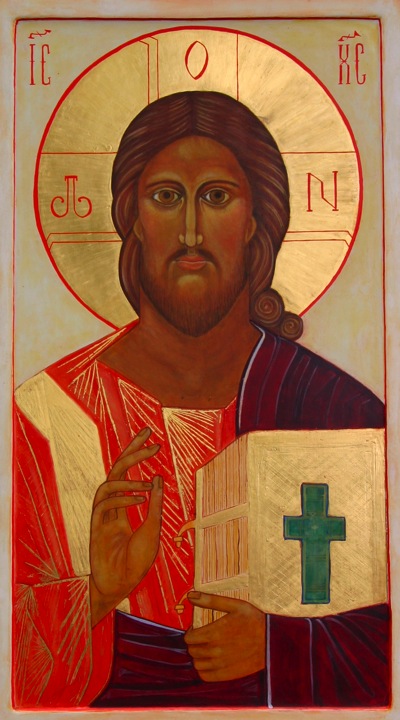
Icon of Christ – the Divine Physician

It has been noted that the besetting sin of our day is not that we love too much but rather that we love too little.  It is my estimation that although often trumpeted,  proclaimed, and sung about in all sectors of society the love that is most often highlighted today is, in fact, impoverished and anemic.  When we scratch just under the surface we realize that what often passes for “love” is really, in fact, just safeguarding ones own interest – ones own viewpoint of the way things are, ones own prosperity, ones own desire and need, the success and comfort of ones own group, ones own ideology, ones own honor, family and kin. 

The truth is that there is nothing new under the sun; this temptation to safeguard ones own has been around for a very long time.  In fact, we find it in today’s gospel passage (Mk. 9:38-43, 44,47-48).  John himself is operating under this temptation when he says to Jesus; Teacher, we saw someone driving out demons in your name, and we tried to prevent him because he does not follow us.  On the surface John might have convinced himself that the attempt to prevent this person and his actions was out of love for Jesus but in fact it was more about privilege and our Lord recognized this.  Do not prevent him.  There is no one who performs a mighty deed in my name who can at the same time speak ill of me.

In today’s gospel passage our Lord asks us to do two things.  The first is to in humility make what is often called a “fearless moral inventory”.  Our Lord asks us to look within and to honestly gauge what motivates us.  He does this by highlighting the temporal nature of the physical body.  If your hand … If your foot causes you to sin cut it off … If your eye causes you to sin, pluck it out.  Any reasonable person is going to realize that its not my hands or my feet or my eyes that cause my sin but rather something much deeper within – my own disordered desires which motivate and impel me. 

If, indeed, it is my body parts that should be cut off if it is proven that they are the root of my sin then even more so must my heart and what motivates me from within be laid open before the Divine Physician in order for that which corrupts to be cut out and removed by his grace.  Every time we come before the Lord in personal prayer, in sacramental celebration or in service to another we must let go of the subtle temptation to safeguard our own and, in humility, open our hearts to Christ. 

This is the first request our Lord makes of us in today’s gospel passage.  The second request both flows from and is dependent upon the first.  Christ asks us to spend ourselves in love.  Elsewhere in scripture, we are told that our love should be sincere.  The sincerity of love both for neighbor and God is dependent upon our willingness to look both fearlessly and humbly within and to let go and move beyond anything that inhibits and disorders love.  This includes the temptation to safeguard our own. 

When we view the lives of the saints one common characteristic we find is that these men and women spent themselves in love.  This is said over and over again in regards to the saints.  They learned the lesson of today’s gospel passage and each, in his or her own unique way, did not just avoid sin (which certainly is important) but also literally spent themselves in love.  They learned and trusted in the expansive love of Christ.  Anyone who gives you a cup of water to drink because you belong to Christ, amen, I say to you, will surely not lose his reward

Christ calls us to spend our lives in love, to an expansiveness of heart, because here (and not in safeguarding our own) is where fulfillment and true joy are to be found.           

Rest in peace Mom

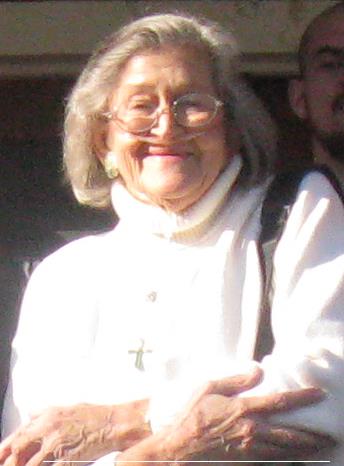
Around 12:40 a.m. this past Thursday morning, my mother Betty passed from this life into eternity.  She had been dealing with the effects of COPD for a number of years but things took a turn for the worse about a month and a half ago.  Last Monday was another crisis point and things quickly went downhill beginning Wednesday afternoon. 

I had stayed with my mom Tuesday night and was planning to do the same for Wednesday.  I had dozed off in my chair and it was the caregiver who woke me up to tell me that my mother had passed. 

The hospice nurse said that is often the case.  The one who is dying (it seems) actually waits until either the loved one(s) leaves the room for a minute or dozes off to pass.  A friend told me that he thought it might be my mother’s last gift to me – not having to see her struggle to take her last breath.  A mother’s love…

When I left my mom’s room at the health care center Thursday morning and drove home I was certainly burdened with sadness but I also had a sense of peace.  My mother had struggled and fought for so long and at the end she was in such pain, there really was no way that she could recover.  There is a peace in knowing that she is no longer suffering. 

I am confident that my mother knew the mercy and love of God when she departed this life and that she knew she was loved by her family and friends.  I told her that she had done a good job in raising her boys and that we were all okay and not to worry. 

I know that I will see my mother again because I know that our Redeemer lives. 

It still hurts though…

Rest in peace Mom.  You have earned it.  We love you.   

“May the angels lead you into paradise, may the martyrs come to welcome you and take you to the holy city, the new and eternal Jerusalem.”

Learning to walk: Twenty-fourth Sunday in Ordinary Time (B)

Not too long ago I had the opportunity to spend some time enjoying and afternoon of a beautiful day in a city park – sitting on a bench, appreciating the sunlight and watching the people.  At one point I noticed a young family strolling down a path – a husband, wife and their little toddler who was obviously just learning to walk and was also very determined to do so on his own.  At one point the little boy stumbled and fell, his father picked him up, set him on his feet and the little boy was off again with his parents following behind.  The little boy was learning to walk both with every step but also every stumble.  It was a very common sight but also very beautiful and true and it gives us, I believe, a wonderful image to hold in relation to today’s gospel passage (Mk. 8:27-35).

All aspects of the gospel message are important and this even includes location and context.  The context of today’s gospel is worthy of note.  Jesus and his disciples set out for the villages of Caesarea Philippi.  Along the way he asked his disciples…  They are walking, they are on journey and it is in this context that Jesus puts forth his question.  “Who do people say that I am?”  Yes, our Lord is taking this moment to teach his disciples about his identity (who he is) but, he is also teaching them by this question and what follows how “to walk” as disciples.  In this gospel passage we find that the Lord is teaching us (like those parents with their son) how to walk as disciples in the world.

Yes, the Gospel proclaims the truth of who Christ is as savior but it also teaches us what it means to be a disciple.  It is not enough to proclaim, “Lord, Lord” but then not do anything about it.  If we are going to talk the talk then we need to also walk the walk.  Faith of itself, writes James in today’s second reading (James 2:14-18), if it does not have works is dead

That day in the park, the natural progression of life was propelling that toddler to walk, even after stumbling.  The child was determined.  He had to do it.  The natural movement of faith leads one to live faith.  We must not short-circuit this truth.  We must grow, we must mature as disciples if we are not to remain in a state of frustration.  We must learn how to walk as disciples in the world.

To walk as a disciple in the world means to learn to judge things differently and therefore to live by a different standard – not the world’s but God’s.  The disciple must learn to deny self, to take up the cross and to follow Christ.  This is the lesson that Peter stumbled upon and had to learn even after proclaiming Jesus as the Christ.  God’s ways are not our ways and God’s Messiah will rule from the defeat and weakness of the cross rather than the power of the world.  The disciple must also learn this and walk the same path that the Master trod.  Anything less is a short-circuiting of the natural and authentic thrust of faith.  Anything less is a selling short of discipleship and of self.

Yes, this if frightening and we will stumble, just like Peter, but our Lord is kind and merciful and in this we find comfort.  Our Lord will pick us up and set us on our feet again.  And in this we will know true joy and fulfillment.  The authentic joy of doing and achieving what one is meant to do and to achieve.  The joy of coming to be what one is meant to be. 

As the toddler walked on down the path, even after his stumble, he was all smiles – precisely because he was doing and achieving what he was meant to do and to achieve.  Here is where joy is found and experienced.  We must grow.  We must mature in faith.  We are meant to learn how to walk as authentic disciples in our world.    


A Gospel passage in three movements: Twenty-Third Sunday in Ordinary Time (B)

In this Sunday’s gospel passage (Mk. 7:31-37) there are three “movements” worthy of reflecting upon.  This passage tells the good news of how Jesus cured the deaf man with the speech impediment and it is worthy to note how our Lord heals the man. 

The first movement is that Jesus takes the man away by himself.  He took him off by himself away from the crowd.  Jesus welcomes this poor man.  He teaches by way of action what James is later to write in his letter (James 2:1-5); …show no partiality as you adhere to the faith in our glorious Lord Jesus Christ.  It is certainly true that God shows no preference between people but we see throughout Scripture that the heart of God leans in a special way toward the poor and the weak. 

Jesus welcomes this man and he takes him off to the side as if to stress the need of a personal relation and encounter with Christ as the foundation of any true healing.  Miracles, it has been noted, “occur in the realm of a deep friendship and trust in God.”  It is true that God respects our freedom enough to not force his love on us but it is also equally true that the respect must go both ways.  Neither God nor his love is a genie to be summoned on command by our whims and needs.  The love and grace of God and the miracles of God in life are dependent (to a considerable extent) upon our friendship with and trust in God.

Jesus then, following ancient custom, puts his finger in the man’s ears and then (with saliva) touches the man’s tongue.  These are the second and third movements respectively. 

Jesus touches the man’s ears.  Each person needs to be “open” to hearing the Word of God.  In our distracted world we need to learn how to cultivate the art of listening, especially listening for the Word of God as it comes to us.  This art implies the willingness to live with an open heart and a humble and receptive spirit.  I think in times past we could almost coast on this because times and circumstances lent themselves to the art of listening.  I do not think we can say this anymore.  There are too many distractions.  We must be intentional about creating in our lives and in our world environments (even pockets) of quiet in order that the discipline of listening and real encounter with another can be developed and grow.  This certainly applies to our faith life and our relationship with Christ. 

(At this point, I want to take an aside and point to two things beginning this week at the Catholic Center that relate here.  The first is Monday morning prayer on campus which will be held every Monday at 7:15 a.m.  Each month we will explore a different prayer form together.  The second is Wednesday Adoration of the Blessed Sacrament which our Graduate Student/Young Adult group is organizing which will be held every Wednesday from 3:00 to 5:00 p.m.  These are both moments to just listen and to be with the Lord.)

Jesus touches the man’s tongue, looks up to heaven, groans and says, Ephphatha! or “Be opened!”.  And immediately the man’s ears were opened, his speech impediment was removed, and he spoke plainly.  In the fact that we are told that the man was able to speak plainly we can see that the miracle proclaimed in this passage concerns not just the restoration of speech but really the ability to speak correctly.  Words carry great power.  We find this throughout Scripture from the very beginning in the creation account where we are told that God spoke and it came to be to John’s reflection of Jesus being the Logos or Word of the Father.  Our words can participate in the very creativity of God or they can be misused in order to harm, to do evil and to create nothing but division. 

For our words to be purified, for them to participate in the very creativity of God and not be malicious nor deceitful then we must first of all (as noted above) listen to the Word of God.  Our words can do great good but they can also do great harm.

Three movements: truly encountering and living in friendship with Christ, listening to the Word of God and learning to speak correctly.