The Expansiveness of Love: Twenty-Sixth Sunday in Ordinary Time (B)

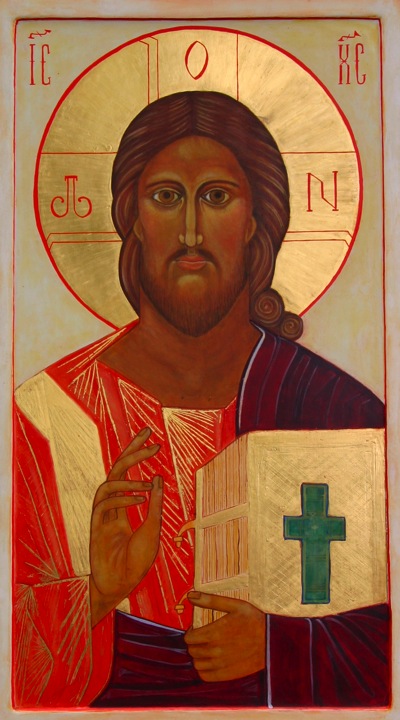
Icon of Christ – the Divine Physician

It has been noted that the besetting sin of our day is not that we love too much but rather that we love too little.  It is my estimation that although often trumpeted,  proclaimed, and sung about in all sectors of society the love that is most often highlighted today is, in fact, impoverished and anemic.  When we scratch just under the surface we realize that what often passes for “love” is really, in fact, just safeguarding ones own interest – ones own viewpoint of the way things are, ones own prosperity, ones own desire and need, the success and comfort of ones own group, ones own ideology, ones own honor, family and kin. 

The truth is that there is nothing new under the sun; this temptation to safeguard ones own has been around for a very long time.  In fact, we find it in today’s gospel passage (Mk. 9:38-43, 44,47-48).  John himself is operating under this temptation when he says to Jesus; Teacher, we saw someone driving out demons in your name, and we tried to prevent him because he does not follow us.  On the surface John might have convinced himself that the attempt to prevent this person and his actions was out of love for Jesus but in fact it was more about privilege and our Lord recognized this.  Do not prevent him.  There is no one who performs a mighty deed in my name who can at the same time speak ill of me.

In today’s gospel passage our Lord asks us to do two things.  The first is to in humility make what is often called a “fearless moral inventory”.  Our Lord asks us to look within and to honestly gauge what motivates us.  He does this by highlighting the temporal nature of the physical body.  If your hand … If your foot causes you to sin cut it off … If your eye causes you to sin, pluck it out.  Any reasonable person is going to realize that its not my hands or my feet or my eyes that cause my sin but rather something much deeper within – my own disordered desires which motivate and impel me. 

If, indeed, it is my body parts that should be cut off if it is proven that they are the root of my sin then even more so must my heart and what motivates me from within be laid open before the Divine Physician in order for that which corrupts to be cut out and removed by his grace.  Every time we come before the Lord in personal prayer, in sacramental celebration or in service to another we must let go of the subtle temptation to safeguard our own and, in humility, open our hearts to Christ. 

This is the first request our Lord makes of us in today’s gospel passage.  The second request both flows from and is dependent upon the first.  Christ asks us to spend ourselves in love.  Elsewhere in scripture, we are told that our love should be sincere.  The sincerity of love both for neighbor and God is dependent upon our willingness to look both fearlessly and humbly within and to let go and move beyond anything that inhibits and disorders love.  This includes the temptation to safeguard our own. 

When we view the lives of the saints one common characteristic we find is that these men and women spent themselves in love.  This is said over and over again in regards to the saints.  They learned the lesson of today’s gospel passage and each, in his or her own unique way, did not just avoid sin (which certainly is important) but also literally spent themselves in love.  They learned and trusted in the expansive love of Christ.  Anyone who gives you a cup of water to drink because you belong to Christ, amen, I say to you, will surely not lose his reward

Christ calls us to spend our lives in love, to an expansiveness of heart, because here (and not in safeguarding our own) is where fulfillment and true joy are to be found.           

Rest in peace Mom

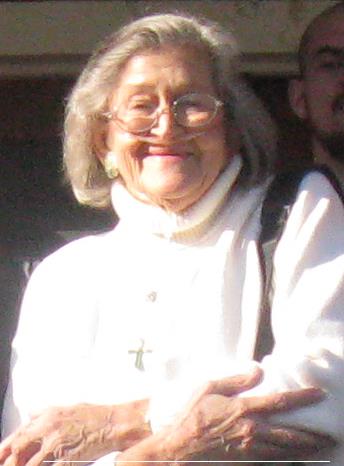
Around 12:40 a.m. this past Thursday morning, my mother Betty passed from this life into eternity.  She had been dealing with the effects of COPD for a number of years but things took a turn for the worse about a month and a half ago.  Last Monday was another crisis point and things quickly went downhill beginning Wednesday afternoon. 

I had stayed with my mom Tuesday night and was planning to do the same for Wednesday.  I had dozed off in my chair and it was the caregiver who woke me up to tell me that my mother had passed. 

The hospice nurse said that is often the case.  The one who is dying (it seems) actually waits until either the loved one(s) leaves the room for a minute or dozes off to pass.  A friend told me that he thought it might be my mother’s last gift to me – not having to see her struggle to take her last breath.  A mother’s love…

When I left my mom’s room at the health care center Thursday morning and drove home I was certainly burdened with sadness but I also had a sense of peace.  My mother had struggled and fought for so long and at the end she was in such pain, there really was no way that she could recover.  There is a peace in knowing that she is no longer suffering. 

I am confident that my mother knew the mercy and love of God when she departed this life and that she knew she was loved by her family and friends.  I told her that she had done a good job in raising her boys and that we were all okay and not to worry. 

I know that I will see my mother again because I know that our Redeemer lives. 

It still hurts though…

Rest in peace Mom.  You have earned it.  We love you.   

“May the angels lead you into paradise, may the martyrs come to welcome you and take you to the holy city, the new and eternal Jerusalem.”

Learning to walk: Twenty-fourth Sunday in Ordinary Time (B)

Not too long ago I had the opportunity to spend some time enjoying and afternoon of a beautiful day in a city park – sitting on a bench, appreciating the sunlight and watching the people.  At one point I noticed a young family strolling down a path – a husband, wife and their little toddler who was obviously just learning to walk and was also very determined to do so on his own.  At one point the little boy stumbled and fell, his father picked him up, set him on his feet and the little boy was off again with his parents following behind.  The little boy was learning to walk both with every step but also every stumble.  It was a very common sight but also very beautiful and true and it gives us, I believe, a wonderful image to hold in relation to today’s gospel passage (Mk. 8:27-35).

All aspects of the gospel message are important and this even includes location and context.  The context of today’s gospel is worthy of note.  Jesus and his disciples set out for the villages of Caesarea Philippi.  Along the way he asked his disciples…  They are walking, they are on journey and it is in this context that Jesus puts forth his question.  “Who do people say that I am?”  Yes, our Lord is taking this moment to teach his disciples about his identity (who he is) but, he is also teaching them by this question and what follows how “to walk” as disciples.  In this gospel passage we find that the Lord is teaching us (like those parents with their son) how to walk as disciples in the world.

Yes, the Gospel proclaims the truth of who Christ is as savior but it also teaches us what it means to be a disciple.  It is not enough to proclaim, “Lord, Lord” but then not do anything about it.  If we are going to talk the talk then we need to also walk the walk.  Faith of itself, writes James in today’s second reading (James 2:14-18), if it does not have works is dead

That day in the park, the natural progression of life was propelling that toddler to walk, even after stumbling.  The child was determined.  He had to do it.  The natural movement of faith leads one to live faith.  We must not short-circuit this truth.  We must grow, we must mature as disciples if we are not to remain in a state of frustration.  We must learn how to walk as disciples in the world.

To walk as a disciple in the world means to learn to judge things differently and therefore to live by a different standard – not the world’s but God’s.  The disciple must learn to deny self, to take up the cross and to follow Christ.  This is the lesson that Peter stumbled upon and had to learn even after proclaiming Jesus as the Christ.  God’s ways are not our ways and God’s Messiah will rule from the defeat and weakness of the cross rather than the power of the world.  The disciple must also learn this and walk the same path that the Master trod.  Anything less is a short-circuiting of the natural and authentic thrust of faith.  Anything less is a selling short of discipleship and of self.

Yes, this if frightening and we will stumble, just like Peter, but our Lord is kind and merciful and in this we find comfort.  Our Lord will pick us up and set us on our feet again.  And in this we will know true joy and fulfillment.  The authentic joy of doing and achieving what one is meant to do and to achieve.  The joy of coming to be what one is meant to be. 

As the toddler walked on down the path, even after his stumble, he was all smiles – precisely because he was doing and achieving what he was meant to do and to achieve.  Here is where joy is found and experienced.  We must grow.  We must mature in faith.  We are meant to learn how to walk as authentic disciples in our world.    


A Gospel passage in three movements: Twenty-Third Sunday in Ordinary Time (B)

In this Sunday’s gospel passage (Mk. 7:31-37) there are three “movements” worthy of reflecting upon.  This passage tells the good news of how Jesus cured the deaf man with the speech impediment and it is worthy to note how our Lord heals the man. 

The first movement is that Jesus takes the man away by himself.  He took him off by himself away from the crowd.  Jesus welcomes this poor man.  He teaches by way of action what James is later to write in his letter (James 2:1-5); …show no partiality as you adhere to the faith in our glorious Lord Jesus Christ.  It is certainly true that God shows no preference between people but we see throughout Scripture that the heart of God leans in a special way toward the poor and the weak. 

Jesus welcomes this man and he takes him off to the side as if to stress the need of a personal relation and encounter with Christ as the foundation of any true healing.  Miracles, it has been noted, “occur in the realm of a deep friendship and trust in God.”  It is true that God respects our freedom enough to not force his love on us but it is also equally true that the respect must go both ways.  Neither God nor his love is a genie to be summoned on command by our whims and needs.  The love and grace of God and the miracles of God in life are dependent (to a considerable extent) upon our friendship with and trust in God.

Jesus then, following ancient custom, puts his finger in the man’s ears and then (with saliva) touches the man’s tongue.  These are the second and third movements respectively. 

Jesus touches the man’s ears.  Each person needs to be “open” to hearing the Word of God.  In our distracted world we need to learn how to cultivate the art of listening, especially listening for the Word of God as it comes to us.  This art implies the willingness to live with an open heart and a humble and receptive spirit.  I think in times past we could almost coast on this because times and circumstances lent themselves to the art of listening.  I do not think we can say this anymore.  There are too many distractions.  We must be intentional about creating in our lives and in our world environments (even pockets) of quiet in order that the discipline of listening and real encounter with another can be developed and grow.  This certainly applies to our faith life and our relationship with Christ. 

(At this point, I want to take an aside and point to two things beginning this week at the Catholic Center that relate here.  The first is Monday morning prayer on campus which will be held every Monday at 7:15 a.m.  Each month we will explore a different prayer form together.  The second is Wednesday Adoration of the Blessed Sacrament which our Graduate Student/Young Adult group is organizing which will be held every Wednesday from 3:00 to 5:00 p.m.  These are both moments to just listen and to be with the Lord.)

Jesus touches the man’s tongue, looks up to heaven, groans and says, Ephphatha! or “Be opened!”.  And immediately the man’s ears were opened, his speech impediment was removed, and he spoke plainly.  In the fact that we are told that the man was able to speak plainly we can see that the miracle proclaimed in this passage concerns not just the restoration of speech but really the ability to speak correctly.  Words carry great power.  We find this throughout Scripture from the very beginning in the creation account where we are told that God spoke and it came to be to John’s reflection of Jesus being the Logos or Word of the Father.  Our words can participate in the very creativity of God or they can be misused in order to harm, to do evil and to create nothing but division. 

For our words to be purified, for them to participate in the very creativity of God and not be malicious nor deceitful then we must first of all (as noted above) listen to the Word of God.  Our words can do great good but they can also do great harm.

Three movements: truly encountering and living in friendship with Christ, listening to the Word of God and learning to speak correctly.           


Hearts open to God: Twenty-Second Sunday in Ordinary Time (B)

Statue of Christ the Redeemer in Rio de Janeiro, Brazil

It is helpful in today’s gospel passage (Mk. 7:1-8, 14-15, 21-23) to distinguish what our Lord is condemning from what he is not condemning.  Our Lord is not condemning ritual action per se.  We realize this if we call to mind elsewhere in the Gospel where our Lord states that he has come not to abolish but to fulfill the law.  What our Lord is condemning in this gospel passage is the temptation to keep our hearts distant from God. 

This temptation can take a variety of forms.  One form is indeed to cloak itself in a form of religious ritualism that really misses the mark.  Here our Lord quotes Isaiah, “This people honors me with their lips, but their hearts are far from me; in vain do they worship me, teaching as doctrines human precepts.”  You disregard God’s commandments but cling to human tradition.  This misuse of ritual as a means to hide our hearts from God rather than the proper exercise of ritual which guides one to an encounter with the Divine can often be seen in the tendency to (as a friend of mine would say) “major in the minors.”  This means to get lost in an over focus on what is of little importance while neglecting the loftier things.  In our first reading for the Sunday (Dt. 4:1-2, 6-8), Moses reminds Israel that the statutes and commandments of the Lord are given that they might have life.  The commandments are given in order that the Israelites might live with hearts open to an encounter with God.

This is one way of keeping our hearts distant from God but there is another way which is quite prevalent today and also worthy of note.  This second way of keeping our hearts distant from God is witnessed in a lack of respect for ritual.  This can be heard often in the critique that the Catholic and Orthodox Church are just about “dead ritual” that has no real value in the true Christian life.  This perception demonstrates a profound ignorance both about the sense of God in one’s life and also often an over-inflated sense of self.  Downplaying the awareness of God as the transcendent mystery while inflating our own ego (which I would argue often happens in many Christian circles today) is another way of keeping our hearts distant from God.  One might profess relationship with Christ but it is, in fact, easy here to keep ones heart distant through both an over focus on self and a viewing of God as just being the means by which I and my needs are satisfied.

Ritual, when properly lived, reminds us that it is God we are approaching.  Ritual calls forth respect in regards to what we are about and also to Whom we are addressing ourselves.  Ritual, through its concrete action, opens our hearts to an encounter with the Divine Mystery.  Ritual, truly lived, recognizes God as God and reminds us of our proper place in this encounter.

Both ritualism and the denial of any value to ritual can be used to cloak the same sin: keeping our hearts distant from God.  Today, Christ invites us to do a little heart surgery in our lives – to acknowledge the root of our sins and to acknowledge that these sins grow in our lives and in our world precisely in relation to how much we keep our hearts distant from God

From within people, from their hearts, come evil thoughts, unchastity, theft, murder, adultery, greed, malice, deceit, licentiousness, envy, blasphemy, arrogance, folly.  All these evils come from within and they defile

“By affirming this, Jesus clarifies that evil does not grow by chance, as if it was the fruit of a blind destiny.  Evil has its own soil that is the heart.  And it has also its farmers: men and women.  Each person is a farmer, at times very active, of small or large quantities of bitter grass in our hearts, grass that often poisons our lives and the lives of others.”  (Bishop Vincenzo Paglia, The Word of God Everyday)

We are responsible for the bitterness in our world and also, often, in our lives.  No one is exempt.  But, just as we can be farmers in our hearts sowing bitter grass, we can also be farmers sowing that which is true and good – solidarity, compassion, patience, humility, piety, mercy and forgiveness.  Our Lord knows that it all happens in the heart and the first step is to stop keeping our hearts distant from God.  In all times and seasons, we ought to welcome the word of the Gospel and the grace of God into our hearts. 

In his letter, the apostle James gives us this wise advice: …welcome with meekness the implanted word that has the power to save your souls.  But be doers of the word, and not hearers who deceive themselves.        

Icon of St. Teresa of Avila, final

I have completed my icon of St. Teresa of Avila and I am pleased with the way it has turned out.  Behind the saint is a representation of the Interior Castle – St. Teresa’s image for the stages of prayer and contemplation and how we encounter God through our own thoughts and imaginings and even going beyond these to that still point where we realize all is grace and pure gift from God.  St. Teresa has much to teach us. 

Recently I picked up a wonderful book on iconography entitled Hidden and Triumphant: The Underground Struggle to Save Russian IconographyThe book is written by Irina Yazykova and it presents the story of how courageous men and women kept the art and prayer of iconography alive during the years and persecution of the communist Soviet regime. 

At one point in the introduction the author shares the description of iconography as being “contemplation in colors”.  I think that this is a wonderful description for the work of iconography and I know that it is a description that I will continue to reflect on and draw insight from. 

Feast of the Beheading of John the Baptist: John’s birth

August 29th is the feast of the Beheading of St. John the Baptist. 

In its calendar of saints, the Church commemorates the day of death. This is done to acknowledge the day of the saint’s “birth” into eternal life – when the saint passes from this world of pilgrimage to the full life of eternity in Christ. This reminds us of our belief as Christians that death is not the end (Christ’s resurrection has conquered death) and also encourages us while we are on pilgrimage to keep our eyes fixed on the full horizon that we are called to and meant for by God and to live our lives accordingly and in hopeful expectation!

Below is the homily of St. Bede the Venerable for this day:  

As forerunner of our Lord’s birth, preaching and death, the blessed John showed in his struggle a goodness worthy of the sight of heaven. In the words of Scripture: “Though in the sight of men he suffered torments, his hope is full of immortality.” We justly commemorate the day of his birth with a joyful celebration, a day which he himself made festive for us through his suffering and which he adorned with the crimson splendour of his own blood. We do rightly revere his memory with joyful hearts, for he stamped with the seal of martyrdom the testimony which he delivered on behalf of our Lord.

There is no doubt that blessed John suffered imprisonment and chains as a witness to our Redeemer, whose forerunner he was, and gave his life for him. His persecutor had demanded not that he should deny Christ, but only that he should keep silent about the truth. Nevertheless, he died for Christ. Does Christ not say: I am the truth? Therefore, because John shed his blood for the truth, he surely died for Christ.

Through his birth, preaching and baptizing, he bore witness to the coming birth, preaching and baptism of Christ, and by his own suffering he showed that Christ also would suffer.

Such was the quality and strength of the man who accepted the end of this present life by shedding his blood after the long imprisonment. He preached the freedom of heavenly peace, yet was thrown into irons by ungodly men; he was locked away in the darkness of prison, though he came bearing witness to the Light of life and deserved to be called a bright and shining lamp by that Light itself, which is Christ. John was baptized in his own blood, though he had been privileged to baptize the Redeemer of the world, to hear the voice of the Father above him, and to see the grace of the Holy Spirit descending upon him. But to endure temporal agonies for the sake of the truth was not a heavy burden for such men as John; rather it was easily borne and even desirable, for he knew eternal joy would be his reward.

Since death was ever near at hand through the inescapable necessity of nature, such men considered it a blessing to embrace it and thus gain the reward of eternal life by acknowledging Christ’s name. Hence the apostle Paul rightly says: “You have been granted the privilege not only to believe in Christ but also to suffer for his sake.” He tells us why it is Christ’s gift that his chosen ones should suffer for him: The sufferings of this present time are not worthy to be compared with the glory that is to be revealed in us.

The Eucharist and friendship with Jesus, part 3 – Twenty-first Sunday in Ordinary Time (B)

With this Sunday’s gospel reading (Jn. 6:60-69) we come to the end of our five week collective reading of the sixth chapter of John and our reflection on Christ as the Bread of Life.  In many ways today we are given a very vulnerable scene.  Christ has just laid out the teaching of his being the bread of life and people needing to eat of his flesh and drink of his blood.  It was a difficult teaching for many of his followers.   

Many of Jesus’ disciples who were listening said, “This saying is hard; who can accept it?” … As a result of this, many of his disciples returned to their former way of life and no longer accompanied him.

The scene is striking in many ways.  Jesus is vulnerable and he is willing to remain in that vulnerability out of his love for us and the Father and his desire for our friendship and not our fear.  Because of this he is willing to accept the poverty of seeing people walk away.  (There is a great lesson here, I believe, for all persons who are involved in ministry and for any Christian disciple in general.  Authentic ministry and witness means accepting and embracing this poverty.  We do not manipulate people, we do not buy their allegiance or their participation through the latest gadget or trend.  Like Christ, we simply offer what we know and what we have and we love people enough to allow them their freedom.)

Our Lord then turns to the Twelve: Do you also want to leave?  Simon Peter answered him, “Master, to whom shall we go?  You have the words of life.  We have come to believe and are convinced that you are the Holy One of God.”  

Now, I do not believe that when Peter made this reply he had a full understanding of transubstantiation worked out in his thoughts.  More than likely, he also probably found our Lord’s words confusing and troubling and the thought was also probably there that, “… maybe it is time to just walk away.”  But he doesn’t.  Even in the uncertainty of the moment and not fully understanding, Peter makes that very remarkable reply, “Master, to whom shall we go?  You have the words of life.  We have come to believe and are convinced that you are the Holy One of God.”

These are words of faith and they are also words of humility – the two are connected.  St. Teresa of Avila, in her book The Interior Castle, makes a profound and foundational observation regarding the spiritual life that is helpful here, I believe, “While we are on this earth nothing is more important to us than humility.”  Humility is a key component of faith and, in fact, it is a key component of true friendship.  No humility, no friendship.  Peter does not work it all out on his own and then come to Jesus fully informed and ready to commit himself.  Rather, Peter remains with Jesus even in the midst of the uncertainty because in his humility he has come to realize and accept that Jesus does indeed have the words of life and it is by remaining with Jesus that he is brought to greater and greater faith and understanding!

The key is humility and the willingness to just remain with Jesus.

It has been noted that beyond the murmuring about eating the flesh and drinking the blood is the heart of the issue that just proved too much for people and so they walked away: this being the choice of an exclusive intimacy with God through a personal relationship with Jesus.  Peter both makes this choice for himself and proclaims it in his reply to the Lord: “We have come to believe and are convinced that you are the Holy One of God.”

All of our Lord’s discourse on his being the bread of life is offered and then it is summed up and accepted in the reply of Peter.  It all comes back to humility, to faith and the willingness to remain with Christ and to have friendship and intimacy with Christ.   

Master, to whom shall we go?  You have the words of life.  We have come to believe and are convinced that you are the Holy One of God.” 


The Eucharist and friendship with Jesus, part 2 – Twentieth Sunday in Ordinary Time (B)

During these weeks when we as the Church have been drawing from the sixth chapter of John’s gospel and reflecting on Christ as the bread of life, I have become more and more aware of how Eucharist and friendship with Christ must be held together and that the starting point for a true understanding of Eucharist is relationship with Christ.  The two are that closely bound and connected.  In fact, I do not think that one can have a full understanding of Eucharist apart from relationship with Christ.  We can talk about transubstantiation, real presence and the matter and form of the sacrament (which are all valid points and have their place) till the cows come home but without relationship with Christ all the talk does not really amount to much.

A number of years ago, I saw a saying on a roadside church sign that has remained with me, “People will not care about how much you know until they know how much you care.”  God, I think, understands this.  In the Eucharist God reveals the depth of his love.  Christ freely and totally gives his own body and blood that we might have life.

Amen, amen, I say to you, unless you eat the flesh of the Son of Man and drink his blood, you do not have life within you.  Whoever eats my flesh and drinks my blood has eternal life, and I will raise him on the last day.  For my flesh is true food, and my blood is true drink.  Whoever eats my flesh and drinks my blood remains in me and I in him. 

This word “life” is of utmost importance.  We live in a time that says we must get the most out of every moment and that this is where true life is to be found.  Today, our faith gives us the same invitation:

Brothers and sisters: Watch carefully how you live, not as foolish persons but as wise, making the most of every opportunity, because the days are evil.  Therefore, do not continue in ignorance, but try to understand what is the will of the Lord.  (Eph. 5:15-16)

Wisdom has built her house … “Let whoever is simple turn in here”; to the one who lacks understanding, she says, “Come, eat of my food, and drink of the wine I have mixed!  Forsake foolishness that you may live; advance in the way of understanding.”  (Proverbs 9:1,5-6)

Notice how in both these passages and in today’s gospel (Jn. 6:51-58) life is achieved through relationship – entering Wisdom’s house, seeking God’s will, eating the flesh and drinking the blood of Christ in order to remain in Christ and for Christ to remain in us.

I have just finished reading a new book put out by my friend Fr. Lou Cameli entitled; Bread of Life: Exploring the Presence of Eucharist in Our LivesThe book is quite good and I highly recommend it but here I want to bring out two points that Fr. Cameli makes in his book. 

First, in the book, Fr. Cameli explores in detail the sixth chapter of John’s gospel and he reminds us that in this chapter as Jesus is expounding on his being the bread of life he is (in fact) in dialogue with a “more and more concentrated set of interlocutors”.  At first Jesus is talking with a crowd, then it is his disciples, then it is the Twelve and, I would say, finally Jesus is in dialogue with you and me.  The invitation that Jesus has put out there for the people has become too much, too intense – many people walk away.  Jesus puts the same question to each of us; Do you also wish to go away?  It is a question of relationship, of friendship.  It is a question that only each one of us can answer for himself or herself but notice how Christ as the bread of life and relationship/friendship are intertwined and connected.  

Throughout his book, Fr. Cameli reflects on the importance of the Eucharist yet also how that importance has seemed to dim in the life of faith for so many people.  Many people, many Catholics, just do not seem to think that the Eucharist is that important.  Fr. Cameli wrestles with the question but he does not give a pat answer because there is none.  Rather, Fr. Cameli shares his own “Eucharistic Autobiography” – how the Eucharist has been experienced throughout his life and how the Eucharist has, in turn, shaped his life.  He concludes his autobiography with these words:

So, the critical importance of the Eucharist happened for me, because the Eucharist became important at important junctures of my life and in the ordinary rhythm of daily life.  I understand how those who have not had this blessed experience would neither know the Eucharist nor find it that important.  There is a circularity here in the logic of this relationship: it is central because it becomes central; it remains peripheral because it remains peripheral.  The spiritual or formational challenge is to break into this circle of relationship and to begin to practice familiarity. 

The language is relational – friendships become important to us because we allow them to become central to our lives.  The Eucharist becomes central because we allow it to become central.

Throughout this chapter of John’s gospel as Jesus speaks of himself as the bread of life we also find him inviting us to relationship and friendship; even to the point of accepting the poverty of seeing people walk away.  Do you also wish to go away?

Amen, amen, I say to you, unless you eat the flesh of the Son of Man and drink his blood, you do not have life within you.  


Icon of St. Teresa of Avila, step 5

In her reflection on the First Dwelling Places in The Interior Castle, St. Teresa offers this bit of sound spiritual advice: While we are on this earth nothing is more important to us than humility.  I have decided to make this the quote for the icon, although I had to shorten it as you can see above.

Humility has its roots in the word humble meaning “close to the ground”.  Humble is rooted in the Old French word umble coming from Latin humilis meaning “low, lowly”.  Further, humilis is a derivative of humus meaning “earth”.

“To be humiliated” means to be brought low by either another person or circumstance, brought back down to earth (this might be a good thing or not depending on the circumstance and ones viewpoint).  To strive for humility (as Teresa suggests throughout her writings) is to acknowledge the truth of who we are before one another and before God.  Humility leads to authenticity.

In iconography one of the three colors mixed to create the proplasma (which is the base color for flesh) is olive green.  When we look at a person’s face we can see tints of green.  I think this might be where the saying, “green with envy” has its start.  The awareness of the need for green to form the base of flesh in iconography is a visual teaching on our connection to earth (humus) and our need for humility in life. 

St. Teresa’s advice is sound for all persons, all circumstances and especially our day and age. 

Authenticity in who we are and in our relationships with one another and even with God can only be achieved when we cultivate humility in our lives.