• About The Alternate Path

The Alternate Path

~ Thoughts on Walking the Path of Christian Discipleship

The Alternate Path

Tag Archives: Jesus

Good Friday – to stand where Jesus stood

29 Friday Mar 2024

Posted by mcummins2172 in Uncategorized

≈ Leave a comment

Tags

Bible, Christian life, Christianity, discipleship, Easter, faith, Good Friday, homily, Jesus

Image may be subject to copyright

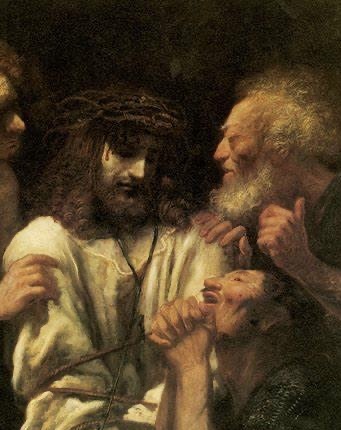
Good Friday invites us to stand in that place where Jesus stood. 

In Isaiah 50:5-6 we hear of this place from the very mouth of the suffering servant.  And I have not rebelled, have not turned back.  I gave my back to those who beat me, my cheeks to those who plucked my beard; my face I did not shield from buffets and spitting.

In the Garden of Eden, through pride, we rebelled, and we turned back from God’s will for us, but Jesus does neither.  In his passion and in the fullness of his humanity, Jesus stands in that place where we failed.  Jesus obeys the will of the Father.  He neither rebels nor does he turn back. 

How do we respond to insult, mockery, abuse, disregard and violence?  Is not our first inclination to respond in kind?  If you insult me, then get ready for my insult back!  If you hurt me then I will hurt you even more!  We see this sad logic at play throughout human history and throughout our world today.  But Jesus does not buy into this sad logic.  Jesus does not rebel, he does not go against the will of the Father.  Jesus does not disobey God’s law; he does not respond to violence directed towards him in whatever form with violence in return. 

Nor does Jesus turn back.  Again, in the fullness of his humanity, he remains in the Father’s will even as he is betrayed, insulted, mocked, scourged, slandered, tossed between Pilate and Herod and disregarded by so many even as he hung on the cross for us.  Jesus remained, he took all the violence and spite that was thrown at him.  Could any of us have done this?  Would our inclination not have been to fall back, to get away from such pain? 

This is the place where Jesus stood, neither rebelling nor falling back.  Jesus stood fully in this place where we failed and he did what we could not.  Jesus obeyed, trusting in the love of the Father. 

Good Friday invites us to stand in this place where Jesus stood.  It is only in grace that we can do this but that grace has been given now in Christ.     

And a deeper truth, when (in grace) we are able to stand in that place where Jesus stood – neither rebelling nor falling back when violence is directed at us – we will find that Jesus stands there with us.  That very place becomes a place of encounter with our Lord where we know his companionship, his friendship and his love.  It becomes a place of blessing rather than a curse. 

Good Friday invites us to stand in that place where Jesus stood.   

How to handle Calumny

11 Monday Mar 2024

Posted by mcummins2172 in Uncategorized

≈ 2 Comments

Tags

Bible, Calumny, catholic, Christian life, Christianity, Eighth Commandment, faith, Jesus, prayer

This image may be subject to copyright.

In his recent homily (found on Word on Fire) for the third Sunday of Lent, Bishop Robert Barron offers succinct reflections on each of the Ten Commandments.  He rightly (I believe) connects the breaking of the Eighth Commandment, “You shall not bear false witness against your neighbor” with the sin of calumny.  Calumny, the willful spreading of false statements about another person in order to damage their reputation, is rife within our society and given safe haven, it seems, especially on social media.  Bishop Barron, both in his insight as a theologian and pioneer in ministry via social media, is in a unique vantage point to note this besetting sin of our age and to call it out.  Which he does. 

The point of reflection for this post is how are we to handle calumny when it comes our way?  Which, more than likely, it will at some point or even points within our lives.  I offer four thoughts for consideration. 

First, be grateful.  Yes, it’s a paradox but we have a God who delights in paradox and frankly, life if full of paradoxes.  The silver lining in the dark cloud of calumny is that you quickly learn who your true friends are.  “A faithful friend is a sturdy shelter: he that has found one has found a treasure” (Sirach 6:14).  Isn’t it best to know where the sturdy shelter is during a time of turmoil than be left out in the cold by false friends who turn away from you just because of something they have heard or something that they suppose to be true about you which is not?  Calumny can actually clear the weeds of false friendship out of one’s life which makes the true, faithful friend all the more apparent and valued.  Being receptive to the lies of calumny also demonstrates a profound lack of intelligence.  Judging another person because of what others say before even knowing the person oneself or even choosing to believe lies about another person rather than one’s own experience of the person is intellectual sloth, plain and simple.  Who wants a stupid friend?  There is a silver lining. 

Second, be civil.  If calumny is a besetting sin of our time, if there are victims of calumny then that means there are perpetrators of calumny.  I call them “wormtongues” after the pathetic character in J.R.R. Tolkien’s “Lord of the Rings”.  (Grima Wormtongue is the court official who whispered lies into the ears of King Theoden in order to steal away life and keep the king paralyzed in doubt.)  Wormtongues lack true moral authority and courage (think of internet trolls) and they think that the way to build themselves up is to tear other persons down.  Don’t sink to the level or actions of wormtongues.  Don’t be naïve to them or their machinations, know them for who they are, but be civil in the face of their incivility.  Choosing to respond civilly even in the face of hostility and lies is an act of moral courage and strength.  Be civil. 

Be faithful.  Here we encounter a deep mystery of our faith.  Not only do we have a God who is Truth and who calls us to live in truth in our relationships and to not bear false witness but we have a God who also fully endured the scourge of calumny himself.  Jesus, throughout his ministry, had to endure the whispers of lies and doubts about who he was and his true motives.  “He casts out demons by the ruler of the demons.” (Mt. 9:34) This whispering became a consistent and hellish roar directed straight at our Lord throughout his passion from the agony in the garden and the running away of the disciples to the mocking of the soldiers during the scourging to the crowd calling for his death to insults even as he hung on the cross, “Come down from the cross, if you are the Son of God!” (Mt. 27:40).  Jesus knows full well the pain of calumny. 

Here is a spiritual exercise for those times when one is experiencing the pain of calumny: pray over a Gospel passage where Jesus is enduring the pain of calumny, place yourself in the scene and just be there as faithful friend for our Lord.  We cannot take the pain away, but Jesus so values our presence and our friendship.  Just be there in that moment as friend for Jesus.  Graces will come from that prayer. 

Finally, be open to leaving by knowing your fixed point.  Throughout his ministry, Jesus moved from town to town, sometimes because he knew that forces were aligning against him and lies were being told but that his hour had not yet come.   Throughout all this movement, Jesus always remained rooted in his relationship with the Father.  His relationship with the Father was his fixed point.  When we know our fixed point everything else becomes secondary.  As Christians, our fixed point is that each of us is a beloved child of God with a dignity and worth.  If this is not being respected, if lies are being told, then we have the freedom to move on from a particular group and its relationships, from a specific social setting and even from a certain location.  Knowing our fixed point brings a freedom that the sin of calumny cannot overcome. 

Calumny is a sin and it is a besetting sin of our time.  It is a sin that will probably come our way in one form or another but it can be endured with dignity and grace and we can know that our Lord, who himself endured the pain of calumny, walks with us in friendship and that this too shall pass.    

Finally, if you are a wormtongue, if you are a perpetrator of calumny, stop it.  You are breaking the Eighth Commandment which is a sin before God for which you will be held accountable.  You are tearing your brother and sister down; you are helping to tear our society apart and you are demeaning yourself in the process and that is pathetic.  Don’t be a wormtongue.  There is no dignity in being a wormtongue.    

First Sunday of Lent B – “Jesus, the New Adam”

18 Sunday Feb 2024

Posted by mcummins2172 in Uncategorized

≈ Leave a comment

Tags

Bible, Christian life, Christianity, discipleship, faith, first Sunday of Lent, free will, Jesus, Jesus and the temptations, Jesus in the desert, satan, temptation

Image may be subject to copyright.

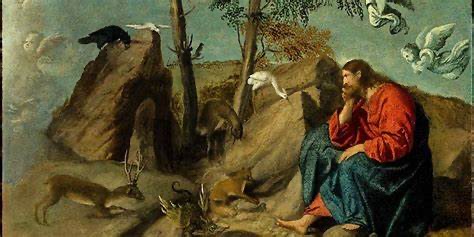
In their presentation of the temptation of Jesus, Luke and Matthew lean on the imagery of Israel’s experience of the forty years in the desert.  Luke and Matthew present Jesus as the new Israel, the Israel who remains faithful to God’s covenant.  Mark – on the other hand – in his two short verses (Mk. 1:12-14) draws on a different source.  Mark goes to the very beginning of creation and draws on the imagery of Jesus as the new Adam.  Jesus, we are told, is “among wild beasts” not in fear and trepidation but rather walking freely in their midst and company just as Adam and Eve had walked freely before the Fall.  “Angels ministered to Jesus,” just as God walked in the cool of the evening in the garden and spoke freely with Adam and Eve.

Within the first chapter of his gospel, Mark is teaching that Jesus is the new Adam who restores that original unity and harmony to all creation that sin had fractured and broken.  Where Adam and Eve had succumbed to the temptation of Satan in the beauty of the garden; Jesus triumphs over Satan’s temptations in the barrenness of the desert. 

This is why Satan and all the demons take fright, tremble and beg not to be cast out before the power and authority of Jesus throughout the remainder of the gospels up until Satan attempts his great counterattack in the passion of our Lord but it is in that final move that Satan is dealt his defeat and our Lord’s full triumph is realized.    

In the desert (in these two short verses in Mark’s gospel) Jesus frees himself from Satan in order to then begin the work of freeing all of humankind.  Jesus had to face Satan before he could begin his public ministry.  This is why Scriptures says that the Holy Spirit “drove” Jesus into the desert.  It is in the desert, faced with the temptations, that Jesus overcomes sin.  It is in the desert that Jesus chooses his relationship with the Father above all else.  It is within the arena of human free will that Jesus meets and conquers Satan in the desert.  Adam and Eve misused their freedom.  They chose to disobey; sin was released and the human will was corrupted.  Jesus obeys.  Jesus says a free “yes” to the will of the Father.  It is in Jesus that a human will expands to fully welcome the entire will of the Father (paraphrased from The Holy Spirit in the Life of Jesus by Cardinal Raniero Cantalamessa).  The domination of Satan over human will is destroyed.

What does this mean for us on this first Sunday of Lent in 2024?  It means that sin is not inevitable.  It means that our will is not the plaything of the devil.  It means that now in Jesus, we too can say “yes” to God.  It means that we also can welcome the will of God into our wills.  It means that we too can begin, even now, to know that authenticity and integrity of life that God intends for his creation rather than living just by the brokenness and pain of sin. 

What does it mean?  It means everything. 

Jesus is the new Adam.  Jesus is the one who restores unity and authenticity to all of creation and to each of our lives.  This first Sunday of Lent invites us to welcome Jesus and learn from him how to also say “yes” to the will of the Father.    

A God who does not need spectacle – Sixth Sunday of Ordinary Time (B)

10 Saturday Feb 2024

Posted by mcummins2172 in Uncategorized

≈ Leave a comment

Tags

Bible, Christianity, healing, Jesus, Jesus healing the leper, leper, leprosy, Sixth Sunday in Ordinary Time

Image may be subject to copyright.

At one point in his book, “Jesus, Present Before Me,” Fr. Peter John Cameron shares the story of a young priest who served as a chaplain to Ground Zero immediately after the terrorist attacks of September 11th.  One of the duties the priest had was serving in the makeshift morgue that was set up in a tent to receive the remains of the victims.  It is easy to imagine the frenzied activity and the number of busy rescue workers intent on their mission but what the priest found amazing was that whenever a new body would arrive at the tent all the work, talking and activity would halt, the workers would gather in a circle with the priest around the body and the workers would bow their head and they would wait for a prayer from the priest.  Even in the deep trauma and pain of that moment, the people recognized that there was something “more” that was stronger even than death. 

The leper in today’s gospel (Mk. 1:40-45), even if he could not specifically say why, recognized that there was something “more” in Jesus.  We heard in the first reading from the Book of Leviticus how lepers were looked upon and treated at this time in history.  There was no cure for leprosy in the time of Jesus.  Leprosy is a horrible disease that, if untreated, ultimately ends in death.  People feared the disease and they wanted nothing to do with lepers.  Lepers were cast out; they were ostracized and they were isolated.  But the leper saw something in Jesus that was more than both his disease and the ostracization he knew.  The leper trusted in this “more”.

The leper falls at the feet of Jesus and he begs, “If you wish, you can make me clean.”  A simple request made in faith. 

Jesus touches the man afflicted with leprosy.  This is no small thing.  By this simple action Jesus demonstrates that he is not bound by the fear and prejudice of his time.  Jesus also knows that something “more” is at work in this moment – the will of his Father that all might be saved.  Jesus recognizes the inbreaking of the Kingdom where all illness and all injustice is to be wiped away.  In the simple act of touching the leper and by saying, “I do will it.  Be made clean,” Jesus brings this poor man afflicted with leprosy to his Father, the Father receives the man and – healed and restored – returns the man to the Son.

I’ve had a realization following my recent trip out west.  On my trip I visited Grand Canyon National Park, Zion National Park and Bryce Canyon National Park.  I saw the grandeur and experienced the serenity of those amazing places and then I ended all of that with an evening in Las Vegas before my flight home the next day.  That evening, I walked along the main strip gawking at all the lights, sights and sounds of that city.  Contrasting the parks and the city, I came to this realization, God does not need spectacle to accomplish his will.  We might need spectacle, in many ways it seems we crave it (i.e. Las Vegas), but God does not because God is the source of all that is, plain and simple. 

There is “more” in Christ.  The leper saw it and this “more” is encountered and made known in the simple.  The simple act of the bowing of heads in prayer even in the midst of death and destruction, the simple act of faith, “If you wish, you can make me clean,” and the simple act of touching another person in love and care. 

There is “more” in Christ and this more is encountered in the simple rather than in the spectacle. 

Holiness is not stingy. Holiness gives and welcomes. A homily for the second Sunday of Ordinary Time – B

13 Saturday Jan 2024

Posted by mcummins2172 in Uncategorized

≈ Leave a comment

Tags

Bible, Christian life, Christianity, disciple, discipleship, faith, gospel, Jesus, john, Second Sunday in Ordinary Time, vocations to priesthood and religious life

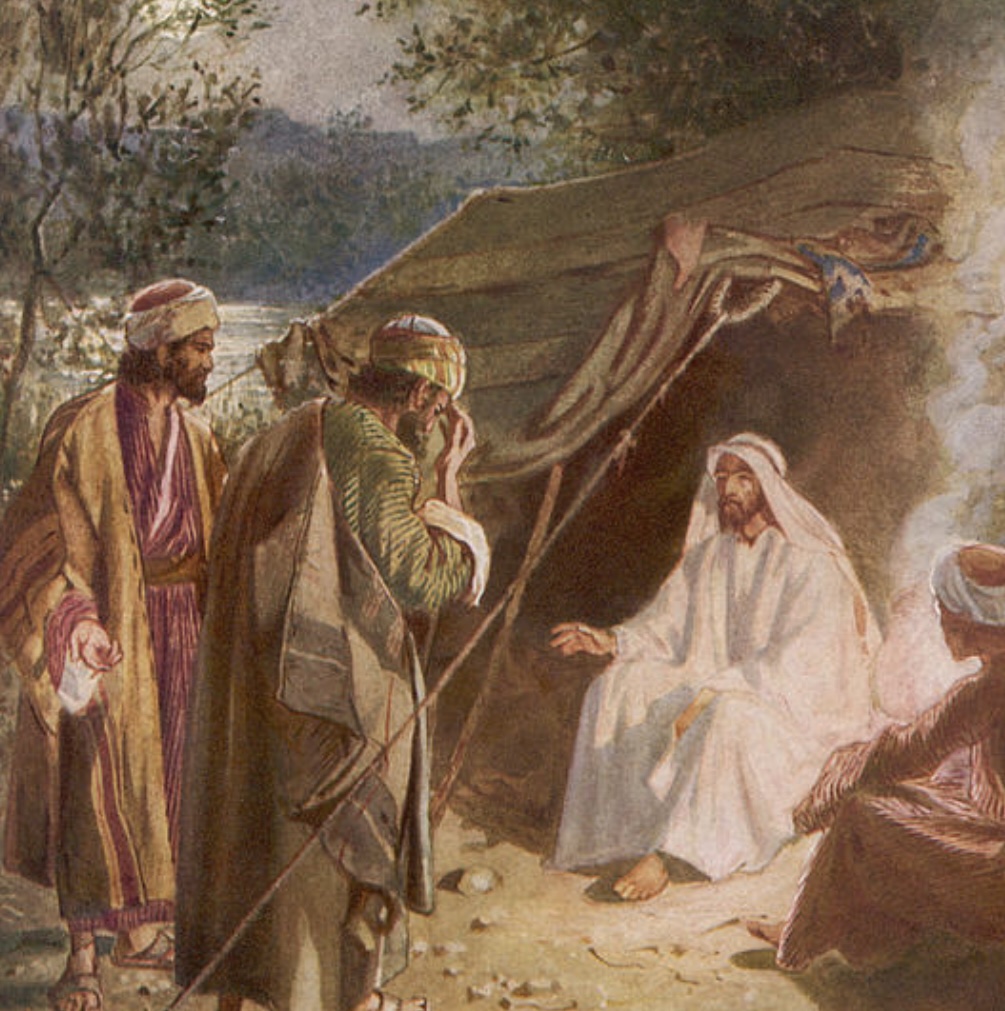
“Andrew taking Simon to meet Jesus” by Mary Evans. Image may be subject to copyright. 

Holiness and the life of grace are not stingy.  Holiness gives and it welcomes. This is my personal learning from the Advent and Christmas seasons. 

When I placed myself in prayer in the manger scene, Joseph and Mary did not just allow me to gaze upon the child, they welcomed me to hold the babe in my own arms.  They did not hesitate in inviting me to hold the child.  When I watched as Simeon and Anna rejoiced in encountering the newborn Messiah in the Temple, they both welcomed me into that joy and hope fulfilled.  When I prayed over Matthew’s account of the three magi journeying to find the newborn king, I found myself eagerly welcomed by the three wise men to journey with them. 

Holiness and the life of grace are not stingy.  Holiness and the life of grace welcomes, invites and encourages.  It does not seek to keep for itself. We find this is today’s gospel ((Jn. 1:35-42) also.  John the Baptist, the one who was declared the greatest of those born of women by our Lord, eagerly points out Jesus as the Lamb of God to his own disciples, not a bit concerned if that means he and his own proclamation would be lessened.  “Behold, the Lamb of God!”  John’s two disciples begin to follow Jesus and John does not begrudge this.  

The holiness of Jesus also gives and welcomes – and this is the deep truth of today’s gospel.  Jesus asks John’s disciples, “What are you looking for?”  “Rabbi,” they answer, “where are you staying?”  Jesus says, “Come, and you will see.”  We are told that they stay with him that day and then they too rush out to invite others.  “We have found the Messiah!” 

“Where are you staying?”  “Come, and you will see.”  It was more than an invitation to a specific physical place.  Elsewhere in the gospel, Jesus says that the Son of Man has no place to lay his head.  The invitation of “come and see” is an invitation by our Lord into that deepest place where he truly resides.  It is an invitation into his very relationship with the Father.  It is an invitation freely given and those two disciples, even in their imperfections and lack of understanding, are both freely welcomed.  It is precisely this new experience of being welcomed into the Son’s relationship to the Father that impels those two disciples to then immediately go forth themselves and invite others to know what they have found.    

Holiness is not stingy. Holiness does not begrudge. It does not try to keep all for itself. Today’s gospel invites us to that same honesty of heart that the two disciples of John had.  “Rabbi, where are you staying?”  Today’s gospel invites us to the same courage and faith that the two disciples had when Jesus responds, “Come, and you will see.” The gospel invites us to also go to that place where our Lord abides in his relationship with the Father and to know that we – even in our imperfections – are indeed welcome. 

Andrew first went and found his brother Simon and brings him to where Jesus is staying.  Jesus looks at him and says, “You are Simon the Son of John: you will be called Cephas (Peter)”,

Life changes when we go to where Jesus resides.  Life changes when we come to know that we also are welcomed into the Son’s relationship with the Father. 

The King who wants us to see the least among us

25 Saturday Nov 2023

Posted by mcummins2172 in Uncategorized

≈ Leave a comment

Tags

Catholic Church, Christianity, discipleship, Feast of Christ the King, Jesus, Solemnity of Christ the King

Image may be subject to copyright

Once, when I was assigned in Chattanooga, I had the experience of driving by the regional airport just as Air Force One took off in flight.  The president had been in the city promoting an industry and now he was leaving for his next destination.  The sight of the plane filled my car window as it was directly in front of me and only a couple of hundred feet above me.  Air Force One certainly grabs your attention and this is intentional.  The plane is a visual statement about the power and the authority of the President of the United States. 

This is what we expect from the ruling powers of our world, whether it be the office of a president, a king or queen, a royal family, a dictator or a tyrant.  These authorities want us to look toward them and for the whole world to see in the trappings of their office – whether that be a plane, a crown, a missile launch – a statement of their power and authority.  The ruling powers of the world want us to see them.  They want our attention, and they want to be noticed. 

Our faith and today’s gospel (Mt. 25:31-46) tell us that when Christ returns in glory all nations and peoples will be assembled before him but until that great and final day, our humble king wants us to turn our attention elsewhere.  Our Lord wants us to look upon our brothers and sisters in need.  Jesus wants us to see the least ones.  Both those persons judged righteous and those persons judged unrighteous in today’s gospel ask the same question, “Lord, when did we see you…”  Jesus’ answer is that when we allow ourselves to look upon the one who is hungry, thirsty, the stranger, naked, ill or in prison and then act in compassion we encounter him and we are judged righteous.  When we do not allow ourselves to see, when we do not act in compassion then a harsh judgment follows. 

It all starts with seeing and Jesus proclaims the importance of being willing to see the other, especially the least among us, throughout his ministry. 

In the midst of the crowded Temple with people moving back and forth and all sorts of commotion, we are told that Jesus spotted the poor widow giving not from her surplus but from her poverty (Lk. 21:1-4). He saw her and he points her out to his disciples who were there present with him, and he points her out to us. Jesus saw her.

Jesus asks Simon the Pharisee (Lk. 7:36-50), “Do you see this woman?” referring to the woman who had come into the dinner party uninvited, a woman seeking mercy who was bathing the feet of Jesus with her tears.  Simon did not “see” the woman because in his heart he had already judged her a sinner not worthy of his attention.  Jesus forgives the woman her many sins and tells her to then, “go in peace” while it seems Simon and the other guests at table remain locked in their inability to see.   

Jesus, in the parable of the rich man and the poor beggar Lazarus (Lk. 16:19-31), tells us that the rich man easily did not see the poor beggar lying at his doorstep and only after they both die does the rich man finally notice Lazarus, now at rest with Abraham, and then it is only to request that Lazarus be sent on an errand for him!  The rich man, both in life and then in death, did not “see” Lazarus and this led to his ruin.

Our Lord, who will come again in glory and before whom all the nations will be gathered, is quite clear regarding our pilgrimage through this world and where we should direct our attention – the royal road for entrance into the fullness of the Kingdom of God is found in being willing to see the least among us and to then act in compassion. 

A coin, census and citizenship (Mt. 22:15-21)

21 Saturday Oct 2023

Posted by mcummins2172 in Uncategorized

≈ Leave a comment

Tags

Catholic Church, Christian life, Christianity, discipleship, Jesus, Kingdom of God, Mt. 22:15-21

This last week I bought a 1935 buffalo nickel for $3.00 in an antique store.  The nickel has the image of an American Indian on one side and on the other side it has the image of a buffalo.  I like the coin because it is a piece of American history and it is a reflection of our nation’s complicated story with both the indigenous peoples and the buffalo – a story that is far from over and continues. 

(A funny story to share regarding a priest who has now gone home to God.  This priest was known for being very, very frugal with money, so frugal in fact that people joked that if he ever had a buffalo nickel, he would squeeze it so tight that the Indian would end up riding the buffalo!  But I digress.) 

In answer to the Pharisee’s question about the lawfulness of paying the census tax to Caesar or not in today’s gospel (Mt. 22:15-21) our Lord asks to see a Roman coin.  Remember that “census” is about citizenship and being a subject.  Subjects pay tax to the authority that rules and governs, whether that be a government, a king or an empire.  On the coin is an image of Caesar with his inscription.  This is more than the image of George Washington on our dollar bill.  Caesar was considered a god in the empire.  In fact, the common greeting that subjects would give one another in the Roman Empire was, “Caesar is Lord!”  When the first Christians began to greet one another with, “Christ is Lord!” they were doing something very intentional and even dangerous as the Roman authorities would regard such a greeting as an act of treason.  The first Christians gave this greeting precisely because they had learned what our Lord was teaching in this gospel passage. 

“Repay to Caesar what belongs to Caesar (let him and all the powers of the world have their piece of dead metal) and to God what belongs to God.”  If the coin belongs to Caesar because it bears his image, then what belongs to God because it bears his image?  Genesis 1:27 gives the answer, “God created man in his image, in the divine image he created him; male and female he created them.”  We bear the image of God; we belong to God and while we walk this earth, yes, with earthly citizenship and responsibilities, we know that our true citizenship is in the Kingdom of God and we strive to live our lives by God’s truth.  We must repay to God what belongs to God. 

There is another truth to our Lord’s answer that we need to let sink into our hearts.  God desires us, each one of us.  God desires the unique image of himself that he has crafted within each one of us.  God rejoices as we receive his love and as our own unique image of him begins to grow and shine!  We are not meant to repay half-heartedly nor grudgingly the image that God has placed within each of us but rather repay it back in abundance and love.  We do this by receiving God’s love and living in that love.  We come from God, we are with God and we are in journey back to God!

Census is about citizenship; it is about being a subject of a kingdom.  Our citizenship is in the Kingdom of God and even now, we strive to live by the light of God’s Kingdom.  Repay to God what belongs to God. 

The Toxicity of Anger even when Righteous

23 Wednesday Aug 2023

Posted by mcummins2172 in Uncategorized

≈ Leave a comment

Tags

Christian life, Jesus

Know this, my dear brothers: everyone should be quick to hear, slow to speak, slow to wrath, for the wrath of a man does not accomplish the righteousness of God.  Therefore, put away all filth and evil excess and humbly welcome the word that has been planted in you and is able to save your souls.  (James 1:19-21)

We humans are not created to remain in anger and this includes even anger that is righteous.  All anger when it is held on to and nursed quickly becomes toxic and this toxicity deadens life whether that be the life of an individual, of a community and even the life of a people and nation.  Christians are not immune to the toxicity of anger and it is exactly because of the faith and hope we hold and profess as well as the ideals we cling to, that I believe Christians are even more susceptible to the toxicity of righteous anger than the non-religious person. 

We proclaim the coming Kingdom of God – a Kingdom where all tears will be wiped away and all injuries and injustices will be healed – yet we live in a world where there is grave injustice, violence and sin.  We see it and we can even be the victims of it ourselves.  Sometimes these injustices can be addressed and overcome on both the individual and societal levels in our world and history and these moments are to be celebrated and upheld (i.e. the end of slavery and segregation, the acknowledgment of the dignity and rights of women, the growing awareness of the rights and heritage of indigenous peoples, an abused woman gaining the strength to walk away from her abuser, a man caught in the mechanisms of addiction breaking free) but sometimes – for a variety of reasons – there cannot be full healing and restoration in this world.  Our belief in the resurrection and final judgment gives us the sure hope and belief that God – in God’s way not ours – will indeed wipe away all tears and answer all injustices but what do we do with the anger that remains in the meantime? 

This is the conundrum.  All anger, even when righteous, becomes toxic.

To me, there seems to be three options when we are confronted with injustices inflicted upon us that cannot be fully answered and remedied in this world.  The first option is to just lay down and die.  This happens, both literally and figuratively.  People do physically die from injustices endured.  Sadly, we see and read this in the news all the time.  But there is also figurative death that results from injustice endured.  People give up; quiet resignation sets in and people just subsist through life.  The hurt experienced overshadows everything and remains a constant shade in the background of the person’s life. 

The second option is to hold on to the injustice experienced, ruminate upon it and therefore nurse the anger within.  Here is where the wisdom and warning of James is worth heeding, …the wrath of a man does not accomplish the righteousness of God.  We are not created to remain in anger.  We are not made in the image of anger even when righteous but rather the image of God.  If we nurse anger then we make anger an idol – we forget God and we devalue ourselves.  All anger, when held on to, becomes toxic.  The righteousness of God is not found in anger.    

The third option is to – with God’s grace – stand up again, brush ourselves off, remember that we are a child of God and make the choice that – despite whatever may be thrown at us – we will live, walk and act always as a child of God.  This third option gets to the advice given by St. James, …put away all filth and excess and humbly welcome the word that has been planted in you and is able to save your souls.  Put away the filth of resentment and nursed anger and remember that the word we have been given, the word of salvation in Christ and our dignity as a child of God, goes deeper and is ever more enduring than any injustice inflicted.  No injustice can take away this truth.  If we focus on this truth and not the injustice and the anger that springs from it, we will move beyond the temptation to make an idol of our anger.  …humbly welcome the word …

All anger becomes toxic.  The good news is that we are not created to remain in anger.  We are created in the image and likeness of God and saved through the sacrifice of the Son.  This is the truth that endures and saves … humbly welcome it.     

Magic is an Illusion. Faith is real. Jesus and the Canaanite Woman.

19 Saturday Aug 2023

Posted by mcummins2172 in Uncategorized

≈ 1 Comment

Tags

Christian life, Christianity, faith, Jesus, Jesus and the Canaanite Woman, Mt. 15:21-28

Image may be subject to copyright

In the time of Jesus, as there are now, there were faith-healers and people who claimed to have power over demons who could be hired and, for the right amount of money, would pretend to heal someone or cast out demons.  These people were charlatans, but people would pay the money in a desperate attempt to bring healing to a loved one.  These supposed “healers” took advantage of people in their suffering and what they offered was not real faith but rather magic – the illusion of healing that was not real.    

Our Lord knew of these faith-healers and how they operated.  He also saw how they took advantage of people.  The Canaanite woman also knew of these faith-healers and the promises they made.  It is possible that she had already paid faith-healers in attempts to bring healing to her daughter but all to no success. 

This context helps to explain this interaction of Jesus with the Canaanite woman. 

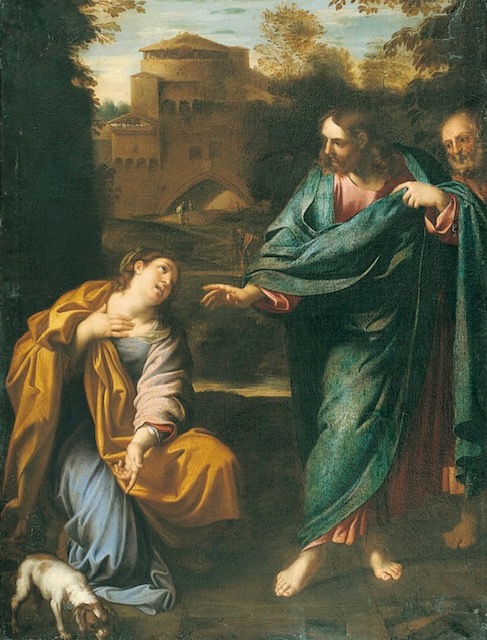
This woman, who has heard of the man Jesus and who initially sees him as just another faith-healer, calls out on behalf of her daughter and, more than likely, she is willing to pay the cost that Jesus will demand.  The disciples, as observant Jews could not abide faith-healers, they know that Jesus was not a faith-healer and they do not want to be associated with faith-healers so they ask Jesus to send the woman away because she, “keeps calling after us”. 

Jesus knows that he is not a charlatan and he knows that this woman is looking to hire him and that she wants a magical healing for her daughter and so he says, “I was sent only to the lost sheep of the house of Israel.”  Jesus has a mission from the Father and he is not for hire for magical healings. 

But then something happens.  The scripture says that the woman, “came to Jesus and did him homage”.  The word “homage” is important here.  “Homage” implies faith, it implies kneeling in wonder and need before the divine mystery.  The woman does not come to Jesus to offer what she will pay him as one would when bargaining with a faith-healer, rather she gives him not money but “homage”. 

What changed for the woman?  Was it her desperation for her daughter, was it an intuition in her soul that something was different about this man named Jesus, was it the movement of the Holy Spirit in the woman’s heart?  Something changed and Jesus sees it. 

Jesus then tests it to make certain.  “It is not right to take the food of the children and throw it to the dogs.”  Now, in this new moment, the woman responds, “Please, Lord, for even the dogs eat the scraps that fall from the table of their masters.”  The woman shows her faith.    

Satisfied and probably with an abundance of joy in his divine heart, Jesus answers, “O woman, great is your faith!  Let it be done for you as you wish!”

Jesus is not a faith-healer for hire.  Jesus does not deal in the illusion of magic.  Jesus comes looking for faith in our hearts and it is in faith that our Lord meets us and brings the healing that only he can give. 

Magic is an illusion.  Faith is real and it is only in faith that Jesus encounters us. 

Two Images and One Truth: Tenderness

15 Tuesday Aug 2023

Posted by mcummins2172 in Uncategorized

≈ Leave a comment

Tags

Catholic Church, Christian life, Christianity, faith, Feast of the Assumption of Mary, Jesus, tenderness

The statue of the Madonna and Child is from my home growing up.  It belonged to my parents and sat in our living room on a table that served, for all intents and purposes although we never named it, as our home altar.  On the table was found this statue, our family Bible, various little statues and holy cards and baptismal candles.  Every day growing up I would see this statue – usually just passing by on my way to whatever I was up to but the statue was always there and remains with me to this day.

I have always appreciated the tenderness expressed by the statue.  Mary cradles her infant son and holds him close to her breast.  Her head leans in towards him and his towards her.  There is a familiarity and an intimacy and she presents her child to the world.  Here is the Son of God born of a humble woman in a small part of vast empire.  He will save us from our sins, 

The holy card is from the Basilica of Santa Maria in Trastevere in Rome.  The basilica is one of the oldest churches in Rome and the first to be dedicated to Mary.  The card depicts an image from the mosaic of the Dormition of Mary.  The dormition of Mary is the Eastern Church’s celebration of the great mystery of the Virgin Mary being taken body and soul into the fullness of the Kingdom of God.  In the West, we focus on the Assumption of Mary and our images depict that.  In the Eastern Church the focus is on the Dormition – or Mary’s falling asleep to then be taken up into the Kingdom – and their images depict this.  It is the same mystery we celebrate.  Immaculate Mary, mother of the Incarnate Word, is brought into the fullness of God’s Kingdom.  Where she has been brought, we have the hope to also follow.    

In the icon of the Dormition of Mary it is common to see Mary asleep in her passing surrounded by the twelve apostles and in the icon is also represented the risen Christ tenderly holding the soul of his mother.  The iconographic tradition is to depict the soul – an immaterial reality – as a person wrapped almost like a child in swaddling clothes.  The son holds the mother in anticipation of uniting soul and body in the glory of the resurrection. 

There is a tenderness here too.  The Son, in love, holds the mother again in an expression of familiarity and intimacy.  Mary is wrapped in white which is an expression of the glory of the resurrection where all sin, death and darkness is overcome!  Christ holds Mary out also as a sign of hope for all the world.  Mary is the first to be brought into the glory of Christ’s resurrection.  A hope that every Christian now carries through baptism. 

One truth of these images and of today’s Feast of the Assumption is the tenderness of God as well as the value of tenderness in the Christian life.  God welcomed the tender love of a humble woman and, in return, Christ tenderly welcomes his mother home. 

We often underrate the importance of tenderness in life, I believe.  But tenderness, as depicted, stands at the heart of the relation of Christ to his mother and, it seems, also at the heart of our Lord’s relationship to every believer.  We have a tender God, a tender Savior.  This is important because tenderness gives birth to hope and hope produces perseverance.  We all need tenderness on the journey of faith.  Tenderness keeps us moving forward toward the fullness of the Kingdom of God that awaits us and that also beckons us.

Two images – a statue and a holy card – showing the truth of tenderness and giving a hope that endures. 

Holy Mary, tender mother of our Savior, pray for us!       

← Older posts
Newer posts →
Follow The Alternate Path on WordPress.com

Enter your email address to follow this blog and receive notifications of new posts by email.

Previous Posts

  • December 2025
  • November 2025
  • August 2025
  • April 2025
  • February 2025
  • January 2025
  • December 2024
  • August 2024
  • July 2024
  • June 2024
  • May 2024
  • April 2024
  • March 2024
  • February 2024
  • January 2024
  • December 2023
  • November 2023
  • October 2023
  • August 2023
  • July 2023
  • May 2023
  • February 2023
  • January 2023
  • December 2022
  • August 2022
  • July 2022
  • April 2022
  • January 2022
  • December 2021
  • September 2021
  • August 2021
  • July 2021
  • May 2021
  • April 2021
  • January 2021
  • December 2020
  • November 2020
  • October 2020
  • August 2020
  • July 2020
  • May 2020
  • April 2020
  • March 2020
  • February 2020
  • December 2019
  • October 2019
  • September 2019
  • August 2019
  • July 2019
  • May 2019
  • April 2019
  • March 2019
  • February 2019
  • December 2018
  • November 2018
  • October 2018
  • August 2018
  • July 2018
  • June 2018
  • April 2018
  • March 2018
  • February 2018
  • January 2018
  • December 2017
  • November 2017
  • September 2017
  • August 2017
  • July 2017
  • June 2017
  • May 2017
  • April 2017
  • March 2017
  • February 2017
  • January 2017
  • December 2016
  • November 2016
  • October 2016
  • September 2016
  • August 2016
  • July 2016
  • June 2016
  • May 2016
  • April 2016
  • March 2016
  • February 2016
  • January 2016
  • December 2015
  • November 2015
  • October 2015
  • September 2015
  • August 2015
  • June 2015
  • May 2015
  • April 2015
  • March 2015
  • February 2015
  • January 2015
  • December 2014
  • November 2014
  • October 2014
  • September 2014
  • August 2014
  • July 2014
  • June 2014
  • May 2014
  • April 2014
  • March 2014
  • February 2014
  • January 2014
  • December 2013
  • November 2013
  • October 2013
  • September 2013
  • August 2013
  • July 2013
  • June 2013
  • May 2013
  • April 2013
  • March 2013
  • February 2013
  • January 2013
  • December 2012
  • November 2012
  • October 2012
  • September 2012
  • August 2012
  • July 2012
  • June 2012
  • May 2012
  • April 2012
  • March 2012
  • February 2012
  • January 2012
  • December 2011
  • November 2011
  • October 2011
  • September 2011
  • August 2011
  • July 2011
  • June 2011
  • May 2011
  • April 2011
  • March 2011
  • February 2011
  • January 2011
  • December 2010
  • November 2010
  • October 2010
  • September 2010
  • August 2010
  • July 2010
  • September 2008
  • August 2008
  • April 2008
  • March 2008
  • February 2008
  • January 2008
  • December 2007
  • November 2007
  • October 2007
  • September 2007

Popular Posts

  • thealternatepath.org/wp-c…
  • thealternatepath.org/wp-c…

Blog at WordPress.com.

  • Subscribe Subscribed
    • The Alternate Path
    • Join 156 other subscribers
    • Already have a WordPress.com account? Log in now.
    • The Alternate Path
    • Subscribe Subscribed
    • Sign up
    • Log in
    • Report this content
    • View site in Reader
    • Manage subscriptions
    • Collapse this bar
 

Loading Comments...