
It was the evening of the last day of my sabbatical and I was sitting in my truck at a roadside pullout gazing across Lamar Valley in Yellowstone National Park. Lamar Valley was formed by the weight of towering glaciers acting over centuries that pressed down, hollowed and smoothed out the terrain underneath. The valley itself is wide and open with a river coursing in the middle and a stand of trees seeming to reside almost in the center of the expanse. Some days prior, the Junction Butte wolf pack had wandered out of the valley toward the Slough Creek area of the park so there was not the energy and noise of wolf watchers spotting through scopes and tourists hoping to catch a picture of one of the park’s famous apex predators.
The valley was quiet with bison scattered here and there grazing, one lone coyote mousing for dinner and a little remaining snow left in the shadowed areas of hillsides and low ravines. Neither a person nor a car could be seen and as I watched the sun set with the sky turning a phenomenal range of colors I sat in my truck and prayed evening prayer and then listened to Symphony No. 3 by Aaron Copland. I cannot imagine a more appropriate setting for the sweep and expanse of Copland’s final symphony than Lamar Valley.
In the ninth chapter of the book Happiness and Contemplation, Josef Pieper lays out the three elements of contemplation. The first element is that contemplation is the silent perception of reality. It is an understatement to say that this is fundamental. Contemplation, by its very nature, points to objective reality and it proclaims that this reality can be perceived. Judeo-Christian thought goes further and says that it wants to be perceived. The second element is that contemplation is a form of knowing arrived at not by thinking but by seeing, intuition. Drawing from the thought of Thomas Aquinas, Pieper reminds the reader that intuition – properly understood – is the higher form of knowing, above reason. In intuition the object is already present where in rational thinking the object is being striven for.
Contemplation, then, is intuition; that is to say, it is a type of knowing which does not merely move toward its object, but already rests in it … In intuition there is no ‘future tension,’ no desire directed toward the future, which desire corresponds with the nature of thinking. The person who knows by intuition has already found what the thinker is seeking; what he knows is present ‘before his eyes.’
The third element is that contemplation can be characterized as a knowing accompanied by amazement. Amazement is born from our perceiving a reality that yet remains beyond our full comprehension. This amazement also carries with it a bit of an unease because – at gut level – we know that we are in the presence of that which is so much more and, through that, we are being summoned to be more. Quoting Paul Claudel, Pieper writes, the call of perfection to the imperfect, which call we name love.
It was a moment of contemplation for me. Sitting in my Toyota Tacoma, gazing on the expanse of Lamar Valley, caught up in the sweep of Copland’s symphony and enriched by the prayer of the psalms. Amazement and gratitude were born and I remain richer for it.
Eventually another car arrived at the pullout. That is the nature of Yellowstone – a parked car attracts other cars. Everyone looking to spot something … anything. A man got out of the passenger side while his companion remained in the car. I nodded my head to him but did not want to speak, did not want to break the moment. The man looked through his binoculars upon the valley for a few minutes. Eventually he returned to his car and as he opened the door, I heard him say, “There is nothing here. Let’s go.”
“No,” I thought, “there is so much here. So, so much.”
May we have eyes to see.
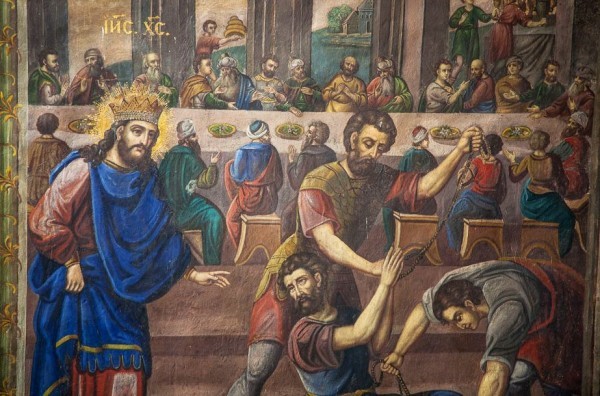
 We all know of Paul’s encounter with the risen Lord on the road to Damascus and how that encounter radically changed his life. The man who was so zealous in his persecution of the early church became the apostle proclaiming Christ to the Gentiles. But do we truly realize how much that conversion cost Paul himself? The second reading for today (Romans 9:1-5 – one of Paul’s later writings) gives us, I believe, a glimpse into the lifelong deep pain that Paul endured. “…I have great sorrow and constant anguish in my heart. For I could wish that I myself were accursed and cut off from Christ for the sake of my own people, my kindred according to the flesh.” Paul carries both the pain of seeing so many of his people – the Jewish people – not wanting to recognize Jesus as the Messiah and he also carries the pain of himself (by his conversion) being cut off from the very people he loves and so identifies with! The man carried heartbreak just as he proclaimed Christ as Savior to the world.
 In the Common Lectionary readings for Sunday, July 19th we are given the teaching of the weeds and the wheat (Mt. 13:24-30) as well as a reading from the Book of Wisdom (Ws. 12:13, 16-19).
 For a number of weeks now I have been watching the communion reception debate play out on social media. People asserting their right to receive communion on the tongue in and out of times of pandemic and questioning the authority of the bishop to restrict that form of reception in the circumstances that we find ourselves. I try to avoid social media debates at all costs as I think they really go nowhere and change no one but, as I have watched this debate unfold, I believe that I have gained some insights into the state of our knowledge of the faith, fears and even a learning about priestly ministry.
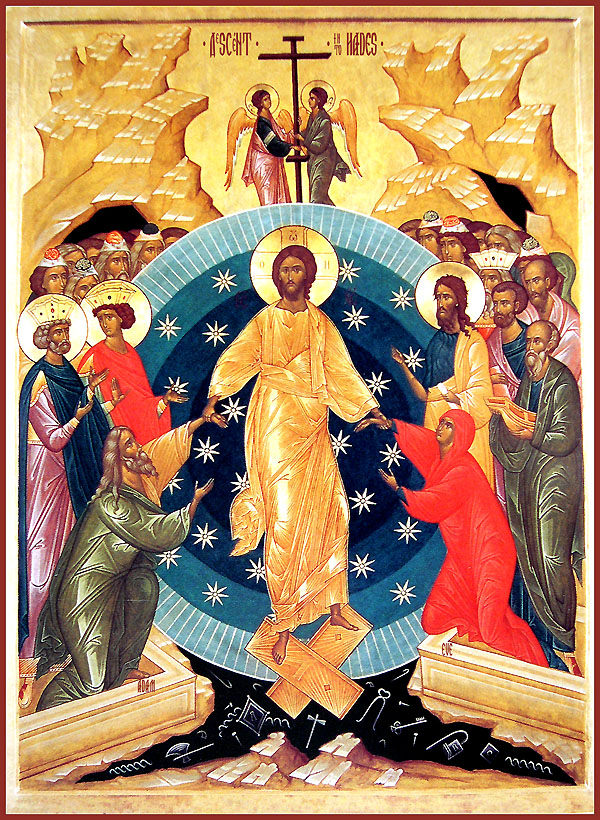 “…as the first day of the week was dawning, Mary Magdalene and the other Mary came to see the tomb.” Each of the four gospels, in its account of the resurrection of Jesus, specifically states the time. It was dawn, it was early in the morning, the day was just breaking.
 In today’s gospel there is a development in the thought of the man born blind and in his proclamation of who Jesus is. It is important to note that just as the questioning the man faces increases, just as his social supports fall away and just as the pressure on him gets heavier – the man’s knowledge of who Jesus is and his proclamation of who Jesus is increases.
 There is a salvific equation at work in the readings for this first Sunday of Lent and it is important to recognize as we begin this Lenten season and our journey to Easter. The equation is this: we sinned by trying to grasp the glory of God and God saves us by letting go of His glory and becoming a servant.
