• About The Alternate Path

The Alternate Path

~ Thoughts on Walking the Path of Christian Discipleship

The Alternate Path

Category Archives: Uncategorized

Christ the King: the choice to love

22 Monday Nov 2010

Posted by mcummins2172 in Uncategorized

≈ Leave a comment

There is a story told about the temple mount in Jerusalem.  Before there was a temple.  Before there was even a city, there were two brothers that lived on either side of the hill.  One brother was wealthy yet he had no family.  The other brother had very limited resources but he had a large family.  One evening the wealthy brother was thinking of his brother on the other side of the hill.  “My brother,” he thought “does not have much and he has many mouths to feed and here I am with all my wealth.  I know what I shall do, every night under the cover of darkness I will take one sack of grain from my granary and carry it over to my brother’s and place it in his granary.”  Now, that very same evening the other brother was thinking of his wealthy sibling.  “My brother,” he thought “does not have the blessing of a family but he does have riches, I might as well help him grow even more in his riches.  I will take a sack of grain from my granary every night and carry it to my brother’s granary and place it with his grain.”  The brothers began to do this every night, all the time not saying a word to the other about what they were doing.  They were both amazed to see every morning that the number of sacks in their granaries remained the same although they had taken away a sack the previous evening.  This all continued for a while until one night they met one another at the crest of the hill carrying their sacks of grain.  Upon seeing one another they immediately realized what had been transpiring and they embraced one another in love.  And upon their embrace the voice of God sounded from heaven, “This is where I will build my house upon earth!” 

The moral of the tale, I believe, is this: when we make the choice to love and to give then we open our hearts that God might come in and make a dwelling place within us.  When we choose to love, God makes his home within and with us.

The latest Harry Potter movie is out and it is quite good but here I would like to share a quote from a previous movie (I cannot remember which one).  At one point in the whole story Dumbledore, the wise wizard, shares this insight with the young Harry, “Harry, it is neither our abilities nor our skills that define our character, rather it is the choices we make that truly define who we are.”  It is when we make a choice, when we exercise our will, that we truly define and determine who we are.

One of the beautiful aspects of our Christian faith tradition is the assertion and belief that every human person is made in the very image and likeness of God – the “imago Dei”.  As we proclaim this, it is understandable to then ask how we are made in God’s image.  Is it in our bodies, our physical makeup, that we image God?  No, because God is pure spirit and does not have a body.  Is it in our abilities or our skills that we image God?  Well, not really, our skills and abilities (no matter how impressive they might be) are not really all that much compared to the truth of God.  How are we made in God’s image?  Many of the greatest thinkers and saints of our faith tradition have answered this question by saying that it is in our will where we find most fully the image of God.  It is by our choosing the good that we show forth God’s image in which we are made.  When we, aided by God’s grace, make the choice to love, the choice to give, the choice to let go of self, the choice to forgive, to show mercy then we truly reveal the image of God in which we are made.  Our character is defined and determined by the choices that we make.

On this feast of Christ the King we proclaim that Christ is indeed Lord and King of all creation.  He is master.  Christ is the one who was dead but who is now risen and alive.  He is the firstborn.  As we proclaim Christ as King it is fair to ask what type of king do we have?  What is our king’s character?

The Gospel reading for this feast (Lk. 23: 35-43) tells us something truly important about the king we have and proclaim and it is revealed in the choice he made.  It is important to note that in the space of just eight verses, as our Lord is being crucified, he is presented with the same temptation three times; three times from different groups: the rulers, the Roman soldiers and the criminal hanging next to him.  The temptation is simple, “Save yourself!”  Rulers: “He saved others, let him save himself if he is the chosen one, the Christ of God.”  Soldiers: “If you are King of the Jews, save yourself.”  Criminal: “Are you not the Christ?  Save yourself and us.”  Three times this temptation is presented before our Lord and he could have chosen to save himself … but he did not.  Rather, he made a different choice.  He choose to obey the Father’s will; he choose to love both God and us, he choose to give of himself even unto death.

This is the king we have, the king that we proclaim and that we glorify!  Our character is defined by our choices and our king’s character is revealed in his choice here at the end of Luke’s gospel.  In the face of all the world’s temptation, Christ made a different choice – he made the choice of love.  Today we glorify Christ as king and as we do the same gospel truth is now put before us.  We all have the same temptation that our Lord faced and we know this.  In so many varied ways the world continues to put the same temptation before every disciple of Christ – sometimes subtly sometimes very blatantly.  “Save yourself!  Do not care about others.  Do not think of others.  Who cares about them?  Think only of yourself.  Save yourself!” 

But Christ our King shows us that there is a different way, a different choice can always be made.

When the world says, “Save yourself!” we, with God’s grace, can make a different choice.  We can make the choice to love.  We can choose to serve and to give of self.  We can forgive and offer mercy.  “Save yourself,” is not the only option we have.  Like Christ, our king, we can make the choice to love and to give.  We can always make the choice for the good regardless of the situation or the context in which we find ourselves.     

And the gospel truth is this: it is when we choose to love and to give (even when it seemingly leads to more hardship, more pain, difficulties and even death) that new and more abundant life is found and known.  More abundant than we could ever possibly imagine!  This is the truth of the cross and the resurrection – the seed of the glory of the resurrection is always found in the loss of the cross!

Today we celebrate Christ as King of Creation and we recognize the gospel truth that he puts before us.  As the world loudly proclaims, “Save yourself” to be the only option we know this not to be true.  Our king has shown us a different way.  There is always another choice that can be made – the choice to love – and it is in this choice that we find new and more abundant life.                   

Simple Gifts

17 Wednesday Nov 2010

Posted by mcummins2172 in Uncategorized

≈ Leave a comment

Sorry that I have not written much lately.  I am learning that the job of Vocation Director entails a good bit of travelling.  I was in Leon, Mexico for Fr. Moises Moreno’s ordination (it was a great celebration) last weekend and tomorrow I leave for Philadelphia to visit our seminarians at St. Charles Borromeo.  I return Friday and begin a full weekend of activities.  Plus, I have had a head cold which began in Mexico and which has kept me running a little more sluggish than usual. 

Hopefully, by next week I will have a little more breathing space and will have something to offer. 

Anyway, below is a rendition of “Simple Gifts” by Yo-Yo Ma and Allison Krauss – a good preparation, I believe, for our upcoming national feast of Thanksgiving!  Peace.

"Pope Decries Gay Marriage." Really?

10 Wednesday Nov 2010

Posted by mcummins2172 in Uncategorized

≈ Leave a comment

There are reports on the internet that Pope Benedict took the opportunity in his homily at the dedication of La Sagrada Familia in Barcelona, Spain this last Sunday to decry gay marriage.  From the reports you would think that this is all he talked about and that it was the focus of his homily.

Below is a video clip with this as its headline.  Below that is the full text of Pope Benedict’s homily.  I have highlighted the only part I could find that might be seen as pertaining to his “decrying” of gay marriage. Look at what the Holy Father said and honestly ask yourself if you find what he says to be in any way offensive.  Look at the whole context of the homily and ask yourself if you think gay marriage was the focus of the homily.  Even in the one paragraph highlighted, Pope Benedict is simply putting forth what the Church teaches and believes and, I would add, doing so in a very respectful manner.  One does not have to agree with the ideas and proposals that Pope Benedict puts forward in his homily (i.e. the advocation of “adequate economic and social means so that women may find in the home and at work their full development”) but I do not see how it can be claimed that he was using the bully pulpit of the dedication of the Basilica to solely focus on and “decry” gay marriage.  I just don’t see it.  Maybe I am missing something… 


HOMILY OF POPE BENEDICT XVI


DEDICATION OF THE EXPIATORY TEMPLE OF SAGRADA FAMILIA


BARCELONA


7 NOVEMBER 2010

Dear Brothers and Sisters in the Lord,

“This day is holy to the Lord your God; do not mourn or weep…. The joy of the Lord is your strength” (Neh 8:9-11). With these words from the first reading that we have proclaimed, I wish to greet all of you taking part in this celebration. I extend an affectionate greeting to their Majesties the King and Queen of Spain who have graciously wished to be with us. I extend a thankful greeting to Cardinal Lluís Martínez Sistach, Archbishop of Barcelona, for his words of welcome and for his invitation to me to dedicate this Church of the Sagrada Familia, a magnificent achievement of engineering, art and faith. I also greet Cardinal Ricardo María Carles Gordó, Archbishop Emeritus of Barcelona, the other Cardinals present and my brother bishops, especially the auxiliary bishop of this local church, and the many priests, deacons, seminarians, religious men and women, and lay faithful taking part in this solemn ceremony. I also extend a respectful greeting to the national, regional and local authorities present, as well as to the members of other Christian communities, who share in our joy and our grateful praise of God.


Today marks an important step in a long history of hope, work and generosity that has gone on for more than a century. At this time I would like to mention each and every one of those who have made possible the joy that fills us today, from the promoters to the executors of this work, the architects and the workers, all who in one way or another have given their priceless contribution to the building of this edifice. We remember of course the man who was the soul and the artisan of this project, Antoni Gaudí, a creative architect and a practising Christian who kept the torch of his faith alight to the end of his life, a life lived in dignity and absolute austerity. This event is also in a certain sense the high point of the history of this land of Catalonia which, especially since the end of the nineteenth century, has given an abundance of saints and founders, martyrs and Christian poets. It is a history of holiness, artistic and poetic creation, born from the faith, which we gather and present to God today as an offering in this Eucharist.

The joy which I feel at presiding at this ceremony became all the greater when I learned that this shrine, since its beginnings, has had a special relationship with Saint Joseph. I have been moved above all by Gaudí’s confidence when, in the face of many difficulties, filled with trust in divine Providence, he would exclaim, “Saint Joseph will finish this church”. So it is significant that it is also being dedicated by a Pope whose baptismal name is Joseph.


What do we do when we dedicate this church? In the heart of the world, placed before God and mankind, with a humble and joyful act of faith, we raise up this massive material structure, fruit of nature and an immense achievement of human intelligence which gave birth to this work of art. It stands as a visible sign of the invisible God, to whose glory these spires rise like arrows pointing towards absolute light and to the One who is Light, Height and Beauty itself.

In this place, Gaudí desired to unify that inspiration which came to him from the three books which nourished him as a man, as a believer and as an architect: the book of nature, the book of sacred Scripture and the book of the liturgy. In this way he brought together the reality of the world and the history of salvation, as recounted in the Bible and made present in the liturgy. He made stones, trees and human life part of the church so that all creation might come together in praise of God, but at the same time he brought the sacred images outside so as to place before people the mystery of God revealed in the birth, passion, death and resurrection of Jesus Christ. In this way, he brilliantly helped to build our human consciousness, anchored in the world yet open to God, enlightened and sanctified by Christ. In this he accomplished one of the most important tasks of our times: overcoming the division between human consciousness and Christian consciousness, between living in this temporal world and being open to eternal life, between the beauty of things and God as beauty. Antoni Gaudí did this not with words but with stones, lines, planes, and points. Indeed, beauty is one of mankind’s greatest needs; it is the root from which the branches of our peace and the fruits of our hope come forth. Beauty also reveals God because, like him, a work of beauty is pure gratuity; it calls us to freedom and draws us away from selfishness.


We have dedicated this sacred space to God, who revealed and gave himself to us in Christ so as to be definitively God among men. The revealed Word, the humanity of Christ and his Church are the three supreme expressions of his self-manifestation and self-giving to mankind. As says Saint Paul in the second reading: “Let each man take care how he builds. For no other foundation can anyone lay than that which is laid, which is Jesus Christ” (1 Cor 3:10-11). The Lord Jesus is the stone which supports the weight of the world, which maintains the cohesion of the Church and brings together in ultimate unity all the achievements of mankind. In him, we have God’s word and presence and from him the Church receives her life, her teaching and her mission. The Church of herself is nothing; she is called to be the sign and instrument of Christ, in pure docility to his authority and in total service to his mandate. The one Christ is the foundation of the one Church. He is the rock on which our faith is built. Building on this faith, let us strive together to show the world the face of God who is love and the only one who can respond to our yearning for fulfillment. This is the great task before us: to show everyone that God is a God of peace not of violence, of freedom not of coercion, of harmony not of discord. In this sense, I consider that the dedication of this church of the Sagrada Familia is an event of great importance, at a time in which man claims to be able to build his life without God, as if God had nothing to say to him. In this masterpiece, Gaudí shows us that God is the true measure of man; that the secret of authentic originality consists, as he himself said, in returning to one’s origin which is God. Gaudí, by opening his spirit to God, was capable of creating in this city a space of beauty, faith and hope which leads man to an encounter with him who is truth and beauty itself. The architect expressed his sentiments in the following words: “A church [is] the only thing worthy of representing the soul of a people, for religion is the most elevated reality in man”.

This affirmation of God brings with it the supreme affirmation and protection of the dignity of each and every man and woman: “Do you not know that you are God’s temple?… God’s temple is holy, and you are that temple” (1 Cor 3:16-17). Here we find joined together the truth and dignity of God and the truth and dignity of man. As we consecrate the altar of this church, which has Christ as its foundation, we are presenting to the world a God who is the friend of man and we invite men and women to become friends of God. This is what we are taught in the case of Zacchaeus, of whom today’s gospel speaks (Lk 19:1-10), if we allow God into our hearts and into our world, if we allow Christ to live in our hearts, we will not regret it: we will experience the joy of sharing his very life, as the object of his infinite love.

This church began as an initiative of the Association of the Friends of Saint Joseph, who wanted to dedicate it to the Holy Family of Nazareth. The home formed by Jesus, Mary and Joseph has always been regarded as a school of love, prayer and work. The promoters of this church wanted to set before the world love, work and service lived in the presence of God, as the Holy Family lived them. Life has changed greatly and with it enormous progress has been made in the technical, social and cultural spheres. We cannot simply remain content with these advances. Alongside them, there also need to be moral advances, such as in care, protection and assistance to families, inasmuch as the generous and indissoluble love of a man and a woman is the effective context and foundation of human life in its gestation, birth, growth and natural end. Only where love and faithfulness are present can true freedom come to birth and endure. For this reason the Church advocates adequate economic and social means so that women may find in the home and at work their full development, that men and women who contract marriage and form a family receive decisive support from the state, that life of children may be defended as sacred and inviolable from the moment of their conception, that the reality of birth be given due respect and receive juridical, social and legislative support. For this reason the Church resists every form of denial of human life and gives its support to everything that would promote the natural order in the sphere of the institution of the family.


As I contemplate with admiration this sacred space of marvellous beauty, of so much faith-filled history, I ask God that in the land of Catalonia new witnesses of holiness may rise up and flourish, and present to the world the great service that the Church can and must offer to humanity: to be an icon of divine beauty, a burning flame of charity, a path so that the world may believe in the One whom God has sent (cf. Jn 6:29).

Dear brothers and sisters, as I dedicate this splendid church, I implore the Lord of our lives that, from this altar, which will now be anointed with holy oil and upon which the sacrifice of the love of Christ will be consumed, there may be a flood of grace and charity upon the city of Barcelona and its people, and upon the whole world. May these fruitful waters fill with faith and apostolic vitality this archdiocesan Church, its pastors and its faithful.

Finally, I wish to commend to the loving protection of the Mother of God, Mary Most Holy, April Rose, Mother of Mercy, all who enter here and all who in word or deed, in silence and prayer, have made this possible this marvel of architecture. May Our Lady present to her divine Son the joys and tribulations of all who come in the future to this sacred place so that here, as the Church prays when dedicating religious buildings, the poor may find mercy, the oppressed true freedom and all men may take on the dignity of the children of God. Amen.
God – "source of true originality"

10 Wednesday Nov 2010

Posted by mcummins2172 in Uncategorized

≈ Leave a comment

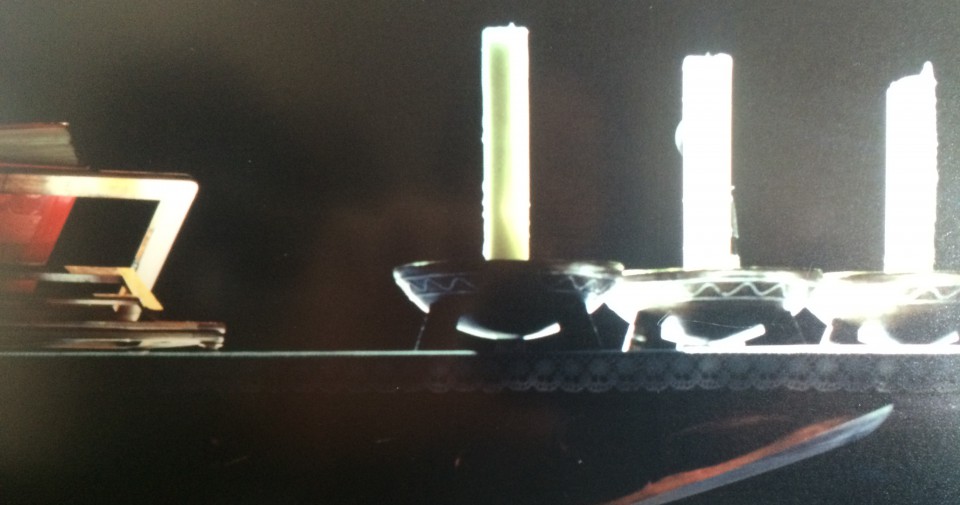
This past Sunday Pope Benedict XVI dedicated the Basilica of the Holy Family (La Sagrada Familia) in Barcelona, Spain.  On my recent trip to Barcelona for the Prayer for Peace I had the opportunity to tour the basilica.  It is truly an amazing and utterly unique structure and one that witnesses to the power of beauty to proclaim the faith and evangelize the heart in every age and circumstance.  In a time of rehashed, manufactured and shallow entertainment, beauty and fame; La Sagrada Familia proclaims boldly that is God who is the source of true originality and beauty.

The work of faith

04 Thursday Nov 2010

Posted by mcummins2172 in Uncategorized

≈ Leave a comment

In the first reading for today’s Mass we heard these words from St. Paul to the Philippians, “My beloved, obedient as you have always been, not only when I am present but all the more now when I am absent, work out your salvation with fear and trembling.  For God is the one who, for his good purpose, works in you both to desire and to work.” (2:12-18)

“…work out your salvation with fear and trembling…”  These are powerful words from Paul and words that can help us get to an understanding of how we as Catholics use the word “works” when it comes to the process of our salvation and sanctification.  Catholics do not, as some often suppose, believe that we achieve or merit our own salvation.  It is through Christ alone (his taking on sin for us, his death and his resurrection) that we are saved.  But we do cooperate with God in the continuing work of our salvation and sanctification.  We do have a role to play.   

I would like to share an image that I find helpful in this regard. 

Imagine a situation where a man stands in need of heart surgery.  He cannot save himself.  Left to himself he is lost and will surely die.  The man goes to the doctor, he undergoes surgery and his condition is rectified.  But the healing does not end there, in fact it would be foolish if it did.  The man has to undergo physical therapy, he has to receive medications, he even has to rest.  He has to follow the doctor’s orders.  The healing does not end with the surgery; it must continue afterwards and the man must make the conscious choice to cooperate with the healing process.

To go to physical therapy, to receive the necessary medications, even to rest are all forms of “work” in this regard.  Works that are truly essential to the full healing process.  Also, it is important to note that the doctor is just as present and active in this recuperative phase of the healing process as he was at the moment of surgery.

The healing grace of Christ does not end after the cross and resurrection (the surgery) and to cooperate in the ongoing healing process is not to deny or diminish either the role of the physician or ones own reliance on the physician.  In fact, the opposite is the case, the work of cooperation in the ongoing healing process demonstrates both an awareness of and dependence on the art, wisdom and skill of the physician.

Christ is the Divine Physician.  Through the grace of the cross and resurrection, the grace freely bestowed at baptism, our “hearts” are rectified – once again made right – but the healing process continues after the initial surgery and it would be foolish to act like it does not.  Ongoing participation in the sacraments, living in the community of the Church, serving one’s brothers and sisters, reflecting on God’s Word found in Scripture, praying, fasting, giving alms – all are cooperating and needed works in the full healing process. 

To acknowledge the surgery but deny the need for and efficacy of the ongoing recuperative treatment might allow an awareness of the heart rectified but there it ends – life remains reduced and limited.  The man remains in the hospital bed.  It is the ongoing “work” of faith – cooperating with and receiving grace – that enables one to rise from the hospital bed, grow to maturity in the Christian life and attain fullness in discipleship.  This awareness of the full dimension of divine healing does not deny the role of Jesus as the Divine Physician in the least but truly acknowledges our need for his presence in all the phases of healing. 

“…work out your salvation with fear and trembling…”


Feast of All Souls

02 Tuesday Nov 2010

Posted by mcummins2172 in Uncategorized

≈ Leave a comment

We still pray
We still sing
We still dream of the day
when  the birds will return
and the flowers
of our lost loved ones

We still live with the belief
that love and gentleness
and faith
will blossom forth one day
like roses in winter

We still believe that God
will be born again in our land
as we prepare the stable
of our hearts for the birth
of a new people.

(A poem to Guatemalan refugees in Mexico from Salvadoran refugees in Honduras, taken from “Death: A Sourcebook about Christian Death” by Liturgy Training Publications)

It is the heart that knows the wound of loss that can recognize the deep and tender beauty of the Feast of All Souls.

Feast of All Saints

01 Monday Nov 2010

Posted by mcummins2172 in Uncategorized

≈ Leave a comment

Today (November 1st) the Church celebrates the Feast of All Saints.  Today we honor all the men and women of past ages and times who lived the fullness of the faith and today we acknowledge that we also are called to be saints in Christ!

Below is a quote from Thomas Merton’s “Seven Storey Mountain” that continually comes to my thoughts around this feast day. 

Therefore, another one of those times that turned out to be historical, as far as my own soul is concerned, was when Lax and I were walking down Sixth Avenue, one night in the spring.  The street was all torn up and trenched and banked high with dirt and marked out with red lanterns where they were digging the subway, and we picked our way along the fronts of the dark little stores, going downtown to Greenwich Village.  I forget what we were arguing about, but in the end Lax suddenly turned around and asked me the question:

“What do you want to be, anyway?”

I could not say, “I want to be Thomas Merton the well-known writer of all those book reviews in the back pages of the ‘Times Book Review,’ or ‘Thomas Merton the assistant instructor of Freshman English at the New Life Social Institute for Progress and Culture,’ so I put the thing on the spiritual plane, where I knew it belonged and said:

“I don’t know; I guess what I want is to be a good Catholic.”

“What do you mean, you want to be a good Catholic?”

The explanation I gave was lame enough, and expressed my confusion, and betrayed how little I had really thought about it all. 

Lax did not accept it.

“What you should say” – he told me – “what you should say is that you want to be a saint.”

A saint!  The thought struck me as a little weird.  I said:

“How do you expect me to become a saint?”

“By wanting to,” said Lax, simply. 

“I can’t be a saint,” I said, “I can’t be a saint.”  And my mind darkened with a confusion of realities and unrealities: the knowledge of my own sins, and the false humility which makes men say that they cannot do the things that they must do, cannot reach the level that they must reach: the cowardice that says: “I am satisfied to save my soul, to keep out of mortal sin,” but which means, by those words: “I do not want to give up my sins and my attachments.”
But Lax said: “No.  All that is necessary to be a saint is to want to be one.  Don’t you believe that God will make you what He created you to be, if you consent to let Him do it?  All you have to do is desire it.”

A long time ago, St. Thomas Aquinas had said the same thing – and it is something that is obvious to everybody who ever understood the Gospels.  After Lax was gone, I thought about it, and it became obvious to me. 

The next day I told Mark Van Doren:

“Lax is going around saying that all a man needs to be a saint is to want to be one.”

“Of course,” said Mark. 

Maybe the best way to celebrate the Feast of All Saints is to consent to let God make of us what He intends us to be.

Jesse James the outlaw and Zacchaeus the tax collector

29 Friday Oct 2010

Posted by mcummins2172 in Uncategorized

≈ Leave a comment

About once a month we have a “Faith in Film” night at the Catholic Center.  At “Faith in Film” we watch a film that has a faith theme and then spend some time afterwards discussing the movie.  The last movie we viewed was “The Assassination of Jesse James by the coward Robert Ford”.  Often, when we think of movies with a faith theme we tend to envision movies that portray the glory or triumphant struggle of faith but there are also movies that explore the other side – the reality of sin and its consequences.  “The Assassination of Jesse James by the coward Robert Ford” is one such film I believe.  It is not necessarily an “easy” movie to watch precisely for this reason.  It is a film that explores the psychological and spiritual landscape of sin and its effects.  Within the movie there are many amazing scenes of fall and winter landscapes which visually portray the stark inner landscapes of the film’s characters … landscapes that have been deadened and made barren by violence and sin.

Jesse James, played by Brad Pitt, is not romanticized in this movie.  He is presented as a fully complex character – extremely violent, a killer, yet human and full of paranoia near the end of his life.  Robert Ford (played by Casey Affleck) – the man who would assassinate James – is also presented in the complexity of his humanity.  He does not come off as a hero nor is he meant to.  Both characters are men fully caught up in the twisting and disfiguring reality of sin and violence.

There is a telling scene near the end of the movie where James and Ford are sitting together in a room of James’ home in St. Joseph, Missouri.  The house is quiet and James is staring out the window.  He says, “I go on journeys outside my body and look at my red hands and angry face and I wonder where I have gone wrong.  I’ve been becoming a problem to myself.”  Ford is in a stunned silence.  He does not have a response to this admission of James.  He departs the room and James continues to stare out the window.

It is, I believe, a poignant portrayal of the affect of sin in ones life.  In sin, we become problems to ourselves.  Problems that we, on our own, can neither solve nor riddle our way through.  We are too twisted, too ineffectual and too lost.  We stand in the need of grace.

The first reading for this coming Sunday is taken from the Book of Wisdom.  The first verse of the reading says this, “Before the Lord the whole universe is as a grain from a balance or a drop of morning dew come down upon the earth.” (Wisdom 11:22)  In the Gospel reading we are given the story of Zacchaeus the tax collector (Luke 19:1-10).  In the story we are told that Jesus is passing through Jericho and Zacchaeus – a short man – has climbed a tree in order to see the controversial rabbi.  When Jesus comes to the place where Zacchaeus is, he looks directly up at the man and says, “Zacchaeus, come down quickly, for today I must stay at your house.”  

When I hold these two verses together I find myself envisioning a common cinematic technique – the movement from a grand scene of the universe step by step to a particular place and moment in our world.  The full universe to our galaxy to our solar system past the moon to earth through the clouds to the Middle East to the Holy Land to Jericho to the street to our Lord looking up at this short man in a tree.  From the Lord who views all creation as a grain of sand to Zacchaeus in the tree – it is the movement of grace.  “Zacchaeus, come down quickly, for today I must stay at your house.”

As soon as our Lord says this, we are told that the other people began to grumble.  Zacchaeus is a tax collector, he is a man caught up in the barren landscape of sin and violence and the others know this.  He is a sinner, let us not kid ourselves, we must neither romanticize this man before the advent of grace in his life nor reduce him to a funny little children’s cartoon character.  We must see him for who he is, acknowledge the violence of the system he represents and recognize the very real need in which he, himself, stands.  Maybe an equivalent to our day which might bring all this out for us it to imagine our Lord deciding to go and dine at the house of Bernie Madoff.   

But something new has now happened!  Zacchaeus has been a problem to himself, a problem in which he has been trapped and lost, but now, in this moment of encounter with Christ, he does something different.  We are told that Zacchaeus stands there in the very midst of the grumbling and he proclaims to the Lord, “Behold, half of my possessions, Lord, I shall give to the poor, and if I have extorted anything from anyone I shall repay it four times over.”  In the encounter with Christ a new way is found!  The starkness of sin, violence and separation is broken through!  The problem that we become to ourselves through sin is broken through!

“And Jesus said to him, ‘Today salvation has come to this house because this man too is a descendant of Abraham.  For the Son of Man has come to seek and to save what was lost.”  In sin, humanity turns in on itself; we become problems to ourselves – a problem that we, on our own, have no hope of solving.  There is a depth to our brokenness that only God can answer.  It is in the gift of grace, the encounter with Christ, that a new way is found … for each and every one of us.

The Pharisee, the tax collector and Sara Bareilles

23 Saturday Oct 2010

Posted by mcummins2172 in Uncategorized

≈ 1 Comment

The gospel reading for this Sunday is taken from Luke 18:9-14.  It reads as follows:

Jesus addressed this parable to those who were convinced of the own righteousness and despised everyone else.  “Two people went up to the temple area to pray; one was a Pharisee and the other was a tax collector.  The Pharisee took up his position and spoke this prayer to himself, ‘O God, I thank you that I am not like the rest of humanity – greedy, dishonest, adulterous – or even like this tax collector.  I fast twice a week, and I pay tithes on my whole income.’  But the tax collector stood off at a distance and would not even raise his eyes to heaven but beat his breast and prayed, ‘O God, be merciful to me a sinner.’  I tell you, the latter went home justified, not the former; for whoever exalts himself will be humbled, and the one who humbles himself will be exalted.”

The singer Sara Barailles currently has a song out entitled, “King of Anything” and in the song (video found below) she shares an experience that probably most of us have also had to endure.  The struggle of trying to have a conversation with someone who is so thoroughly convinced of their own righteousness that you cannot really get anywhere.  There is a great line in the song that epitomizes this struggle, “…you got the talking down, just not the listening…”

It is this type of stilted conversation, I propose, that is occurring between the Pharisee and God in the gospel passage and guess what … it is not God who is the one convinced of his own righteousness.  The gospel also has a great line which clearly demonstates the inner life and attitude of the Pharisee, “… (the Pharisee) spoke this prayer to himself, ‘O God…'”.  The Pharisee is praying to and worshipping himself and not God!  He is caught up in his own delusion.  Because of this he does not even allow God the littlest crack by which to enter into his heart and therefore, despite taking “up his position”, he remains far from God and from the truth of faith and what it is about.

The tax collector, on the other hand, is honest.  His prayer is addressed to God.  He humbles himself and in this humbling he opens his heart to God and he has an honest conversation with the Almighty.  It is the tax collector, our Lord tells us, who goes home justified – righteous in God’s eyes.

There is much that we and our current culture that values yelling and the art of the stilted conversation can learn from the attitude of the tax collector.  I recently heard someone define dialogue (and honest conversation, I would add) as the willingness to find the truth present in the other person’s point of view and the willingness to move beyond self-absorbed individualism.  Truth be told, I think that there are many in our world who, when they are praying to God, are in fact really worshipping themselves … and you do not even have to believe in God in order to do this.  We need to learn the honesty and the humility of the tax collector.

We can remain little kings of our own little kingdoms, or little pharisees convinced of our own righteousness worshipping ourselves or we can be honest.  It is only when we are honest and humble that we truly find our way to God and truly find our way to one another.


Pope Benedict: "Anonymous capital’s power to destroy threatens the world", Part II

22 Friday Oct 2010

Posted by mcummins2172 in Uncategorized

≈ Leave a comment

My last post received a comment from Jim which I think is worthy of consideration and response.  The comment is below.

Thank your for a wonderful explanation of the Pope’s recent statements. He is truely a great man and a gift to our church. You do a fine job of explaining the scriptures as well.


I have an old 2009 issue or Panorama Magizine, an Italian publication. It says that Vatican Bank is being investigated by Italian authorities from the Financial Intelligence Unit of the Banca d’Italia and the Guardia di Finanza over money laundering transactions worth over $200 million through a branch of UniCredit located at Via della Conciliazione across from St. Peter’s Basilica. This bank apparently handles accounts of Catholic religious orders and other Catholic associations using the “offshore” status of the Holy See. In September of this year, I read that the investigation is ongoing. Is there any relationship between these events and the Pope referrences to “Anonymous Capital” and its destructive power? His statements seem timely considering these financial events in the Vatican.


Many blessings in your ministry!

Actually, the amount in question is $30 million and not $200 million.  There is a current investigation launched by Italian authorities into the movement of these monies and if it constitutes laundering.  Part of the complexity of the matter involves the Holy See’s designation as a sovereign state.  The Vatican has expressed perplexity regarding this investigation especially since it has for a while now been involved in an ongoing process of putting in place structures of transparency regarding all financial matters.  We will have to see what the investigation concludes.  Found at the end of this post is a statement issued by the Vatican regarding this matter.

Now, is this matter related to the Holy Father’s warning regarding “Anonymous Capital”.  No, I do not believe so. 

There are a series of books put out by a man by the name of Walter Wink that I would encourage people to read.  The books are: “Naming the Powers”, “Unmasking the Powers” and “Engaging the Powers”.  Wink is a professor of Biblical Interpretation at Auburn Theological Seminary and in this series of books he demonstrates how the biblical terms “powers, principalites, thrones, dominions, etc.” are not just biblical poetic imagery but references to (my definition) “pervasive systems of thought that influence our lives and the life of society.”  When these powers are in correct relation to truth then they are beneficial and good but when they seek to usurp and supplant truth then they become demonic – false divinities.  All the powers of our world must continually be brought before and measured by the truth of the Kingdom of God.

Am I saying that the Holy Father is referring to Wink’s books here?  No, I am not.  I do not know if he is even familiar with these books.  But I am saying that the books can help us get into what the Holy Father is saying about the false powers of our world, their influence and how they must always be held accountable before the Kingdom of God.

The attitudes, practices, mindsets and philosophies that all contributed to the economic collapse and to our being at the precipice of world-wide financial catastrophe – which we still find ourselves dangerously near to – must be acknowledged and named and judged according to a renewed understanding of the common good.  These are the “anonymous powers”.  The forces of the market must be held accountable to the common good and the dignity of the human person.

Earlier today I heard a news story on the radio regarding a woman who, due to our troubled economy, had her salary cut.  Because of this she fell behind in her mortgage payments.  She went to her lending agency and was able to renegotiate her mortgage.  She felt good and hopeful.  Three months later she found a note attached to her front door saying she had been evicted and her house had been sold.  Her lending agency had failed to do the proper paperwork verifying that her mortgage had been renegotiated.  She was caught up in a system beyond her control.  She went to the foreclosure court to argue her case but the judge found in favor of the lending agency.  She now no longer has a home.  This is an injustice filled with biblical overtones.  “The Lord hears the cry of the poor, blessed be the Lord.”

Near the end of the excerpt of the Holy Father’s talk (which I shared on the previous post), Pope Benedict refers to the “simple faith” that remains the greatest strength of the Church against the flowing river of the anonymous and false powers we find ourselves in the midst of in this world.  The faith to believe in God, to do the right thing and to care for the other person.  The opening hymn for tonight’s evening prayer expresses very simply and beautifully, I believe, this simple faith.  I will quote it to end this post.  It is a hymn we should all sing and truly take to heart during these times. 

For the fruits of his creation, 
     Thanks be to God;
For the gifts to every nation,
     Thanks be to God;
For the ploughing, sowing, reaping, 
Silent growth while men are sleeping, 
Future needs in earth’s safe keeping,
     Thanks be to God.

In the just reward of labor,
     God’s will is done; 
In the help we give our neighbor,
     God’s will is done;
In our world-wide task of caring
For the hungry and despairing,
In the harvests men are sharing,
     God’s will is done. 

For the harvests of his spirit,
     Thanks be to God;
For the good all men inherit,
     Thanks be to God;
For the wonders that astound us,
For the truths that still confound us,
Most of all, that love has found us,
     Thanks be to God.  

(Below is the statement from the Vatican I made mention of above.)

ZE10092303 – 2010-09-23

Permalink: http://www.zenit.org/article-30463?l=english

VATICAN SPOKESMAN ON BANK INVESTIGATION

“Holy See Reiterates Its Desire for Complete Transparency in the Financial Operations”

VATICAN CITY, SEPT. 23, 2010 (Zenit.org).- Here is a statement from Jesuit Father Federico Lombardi, director of the Vatican press office, regarding the investigation into the Institute for the Works of Religion.

The statement was published by the Financial Times.

* * *

Sir, The Institute of Religious Works (IOR) has returned to international media attention in the wake of a surprise investigation by the Procurator’s Office in Rome (“Vatican backs bankers in laundering probe”, September 22).

Given that the activities of the IOR take place at an international level, and that its president is well-known in the world of international finance, it is appropriate that I should seek to avoid the spread of inaccurate information and to ensure that no damage is caused to the institute or the good name of its managers.

The IOR is not a bank in the normal definition of the term. It is an institute that administers the assets of Catholic institutions, who aim to further a religious and charitable apostolate at an international level. The IOR is located within the territory of Vatican City State, beyond the jurisdiction and surveillance of various national banks.

Its particular status means that its position in the system and the regulations of international finance require a series of agreements to establish the procedures necessary for the Holy See to be included in the Organisation for Economic Co-operation and Development’s “white list” – this is especially true in light of the new norms laid down by the European Union to combat terrorism and money laundering.

From the day of his appointment as president, and in accordance with the mandate he received from the highest Vatican authorities and from the IOR inspection committee, Ettore Gotti Tedeschi has been working with great commitment to ensure the absolute transparency of the IOR’s activities, and its compliance for the norms and procedures which will allow the Holy See to be included in the white list. To this end, intense and fruitful contacts are ongoing with the Bank of Italy, the EU and with the competent international bodies: the OECD and Gafi (or Financial Action Task Force).

It is for this reason that the Vatican Secretariat of State expressed its perplexity and amazement at this investigation by the Procurator’s Office in Rome, which has come at a time in which this commitment is being clearly shown and these contacts are being made in order to reach lasting solutions as soon as possible.

The nature and aims of the transactions under investigation could have been clarified with great simplicity, being cash transactions the beneficiary of which is the institute itself, on accounts it holds at other credit institutions. The current problem was caused by a misunderstanding (now being examined) between the IOR and the bank which received the transfer order.

Thus the Holy See reiterates its complete confidence in the managers of the IOR, and its desire for complete transparency in the financial operations the institute undertakes, in accordance with the procedures and norms required today to ensure the security and transparency of transactions in the field of international finance.

Father Federico Lombardi,

Director, Press Office of the Holy See, Vatican City


← Older posts
Newer posts →
Follow The Alternate Path on WordPress.com

Enter your email address to follow this blog and receive notifications of new posts by email.

Previous Posts

  • May 2026
  • April 2026
  • March 2026
  • December 2025
  • November 2025
  • August 2025
  • April 2025
  • February 2025
  • January 2025
  • December 2024
  • August 2024
  • July 2024
  • June 2024
  • May 2024
  • April 2024
  • March 2024
  • February 2024
  • January 2024
  • December 2023
  • November 2023
  • October 2023
  • August 2023
  • July 2023
  • May 2023
  • February 2023
  • January 2023
  • December 2022
  • August 2022
  • July 2022
  • April 2022
  • January 2022
  • December 2021
  • September 2021
  • August 2021
  • July 2021
  • May 2021
  • April 2021
  • January 2021
  • December 2020
  • November 2020
  • October 2020
  • August 2020
  • July 2020
  • May 2020
  • April 2020
  • March 2020
  • February 2020
  • December 2019
  • October 2019
  • September 2019
  • August 2019
  • July 2019
  • May 2019
  • April 2019
  • March 2019
  • February 2019
  • December 2018
  • November 2018
  • October 2018
  • August 2018
  • July 2018
  • June 2018
  • April 2018
  • March 2018
  • February 2018
  • January 2018
  • December 2017
  • November 2017
  • September 2017
  • August 2017
  • July 2017
  • June 2017
  • May 2017
  • April 2017
  • March 2017
  • February 2017
  • January 2017
  • December 2016
  • November 2016
  • October 2016
  • September 2016
  • August 2016
  • July 2016
  • June 2016
  • May 2016
  • April 2016
  • March 2016
  • February 2016
  • January 2016
  • December 2015
  • November 2015
  • October 2015
  • September 2015
  • August 2015
  • June 2015
  • May 2015
  • April 2015
  • March 2015
  • February 2015
  • January 2015
  • December 2014
  • November 2014
  • October 2014
  • September 2014
  • August 2014
  • July 2014
  • June 2014
  • May 2014
  • April 2014
  • March 2014
  • February 2014
  • January 2014
  • December 2013
  • November 2013
  • October 2013
  • September 2013
  • August 2013
  • July 2013
  • June 2013
  • May 2013
  • April 2013
  • March 2013
  • February 2013
  • January 2013
  • December 2012
  • November 2012
  • October 2012
  • September 2012
  • August 2012
  • July 2012
  • June 2012
  • May 2012
  • April 2012
  • March 2012
  • February 2012
  • January 2012
  • December 2011
  • November 2011
  • October 2011
  • September 2011
  • August 2011
  • July 2011
  • June 2011
  • May 2011
  • April 2011
  • March 2011
  • February 2011
  • January 2011
  • December 2010
  • November 2010
  • October 2010
  • September 2010
  • August 2010
  • July 2010
  • September 2008
  • August 2008
  • April 2008
  • March 2008
  • February 2008
  • January 2008
  • December 2007
  • November 2007
  • October 2007
  • September 2007

Popular Posts

  • thealternatepath.org/wp-c…
  • thealternatepath.org/wp-c…
  • thealternatepath.org/wp-c…

Blog at WordPress.com.

  • Subscribe Subscribed
    • The Alternate Path
    • Join 156 other subscribers
    • Already have a WordPress.com account? Log in now.
    • The Alternate Path
    • Subscribe Subscribed
    • Sign up
    • Log in
    • Report this content
    • View site in Reader
    • Manage subscriptions
    • Collapse this bar