Jesus – the Living One

Tags

, , ,

Image may be subject to copyright

My favorite Easter movie is “Risen”.  The story centers on a Roman soldier named Clavius.  A lifelong member of the military, Clavius is a dutiful and hardened soldier who has risen in the ranks.  He is looking toward the end of his military career.  He is sent by Pilate to oversee the execution of a criminal charged with treason – a man that many were proclaiming to be the King of the Jews.  Clavius watches Jesus die.  He returns to Pilate and gives his report.  Pilate, aware that Clavius is a man of ambition whose service will soon be ending, asks the soldier what he ultimately wants in life.  Clavius answers, “Rome, position, power…”  “What will this give you?” asks the governor.  “A villa in the country.”  “What will you find there?” asks Pilate.  “An end of travail … peace … a day without death.” 

The story does not end there. 

There begins to be reports that this dead man has risen and with these rumors unrest begins in and around Jerusalem.  Pilate again summons the soldier and assigns Clavius to get to the truth of what has happened and to prove that all of these accounts of a resurrection are false.  But they are not.  In the course of his tracking down the disciples, Clavius comes face to face with Jesus – the man he saw die on the cross.  His world is turned upside down!  Everything is thrown into question.  The hardened Roman soldier begins to tag along on the edge of the group of disciples – like a stray dog.  He watches the risen Lord and the disciples.  One night, on the shore of Lake Galilee, while all the disciples are asleep, Clavius approaches Jesus who is watching the night sky.  Sitting down beside Jesus, Clavius admits, “I don’t even know what to ask,”  “Speak your heart,” says Jesus.  “How can I reconcile this with the world I know?”  “Still you doubt … what frightens you … What is it you seek Clavius?”  Jesus then answers for him, “certainty … peace … a day without death?”  Clavius weeps, his heart and his pain have been recognized … and answered. 

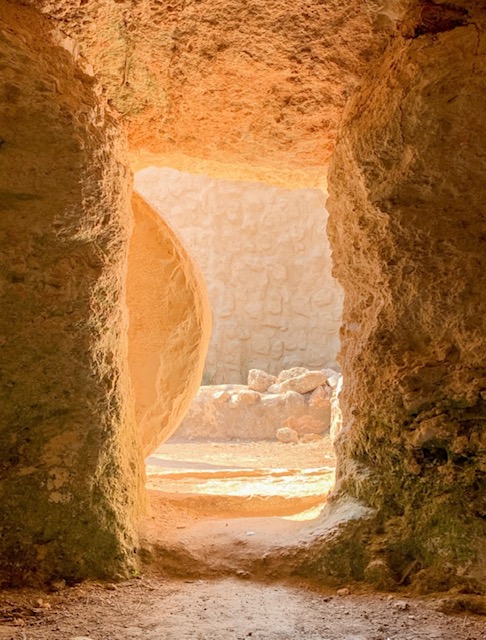
The angels in the tomb ask the women, “Why do you seek the living one among the dead?  He is not here, but he has been raised.”  Jesus alone is the “living one”.  Although we consider ourselves alive we are not the “living one”.  How do we know this?  Because, like Clavius, we often seek to find life in the midst of that which is dead.  When we seek peace and tranquility through worldly power, privilege and position – that is seeking to find life among that which is dead.  When we find a numbing comfort in life by holding on to grievances, resentments, fears, sorrows, addictions, failures and even our own sins and sense of unworthiness of mercy – that is also seeking to find life among the dead.  We are not the living one because we carry the wound of sin, because we so often look to find life among that which is dead.

“Why do you seek the living one among the dead,” asks the angels.  Jesus alone is the living one and he is not to be found among any of those dead things. 

Here is the Easter truth – Jesus alone is the living one.  Jesus, alone, in his obedience has conquered sin and death.  If we go on looking for life among that which is dead, we will find no life.  It is only when we allow the Living One to find us – to answer the need and pain in our own heart – that we will know healing and true life. 

Only in the fullness of the Kingdom, will we be truly living.  Only then will we know a day without death.  For now, we still carry the wound of sin.  But, the Living One is here, he walks with us, he loves us and he gives us his mercy and he says to us, “Do not seek me among the dead things.  I am not there.  There is no life there.  Let go of those things.  I am the Life and I am here for you.” 

“Why do you seek the living one among the dead,” ask the angels, “He is not here, but he has been raised.”   

Singing the Christ Hymn on Good Friday

Tags

, , , ,

The Christ Hymn (Philippians 2:6-11) was the first reading I proclaimed as a lector at Mass during my time in theology studies.  Since that time I keep returning to the mystery of the words found in the hymn.  The hymn, I believe, is both a good complement as well as corrective to scriptural interpretations and theologies found throughout history and present in our own day.  “Does it pass the Christ Hymn test?” is what I often ask myself when listening to sermons and opinions in theology.  

Singing the hymn on Good Friday leaves one with a question; “What saves?  The blood of Christ or the obedience of Christ?”  This is asked not to minimize the sufferings of Jesus nor the salvation which was won for us through his sacrifice but to allow the hymn to clarify in the hope of being brought to deeper understanding. 

Could an over-emphasis on the imagery of the “blood of the Lamb” have the unintended consequence of leaving us with the image of God as a wrathful Father who demands a blood sacrifice?  Sadly, this has been an interpretation given ample evidence of in sermons, hymns and theological writings that has floated down through the Christian centuries.  But sheer multitude does not necessarily make something right.  In fact, it might demonstrate that it is just … easy. 

Scripture scholars say that Paul did not pen the Christ Hymn.  Rather, he made use of a hymn that was already being widely sung by that first generation of Christian disciples.  This first generation hymn does not mention nor emphasize “blood” rather it focuses on “obedience”.     

“…he emptied himself, taking the form of a slave, coming in human likeness; and found human in appearance, he humbled himself, becoming obedient to death, death on a cross.  Because of this, God greatly exalted him…”  (Phil. 2:7-8)

Obedience is an act of the will and when that is kept primary then we are safeguarded from the pitfalls of a brand of Christian thought that ultimately reduces the Father to the image of a wrath-filled despot demanding a pound of flesh.  Keeping the obedience of the Son central allows the focus to remain (in wonder and awe) upon the free act of will on the Son’s part – an act of will in which Jesus demonstrates his love for the Father and his deep desire for us to be restored in our relationship with the Father (free from the wound of sin) in the fullness of the Kingdom.    

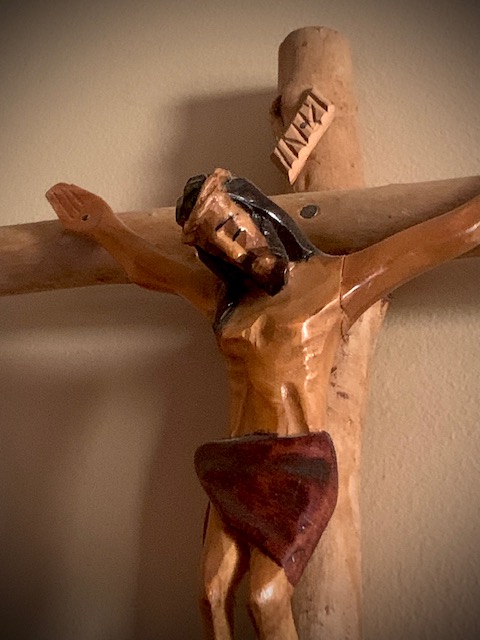
Singing the Christ Hymn on Good Friday reminds us that the sacrifice made on the cross was first, foremost and for all eternity an act of love. 

Writing in the dust and circles of violence

Tags

, ,

Image may be subject to copyright

There are many circles of violence in this Sunday’s gospel story (Jn 8:1-11). 

The woman is not without fault.  She was caught in the act of adultery.  That was a free choice on her part as well as a free choice by the man she committed the sin with.  Adultery is an act of violence against the covenant of marriage.  It is worthwhile to note that after everyone walks away Jesus says, “Neither do I condemn you.”  It is in the mercy of God that she is freed from condemnation but there is judgment on her sin, her participation in that act of violence.  Jesus says, “Go, and from now on do not sin anymore.”    

The crowd is also caught up in the circle of violence as they stand ready to stone this woman.  These two circles of violence (the act of adultery and the desire to kill) are clearly visible and apparent but there are still other circles of violence.  There is a further circle of violence against the woman – she is being used.  The gospel lays it out clearly.  The scribes and Pharisees are using the woman to try to trap Jesus.  “They said this to test him, so that they could have some charge to bring against him.”  They have no real interest in the woman, their focus is on Jesus and she (and apparently even her very life) means nothing, she is just a means to get at Jesus.  To reduce another person in any circumstance to a “means to an end” is an act of violence. 

There is a further and even more profound act of violence.  The scribes and Pharisees, so proud of their religious observance, are trying to use both the commandments and even God.  Again, their intent here is to trap Jesus and not to give honor to the commandments of God and therefore, even God himself.  On their lips they say, “Now in the law, Moses commanded us…” but in their hearts their intent is far from giving honor to the law but rather to trap Jesus. It is in their intent that we see that they are trying to reduce the commandments of God and even God himself to a means to an end.  This is an act of violence.  God will never be reduced to a means to an end. 

All of these circles of violence within eleven verses. 

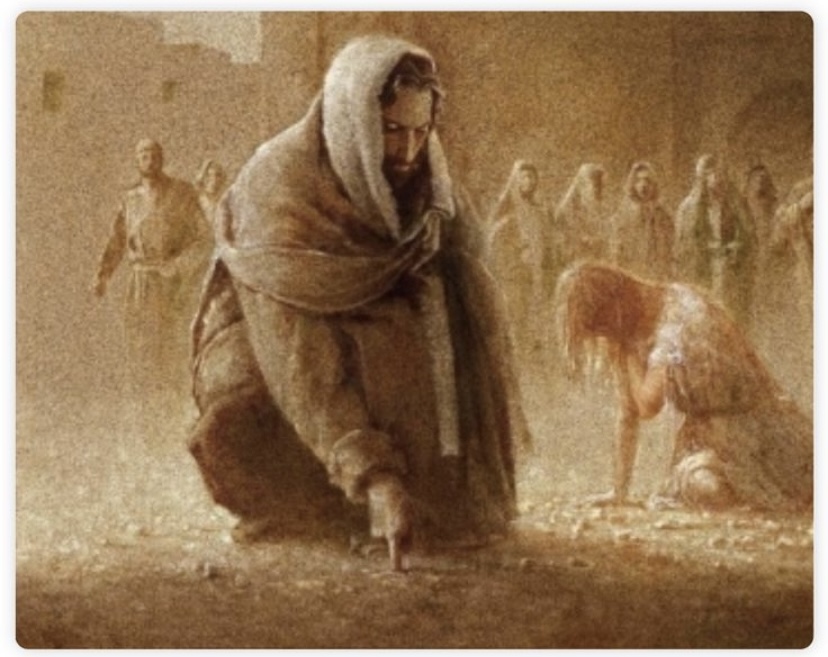
Probably beginning the very day that these verses were written, we have wondered what it means that Jesus bent down and wrote on the ground.  There are all sorts of interpretations of this action.  A thought that I have is that, by this simple action, Jesus is clearly showing that he will not participate, he will not get caught up in any of these circles of violence.  He will not condone the woman’s act of violence, he will not get caught up in desire to kill, he will neither use a person nor his heavenly Father as a means to an end.  He will not … by writing in the sand, our Lord demonstrates his refusal and disdain for all these circles of violence. 

Once he straightens up and looks around, the answer he gives immediately cuts through all of these circles of violence.  “Let the one among you who is without sin be the first to throw a stone at her.”  All walk away.  The circles of violence have been broken, no stronger than the dust Jesus was just drawing in. 

Throughout his preaching, St. Paul never tired of letting people know how he had persecuted the church before his encounter with Christ.  St. Peter, never tired of sharing how he had denied knowing Christ in the courtyard of the high priest.  Both men and all of the apostles never tired of sharing how Jesus had rescued them from the circles of violence in their lives and how Jesus shows us a different way and makes it possible for us to live this way. 

Isaiah foretold it, “Thus says the Lord, who opens a way in the sea and a path in the mighty waters … In the desert I make a way, in the wasteland, rivers.” (Is. 43:16-21)    

Now, in Christ, we do not have to live in the circles of violence.  We do not have to participate.  We do not have to get caught up in the violence.  There is a different way.  We find it when we allow Jesus to find us. 

Jesus sets us free to walk this new way. 

The Church ministers best as “Church”

Tags

,

Image taken from internet. Copyright respected.

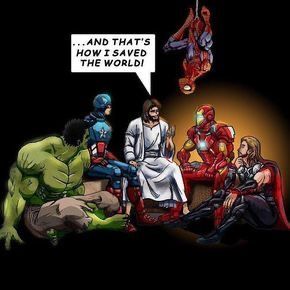
I have a confession to make … I am not a fan of superhero movies.  Don’t get me wrong, they can be entertaining (a good escape for a couple of hours) and the special effects are amazing but they are really just the same story over and over again – just repackaged.  Also, and here I will admit I may be reading too much into things, I feel that all of these superhero movies are grooming their audience (us) into the belief that we need a superhero to come along and save us when that is neither reality nor what we truly need. 

St. Paul did not need superheroes.  He had a Savior.  The Savior is real, superheroes are made up.  Paul instructs us in his letter to the Corinthians (Cor. 12:12-30) that we – through our baptism – are all part of the Body of Christ.  Christ is the head and we are the body.  We each have a role to play, we each have gifts to give.  Every member of the Body of Christ contributes – in his or her own unique way – to the building up of the Body of Christ and to the mission of the Body of Christ in our world.  We do not need a superhero to save us.  We have a Savior and he has made us into his body. 

The Church ministers best as “Church”.  As the “Body of Christ” in our world we are each to live our faith which means each of us taking responsibility for our faith and not waiting for some superhero to come along and save us.  Ever notice that in superhero movies – the hero swoops in, saves the day and then flies off.  There really is no relationship between hero and those who are saved.  Having a Savior, on the other hand, implies an ongoing relationship which does put honest demands on us and honest responsibilities which we must strive to live. 

The Church ministers best as “Church”.  The Church has done this in the pro-life movement.  From day one, the Church has been consistent in the message of the dignity of life in the womb and the dignity of the woman who carries that life.  All together the Church promotes life.  Clergy and laity in a variety of ways and settings and as different parts of the body of Christ does this.  The Church has been and will always be pro-life.  It is quite likely that Roe v. Wade will be struck down in some form or fashion soon.  It should be struck down.  It is a horrific law that has killed millions and destroyed millions of lives.  But the work of defending life will continue and we will do that work as church – helping those persons with unplanned pregnancies, caring for both children and parents, defending the dignity of the life of every person and working to ensure that dignity on all levels. 

Pope Francis, in his unique role as the successor to St. Peter, has invited each of us as members of the Body of Christ universal to listen to one another and to listen to the Holy Spirit by sharing our thoughts through the Synod process.  If you have not already done so, take the time to participate in the survey and attend one of the listening sessions that will soon be occurring in our parish.  The key word is “listening”.  We each are a part of the body; we each have a voice to share.  It does not mean we will each get our way or our thought is necessarily the “correct” one.  It does not work that way in the body, St. Paul demonstrates that, but we each are called to listen and to share. 

St. Dominic Church has ministered as “Church” powerfully in the ministry of St. Dominic School.  It is no easy thing to support and run a school.  What other churches in our area are doing it?  But this parish church – all of us together, in different ways and in different roles – has said that this is an important ministry that builds up generations and we will continue to strive to uphold and strengthen this ministry.  As Church this is being done. 

The Church ministers best as “Church”. 

Not to pit movie genres against one another but there is a wonderful line from one of the Harry Potter movies.  Dumbledore – the wise wizard – at one point remarks off-handedly, “I’ve never had much use for heroes.”  (Whenever I see someone trying to market himself or herself as a “hero” that others should look up to that, for me, is a huge red flag that makes me wonder what happened in that person’s childhood years.)

We don’t need superheroes who are not real.  We have a Savior and he has made us into his body.  The Church ministers best as “Church”. 

Yosemite Valley, John Muir, Antoni Gaudi and the Heart of Creation

Tags

,

Yellowstone Falls

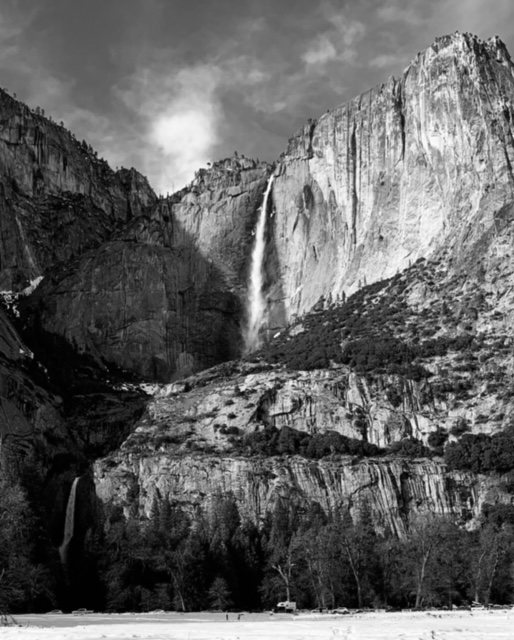
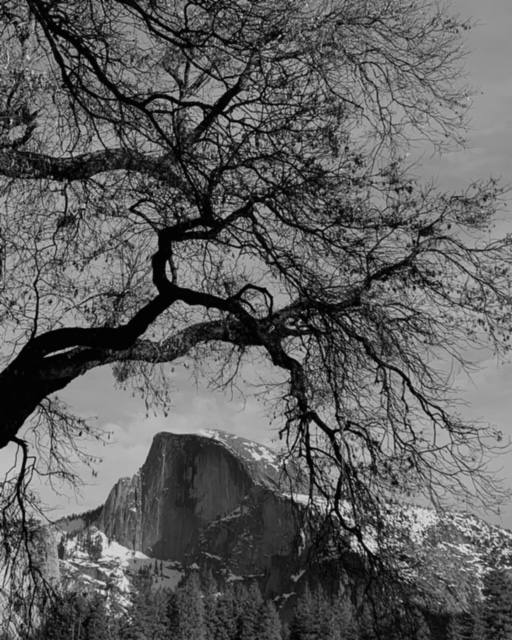
Last week I spent four days in Yosemite National Park continuing my quest to visit all of our country’s national parks.  (I am now at twenty-six parks visited.)  Each park – I have found – has its own particular beauty and awe.  What most struck me in Yosemite was Yosemite Valley itself.  Via the entrance road from El Portal, you weave into the valley catching hints of the surrounding mountains through the standing ponderosa pine trees.  Yet, it is only within the valley that you are brought into a full awareness of the enormity of the surrounding cliffs and mountains that loom large over the fields, river and forests.  One would think that the sheer cliffs and mountain rockfaces would weigh down on the valley and any person within it but the opposite is the case.  El Capitain and Half-Dome continually pull one’s line of sight upwards and beyond oneself.  Yosemite Falls and Bridalveil Falls, even as they drop into the valley, beckon the viewer to look up to the source of their waters.  Even the tall ponderosa pines direct one towards the sky and what is above.  Every aspect within this valley draws the person upwards. 

John Muir named Yosemite Valley, “Nature’s Cathedral” and I cannot help but believe this upward movement of the valley is part of what Muir experienced himself and what, at least partly, stands behind his designation.  Cathedrals and basilicas – by design – are meant to draw the person upwards into the transcendent and that which is beyond oneself.  Interesting note – the basilica I found myself just naturally beginning to remember while standing in Yosemite Valley was La Sagrada Familia in Barcelona.  On a tour of the famous basilica a number of years ago, I remember our group’s tour guide remarking how Antoni Gaudi based the design of the church not so much on the foundation sunk in the earth but rather on the movement of being drawn upward and this is witnessed to throughout the architecture.  I have no idea if Gaudi knew anything about Yosemite Valley but I believe what he sought to express through his design of La Sagrada Familia finds deep natural resonance in the wonder and upward movement of Yosemite Valley.

Both John Muir and Antoni Gaudi were men steeped in the Christian faith.  Muir’s father was a presbyterian minister who raised his children on the words of Scripture.  Gaudi was a devoted Catholic whose life and work were guided by his faith.  Both men were also devoted to the beauty of creation.  Gaudi saw his basilica as a reflection of creation and the wonder that the Creator has entered within creation by the incarnation.  Muir’s life was marked by an Old Testament prophet’s zeal for creation and humanity’s responsibility to be good stewards of what has been entrusted to us. 

The fact that both of these men – coming from different parts of the world and from different life experiences – each had a sense of the wonder of creation and its upward movement AND were steeped in the language and thought of Christianity is no coincidence I believe.  The language of Scripture which speaks of both creation and Creator, the awareness of the sublime wonder of the incarnation and resurrection and the hunch of what that implies for all of creation as well as a felt knowledge of grace in ones own life were all truths deeply embedded in each of these men (given ample witness in their work and words) and this is what gave them both the intuition required to sense the upward movement of a creation both weighed in reality and set free by grace as well as the words needed to give voice to that movement whether that be through the language of soaring architecture or the stirring words of essay, written letter or fireside conversations with an American president. 

Half Dome

Christianity, when not manipulated by a perverse ideology of selfish domination, offers a person the awareness needed to truly listen to the heart of creation.  This is expressed throughout the scope of Scripture and witnessed by a Savior who himself was fully attuned to all of the wonder and nuances of creation – just reflect on how he continually drew on creation to teach us about the Kingdom. 

John Muir heard the heart of creation reverberating through Yosemite Valley.  Antoni Gaudi heard the heart of creation and gave it voice in the soaring spires of La Sagrada Familia.  Another Christian by the name of Paul also heard it and this reflection will end with his words: 

“For creation awaits with eager expectation the revelation of the children of God; for creation was made subject to futility, not of its own accord by because of the one who subjected it, in hope that creation itself would be set free from slavery to corruption and share in the glorious freedom of the children of God.  We know that all of creation is groaning in labor pains even until now.”  (Rom. 8:19-22) 

The Active Waiting of Advent

Tags

, , ,

Near the end of his little book, “Obedience” Cardinal Cantalamessa reflects on an expression found throughout Scripture that is very dear to God.  “Here I am.”  These words are dear to God because they are an expression of an obedience rooted in love (imagine a parent walking into a home and calling out to his or her child, “Where are you?” and the child, playing in the back room, simply responding “Here I am”).  It is a simple automatic connection of love, relationship and obedience and it is through all of this that God is able to do great things. 

To continue Cardinal Cantalamessa’s thought – Abraham responded, “Here I am” and God made him the father of faith and brought forth from him innumerable descendants – as many as the stars in the sky.  Moses said, “Here I am” and through him God was able to set his people free and lead them to the promised land.  The young Samuel did not fully understand at first but after being instructed by the elder Eli answered, “Here I am” and God made of him a great prophet who would anoint David as king.  Isaiah said, “Here I am” and through his writings we are given the beautiful imagery of the coming Messiah as the one who would bring forth God’s reign and also be the suffering servant.  We are told that the word of God came to John the Baptist in the desert and his, “Here I am” was his willingness to go forth and proclaim the coming of God’s Kingdom even to the point of giving his life.  Mary, the mother of our Lord, said, “Here I am” when she responded to Gabriel’s message by saying, “Behold, I am the handmaid of the Lord.  May it be done to me according to your word.”  Jesus’ whole life, every aspect of his being, was, “Here I am” to the Father’s will.  He took this loving response to the call of the Father to the level of the infinite and through that he won salvation for all. 

The life of every Christian should be lived as an expression of these simple words, “Here I am”. 

We talk about the season of Advent being both a time of waiting and of hope.  How are the two connected?  Here is a thought. 

The waiting of Advent is not a passive thing.  As Christians we are not just sitting, twiddling our thumbs waiting on the Master’s return.  The waiting of Advent is an active waiting. 

It is said that a large part of success in life is the willingness to just show up.  It may sound simple but it is a key ingredient in success and accomplishment.  Being willing to “show up” is saying, “Here I am” to God and to neighbor.  We show up to God when we value our relationship with Him – when we take the time to pray, when we give priority and value to worship and adoration of God.  We show up when we strive to both learn and live by God’s teachings for us through Scripture and Tradition.  We show up when we are obedient to God’s will for us.  We are that child in the back room playing and we should easily and automatically in love respond, “Here I am” when our loving Father calls out for us. 

We respond, “Here I am” to our neighbor when we also show up for them.  We show up when we strive to be fully present to the other person – spouse, child, parent, neighbor, stranger.  We show up to our neighbor when we desire and choose to live the particular vocation God has called each one of us to.  We show up when we live our commitments and responsibilities in life.  It is the mature thing to do and there is no substitute. 

This willingness to just show up, to say, “Here I am” is the active waiting of Advent and it is connected to hope. 

Hope is a theological virtue in our Christian understanding.  Part of being a theological virtue means that the source of this virtue is God.  We – on our own – cannot make hope, we cannot contrive it.  Hope is a gift from God that is only received by living in right relationship with God.  We cannot make hope but we can live our lives in such a manner as to be open to receive this most precious of gifts.  We can make the choice to live in a way that opens our hearts to this gift, that will allow this gift to take root in our lives and to bear fruit and then, our lives, can be a witness of hope in our world. 

The active waiting of Advent is living is such a manner as to receive hope.  Responding, “Here I am” is allowing hope to take root within us.  Just showing up is the willingness to live in hope. 

The waiting of Advent is active, in fact, it is probably the most active thing we could ever do.  It is the willingness to say, “Here I am”.  It is the desire to just show up. 

The Reign of God and the Trophic Cascade

Tags

, , ,

I and Bodaway

Any interest in wolves will eventually lead a person to Yellowstone National Park and the work of reintroducing wolves into the ecosystem there.  It is in this context, that one will hear the term, “trophic cascade”.  The term is used to describe an “ecological phenomenon triggered by the addition or removal of top predators which then brings about changes in the relative populations of predator and prey in an area. A trophic cascade often results in dramatic changes in an ecosystem.” (Stephen Carpenter) In the case of Yellowstone, it was the healing of the ecosystem. 

When wolves were extirpated from the park in 1926, their natural prey, the elk, increased to unmanageable numbers.  There was overgrazing by the elk and the whole ecosystem suffered.  Since being returned, the wolves have helped to reduce the number of elk to a number that the ecosystem can actually support.  The wolves changed the grazing patterns of the elk so that valleys and riverbanks (where elk are more vulnerable) are no long overgrazed.  The wolves have even strengthened the elk in that the wolves cull out the sick and weak elk, thus helping to reduce the risk of spread of disease in a herd.  All of these factors have allowed areas that were overgrazed to rebound allowing plant life to again flourish naturally which, in turn, attracts more and varied fauna back into the ecosystem. 

All of this cascade of effects from one change. 

Here is the connection to the readings.  James, in the excerpt from his letter that we just read (James 3:16-4:3), lays out the human condition under sin quite clearly.  We are a mix of pride, jealousy, selfishness and envy.  We are at war within ourselves and this violence seeps out in many ways.  Yet, even in the midst of all of this, we yearn for that “wisdom from above” which is peaceable, pure, gentle, full of mercy and good works.  We yearn for this because we know in our deepest core that we are meant for it.  We are made and meant for that authenticity of self and life. 

In the gospel (Mark 9:30-37) we see this played out in real time.  The disciples are confused about what Jesus is telling them and they have fear within them about asking.  When the group arrives at the house, we come to learn that they were arguing about who was the greatest disciple among them.  The disciples themselves have been caught up in that whole mix of pride, jealousy, selfishness and envy that James laid out in his letter!

Jesus knows full well the human condition.  He sees the sad circumstance of the mix of who we are under sin but he also knows the truth of who we are meant to be as children of God.  What does he do in the face of all of this?  He makes one change.  He brings in a child and says, “Whoever receives one child such as this in my name, receives me; and whoever receives me, receives not me but the One who sent me.”   

In this one act, Jesus shifts the attention of the disciples away from themselves and towards another.  Now, instead of being caught up in the whole mix of pride, jealousy, selfishness and envy; focus is on the other and welcoming the other.  Pride is forgotten, jealousy gives way, selfishness and envy are put aside.  The shift in focus allows for a whole cascade of effects. 

It can all be very daunting when we are honest and recognize the truth of the mix that we are – a good chunk of it which is not so great.  Rather than demanding wholesale change which is beyond any of our abilities, the lesson given here by Jesus is to make one change.  Do one thing in our lives for the Kingdom.  Shift the focus.  Welcome one person in the name of Christ.  From the one change in our lives for the reign of God there will then come a cascade of effects. 

Do one thing. 

“…the fruit of righteousness is sown in peace for those who cultivate peace.”

The Christian as Tapper

Tags

I just learned a new word.  The word is “tapper” and I heard it in an interview of an athlete at the Paralympics in Japan.  In the interview, a blind relay swimmer spoke about his tapper.  A “tapper” is the person stationed at the end of a swimming lane whose job it is to reach out with a pole and tap the blind swimmer to notify him or her when they are at the wall and need to either turn around for the next lap or end the race.  The blind swimmer cannot know exactly where the wall is, so this role is critical both for maintaining the speed and momentum necessary for the race as well as the basic safety of the swimmer.  

In a race every second counts so the tapper needs to truly know the swimmer and the swimmer’s speed and style.  The best interest of the swimmer must be foremost in the tapper’s mind and focus throughout the race.  This type of knowledge and attention takes training, dedication, practice and familiarity on the part of both the swimmer and the tapper.  The tapper’s job is to be the eyes for the swimmer and to look out for him or her.  It is a critical role. 

St. Paul used the image of the athlete running the race to speak of the life of Christian discipleship.  I think that the Apostle to the Gentiles would find the role of the tapper to be another apt metaphor for the life of the Christian disciple.  Yes, as Christians, we are called to certainly run our particular race of faith and we are called to look out for one another.  In fact, looking out for others, is an important and critical aspect of running our own individual race of faith.  The two are connected.   

The Christian must be concerned for the welfare of the other – whether that welfare be spiritual, physical, emotional or material.  We look out for the other because we realize that just as we run the race we also run the race together and we help one another along.  The Christian disciple cannot be selfish in his or her approach to the race of faith.   

Christians are to be tappers for others.  This is a critical role in the life of every follower of Christ.   

The most effective tapper knows when to “tap” the swimmer at the best possible instant to capitalize on the speed and momentum of the swimmer.  We encourage one another, we support one another, we uphold one another in order to push one another along to keep running (or swimming) the race in the best way possible.  But, we must also keep discerning and learning when is the best possible time to tap the other.  Timing is important and knowledge of timing comes only with practice, perseverance, reflection, prayer, humility, love for the other and familiarity with the other.  All of these factors go into good timing and timing is key in the race.   

The tapper also “taps” the swimmer to caution that the wall is near in order to protect the swimmer against serious injury.  We caution one another against sin and error, we challenge one another to the life of virtue, we pray God’s protection for one another and caution against despair.  Correct timing is also of upmost importance here because just as the tapper does not want the swimmer to slam into the wall, so the Christian does not want another person to enter into serious harm (spiritual, physical, emotional) but the warning must be given in sincere concern and love for the other to truly be effective.  The most effective tapper truly knows his or her swimmer and this knowledge can only come through an authentic concern and charity for the other.  Both timing and an authenticity of care are key when giving a tap of warning. 

We live in precarious and confusing times.  There are many things that seek to distract and turn the Christian away from the race of faith as well as dividing us from one another.  A temptation in the face of all of this is to just focus on one’s own race and let others worry about their races.  But this is not the call of the gospel nor the witness of Christ.  Just as we run the race we must also be concerned for one another.  We run and we swim the race together. 

As Christians, we must also be tappers.   

Nurse Rocks and the Rock of the Church

Tags

, , , ,

I first became aware of “Nurse Rocks” on one of my early trips to Yellowstone National Park.  These “glacial erratics” dot the landscape of areas within the park and northward throughout Montana.  When glaciers from the mountains last marched through the area (the Wisconsian and Pinedale glaciations) they picked up and carried rocks of all sizes, some quite huge. When the climate began to warm and these glaciers melted, they dropped the rocks trapped in their ice.  These are the rocks and boulders that one sees randomly strewn across the terrain. 

The term “nurse rocks” come from an interesting ecological niche they occupy.  In a harsh and quite unforgiving landscape these boulders actually create a microclimate that is more conducive to life taking root and growing.  The boulders buffer against the wind as well as animal grazers while also providing a needed bit of shade during the hot summer months.  Radiating the warmth of the sun during the colder months, the rocks also warm the surrounding earth which both delays the freezing of the ground immediately around the rock as the cold of winter begins to set in as well as contributing to a quicker melt off of packed down snow around the rock as winter gives way to spring, thus allowing for an earlier growing season.  (It is quite common to see the first tufts of green grass of spring around these rocks.)  In this way these boulders actually help to extend the growing season in their immediate area.  In summer the rocks and the shade they cast also slow down the evaporation of the morning dew giving just a little bit more moisture for surrounding plants to draw upon.  With all of these factors adding up, it is therefore no coincidence to notice that trees in this harsh landscape of sage brush tend to take root and grow right beside a “nurse rock”.    

A spiritual thought for reflection is this – can we as Christians individually and collectively be “nurse rocks” for others?  Can we be a source of shade, protection and even nourishment so that life might take root and grow around us?  Might we, by our very presence, help create a microclimate of life and growth especially in harsh circumstances?

We are aware of our Lord in the gospel giving Simon the new name “Peter” – the rock on which he would build his church.  We traditionally think of rock as strength, foundation and cornerstone – and these are all true – but can we also add “nurse rock” to our understanding of the rock of the Church?   

Life can be harsh, very harsh and unforgiving.  Many people are hurting in a variety of ways.  Places of shade, protection, comfort and nourishment are truly needed.  The Church, at its best, provides this and even each individual Christian can help affect it.  We might look at all the problems of the world and toss up our hands in frustration and despair, “What can one person or one church community do?!”  We might not be able to change the world – and we are not necessarily called to – but we can affect our immediate surroundings for the better and that is a good thing. 

What stands out about the nurse rock is not the rock itself but rather the life around it.  Nurse rocks are not flamboyant.  They do not tend to immediately draw one’s attention.  In Yellowstone what initially grabbed my attention as I looked out upon the different open areas were the trees, it was only when someone pointed out the rock beside the tree that I began to notice a trend and learn a connection.  Then I began to notice these glacial erratics and see the life-giving effects of their microclimates.  After that, I began to see rock nurses all around the park!  There is almost a humble, hidden-in-plain-sight quality to the work of the nurse rock. 

It is the life around the nurse rock that truly witnesses and testifies to the blessing that the rock is. 

Isn’t that both a good metaphor and goal for the life of the Christian disciple? 

Paul’s “Thorn in the Flesh” and the Century Plant

Tags

, , ,

The Century Plant (Agave Americana) is a type of agave plant that is native to northern Mexico and southern Texas.  I came across it in my recent travels.  It is particularly suited for dry, higher elevations.  The plant’s name is a misnomer.  It does not live for a century.  Generally, it lives between eight and thirty years.  When it blossoms, it puts out a single stalk that can rise up to twenty feet from it’s thick, leafy base.  Little branches will grow out of the stalk and at the end of each branch a cluster of bright yellow flowers will grow upward – attractive to insects and birds.  The sight of these towering plant stalks with their yellow blossoms is quite dramatic against the dry desert landscape.  What is also dramatic is that the plant will (for the vast majority) only bloom once – at the end of its lifespan.  So, when you are looking upon this amazing spectacle of height, color and beauty you are also looking at a plant that is actively dying. 

Our Christian faith is centered around a God who died for us and in that dying revealed the depth and beauty of God’s love.  This same God – who died for us – also taught us that – as his disciples – we must pick up our own crosses and follow after him.  That to be true disciples we must also go through the journey of “dying to self”. 

Can we recognize the beauty in this?

In his second Letter to the Corinthians, Paul writes about the “thorn in the flesh” given to him, “an angel of Satan, to beat me, to keep me from being too elated.”  Much ink has been spilt over the centuries arguing what this “thorn” might have been.  I do not believe that Paul ever specifically says and he does not have to.  It is valid that every person has some things kept between himself/herself and God.  Despite what social media tries to impress upon us all, we do not have to be open books to the world in every aspect of our lives. 

What Paul does share is that there was a grace and wisdom which he gained from this “thorn”.  Paul writes that God responds to his entreaties with, “My grace is sufficient for you, for power is made perfect in weakness.”  So, Paul will boast in his weakness, he even goes on to share, “I am content with weaknesses, insults, hardships, persecutions and constraints, for the sake of Christ; for when I am weak, then I am strong.” 

Following upon my trip to Big Bend National Park, when I read these words by the apostle I now easily envision the century plant – a witness of life, beauty, height, strength, color even in the very midst of its dying. 

Is there a beauty to be found in dying to self?  Very much so.  It is a real beauty and an authentic beauty and so often (for those with eyes to see) it does stand out from its surroundings in dramatic contrast. 

“I am content with weaknesses, insults, hardships, persecutions and constraints, for the sake of Christ; for when I am weak, then I am strong,” writes Paul and writes every disciple (maybe not by word on paper but most importantly by the witness of their life) who undertakes the journey of dying to self.

God sees the beauty and God rejoices.