There is a story told in the Lakota tribe of the Man who Spoke Softly. (Taken from The Lakota Way by Joseph M. Marshall III.)

In a certain village there was a leader, a headman, who was respected for his quiet ways and good decisions. He never sought to become a leader but as a young man he proved that he could think clearly and act calmly on the battlefield. He was a good provider for his family and he took care of the helpless ones. For these reasons the people asked him to be their leader and he reluctantly agreed. As leader, he made good decisions and always spoke the truth in council meetings and under his leadership the village prospered and grew strong.
Two generations grew up under his leadership and the man was getting on in years. There were a few young men in the village who yearned for a new leader. They wanted someone with more daring and flair – more fitting to their prosperous village, they thought. They had forgotten it was the headman’s leadership that grew their village.
The young men formed a plan. They would catch a small bird and one of them – in front of the whole village – would question the headman. “Grandfather, I have a bird in my hand. You are wise. Is the bird dead or alive?” If the headman answered “alive” then the young man would crush the bird and kill it before opening his hand. If the headman said “dead” then the young man would open his hand and the bird would fly free. Either way, they thought, the headman would be shown to be weak and uncertain.
So, on the morning of an important tribal gathering when all the people were gathered, one of the young men called out in a loud voice to the headman. “Grandfather, I have an important question. I have a bird in my hand. Since you are wise, is the bird dead or alive?’
A hush fell over the people. They knew that some of the young men were wanting new leadership and some wondered if the young men were right. They waited for the headman’s answer.
The old headman approached the young man with the question. He stood quietly, seeming to study the ground as the people whispered. Finally, the headman turned to the young man and smiled patiently and spoke firmly and gently as he always did when something important was to be said.
“Grandson,” he said, “the answer is in your hands.”
In a sense, the same answer is given to us on this Feast of Christ the King. Yes, Christ is King. Jesus is the Son of the Father. He is risen from the dead – the firstborn. Jesus is king of all creation. This is truth and whether people like it or not, whether people or nations acknowledge it or ignore it does not really matter. Jesus Christ is King!
But what resides in our hands, what we can either crush or let live, is whether we choose to live our lives in such a way as to acknowledge Christ as King. This is what is within our power. Grandson/Granddaughter, the answer is in your hands.
Jesus, himself, gives us the criteria by which we will show forth our answer to this most fundamental of questions before all of creation when he returns as King of all nations and just judge.
When I was hungry, did you feed me? When I was thirsty, did you give me drink? When I was a stranger, did you welcome me? When I was naked, did you clothe me? When I was ill, did you care for me? When I was in prison did you visit me?
Jesus Christ is King! This is truth and no power in earth or heaven can alter it. God has willed it. What is within our power is how we choose to live our life in relation to this truth.
Grandson/Granddaughter, the answer is in your hands.

 We all know of Paul’s encounter with the risen Lord on the road to Damascus and how that encounter radically changed his life. The man who was so zealous in his persecution of the early church became the apostle proclaiming Christ to the Gentiles. But do we truly realize how much that conversion cost Paul himself? The second reading for today (Romans 9:1-5 – one of Paul’s later writings) gives us, I believe, a glimpse into the lifelong deep pain that Paul endured. “…I have great sorrow and constant anguish in my heart. For I could wish that I myself were accursed and cut off from Christ for the sake of my own people, my kindred according to the flesh.” Paul carries both the pain of seeing so many of his people – the Jewish people – not wanting to recognize Jesus as the Messiah and he also carries the pain of himself (by his conversion) being cut off from the very people he loves and so identifies with! The man carried heartbreak just as he proclaimed Christ as Savior to the world.
 In the Common Lectionary readings for Sunday, July 19th we are given the teaching of the weeds and the wheat (Mt. 13:24-30) as well as a reading from the Book of Wisdom (Ws. 12:13, 16-19).
 For a number of weeks now I have been watching the communion reception debate play out on social media. People asserting their right to receive communion on the tongue in and out of times of pandemic and questioning the authority of the bishop to restrict that form of reception in the circumstances that we find ourselves. I try to avoid social media debates at all costs as I think they really go nowhere and change no one but, as I have watched this debate unfold, I believe that I have gained some insights into the state of our knowledge of the faith, fears and even a learning about priestly ministry.
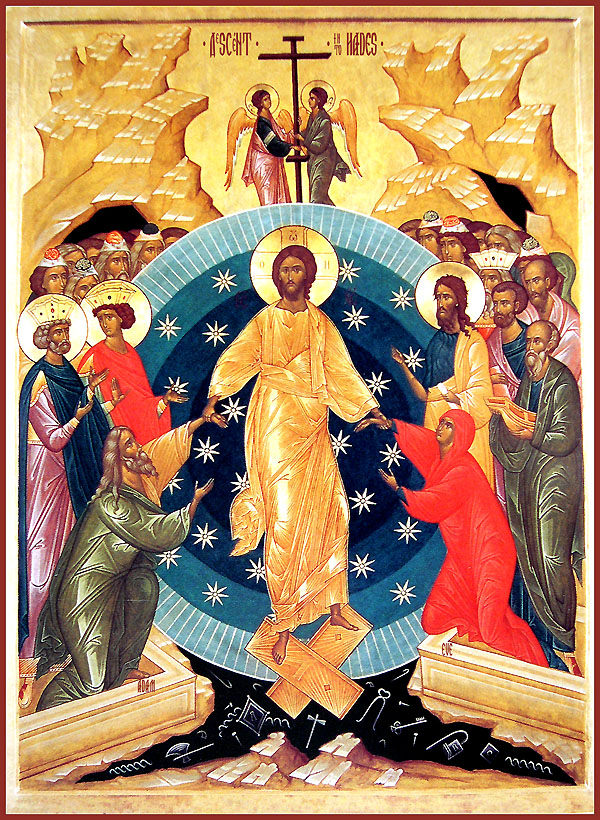 “…as the first day of the week was dawning, Mary Magdalene and the other Mary came to see the tomb.” Each of the four gospels, in its account of the resurrection of Jesus, specifically states the time. It was dawn, it was early in the morning, the day was just breaking.
 In today’s gospel there is a development in the thought of the man born blind and in his proclamation of who Jesus is. It is important to note that just as the questioning the man faces increases, just as his social supports fall away and just as the pressure on him gets heavier – the man’s knowledge of who Jesus is and his proclamation of who Jesus is increases.
