• About The Alternate Path

The Alternate Path

~ Thoughts on Walking the Path of Christian Discipleship

The Alternate Path

Tag Archives: Bible

How to handle Calumny

11 Monday Mar 2024

Posted by mcummins2172 in Uncategorized

≈ 2 Comments

Tags

Bible, Calumny, catholic, Christian life, Christianity, Eighth Commandment, faith, Jesus, prayer

This image may be subject to copyright.

In his recent homily (found on Word on Fire) for the third Sunday of Lent, Bishop Robert Barron offers succinct reflections on each of the Ten Commandments.  He rightly (I believe) connects the breaking of the Eighth Commandment, “You shall not bear false witness against your neighbor” with the sin of calumny.  Calumny, the willful spreading of false statements about another person in order to damage their reputation, is rife within our society and given safe haven, it seems, especially on social media.  Bishop Barron, both in his insight as a theologian and pioneer in ministry via social media, is in a unique vantage point to note this besetting sin of our age and to call it out.  Which he does. 

The point of reflection for this post is how are we to handle calumny when it comes our way?  Which, more than likely, it will at some point or even points within our lives.  I offer four thoughts for consideration. 

First, be grateful.  Yes, it’s a paradox but we have a God who delights in paradox and frankly, life if full of paradoxes.  The silver lining in the dark cloud of calumny is that you quickly learn who your true friends are.  “A faithful friend is a sturdy shelter: he that has found one has found a treasure” (Sirach 6:14).  Isn’t it best to know where the sturdy shelter is during a time of turmoil than be left out in the cold by false friends who turn away from you just because of something they have heard or something that they suppose to be true about you which is not?  Calumny can actually clear the weeds of false friendship out of one’s life which makes the true, faithful friend all the more apparent and valued.  Being receptive to the lies of calumny also demonstrates a profound lack of intelligence.  Judging another person because of what others say before even knowing the person oneself or even choosing to believe lies about another person rather than one’s own experience of the person is intellectual sloth, plain and simple.  Who wants a stupid friend?  There is a silver lining. 

Second, be civil.  If calumny is a besetting sin of our time, if there are victims of calumny then that means there are perpetrators of calumny.  I call them “wormtongues” after the pathetic character in J.R.R. Tolkien’s “Lord of the Rings”.  (Grima Wormtongue is the court official who whispered lies into the ears of King Theoden in order to steal away life and keep the king paralyzed in doubt.)  Wormtongues lack true moral authority and courage (think of internet trolls) and they think that the way to build themselves up is to tear other persons down.  Don’t sink to the level or actions of wormtongues.  Don’t be naïve to them or their machinations, know them for who they are, but be civil in the face of their incivility.  Choosing to respond civilly even in the face of hostility and lies is an act of moral courage and strength.  Be civil. 

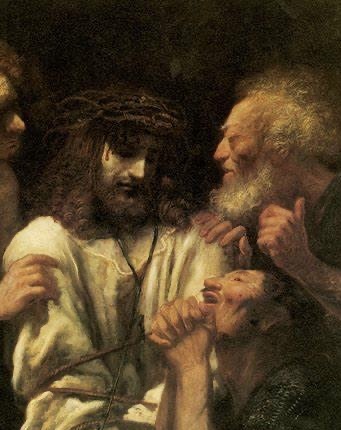
Be faithful.  Here we encounter a deep mystery of our faith.  Not only do we have a God who is Truth and who calls us to live in truth in our relationships and to not bear false witness but we have a God who also fully endured the scourge of calumny himself.  Jesus, throughout his ministry, had to endure the whispers of lies and doubts about who he was and his true motives.  “He casts out demons by the ruler of the demons.” (Mt. 9:34) This whispering became a consistent and hellish roar directed straight at our Lord throughout his passion from the agony in the garden and the running away of the disciples to the mocking of the soldiers during the scourging to the crowd calling for his death to insults even as he hung on the cross, “Come down from the cross, if you are the Son of God!” (Mt. 27:40).  Jesus knows full well the pain of calumny. 

Here is a spiritual exercise for those times when one is experiencing the pain of calumny: pray over a Gospel passage where Jesus is enduring the pain of calumny, place yourself in the scene and just be there as faithful friend for our Lord.  We cannot take the pain away, but Jesus so values our presence and our friendship.  Just be there in that moment as friend for Jesus.  Graces will come from that prayer. 

Finally, be open to leaving by knowing your fixed point.  Throughout his ministry, Jesus moved from town to town, sometimes because he knew that forces were aligning against him and lies were being told but that his hour had not yet come.   Throughout all this movement, Jesus always remained rooted in his relationship with the Father.  His relationship with the Father was his fixed point.  When we know our fixed point everything else becomes secondary.  As Christians, our fixed point is that each of us is a beloved child of God with a dignity and worth.  If this is not being respected, if lies are being told, then we have the freedom to move on from a particular group and its relationships, from a specific social setting and even from a certain location.  Knowing our fixed point brings a freedom that the sin of calumny cannot overcome. 

Calumny is a sin and it is a besetting sin of our time.  It is a sin that will probably come our way in one form or another but it can be endured with dignity and grace and we can know that our Lord, who himself endured the pain of calumny, walks with us in friendship and that this too shall pass.    

Finally, if you are a wormtongue, if you are a perpetrator of calumny, stop it.  You are breaking the Eighth Commandment which is a sin before God for which you will be held accountable.  You are tearing your brother and sister down; you are helping to tear our society apart and you are demeaning yourself in the process and that is pathetic.  Don’t be a wormtongue.  There is no dignity in being a wormtongue.    

First Sunday of Lent B – “Jesus, the New Adam”

18 Sunday Feb 2024

Posted by mcummins2172 in Uncategorized

≈ Leave a comment

Tags

Bible, Christian life, Christianity, discipleship, faith, first Sunday of Lent, free will, Jesus, Jesus and the temptations, Jesus in the desert, satan, temptation

Image may be subject to copyright.

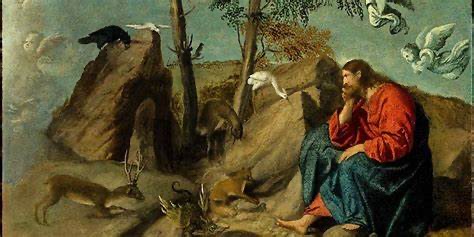
In their presentation of the temptation of Jesus, Luke and Matthew lean on the imagery of Israel’s experience of the forty years in the desert.  Luke and Matthew present Jesus as the new Israel, the Israel who remains faithful to God’s covenant.  Mark – on the other hand – in his two short verses (Mk. 1:12-14) draws on a different source.  Mark goes to the very beginning of creation and draws on the imagery of Jesus as the new Adam.  Jesus, we are told, is “among wild beasts” not in fear and trepidation but rather walking freely in their midst and company just as Adam and Eve had walked freely before the Fall.  “Angels ministered to Jesus,” just as God walked in the cool of the evening in the garden and spoke freely with Adam and Eve.

Within the first chapter of his gospel, Mark is teaching that Jesus is the new Adam who restores that original unity and harmony to all creation that sin had fractured and broken.  Where Adam and Eve had succumbed to the temptation of Satan in the beauty of the garden; Jesus triumphs over Satan’s temptations in the barrenness of the desert. 

This is why Satan and all the demons take fright, tremble and beg not to be cast out before the power and authority of Jesus throughout the remainder of the gospels up until Satan attempts his great counterattack in the passion of our Lord but it is in that final move that Satan is dealt his defeat and our Lord’s full triumph is realized.    

In the desert (in these two short verses in Mark’s gospel) Jesus frees himself from Satan in order to then begin the work of freeing all of humankind.  Jesus had to face Satan before he could begin his public ministry.  This is why Scriptures says that the Holy Spirit “drove” Jesus into the desert.  It is in the desert, faced with the temptations, that Jesus overcomes sin.  It is in the desert that Jesus chooses his relationship with the Father above all else.  It is within the arena of human free will that Jesus meets and conquers Satan in the desert.  Adam and Eve misused their freedom.  They chose to disobey; sin was released and the human will was corrupted.  Jesus obeys.  Jesus says a free “yes” to the will of the Father.  It is in Jesus that a human will expands to fully welcome the entire will of the Father (paraphrased from The Holy Spirit in the Life of Jesus by Cardinal Raniero Cantalamessa).  The domination of Satan over human will is destroyed.

What does this mean for us on this first Sunday of Lent in 2024?  It means that sin is not inevitable.  It means that our will is not the plaything of the devil.  It means that now in Jesus, we too can say “yes” to God.  It means that we also can welcome the will of God into our wills.  It means that we too can begin, even now, to know that authenticity and integrity of life that God intends for his creation rather than living just by the brokenness and pain of sin. 

What does it mean?  It means everything. 

Jesus is the new Adam.  Jesus is the one who restores unity and authenticity to all of creation and to each of our lives.  This first Sunday of Lent invites us to welcome Jesus and learn from him how to also say “yes” to the will of the Father.    

A God who does not need spectacle – Sixth Sunday of Ordinary Time (B)

10 Saturday Feb 2024

Posted by mcummins2172 in Uncategorized

≈ Leave a comment

Tags

Bible, Christianity, healing, Jesus, Jesus healing the leper, leper, leprosy, Sixth Sunday in Ordinary Time

Image may be subject to copyright.

At one point in his book, “Jesus, Present Before Me,” Fr. Peter John Cameron shares the story of a young priest who served as a chaplain to Ground Zero immediately after the terrorist attacks of September 11th.  One of the duties the priest had was serving in the makeshift morgue that was set up in a tent to receive the remains of the victims.  It is easy to imagine the frenzied activity and the number of busy rescue workers intent on their mission but what the priest found amazing was that whenever a new body would arrive at the tent all the work, talking and activity would halt, the workers would gather in a circle with the priest around the body and the workers would bow their head and they would wait for a prayer from the priest.  Even in the deep trauma and pain of that moment, the people recognized that there was something “more” that was stronger even than death. 

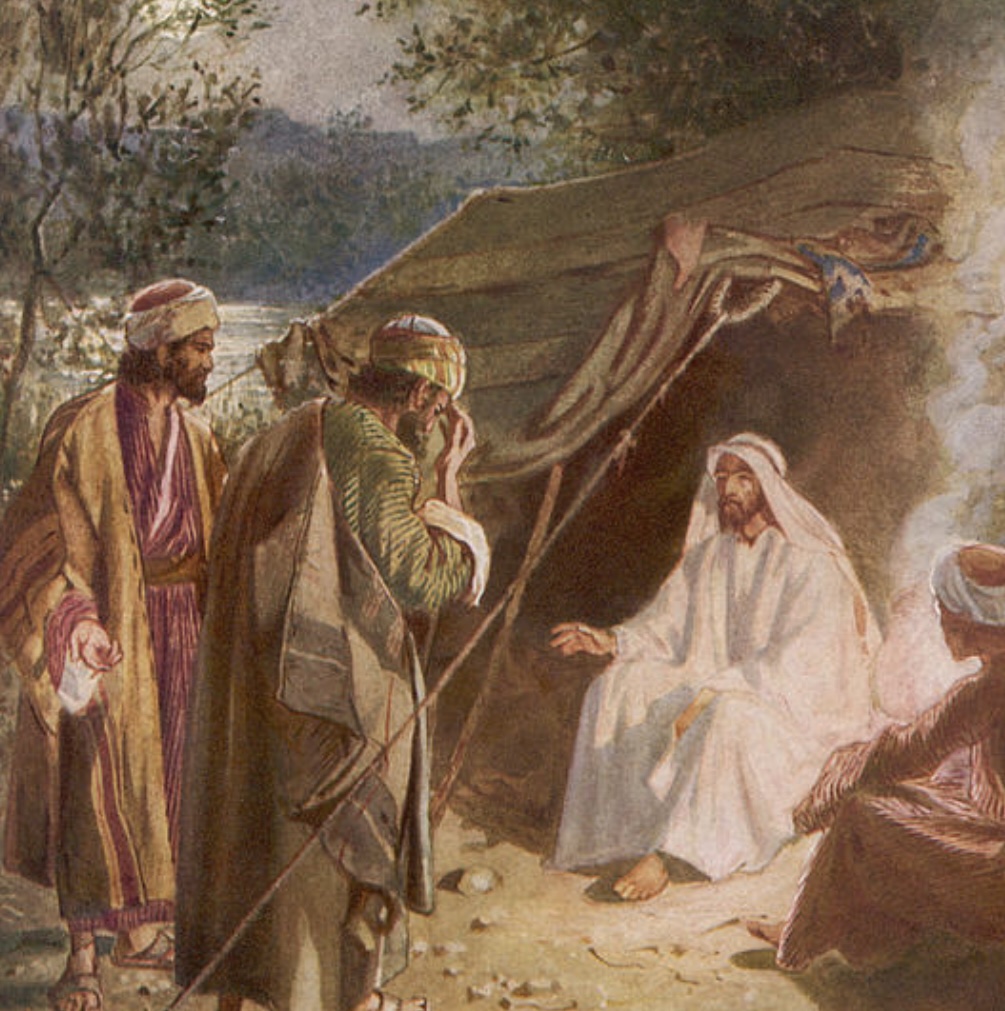
The leper in today’s gospel (Mk. 1:40-45), even if he could not specifically say why, recognized that there was something “more” in Jesus.  We heard in the first reading from the Book of Leviticus how lepers were looked upon and treated at this time in history.  There was no cure for leprosy in the time of Jesus.  Leprosy is a horrible disease that, if untreated, ultimately ends in death.  People feared the disease and they wanted nothing to do with lepers.  Lepers were cast out; they were ostracized and they were isolated.  But the leper saw something in Jesus that was more than both his disease and the ostracization he knew.  The leper trusted in this “more”.

The leper falls at the feet of Jesus and he begs, “If you wish, you can make me clean.”  A simple request made in faith. 

Jesus touches the man afflicted with leprosy.  This is no small thing.  By this simple action Jesus demonstrates that he is not bound by the fear and prejudice of his time.  Jesus also knows that something “more” is at work in this moment – the will of his Father that all might be saved.  Jesus recognizes the inbreaking of the Kingdom where all illness and all injustice is to be wiped away.  In the simple act of touching the leper and by saying, “I do will it.  Be made clean,” Jesus brings this poor man afflicted with leprosy to his Father, the Father receives the man and – healed and restored – returns the man to the Son.

I’ve had a realization following my recent trip out west.  On my trip I visited Grand Canyon National Park, Zion National Park and Bryce Canyon National Park.  I saw the grandeur and experienced the serenity of those amazing places and then I ended all of that with an evening in Las Vegas before my flight home the next day.  That evening, I walked along the main strip gawking at all the lights, sights and sounds of that city.  Contrasting the parks and the city, I came to this realization, God does not need spectacle to accomplish his will.  We might need spectacle, in many ways it seems we crave it (i.e. Las Vegas), but God does not because God is the source of all that is, plain and simple. 

There is “more” in Christ.  The leper saw it and this “more” is encountered and made known in the simple.  The simple act of the bowing of heads in prayer even in the midst of death and destruction, the simple act of faith, “If you wish, you can make me clean,” and the simple act of touching another person in love and care. 

There is “more” in Christ and this more is encountered in the simple rather than in the spectacle. 

Holiness is not stingy. Holiness gives and welcomes. A homily for the second Sunday of Ordinary Time – B

13 Saturday Jan 2024

Posted by mcummins2172 in Uncategorized

≈ Leave a comment

Tags

Bible, Christian life, Christianity, disciple, discipleship, faith, gospel, Jesus, john, Second Sunday in Ordinary Time, vocations to priesthood and religious life

“Andrew taking Simon to meet Jesus” by Mary Evans. Image may be subject to copyright. 

Holiness and the life of grace are not stingy.  Holiness gives and it welcomes. This is my personal learning from the Advent and Christmas seasons. 

When I placed myself in prayer in the manger scene, Joseph and Mary did not just allow me to gaze upon the child, they welcomed me to hold the babe in my own arms.  They did not hesitate in inviting me to hold the child.  When I watched as Simeon and Anna rejoiced in encountering the newborn Messiah in the Temple, they both welcomed me into that joy and hope fulfilled.  When I prayed over Matthew’s account of the three magi journeying to find the newborn king, I found myself eagerly welcomed by the three wise men to journey with them. 

Holiness and the life of grace are not stingy.  Holiness and the life of grace welcomes, invites and encourages.  It does not seek to keep for itself. We find this is today’s gospel ((Jn. 1:35-42) also.  John the Baptist, the one who was declared the greatest of those born of women by our Lord, eagerly points out Jesus as the Lamb of God to his own disciples, not a bit concerned if that means he and his own proclamation would be lessened.  “Behold, the Lamb of God!”  John’s two disciples begin to follow Jesus and John does not begrudge this.  

The holiness of Jesus also gives and welcomes – and this is the deep truth of today’s gospel.  Jesus asks John’s disciples, “What are you looking for?”  “Rabbi,” they answer, “where are you staying?”  Jesus says, “Come, and you will see.”  We are told that they stay with him that day and then they too rush out to invite others.  “We have found the Messiah!” 

“Where are you staying?”  “Come, and you will see.”  It was more than an invitation to a specific physical place.  Elsewhere in the gospel, Jesus says that the Son of Man has no place to lay his head.  The invitation of “come and see” is an invitation by our Lord into that deepest place where he truly resides.  It is an invitation into his very relationship with the Father.  It is an invitation freely given and those two disciples, even in their imperfections and lack of understanding, are both freely welcomed.  It is precisely this new experience of being welcomed into the Son’s relationship to the Father that impels those two disciples to then immediately go forth themselves and invite others to know what they have found.    

Holiness is not stingy. Holiness does not begrudge. It does not try to keep all for itself. Today’s gospel invites us to that same honesty of heart that the two disciples of John had.  “Rabbi, where are you staying?”  Today’s gospel invites us to the same courage and faith that the two disciples had when Jesus responds, “Come, and you will see.” The gospel invites us to also go to that place where our Lord abides in his relationship with the Father and to know that we – even in our imperfections – are indeed welcome. 

Andrew first went and found his brother Simon and brings him to where Jesus is staying.  Jesus looks at him and says, “You are Simon the Son of John: you will be called Cephas (Peter)”,

Life changes when we go to where Jesus resides.  Life changes when we come to know that we also are welcomed into the Son’s relationship with the Father. 

Short and Long-Term Urges and Walking on the Moon

21 Sunday Jul 2019

Posted by mcummins2172 in homily, Uncategorized

≈ Leave a comment

Tags

Abraham and three angels, Advent, Bible, Christianity, discipleship, Martha and Mary, Walking on the moon

the_day_we_walked_on_the_moon_09Our nation has been reflecting on the 50th anniversary of the Apollo moon landing. Where were you when man first stepped on the moon? I was one-year-old. I don’t remember much about it. It is fitting and right to have this reflection. It was and remains one of our nation’s greatest accomplishments and not just for what was achieved but how it was achieved. A goal was set and as a nation we rallied around that goal and we devoted the resources, the time, the energy, the skill needed to achieve that goal. In a sense, it was not just one man who took that first step on the moon but a whole nation. It was a great moment and will hopefully be one of continuing moments in humanity’s outreach into space.

Br. Guy Consolmagno is the director of the Vatican Observatory. I just read an interview with him about the significance of the moon landing and in the interview he reflects on how the moon landing offers concrete lessons for people of faith. One lesson is “hope”. That even as we face what seems to be impossible problems we can work together. Another lesson is how God is creator of all – not just the earth and all of its wonders but all the universes and galaxies with all of their untold wonders. All of creation proclaims the glory of God! Finally, the moon landing speaks of a compatibility and not an opposition between science and religion – both (when truly and authentically lived) enhance and support one another.

In reflecting on these lessons, Br. Consolmagno shares something he once heard from a person who works with the poor, “a short-term urge leads to addiction, but a long-term urge leads to purpose.” This is played out, I think, in today’s readings.

One thing to note in the encounter between Abraham and the three men is that there is really nothing mystical or exceptional about it. It was a hot day and three men are walking by. It would have been very easy (and understandable) to just let them continue on and not expend the energy needed to welcome and host them. A short term urge. But Abraham made a choice – a choice not guided by the short term urge (of laziness, basically) but rather the long term commitment of hospitality and going out of one’s way to welcome the other. In this choice Abraham and Sarah were blessed with the promise of a child, and from that child – a nation. A long-term urge leads to purpose.

In the gospel Martha welcomes Jesus into her home and she quickly sets about the work of serving and then complains when her sister Mary does not do the same. (It is interesting how the gospel here points out how even the work of hospitality – for which Abraham and Sarah were blessed – can be twisted to be more about a fix for the short term urge.) Martha’s outer busy-ness and complaining is a reflection of the anxiety and the worry she carries within. Anxieties and worries and our choice for them can become addictive realities in our hearts. Mary chooses the better part. She also had worries and anxieties but she set those short-term urges aside in favor of the long-term urge of just sitting at our Lord’s feet and listening. Mary was blessed by this choice.

Much in our world and society is focused toward the short-term and even attempts to train us for the short-term alone. This is a reflection of our fallen state and our fallen world. But today’s readings along with our nation’s reflecting on the 50th anniversary of the Apollo moon landing offer a different perspective and a different way to live faith and even life itself.

“…a short-term urge leads to addiction, but a long-term urge leads to purpose.” The blessing that Abraham and Sarah knew, the blessing that Mary knew can also be known by us. We just need to make the choice.

An invitation from Pope Francis: a Sunday given over entirely to the word of God

28 Wednesday Dec 2016

Posted by mcummins2172 in Pope Francis, Uncategorized

≈ Leave a comment

Tags

Bible, Catholic Church, Catholic faith, Christianity, Misericordia et Misera, Pope Francis, Sacred Scripture

Pope Francis raises Book of Gospels as he celebrates Easter Vigil in St. Peter's Basilica at VaticanBoth of my parents were converts.  My father grew up in the Presbyterian Church and my mother grew up as a Southern Baptist.  There is a story told in my family that once, not long after my father’s conversion, my two great aunts from Mississippi (both spinsters and staunch Presbyterians to boot) visited my grandfather.  Noticing some dust on the cover of the family bible, one great aunt is said to have remarked, “I guess if this Bible cover was not so dusty Jack would never have converted.”  I am not sure how my grandfather and grandmother replied although I would wager that a bit of a chill went through the room.

I, for one, am very grateful for my parents’ conversions and acknowledging that my views would differ from my great aunt’s in this regard (i.e. seeing my father’s conversion to Catholicism as a fulfilling of his faith journey and not a loss); I do believe her remark about the family Bible carries an intuition of truth.  There is a power and a grace to be found in Sacred Scripture.  The Bible is God’s holy word and within it we encounter our risen Lord.

In his Apostolic Letter, Misericordia et Misera given at the conclusion of the Jubilee Year of Mercy, Pope Francis brings to summation the Holy Year and puts forward his hope that the work of mercy will continue and be ever-strengthened in the Church.

(The Holy Year) must continue to be celebrated and lived out in our communities. Mercy cannot become a mere parenthesis in the life of the Church; it constitutes her very existence, through which the profound truths of the Gospel are made manifest and tangible. Everything is revealed in mercy; everything is resolved in the merciful love of the Father. (MM, 1)

The Holy Father reflects on how best to continue the work of mercy and he puts forward some specific thoughts for discernment by the Church – mercy should be celebrated and at the heart of every Eucharistic celebration and every homily, every encounter involving the sacrament of anointing should be guided by mercy and certainly mercy should be found in abundance within the sacrament of reconciliation.  Here the Holy Father grants the authority for every priest to forgive the sin of a procured abortion.  This permission given even gained the attention of the secular media for at least a day or two.

What did not garner as much attention though is an invitation that the Holy Father extended to the Church in his apostolic letter.  It is an invitation worthy of consideration and it is why I began this article by sharing the story of my two great aunts.  The Holy Father invites the Church to consider a Sunday, “given over entirely to the word of God”.

Why not just mandate such a thing?  Certainly the pope has the authority.  Here, I believe, Pope Francis is demonstrating a pastor’s wisdom.  Some things within the Church – especially those liturgical and devotional – are best established and encouraged from the foundation up rather than the top-down.  Pope Francis is inviting the Church into a dialogue regarding this possibility and he is giving his permission as the successor of Peter for this dialogue, this possibility, to occur and to even grow organically from within the life of the Church.  He is encouraging an idea to grow.

It is an idea already present within the full life of our faith and specifically rooted and expressed for our time in the document Dei Verbum of the Second Vatican Council.  Here are three quotes from the final chapter of that document which demonstrate this.  “It follows that all the preaching of the Church, as indeed the entire Christian religion, should be nourished and ruled by sacred Scripture.” (DV, 21)  “Access to sacred Scripture ought to be open wide to the Christian faithful.” (DV, 22)  “Just as from constant attendance at the Eucharistic mystery the life of the Church draws increase, so a new impulse of spiritual life may be expected from increased veneration of the Word of God, which ‘stands forever’.” (DV, 26)

Below are the two paragraphs of Misericordia et Misera specifically devoted to this invitation.  The first paragraph can be viewed as a summation of Vatican II’s Dei Verbum, the second is the invitation given by the Holy Father to the Church universal.

The Bible is the great story of the marvels of God’s mercy. Every one of its pages is steeped in the love of the Father who from the moment of creation wished to impress the signs of his love on the universe. Through the words of the prophets and the wisdom writings, the Holy Spirit shaped the history of Israel as a recognition of God’s tenderness and closeness, despite the people’s infidelity. Jesus’ life and preaching decisively marked the history of the Christian community, which has viewed its mission in terms of Christ’s command to be a permanent instrument of his mercy and forgiveness (cf. Jn 20:23). Through Sacred Scripture, kept alive by the faith of the Church, the Lord continues to speak to his Bride, showing her the path she must take to enable the Gospel of salvation to reach everyone. I greatly desire that God’s word be increasingly celebrated, known and disseminated, so that the mystery of love streaming from this font of mercy may be ever better understood. As the Apostle tells us clearly: “All Scripture is inspired by God and profitable for teaching, for reproof, for correction, and for training in righteousness” (2 Tim 3:16).

It would be beneficial if every Christian community, on one Sunday of the liturgical year, could renew its efforts to make the Sacred Scriptures better known and more widely diffused. It would be a Sunday given over entirely to the word of God, so as to appreciate the inexhaustible riches contained in that constant dialogue between the Lord and his people. Creative initiatives can help make this an opportunity for the faithful to become living vessels for the transmission of God’s word. Initiatives of this sort would certainly include the practice of lectio divina , so that the prayerful reading of the sacred text will help support and strengthen the spiritual life. Such a reading, centered on themes relating to mercy, will enable a personal experience of the great fruitfulness of the biblical text – read in the light of the Church’s spiritual tradition – and thus give rise to concrete gestures and works of charity.(MM, #7)

Could this be the beginnings of a liturgical feast for the Bible?  What would it look like?  I am not sure and I do not know if even the Holy Father knows but he is inviting the Church to the possibility and even encouraging a faith-filled creativity.  As both a Christian disciple and a pastor of a parish in the belt buckle of the Bible Belt – where there is such a strong emphasis on Scripture in the surrounding churches – I find this invitation of Pope Francis to creatively dream of such a day to be both exciting and necessary!  One of the great gifts of the Second Vatican Council was in reminding us that the Bible belongs to every member of the Church, that it should be picked up and read and that within Sacred Scripture we encounter Christ.  The Bible is much more than just proof texts for the sacraments and devotions.  A day given over entirely to the Bible would not lessen our sacramental identity as Catholics but would rather root our identity deeper in an awareness that we are a people of both Word and Sacrament!

A day devoted to the Bible would also be a strength and support for the ongoing work of mercy.  “I greatly desire that God’s word be increasingly celebrated, known and disseminated, so that the mystery of love streaming from this font of mercy may be ever better understood,” writes the Holy Father.  God’s word is a “font of mercy” which opens our minds in greater awareness, our imaginations in new possibilities and our hearts in greater charity.  Or, as expressed in Dei Verbum, “This nourishment (of Scripture) enlightens the mind, strengthens the will and fires the hearts of men with the love of God.” (DV, 23) 

Pope Francis, through his life as a Jesuit and priest is someone steeped in the Ignatian spiritual tradition of entering Scripture.  The Holy Father speaks from experience when he refers to Scripture as a “font of mercy” and he is here inviting the whole church to continually turn to this font.

It is a simple and beautiful invitation that the Holy Father puts forward in his letter – a day given over entirely to the Word of God – and within this invitation is found the possibility of innumerable graces and blessings.  I am praying how the parish I serve might answer this invitation of our Holy Father.  I would encourage all members of the Church to take to heart this simple and beautiful invitation of our Holy Father.
Newer posts →
Follow The Alternate Path on WordPress.com

Enter your email address to follow this blog and receive notifications of new posts by email.

Previous Posts

  • August 2026
  • July 2026
  • May 2026
  • April 2026
  • March 2026
  • December 2025
  • November 2025
  • August 2025
  • April 2025
  • February 2025
  • January 2025
  • December 2024
  • August 2024
  • July 2024
  • June 2024
  • May 2024
  • April 2024
  • March 2024
  • February 2024
  • January 2024
  • December 2023
  • November 2023
  • October 2023
  • August 2023
  • July 2023
  • May 2023
  • February 2023
  • January 2023
  • December 2022
  • August 2022
  • July 2022
  • April 2022
  • January 2022
  • December 2021
  • September 2021
  • August 2021
  • July 2021
  • May 2021
  • April 2021
  • January 2021
  • December 2020
  • November 2020
  • October 2020
  • August 2020
  • July 2020
  • May 2020
  • April 2020
  • March 2020
  • February 2020
  • December 2019
  • October 2019
  • September 2019
  • August 2019
  • July 2019
  • May 2019
  • April 2019
  • March 2019
  • February 2019
  • December 2018
  • November 2018
  • October 2018
  • August 2018
  • July 2018
  • June 2018
  • April 2018
  • March 2018
  • February 2018
  • January 2018
  • December 2017
  • November 2017
  • September 2017
  • August 2017
  • July 2017
  • June 2017
  • May 2017
  • April 2017
  • March 2017
  • February 2017
  • January 2017
  • December 2016
  • November 2016
  • October 2016
  • September 2016
  • August 2016
  • July 2016
  • June 2016
  • May 2016
  • April 2016
  • March 2016
  • February 2016
  • January 2016
  • December 2015
  • November 2015
  • October 2015
  • September 2015
  • August 2015
  • June 2015
  • May 2015
  • April 2015
  • March 2015
  • February 2015
  • January 2015
  • December 2014
  • November 2014
  • October 2014
  • September 2014
  • August 2014
  • July 2014
  • June 2014
  • May 2014
  • April 2014
  • March 2014
  • February 2014
  • January 2014
  • December 2013
  • November 2013
  • October 2013
  • September 2013
  • August 2013
  • July 2013
  • June 2013
  • May 2013
  • April 2013
  • March 2013
  • February 2013
  • January 2013
  • December 2012
  • November 2012
  • October 2012
  • September 2012
  • August 2012
  • July 2012
  • June 2012
  • May 2012
  • April 2012
  • March 2012
  • February 2012
  • January 2012
  • December 2011
  • November 2011
  • October 2011
  • September 2011
  • August 2011
  • July 2011
  • June 2011
  • May 2011
  • April 2011
  • March 2011
  • February 2011
  • January 2011
  • December 2010
  • November 2010
  • October 2010
  • September 2010
  • August 2010
  • July 2010
  • September 2008
  • August 2008
  • April 2008
  • March 2008
  • February 2008
  • January 2008
  • December 2007
  • November 2007
  • October 2007
  • September 2007

Popular Posts

  • thealternatepath.org/wp-c…
  • thealternatepath.org/wp-c…

Blog at WordPress.com.

  • Subscribe Subscribed
    • The Alternate Path
    • Join 167 other subscribers
    • Already have a WordPress.com account? Log in now.
    • The Alternate Path
    • Subscribe Subscribed
    • Sign up
    • Log in
    • Report this content
    • View site in Reader
    • Manage subscriptions
    • Collapse this bar
Loading Comments...