• About The Alternate Path

The Alternate Path

~ Thoughts on Walking the Path of Christian Discipleship

The Alternate Path

Tag Archives: Christian life

The Toxicity of Anger even when Righteous

23 Wednesday Aug 2023

Posted by mcummins2172 in Uncategorized

≈ Leave a comment

Tags

Christian life, Jesus

Know this, my dear brothers: everyone should be quick to hear, slow to speak, slow to wrath, for the wrath of a man does not accomplish the righteousness of God.  Therefore, put away all filth and evil excess and humbly welcome the word that has been planted in you and is able to save your souls.  (James 1:19-21)

We humans are not created to remain in anger and this includes even anger that is righteous.  All anger when it is held on to and nursed quickly becomes toxic and this toxicity deadens life whether that be the life of an individual, of a community and even the life of a people and nation.  Christians are not immune to the toxicity of anger and it is exactly because of the faith and hope we hold and profess as well as the ideals we cling to, that I believe Christians are even more susceptible to the toxicity of righteous anger than the non-religious person. 

We proclaim the coming Kingdom of God – a Kingdom where all tears will be wiped away and all injuries and injustices will be healed – yet we live in a world where there is grave injustice, violence and sin.  We see it and we can even be the victims of it ourselves.  Sometimes these injustices can be addressed and overcome on both the individual and societal levels in our world and history and these moments are to be celebrated and upheld (i.e. the end of slavery and segregation, the acknowledgment of the dignity and rights of women, the growing awareness of the rights and heritage of indigenous peoples, an abused woman gaining the strength to walk away from her abuser, a man caught in the mechanisms of addiction breaking free) but sometimes – for a variety of reasons – there cannot be full healing and restoration in this world.  Our belief in the resurrection and final judgment gives us the sure hope and belief that God – in God’s way not ours – will indeed wipe away all tears and answer all injustices but what do we do with the anger that remains in the meantime? 

This is the conundrum.  All anger, even when righteous, becomes toxic.

To me, there seems to be three options when we are confronted with injustices inflicted upon us that cannot be fully answered and remedied in this world.  The first option is to just lay down and die.  This happens, both literally and figuratively.  People do physically die from injustices endured.  Sadly, we see and read this in the news all the time.  But there is also figurative death that results from injustice endured.  People give up; quiet resignation sets in and people just subsist through life.  The hurt experienced overshadows everything and remains a constant shade in the background of the person’s life. 

The second option is to hold on to the injustice experienced, ruminate upon it and therefore nurse the anger within.  Here is where the wisdom and warning of James is worth heeding, …the wrath of a man does not accomplish the righteousness of God.  We are not created to remain in anger.  We are not made in the image of anger even when righteous but rather the image of God.  If we nurse anger then we make anger an idol – we forget God and we devalue ourselves.  All anger, when held on to, becomes toxic.  The righteousness of God is not found in anger.    

The third option is to – with God’s grace – stand up again, brush ourselves off, remember that we are a child of God and make the choice that – despite whatever may be thrown at us – we will live, walk and act always as a child of God.  This third option gets to the advice given by St. James, …put away all filth and excess and humbly welcome the word that has been planted in you and is able to save your souls.  Put away the filth of resentment and nursed anger and remember that the word we have been given, the word of salvation in Christ and our dignity as a child of God, goes deeper and is ever more enduring than any injustice inflicted.  No injustice can take away this truth.  If we focus on this truth and not the injustice and the anger that springs from it, we will move beyond the temptation to make an idol of our anger.  …humbly welcome the word …

All anger becomes toxic.  The good news is that we are not created to remain in anger.  We are created in the image and likeness of God and saved through the sacrifice of the Son.  This is the truth that endures and saves … humbly welcome it.     
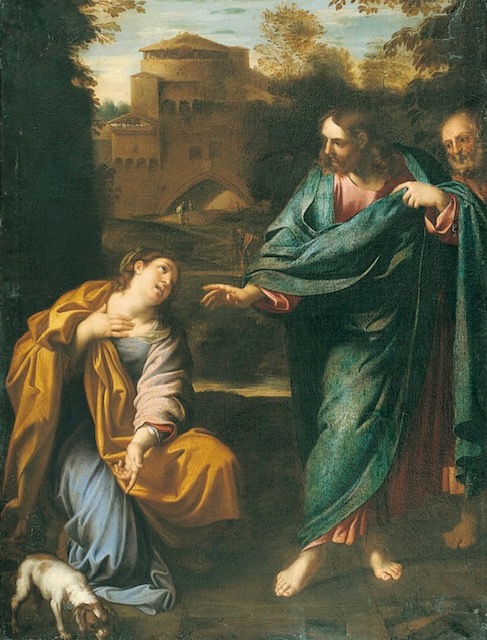
Magic is an Illusion. Faith is real. Jesus and the Canaanite Woman.

19 Saturday Aug 2023

Posted by mcummins2172 in Uncategorized

≈ 1 Comment

Tags

Christian life, Christianity, faith, Jesus, Jesus and the Canaanite Woman, Mt. 15:21-28

Image may be subject to copyright

In the time of Jesus, as there are now, there were faith-healers and people who claimed to have power over demons who could be hired and, for the right amount of money, would pretend to heal someone or cast out demons.  These people were charlatans, but people would pay the money in a desperate attempt to bring healing to a loved one.  These supposed “healers” took advantage of people in their suffering and what they offered was not real faith but rather magic – the illusion of healing that was not real.    

Our Lord knew of these faith-healers and how they operated.  He also saw how they took advantage of people.  The Canaanite woman also knew of these faith-healers and the promises they made.  It is possible that she had already paid faith-healers in attempts to bring healing to her daughter but all to no success. 

This context helps to explain this interaction of Jesus with the Canaanite woman. 

This woman, who has heard of the man Jesus and who initially sees him as just another faith-healer, calls out on behalf of her daughter and, more than likely, she is willing to pay the cost that Jesus will demand.  The disciples, as observant Jews could not abide faith-healers, they know that Jesus was not a faith-healer and they do not want to be associated with faith-healers so they ask Jesus to send the woman away because she, “keeps calling after us”. 

Jesus knows that he is not a charlatan and he knows that this woman is looking to hire him and that she wants a magical healing for her daughter and so he says, “I was sent only to the lost sheep of the house of Israel.”  Jesus has a mission from the Father and he is not for hire for magical healings. 

But then something happens.  The scripture says that the woman, “came to Jesus and did him homage”.  The word “homage” is important here.  “Homage” implies faith, it implies kneeling in wonder and need before the divine mystery.  The woman does not come to Jesus to offer what she will pay him as one would when bargaining with a faith-healer, rather she gives him not money but “homage”. 

What changed for the woman?  Was it her desperation for her daughter, was it an intuition in her soul that something was different about this man named Jesus, was it the movement of the Holy Spirit in the woman’s heart?  Something changed and Jesus sees it. 

Jesus then tests it to make certain.  “It is not right to take the food of the children and throw it to the dogs.”  Now, in this new moment, the woman responds, “Please, Lord, for even the dogs eat the scraps that fall from the table of their masters.”  The woman shows her faith.    

Satisfied and probably with an abundance of joy in his divine heart, Jesus answers, “O woman, great is your faith!  Let it be done for you as you wish!”

Jesus is not a faith-healer for hire.  Jesus does not deal in the illusion of magic.  Jesus comes looking for faith in our hearts and it is in faith that our Lord meets us and brings the healing that only he can give. 

Magic is an illusion.  Faith is real and it is only in faith that Jesus encounters us. 

Two Images and One Truth: Tenderness

15 Tuesday Aug 2023

Posted by mcummins2172 in Uncategorized

≈ Leave a comment

Tags

Catholic Church, Christian life, Christianity, faith, Feast of the Assumption of Mary, Jesus, tenderness

The statue of the Madonna and Child is from my home growing up.  It belonged to my parents and sat in our living room on a table that served, for all intents and purposes although we never named it, as our home altar.  On the table was found this statue, our family Bible, various little statues and holy cards and baptismal candles.  Every day growing up I would see this statue – usually just passing by on my way to whatever I was up to but the statue was always there and remains with me to this day.

I have always appreciated the tenderness expressed by the statue.  Mary cradles her infant son and holds him close to her breast.  Her head leans in towards him and his towards her.  There is a familiarity and an intimacy and she presents her child to the world.  Here is the Son of God born of a humble woman in a small part of vast empire.  He will save us from our sins, 

The holy card is from the Basilica of Santa Maria in Trastevere in Rome.  The basilica is one of the oldest churches in Rome and the first to be dedicated to Mary.  The card depicts an image from the mosaic of the Dormition of Mary.  The dormition of Mary is the Eastern Church’s celebration of the great mystery of the Virgin Mary being taken body and soul into the fullness of the Kingdom of God.  In the West, we focus on the Assumption of Mary and our images depict that.  In the Eastern Church the focus is on the Dormition – or Mary’s falling asleep to then be taken up into the Kingdom – and their images depict this.  It is the same mystery we celebrate.  Immaculate Mary, mother of the Incarnate Word, is brought into the fullness of God’s Kingdom.  Where she has been brought, we have the hope to also follow.    

In the icon of the Dormition of Mary it is common to see Mary asleep in her passing surrounded by the twelve apostles and in the icon is also represented the risen Christ tenderly holding the soul of his mother.  The iconographic tradition is to depict the soul – an immaterial reality – as a person wrapped almost like a child in swaddling clothes.  The son holds the mother in anticipation of uniting soul and body in the glory of the resurrection. 

There is a tenderness here too.  The Son, in love, holds the mother again in an expression of familiarity and intimacy.  Mary is wrapped in white which is an expression of the glory of the resurrection where all sin, death and darkness is overcome!  Christ holds Mary out also as a sign of hope for all the world.  Mary is the first to be brought into the glory of Christ’s resurrection.  A hope that every Christian now carries through baptism. 

One truth of these images and of today’s Feast of the Assumption is the tenderness of God as well as the value of tenderness in the Christian life.  God welcomed the tender love of a humble woman and, in return, Christ tenderly welcomes his mother home. 

We often underrate the importance of tenderness in life, I believe.  But tenderness, as depicted, stands at the heart of the relation of Christ to his mother and, it seems, also at the heart of our Lord’s relationship to every believer.  We have a tender God, a tender Savior.  This is important because tenderness gives birth to hope and hope produces perseverance.  We all need tenderness on the journey of faith.  Tenderness keeps us moving forward toward the fullness of the Kingdom of God that awaits us and that also beckons us.

Two images – a statue and a holy card – showing the truth of tenderness and giving a hope that endures. 

Holy Mary, tender mother of our Savior, pray for us!       

Peter’s Prayer: a reflection on Mt. 14:22-33

13 Sunday Aug 2023

Posted by mcummins2172 in Uncategorized

≈ 1 Comment

Tags

Christian life, Christianity, discipleship, faith, hope, Jesus, Mt. 14:22-33

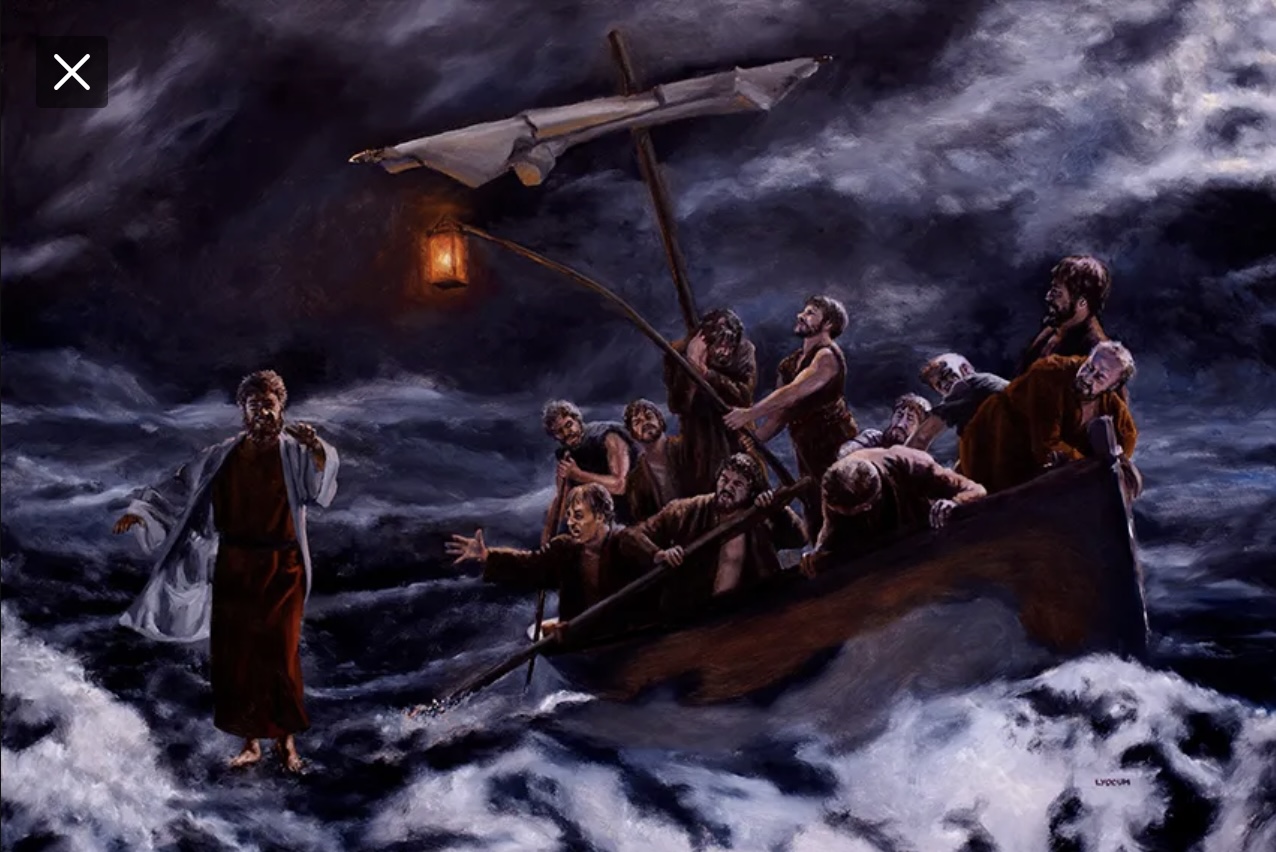
“Peter walking on the Water” by Lester Yokum. Image may be subject to copyright.

My friends, there is a simple truth found in today’s gospel that is worthy of our reflection. 

We are told that the disciples are in the boat in the middle of the night and are being tossed about by the waves of the sea.  The disciples are caught in fear and dread.  Our Lord comes towards them walking on the water.  Jesus calls to them and tells them to not be afraid and in response Peter cries, “Lord, if it is you, command me to come to you on the water.”

“Command me.” 

Peter does not say, “Lord, calm the sea.”.  Peter does not say, “Lord, take away this storm.”  Nor does Peter remain in the little safety of the boat, waiting for the Lord to arrive.  Peter says, “command me to come to you on the water.”  Peter (in his cry to the Lord, in his prayer) is asking for the grace to look beyond the crashing waves, to move beyond the limits of his own fear and to have the faith to walk towards Jesus on the water. 

This is the truth – there will be storms in life, there will be struggles and pain and doubt.  We will know fear and uncertainty.  The waves of life can be strong, high and crushing and it might even seem like everything is going to be lost.  The temptation in such moments is to pray to God to take away the storm, to calm the waters and to right whatever is the wrong that we are facing.  But is that the right prayer? 

The prayer that Peter made was not to take away the storm but to have the faith to walk through the storm, the faith to keep his eyes on Jesus even in the midst of the storm.  The gospel gives no indication that the sea calmed while Peter walked on the water.  The waves still crashed but Peter did walk on the water and when his faith faltered, Jesus was there to lift him up and save him. 

My friends, the right prayer may not always be “Lord, take this storm away.  Take away this struggle. Take away my fear.”  The right prayer may be, “Lord, give me the faith to walk through this storm trusting that you walk with me and that you are with me to protect me.” 

“Lord, if it is you, command me to come to you on the water.”    

Union Square and World Youth Day: A tale of two crowds

06 Sunday Aug 2023

Posted by mcummins2172 in Uncategorized

≈ 4 Comments

Tags

Catholic Church, Christian life, Jesus, Pope Francis, Union Square Riot, World Youth Day in Lisbon, WYD 2023

This week the world has given us the tale of two crowds for our consideration. 

The first crowd was a group of a few thousand people brought together at Union Square in Manhattan on Friday afternoon by the internet streamer and influencer Kai Cetan.  The people came for a hyped giveaway hoping for free PlayStations, computers and other devices.  The crowd quickly turned unruly – climbing on vehicles, hurling chairs and throwing punches.  The police were called in and only after a number of hours were they able to disperse the crowd and bring calm back to the area.  Kai Cetan is now charged with inciting a riot. 

The second gathering is going on right now in Lisbon, Portugal.  Over four hundred thousand young people representing every nation in the world except one (Maldives) are gathering these days for World Youth Day.  These young adults are gathering with Pope Francis, cardinals, bishops, priests and religious from around the world.  Rather than unrest and rioting; this gathering is marked by prayer, song, service to others and worship. 

The two crowds are certainly set apart by their actions but also by what brings them together and their focus. 

A craving for material things and the need to be near the pseudo-celebrity of a social media influencer brought the first crowd together.  My hunch is that people saw the crowd gathered while realizing the limited number of items to be given away with the result being that the energy of the excitement of getting something for free quickly turning into a riot.  Hence the charge of “inciting a riot”.  In this crowd, people saw one another solely as competition for something they wanted.   

The focus of World Youth Day is not for a “thing” nor for the hollow fame of an influencer, the focus of the gathering of four hundred thousand in Lisbon is on the Lord of Life and an authentic encounter with Him.  In this gathering, the participants recognize one another not as competitors for things but as brothers and sisters in the great family of God – a family which crosses all borders, nationalities, languages and social divisions.  The participants at World Youth Day are gathered in Christ. 

Today’s Feast of the Transfiguration focuses our eyes on Christ.  Jesus is revealed as the long-awaited Messiah as prophesied by Daniel (Daniel 7:9-10, 13-14) and witnessed to by the presence of Moses and Elijah gathered with Jesus on the mountain (Mt. 17:1-9).  The voice of the Father is heard by Peter, James and John and the same truth is proclaimed to us today, “This is my beloved Son, with whom I am well pleased; listen to him.” 

Listen to Jesus.  Stay focused on Jesus throughout the journey of life.  Do not seek after things that do not last and that fail to satisfy.  Such things only end in ruin and hurt.  Stay focused on the Lord of Life and, by so doing, receive life in abundance. 

The world has put before us the tale of two crowds this week.  In one is found only self-centeredness and rioting.  In the other is found true community, life, hope and joy. Choose wisely.     

“This is my beloved Son, with whom I am well pleased; listen to him.” 

Be serious about sin, holiness and God’s mercy. A reflection on readings for 6th Sunday of Ordinary Time – A

13 Monday Feb 2023

Posted by mcummins2172 in Uncategorized

≈ 1 Comment

Tags

Christian life, God's mercy, holiness, sin

Image may be subject to copyright

There are a few things going on in today’s gospel (Mt. 5:17-37) that are worthy of reflecting upon. 

The first is that Jesus wants us to take sin seriously.  There is sin, sin offends God and sin wounds the one who sins.  This last part is often lost in our world today.  We act as if sin has no real effect on us but that is not true.  Sin wounds the sinner – it weakens our will, it dulls our awareness of the truth that God intends and it hardens us to the Holy Spirit and to all that the Spirit can give us.  The Spirit will not abide where sin is.  So, Jesus wants us to be attentive to sin – both the outward act of sin but also how the temptation to sin is rooted within our weak nature.  The quicker we learn to recognize the movement of sin within; the quicker we can cut it off at the root. 

Jesus also wants us to take the work of holiness seriously.  In his reflection on Psalm 119, St. Augustine writes about learning the commandments of God both in thought and in practice.  Augustine writes, “(The one who wrote the psalm) adds, therefore, ‘Blessed are you, O Lord: teach me your ways of justice.’  He prays, ‘Teach me’: let me learn them as people who carry them out learn them, not as those who simply memorize them in order to have something to say.”  True and authentic knowledge of God’s commandments can only be gained by striving to live the commandments.  Jesus wants us to have a lived knowledge of God’s law and this knowledge can only be gained at that place where God’s grace and our will meet and we make the choice to live God’s commandment.  So, be attentive to what is going on within and there make the choice for holiness.  …let me learn them as people who carry them out learn them…

Finally, take God’s mercy seriously.  I have learned a few things after twenty-seven years of hearing confessions and one is that we can make an idol of anything, including our sins.  God will not abide idolatry in any form and there is a real temptation to put our sins and the sense of unworthiness and guilt that spring from them even before God.  It seems we can put more faith in our sins than in God’s mercy.  This is idolatry and it is wrong.  There is nothing that God will not forgive.  There is nothing greater than God’s mercy.  To think our sins outweigh God’s mercy is like thinking a pebble outweighs Mount Everest.  Take God’s mercy seriously. 

Jesus wants us to be serious about the life of discipleship, not in a gloomy and dour way but knowing here – being attentive about sin, doing the work of holiness and taking God’s mercy seriously – is where true joy and true life is to be found. 

… let me learn your commandments God as people who carry them out learn them …

(Part of this reflection is recycled from a post written in February of 2011.) 

Trying to be family in a smoke-filled room. A reflection for the Feast of the Holy Family

30 Friday Dec 2022

Posted by mcummins2172 in Uncategorized

≈ Leave a comment

Tags

Christian life, Christianity, Feast of the Holy Family

Image may be subject to copyright

I am not a Marxist.  (How is that for an opening line?)  But I do believe that Marx was right about one thing – the economy matters.  Neither our individual lives nor the life of society occur within a vacuum.  There are many factors which influence and even shape us and the economy is one of the major influencers.  Economy carries both positive and negative influence in our lives and it is both critical and helpful to acknowledge this. 

Today’s feast – the Feast of the Holy Family – naturally leads us into a reflection on what it means to be family.  As Church we proclaim the importance of family and how family is the foundation of society.  As Church we strive to build up, support and strengthen families in their particular vocation and witness to our world.  This is all true and good, but in order to truly fulfill these goals we also have to be willing to acknowledge and be aware of the context of our times in which families find themselves.  Part of this context is economy and its influence. 

A number of years ago I came across the book, “Following Christ in a Consumer Society” by John Kavanaugh S.J.  Writing the first edition of the book in 1981, Kavanaugh was quite prescient in his awareness and understanding of how the economy was having and would have ongoing impact on our lives, including the life of the family.  Here is a quote from the book:

          When people, at least on a per capita basis, have most of their needs fulfilled, how are you going to get them to continually want and buy more?  Is it possible that it would be more financially rewarding if people were conditioned to be dissatisfied cravers rather than appreciators of the earth?  Does one buy more if one appreciates and relishes things, or if one is continually dissatisfied and distressed and craving?  Is it profitable that dissatisfaction be induced into the life-consciousness of a people?  Will the stimulation of anxiety and tension (closely associated with the experience of need) be economically desirable?  Will persons buy and consume more if they have been taught to be unhappy, to be distressed, to be unsure about personal identity, sexuality, and relationships?

          Another way of putting this problem of the commodity formation of self-consciousness is to suggest what kinds of behavior are not “good new for business.”  Let us suppose that you are a married person with children.  If you are relatively happy with your life, if you enjoy spending time with your children, playing with them and talking with them; if you like nature, if you enjoy sitting in your yard or on your front steps, if your sexual life is relatively happy, if you have a peaceful sense of who you are and are stabilized in your relationships, if you like to pray in solitude, if you just like talking to people, visiting them, spending time in conversation with them, if you enjoy living simply, if you sense no need to compete with your friends or neighbors – what good are you economically in terms of our system?  You haven’t spent a nickel yet.

This is the context in which families find themselves – the very air they breathe – as they strive to be all that family entails. 

Both of my parents were life-long smokers (a factor that was a contributing cause in both of their deaths).  It was only when I got to college seminary that I realized it was possible to live in an environment that did not have the continual haze of cigarette smoke.  I also soon realized the health benefits of living in an environment free of second-hand smoke.  Our society has also learned these benefits and promotes these benefits through a variety of laws and ordinances prohibiting second-hand smoke. 

To promote family while not acknowledging the influences which weigh upon family is like trying to encourage people in maintaining a healthy lifestyle in a smoke-filled room.  Life does not occur within a vacuum.  Context matters and economy (positive and negative) is part of this context.  Economy influences. 

Ours is not the first generation to be influenced by economy.  Economy (in all of its different forms and developments) has been an influence since day one.  The Holy Family lived with the influence of economy, the families of medieval serfs lived with the influence of economy, modern day men and women live with this influence.  What is unique, I think, about our time though is the depth of influence and continual presence and impact the economy has in our lives through our cell phones, social media in all of its forms and the internet.  It is unrelenting and is now moving into the virtual and trying to take us with it.     

What can Church and family do within this smoke-filled room?  Here are some initial thoughts.  First acknowledge that there is smoke.  Economy is an influencer and not all of the influence is good.  We need to be honest about this.  Second, always proclaim and uphold the dignity of the human person and demand that this dignity be respected in all contexts, especially in those of economy.  Third, individually, begin to open some doors and windows in your life to both clear the smoke and let fresh air in.  How?  Do the things Kavanaugh lists in the second paragraph quoted above: go for a hike (one of my favorites), enjoy time with your kids and talking with other people, pray, live simply, put the cell phone away every now and then.  Strive to be an appreciator of the goods of the earth.  Do the things where you don’t have to spend a nickel and enjoy it.   

The fact that God chose to be born and then grow up within the context of human family has much to teach us.  St. Paul VI encouraged us to always be willing to go to the “school of Nazareth” and learn from the Holy Family in their love for and interaction with one another.  It is interesting to note that the origin of the word “economy” is rooted in Greek meaning, “the management of a household or home”.  The Holy Family can help us learn how to truly navigate all of the contexts and influences in which we find ourselves while remaining family – rooted in and formed by that greater economy of salvation found and known through Christ our Lord.    

St. Joseph – patron saint of handling the curveballs of life (Reflection for the Fourth Sunday of Advent A)

18 Sunday Dec 2022

Posted by mcummins2172 in Uncategorized

≈ 1 Comment

Tags

Catholic Church, Christian life, Christianity, discipleship, St. Joseph

After listing the genealogy of Jesus in the first chapter of his gospel, Matthew tells us how the birth of our Lord came about and how the humble carpenter Joseph plays a key role but not in any sort of way that he could ever have expected.  After deciding to spare Mary shame and to divorce her quietly, Joseph is visited by an angel in his dream.  The context of “within a dream” is important because by letting Joseph know that Mary is with child through the Holy Spirit, the angel is inviting Joseph to set aside his own dreams in favor of God’s dream. 

Surely Joseph had dreams and plans regarding his marriage to Mary and what their life together would be like.  Surely Joseph found great anticipation and joy in those dreams but then he was thrown the biggest curveball in all of human history – his betrothed was with child, the infant was the Word incarnate and now his dreams must give way to God’s dream.

Joseph is considered the patron saint of a happy death because tradition holds that when he died (sometime between the finding of the young Jesus in the Temple and before the beginning of our Lord’s public ministry) Joseph had at his bedside both our Lord and our Lady.  St. Joseph is also considered the protector of the Universal Church as he took on the duty and responsibility of protecting the newborn Christ and his mother.  There are many titles given to this amazing saint and each title offers a different glimpse of his sanctity.  The first chapter of Matthew offers another title worthy of consideration I believe – St. Joseph, the patron saint of handling the curveballs of life! 

Life throws curveballs and they come at us at unexpected times and in many varied ways – an illness in the family, the loss of a job, the need to move, interrupted plans and projects, an unexpected pregnancy, even a random encounter with a stranger can turn things upside down!  These curveballs come in many shapes and sizes and they all demand that we set aside our dreams and plans in favor of the needs of the situation and the needs of another person(s).    

It is good to have Joseph with us in these moments.  He shows that these moments can be navigated through in faith and in hope. 

Joseph offers three lessons for the curveball moments of life. 

The first is not to react in frustration and agitation (a common and often kneejerk response in such moments) but rather to step back, take a deep breath and choose to act in care for all involved.  Joseph did this.  Before the angel even visited him in his dream to announce God’s plan, Joseph finds out that his betrothed is with child.  Joseph must have experienced pain, shame and a sense of betrayal in this moment.  Yet, he does not react out of all of that.  Joseph falls back on his faith and his honest care for Mary and he chose to act out of that space.  He decides not to expose her to shame.  Even in his pain he acts in care for the very one who it seems (on the surface) betrayed him.  Joseph teaches that when life throws a curveball don’t react – rather step back, take a deep breath and act in care. 

The second lesson is to listen. God is present even in the curveballs of life.  God has a word to share even in such moments.  We are told that Joseph was a righteous man – a righteous person lives in relationship with God which means a person who has learned that God is present in all moments of life and who has learned to search for the voice of God in all situations.  Joseph listened to the message of the angel in his dream and he accepted that message.  Even in the curveballs that life throws at us, God is present. Joseph teaches us to listen for what God is saying even in such moments. 

Thirdly, Joseph (after listening) acts in faith.  Faith means to be willing to just take the next step.  Faith does not mean we know exactly how things will work out.  Faith means we take the next step precisely because we trust in God and His will for us.  Joseph did this.  Joseph did not know how it would all end.  Joseph did not fully understand all that was going on and neither was he given the whole picture but he trusted and in that trust he decided to act in faith.  Joseph received Mary into his home. 

Three solid lessons for handling the curveballs that life can throw at us: don’t react but rather act in care, listen for the voice of God in the moment and then act in faith, take that next step. 

St. Joseph, patron saint of handling the curveballs of life, pray for us! 

Trying to ride dead horses – reflection and homily

13 Saturday Aug 2022

Posted by mcummins2172 in Uncategorized

≈ 2 Comments

Tags

Christian life

Image may be subject to copyright

It is interesting how God speaks to us.  This past week I was on retreat at a Jesuit retreat house.  For me, a retreat is a time for quiet, prayer, reading and walking.  (I walk a lot on retreats.) On one of these walks, I came across a little bench given to the retreat center in memory of a deceased Jesuit priest.  On the bench was engraved a saying that, I am guessing, this Jesuit was known for.  The saying is, “If the horse is dead, it is prudent to dismount.”  (Fr. Bob Hanlon, S.J.)  Jesuit wisdom at its finest!

There is wisdom in the saying.  How much of our time and energy do we spend trying to ride dead horses?  If we are nursing a grudge or a grievance, we are trying to ride a dead horse.  If we are comfortable in a habit of sin, we are trying to ride a dead horse.  If we are holding on to a prejudice, we are trying to ride a dead horse.  If we give in to the voices of negativity and doubt in our lives, we are trying to ride a dead horse.  If we take pleasure in gossip, we are trying to ride a dead horse.  If we are active in an addiction, we are trying to ride a dead horse.  If we need to control persons and situations, we are trying to ride a dead horse.  There are many ways of trying to ride a dead horse. 

There is wisdom in the saying.  A good examination for each of us is asking the question: what are the dead horses in my life that I am trying to ride and is now the time to dismount? 

The gospel for this Sunday is not easy (Lk. 12:49-53).  Jesus … a source of division and not peace?  This does not seem right.  Jesus does not come to sow discord but, as we are told elsewhere in the gospels, Jesus fully understands human nature.  Jesus comes to bring new and true life but he knows our weakness in sin.  Some will accept this call to new life and some will fight and kick against it. 

Jesus comes to each of us – in love and in truth – and says, “It is time to stop trying to ride that dead horse.”  Not only does he say “it is time”, he gives us the grace – he is the grace – to dismount and to walk away from the dead horse into the newness of true life. 

Because of this we read in the Letter to the Hebrews, “…let us rid ourselves of every burden and sin that clings to us (in other words, “Get off that dead horse!”) and persevere in running the race that lies before us while keeping our eyes fixed on Jesus…”

Jesus calls us to rid ourselves of sin and he gives us (each of us) the grace to persevere in running the race – the grace of the sacraments, the grace of Holy Scripture, the life of Christian community, the discipline of prayer, the call to serve and the call to carry our own crosses.  These are the graces given in order to persevere.  Hebrews gives us further wisdom; when we are discouraged and down  – consider Jesus and all that he endured, we have not yet resisted, “to the point of shedding blood.” 

Jesus does not come to sow discord.  Jesus comes to brings new and true life but he also knows well our human nature. 

“If the horse is dead, it is prudent to dismount.” (Fr. Bob Hanson, S.J. – may he rest in peace)

The “Our Father” as fire

23 Saturday Jul 2022

Posted by mcummins2172 in Uncategorized

≈ 1 Comment

Tags

Christian life, Christianity, Our Father, prayer

Image may be subject to copyright

In the “dog days” – the time before the arrival of horses and guns – the Pikunii people (one branch of the Blackfeet nation served by our sister parish in Montana) used fire carriers made of hollowed-out bison horns to carry burning coals from one camp to the next in order to once again enkindle fire at the new campsite.  The persons chosen to carry the fire for the tribe were well respected members of the tribe who were known to be both mature and responsible.  To carry the coals was a critically important task because in many ways the life of the tribe (fire for warmth and for cooking) depended on these coals being safely transferred from camp to camp.  The coals had to be both protected as well as kept burning just enough through the journey so as not to go out. 

In the coals was also seen a connection to the past as the coals being carried were seen as coming from and connected to all of the campfires at all the campsites the people had made throughout their history.  The fire journeyed with the people. 

The tribes carried these coals with the greatest of care. 

How do we view the “Our Father”?  Is it just some interesting words, a nice part of our worship, nice thoughts given us by Jesus to think about or do we see it for what it truly is – fire. 

The “Our Father” is fire. 

It is a fire that we could not get on our own.  Tertullian wrote, “The expression God the Father had never been revealed to anyone.  When Moses himself asked God who he was, he heard another name.  The Father’s name has been revealed to us in the Son, for the name ‘Son’ implies the new name ‘Father’.”  (CCC #2779) Jesus alone brings this name to us and he gives this name and his prayer to us now through our adoption as sons and daughters of God.  Jesus entrusts this fire to each of us and he invites us into this relationship that is now – through grace – our common patrimony.  Now, we each must carry this fire throughout the journey of our lives.  We must cherish this fire, tend it, protect it and allow it to protect and nourish us. 

In the very beginning of the Church, Christians would stop and pray the “Our Father” three times each day.  They recognized that this fire that they held (which we now hold) pushes back the darkness of evil, sin and lies.  It overcomes the great deceiver and his lies.  It nourishes and brings refreshment to our weary and thirsting souls and it warms and protects us from the cold pain of injustices endured in our world. 

The Pikunii chose only those persons who were mature and responsible enough to carry the fire for the tribe.  This fire given to us by Christ both matures us and is received by us more fully as we mature in the journey of faith and discipleship.  The words of the Our Father are the same today that I first learned when I was five years old but the fire that I carry in those words today is very different – it has now been tended through all of the experiences, joys and struggles of fifty-four years of life.  It is the same for each of us, if we tend this fire that has been given us and if we also allow this fire to warm, nurture and mature us. 

How do we view the “Our Father”?  It is fire.  A fire given to each of us through our baptisms to carry and protect throughout the journey of our lives. 

← Older posts
Newer posts →
Follow The Alternate Path on WordPress.com

Enter your email address to follow this blog and receive notifications of new posts by email.

Previous Posts

  • December 2025
  • November 2025
  • August 2025
  • April 2025
  • February 2025
  • January 2025
  • December 2024
  • August 2024
  • July 2024
  • June 2024
  • May 2024
  • April 2024
  • March 2024
  • February 2024
  • January 2024
  • December 2023
  • November 2023
  • October 2023
  • August 2023
  • July 2023
  • May 2023
  • February 2023
  • January 2023
  • December 2022
  • August 2022
  • July 2022
  • April 2022
  • January 2022
  • December 2021
  • September 2021
  • August 2021
  • July 2021
  • May 2021
  • April 2021
  • January 2021
  • December 2020
  • November 2020
  • October 2020
  • August 2020
  • July 2020
  • May 2020
  • April 2020
  • March 2020
  • February 2020
  • December 2019
  • October 2019
  • September 2019
  • August 2019
  • July 2019
  • May 2019
  • April 2019
  • March 2019
  • February 2019
  • December 2018
  • November 2018
  • October 2018
  • August 2018
  • July 2018
  • June 2018
  • April 2018
  • March 2018
  • February 2018
  • January 2018
  • December 2017
  • November 2017
  • September 2017
  • August 2017
  • July 2017
  • June 2017
  • May 2017
  • April 2017
  • March 2017
  • February 2017
  • January 2017
  • December 2016
  • November 2016
  • October 2016
  • September 2016
  • August 2016
  • July 2016
  • June 2016
  • May 2016
  • April 2016
  • March 2016
  • February 2016
  • January 2016
  • December 2015
  • November 2015
  • October 2015
  • September 2015
  • August 2015
  • June 2015
  • May 2015
  • April 2015
  • March 2015
  • February 2015
  • January 2015
  • December 2014
  • November 2014
  • October 2014
  • September 2014
  • August 2014
  • July 2014
  • June 2014
  • May 2014
  • April 2014
  • March 2014
  • February 2014
  • January 2014
  • December 2013
  • November 2013
  • October 2013
  • September 2013
  • August 2013
  • July 2013
  • June 2013
  • May 2013
  • April 2013
  • March 2013
  • February 2013
  • January 2013
  • December 2012
  • November 2012
  • October 2012
  • September 2012
  • August 2012
  • July 2012
  • June 2012
  • May 2012
  • April 2012
  • March 2012
  • February 2012
  • January 2012
  • December 2011
  • November 2011
  • October 2011
  • September 2011
  • August 2011
  • July 2011
  • June 2011
  • May 2011
  • April 2011
  • March 2011
  • February 2011
  • January 2011
  • December 2010
  • November 2010
  • October 2010
  • September 2010
  • August 2010
  • July 2010
  • September 2008
  • August 2008
  • April 2008
  • March 2008
  • February 2008
  • January 2008
  • December 2007
  • November 2007
  • October 2007
  • September 2007

Popular Posts

  • thealternatepath.org/wp-c…
  • thealternatepath.org/wp-c…
  • thealternatepath.org/wp-c…

Blog at WordPress.com.

  • Subscribe Subscribed
    • The Alternate Path
    • Join 156 other subscribers
    • Already have a WordPress.com account? Log in now.
    • The Alternate Path
    • Subscribe Subscribed
    • Sign up
    • Log in
    • Report this content
    • View site in Reader
    • Manage subscriptions
    • Collapse this bar
 

Loading Comments...