• About The Alternate Path

The Alternate Path

~ Thoughts on Walking the Path of Christian Discipleship

The Alternate Path

Tag Archives: Christianity

Joseph’s choice.

21 Saturday Dec 2019

Posted by mcummins2172 in homily, Uncategorized

≈ Leave a comment

Tags

Christianity, faith, Fourth Sunday of Advent, free will, St. Joseph, volition

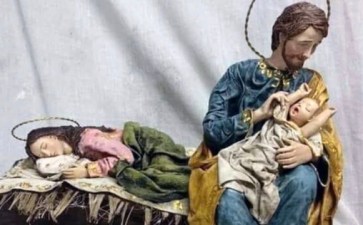
let mum restIt was more than just the dream for Joseph that led him to take the young, pregnant Mary into his home – even as he knew that his decision would not be understood by his neighbors and that he would be mocked and ridiculed for welcoming Mary. No person wants to be seen as a fool. Yes, the angel appeared in a dream and certainly there must have been the glory and power of God revealed but God never overwhelms our volition. God never manipulates. God always invites our free choice and our free response.

The other part to Joseph’s decision was Joseph himself. This is witnessed by the two descriptions of the man found in the Gospel reading for this fourth Sunday of Advent; “…Joseph her husband, since he was a righteous man…” and the title given by the angel in his greeting, “Joseph, Son of David…” Scholars say that the title offered by the angel is Matthew’s way of linking Jesus to the lineage of David but it is also safe to say that the greeting offered is a reflection on Joseph himself as being an observant Jew of his time, as being a righteous man who demonstrated by his life and his choices his belief in God.

Joseph, who says no words in all of Scripture, teaches us that God does not and will not overwhelm our volition nor does faith occur in a vacuum. What led up to Joseph’s ability to both hear and trust in the dream and then to take Mary “into his home” was a lifetime of making the choice for God and responding to God’s initiative and grace in faith and trust.

We often willfully forget that we have a part to play in the equation of faith. So often we say, “Why is God silent? Why is God not speaking in our world or in our lives?” Well, maybe God is speaking but it is we who have stopped our ears and it is we who have hardened our hearts by the choices we have made and continue to make. Choices have consequences.

I think it safe to say that every choice Joseph made for God (no matter how big or small, seen or unseen, applauded or not) in his journey of faith both led up to and prepared him for the moment we hear today in the gospel. All those choices gave Joseph the strength of character to trust in the message of the angel and to take Mary “into his home”.

We hear of the Star of Bethlehem that led the wise men to the place of the birth of the savior. Joseph had his own “north star” that guided him throughout the journey of his life. It was his faith and his decision to live according to his faith. Without a word spoken, Joseph teaches us what it means to be righteous in the eyes of God and what it means to be a child of David – it means trusting in God and then acting on that trust.

Faith does not occur in a vacuum.

God does not overwhelm our volition and God does not manipulate.

Our choices do have consequences.

We can make the choice to soften our hearts and open our ears and to listen to what God has to offer.

Joseph teaches us this.

Learning the Commerce of the Kingdom of God

21 Saturday Sep 2019

Posted by mcummins2172 in homily, Uncategorized

≈ Leave a comment

Tags

Christianity, Jesus, Kingdom of God, Parable of Dishonest Steward

bird feederI am a fan of the work and the writings of Wendell Berry. Here, I would like to share #7 from his “Window Poems”.

Outside the window
in a roofed wooden tray
he fills with seed for the birds.
They make a sort of dance
as they descend and light
and fly off at a slant
across the strictly divided
black sash. At first
they came fearfully, worried
by the man’s movements
inside the room. They watched
his eyes, and flew
when he looked. Now they expect
no harm from him
and forget he’s there.
They come into his vision,
unafraid. He keeps
a certain distance and quietness
in tribute to them.
That they ignore him
he takes in tribute to himself.
But they stay cautious
of each other, half afraid, unwilling
to be too close. They snatch
what they can carry and fly
into the trees. They flirt out
with tail or beak and waste
more sometimes than they eat.
And the man, knowing
the price of seed, wishes
they would take more care.
But they understand only
what is free, and he
can give only as they
will take. Thus they have
enlightened him. He buys
the seed, to make it free.

“Thus they have enlightened him. He buys the seed, to make it free.” The man provides seed for the birds and the birds enlighten him, they bring him to the awareness of a new commerce. “He buys the seed, to make it free.”

In the first reading, the prophet Amos proclaims that God’s anger is stirred up because the merchants are given the life of the Sabbath and all they can do is eagerly anticipate its end so they can get back to cheating the people! Not only that, they use what is supposed to be the sacred rest of the Sabbath to plan and devise new ways to cheat and take advantage of the poor! Theirs is a sad commerce that will end in ruin because God has noticed and God will not abide this. The life of the Sabbath freely given by God, they squander away and warp in dishonest pursuits.

In the parable of the dishonest steward our Lord does not applaud the steward’s dishonesty but he notes the ingenuity, the focus and the drive of the man and he uses this to make a point. If we can be so focused, so driven and so ingenuous when it comes to this world and its commerce then why can we not be the same about the commerce of the Kingdom of God?

There is a commerce to the Kingdom of God. It is true wealth and the journey of faith is a journey of coming to recognize and value this true wealth over the dishonest wealth of our world.

Grace is free, mercy is given, life is found in Jesus Christ! Can we recognize that? Can we value it? Can we put this wealth before everything else and be just as focused, ingenuous and driven as the dishonest steward was in seeking out this true wealth and attaining it? Can we learn to set our lives and live our lives by the measure of the Kingdom of God and not by the sad commerce of this world.

The man buys the seed and, in so doing, he is enlightened by the birds. He is brought into a new awareness and into a different commerce. “He buys the seed, to make it free.”

There is a commerce to the Kingdom of God and it is different than that of the world and we are invited into it. True wealth is found here. The choice to enter (or not) into this commerce of the Kingdom of God is and ever will be ours to make.

“You cannot serve both God and mammon.”

Politics as Meta-Narrative? Meh…

12 Monday Aug 2019

Posted by mcummins2172 in culture and society, Uncategorized

≈ Leave a comment

Tags

Christianity, discipleship, faith, Media, meta-narrative, political junkies, politics

dominicRecently the Knights of Columbus decided to begin an initiative to help refugees at the U.S. – Mexican border. Carl Anderson, the Supreme Knight of the Knights of Columbus, specified in his announcement that this was not a “political statement” but a statement of principle. I find it telling that the head of this fraternal, international Catholic organization guided by the tenets of the Catholic faith felt it necessary to make this distinction.

It was in seminary that I first heard the term “meta-narrative” (beyond-story) and it was in reference to God’s plan of salvation being the meta-narrative to all other narratives in human history. The meta-narrative is the one overarching narrative (the beyond-story) to which all other narratives are to be measured, judged, transformed and even discarded if necessary. Prevailing ideas and societal customs, histories of peoples and nations, economic and political systems are all narratives and may indeed have much positive to speak for them but none are the meta-narrative, none are the Gospel story of God’s movement and plan in history. All narratives are to be judged in the light of the meta-narrative on God’s work of salvation.

I would propose for consideration that Carl Anderson’s need to clarify the purpose of the Knight’s new initiative at the border witnesses to the fact that for many who claim the name of Christian the narrative of U.S. politics has eclipsed the meta-narrative of the Gospel message. Everything is being viewed and evaluated through the lens of contemporary American politics regardless of the side of the aisle you fall on.

How did this happen? This is not an exhaustive list but here are some thoughts. The 24-hour, 7 day a week news cycle – now even more magnified by social media. We have always had political junkies and that is okay. We need people who are passionately invested in politics and willing to work and fight for what they value but what is different today is that we now have political junkies debating political junkies nonstop on our tv screens both in our homes and all other type of screens. What we are being taught by this continuous stream of political junkie debate (no matter where we find ourselves on any particular issue in the moment) is that this is the only legitimate way to see and judge all actions and events – only through the lens of the political. Holding to the meta-narrative of the Gospel, I would say “no”- politics is not the only way to see and evaluate everything and that assumption is itself a false narrative.

The turn to the base. I am not a political junkie, nor care to be – thank you. But what I have learned through my own being immersed in the continuous stream of political junkie-ism is that not that long ago a decision was made to turn to the base in the effort to win elections and advance causes and perspectives. This was a shift away from a broad appeal that would attract the large number of votes needed to get elected. It has proven to be an effective strategy but it is a strategy based on a negative – the apparent apathy of the majority vs. the fervor of the base. Because it is based on a negative, I believe it is doomed to collapse at some point and it may be quite ugly when it happens. For our purpose here, the turn to the base is again the turn to a segment of the population who is already keyed into things political – the people who have bought into the notion that politics alone is the best means to achieving a certain desired end. But, again, it is the politically-minded crowd who are having the overarching influence on determining how things are being viewed, evaluated and presented.

I do not want to come across as denigrating politics. There is certainly a value and even a virtue to politics and it is a way of encountering the mystery of life and even the true meta-narrative of God’s work of salvation but it is not the only way. I would hold that those people who are not so keyed into the political are encountering the mystery of life and even the true meta-narrative in their own way which is just as valid – art, literature, relationships, responsibilities, worship, service, appreciation of creation, community … the list could go on.

Fear. U.S. society is changing and there are many factors that are at work in this. There are and will be more darker tones of skin, there will be more non-European sounding names, there will be different styles of clothing than what we have been used to in American society. Get used to it; it is a demographic reality but change can be scary so in the midst of the change it is always important to remember that Scripture reminds us that “perfect love casts out all fear.” Trust that God is at work bringing about His Kingdom of all of His children in all of their varying hues, languages and experiences. By trusting a little bit more we can begin to let go of our little kingdoms in anticipation of God’s coming Kingdom.  Death is also a fearful thing. The Baby Boomer generation is approaching this great mystery and no amount of commercials with gray haired people climbing mountains or couples holding hands while soaking in claw-footed bathtubs set in nature will forestall this reality that we all must face. Here is where the illusion of all narratives that try to propose themselves as the meta-narrative ultimately collapse. At the tomb. The resurrection of Christ is the only beyond-story that has ever conquered the grave.  This is the only story that gives that hope which endures and that overcomes all fear.

What can be done to reduce the illusion of politics as the meta-narrative? Some thoughts. Turn off the 24 hours news cycle. It can be done and by doing so more space is allowed for other narratives and even the true meta-narrative to enter our lives. Take time to read good literature and listen to good music and enjoy good drama and theater. When good, these realities lead us into the great mysteries of the human experience. Enjoy good sport. This also is a way of being led into the mystery and drama of human experience. Remember that the United States is not the center of the world. I love my home country and am proud of what we have achieved but I have travelled enough to recognize that not everyone is looking to the U.S. at all times and that there is beauty and truth in all cultures. (A little humility goes a long way.) Go into a situation where you are a minority and be willing to keep going there. Pray and worship – root yourself in the true meta-narrative of the Gospel and even encounter the Author of this beyond-story. Go for a walk in creation and allow yourself to be struck by the truth that each of us is just one part of something much bigger than ourselves. Serve other people and learn to recognize God in that space of service. Make friends with people you do not necessarily agree with on everything. Cultivate wonder and curiosity in your life.

And, yes, be involved in politics if you have that desire but please recognize it for what it is – just one part of the story and not the whole.

Truth is, this reflection will probably be judged, written off as naïve or possibly even condemned by people who view all things through the lens of politics. Okay, that is your choice but it does not have to be mine. To God be the glory.
Singing the Goat Song

03 Saturday Aug 2019

Posted by mcummins2172 in homily, Uncategorized

≈ Leave a comment

Tags

Christian life, Christianity, discipleship, goat song, Jesus, suffering, tragedy

goatOne thing that the Scriptures do not shy away from presenting is tragedy. We like tragedy when it is on the screen or in a play but not so much in our lives. This is partly why we invest in IRA’s. Yet, tragedy is a part of life (Sacred Scripture knows this) and no one gets through this life without experiencing tragedy in one form or another.

Here is an interesting fact. The word “tragedy” is rooted in two Greek words which mean “goat song”. The thought is that the word comes out of ancient Greek drama where the chorus was dressed like satyrs, who in Greek mythology were goat-like woodland deities. A tragedy is a goat song.

Our Lord makes use of tragedy throughout his parables and teachings and today’s gospel is one example. The story of the rich man planning to build bigger storage bins and then be set for many years to come is both tragic and ironic. Just as the man is planning and dreaming, God knows that very night his life will be demanded of him.

There is tragedy in life. We all, in one form or another and at one time or another, will have to sing the goat song. Maturing in life and maturing in faith is coming to both recognize this and accept it. In both the recognition and acceptance of tragedy there is a hard fought maturity and wisdom gained that can never be pretended. This is why Scripture does not shy away from presenting tragedy. It is why in the first reading we hear from that great reflection on “vanity of vanities”. Tragedy has a way (unlike any other) of breaking through the illusions of life, the vanities that we all like, the vanities that keep us comfortable but stifled and that ultimately can impede us from the growth that is necessary.

Certainly part of the mystery of the cross is tragedy. It is the greatest tragedy in human history that the one man without sin publically died the death of a sinner, but God has a way of overcoming and transforming from within. The cross does not say that the Christian will never experience tragedy. That is an immature faith, yet it is preached and popular. The cross says that even in the midst of tragedy God is there for us. God can reside in tragedy because God has entered into the tragedy of the cross. Even in the tragic moments of our lives, God is there for us – willing to walk beside us and give us his grace, his strength, his love and his consolation and hope.

At the end of the parable God says, “You fool, this night your life will be demanded of you; and the things you have prepared, to whom will they belong?” God’s use of the term “fool” is not necessarily a condemnation of the man himself. How often do friends say to one another, “Don’t be a fool!”? Love allows for the freedom to point out foolishness. The foolishness of the man’s plans and attitude is what is subject to condemnation by God. How often are we, through our assumptions and attitudes, fools before God, but God still loves us.

“Thus it will be for all who store up treasure for themselves but are not rich in what matters to God.” In this context what does it mean to be “rich in what matters to God”? Here it is the awareness and the faith needed to know that, yes, there will be tragedy in life yet even in the midst of tragedy, God is God for us. We will each have to sing the goat song at some point but God – in his love and his willingness to embrace the tragedy of the cross – can even make of that something beautiful and graced.

If God is for us, who can possibly be against us?

Short and Long-Term Urges and Walking on the Moon

21 Sunday Jul 2019

Posted by mcummins2172 in homily, Uncategorized

≈ Leave a comment

Tags

Abraham and three angels, Advent, Bible, Christianity, discipleship, Martha and Mary, Walking on the moon

the_day_we_walked_on_the_moon_09Our nation has been reflecting on the 50th anniversary of the Apollo moon landing. Where were you when man first stepped on the moon? I was one-year-old. I don’t remember much about it. It is fitting and right to have this reflection. It was and remains one of our nation’s greatest accomplishments and not just for what was achieved but how it was achieved. A goal was set and as a nation we rallied around that goal and we devoted the resources, the time, the energy, the skill needed to achieve that goal. In a sense, it was not just one man who took that first step on the moon but a whole nation. It was a great moment and will hopefully be one of continuing moments in humanity’s outreach into space.
Br. Guy Consolmagno is the director of the Vatican Observatory. I just read an interview with him about the significance of the moon landing and in the interview he reflects on how the moon landing offers concrete lessons for people of faith. One lesson is “hope”. That even as we face what seems to be impossible problems we can work together. Another lesson is how God is creator of all – not just the earth and all of its wonders but all the universes and galaxies with all of their untold wonders. All of creation proclaims the glory of God! Finally, the moon landing speaks of a compatibility and not an opposition between science and religion – both (when truly and authentically lived) enhance and support one another.

In reflecting on these lessons, Br. Consolmagno shares something he once heard from a person who works with the poor, “a short-term urge leads to addiction, but a long-term urge leads to purpose.” This is played out, I think, in today’s readings.

One thing to note in the encounter between Abraham and the three men is that there is really nothing mystical or exceptional about it. It was a hot day and three men are walking by. It would have been very easy (and understandable) to just let them continue on and not expend the energy needed to welcome and host them. A short term urge. But Abraham made a choice – a choice not guided by the short term urge (of laziness, basically) but rather the long term commitment of hospitality and going out of one’s way to welcome the other. In this choice Abraham and Sarah were blessed with the promise of a child, and from that child – a nation. A long-term urge leads to purpose.

In the gospel Martha welcomes Jesus into her home and she quickly sets about the work of serving and then complains when her sister Mary does not do the same. (It is interesting how the gospel here points out how even the work of hospitality – for which Abraham and Sarah were blessed – can be twisted to be more about a fix for the short term urge.) Martha’s outer busy-ness and complaining is a reflection of the anxiety and the worry she carries within. Anxieties and worries and our choice for them can become addictive realities in our hearts. Mary chooses the better part. She also had worries and anxieties but she set those short-term urges aside in favor of the long-term urge of just sitting at our Lord’s feet and listening. Mary was blessed by this choice.

Much in our world and society is focused toward the short-term and even attempts to train us for the short-term alone. This is a reflection of our fallen state and our fallen world. But today’s readings along with our nation’s reflecting on the 50th anniversary of the Apollo moon landing offer a different perspective and a different way to live faith and even life itself.

“…a short-term urge leads to addiction, but a long-term urge leads to purpose.” The blessing that Abraham and Sarah knew, the blessing that Mary knew can also be known by us. We just need to make the choice.

Kindness matters

13 Saturday Jul 2019

Posted by mcummins2172 in Christian life, Uncategorized

≈ Leave a comment

Tags

Care, Charity, Christian faith, Christianity, Church, compassion, discipleship, kindness

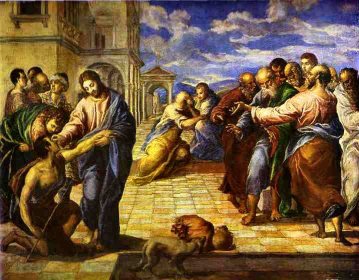
ElGreco-ChristHealingBlind-ptg-large“You should give up drinking only water and have a little wine for the sake of your digestion and the frequent bouts of illness that you have.” (1 Timothy 5:23)

The First Letter to Timothy addresses a variety of issues within the early Christian community – how elders are to be addressed, the mystery of the Church, the role of the deacon, consideration of widows just to name a few. Yet, in the context of all of this the author stops for a moment and encourages Timothy to take a little wine for his stomach.

It is a moment of kindness. It is an easy temptation to step over this verse and focus on the “weightier” issues addressed in the letter – and those issues are of importance – but all of Scripture has something to say and maybe this short verse is telling us, “Don’t forget to be kind to one another.”

There are continuously new plans and programs being developed, new webinars and conferences to attend on how to “do” church but do we always recognize the importance that simple kindness plays in the life of the Christian and the Christian community?

It is interesting how God can speak in our lives. Just within the past couple of months I have had a number of encounters where people have come up to me and told how something I did or said in the past made an important impact on them. Truth is, these moments (at least on the surface) were not exceptional – I was in town for a conference so I called up a young lady who had been a member of the youth group at my first assignment and asked if she would like to grab dinner and catch up, I listened as someone shared his struggles, I offered a kind word and encouragement to a couple at a time of pain. But these moments of kindness did have an effect even if I did not fully recognize nor realize it at the time.

Kindness matters. It costs nothing to be kind and it betrays nothing to be kind. Sometimes we forget this.

I once saw a church sign that read, “No one will care how much you know until they know how much you care.” If the First Letter to Timothy is about addressing pressing issues with the hope of building up and strengthening the Christian community then I would say that 5:23 can be seen as more than just an interesting side note regarding the curative effects of a little wine on an upset stomach. I would say that 5:23 teaches that basic, human kindness and care is an essential component to the building and living of Christian community.

“See how these Christians love one another,” was one of the earliest observations of a non-Christian when looking at this new religious group who had just come on the scene. This love was not because everyone looked the same, acted the same nor thought the same – just read the Acts of the Apostles and Paul’s epistles to see how the Church debated and argued itself through its first century. This love was also not because the early Church walled itself off from the rest of the world – again, read Acts and Paul’s letters to see this. I think kindness, patience, humility, reliance on the Holy Spirit and some good self-effacing humor had a lot to do with this love. The observation quoted above demonstrates that people saw a living of love and community in the early Christian community that was unique … and it clearly impressed them.

See how these Christians love one another.  Kindness does matter.

The Gatlinburg Skybridge and our Lord’s Invitation: “Feed My Sheep.”

04 Saturday May 2019

Posted by mcummins2172 in homily, Uncategorized

≈ Leave a comment

Tags

Catholic Church, Christianity, Feed my Sheep, Jesus, John 21:1-19, Pontifex Maximus, Pope Francis, resurrection

Gatlinburg-Sky-Bridge-2-793x526The longest pedestrian suspension bridge in North America is set to open later this month in our own Gatlinburg, TN. The bridge stretches nearly 700 ft. and is suspended 150 feet high. Apparently, it has glass panels as flooring in the middle of the expanse. I’ve been hearing people talk about it and have been seeing things on the news about it. Would you walk across it?

Bridges are pretty amazing structures when you stop and think about it. The physics, architecture and engineering that goes into the construction of a bridge is quite daunting. Whether the bridge is designed as a tourist destination (as the Gatlinburg Skybridge is) or if it has a completely utilitarian purpose as any number of interstate bridges dotting our country’s landscape or if it even has reached an iconic status such as the Brooklyn Bridge or the Golden Gate Bridge, every bridge serves the same basic purpose of connecting two points and allowing interaction, traffic and commerce.

One of the traditional titles given to the Pope as the Bishop of Rome is “Pontifex Maximus” which means “bridge-builder”. It is a title rooted in pagan Rome but later christianized. The Pope, as successor to St. Peter, is to continuously work to build, strengthen and restore that bridge which connects our fallen and wounded world with the Kingdom of God. That bridge is the Church itself but like any bridge there are some divine physics and engineering that goes into the structure and maintaining of this bridge. Today’s gospel (Jn. 21:1-19) show some of these divine elements and they are worthy of note.

The disciples are gathered together at the Sea of Tiberias which means that they have done what our Lord requested when he instructed the women at the tomb to tell the apostles that they would find him in Galilee. Obedience to the Lord’s instruction and the grace of community are part of the divine physics that form the bridge of the Church. John, the disciple whom Jesus loved, is the first to recognize the Lord. Love is farsighted and is the first to appreciate divine kindness and the Church must always be led by this true love which is rooted in God alone. Peter has an acknowledged authority (as the Lord said that he would strengthen his brothers) but, is himself, open in humility to guidance as he listened to John, the youngest of disciples. The disciple allowed themselves to be fed by our Lord – the Church must continually be nourished by Christ through Word and Sacrament. All of these elements are part of the physics which must continually make up and uphold the bridge that is the Church.

But there is something else that must be learned from the exchange between Jesus and Peter. When our Lord was bound and on trial, Peter had denied knowing him three times. Now, three times, Jesus asks Peter if he loves him. Jesus does not belittle Peter. He does not punish him or embarrass him in front of the others rather he heals him and he does this by three times inviting Peter to love, to give and even to be as God himself does and is. God is love and true love feeds, nourishes, strengthens, tends, builds up and upholds. True love is willing to go where it would rather not out of care for the other. Jesus invites Peter (and the whole Church) into the very work of God which is to feed, tend and strengthen. The Church is to be the bridge connecting our world with the promise of the Kingdom of God by continuously living this invitation of our Lord to Peter.

After this exchange, our Lord says to Peter (and to us), “Follow me.”

In a special way, we pray for our Holy Father Pope Francis today. He is a good man and a good pope. He deserves our respect and he deserves our prayers as he strives to live his role and as he strives to encourage us to live our role as Church by feeding, tending, strengthening and loving as Christ would have us do.

Easter Sunday – the Lord “primerea”!

21 Sunday Apr 2019

Posted by mcummins2172 in homily, Uncategorized

≈ Leave a comment

Tags

Christianity, Easter, Easter 2019, faith, Jesus, primerea, resurrection

resurrection2In a recent interview on the life of faith and discipleship, Pope Francis shared an expression often used in Argentina – the expression is “primerea”. “…the Lord ‘primerea,’ anticipates us, waits for us; we sin and He is waiting to forgive us. He is waiting to welcome us, to give us His love, and each time faith grows.”

The Holy Father shared the expression in response to a question where he was asked about whether he ever felt betrayed by God. “Never,” responded Pope Francis. “I was the one who betrayed Him. At times I even felt like God was turning away from me, just as I turned away from Him. At very dark moments you ask yourself, ‘Where are you, God?’ I always believed that I was looking for God, but really it was He who was looking for me. He always gets there first and waits for us.”

The Lord “primerea”.

On Easter morning, Mary of Magdala comes to the tomb … it is empty. Peter and John run to the tomb and all they find are the burial cloths. The tomb is empty. It is empty because the Lord primerea!

A closed tomb is the opposite of primerea – there is no life, life is ended. All that the closed tomb offers is loss, sadness and pain. Life, on the other hand, by its very nature moves forward! It cannot remain stagnant nor be held back – the stone is rolled away and the tomb is emptied because the Lord primerea!

The Lord leaves the tomb in order to anticipate us, in order to show and be the living mercy that forgives us now and ever again on our journey. Even though this Easter Sunday we mark and proclaim in faith that greatest of events which occurred centuries ago when our Lord was bodily raised triumphant from the dead, the truth of the resurrection – and what it means for all time and creation – does not remain in the past. The truth of the resurrection is found in our today and in our tomorrow because this is where the risen Lord awaits us. The Lord primerea!

As Pope Francis remarked, “(The Lord) always gets there first and waits for us.”

Life calls us forward and Jesus is life itself! “Where is the resurrection?” some might ask. Others might demand that we point it out in order to prove it to them! I can say that it is not to be found in the history book nor in a museum. It is found right now and it resides in tomorrow. This is why on Easter Sunday we have this strange little reading about yeast. It is a strange reading really, and why – of all days – do we have it on Easter Sunday? You would think that there would be a reading proclaiming a blare of trumpets and choirs of angels singing. But, no, on our holiest day the Church has chosen this reading. Why?

Old yeast has no life, it produces nothing. It is like the enclosed tomb. But a little yeast that is true leavens all the dough – this little yeast brings life and it brings newness! And it does it truthfully and without the need for fanfare. Christ has been sacrificed and Christ has been raised!

True life does not need spectacle in order to prove itself. The resurrection does not need to prove itself to us nor does the one who is raised need to. Life reveals itself by being life. The resurrection is shown within the hearts that have been enlivened by it, by the hearts that encounter Christ today and move toward tomorrow in hope because the risen Lord awaits them there.

The tomb is empty! The Lord is risen!

The Lord primerea!

“…see, I am doing something new” and the fowler’s net. John 8:1-11

06 Saturday Apr 2019

Posted by mcummins2172 in homily, Uncategorized

≈ Leave a comment

Tags

5th Sunday of Lent C, Christianity, cycle of violence, faith, Jesus, John 8:1-11, truth, woman caught in adultery

bird caught in the fowler's net 2What was our Lord writing on the ground with his finger? No one really knows but it is an interesting addition that the gospel writer makes to this narrative and it does lead one to wonder. What was he tracing on the ground?
In light of today’s first reading from Isaiah where the Lord proclaims that he alone is the one “who opens a way in the sea and a path in the mighty waters,” I can imagine our Lord tracing the scene of the crossing of the Red Sea, because at this moment this is what our Lord is preparing to do – both for the woman caught in adultery and for the mob caught in the cycle of recrimination and violence.

Yes, the woman was caught in sin. We do not know the circumstances, nor the situation and we can honestly wonder, “well, why wasn’t the man involved also brought forward for judgment?”. But there was sin and this woman who sinned is now standing before the only one without sin. Of all, he alone can judge and condemn her. There is judgment but no condemnation. After the people walk away, our Lord asks, “Woman, where are they? Has no one condemned you?” She replied, “No one, sir.” Then Jesus said, “Neither do I condemn you. Go, and from now on do not sin any more.” In this moment we see lived out the words found in Isaiah, “Remember not the events of the past, the things of long ago consider not; see, I am doing something new!” The Righteous One has come but not to condemn but rather to give life. This is the amazing grace! He alone has now opened a way in the sea and a path in the mighty waters. Mercy is given and divine mercy alone sets the sinner free from the trap of sin.

“We escaped like a bird from the fowler’s net. The net was broken and we escaped; our help is in the name of our Lord…” (Psalm 124:7-8). “…see, I am doing something new!”

But the path through the waters is not just for the woman, it is also for the crowd! They are caught up in the frenzy and blood thirst of a mob. They are clinging to the stones they want to hurl at the woman! They also are trapped in the fowler’s net of sin, violence and death although they do not recognize it. Their trap is not as public as that of the woman. Christ will also do something new for them.

Again, God says through the prophet Isaiah, “In the desert I make a way, in the wastelands, rivers.” The cycle of violence gives no life and to be trapped in that cycle is to be trapped in a lifeless desert! Only God can call forth life in that desert, only God can call forth rivers in that wasteland. So, in his encounter with the demonic frenzy of the mob, Christ – the only one without sin – quietly bends down, traces on the ground and says, “Let the one among you who is without sin be the first to throw a stone at her.” Jesus is truth and he alone calls forth truth and the violence of the mob breaks on the truth of who he is. The gospel says, “…they went away one by one, beginning with the elders.”

Something new had just happened! The cycle of violence had just been broken by the one who is truth and who is mercy … and he continues to trace on the ground.

Friends, the readings for this Sunday are not circumspect. No one is exempt. Everyone – in one way or another or in many ways – is caught in the fowler’s net. Everyone is trapped – whether recognized, public or not. Where are we before our Lord – the only one without sin, the one who is both truth and mercy. Will we let him do something new? Will we let him open a way in the sea and a path in the mighty waters for us?

Jesus’ Hope

09 Saturday Mar 2019

Posted by mcummins2172 in homily, Uncategorized

≈ Leave a comment

Tags

Christianity, faith, Jesus in the desert, Lent, temptation of Christ

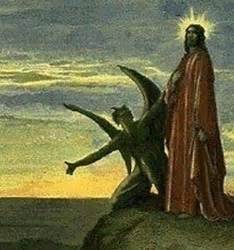
Jesus in the desertHave you ever noticed that each of our Lord’s temptations in Luke’s Gospel is a temptation to something within the immediate and that our Lord responds to each temptation by his hope in the future? That Jesus responds by not getting stuck in the immediate but by looking beyond the immediate to the infinite?

The gospel tells us that our Lord, after fasting for forty days was hungry. That is an immediate need. We all know that when we are hungry it is hard to even think about anything else. The devil plays on this. “If you are the Son of God, command this stone to become bread.” Answer this immediate and pressing need! Satisfy your hunger! Our Lord responds, “… One does not live on bread alone.” Our Lord’s hope is not in a quick fix or easy answer right now but on that which is truly enduring and lasting – relationship with the Father.

The devil again tempts the Lord, “I shall give you all this power and glory … all this will be yours, if you worship me.” Okay, Jesus has come to be savior and king – the devil concedes this – but he need not go through the pain and struggle, suggests the Father of Lies. Jesus need not go to Jerusalem and walk the way of Calvary. He can be king now, immediately! Jesus can be king without the cross! Certainly tempting, but our Lord responds, “You shall worship the Lord, your God, and him alone shall you serve.” Jesus answers by showing where his hope lies – not in the devil and his power and neither in any power that the world affords in the here and now but in the Father and his will. Jesus hopes in the Father and the Father alone will Jesus serve.

If not through need nor through power will the Lord be tempted then through love will the devil try to tempt the Lord. Make the Father show his love here and now, force his hand! “If you are the Son of God, throw yourself down from here, for it is written: “He will command his angels concerning you, to guard you…” The Son will not force the Father to prove his love. His hope in the Father’s love does not need to be proven at any point, it endures even to the cross. “You shall not put the Lord, your God, to the test.”

Jesus overcomes these temptations in the immediate not through his own strength of will but through his hope in the Father. It is the Father who summons the Son into the future – into the desert, into ministry, to Jerusalem, through the cross to the resurrection and into the fullness of the Kingdom! God summoned Jesus and Jesus put his trust in the summons of the Father. And God summons us! God calls us forward into the future – not as we might have it or envision it – but into the fullness of His Kingdom! To be a Christian – to confess with our mouths that Jesus is Lord and to believe in our hearts that God raised Jesus from the dead – means to be a person never resigned to the immediate nor the status quo nor to the sad belief that it is solely up to our own effort. These are the illusions of the Father of lies. That things cannot change. That there is no hope. That we are abandoned.

Jesus is risen from the dead! Hope ever endures! The Father summons us into the Kingdom!

The hymn has it right. “My life flows on in endless song above earth’s lamentations! I hear the real, though far off hymn that hails a new creation! No storm can shake my inmost calm, while to that rock I’m clinging. Since love is Lord of heaven and earth, how can I keep from singing?”

We are members of the Body of Christ and Jesus’ hope is our hope! We turn our gaze to the Father…

← Older posts
Newer posts →
Follow The Alternate Path on WordPress.com

Enter your email address to follow this blog and receive notifications of new posts by email.

Previous Posts

  • December 2025
  • November 2025
  • August 2025
  • April 2025
  • February 2025
  • January 2025
  • December 2024
  • August 2024
  • July 2024
  • June 2024
  • May 2024
  • April 2024
  • March 2024
  • February 2024
  • January 2024
  • December 2023
  • November 2023
  • October 2023
  • August 2023
  • July 2023
  • May 2023
  • February 2023
  • January 2023
  • December 2022
  • August 2022
  • July 2022
  • April 2022
  • January 2022
  • December 2021
  • September 2021
  • August 2021
  • July 2021
  • May 2021
  • April 2021
  • January 2021
  • December 2020
  • November 2020
  • October 2020
  • August 2020
  • July 2020
  • May 2020
  • April 2020
  • March 2020
  • February 2020
  • December 2019
  • October 2019
  • September 2019
  • August 2019
  • July 2019
  • May 2019
  • April 2019
  • March 2019
  • February 2019
  • December 2018
  • November 2018
  • October 2018
  • August 2018
  • July 2018
  • June 2018
  • April 2018
  • March 2018
  • February 2018
  • January 2018
  • December 2017
  • November 2017
  • September 2017
  • August 2017
  • July 2017
  • June 2017
  • May 2017
  • April 2017
  • March 2017
  • February 2017
  • January 2017
  • December 2016
  • November 2016
  • October 2016
  • September 2016
  • August 2016
  • July 2016
  • June 2016
  • May 2016
  • April 2016
  • March 2016
  • February 2016
  • January 2016
  • December 2015
  • November 2015
  • October 2015
  • September 2015
  • August 2015
  • June 2015
  • May 2015
  • April 2015
  • March 2015
  • February 2015
  • January 2015
  • December 2014
  • November 2014
  • October 2014
  • September 2014
  • August 2014
  • July 2014
  • June 2014
  • May 2014
  • April 2014
  • March 2014
  • February 2014
  • January 2014
  • December 2013
  • November 2013
  • October 2013
  • September 2013
  • August 2013
  • July 2013
  • June 2013
  • May 2013
  • April 2013
  • March 2013
  • February 2013
  • January 2013
  • December 2012
  • November 2012
  • October 2012
  • September 2012
  • August 2012
  • July 2012
  • June 2012
  • May 2012
  • April 2012
  • March 2012
  • February 2012
  • January 2012
  • December 2011
  • November 2011
  • October 2011
  • September 2011
  • August 2011
  • July 2011
  • June 2011
  • May 2011
  • April 2011
  • March 2011
  • February 2011
  • January 2011
  • December 2010
  • November 2010
  • October 2010
  • September 2010
  • August 2010
  • July 2010
  • September 2008
  • August 2008
  • April 2008
  • March 2008
  • February 2008
  • January 2008
  • December 2007
  • November 2007
  • October 2007
  • September 2007

Popular Posts

  • thealternatepath.org/wp-c…
  • thealternatepath.org/wp-c…
  • lh3.googleusercontent.com…
  • thealternatepath.org/wp-c…
  • thealternatepath.org/wp-c…
  • thealternatepath.org/wp-c…
  • thealternatepath.org/wp-c…
  • thealternatepath.org/wp-c…

Blog at WordPress.com.

  • Subscribe Subscribed
    • The Alternate Path
    • Join 156 other subscribers
    • Already have a WordPress.com account? Log in now.
    • The Alternate Path
    • Subscribe Subscribed
    • Sign up
    • Log in
    • Report this content
    • View site in Reader
    • Manage subscriptions
    • Collapse this bar
 

Loading Comments...