Tags
Christ in the desert, Christianity, first Sunday of Lent, Love of Christ, prayer, temptation of Christ
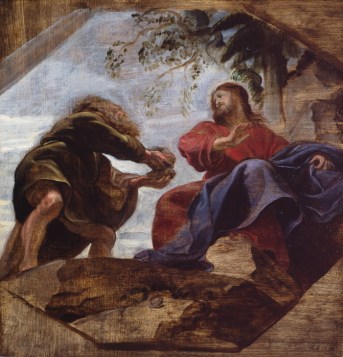 In Adam and Eve, the devil trips humanity up not just through the temptation to exalt ourselves by eating of the tree of the knowledge of good and evil (the sin of pride) but also through the temptation to reduce God to our limits. The serpent plants the seed for this second sin in his reply to Eve, You certainly will not die! No, God knows well that the moment you eat of it your eyes will be opened and you will be like gods who know what is good and what is evil.
The devil introduces a doubt about God and God’s goodness. There is some reason God does not want them to eat of this tree… There is something God is holding back… There is something that even God is fearful of…
If God is fearful then God is not God because there is then something beyond God which causes fear within God. Scriptures tells us that God is love (1 Jn. 4:16) and also that perfect love casts out all fear (1 Jn. 4:18). In God there is no fear, only love. God is not bound by our limits.
During his trial in the desert, our Lord overcomes the temptations of the devil and the doubts the serpent seeks to plant by holding to the truth of a God beyond our limits. When the devil took our Lord to the parapet of the temple and seeks to plant doubt by saying, If you are the Son of God, throw yourself down and then even quotes scripture; our Lord quotes scripture back, You shall not put the Lord, your God, to the test.
We do not put God to the test in the way that we can test one another by trying each other’s patience and resolve. God cannot be tested this way. We put God to the test when we seek to bind God by our limits. When, in this sense, we put God to the test we, in fact, show our limits, we do nothing to God. God remains God whether we fully understand Him or not. Christ will not put God to the test. He will not limit God but will live rather in full trust of the love of the Father and full obedience to the Father’s will.
In my experience as a confessor as well as through my own stumblings in life, I have learned that one of the most corrosive aspects of sin in our lives is the seed of doubt in the goodness and true nature of God that can be planted by the evil one in our hearts. God is like us. God is fearful. God needs to control. God is jealous as we are often jealous. God is a God of wrath. God is somehow opposed to my freedom and fulfillment. God is angry with me. God is somehow “put off” by my weakness and failures. Ultimately, God is not truly love…
The season of Lent and its disciplines offers us a time of both repentance and renewal. As we begin this season I think it would be most beneficial to begin where our Lord begins – by not limiting God to our limits, by not putting God to the test. To trust that God is love and that perfect love has no fear.
At the last temptation our Lord is taken to a high mountain and promised all the kingdoms of the world if he would but serve the devil. Our Lord responds, Get away Satan! It is written: “The Lord, your God, shall you worship and him alone shall you serve.” Only God shall we worship and serve. Lent is an invitation to follow our Lord and let go of any god we might be carrying around in our wounded hearts made in our limits in favor of the true God we are called to worship.
God is love and in love there is no fear.
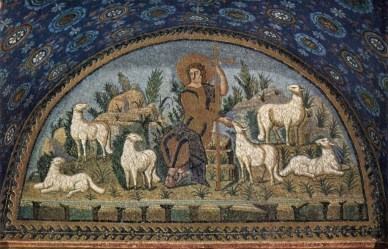 The context of today’s gospel (Jn. 10:27-30) is the feast of the Dedication in Jerusalem. Jesus is in the Temple when he is approached by some Jews who begin to question him, asking if he is the Christ. The feast of the Dedication marked an historical moment in the history of Israel when the Jewish people were able to overcome their Greek oppressors and re-dedicate the Temple by destroying and removing a pagan altar that had been placed there. The context is important because it demonstrates the importance of the Temple in the culture and psyche of the Jewish people. The Temple was the meeting place between God and his people. The Temple was the visible sign for the Jewish people of their belonging to God. This sense of “belonging” is of importance.
 So much of the Christian life seems to be about “going out”. We are called to go out to proclaim the good news. We go out to share Christ’s love. We go out to serve others. This is good and authentic to our faith and it is the mandate that Christ has given us as Church to proclaim the good news to the ends of the earth.
 The Alternate Path