• About The Alternate Path

The Alternate Path

~ Thoughts on Walking the Path of Christian Discipleship

The Alternate Path

Author Archives: mcummins2172

Thoughts on the Sunday readings: the Boldness of Beauty (33rd Sunday in Ordinary Time, A)

16 Sunday Nov 2014

Posted by mcummins2172 in beauty, boldness, faith, Giving

≈ Leave a comment

In the beginning of her book An American Childhood Annie Dillard tells the story of watching a neighbor girl skate on the city street on a cold, Pittsburg winter night:

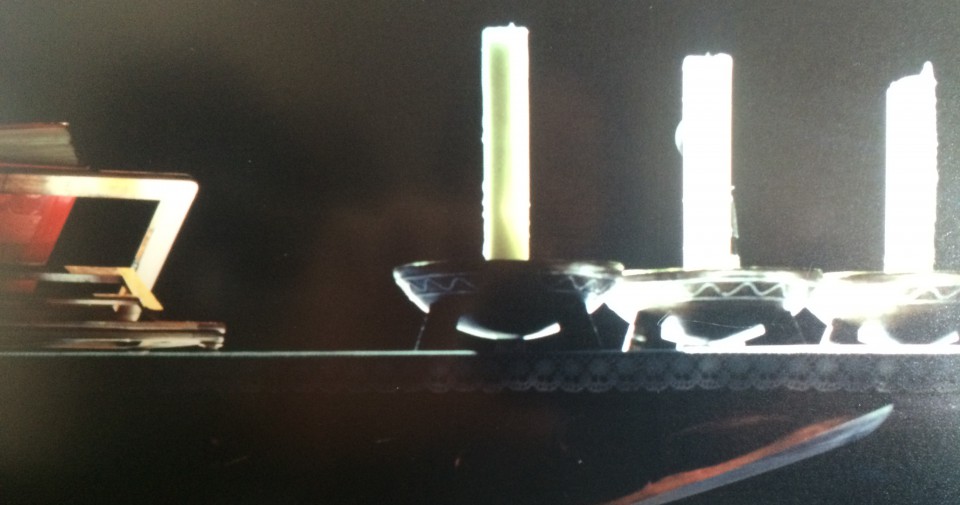
The night Jo Ann Sheehy skated on the street it was dark inside our house.  We were having dinner in the dining room – my mother, my father, my sister Amy, who was two and I.  There were lighted ivory candles on the table … Now we sat in the dark dining room, hushed…  Behind me, tall chilled windows gave out onto our narrow front yard and street.  A motion must have caught my mother’s eye; she rose and moved to the windows, and Father and I followed.  There we saw the young girl, the transfigured Jo Ann Sheehy skating alone under the streetlight. 

She was turning on ice skates inside the streetlight’s yellow cone of light – illumined and silent.  She tilted and spun.  She wore a short skirt, as if Edgerton Avenue’s asphalt had been the ice of an Olympic arena.  She wore mittens and a red knitted cap below which her black hair lifted when she turned.  Under her skates the street’s packed snow shone; it illumined her from below, the cold light striking her under her chin.  

I stood at the tall window, barely reaching the sill; the glass fogged before my face, so I had to keep moving or hold my breath.  What was she doing out there?  Was everything beautiful so bold? 

Nelson Mandela once said: It is our light not our darkness that most frightens us.  We ask ourselves, “Who am I to be brilliant, gorgeous, talented?”  Actually, who are you not to be.  Playing small does not serve the will of God.  We are born to make manifest the glory of God within us.  It is not just within some of us, it is within everyone.  The more we light our own light shine; the more we unconsciously give other people the permission to do the same.

In today’s Gospel (Mt. 25:14:30) we are given the parable of the talents.  The term “talent” in our Lord’s day was used to denote a certain measurement of wealth.  It is due to this very parable that the word “talent” has the meaning which we know today.  In the parable, the master who is departing on a journey leaves a different sum of talents with three different servants.  The first two servants double what was given them and are rewarded accordingly.  The third servant (out of fear) buries the talent he is given and makes nothing.  He is punished for his laziness. 

So, we see this parable as an instruction about using the gifts, the talents that we have been given in life and not being fearful.  It is also helpful to note where this parable falls within Matthew’s gospel.  It is in the section where Jesus is discussing the end times and it comes right before the section where Jesus sets the criteria for judgment of our lives.  (The Gospel passage we will hear next Sunday.)

With the awareness of this context we see that the use of talents is not toward the goal of comfort in this life but toward the goal of the reign of God.  This parable warns us that the servant preferred to hide his life in a hole, in an avaricious and egoistic tranquility … Jesus unveils the ambiguity of one who contents himself with how things are, has no desire to change, no aspiration to transform life and, no ambition for a happier life for all. (Bishop Vincenzo Paglia)

The Kingdom of God begins with each one of us when we make the choice to not close ourselves off in our own self interest but make the bold choice for life and to help alleviate the sufferings of the other person.  It is a choice that must begin within – the choice to begin changing our own hearts and the choice to bring the Gospel to our world and live the Gospel for our world.

“Does beauty have to be so bold?” wondered the young Annie Dillard.  Yes, it does.  We are each born to make manifest the glory of God within us.   

The danger of narrowcasting in the Church

13 Thursday Nov 2014

Posted by mcummins2172 in Catholic Church, dialogue, Media, Pope Francis

≈ Leave a comment

Tags

Christianity, Church, Dialogue, faith, narrowcasting, social media

studio-broadcasting-camps-2There has been a trend developing in our national news media and you have probably noticed it.  It is the move from “broad-casting” to “narrow-casting”.  Charles Seife, in his book, Virtual Unreality: Just Because the Internet Told You So, How Do You Know It’s True?, lays it out quite clearly.
Back when the Big Three ruled the airwaves, the nightly news had to perform a delicate balancing act.  A news program had to try to appeal to the entire television audience – it had to be, quite literally, a broad cast – if it was to compete with the other two networks that were taking the same strategy.  This meant that the networks couldn’t become too partisan or take an extreme position on anything, for fear of alienating its potential audience…
Then cable and the internet increased our choices.  The Big Three kept trying to capture as big a slice of America as possible by staying centrist, but a couple of upstarts – particularly Fox News and MSNBC – realized that there was another possible strategy.  Instead of trying to go after the entire American population with a broadly targeted program that appealed to everyone, you could go with a narrowly targeted program that appealed to only a subgroup of the population.  Throw in your lot with, say, die-hard Republicans and give them coverage that makes them happy; you alienate Democrats and won’t get them as viewers, but you can more than make up for that loss by gaining a devoted Republican fan base …  MSNBC did exactly the reverse … 
“So, what’s the big deal?” one might wonder.  Let the conservatives have their Fox News and the liberals their MSNBC then everyone gets what they want.  As Charles Seife argues in his book though we need challenges to our assumptions in order for our ideas and understanding to grow and evolve.  True information can only be gained through this sometimes difficult but essential process.  If all we get when we switch on the news is a presentation that is catered to our particular slant on the world then we get stuck in our own assumptions and we even become more radicalized.  We do not get true information.
With news and data that is tailored to our prejudices, we deprive ourselves of true information.  We wind up wallowing in our own false ideas, reflected back to us by the media.  The news is ceasing to be a window unto the world; it is becoming a mirror that allows us to gaze only upon our own beliefs. 
Couple this dynamic with the microsociety-building power of the hyper-interconnected internet and you’ve got two major forces that are radicalizing us.  Not only does the media fail to challenge our preconceptions – instead reinforcing them as media outlets try to cater to smaller audiences – but we all are able to find small groups of people who share and fortify the beliefs we have, no matter how quirky or outright wrong they might be.  Ironically, all this interconnection is isolating us… 
Lack of true information, radicalization and isolation – this is a disturbing and dangerous mix that, I would argue, we are witnessing the affects of throughout our world today.  That is a larger discussion but my purpose for this reflection is to wonder how much this trend of “narrow-casting” has moved into the life of the Church.  I would point to the wide-ranging reactions to the recent preparatory meeting of the upcoming Synod on the Family in Rome as a prime example.  The way I read them, reactions posted in journals, on the internet and the blogosphere were often extreme and catered to a particular slant.  There was a lot (and continues to be a lot) of noise regarding the preparatory meeting in these pieces but not much true information … at least from my reading.
Call me crazy but I have a hunch that Pope Francis knows what he is doing and that the Holy Spirit is in the midst of the Church.  Maybe our United States “American” (I say this because this is the only cultural context I can speak to) tendency to interpret an event (i.e. the Synod on the Family) only by catering to a particular viewpoint is more of a reflection of a deficiency in our culture than a reflection of what actually transpired in Rome?  Maybe we have become more conditioned by narrow-casting than we realize?
Pope Francis is not a product of United States “American” culture.  I do not think that he has been conditioned by narrow-casting.  I think he asked the participants at the meeting in Rome to speak boldly from their hearts because he knows what Charles Seife knows.  True information is only gained through the difficult process of having assumptions challenged – if the assumptions are true then they will only grow stronger through this process, if not then they will fall by the wayside.  Pope Francis values true discussion because he values true information.  Isn’t true information what we want any leader (particular the Pope) to have?
Catholic means “universal”.  I do not believe that there is space for narrow-casting in the Church.  In fact, I wonder if it might even be a sin against the unity of the Church.  Seife lays out the fruits of narrow-casting: lack of true information, radicalization and isolation.  All of these harm the Body of Christ.
Come, Holy Spirit and enkindle within us the fire of your love and strengthen your Church that she might be a humble and authentic witness of the gospel!

The Feast of the Dedication of St. John Lateran and Stewardship Sunday

09 Sunday Nov 2014

Posted by mcummins2172 in Basilica of John Lateran, Church, collection, discipleship, gospel, support

≈ Leave a comment

One summer when I was in seminary I spent seven weeks in Cuernavaca, Mexico for a Spanish immersion program.  Cuernavaca is a beautiful city located in the mountains outside of Mexico City.  I was living with a host family and I would walk a couple of blocks each day to the language institute for my classes.  The previous semester in seminary I had taken a class on the writings of St. Paul and I decided to also read through all of Paul’s letters that summer.  So, each day in the afternoon after class I would walk down the street to a little neighborhood park with my Bible and Spanish books and read a little bit of St. Paul and study some Spanish, read some St. Paul and study some Spanish.  St. Paul became my Spanish study companion.  
Reading Paul’s letters though I started to note how he often emphasized and encouraged the fledgling Christian communities in their collections and support for the needs of the church.  At first I thought this was just about the reality of money and how you just need it in order to get things done.  But the more I read St. Paul, the more I realized that the collection itself was not the primary thing for him rather it was what the giving of support itself represented in the growing spiritual maturity of the community.  The willingness to give to support the needs of the church community (whether local or not) was a reflection of the gospel taking root in one’s heart – either the heart of an individual or that of a community.  It was a sign of one’s ability to let go of self in order to focus on the needs of the other.  Paul realized that the ability to give was an important demonstration of maturity in discipleship; so by encouraging these communities in their support he was actually encouraging their growth in discipleship.  
This Sunday the Church celebrates the Dedication of the Basilica of John Lateran in Rome and in our own parish we also mark this as Stewardship Sunday.  An historical note – the actual “cathedral” of the Bishop of Rome is not St. Peter’s but the Basilica of St. John Lateran.  Before the Basilica of St. Peter we know today was constructed the bishop of Rome (the Pope) resided at St. John Lateran for hundreds of years and this basilica is still considered the actual cathedral seat of Rome.  The Church celebrates this Feast of Dedication as a moment to reflect on our unity as Church throughout the world and our understanding of the Bishop of Rome having a unique authority given by Christ for the shepherding of his Church.  
It is also a good moment to reflect on the reality of what it means to be “Church” and the gift of faith we have been given and the gift we are called to pass on to others.  Paul writes in his first letter to the Corinthians, “Brothers and sisters: you are God’s building.  According to the grace of God given to me, like a wise master builder I laid a foundation, and another is building upon it.  But each one must be careful how he builds upon it, for no one can lay a foundation other than the one that is there, namely, Jesus Christ.” (1 Cor. 3:9-11)  We are collectively and each individually “God’s building”.  We are the Church – more so than any building, even more than magnificent buildings like St. John Lateran, St. Peter’s or the Shrine of our Lady of Guadalupe in Mexico – we are the Church, the dwelling place of the Holy Spirit in our world.  But if we listen to Paul’s words and we take them to heart we realize that we also are “builders”.  We are not the foundation – that is Christ our Lord, but we are builders and Paul advises that each of us “must be careful” in how we build upon this foundation.  Our lives matter, how we live our lives of faith matter and not just for us but also for others.  
I have shared that both of my parents are deceased and now looking back in hindsight some of the fondest memories and, I think, most formative moments for me were when my parents demonstrated their faith.  Nothing earth-shattering rather these were daily things like prayer before a meal, saying the rosary, making the sign of a cross when we drove by a church.  To this day I remember how every so often on a Saturday morning my Dad would gather my three brothers and I in our car and drive us to church to go to confession and God knows we needed it!  But standing in line as a young boy with my father, who was not a perfect man, left a strong and lifelong impression on me.  Whether he knew it or not my father was building upon the foundation he had received both for himself and for me.  Without saying a word he was witnessing the need for forgiveness and mercy in our lives.  Our lives matter.  How we live our lives and our faith matter.
On this Feast of the Dedication of the Basilica of St. John Lateran and Stewardship Sunday it is good to reflect on what it means to be Church, on what we have received and the call for each of us to be wise builders.  St. Paul knew this.  The ability to give and to support is a reflection of our own growing maturity as disciples, of how the gospel has taken root in our lives.  How we live our lives of faith matter, not just for us but for others – especially those who come after us.       

The Feast of All Souls: the Word of God, Faith and Mercy.

02 Sunday Nov 2014

Posted by mcummins2172 in faith, Feast of All Souls, mercy, Word of God

≈ Leave a comment

You know, as a priest, you see many things and sometimes you see things that do not necessarily go as planned.  A number of years ago I was in a cemetery for a graveside service on a bright sunny day.  A woman had died and her children and friends had gathered for the funeral.  I concluded the Church’s prayers at the graveside and stepped to the side.  The funeral director then stepped in front of the people to share a few words.  A service that this particular funeral home provided for a fee was to release a flock of doves.  The doves were trained to circle around in the air.  As the birds did this the director would offer a few words about how the doves represented the already departed members of the deceased’s family.  The director would then release a single dove – representing the recently deceased.  This bird was trained to join the flock and then all the birds would fly off (back to the funeral home).  Well, the flock was released and was circling in the air and the director said his few words.  Then the director released the one dove.  That bird flew up, saw the flock and bee-lined it in the opposite direction!  And behind me I heard someone say, “Well, she never really cared much for her family!” 
On this Feast of All Souls I do not have a flock of birds nor do I have any other gimmicks.  What the Church simply has at the moment of death, loss and suffering is the Word of God, our faith and our belief in the mercy of God.  
It has been noted that one of the primary works of the Holy Spirit is to continually remind us of what God has done through Jesus Christ, to continually lead us back to Scripture and learn anew and with new depth of understanding what God has done.  In moments of pain and loss we can forget.  In these moments God remembers for us and God invites us into this sacred remembering!  “The souls of the just are in the hand of God, and no torment shall touch them … Those who trust in him shall understand truth, and the faithful shall abide with him in love …” (Wis 3:1,9)  “Hope does not disappoint, because the love of God has been poured out into our heart through the Holy Spirit that has been given to us.” (Rom 5:5)  Hope springs from this remembering.  We remember not what we have done but what God has done and continues to do for us!  Jesus said, “And this is the will of the one who sent me, that I should not lose anything of what he gave me, but that I should raise it on the last day.”(Jn 6:38) 
It is a good and beautiful thing to pray for the departed.  Our prayers assist our loved ones and they quicken our own hearts!  Hope as gift of the Holy Spirit does not come through some magic formula or esoteric demands but rather through daily and often ordinary choices.  When we pray we are making a choice for hope.  When we pray for our dearly departed we remind ourselves of the greater reality that life is not ended but changed at the moment of death!  Death is not the final word. When we were lost in sin and death and could no longer remember, God remembered for us and sent his Son, who died that we might have life and that we might not be forgotten and lost through death.  
It is a holy thing to pray for the departed. 
I believe that one of the most beautiful things the Church does is the Rite of Christian Burial.  It is simple, honest, straight-forward and beautiful.  It does not need gimmicks.  Throughout the Rite we find the proclamation of faith and the proclamation of God’s mercy.  Sometimes the wisdom of the Church is displayed in what she does not say and this is evidenced in the funeral rite.  Throughout all the prayers and rituals of the rite we proclaim our hope in the resurrection and we commend the dearly departed to the mercy of God and we go no further.  God alone sees into the human heart.  God alone makes the final judgment.  We, on our part, commend to God’s mercy. 
It is a beautiful and holy and hope-filled thing to pray for our dearly departed.   

Thoughts on the Sunday readings: Learning to serve the living God (30th Sunday in Ordinary Time – A)

26 Sunday Oct 2014

Posted by mcummins2172 in love of God, love of neighbor, overcoming idols

≈ Leave a comment

In his book The Devil You Don’t Know, Fr. Louis Cameli makes the important observation that as Christians we believe that not only has God made all creation from nothing (ex nihilo) but also that God has created “from love” and now, through Christ, God is summoning all creation back to the fullness of love.  Where the omnipotence of God is revealed in creation from nothing; the heart of God is made known in creation from and for love.  In Christ, we encounter God as love and we learn that the dynamic of true and authentic love stands at the very foundation of all creation and even within the very life of the Creator himself.
The two commandments of love of God and love of neighbor were not necessarily new in the time of Jesus.  What is unique about the gospel teaching of Christ is that our Lord inter-connects the two.  Love of God and love of neighbor now become an intersecting point for one another.  In this reality it is helpful to note that God does not compete for love with men and women; in a certain sense he does not insist on the reciprocity of love (which should obviously exist). Jesus does not say: “Love me as I have loved you,” but: “Love one another as I have loved you.”  This sets the tone for our love of God and of one another.  
This is singularly important as it leads us into an awareness of the very depth of love that God calls us to: a love that does not need to compete, a love that does not seek self but rather is willing to die to self, a love that wills the good of the other.
On the surface to contemplate living this truth of love is daunting to say the least and, left to our own devices, impossible.  But God is with us and God is patient.  In our second reading from Paul’s First Letter to the Thessalonians (1 Thes 1:5c-10) we can take comfort because we can learn that the progress in faith that Paul refers to can be our progress also.  Paul reminds the community of how they welcomed him, and how they became “imitators” of he and the Lord, “receiving the word” to the point of becoming a “model for all believers”.  Finally Paul reminds the community of how they, “…turned to God from idols to serve the living and true God…”  It is not coincidence that in all of this we hear the language of journey and progress.   
As we make this journey and progress of faith – learning a love that does not need to compete, that does not need to seek self, that can will the good of the other – then we begin to leave the idols of our day behind and we begin to turn to God in truth.  The idols of our day are many.  We heard of two of them in the first reading (Ex. 22:20-26)  – fear of the stranger, the alien and the one who is different as well as greed.  But there are others; violence, fear of encounter, narcissism of self and group, gossip, rumor and pride (just to name a few).  The idols of our world are many and for each of us they are also particular.  Each one of us is weighed down by our “idols”.  No one is exempt.  Often, they seem so impassible and fixed – even to the point of leaving us with the false belief that this is just the way things are and nothing can change.  
Love of God and love of neighbor are not a static point that is weak and ineffectual in our world of today, rather these two “greatest of commandments” are a journey that always leads to new life and new strength!  Faith is a journey of learning the reality of the love of God, learning to live that reality and through this coming to understand that the idols don’t have the final say, that (in fact) they are often illusions and that we can leave them behind and live a different way!  We can live with a love that does not compete, that does not seek self and that can will the good of the other above all else.  We can put our idols aside and we can learn to serve the living God! 
“You shall love the Lord, your God … You shall love your neighbor as yourself.  The whole law and the prophets depend on these two commandments.” 

Thoughts on the Sunday readings: God’s mercy. (25th Sunday in Ordinary Time – A)

21 Sunday Sep 2014

Posted by mcummins2172 in goats, homily; mercy, Jesus, justice, parable

≈ Leave a comment

When you get a chance and if you are interested I invite you to google “tree climbing goats of Morocco”.  I once stumbled across this and was really kind of mesmerized.  At first you might think that the pictures of these goats perched on extremely small branches of trees are doctored, I know I did, but they are not.  If you go to YouTube you will see videos of these goats climbing up into the trees, moving around and balancing on the branches and then scampering down.  The story is that there is a berry that these trees produce that the goats crave and over time they have adapted and developed the ability to climb the trees in order to get at the berries.  That being understood, the image of all these goats standing on branches in a tree is surreal – two very ordinary things (goats and trees) brought together in a totally unexpected way.  It makes you do a double-take when you see it and even question your perception. 
The parables of our Lord operate in a similar way I believe.  Our Lord takes common, everyday realities that we are all familiar with (maybe even take for granted) and then puts a spin on them that leaves the listener doing a mental double-take and re-evaluating ones perception of things.  Similar to seeing goats perched in a tree.  Take for example this Sunday’s parable (Mt. 20:1-16).  We can easily imagine the landowner and the laborers.  We understand what work is and what it means to give someone a fair wage for a fair day’s work.  But then there is this “spin” at the end.  Those laborers who worked only one hour get paid the same amount as those who put in a full day’s work.  And we are left with the response of the landowner, “Are you envious because I am generous?”
What is helpful to realize is that this parable is not about us.  It is about God.  God’s justice is his mercy.  In Isaiah we hear God proclaim, “…my thoughts are not your thoughts, nor are your ways my ways … As high as the heavens are above the earth, so high are my ways above your ways and my thoughts above your thoughts.” (Is. 55:6-9).  
In this parable our Lord is not giving us a lesson on social justice nor is he presenting us with an image of the just boss.  Rather, he presents us with an absolutely exceptional person, who treats those under him beyond the bounds of any legalistic rules. The parable shows us how the Father acts – his kindness, his magnanimousness, and his mercy, which are as far from the human way of thinking as heaven is from earth. 
It is very easy to be cynical about all this, to roll one’s eyes at the Christian talk of mercy.  The cynic easily says, “Let’s get real; enough of this fairy-tale talk!”  Cynicism is indeed one of the besetting sins of our age which often dismissively equates mercy with naivety but cynicism is often really just a cover for fear.  The Christian mystery is not a puzzle to be solved and then set aside, allowing a sense of accomplishment and superiority for the cynic, rationalist and materialist.  The Christian mystery is a mystery to be lived and as we live it we are then brought to greater understanding and greater hope and joy.  And it takes courage and trust to live the mystery.  
So Isaiah doesn’t say “Figure it out!” rather he says, “Seek the Lord while he may be found, call him while he is near.”  Then he gets really personal, “…scoundrel, wicked … you forsake your way, your thoughts … turn to the Lord for mercy…”  God owes us nothing except by his choice which is his mercy.  Rather than trying to fit God into our sense of fairness it would be better for us to wonder on God’s mercy.  
The parable is about God and how his justice is his mercy and it teaches us that when we labor for him, as we are each called to do in our own way and according to our current season in life, then we will know the great reward of his mercy.  It is a great reward.  God is unjust with no one and neither is he senseless.  God does not give according to some abstract notion of equity, rather he gives to each of his children according to his or her need.  God’s justice is his mercy. 
“Seek the Lord while he may be found…”  Encounter God and his mercy.  Live the mystery and know the life and the generous mercy that overcomes all the cynicism and sad logic of our world.
“…am I not free to do as I wish … Are you envious because I am generous?” 

Thoughts on the Sunday readings: Feast of the Exaltation of the Holy Cross

14 Sunday Sep 2014

Posted by mcummins2172 in cross, culture of fear., Exaltation of the Holy Cross, hope, sacrifice

≈ Leave a comment

Prior to the gospel passage we just heard proclaimed (Jn. 3:13-17), we are told that Nicodemus comes to Jesus “by night”.  Nicodemus is a religious leader of his day and therefore a powerful and respected man in his society.  Even though Nicodemus can recognize and acknowledge that Jesus is a “teacher come from God” he still does not want to be seen visiting this strange new teacher who had just run out the money-changers from the temple (Jn. 2:13-22).  Nicodemus is fearful for his stature and his reputation in the society of his day.  Even though something about Jesus attracts him, Nicodemus’ faith is darkened by fear so it is telling on many levels that he comes to our Lord “by night”. 
Fear always darkens our lives.  Fear always darkens faith and fear always seeks to overshadow hope.  The exaltation of the Holy Cross, even in the stark violence of the sacrifice offered, stands in witness against fear in all its forms.  The cross banishes the darkness of fear precisely because it reveals the love of the Father.  A love so amazing that the Father permits the sacrifice of the Son in order to satisfy the demand of justice!  “For God so loved the world that he gave his only Son, so that everyone who believes in him might not perish but might have eternal life.  For God did not send his Son into the world to condemn the world, but that the world might be saved through him.”
It is in and through the triumph of the Cross and Resurrection that Christians can say “no” to the sad logic of violence, oppression and fear.  In the exaltation of the Cross, we can say that peace, reconciliation and forgiveness are always possible.  In some ways it seems counter-intuitive that a means of violent execution becomes the sign of hope; but this is God’s logic – a logic that overcomes all the supposed logic and understanding of our world.
In my prayer this week, my thoughts have kept returning to our Christian brothers and sisters throughout the world, especially in the Middle East, who are facing the very real threat of martyrdom for their faith in Christ.  Many have already been martyred, some through very violent and barbaric acts.  We often think of the age of the martyrs as a period of early Christian history but in the twentieth century alone more Christian were killed for their faith than at any other time in history.  Sadly, the trend seems to be continuing in this century.  These men and women facing the full onslaught of violence witness the wisdom and hope that can only come through embracing the cross of Christ! 
When I was in seminary I received some advice on preaching that has remained with me to this day.  I was told that when I preach I should not worry about having to review all of salvation history in one homily rather I should concern myself simply with saying something that invites people to prayer.  So, I will end this homily with a direct invitation to prayer: sometime on this Feast of the Exaltation of the Holy Cross go before a crucifix whether it is here in the church, whether at home, whether an image you pull up on the internet, whether in your mind’s eye.  Place yourself before the cross, imagine Christ looking on you with love and reflect on the love revealed on the cross, receive that love and allow it to banish any fears that you might be carrying in your life.  The logic of the cross, God’s logic, overcomes all the fears and sad divisions and violence of our world.  And, in a special way, pray for our brothers and sisters who are facing persecution and death for their love of Christ. 


Thoughts on the Sunday readings: God’s Strange Economics (Twenty-Third Sunday, A)

06 Saturday Sep 2014

Posted by mcummins2172 in 23rd Sunday (A), debt of love, economy of self-gift, God's love, sacrifice

≈ Leave a comment

The Catholic writer and speaker Fr. Robert Barron begins a session in one of his video series by stating, “You are not necessary!  Neither you nor I are necessary!”  I have often thought that this would make for an ironic hallmark card.  On the front cover – “You are not necessary!” – and inside – “Have a nice day!”  But Fr. Barron is not being flippant in this; rather he is stating an important spiritual truth.  None of us, none of creation, everything that we see and discover around us – none of it is necessary.  All of it continually flows from God.  God alone is the one necessary; everything else from the largest galaxy to most finite speck of dust is dependent upon God and therefore not necessary. 
Whoa … this is heavy and it can quickly weigh heavy on one’s mind and life.  If all is dependent upon God then what happens if I really, really make him mad?  Does he need to be appeased?  Do I need to do absolutely correct every little thing that I think God wants done?  God seems then to be opposed to my thriving.  God, who alone is necessary, almost seems to be in competition with my freedom. 
This would be valid (Fr. Barron continues) were it not for one thing; “God is love,” writes St. John.  God is not the biggest unnecessary thing among other unnecessary things.  God is not the biggest part of creation among other parts of creation.  If these were indeed the case then yes, God’s presence would necessarily hinder my freedom, my thriving.  One limited thing always hinders, always limits another limited thing.  God is not one thing among other things; God is the source of all things and this source is love!  The presence of God in a person’s life does not hinder one’s freedom nor does the presence of God compete with one’s thriving because there is no competition! 
The quicker we learn this truth the better for us and the more easily we begin to grasp God’s economics.
No one likes debt.  I know that I don’t.  We want to be free of debt.  We work our whole lives to pay off debts – house, car, college – that we might one day be finally free of the weight of any debt.  In God’s economics there is a debt that we all carry, it can never be paid off and instead of denying life it brings life.  St. Paul, in his Letter to the Romans (Rom. 13:8-10) writes these words, “Brothers and sisters, owe nothing to anyone, except to love one another; for the one who loves another has fulfilled the law.”  We are all bound by the debt of love for one another, love for the stranger and even love for the enemy.  What a strange economics where debt brings life but when we live the debt of love then we, who are not necessary, participate in that which is necessary – the very nature and life of God!  
There is another component to the strange economics of God.  In this strange economics sacrifice displays wealth.  In God’s economics a large house, the latest gadgets, big toys (things which are not bad in and of themselves) are not the primary signs of success and wealth.  The surest sign of wealth in God’s economics is the willingness to sacrifice, the willingness to let go of self.  Authentic sacrifice is rooted in love for the other.  Parents sacrifice unreservedly for their children then, near the end of the journey of life, children have the opportunity to sacrifice unreservedly in love for their parents.  It may not appear on the cover of Fortune 500 but, in God’s economics, the surest display of wealth is sacrifice.  
The prophet Ezekiel tells us that we are to be watchmen (and women).  Part of being a watchman or woman in our day and age is to set our lives by God’s economics.  I think our Lord in today’s gospel (Mt. 18:15-20) invites us to carry this economics even into our dealings with one another in community and in family.  In God’s strange economics we all carry the debt of love and sacrifice witnesses to wealth. 

Fr. Michael’s "How to be Happy" list

27 Wednesday Aug 2014

Posted by mcummins2172 in gratitude, happiness, prayer

≈ Leave a comment

Recently I have noticed lists going around the social media-sphere regarding how to cultivate happiness in life.  I have decided to jump on the bandwagon.  Here is my list as of August 27, 2014 in no particular order.  What would be on your list?

  • Practice gratitude.
  • Smile and laugh.
  • Say “Thank you.”
  • Pet and speak to dogs, cats and animals you may come across.
  • Feed the birds.
  • Go outside when you can.
  • Use natural sunlight as much as possible.
  • Hum or whistle. 
  • Say “yes” when you can, say “no” when it is appropriate.
  • Make eye contact.
  • Stand straight.
  • Be curious – ask questions.
  • Read.
  • Always learn.
  • Enjoy friends.     
  • Pray.
  • Exercise but don’t care about how you look.
  • Eat well.
  • Get enough sleep.
  • Read the Bible and talk with God. 
  • Talk with the elderly, hold babies and play with children.
  • Plant and tend something.
  • Notice the poor, care about others and help them as you are able.
  • Recognize that you are only asked to do what you can and leave the rest to God and others.    

Thoughts on the Sunday readings: "Who do you say that I am?" (Twenty-First Sunday – A)

23 Saturday Aug 2014

Posted by mcummins2172 in Christ, grace, Kingdom of God, power to bind and loose, sin, St. Peter

≈ Leave a comment

The Gospel passage we have heard (Mt. 16:13-20) is known as “the text regarding the primacy of Peter.” Yet, it is a Gospel passage that goes well beyond the theological debates of Peter’s primacy and questions the faith of each one of us. 

There are a number of lessons to be learned from today’s gospel.  As we reflect on this passage it is helpful to recognize the context in which it occurs.  After feeding the multitude and curing many people our Lord finds himself practically alone.  The crowd seems to be present when there is the possibility of healing from illness and when there is food to be had but then the crowd dwindles.  In a sense, our Lord, in this passage is left almost defeated.  After having so many people around and trying to make them into the People of God, he is now left alone – only with his small group of disciples.  Here is an important point to remember – the ways of God are not our ways.  God will not force his Kingdom.  Christ will usher in the Kingdom of God not through our world’s understanding of power, success and accomplishment but according to God’s terms nor will Christ usher in the Kingdom by seeking to cater to our every whim or entertain us with the latest fade.  Christ will always be authentic to himself, the Kingdom and the will of the Father. 

So, after the crowds have dwindled away, our Lord turns to this small and less-than-perfect grouping of disciples and asks, “Who do people say that the Son of Man is?”  Then, he looks directly to them and asks, “Who do you say that I am?”  Our Lord is seeking to move this small band of followers beyond the limits of the world’s thought (in this case, the awaited messiah as a military leader and conqueror) into the truth of the Kingdom of God.  Will they be able to follow a crucified Messiah?  If they are to be his disciples they must begin to grasp the ways and the movements of God’s Kingdom.  

Peter, speaking for the community of disciples, responds, “You are the Christ, the Son of the living God.”  “Blessed are you, Simon son of Jonah.  For flesh and blood has not revealed this to you, but my heavenly Father.”  There is an important spiritual lesson here – Peter was not perfect when he made this proclamation of truth.  In fact, in the very next chapter Peter rebukes our Lord and is himself reprimanded.  “Get behind me Satan!  You are thinking not as God does but as human beings do!”  The lesson is this: in the life of faith it is more important to cling to Jesus rather than to seek to make ourselves perfect in the hopes of winning his acknowledgement and love or (another temptation) to present ourselves as perfect in the eyes of others.  (Christians who pretend to be perfect are like church buildings that have no windows; there might be a nice façade outside but within there is no light, no grace.)  We forget this all the time.  We want to have everything “perfect” – nice and neat – before we invite Jesus in.  Jesus does not expect everything to be perfect.  He just wants to be invited in!  Just let him in and then, by his presence, all will begin to be healed!

When we allow Jesus in, when, in our heart, we are able to proclaim, “You are the Christ, the Son of the living God…,” we gain the true power of the keys of the Kingdom – the power to “loose” and to “bind”.  With Christ present, we gain the ability to loosen the bonds that hold us tight to our selfishness, our own love of self, our hurts, our petty indifferences and grudges.  These are the bonds that make us violent and like a slave.  When we let Christ in we learn to bind ourselves to that which gives true life – friendship, solidarity, integrity and service.  We bind ourselves to the ways of the Kingdom. 

In and through Christ, whatever we bind on earth will be bound in heaven.  Whatever we loose on earth will be loosed in heaven

“Who do you say that I am?” is not some intellectual exercise that our Lord throws out there to test us.  Rather, it is an invitation which our Lord extends to each one of us.  It is an invitation to welcome Christ ever anew into our lives and into our hearts, that we might know life and become life for others. 
← Older posts
Newer posts →
Follow The Alternate Path on WordPress.com

Enter your email address to follow this blog and receive notifications of new posts by email.

Previous Posts

  • May 2026
  • April 2026
  • March 2026
  • December 2025
  • November 2025
  • August 2025
  • April 2025
  • February 2025
  • January 2025
  • December 2024
  • August 2024
  • July 2024
  • June 2024
  • May 2024
  • April 2024
  • March 2024
  • February 2024
  • January 2024
  • December 2023
  • November 2023
  • October 2023
  • August 2023
  • July 2023
  • May 2023
  • February 2023
  • January 2023
  • December 2022
  • August 2022
  • July 2022
  • April 2022
  • January 2022
  • December 2021
  • September 2021
  • August 2021
  • July 2021
  • May 2021
  • April 2021
  • January 2021
  • December 2020
  • November 2020
  • October 2020
  • August 2020
  • July 2020
  • May 2020
  • April 2020
  • March 2020
  • February 2020
  • December 2019
  • October 2019
  • September 2019
  • August 2019
  • July 2019
  • May 2019
  • April 2019
  • March 2019
  • February 2019
  • December 2018
  • November 2018
  • October 2018
  • August 2018
  • July 2018
  • June 2018
  • April 2018
  • March 2018
  • February 2018
  • January 2018
  • December 2017
  • November 2017
  • September 2017
  • August 2017
  • July 2017
  • June 2017
  • May 2017
  • April 2017
  • March 2017
  • February 2017
  • January 2017
  • December 2016
  • November 2016
  • October 2016
  • September 2016
  • August 2016
  • July 2016
  • June 2016
  • May 2016
  • April 2016
  • March 2016
  • February 2016
  • January 2016
  • December 2015
  • November 2015
  • October 2015
  • September 2015
  • August 2015
  • June 2015
  • May 2015
  • April 2015
  • March 2015
  • February 2015
  • January 2015
  • December 2014
  • November 2014
  • October 2014
  • September 2014
  • August 2014
  • July 2014
  • June 2014
  • May 2014
  • April 2014
  • March 2014
  • February 2014
  • January 2014
  • December 2013
  • November 2013
  • October 2013
  • September 2013
  • August 2013
  • July 2013
  • June 2013
  • May 2013
  • April 2013
  • March 2013
  • February 2013
  • January 2013
  • December 2012
  • November 2012
  • October 2012
  • September 2012
  • August 2012
  • July 2012
  • June 2012
  • May 2012
  • April 2012
  • March 2012
  • February 2012
  • January 2012
  • December 2011
  • November 2011
  • October 2011
  • September 2011
  • August 2011
  • July 2011
  • June 2011
  • May 2011
  • April 2011
  • March 2011
  • February 2011
  • January 2011
  • December 2010
  • November 2010
  • October 2010
  • September 2010
  • August 2010
  • July 2010
  • September 2008
  • August 2008
  • April 2008
  • March 2008
  • February 2008
  • January 2008
  • December 2007
  • November 2007
  • October 2007
  • September 2007

Popular Posts

  • thealternatepath.org/wp-c…
  • thealternatepath.org/wp-c…
  • thealternatepath.org/wp-c…
  • thealternatepath.org/wp-c…

Blog at WordPress.com.

  • Subscribe Subscribed
    • The Alternate Path
    • Join 156 other subscribers
    • Already have a WordPress.com account? Log in now.
    • The Alternate Path
    • Subscribe Subscribed
    • Sign up
    • Log in
    • Report this content
    • View site in Reader
    • Manage subscriptions
    • Collapse this bar

Loading Comments...