“Maybe … just maybe, one lesson we learn from these weeks of quarantine and lockdown is that we do not have to go nonstop all the time in order to live life.” This was a thought I shared on social media the other day and it has received multiple “likes”. There were only two cautions, both from parents of small children who are working from home and now also homeschooling their children, sharing that their lives are busier than ever. True, God bless the parents of small children these days!
That being understood though I stand by my original thought – we do not have to go nonstop all the time in order to live life.
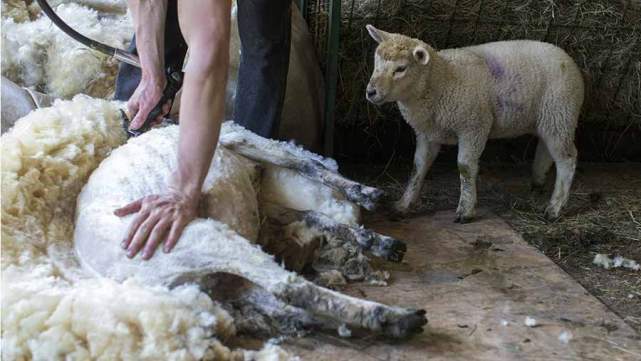
The other day I was talking with Paul Vachon – Paul and his wife Amber are the caretakers at Exchange Place. They live on site and part of their duties is to take care of the animals. When I called Paul he was in the process of having the sheep sheared. Paul shared an interesting (and kind of amusing) fact that once the sheep have their wool cut off they do not immediately recognize each other and so they act aggressively toward one another – butting heads and being aggressive little sheep. It is only after a while, once they begin to recognize the scent of each other that they calm down and realize that they do, indeed, know one another.
These weeks of quarantine and lockdown have abruptly shorn away the coats of busy-ness that we all often live by and even measure our worth by. Most of us have been stripped down from the daily routines of our lives – not running to the next meeting or business trip nor driving the kids to another school or sporting event. Not planning this event or doing a task for a group we are involved with. Not rushing out the door for a dinner and concert with friends after just getting in from a full day of work. I am not saying these things are bad. All these activities can be very good and even worthwhile but we do wrap ourselves in busy-ness to the point that our activities become our identity. These weeks have shorn all of this away. Now, without them, do we recognize ourselves and do we recognize each other?
“Be still and know that I am God,” – Psalm forty-five. Is there pain and suffering during this time of pandemic? Yes, intense pain. We pray for those who have lost their lives and for those who are mourning the loss of a loved ones. We pray for families facing economic hardships. We pray for our healthcare workers being pushed to their limit. We pray for our brothers and sisters in poorer countries who do not have the advantages that we have to ride this storm out. For all of these we pray and we will continue to pray.
Be still and know that I am God. In the gospel for today, our Lord tells us about the true shepherd. The true shepherd comes in love in order to protect and bring life. The true shepherd does not come as a thief to hurt, steal and wound. The true shepherd alone has the authority to walk through the gate and he calls each sheep by name. The sheep, we are told recognize his voice and in that recognition they know they are safe and they willingly follow after the shepherd.
We – on our part – must recognize his voice and the only way we can do that is if we hear his voice. Be still … be still … and know that I am God. Being shorn from all the distractions of life can indeed be unnerving, even frightening. We can be like those little sheep with their wool just cut off – confused and even aggressive. But we can also learn to listen. We can learn to be still and God will speak to us and the true shepherd will come to us to bring true life and protection.
And the true shepherd will tell us who we really are. Our identity is not all of our activities (no matter even how good these might be) our identity is something much deeper. Our true identity is in being a child of God, beloved of the Father. Can we just be in this truth and let it sink into our hearts?
Be still and know that I am God. …the sheep follow him, because they recognize his voice …
“Tal vez … solo tal vez, una lección que aprendemos de estas semanas de cuarentena y encierro es que no tenemos que ir sin parar todo el tiempo a fin de vivir la vida”. Este fue un pensamiento que compartí en las redes sociales el otro día y ha recibido múltiples “me gusta”. Solo hubo dos advertencias, ambas de padres de niños pequeños que trabajan desde casa y ahora también educan a sus hijos en casa, compartiendo que sus vidas están más ocupadas que nunca. Es cierto que Dios bendiga a los padres de niños pequeños en estos días.
Eso se entiende aunque mantengo mi pensamiento original: no tenemos que ir sin parar todo el tiempo a fin de vivir la vida.
El otro día estaba hablando con Paul Vachon. Paul y su esposa Amber son los cuidadores del Exchange Place. Viven en el sitio y parte de sus deberes es cuidar a los animales. Cuando llamé a Paul, estaba en el proceso de esquilar las ovejas. Paul compartió un hecho interesante (y un poco divertido) de que una vez que se le corta la lana a las ovejas, ellas no se reconocen de inmediato y, por lo tanto, actúan agresivamente la una con la otra, golpeándose las cabezas y siendo pequeñas ovejas agresivas. Es solo después de un tiempo, una vez que comienzan a reconocer el olor de las demás, que se calman y se dan cuenta de que sí se conocen.
Estas semanas de cuarentena y encierro han eliminado abruptamente los abrigos del ajetreo con el que todos vivimos e incluso medimos nuestro valor. La mayoría de nosotros hemos sido despojados de las rutinas diarias de nuestras vidas: no tener que correr a la próxima reunión o viaje de negocios, no tener que conducir a los niños a la escuela o a otro evento deportivo. No tener que planificar un evento o realizar una tarea para un grupo con el que estamos involucrados. No salir corriendo por la puerta para una cena y concierto con los amigos después de llegar de un día completo de trabajo. No digo que estas cosas sean malas. Todas estas actividades pueden ser muy buenas e incluso valen la pena, pero nos envolvemos en ocupaciones hasta el punto de que nuestras actividades se convierten en nuestra identidad. Estas semanas han evitado todo esto. Ahora, sin ellas, ¿nos reconocemos y nos reconocemos mutuamente?
“Estén quietos y sepan que Yo soy Dios”, Salmo cuarenta y cinco. ¿Hay dolor y sufrimiento durante este tiempo de pandemia? Sí, dolor intenso. Oramos por aquellos que han perdido la vida y por aquellos que están de luto por la pérdida de un ser querido. Oramos por las familias que enfrentan dificultades económicas. Oramos para que nuestros trabajadores de la salud que están siendo empujados a su límite. Oramos por nuestros hermanos y hermanas en los países más pobres que no tienen las ventajas que tenemos para soportar esta tormenta. Por todo esto rezamos y seguiremos rezando.
Estén quietos y sepan que Yo soy Dios. En el evangelio de hoy, nuestro Señor nos habla sobre el buen pastor. El buen pastor viene con amor para proteger y dar vida. El verdadero pastor no viene como ladrón para hacer daño, robar y herir. El verdadero pastor solo tiene la autoridad de entrar por la puerta y llama a cada oveja por su nombre. Se nos dice que las ovejas reconocen su voz y en ese reconocimiento saben que están a salvo y están dispuestas a seguir al pastor.
Nosotros, por nuestra parte, debemos reconocer su voz y la única forma de hacerlo es si escuchamos su voz. Estén quietos … estén quietos … y sepan que Yo soy Dios. El ser despojado de todas las distracciones de la vida puede ser desconcertante, incluso aterrador. Podemos ser como esas ovejitas con la lana cortada, confundidas e incluso agresivas. Pero también podemos aprender a escuchar. Podemos aprender a estar quietos y Dios nos hablará y el verdadero pastor vendrá a nosotros para traer vida y protección verdaderas.
Y el verdadero pastor nos dirá quiénes somos realmente. Nuestra identidad no es todas nuestras actividades (no importa cuán buenas sean), nuestra identidad es algo mucho más profundo. Nuestra verdadera identidad es ser un hijo de Dios, amado por el Padre. ¿Podemos estar en esta verdad y dejar que se sumerja en nuestros corazones?
Estén quietos y sepan que Yo soy Dios. … las ovejas lo siguen porque reconocen su voz …
 “…as the first day of the week was dawning, Mary Magdalene and the other Mary came to see the tomb.” Each of the four gospels, in its account of the resurrection of Jesus, specifically states the time. It was dawn, it was early in the morning, the day was just breaking.
 In today’s gospel there is a development in the thought of the man born blind and in his proclamation of who Jesus is. It is important to note that just as the questioning the man faces increases, just as his social supports fall away and just as the pressure on him gets heavier – the man’s knowledge of who Jesus is and his proclamation of who Jesus is increases.
 There is a salvific equation at work in the readings for this first Sunday of Lent and it is important to recognize as we begin this Lenten season and our journey to Easter. The equation is this: we sinned by trying to grasp the glory of God and God saves us by letting go of His glory and becoming a servant.
 I have been reading a book by Liz Forkin Bohannon entitled “Beginner’s Pluck” – not “luck” but “pluck” with a “p”. The author has some good insights and she is not afraid to take on some sacred cows in our times and culture. One of these sacred cows is the myth of “finding your passion” in life and she addresses this in a chapter aptly entitled, “Stop Trying to ‘Find Your Passion’”.
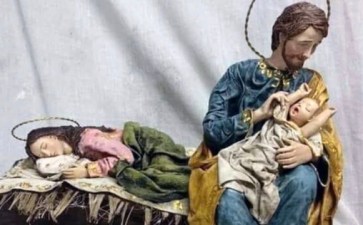 It was more than just the dream for Joseph that led him to take the young, pregnant Mary into his home – even as he knew that his decision would not be understood by his neighbors and that he would be mocked and ridiculed for welcoming Mary. No person wants to be seen as a fool. Yes, the angel appeared in a dream and certainly there must have been the glory and power of God revealed but God never overwhelms our volition. God never manipulates. God always invites our free choice and our free response.
 I am a fan of the work and the writings of Wendell Berry. Here, I would like to share #7 from his “Window Poems”.
 Recently the Knights of Columbus decided to begin an initiative to help refugees at the U.S. – Mexican border. Carl Anderson, the Supreme Knight of the Knights of Columbus, specified in his announcement that this was not a “political statement” but a statement of principle. I find it telling that the head of this fraternal, international Catholic organization guided by the tenets of the Catholic faith felt it necessary to make this distinction.
 One thing that the Scriptures do not shy away from presenting is tragedy. We like tragedy when it is on the screen or in a play but not so much in our lives. This is partly why we invest in IRA’s. Yet, tragedy is a part of life (Sacred Scripture knows this) and no one gets through this life without experiencing tragedy in one form or another.
 The Alternate Path