The Preacher as Servant to Dialogue – Insights from Bl. Pope Paul VI

Tags

, , , , ,

Pope Paul VIIt is always helpful to notice references in writings, especially papal writings, and then be willing to explore those writings referenced.  With a little digging you can be brought to some insightful, advantageous and even saving information.  Since I wrote my post on the preacher as servant of dialogue I have done some digging into the writings of Bl. Pope Paul VI.  Pope Francis references Paul VI quite extensively in Evangelii Gaudium.  Specifically referenced is Paul VI’s 1975 Apostolic Exhortation Evangelii Nuntiandi where the pontiff reflects on the Church’s responsibility of evangelization in the modern world.  What I have found of interest though (and the purpose for this post) is an earlier writing of Pope Paul VI – his first encyclical, Ecclesiam Suam (ES) and its section on the work of dialogue.

In this encyclical, Paul VI explores how the world and the Catholic Church can meet one another and even get to know and love one another.  (ES, 3)  When considering how the Church should engage the world, Paul VI quickly discards the ever-present temptation to focus solely on the evils of the world and crusade against them as well as the desire to subjugate the world in a form of theocracy.  Neither of these approaches will work.  Rather, Bl. Paul VI concludes; …it seems to Us that the sort of relationship for the Church to establish with the world should be more in the nature of a dialogue, though theoretically other methods are not excluded.  We do not mean unrealistic dialogue.  It must be adapted to the intelligences of those to whom it is addressed, and it must take account of circumstances. (ES, 78)

Paul VI then goes on to stress that this form of encounter is demanded due to dynamics prevalent within modern society – the understanding of the relationship between the sacred and profane, the pluralism of society and the maturity of thought men and women have attained in our modern world.  I think it safe to say that gone are the days (at least here in the U.S.) when the priest is the most educated person in the room.  But there is a deeper impetus for the discipline of dialogue and that is the respect it demonstrates.  The willingness to dialogue by its very nature witnesses to a person’s esteem for the other as well as one’s own understanding and kindness.  These are attitudes that every disciple of Christ, especially those called to the task of preaching, should cultivate and exemplify in life.

Our dialogue, therefore, presupposes that there exists in us a state of mind which we wish to communicate and to foster in those around us.  It is the state of mind which characterizes the man who realizes the seriousness of the apostolic mission and who sees his own salvation as inseparable from the salvation of others. (ES, 80)

If we want dialogue then we, ourselves, must be willing to dialogue authentically and, not only that, the discipline of dialogue builds on dialogue. The preacher, as servant to dialogue, must be willing and, in fact, is duty-bound to work at fostering this discipline in our world today.  Our world needs the discipline of dialogue.

Bl. Paul VI roots preaching in this greater task of the Church’s dialogue with our world.  Preaching is the primary apostolate … We must return to the study, not of human eloquence of empty rhetoric, but of the genuine art of proclaiming the Word of God.  We must search for the principles which make for simplicity, clarity, effectiveness and authority, and so overcome our natural ineptitude in the use of this great and mysterious instrument of the divine Word, and be a worthy match for those whose skill in the use of words makes them so influential in the world today and gives them access to the organs of public opinion.  We must pray to the Lord for this vital, soul-stirring gift… (ES, 90-91)

Paul VI then goes on to list out the proper characteristics of dialogue and, if proper for dialogue, then proper for preaching as the preaching task flows by nature out of the greater work of the Church’s dialogue with our world.

Clarity before all else; the dialogue demands that what is said should be intelligible. (ES, 81)  The caliber of an artist is found not in a work of art standing alone and isolated as if in a vacuum but in the ability of a work of art to engage people where they are at in their lives, to move them and to call forth a response, a dialogue.  If there is no engagement, it is fair to question if it is true art.  Striving for clarity in dialogue and striving for clarity in preaching matters.  Let there be no mistake, this takes work and practice but this ability to translate the realities of faith and gospel into the language of where people are at is extremely important and it marks authentic preaching.

Our dialogue must be accompanied by that meekness which Christ bade us learn from Himself: “Learn of me, for I am meek and humble of heart.” (ES, 81)  Our dialogue and our preaching must not be marked by arrogance or bitterness.  We must learn the meekness of Christ himself because in this lies the power of the gospel.  This “meekness of Christ” sets the words of the Church apart from all the other words that continuously wash over people in their everyday lives.  We should not underestimate this characteristic of meekness in the lives of people who are daily inundated and even assaulted by words wrapped in bias, anger, coercion and manipulation.

Our dialogue must have a confidence not just in the power of our own words (which could easily lead to arrogance) but also in the good will of both parties to the dialogue. (ES 81)  We must continually seek the good in the other and this must mark the words that we use and the dialogue we engage in.  To be a good preacher one must be convinced that people are yearning for the Word of God … and they are.  It might not be fully expressed, the desire might even be distorted, hidden or stunted but it is there and the preacher must learn to both listen for that desire and speak to that truth within the heart of people. This is not an easy discipline to acquire in a world that continually seeks to isolate and separate people but it is essential and is truly a counter-cultural witness.

Authentic dialogue must have the prudence of a teacher who is most careful to make allowances for the psychological and moral circumstances of his hearer … The person who speaks is always at pains to learn the sensitivities of his audience, and if reason demands it, he adapts himself and the manner of his presentation to the susceptibilities and the degree of intelligence of his hearers. (ES, 81)  Prudence is a cardinal virtue and can be practiced and developed by any person.  The virtue of prudence is fulfilled in the supernatural virtue of Counsel, one of the seven gifts of the Holy Spirit.  Prudence seeks to be aware of the other person(s).  The good shepherd knows his sheep.  Prudence can be seen as a proactive movement of respect.  It is not learning the sensitivities of the other in order to manipulate with the intent of achieving some desired result but learning about the other person in order to meet that person where he or she is at.  Authentic preaching must always avoid the temptation to manipulate.  I believe that Bl. Paul VI understood this because immediately after this reflection on prudence as a constitutive element of true dialogue he writes,

In a dialogue conducted with this kind of foresight, truth is wedded to charity and understanding to love.

And that is not all.  For it becomes obvious in a dialogue that there are various ways of coming to the light of faith and it is possible to make them all converge on the same goal.  However divergent these ways may be, they can often serve to complete each other.  They encourage us to think on different lines.  They force us to go more deeply into the subject of our investigations and to find better ways of expressing ourselves.  It will be a slow process of thought, but it will result in the discovery of elements of truth in the opinion of others and make us want to express our teaching with great fairness.  It will be set to our credit that we expound our doctrine in such a way that others can respond to it, if they will, and assimilate it gradually.  It will make us wise; it will make us teachers. (ES, 82-83)

In the dynamic of manipulation, I try to force you to change, consciously or unconsciously.  Authentic dialogue stands opposed to manipulation in all its forms.  Authentic dialogue summons both parties to an honest investigation of the subject at hand as well as a fearless rooting out of the tendencies of manipulation that each one of us carry within ourselves.

Finally, the discipline of dialogue and preaching must begin in the witness of the preacher’s own life if it is to be authentic and salvific in the lives of other people.

Since the world cannot be saved from the outside, we must first of all identify ourselves with those whom we would bring the Christian message – like the Word of God who Himself became a man.  Next we must forego all privilege and the use of unintelligible language, and adopt the life of ordinary people in all that is human and honorable.  Indeed, we must adopt the way of life of the most humble people, if we wish to be listened to and understood.  Then, before speaking, we must take great care to listen not only to what men say, but more especially to what they have in their hearts to say.  Only then will we understand them and respect them, and even, as far as possible, agree with them. 

Furthermore, if we want to be men’s pastors, fathers and teachers, we must also behave as their brothers.  Dialogue thrives on friendship, and most especially on service. (ES, 87) 

Dialogue and preaching, if it is to be authentic, must become incarnate which means that the preacher’s life must also become incarnate within the life of his community just as the Word of God became incarnate.  We are told at different times in the gospel story that Jesus was aware of the thoughts of other people before they ever even expressed them.  This was no form of magical clairvoyance on the part of our Lord but the ability to listen to hearts.  The Church has been given this ability, the preacher must cultivate this ability.  “Heart speaks to heart” noted Bl. John Henry Cardinal Newman.  The preacher must learn how to listen to both the heart of God speaking to the heart of his people as well as to the reply and yearning of God’s people.

To end, I would like to share one further quote from Ecclesiam Suam. 

To this internal drive of charity (the gifts Christ has bestowed on the Church in abundance) which seeks expression in the external gift of charity, We will apply the word “dialogue.”

The Church must enter into dialogue with the world in which it lives.  It has something to say, a message to give, a communication to make. (ES, 64-65)

The preaching task is rooted in the greater task of the Church’s dialogue with the world.  As a servant to dialogue, the preacher shares intimately in this task.  Hopefully, we can learn from the insight and wisdom of Bl. Pope Paul VI.

Thoughts on the Sunday readings: “Something happened” (Third Sunday of Easter – B)

Tags

, , , ,

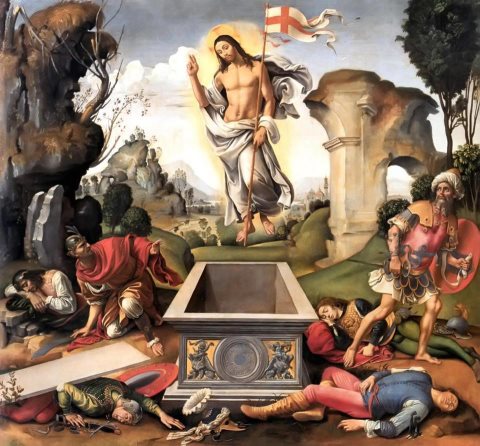
resurrectionWhen I was a college student at East Tennessee State University and just starting to come back to Church, I took a college class on the history of Christianity.  When we arrived at the subject of the resurrection I remember our professor stating (much to the chagrin of some of the students) that the secular academic discipline of history could not make a conclusive statement either for or against the resurrection.  But what the discipline of history could say is that “something happened” that enabled those first disciples to move from remaining behind locked doors in fear as we find in today’s gospel (Lk. 24:35-48); “But they were startled and terrified and thought that they were seeing a ghost.” to boldly proclaiming Christ as Messiah in the public square as we find Peter doing in today’s first reading (Acts 3:13-15, 17-19); “You denied the Holy and Righteous One and asked that a murderer be released to you … Repent, therefore, and be converted…” 

That class (and I would say specifically that statement “something happened”) was one of the key components that led to my returning to the Church and the active practice of the faith.  What was it that enabled Peter (the one who had denied knowing Jesus) and those first disciples (the ones who had run away) the ability to move from fear to being bold and public proclaimers of Christ and the resurrection?  Was it a hoax they cooked up in their minds to steal the body away and see how long they could ride the “Jesus as Messiah” train?  Hoaxes do not last so long (two thousand plus years) nor show such continued vitality and chronic vigor.  Was it that the “spirit” of Jesus had risen – his vision of the world and living together in harmony – while his body remained dead in the tomb?  But who willingly chooses martyrdom for an idea or the “spirit” of someone’s thought (as we see throughout history beginning with those first fearful disciples)?

In today’s gospel we are given some specifics about the resurrection that are worthy of note.  Jesus again appears to his disciples.  Again he greets them with, “Peace be with you.”  Knowing their fear and their uncertainty he then goes on to say,

“Why are you troubled?  And why do questions arise in your hearts?  Look at my hands and my feet, that it is I myself.  Touch me and see, because a ghost does not have flesh and bones that you can see I have.”  And as he said this, he showed them his hands and his feet.  While they were still incredulous for joy and were amazed, he asked them, “Have you anything here to eat?”  They gave him a piece of baked fish; he took it and ate it in front of them.” 

Neither hoaxes nor ideas ask for a piece of fish to eat.

There are many ways to run from the scandal of the resurrection.  All sorts of people throughout history have proven to be quite adept at it.  One such way (often touted as being an “enlightened” approach) is to see the resurrection as a nice idea – Jesus’ spirit continuing to live on.  But today’s gospel is quite clear.  Jesus is not a ghost, not a vague idea.  Jesus is risen – body and soul!  He is the firstborn from the dead.  Jesus is risen and he has not risen in vain.

If we are to be Christian then we must be willing to encounter the fullness of the resurrection.  We must be willing to encounter that “something that happened” as my professor said so many years ago and in that encounter we must be willing to make a fundamental faith statement, “I believe”.   Only this will move us from fear to peace.

There is a saying that contends that you must have “skin in the game” in order to be truly committed to something.  When the Word became incarnate, when Christ suffered his passion and crucifixion, when the resurrected Christ shows his wounds which he still bears in glory, then God shows that he has “skin in the game” for our salvation.  If we want to know the peace and life of the gospel then we also must be willing to have “skin in the game”.  By our lives, our words, our choices and our actions we must profess, “I believe”.  Nothing less will do.

This encounter and the peace and courage it alone brings, continues today.  We can look at the successors to Peter himself as witnesses of this to our world.  These men do not have any military or economic might yet they continually stand before the powers of our world with nothing other than the word of the gospel.  Think of St. John Paul II confronting communism.  I remember when Pope Emeritus Benedict travelled to Mexico and Cuba during his pontificate.  In the face of the chaotic violence of the drug trade engulfing Mexico the eighty-five year old pontiff proclaimed firmly and resolutely that drug trafficking is a sin and it is wrong.  Then going on to Cuba at a Mass where the very Cuban government sat in the front rows, again this elderly soft-spoken man called for greater freedom.  Think of Pope Francis calling the Mafia out and all worldly powers that would de-humanize the person made in God’s image.  What enables these men to do this?  These men have encountered Christ risen and alive – not an idea of Christ, not just the spirit of Christ – but Jesus Christ himself and, from that encounter, each one has made his faith statement and has moved from fear to a bold peace.

This peace is there for us also if we also are willing to encounter Christ risen and if we are willing to profess him as Lord!

Easter Sunday – Mary, Peter and John ran!

Tags

, , , ,

peter_and_john_running-dan-burr-mindreChildren like to run.  Have you ever noticed this?  Watch children at play – pure energy!  In children we see the body just needing to move – not weighed down, not encumbered by age or past hurts – pure life and pure joy!  Children run and in this running we find a witness to life and to joy!

The gospel (Jn. 20:1-9) today tells us that Mary of Magdala ran to the disciples once she saw that the stone had been removed from the tomb’s entrance.  The gospel then goes on to tell us that Peter and John ran to the tomb to investigate.  When you ask children at play, “Why do you run?” they probably will not be able to give an answer.  Maybe at best they will say, “Because we can!” or “We just want to!”  The running is just a witness to live within them.  Why did Mary run?  Why did Peter and John run?  Was it a conscious decision on their part or rather, like children, did the energy of a new life impel them?  I think it was the latter.  An unimaginable energy, an unheard of joy – the tomb was empty!  Death has been conquered!  They ran simply because they had to!

For too long history has wept before the tombs of our world.  How countless the number of men and women who have died by violence, hatred, war, famine, isolation and abandonment!  Even today it continues.  Before the tombs of our world our hearts are left heavy and we feel abandoned.  Before the tomb there is no joy, no desire to run because there seems to be no future – no hope.

Hope impelled Mary and the two disciples to run.  They ran because hope was born again in their hearts!  Not a hope born of this world that ends with the tomb but a hope born of heaven that empties the tomb from within!  In the resurrection of Christ the tomb is emptied from within!  Christ has entered even death itself – abandonment from God – and Christ has overcome death from within.  Death, sin and evil are swallowed up!  The tomb is emptied from within.  Death is robbed of its power!

The tombs of our world remain.  Sadly, too many people still weep before the tombs of violence, war, abandonment and isolation but the finality of the tomb has been broken.  Its power vanquished!

Where is the glory of the resurrection?  It is in the gospel that says there is a different way to live other than the logic of the tomb – a way that says “no” to violence, “no” to abandonment and to war, hatred and isolation.  The glory of the resurrection is found in the heart of the Christian who says “yes” to this different way of living – “yes” to friendship, “yes” to forgiveness and reconciliation, “yes” to peace and “yes” to the belief that death is not the final word!

And when we live this different way?  We run, we run so fast!  We run with Mary and Peter and John!  We run a new way with a new hope born of heaven!  Life itself impels us to run!

Christ is risen!  He is risen indeed!

Thoughts on the Sunday readings: “We would like to see Jesus.” (5th Sunday of Lent – B)

Tags

, , , , , , ,

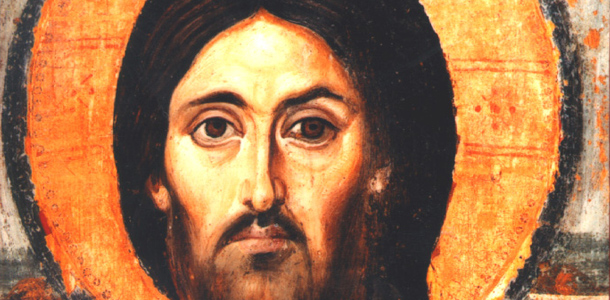
face_of_jesus_610x300“We would like to see Jesus.”  This is the request of some Greeks from today’s gospel.  (Jn. 12:20-33)  “We would like to see” the one who teaches with authority.  “We would like to see” the one who is compassionate, who welcomes the sinner, who goes out to meet others, who weeps for his friend who has died.  “We would like to see” the one who has come not to judge but to save.  “We would like to see” this teacher who says that there is a different way to live.  “We would like to see” the one who says “no” to the logic of violence and isolation.  “We would like to see” the one who does not live according to the law of reciprocity but rather according to a different law – the law of love.

We all know the law of reciprocity.  It is so present, so seemingly uncontested, that we easily take it for granted that it is just the way things are.  The law of reciprocity says an eye for an eye and a tooth for a tooth!  If you do this to me then I can do that to you!  It is a law that perpetuates the cycle of violence.  It is a law of strict justice/retribution alone.  It is a law that leads one into viewing other people solely in terms of being competitors, even adversaries, rather than brothers and sisters.  Due to this, it is a law that isolates and breaks people, communities and nations into opposing camps.  It is also a law that ultimately binds and enslaves.  Jesus never lived according to the law of reciprocity, rather he lived according to the law of love and because of this Jesus is the freest person that has ever walked the face of the earth.

Behind this simple request of these Greeks is a profoundly fundamental yearning and recognition of the human heart – the desire to live differently, to escape the logic of violence and the tyranny of reciprocity.  We yearn for this.  On our own, we cannot achieve it.  “Sir, we would like to see Jesus.”  We need Jesus because he alone can forgive what needs to be forgiven within ourselves, because he alone can make new of what has been made old through sin.  Without Jesus we are left under the law of reciprocity – it is the best we can hope for.  With Jesus, we can learn and we can live the law of love and we can gain that freedom that Jesus himself knew.  We can be made free!

On the surface it seems that Jesus does not answer the request of the Greeks brought to him via Andrew and Philip.  Rather than saying, “Bring them here,” he goes off into a reflection on the Son of Man being glorified. But this reflection is his response!  “You want to see me?  You want to see the one who lives a different way, the one who does not live according to the logic of violence and the law of reciprocity?  You will see this and so much more!  Watch what happens on Golgotha, watch what happens within the tomb itself!  Watch what happens within “this hour”!

Then he give us God’s answer to that deepest disconnect of the human heart.  “You wish to see me because you also want to be free of the law of reciprocity, you also want to overcome the sad logic of violence and isolation.  You want to live differently.”  “Amen, amen, I say to you, unless a grain of wheat falls to the ground and dies, it remains just a grain of wheat; but if it dies, in produces much fruit.  Whoever loves his life loses it, and whoever hates his life in this world will preserve it for eternal life.”

Freedom, a different way to live other than the dictates of reciprocity, is found when a person lets go of self and lives for others … in Christ.  This last part is often overlooked.  Sadly, even by teachers of Christianity sometimes.  Jesus is not proposing a vague philosophy open to any person apart from him.  The request of the Greeks was, “We would like to see Jesus.”  Jesus – not his teachings, not his ideas but the person.  When we die to self and live for others within the reality of Christ’s own sacrifice then the logic of violence and isolation can be overcome.  Christ goes on to say, “Whoever serves me must follow me, and where I am, there also will my servant be.  The Father will honor whoever serves me.”  

Life can be lived in a different way.  The sad logic of violence and isolation is not inevitable.  The new law of love is possible!

“We would like to see Jesus.”

Thoughts on the Sunday readings: “Christ crucified” (3rd Sunday of Lent – B)

Tags

, , ,

Jesus-Christ-from-Hagia-SophiaIt has been said that when it comes to Jesus there are basically only three options to choose from: either Jesus is a madman, a lunatic (How many people throughout the centuries, struggling with sanity, have concluded that they must be God?), either he is a liar and therefore one of the most evil people of all history, someone willing to deceive generations into the belief that he is God or lastly, he actually is who he says he is.  These are the options we have to choose from and if we are to be authentic in life then at some point we must each make a choice.

For Christians it all comes down to this one person who lived nearly two thousand years ago, who was poor, who never travelled in his adult life beyond his immediate area, who did not seem to have any formal education, who preached the good news of a God of love and humility and who was put to death by the powers that be.  If you are looking for an ascetic or a yogi to follow, then do not look to Jesus, he was neither.  If you are searching for a great philosopher or guru then do not look to Jesus.  If you are looking to a man of success in order to feel validated and bask in the glow of, then do not look to Jesus.  Jesus is none of these things.  He is something totally different all together.  Jesus cannot and will not be captured and contained by any of our definitions and biases.  Jesus can only be encountered.  It is because of this truth that Paul is able to write, “…Jews demand signs and Greeks look for wisdom, but we proclaim Christ crucified…” (1 Cor. 1:22).  “Christ crucified” – these two words held together break every human presumption about God and how he operates, about what it means to be human, about life itself.  For Christians it all comes down to a person – to Christ crucified.

In his book, “The Lord” Romano Guardini writes:

God did not reveal himself merely by teaching a truth, giving us commands to which he attaches consequences, but by coming to us, personally.  His truth is himself.  And to him who hears, he gives his own strength, again himself.  To hear God means to accept him.  To believe means to accept him in truth and loyalty.  The God we believe in is the God who “comes” into heart and spirit, surrendering himself to us. 

The “temple” Jesus will raise up is not a building, not a compilation of religious laws and precepts, not a system of political or philosophical thought, not an idea of a better world.  The “temple” that will be raised up is Jesus himself, “Christ crucified.”

We cannot constrain Jesus, neither can we explain him away nor fit him into a nice, neat, little category.  All we can do is encounter Jesus – the one who once was dead but who now lives – and in this is found life.

Thoughts on the Sunday Readings: Transfiguration and the Cross (Second Sunday of Lent – B)

Tags

, , , ,

A priest of our diocese tells the story that one day he and some friends were out driving and they were coming upon Smyrna, TN.  As they approached the city they started arguing about its correct pronunciation – was it “Smyr-na” or “Smeer-na”?  It was close to midday so they decided to ask someone when they stopped for lunch.  They came to a fast food restaurant and once inside the group went to a lady who was standing nearby.  The priest said, “Ma’am, could you please help me and my friends with a debate that we are having?  Could you, slowly and distinctly, tell us the name of the place in which we are?”  The lady gave them a quizzical look and slowly said, “Bur … ger … King.”

transfiguration_of_jesus_christIt is good to know where we are – both geographically and, for our purposes this Sunday, in the life of faith and discipleship.  Today, as we continue our journey toward Jerusalem with the Lord we are at the mount of Transfiguration but it is worthwhile to note both that this mountain points toward Golgotha – the mountain of the cross and sacrifice of the Son – and why it points that direction.

There is a beauty to sacrifice.  Cinema, in its best moments, is aware of this.  Think of those moments in movies that wrench our guts when the hero or heroine sacrifices (the soldier lets go of the rope and plummets to his death so that others in the troop might make it, Obi-Wan Kenobi lets Darth Vader strike him down, the priest in “The Mission” walks directly into a hail of gunfire while carrying the monstrance).  But the beauty of sacrifice is not limited to “big” moments.  Sacrifice can be seen in the parent who works two or three jobs in order to provide for his or her children, it can be found in the life of the teacher whose great work or opus is not a world-renowned symphony but generations of students whose lives are transformed by the love of learning.  There is a beauty in sacrifice.

Before the sacrifice of the cross to which we are journeying with our Lord is the moment of Transfiguration.  Before the sacrifice of the cross, all other sacrifices pale in comparison.  The sacrifice of the cross is infinite.  God dies that we might have life.  We killed God.  Do we recognize the scope of this?  Sometimes the true depth (and beauty) of sacrifice can only be recognized in contrast to what might have been.

Romano Guardini’s book, The Lord, is a powerful exploration of the fullness of the Christian mystery.  One thing that Guardini explores in his book is the great “What if?”  What if Jesus had not been crucified?  We assume that the crucifixion was just the way it had to happen, the way salvation was to be won.  Not necessarily so, asserts Guardini.  Within the Book of the prophet Isaiah running alongside the prophecies of the suffering servant, Guardini points out, are the visions of God’s mountain where peace is established, people forget the ways of war and right relationship is restored.  God is revealed in the midst of his people.  A choice is brought to us.  Christ, the humble God-man, stands before every part of society, yet each one denounces him and each one turns away.  The religious leaders call him a blasphemer, the government/military leaders mock him and wash their hands of him, the very people who welcomed him into Jerusalem waving palm branches later denounce him in favor of a criminal, even his disciples run away.  What if we had not turned away?  What if we had not denounced?  Yet we did.  Christ must go the way of the cross.

crucifix icon6Do we recognize the depth of the sacrifice?  Before the horror of the cross we have the moment of Transfiguration.  What might have been?  There is a spiritual that is usually sung during Holy Week but it is appropriate for all of Lent, “Were you there when they crucified my Lord?  Sometimes it causes me to tremble … tremble … tremble … Were you there when they crucified my Lord?”  The depth of the sacrifice of Christ…

Going back to the story shared earlier, it is good to know where we are in the spiritual life, in our journey toward Jerusalem.  This Sunday, in the beauty and awe of the Transfiguration … of who Christ is and of what might have been … we recognize the depth and love of the sacrifice of the cross.

God came to us.  We turned away.  Christ must go the way of the cross.

Another spiritual, “What wondrous love is this that caused the Lord of bliss to bear the dreadful curse, for my soul, for my soul…”

The Preacher as Servant of Dialogue

Tags

, , , ,

christ_preachingRecently, I re-read Pope Francis’ apostolic exhortation Evangelii Gaudium and I was brought to the realization that the Holy Father is proposing, in his section on preaching, the role of “servant to dialogue” as the primary role of the preacher.

Let us renew our confidence in preaching, based on the conviction that it is God who seeks to reach out to others through the preacher, and that he displays his power through human words. (EG, 136)

In the exhortation, Pope Francis begins by calling preachers of the Word to a sacred remembering of the power of preaching.  Throughout Scripture we find God choosing to work with human beings in all of their limits to proclaim his plan and his grace.  From Moses with his stutter through the Old Testament prophets and all their tribulations to John the Baptist to the apostles in their weaknesses and misunderstandings to the great missionary Paul, even though he persecuted the Church – the Word of God is proclaimed. The Word of God needs to be proclaimed in our day also!  People need to encounter the Word of God in all its richness and all of its challenging beauty and the preacher is entrusted with this sacred task!

I find it interesting then, that after making this bold and challenging proclamation, Pope Francis moves to the almost seemingly mundane character of dialogue and conversation as the foundation of preaching.

It is worth remembering that “the liturgical proclamation of the word of God, especially in the Eucharistic assembly, is not so much a time for meditation and catechesis as a dialogue between God and his people, a dialogue in which the great deeds of salvation are proclaimed and the demands of the covenant are continually restated”.   The homily has special importance due to its Eucharistic context: it surpasses all forms of catechesis as the supreme moment in the dialogue between God and his people which lead up to sacramental communion. The homily takes up once more the dialogue which the Lord has already established with his people. The preacher must know the heart of his community, in order to realize where its desire for God is alive and ardent, as well as where that dialogue, once loving, has been thwarted and is now barren. (EG, 137)

To help explore this move toward dialogue and conversation I would like to quote in length a section out of Fr. Robert Barron’s book, The Priority of Christ: Toward a Postliberal Catholicism.

At one point in his book, Fr. Barron reflects on intersubjectivity as a component of true knowledge.

For the Christian, authentic knowledge comes not through isolation or objectification but rather through something like love.  Therefore it should not be surprising that the fullness of knowing would occur through an intersubjective process, with knowers, as it were, participating in one another as each participates in the thing to be known.  If, as the Johannine prologue implies, the ground of being is a conversation between two divine speakers, it seems only reasonable that the search for intelligibility here below takes place in the context of steady and loving conversation.  

In a lyrical and compelling section of “Truth and Method,” Hans-Georg Gadamer reminds us that a healthy conversation is something like a game.  As two players surrender to the movement and rules of the game of tennis, they are carried away beyond themselves in such a way that the game is playing them much more than they are playing it.  In a similar way, when two or more interlocutors enter into the rhythm of an intellectual exchange, respectful of its rules and of one another, they are quite often carried beyond their individual concerns and questions and taken somewhere they had not anticipated, the conversation having played them.  The fundamental requirement for this sort of shared self-transcendence is a moral one: each conversationalist has to surrender her need to dominate the play for her purposes; each must efface herself, not only before the others but, more importantly, before the transcendent goal that they all seek.  To have a conversation is humbly to accept the possibility that one’s take on things might be challenged or corrected, that the other’s perspective might be more relatively right than one’s own.  

Holding these thoughts with those of Pope Francis we can see that preaching has as its true basis and foundation the very common and universal reality of honest conversation and dialogue more so than any latest and trendy fad, philosophy or method regarding public speaking and debate.  Rather than belittling the preaching task these depth explorations of conversation and dialogue show forth the true richness of understanding afforded this important and critical task!

The homily takes up once more the dialogue which the Lord has already established with his people. The preacher of the Word, along with the people of God, is himself caught up in this ongoing conversation between the Lord and his people yet he has a truly unique and important role to play.  The preacher must allow himself to be caught up in the game and therefore overcome the constant and often subtle temptation to dominate the play for his purposes.  This is a renunciation and an asceticism that every preacher must develop in his life.  If a homily is too self-referential then it has missed the mark and probably most of the people of God have already tuned out.  To make use of the above analogy – a person cannot play a good and rousing game of tennis if he is more concerned about how he looks rather than the game!  To preach is to enter into the great game of the dialogue between our risen Lord and his people!

The proper progress of the dialogue though is dependent upon respect of the rules given.  The homilist is to be the servant to dialogue.

The dialogue is Christ’s and not the preacher’s.  If preaching is to mean anything then somehow Christ must speak through the preacher’s words to the heart of those who are gathered.  This means that the preacher must learn how to get out of the way and not try to dominate the play for his own agenda or emotional needs.  Any person acquainted with the task of preaching will know that this is not as easy to do as one might think but it is essential.

For preaching to be effective, the preacher must be in dialogue with Christ and in dialogue with the community of the Church.  The preacher must know Christ and allow himself to be known by Christ fully.   The preacher must know the heart of his community, in order to realize where its desire for God is alive and ardent, as well as where that dialogue, once loving, has been thwarted and is now barren.  In order to know his community, the preacher must be with his community.  He must have the “smell of his sheep” on him as Pope Francis has famously said.  When the community is not known there is always the danger of preaching at people rather than assisting the great dialogue that the Lord has begun.  Would it not be an extremely sad thing for a preacher to come before the gates of heaven only to there be given the realization that his preaching was more of an interruption to our Lord’s great dialogue with his people rather than an assistance?

If authentic preaching has as part of its basis knowledge of the community then homily preparation is just as much about visiting the homebound, celebrating with families, serving the poor and weeping with those who mourn as it is about studying the Scriptures and reflecting on Biblical commentaries.  The preacher who shuts himself away in a rectory or a parish office is stunting his preaching potential and doing a great disservice to his community.  Christ dwells in the midst of his people, especially the poor.  Whenever and wherever Christ is encountered deeper understanding of Sacred Scripture is gained. In order to be a servant of dialogue, the preacher must go out into his community.

A little later in his Exhortation, Pope Francis offers these words that again situate the preaching task squarely in the life of the community with some profound implications: The Lord and his people speak to one another in a thousand ways directly, without intermediaries. But in the homily they want someone to serve as an instrument and to express their feelings in such a way that afterwards, each one may choose how he or she will continue the conversation. (EG, 143) Believe it or not, preacher, it is not your gifted eloquence, flourishing rhetoric or funny jokes that unite heaven and earth! Christ and his people are already united; they are already in dialogue in a thousand ways directly. Daily (in prayer, in struggle, in joy, in temptations, in uncertainty, in gratitude, in the depth of the human heart) Christ and his people are conversing, recognized or not on our part. The preacher does not have the task of scaling the heavens in order to unite heaven and earth (and honestly I don’t believe the people are looking for this). The preacher, as servant of dialogue, does have the task of being open to being led by the Spirit to speak the words that help the people catch a glimpse of how heaven and earth are already united and interacting in their lives! (The Holy Father offers three practical resources to aid in this: appeal to imagery, cultivate simplicity in ones words and be positive.) Upon catching this glimpse, the people will then continue the conversation with the Lord in their own way. As a servant of dialogue the homilist is to listen, to seek to be an instrument and then to let go … then repeat.      

Finally, the preacher himself must both allow the dialogue to carry him as well as call forth sacrifice in his life. As two players surrender to the movement and rules of the game of tennis, they are quite often carried beyond their individual concerns and questions and taken somewhere they had not anticipated, the conversation having played them.  In humble prayer, the preacher must first encounter the Word and let the Word speak to him, once something sparks then the preacher must let the Word carry him to where it wants him to go.  We need to trust that the Word of God is indeed active and alive and we need to trust that the Word will take us to what the community needs to hear.  Within this trust, the preacher must even sacrifice of bit of self for this to happen. To illustrate this dynamic of service to dialogue here are two images given by the author Annie Dillard in her book, The Writing Life:

To find a honey tree, first catch a bee. Catch a bee when its legs are heavy with pollen; then it is ready for home … Carry the bee to a nearby open spot – best an elevated one – release it, and watch where it goes. Keep your eyes on it as long as you can see it, and hie you to that last known place. Wait there until you see another bee; catch it, release it, and watch. Bee after bee will lead toward the honey tree, until you see the final bee enter the tree. Thoreau describes this process in his journals. So a book leads its writer.

You may wonder how you start, how you catch the first one. What do you use for bait?

You have no choice. One bad winter in the Arctic, and not too long ago, an Algonquin woman and her baby were left alone after everyone else in their winter camp had starved … The woman walked from the camp where everyone had died, and found at a lake a cache. The cache contained one small fishhook. It was simple to rig a line, but she had no bait, and no hope of bait. The baby cried. She took a knife and cut a strip from her own thigh. She fished with the worm of her own flesh and caught a jackfish; she fed the child and herself. Of course she saved the fish gut for bait. She lived alone at the lake, on fish, until spring, when she walked out again and found people…

Might it be possible that the New Evangelization is calling forth a new approach to preaching? I believe that Pope Francis is sharing some profound thoughts in this regard for our consideration – the preacher as servant to dialogue.

Thoughts on the Sunday readings: worlds collide and the horizon of the gospel (6th Sunday in Ordinary Time – B)

A few years ago a string of movies came out that all seemed to revolve around the theme of different worlds colliding.  Each movie tended to have a large cast of famous actors representing people from different strata of society – rich/poor, black/white, newly arrived immigrant/born in the country, inner city/suburban, liberal/conservative, whatever cultural war delineation one could come up with it was found in these films.  Something would happen, usually traumatic and often violent (a car crash, a misfired rifle shot), and these separate worlds would all of a sudden be brought into crashing contact with one another.  The movie would then go on to explore how these moments of unexpected encounter changed all persons involved giving, sometimes, a deeper awareness of the common human condition.

In today’s gospel (Mk. 1:40-45), there are also worlds colliding but it is not violent.  A leper and therefore an outcast, comes before a religious teacher who epitomizes the very system of belief that excludes him.  A wounded and ill creature comes before the very one who is Creator and Lord.  One who is seeking mercy comes before Mercy itself.
There is no violence because Christ as “God made flesh” is not in competition with creation.  God is not like us – one creature among other creatures needing to claim his own space by limiting the space of other creatures.  God is the very source of creation itself.  God is non-competitive with his very creation.  God is non-competitive with humanity.  The presence of God in life does not limit the creature’s own flourishing; rather the presence of God enables the creature to truly flourish.  God does not limit my freedom, rather when I allow God into my life his presence enables me to truly become whom I am meant to be.  
The leper in today’s gospel seems to intuit this truth.  “If you wish, you can make me clean … I do will it.  Be made clean.”  
One of the points that the genre of movies mentioned earlier makes is that often we live our lives in our own world, in our own bubbles.  To some extent this is natural and necessary.  We get into our own rhythms in order to get things done, we have our particular group of friends and family, we certainly want to protect and shelter those we care about.  This is all good.  The danger comes when the bubbles we live in begin to restrict the horizon and possibility of the gospel.  We don’t see the poor, we rush past the sick, we become blind to the lonely and the elderly.  We get so focused in that we fail to see out! 
 The Gospel continually invites us to see out, to look away from self, to go to the peripheries and to set our lives not by the limits that our world would impose in how it thinks we are supposed to live our lives but by the horizon of the gospel.  Notice the poor, don’t rush past the sick and ill, be aware of the one who is lonely and the elderly!  Be open to encounter with the other because often this can be a point of grace and even healing in life!
Our Holy Father, Pope Francis, is fully aware of this gospel truth and this is why he continues to call the Church to the peripheries.  He knows that Christ can be found there often in the most unexpected of ways.  He also knows that the Church is continually revitalized by this encounter. 
This weekend at our Saturday vigil and Sunday 12:30 pm Mass we are offering the Sacrament of Anointing for any parishioner in need of physical, emotional or spiritual healing.  As a community and a family we are taking a moment to acknowledge the periphery of illness that is often right before us yet, one we often choose to rush past.  We are making the choice to notice and we are making the choice to lift up our brothers and sisters in prayer.  We are making the choice to set our life as a community by the horizon of the gospel.  This is a holy and good thing to do.              

Thoughts on the Sunday readings: suffering as a "thin place" (5th Sunday in Ordinary Time – B)

There is a story told about Mother Teresa of Calcutta.  A newspaper reporter assigned to write a story on her one day followed the elderly nun around the streets of Calcutta as she made her daily rounds.  At one point, Mother Teresa knelt down to cradle the head of a man who was obviously near death.  As she held his head, oblivious to the sores covering his body and the stench of the man’s illness, Mother Teresa assured him that he would not die alone.  She arranged for the man to be brought to the Home for the Dying that she has founded.  After witnessing all of this the reporter exclaimed to Mother Teresa, “Sister, I would not do what you are doing for a million dollars.”  Mother Teresa immediately replied, “Neither would I!”

Some cultures talk about “thin places”.  The thought is that “thin places” are those places in our world where visible and invisible reality comes into close proximity.  Part of the job of the believer is to recognize the thin place when it is encountered and to seek God’s presence in that place.  Thin places help us to recognize the truth of who we are (both good and bad), what truly motivates us and what calls forth from us true response.  
Certainly the Mass and the celebration of the sacraments are “thin places”.  Here heaven and earth are united and if we let ourselves learn to be open we can be deeply nourished and strengthened for the journey of discipleship.  
Another “thin place” revealed in two of our readings as well as this story about Mother Teresa is suffering in life.  Suffering – whether it be physical, emotional, spiritual – has a way of clearing away distractions and superficials in life.  In suffering we are brought to the truth of who we are and what truly motivates us.  
The story of Job is a reflection on the reality and mystery of suffering.  For any person who suffers, Job’s word’s ring true.  “…troubled nights have been allotted to me.  If in bed I say, ‘When shall I arise?’ then the night drags on; I am filled with restlessness until the dawn.  My days are swifter than the weaver’s shuttle; they come to an end without hope.”  The Book of Job invites us into the mystery of suffering not as a problem to be solved but a mystery to be lived and even a “thin place” where God is encountered and the truth of who we are can be found.  
In the gospel, we are told that Simon’s mother-in-law “lay sick with a fever”.  Christ is not unmoved.  We are told that Christ, “approached, grasped her hand, and helped her up.”  “Approached … grasped … helped” are not words to pass over lightly.  These words reveal the truth of who God is.  God is not unmoved or uncaring toward our pain and suffering.  Jesus, we are told, entered into the house of Simon and Andrew and he approached the woman who lay ill. 
God cares and God chooses to be involved in our lives and our world.  And we need this.  This is where the truth of who we are is also revealed.  We stand in need of a God who cares.  The wound within ourselves is too deep, too much for us to overcome on our own.  We need a God who will approach us, who will grasp our hands and who will help us up if we just ask.  We have this is Jesus. 
Mother Teresa was right – she wouldn’t do her great work of mercy and caring for a million dollars but she would do it for a God who cares and a God who loves.    

St. Francis and the Wolf of Gubbio

A couple of summers ago I went with a pilgrimage group to Ireland.  One evening, near the end of the pilgrimage, I went out for a walk by myself.  Wandering around the streets of the town, I walked into a small store that seemed to sell a variety of items.  Although the store did not seem to be a religious goods store I immediately noticed a little statue of St. Francis and the wolf of Gubbio.  I bought the statue and it sits on my window sill today. 

The story of the saint and the wolf is that the wolf terrorized the inhabitants of the small Italian town.  Not only did the wolf kill and devour livestock but it began to attack and devour humans.  All attempts to kill the wolf failed and the people of the town would literally shut the town down in fear whenever the wolf would appear.  St. Francis heard of this and decided to go and meet the wolf.  The huge wolf rushed toward Francis as soon as he saw the saint approaching his lair.  St. Francis made the sign of the cross and commanded the wolf in the name of God to stop his terrorizing of the town.  Immediately, the wolf became docile before the saint.  Francis went on to condemn the wolf for his attacks not just on animals but upon men and women who are made in the image of God.  Francis told the wolf that if he ended his attacks he would see to it that the inhabitants of Gubbio would provide him with the food he needed.  The story goes that the wolf placed his paw in Francis’ hand in agreement.  Francis then walked the docile wolf back into the main square of Gubbio to the astonishment of the inhabitants and there reiterated the promise.  Again the wolf placed his paw in the saint’s hand in agreement.  The saint had tamed the wolf. 
Recently, I have been reading Romano Guardini’s book “The Lord”.  I came across the following passage and it has cast a new light on the story of St. Francis and the Wolf of Gubbio.  
It is also said that the sheep heed the Shepherd, because they know his voice. Is it true that men recognize Christ’s call and respond to it? In one sense it must be, for he has said so; yet much in me qualifies the statement. Actually I respond much more readily to the call of ‘the others’; I neither really understand Christ’s summons nor follow it. Therefore, in order that I may hear, he must not only speak, but also open my ears to his voice. Part of me, the profoundest part, listens to it, but superficial, loud contradiction often overpowers it.  The opponents with whom God must struggle in order to win us are not primarily ‘the others,’ but ourselves; we bar his way.  The wolf who puts the hireling to flight is not only outside; he is also within.  We are the arch-enemy of our own salvation, and the Shepherd must fight first of all with us – for us.

Guardini gets at the paradox that is the human condition.  We yearn for God and the profoundest part of who we are listens for God’s voice; yet so easily we let superficial contradiction win the day.  We disregard the very thing we most yearn for.  The first fight that the true Shepherd must undertake is the fight “with us – for us”.  The strongest and most terrifying wolf that puts the hireling to flight is not without, but within!
My hunch is that we all have a wolf within; the question is to what extent is the wolf ravaging and to what extent is it tamed?  The story of the poor man of Assisi offers some thoughts for consideration.  
The town of Gubbio shut down out of fear of the wolf.  A “town” is the moment of encounter, relationship, friendship, creativity, new possibility and life.  When a wolf ravages in our hearts all of these things are shut down and boarded up!  Life becomes dull and stagnant.  Maybe people even fear to approach us?  Maybe we even fear to approach ourselves?   I have heard it said that depression is anger turned within, like a wolf ravaging. 
The wolf did not just devour livestock but even dared to attack and devour humans, made in the image of God.  If left unchecked not only will a ravaging wolf inhibit the growth and possibility of life but will even begin to devour life as well as the dignity of the person – oneself and sadly even others if allowed.  St. Francis strongly condemns the wolf for this sin!
How to tame the wolf?
First off, unlike the others who went out and were defeated, St. Francis went out to tame the wolf, not destroy it.  The wolf is a creature of God, a brother.  If we try to destroy it we will fail.  The wolf within is part of who we are therefore we need to have the trust and courage of St. Francis to even approach its lair and encounter it on its turf not with the intent to destroy but tame.  
John tells us that perfect love casts out all fear.  The first thing Francis did as the snarling wolf approached him was make the sign of the cross.  Francis did not fall back on his own resources but rather called on that perfect love, the grace of God won for us by Christ!  There is a depth to our brokenness that we, alone, can never overcome.  Only God can.  Only by God’s grace can the wolf be tamed.  As Guardini notes; “Therefore, in order that I may hear, he must not only speak, but also open my ears to his voice.”
Francis condemns the wolf for his sin of attacking and devouring humans but then gives mercy.  Elsewhere in his book Guardini points out that true justice and true healing can only be achieved when we strive for that which is beyond mere justice, which is Christian love.  We have to move beyond the sad logic and bitter cycle of violence in our world.  It is mercy that allows us to do so. 
The saint recognized that the wolf was acting out of hunger.  So often we sin not out of pure malice but rather out of our own hunger, need and fear.  Francis knew this and sought to heal the root cause and what is uniquely worth reflecting upon in this story is that the saint does this by bringing the wolf back into relationship with the very ones he had been terrifying!  The saint crafts a pact between the wolf and the inhabitants of Gubbio.  It is the very people of Gubbio and their relationship with the wolf that will allow the wolf to overcome his hunger, need and fear.  Francis does not tame the wolf and then send it off to a distant location.  No, the process of taming continues within the very context of the wolf’s ongoing relationship and life with the townspeople. 
There is much to be learned from the story of St. Francis and the wolf of Gubbio as well as Romano Guardini’s recognition that the fiercest wolf is often the one within.  Much to be learned for our own lives, for recognizing what is at work in the lives and actions of others and even regarding what is at work, writ large, in our world today. 
St. Francis, tamer of wolves, pray for us!