• About The Alternate Path

The Alternate Path

~ Thoughts on Walking the Path of Christian Discipleship

The Alternate Path

Tag Archives: Christian life

An Advent reflection on the names “Jesus” and “Emmanuel”

06 Saturday Dec 2025

Posted by mcummins2172 in Uncategorized

≈ Leave a comment

Tags

Advent, Bible, Catholic Church, Christian life, Christianity, discipleship, Emmanuel, faith, God, Jesus, Matthew 1:18-25

Image may be subject to copyright.

In the first chapter of Matthew’s Gospel an angel of the Lord comes to Joseph in a dream after Joseph had decided to “dismiss” Mary quietly.  The angel has a mission, to convince this good and righteous man to take Mary, pregnant with child, as his wife because the child is conceived of the Holy Spirit.  The angel instructs Joseph to name the child Jesus, a name which means, “God saves”.  The child will save his people from their sins.  The angel then quotes the prophet Isaiah as witness, “Look, the virgin shall conceive and bear a son, and they shall name him Emmanuel”, which means, “God is with us.” 

The angel succeeds in his mission.

The names carry depth and weight, a significance that both answers the yearning of Joseph’s heart (the honest heart of a good and righteous man) and gives courage to do the right thing. 

The name “Jesus” means, “God saves” and specifically he saves, “people from their sins”.  The messiah is long expected and yearned for and many people in Israel were looking for his coming but most thought in earthly terms – the messiah would be an earthly king ruling by might and power.  The messiah would defeat all of Israel’s enemies and would establish the kingdom in peace and security.  But God is about something so much more than all of humanity could imagine.  God’s Anointed One would not merely be an earthly king but, rather the eternal king, priest and prophet who would overcome the great wound of sin itself, that which fundamentally separates us from God.  Jesus will save the people from their sins and will heal the great separation. 

Joseph and Mary, two faith-filled Jews, were the first to hear the great promise of the gospel.  How it must have called forth wonder and inflamed their hearts with joy! 

How does God save?  “Emmanuel,” which means, “God is with us.”  This is the incarnation; God saves by being with us.  As we are lost, as we are separated from God, God comes to us.  God enters into the darkness caused by our sin.  Jesus is born that we would live.  God saves us by being with us.

Here is an invitation to prayer in preparation for the celebration of Christmas and in preparation for our Lord’s return in glory.  Reflect on the name “Jesus”.  What are the sins I cling to?  What are the sins I need to be saved from?  There are no pedestals here.  How do I need Jesus as Lord and Savior?  Reflect on the name “Emmanuel”.  How is God with me, right now, in the season of life I find myself in.  Can I recognize and find comfort and encouragement in God’s abiding presence?  Can I welcome God into where I am now and indeed trust that God wants relationship with me? 

A final thought to this exercise of the holding together of the names in which we realize that God saves us by being with us.  From the angel’s proclamation to Joseph in the first chapter of Matthew’s gospel, we look to the end of the Book of Revelation.  By doing this we find that the image of the heavenly Jerusalem fulfills the proclamation of the angel.  In Revelations 21:1-4 we read,

Then I saw a new heaven and a new earth; for the first heaven and the first earth had passed away, and the sea was no more.  And I saw the holy city, the new Jerusalem, coming down out of heaven from God, prepared as a bride adorned for her husband.  And I heard a loud voice from the throne saying, “See, the home of God is among mortals.  He will dwell with them; they will be his peoples, and God himself will be with them; he will wipe every tear from their eyes.  Death will be no more; mourning and crying and pain will be no more, for the first things have passed away.”

God himself will be with them…  Death will be no more…

“Jesus” – God saves.  “Emmanuel” – God is with us. 

God saves us by being with us. 

Come, Lord Jesus! 
Faith – 19th Sunday in Ordinary Time C

09 Saturday Aug 2025

Posted by mcummins2172 in Uncategorized

≈ Leave a comment

Tags

19th Sunday in Ordinary Time C, abraham, Bible, Christian life, Christianity, faith, God, Jesus

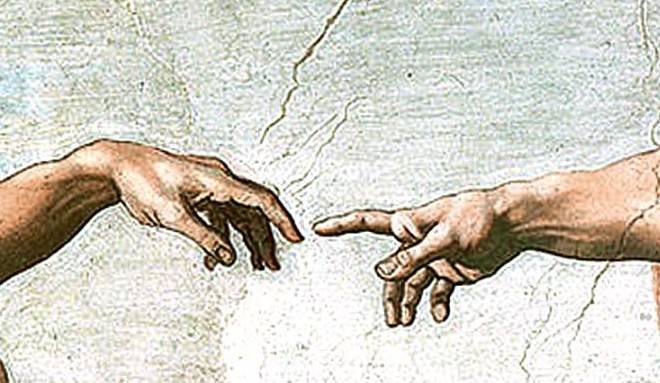
In Michelangelo’s famous painting, “The Creation of Adam,” there is a small detail worth mentioning. When God, supported by angels in heaven, extends his index finger toward Adam, it is fully extended. Adam, formed from the earth, also reaches out, but his index finger is slightly bent at the last joint. There is a space between God’s finger and man’s finger. Through this small detail, the artist teaches us that God is always there, seeking us, wanting to have a relationship with us. We, humanity, must make the decision to seek God. Until we make that decision, our finger will remain slightly bent leaving empty space. The gap that is created is our doing.

Abraham is considered the father of faith. In this Sunday’s passage from the Letter to the Hebrews, we are told that “by faith Abraham obeyed when he was called to go out to a place that he was to receive as an inheritance… By faith he lived as a stranger in the promised land… By faith he received the power to be the father of many… because he considered the one who had made the promise to be faithful.” Abraham made the decision to trust God. Abraham decided to give himself completely to God because he believed that God was trustworthy.

In today’s Gospel, Jesus invites us to enter into the dynamic of faith. The invitation is given when he says: “Gird yourselves, light your lamps, and be like servants waiting for their master to return from the wedding, ready to open the door immediately when he comes and knocks. Blessed are those servants whom the master finds awake when he comes.” This vigilance is faith: it is believing that the master who promised to return is trustworthy.

Today’s readings show us two aspects of faith. The first is that faith is never a “once and done” thing. Faith is a constant decision for all of us. By faith, Abraham set out on his journey. By faith, Abraham sojourned. By faith, Abraham received the power to beget. By faith, Abraham was even willing to enter into the heartbreak of the sacrifice of his son, but God did not require that heartbreak of Abraham even as God accepted it for himself in the death of his son on the cross out of love for us. Faith is a constant decision for each of us.

The second dynamic is found in the strange scene where the master blesses the servants he finds watching for his return, seating them at the table and serving them himself. When we enter into a moment or encounter of faith, whether it is trusting that God is with us or reaching out to another person in charity, we will receive blessings. I am not referring here to the lie known as the “prosperity gospel.” I am not saying that if we have faith, we will win the lottery. When we choose to have faith, we receive true blessings that neither rust nor moth can destroy – friendship with God, true life, peace, and joy.

Jesus continually invites us to faith. The choice to believe and trust, to extend our finger, is ours to make.

Learn a lesson from the Redwood Tree – 18th Sunday in Ordinary Time C

03 Sunday Aug 2025

Posted by mcummins2172 in Uncategorized

≈ Leave a comment

Tags

18th Sunday in Ordinary Time C, Bible, Christian community, Christian life, Christianity, Collosians 3:1-5/9-11, discipleship, faith, God, Jesus

I just returned from vacation where I visited three national parks: Redwood and Lassen Volcanic Parks in north California and Crater Lake National Park in Oregon.  The Redwood trees are the tallest trees on the planet and as you hike through groves of Redwoods or stand at the base of a tree, your eyes are continually pulled upwards.  The beauty of this park allows a visitor to witness this continual growth and striving towards the sky.  What is interesting to note about these trees that can reach around 350 ft in height though is that they actually have (in comparison to their height) a very shallow root system.  

The root system of a redwood tree is maybe around ten to thirteen feet deep.  This makes a redwood tree on its own very vulnerable to falling in high winds or heavy rains.  What keeps the trees secure in heavy storms though is how far the root system spreads horizontally (sixty to a hundred feet) and the fact that the root system of one tree intertwines with the roots of the other surrounding trees.  Through the intertwining of roots these gigantic trees actually support one another, and by doing so, they – together – withstand strong storms. 

Paul, in his letter to the Colossians, encourages us to “seek what is above, where Christ is seated…”.  The apostle wants us to strive upwards.  “Think of what is above, not of what is on earth.”  But the apostle also knows that in order to truly strive upwards we need to be attentive to our roots and make sure they are strong.  This is why he goes on to write, “Put to death, then, the parts of you that are earthly: immorality, impurity, passion and desire, and the greed that is idolatry.  Stop lying to one another…” 

It might seem paradoxical but Paul is inviting us to strengthen our “roots” – that which truly supports us – in order that we might authentically seek that which is above.  The earthly parts within us that Paul writes about: “immorality, impurity, passion, desire, greed, lying” lead to sins the end results of which are isolation.  These sins turn us in on ourselves and away from one another.  To go back to the analogy of the Redwood tree.  On our own, we are very vulnerable to being overcome by the storms of life but when our roots are strong and they intertwine with the roots of others then we find strength in the face of a storm.  Sins that isolate us, sins that turn us away from one another, sins that block true and authentic relationship must be put to death.  Only by doing so can we truly grow, only by doing so can we truly strive for that which is above.  We do not achieve the high reality of the Kingdom of God by ignoring our roots.  We achieve that which is above by strengthening our roots through connecting with one another authentically and honestly in faith and in true Christian community.  We have to let go of the sins that turn us in on ourselves. 

One of the greatest things that the Church gives our world today is “church”.  True and authentic Christian community grounds us, strengthens us and empowers us to strive for that which is above.  True Christian community is not groupthink nor is it merely another faction based on a particular worldly ideology or politic.  True Christian community is – to make use of an image our Lord gives us in today’s gospel – made up of limited persons with various viewpoints striving to be “rich in what matters to God”. 

We can learn a lesson from the Redwood tree.  Connected with one another, in Christ, we are made strong.  Put to death those sins that isolate in order to authentically live in relationship with others – by this we gain the momentum to withstand the storms of life and even to strive for that which is above.       

Learning Righteousness this Holy Week

13 Sunday Apr 2025

Posted by mcummins2172 in Uncategorized

≈ Leave a comment

Tags

Bible, Catholic Church, Christian life, Christianity, discipleship, faith, God, Holy Week, Jesus, Palm Sunday homily, Principle and Foundation, Righteousness

In Luke’s account of the passion, we are told – in our translation – that the centurion on witnessing the death of Jesus, glorifies God and says, “This man was innocent beyond doubt.”  A number of Scripture scholars argue that this is a poor translation of the original Greek.  The more accurate translation has the centurion saying, “This man was righteous beyond doubt.”  Why is this important?  A person can be innocent of a particular crime but not innocent in other aspects of life.  “Righteousness” on the other hand implies that the whole of one’s life has been actively lived in right relationship with God. 

This righteousness is witnessed in the very last words that Jesus proclaims before his death – “Father, into your hands I commend my spirit.”  In Hebrew tradition, it is held that these are the words a righteous person should say right before death.  “Father, into your hands I commend my spirit.”  Living in right relationship with God, even to the very moment of handing one’s spirit over to God in faith and trust. 

Finally, the righteousness of Christ is witnessed by the crowd of people themselves.   Luke tells us that the people went home “beating their breasts”.  This is not the chest thump of triumph.  “Beating one’s breast” is the sign of repentance.  No longer lost in the spectacle, no longer caught up in the madness of violence, the people recognize what has truly happened – a righteous man has been unjustly murdered before their eyes.  They return home repentant of the tragedy that just occurred and their part in it. 

Jesus is the righteous one, the one who obeyed his Father’s will, the one who lived his whole life in right relationship with the Father.  As we prepare to enter into Holy Week, it is worthwhile reflecting on the true righteousness of Jesus and, through that reflection, learning what it truly means to be righteous before God. 

Here are some words from our tradition to aid us in this reflection.  The words are from a contemporary translation written by David Fleming, S.J. of the “Principle  and Foundation”.  Reflecting on the great love of God and how that love is revealed to us every day, the prayer says,

In everyday life then, we must hold ourselves in balance before all created gifts insofar as we have a choice and are not bound by some responsibility.  We should not fix our desires on health or sickness, wealth or poverty, success or failure, a long life or a short one.  For everything has the potential of calling forth in us a more loving response to our life forever with God.  Our only desire and our one choice should be this: I want and I choose what better leads to God’s deepening life in me.

Jesus is the Righteous One – the centurion, the crowd and the Hebrew tradition witness it.  As we walk these days of Holy Week, it is worthwhile to pray and ask, “Jesus, help me to be righteous.  Teach me how to live in right relationship with God.”   

The Beatitudes and the Sacred Red Road

15 Saturday Feb 2025

Posted by mcummins2172 in Uncategorized

≈ Leave a comment

Tags

Beatitudes, Black Elk, Catholic Church, Christian life, Christianity, Nicholas Black Elk, Sixth Sunday in Ordinary Time C

Image may be subject to copyright

Black Elk was a member of the Native American Lakota tribe.  He is best known for the book, “Black Elk Speaks” where he shares his life story and the story of the Lakota people.  When he was nine years old, Black Elk fell into a coma like state for a number of days.  In his illness he had a vision that guided him throughout his life and he came to be recognized as a powerful Medicine Man among his people.  Later in life, Black Elk joined the Catholic Church and served as a catechist for twenty years.  He lived a life authentic to his people’s beliefs and his Catholic faith even as he experienced great tragedy in his life. A cause for his canonization has begun.  God willing, one day he may be a recognized saint in the Catholic Church. 

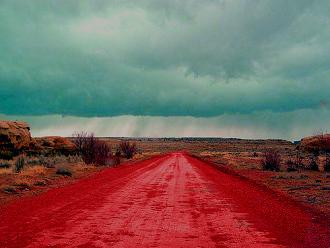
Black Elk shares the thought among the Lakota people that there are two roads in life – the black road and the red road.  The black road is the road that every person must walk.  There are no exceptions.  On the black road we encounter loss, suffering, anguish, division.  In life we will all walk the black road in one form or another.  The red road is the sacred road as it leads to God the creator.  The red road is the road of spiritual growth and maturity. 

The black road and the red road intersect and where the roads cross is the center of creation.  The roads cross exactly in those times of pain and loss we experience as we walk the black road and the red sacred road is discovered and recognized in those moments when we realize that God the creator is indeed with us.  Once we recognize that God is with us even and especially in the moments of pain, we begin to walk the red sacred road toward spiritual maturity and understanding and that moment of recognition becomes the center of the world because God is there with us. 

In today’s gospel (Lk 6:17, 20-26), Jesus says, “Blessed are you who are poor … Blessed are you who are now hungry … Blessed are you who are now weeping … Blessed are you when people hate you, and when they exclude and insult you …”  These are moments on the black road that we will all experience, that we will all have to walk through but these moments become means of blessing when we recognize that God is there with us and we welcome his companionship, in that moment, we begin to walk the red sacred road and we are at the center of creation.  “… for the kingdom of God is yours … for you will be satisfied … for you will laugh … your reward will be great in heaven.” 

But there are also the “woes”.  “But woe to you who are rich … woe to you who are filled now … woe to you who laugh now … woe to you when all speak well of you.”  These are the ones who have only walked the black road.  They may have been more comfortable and sheltered in life but because their focus was only on self, they never allowed themselves to meet God in those moments of pain and loss.  They never walked the red sacred road.  They never stood at the center of creation.  They arrive at the end-of-life lacking depth and maturity.  They arrive at the end of life very poor for having only walked the black road.  “Woe to these people,” says our Lord. 

Black Elk and the Lakota people knew the truth that our Lord proclaims.  There are two roads in life.  We all must walk the black road.  We are all called to walk the red sacred road.  The blessing or the woe is found in the choice we make in whether or not to recognize the presence of God with us and the choice to strive to live the life we have been given in honest relationship with God. 

Epiphany – the invitation to love

05 Sunday Jan 2025

Posted by mcummins2172 in Uncategorized

≈ Leave a comment

Tags

Cardinal Cantalamessa, Catholic Church, Christian life, Christianity, Christmas, Epiphany, Jesus, magi, The Feast of the Epiphany

Scholars suggest that the Magi mentioned in today’s gospel (Mt. 2:1-12) probably journeyed from the area around Babylon.  If that were the case, the Magi who came to give homage to the newborn king of the Jews travelled around 900 miles.  The distance from Jerusalem to Bethlehem is around 7 miles yet Herod, the chief priests and the scribes – even when being able to point to the prophecy in Scripture – could not bring themselves to leave the comfort of the court in order to also give homage.  Why the difference between the Magi willing to travel over 900 miles and the local authorities not willing to travel 7 miles?

The difference is love.  Even before seeing the newborn king, the Magi were caught up in love of the newborn king.  This was more than a journey to prove some abstract theory of star alignment.  The abstract does not give the resolve needed to endure the hardship of a 900-mile journey.  Only love gives such resolve.  Unlike Herod and his officials imprisoned in their fear and complacency, the Magi were caught up in the love of a God that they could not see but would soon behold in the smallness of a manger. 

Epiphany gives each of us the same invitation to come and adore Jesus.  Epiphany invites us to love Jesus.  In his book, “Jesus Christ, the Holy One of God” Cardinal Cantalamessa asks the fundamental question, “Why should we love Jesus?” and in response he offers six reasons.  Each worthy of note. 

The first reason, Jesus has asked us to.  At the end of John’s gospel, the risen Lord asks Peter the same question three times, “Simon, son of John, do you love me?”  It will be the same question asked of each of us when we each stand before Jesus and it will not be enough to say, “Lord, I belonged to the church.  I went to Mass.”  No, the question will be direct and focused there will not be others.  Jesus will look at each of us and ask, “Do you love me?”  We will be judged on this love.  Jesus asks us to love him, pure and simple. 

The second reason is that Jesus has loved us first.  This truth needs to sink into every aspect of our lives and every corner of our heart.  We are loved infinitely by Jesus.  It is that love of Christ that impels us. 

Third, we ought to love Jesus because he deserves to be loved and is loveable in himself.  Everything that is good, everything that is true, everything that is beautiful is fulfilled in Jesus of Nazareth.  Within our very being has been planted, by God himself, the yearning to love and know the good.  This is Jesus and he alone answers this deepest yearning of the human heart. 

We ought to love Jesus because only those who love him can know him.  Everyone – believer, atheist, non-believer, non-Christian, secular agnostic – seems to have an opinion about Jesus and many are quite sure in their opinion but opinion does not equal knowing.  Only when we love Jesus do we begin to know Jesus.  Love and true knowledge demand this risk.  Opinions are just puffs of wind. 

Fifth, we ought to love Jesus because everyone who loves him is loved by the Father.  Jesus says this again and again throughout the gospels.  We need to take him at his word. 

Finally, we ought to love Jesus because only by loving him (continually striving to live in relationship with him) is it possible to live his words and put his commandments into practice.  Are we finding the living of the faith difficult?  Before we beat ourselves up for a perceived lack of will and determination on our part, it would be more beneficial to ask, “Am I talking to Jesus?  Am I praying?  Am I welcoming Jesus into my life?”  The Christian life has never been meant to be a solo mission.  We know the Kingdom by walking with Jesus and welcoming Jesus to walk with us. 

The difference between the Magi and the officials is love.  Epiphany invites us to love Jesus, to adore like the Magi and in that adoration, Epiphany gifts us with the ability to persevere – just like the Magi – in the journey of our lives. 

Christmas and the Creche

24 Tuesday Dec 2024

Posted by mcummins2172 in Uncategorized

≈ Leave a comment

Tags

Bible, Christian life, Christianity, Christmas, Christmas homily, Christmas manger, Creche, faith, Infant Jesus, Jesus

Image may be subject to copyright.

A few years ago, Pope Francis wrote an Apostolic Letter on the Creche, the tradition of displaying the manger scene during the days of Christmas.  The Holy Father praised this beautiful custom and he encouraged all Christians to reflect on the manger scene because the creche and all of its figures and symbols have something to teach us about the wonder of the incarnation as well as the life of faith.  There is healing grace and instruction to be found in the manger scene. 

The simplicity and humility of the scene itself instructs.  God chose to enter into his creation in a simple and unassuming way.  God comes as a newborn infant in a scene marked more by poverty and simplicity than by power and comfort.  God so often prefers to come to us in such simple ways, so simple that we often do not even recognize it or might even take it for granted.  The beauty of a particular day, an act of kindness or honest human care and companionship, the simplicity of bread and wine that truly becomes the body and blood or our Lord.  Contemplating on the manger scenes helps to attune our hearts to how God enters our lives. 

Sometimes the manger is set amidst ruins.  There was an ancient story of a pagan Temple of Peace in Rome.  It was prophesied that the temple would collapse when a virgin gave birth.  On the night of the incarnation, the temple in Rome crumbled.  The “peace” that the temple proclaimed was not the peace of God’s Kingdom but rather the peace of the Roman empire – a “peace” built on conquest and oppression.  The birth of the true Prince of Peace continually overcomes this false peace built by all the Caesars throughout history. 

The shepherds in the field were the first to hear the good news of the birth of Christ.  They are the lowly ones of society – the poor and the forgotten by the world but not by God whose heart overflows in mercy.  On the Feast of the Epiphany, the three magi arrive to adore the newborn king, their journeys were long and often our journeys to Christ and the journeys of those we love are long and laborious.  The magi teach us the value of perseverance and hope. 

Mary and Joseph – their faces are turned in adoration of the Christ child but their hands always welcome each of us to also adore and behold in wonder.  They even invite us to cradle the newborn infant in our own arms.  At the heart of the whole scene is the newborn Jesus.  It is only when the baby is placed in the manger that the whole scene comes alive.  The apostle John reminds us that in Jesus, “life was made manifest,” (1 Jn. 1:2).  Beneath his weakness and frailty, is the power to transform and make all things new.  He is the word made flesh. 

I want to share three images from the creche that have spoken to me this Christmas.  The first is straw.  Being “laid in a manger” implies being among the animals of the field which implies straw and hay.  There is a Ukranian custom of putting straw on the floor of one’s house and hay under the dining room table cloth on Christmas in order to draw us into the scene itself.  The manger is the feeding trough, this newborn child is to be nourishment (the bread of life) for the whole world.  Blessed are we if we learn to receive this bread. 

The second image are the swaddling clothes – the tight bands put around newborn infants.  Jesus is wrapped in swaddling clothes at the beginning of his life with us and he is wrapped in burial cloth at the end of his life with us, his mission completed.  At the heart of each moment is God’s never-ending love.  Love born into the midst of our sin and error and love willing to take on the weight of our sin and die that we might have life. 

The final image is the quiet and darkness of the night itself.  Sometimes the darkness of night can be a fearful thing but I do not think so for this night.  A clear night opens us to the wonder of the stars and vastness of all creation.  A quiet night also brings peace to our souls.  The nativity was in a rural setting.  It was not in the noise of a city’s night but rather in the quiet and peace of the countryside marked only by the occasional sound of the field animals.  There is a peace that can only be gained when we welcome Jesus into our lives, when we make of our hearts a manger for the Christ child. 

May we learn the wonder of the creche.  May we welcome the Christ child this Christmas. 

Peace.  

Home, Hope, Redemption and Light: First Sunday of Advent, Year C

01 Sunday Dec 2024

Posted by mcummins2172 in Uncategorized

≈ Leave a comment

Tags

Advent, Catholic Church, Christian life, Christianity, Christmas, discipleship, faith, First Sunday of Advent, hope, Jesus

Image may be subject to copyright

Recently, a priest friend of mine shared with me some themes that he found present in this First Sunday of Advent’s prayers and readings, themes that are worthy of our carrying and reflecting upon these next four weeks.  I would like to share some of the themes but add my own take upon them.  The themes are: home, hope, redemption and light. 

Home.  This last liturgical year I made the Nineteenth Annotation retreat and in the fourteenth week of the retreat I had a truly profound prayer experience – Jesus invited me to the Father’s house.  In my mind, the Father’s house was a small cabin in the woods.  It was a winter night, there was snow on the ground and it was cold but there was warmth, light and laughter coming from the cabin.  Jesus welcomed me and the Father was there – not seen – but a deep abiding presence.  In my heart I heard the Father say, “Welcome, Michael, you are always welcome here.”  Part of the expectation of Advent – as we await the coming of the Messiah – is that we have a home.  Each one of us has a home.  Our home is in the fullness of the Kingdom with the Father, the Son and the Spirit and we are always welcome there. 

Hope.  In today’s gospel (Lk. 21:25-28, 34-36), Jesus calls us to be vigilant but the vigilance of the Christian is not a vigilance founded in fear but rather a vigilance rooted in hope.  Notice the distinction that Jesus makes in the gospel.  “There will be signs,” says Jesus and “nations will be in dismay” and “people will die of fright” but then Jesus tells his disciples that when these signs occur, “stand erect and raise your heads because your redemption is at hand.”  Christians live in hope and not fear.  We stand erect and we raise our heads because we know that Jesus is Lord.  The cry of Advent, “Maranatha!” (Come, Lord Jesus!) is never a cry of fear but rather a bold proclamation of hope.  Every Advent calls the Church to hope. 

Redemption.  Jesus calls us to raise our heads because our “redemption is at hand”.  “Redemption” is a powerful and heavy word and we often think of it in final terms but in our Lord’s words we also see that redemption takes root in our lives and begins to grow and have effects today.  In redemption, we learn and we find the strength to begin to let go of those things, those decisions, attitudes and anxieties that make us “drowsy” from carousing and drunkenness.  In redemption, we learn to let go of actions and mindsets that block life in order to choose that which leads to true life.  Redemption is more than just a final goal for the Christian.  Redemption is a growing and living seed planted in the heart of every disciple by Jesus himself.

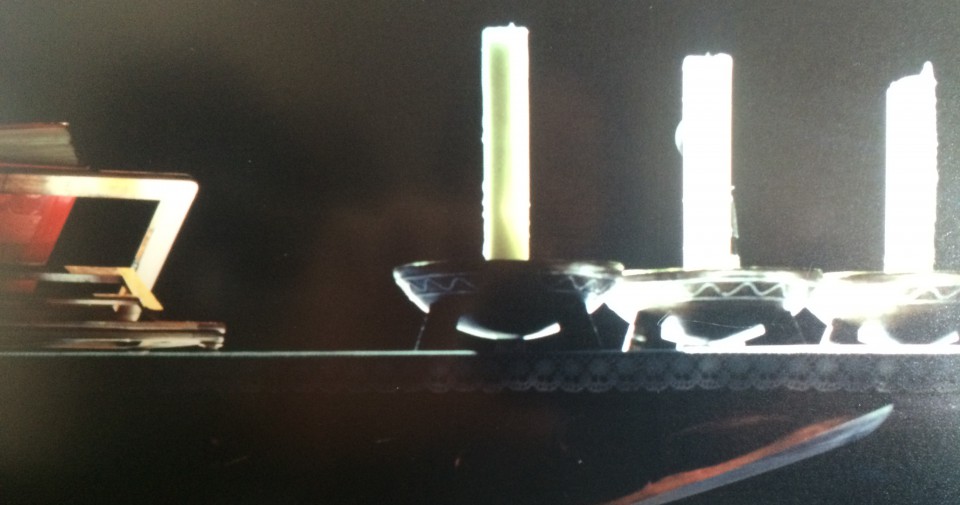
Light.  This Sunday, we light the first Advent candle and we will light the other candles over the next three weeks.  The light grows with each candle even as the days become shorter and the darkness of winter lengthens.  The light dispels the darkness and we await the coming of the light of the world and this light transforms our hearts even as we await it.  Dr. Martin Luther King Jr. reminded us that darkness cannot drive out darkness, only light can do that.  Hate cannot drive out hate, only love can do that.  We await the coming of the light and we let that light find a home in our hearts.

Home.  Hope.  Redemption.  Light. 

Come, Lord Jesus!     

Where are our hearts? Homily for 22nd Sunday of OT, Year B

31 Saturday Aug 2024

Posted by mcummins2172 in Uncategorized

≈ Leave a comment

Tags

22nd Sunday in Ordinary Time, Catholic Church, Christian life, discipleship, faith, Jesus

There is a story told in the Lakota tribe of the Man who Spoke Softly.  (Taken from The Lakota Way by Joseph M. Marshall III.) 

In a certain village there was a leader, a headman, who was respected for his quiet ways and good decisions.  He never sought to become a leader but as a young man he proved that he could think clearly and act calmly on the battlefield.  He was a good provider for his family and he took care of the helpless ones.  For these reasons the people asked him to be their leader and he reluctantly agreed.  As leader, he made good decisions and always spoke the truth in council meetings and under his leadership the village prospered and grew strong.

Two generations grew up under his leadership and the man was getting on in years.  There were a few young men in the village who yearned for a new leader.  They wanted someone with more daring and flair – more fitting to their prosperous village, they thought.  They had forgotten it was the headman’s leadership that grew their village. 

The young men formed a plan.  They would catch a small bird and one of them – in front of the whole village – would question the headman.  “Grandfather, I have a bird in my hand.  You are wise.  Is the bird dead or alive?”  If the headman answered “alive” then the young man would crush the bird and kill it before opening his hand.  If the headman said “dead” then the young man would open his hand and the bird would fly free.  Either way, they thought, the headman would be shown to be weak and uncertain. 

So, on the morning of an important tribal gathering when all the people were gathered, one of the young men called out in a loud voice to the headman. “Grandfather, I have an important question.  I have a bird in my hand.  Since you are wise, is the bird dead or alive?’

A hush fell over the people.  They knew that some of the young men were wanting new leadership and some wondered if the young men were right.  They waited for the headman’s answer. 

The old headman approached the young man with the question.  He stood quietly, seeming to study the ground as the people whispered.  Finally, the headman turned to the young man and smiled patiently and spoke firmly and gently as he always did when something important was to be said.

“Grandson,” he said, “the answer is in your hands.” 

The story invites us to look into what is in our hearts.  It is the same invitation that Jesus gives in today’s gospel; the invitation to move beyond the blind ritualism of the Pharisees that focused solely on external actions – This people honors me with their lips, but their hearts are far from me… – in order to see where ones heart is. 

Are our hearts in living relationship with God?  The answer is, and will always be, in our hands. 

St. James, in his letter, gives good advice on how to keep our hearts in living relationship with the Father. 

Humbly welcome the word that has been planted in you and is able to save your souls. 

Be doers of the word and not hearers only, deluding yourselves. 

Religion that is pure and undefiled before God and Father is this: to care for orphans and widows in their affliction and to keep oneself unstained by the world.  (James 1:17-18, 21b-22, 27)

Church, forget not your power! (Sixteenth Sunday of Ordinary Time – B)

21 Sunday Jul 2024

Posted by mcummins2172 in Uncategorized

≈ Leave a comment

Tags

Bible, Catholic Church, Christ, Christian life, Christianity, discipleship, Easter, faith, God, Jesus, Mk. 6:30-34

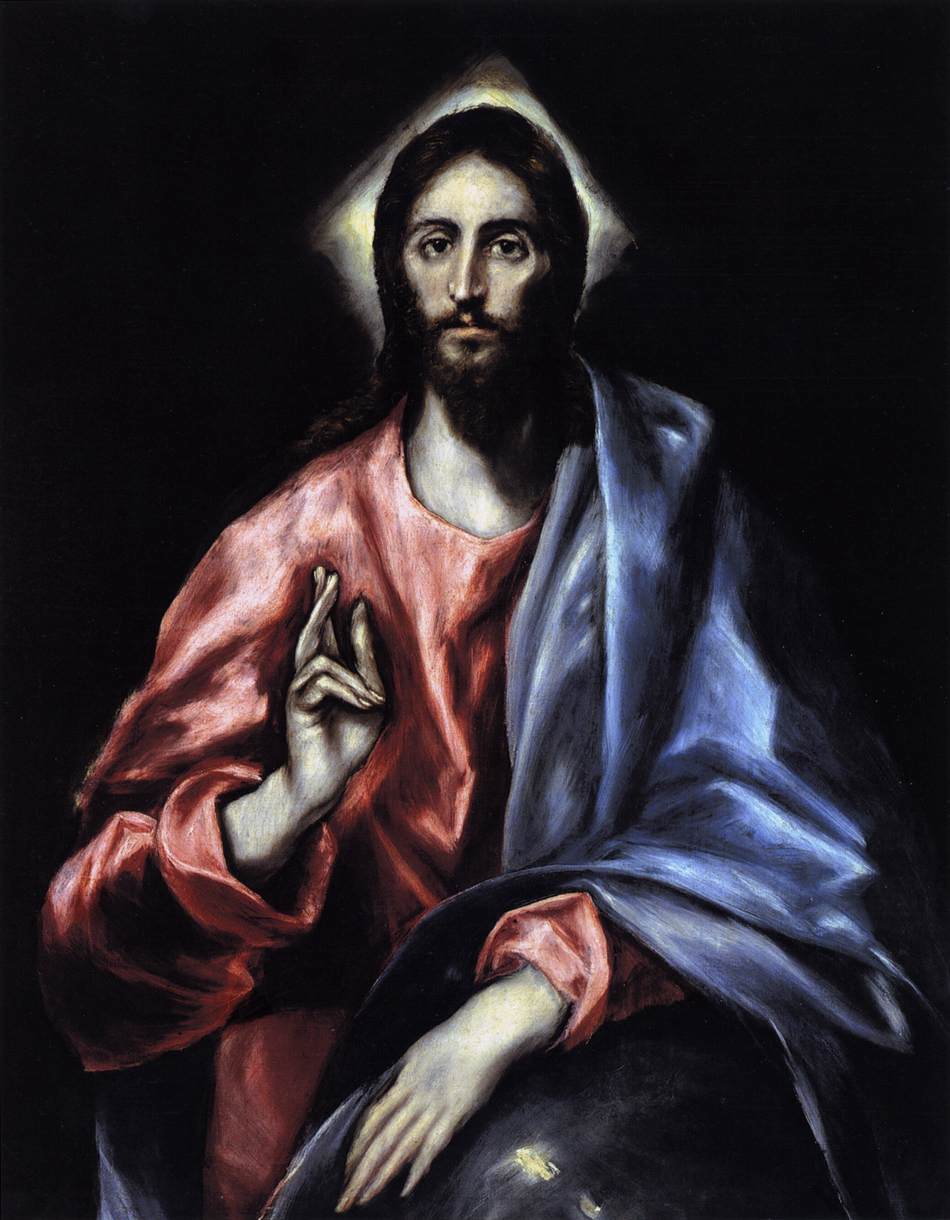
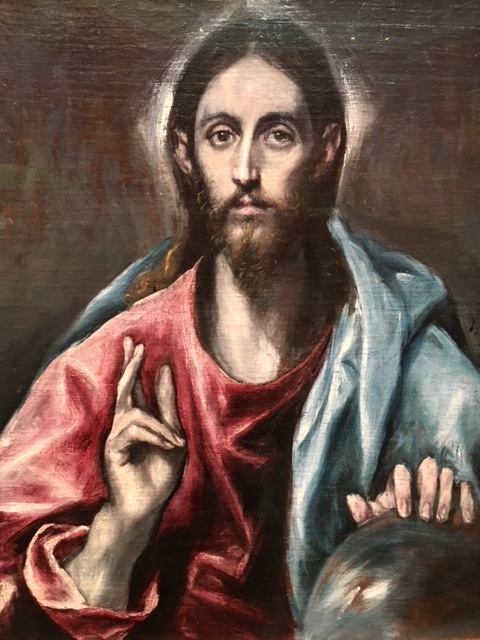
Christ the Saviour by El Greco. Image may be subject to copyright

The Gospel passage for this Sunday (Mk. 6:30-34) has the apostles returning to the Lord after having been sent out on mission to proclaim the coming of the Kingdom of God, to heal the sick and to aid the weak and the poor.  The evangelist makes note of a “power” being conferred on the apostles in order to accomplish these tasks.  The power mentioned here is not a worldly power because those first disciples had no such power.  They had neither wealth nor influence.  The “power” that the disciples went forth with were obedience to Jesus, the proclamation of his words and repeating the Lord’s gestures of mercy.  Through these simple powers great things happened and the apostles return full of excitement to share their experiences. 

In our Christian tradition there is a famous quote that states, “Christian, forget not your dignity!”  In relation to today’s Gospel, I think we can say, “Church, forget not your power!” 

The power of the Christian community is threefold: 1. obedience to Jesus, 2. the proclamation of his words, 3. repeating the Lord’s gestures of mercy.

Obedience to Jesus.  Jesus is Son of God, Son of Man and Lord of history.  Why do we keep searching for other lords and other messiahs?  Yet, we do.  There are great men and great women throughout history yet none of these people are Son of God and Son of Man.  The witness of the disciples is found both in what they said and in what they did.  They remained with the Lord.  They returned to him (as we see in today’s Gospel).  When they wandered and stumbled, they turned back.  Even when they scattered from the cross; they gathered together again in the locked room.  In times of triumph, times of struggles, and times of uncertainty the disciples remained with the Lord.  There is a power found in obedience to the Lord.

The proclamation of Christ’s words.  There are many great ideas, theories and achievement throughout human history and these amaze and astound us.  We celebrate what is good and true.  But even as the Church can and should learn from these achievements, we must remember that the words that we have to share are authentic, true and needed for every place and age.  They are words that truly bring life.  The words are not of our own making; rather they have been entrusted and given to us.  We are to speak Christ’s words to our world.  Elsewhere in the Gospel our Lord tells us that no one puts a light under a bushel basket yet how often are we tempted to give the Gospel second place in our lives to the latest theory, psychology, philosophy or social fad?  When we do so are we not, in essence, placing a basket over the light of the Gospel?  The words of Christ truly heal because Christ alone is the Lord of life.

The Lord’s gestures of mercy.  Jesus knew the power of gesture: he writes in the sand, he touches the leper, he sits down at the well with the Samaritan woman.  It is interesting to note how our Lord’s gestures were ever directed toward mercy.  The Church is at its best when it lives our Lord’s gestures of mercy – when the person seen as untouchable is touched, when the hungry are fed and when the sinner is forgiven.  These gestures will not make the evening news but they are true and they bring hope and healing to our world.

At the end of today’s gospel passage, we are told that when Jesus saw the crowd his heart was moved with pity.  The people were starving.  They were tired of that which failed to satisfy.  We, also, are tired of that which fails to satisfy.  Salvation does not come through the powers of our world.  Salvation comes through God’s mercy at work in our world, our hearts and our lives.

Christian, forget not your dignity!  Church, forget not your power!

← Older posts
Follow The Alternate Path on WordPress.com

Enter your email address to follow this blog and receive notifications of new posts by email.

Previous Posts

  • December 2025
  • November 2025
  • August 2025
  • April 2025
  • February 2025
  • January 2025
  • December 2024
  • August 2024
  • July 2024
  • June 2024
  • May 2024
  • April 2024
  • March 2024
  • February 2024
  • January 2024
  • December 2023
  • November 2023
  • October 2023
  • August 2023
  • July 2023
  • May 2023
  • February 2023
  • January 2023
  • December 2022
  • August 2022
  • July 2022
  • April 2022
  • January 2022
  • December 2021
  • September 2021
  • August 2021
  • July 2021
  • May 2021
  • April 2021
  • January 2021
  • December 2020
  • November 2020
  • October 2020
  • August 2020
  • July 2020
  • May 2020
  • April 2020
  • March 2020
  • February 2020
  • December 2019
  • October 2019
  • September 2019
  • August 2019
  • July 2019
  • May 2019
  • April 2019
  • March 2019
  • February 2019
  • December 2018
  • November 2018
  • October 2018
  • August 2018
  • July 2018
  • June 2018
  • April 2018
  • March 2018
  • February 2018
  • January 2018
  • December 2017
  • November 2017
  • September 2017
  • August 2017
  • July 2017
  • June 2017
  • May 2017
  • April 2017
  • March 2017
  • February 2017
  • January 2017
  • December 2016
  • November 2016
  • October 2016
  • September 2016
  • August 2016
  • July 2016
  • June 2016
  • May 2016
  • April 2016
  • March 2016
  • February 2016
  • January 2016
  • December 2015
  • November 2015
  • October 2015
  • September 2015
  • August 2015
  • June 2015
  • May 2015
  • April 2015
  • March 2015
  • February 2015
  • January 2015
  • December 2014
  • November 2014
  • October 2014
  • September 2014
  • August 2014
  • July 2014
  • June 2014
  • May 2014
  • April 2014
  • March 2014
  • February 2014
  • January 2014
  • December 2013
  • November 2013
  • October 2013
  • September 2013
  • August 2013
  • July 2013
  • June 2013
  • May 2013
  • April 2013
  • March 2013
  • February 2013
  • January 2013
  • December 2012
  • November 2012
  • October 2012
  • September 2012
  • August 2012
  • July 2012
  • June 2012
  • May 2012
  • April 2012
  • March 2012
  • February 2012
  • January 2012
  • December 2011
  • November 2011
  • October 2011
  • September 2011
  • August 2011
  • July 2011
  • June 2011
  • May 2011
  • April 2011
  • March 2011
  • February 2011
  • January 2011
  • December 2010
  • November 2010
  • October 2010
  • September 2010
  • August 2010
  • July 2010
  • September 2008
  • August 2008
  • April 2008
  • March 2008
  • February 2008
  • January 2008
  • December 2007
  • November 2007
  • October 2007
  • September 2007

Popular Posts

  • thealternatepath.org/wp-c…
  • thealternatepath.org/wp-c…
  • thealternatepath.org/wp-c…

Blog at WordPress.com.

  • Subscribe Subscribed
    • The Alternate Path
    • Join 156 other subscribers
    • Already have a WordPress.com account? Log in now.
    • The Alternate Path
    • Subscribe Subscribed
    • Sign up
    • Log in
    • Report this content
    • View site in Reader
    • Manage subscriptions
    • Collapse this bar
 

Loading Comments...