 “…as the first day of the week was dawning, Mary Magdalene and the other Mary came to see the tomb.” Each of the four gospels, in its account of the resurrection of Jesus, specifically states the time. It was dawn, it was early in the morning, the day was just breaking.
Maybe it is just a reflection of my own shifting sleep patterns as I get older but I am learning the value of the dawn. To sit quietly and watch as the world wakes up, as night recedes and the light of day dawns is a good and healing thing. In the dawning of the day we are taught unceasingly and even rhythmically how much is just pure gift and how we are each part of something so much bigger than ourselves!
But this dawn, this dawn was different! It was not just another lesson on the seasonal nature of life and creation. This particular dawn proclaimed an empty tomb! It had never happened before – that a tomb had been emptied and not just emptied but vanquished and broken! The one who came forth from this tomb would never return. That dawn – in that cemetery garden outside of Jerusalem – was and will always remain a new day!
The truth is that the Church which proclaims the resurrection of Christ will never be a powerful church – this is not our identity. We are not to be a “powerful church” as the world measures power because all of the world’s measurements, judgments and calculations end at the tomb. Rather, we are to be a “risen church” because we live in the dawn of the new day! We are not stopped by the weight of the tomb. The tomb is emptied and broken and our Lord walks forth from its confines never to return! Everything is different and this is who we are! The risen church – even when hope seems lost – is revived again and again because our bridegroom is risen and he gives us the power to rise!
When fear and uncertainty set in, we rise. When persecution and violence are experienced, we rise. When war and disease destroy lives and threaten what we hold dear, we rise. We rise because we are the church. We rise because we live in the new day. We rise because Jesus is risen and he gives us the power to rise!
And he goes before us. Christ always goes before us – into the fullness of this new day and he calls us to follow after him in hope. This hope was planted by God in the heart of creation on the very first day – that the creator will not abandon his creation. This hope grew and was foretold by the people of Israel in their being brought from slavery to freedom with the waters of the Red Sea being a prefiguring of the waters of baptism which bring us into the new day of Christ and the promise us freedom from death itself. Paul recognizes this truth when he writes in his letter to the Romans, “Brothers and sisters: Are you unaware that we who were baptized into Christ Jesus were baptized into his death? We were indeed buried with him through baptism into death, so that, just as Christ was raised from the dead by the glory of the Father, we too might live in newness of life.”
“…we too might life in newness of life.” We live in the new day and we rise. We are the risen church!
“…as the first day of the week was dawning, Mary Magdalene and the other Mary came to see the tomb … you are seeking Jesus the crucified. He is not here, for he has been raised just as he said … he is going before you …”
“… al amanecer del primer día de la semana, María Magdalena y la otra María fueron a ver el sepulcro”. Cada uno de los cuatro evangelios, en su relato de la resurrección de Jesús, establece específicamente la hora. Era el amanecer, era temprano en la mañana.
Tal vez sea solo un reflejo en los cambios de mis patrones de sueño a medida que envejezco, pero estoy aprendiendo el valor del amanecer. Sentarse en silencio y observar cómo el mundo se despierta, cuando la noche retrocede, y la luz del día amanece es algo bueno y curativo. Al amanecer del día, se nos enseña incesantemente e incluso rítmicamente cuánto es tan solo puro regalo, y cómo somos parte de algo mucho más grande que nosotros.
¡Pero este amanecer, este amanecer fue diferente! No fue solo otra lección sobre la naturaleza estacional de la vida y la creación. ¡Este amanecer particular proclamó una tumba vacía! ¡Nunca había sucedido antes, que una tumba haya sido vaciada y no tan solo vaciada, sino vencida y rota! El que salió de esta tumba nunca volvería. ¡Ese amanecer, en el jardín del cementerio a las afueras de Jerusalén, fue y siempre seguirá siendo un nuevo día!
La verdad es que la Iglesia que proclama la resurrección de Cristo nunca será una iglesia poderosa; esta no es nuestra identidad. No debemos ser una “iglesia poderosa” en la forma en como el mundo mide el poder porque todas las medicionesy cálculos del mundo terminan en la tumba. ¡Debemos ser una “iglesia resucitada” porque vivimos en los albores del nuevo día! No nos detiene el peso de la tumba. ¡La tumba está vacía y rota, y nuestro Señor sale de sus confines para nunca volver! ¡Todo es diferente, y esto es lo que somos! ¡La iglesia resucitada, incluso cuando la esperanza parece perdida, revive una y otra vez porque nuestro novio ha resucitado y él nos da el poder de levantarnos!
Cuando surge el miedo y la incertidumbre, nos levantamos. Cuando se experimenta la persecución y la violencia, nos levantamos. Cuando la guerra y la enfermedad destruyen vidas y amenazan lo que apreciamos, nos levantamos. Nos levantamos porque somos la iglesia. Nos levantamos porque vivimos en el nuevo día. ¡Resucitamos porque Jesús ha resucitado, y él nos da el poder para resucitar!
Y él va antes que nosotros. Cristo siempre va antes que nosotros, a la plenitud de este nuevo día y nos llama a seguirlo con esperanza. Esta esperanza fue plantada por Dios en el corazón de la creación el primer día: que el creador no abandonará su creación. Esta esperanza creció y fue predicha por el pueblo de Israel al ser llevados de la esclavitud a la libertad, siendo las aguas del Mar Rojo una prefiguración de las aguas del bautismo que nos llevan al nuevo día de Cristo, y a la promesa de liberarnos de la muerte misma. Pablo reconoce esta verdad cuando escribe en su carta a los romanos: “Hermanos: Todos los que hemos sido incorporados a Cristo Jesús por medio del bautismo, hemos sido incorporados a su muerte. En efecto, por el bautismo fuimos sepultados con él en su muerte, para que, así como Cristo resucitó de entre los muertos por la gloria del Padre, así también nosotros llevemos una vida nueva “.
“… así también nosotros llevemos una vida nueva”. Vivimos en el nuevo día y nos levantamos. ¡Somos la iglesia resucitada!
“… al amanecer del primer día de la semana, María Magdalena y la otra María fueron a ver el sepulcro … Ya sé que buscan a Jesús, el crucificado. No está aquí; ha resucitado, como lo había dicho … e irá delante de ustedes…”
 We all know of Paul’s encounter with the risen Lord on the road to Damascus and how that encounter radically changed his life. The man who was so zealous in his persecution of the early church became the apostle proclaiming Christ to the Gentiles. But do we truly realize how much that conversion cost Paul himself? The second reading for today (Romans 9:1-5 – one of Paul’s later writings) gives us, I believe, a glimpse into the lifelong deep pain that Paul endured. “…I have great sorrow and constant anguish in my heart. For I could wish that I myself were accursed and cut off from Christ for the sake of my own people, my kindred according to the flesh.” Paul carries both the pain of seeing so many of his people – the Jewish people – not wanting to recognize Jesus as the Messiah and he also carries the pain of himself (by his conversion) being cut off from the very people he loves and so identifies with! The man carried heartbreak just as he proclaimed Christ as Savior to the world.
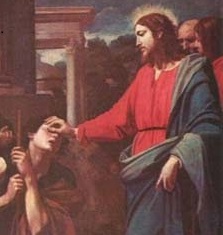 In today’s gospel there is a development in the thought of the man born blind and in his proclamation of who Jesus is. It is important to note that just as the questioning the man faces increases, just as his social supports fall away and just as the pressure on him gets heavier – the man’s knowledge of who Jesus is and his proclamation of who Jesus is increases.
 There is a salvific equation at work in the readings for this first Sunday of Lent and it is important to recognize as we begin this Lenten season and our journey to Easter. The equation is this: we sinned by trying to grasp the glory of God and God saves us by letting go of His glory and becoming a servant.
 I have been reading a book by Liz Forkin Bohannon entitled “Beginner’s Pluck” – not “luck” but “pluck” with a “p”. The author has some good insights and she is not afraid to take on some sacred cows in our times and culture. One of these sacred cows is the myth of “finding your passion” in life and she addresses this in a chapter aptly entitled, “Stop Trying to ‘Find Your Passion’”.
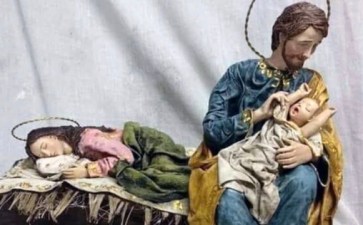 It was more than just the dream for Joseph that led him to take the young, pregnant Mary into his home – even as he knew that his decision would not be understood by his neighbors and that he would be mocked and ridiculed for welcoming Mary. No person wants to be seen as a fool. Yes, the angel appeared in a dream and certainly there must have been the glory and power of God revealed but God never overwhelms our volition. God never manipulates. God always invites our free choice and our free response.
 I am a fan of the work and the writings of Wendell Berry. Here, I would like to share #7 from his “Window Poems”.
 Recently the Knights of Columbus decided to begin an initiative to help refugees at the U.S. – Mexican border. Carl Anderson, the Supreme Knight of the Knights of Columbus, specified in his announcement that this was not a “political statement” but a statement of principle. I find it telling that the head of this fraternal, international Catholic organization guided by the tenets of the Catholic faith felt it necessary to make this distinction.
 One thing that the Scriptures do not shy away from presenting is tragedy. We like tragedy when it is on the screen or in a play but not so much in our lives. This is partly why we invest in IRA’s. Yet, tragedy is a part of life (Sacred Scripture knows this) and no one gets through this life without experiencing tragedy in one form or another.
