• About The Alternate Path

The Alternate Path

~ Thoughts on Walking the Path of Christian Discipleship

The Alternate Path

Tag Archives: hope

Advent: Return to the Beginning

05 Saturday Dec 2015

Posted by mcummins2172 in Advent, hope, Uncategorized, Year of Mercy

≈ 1 Comment

Tags

Advent, hope, Mass shooting, sad logic of violence, Year of Mercy

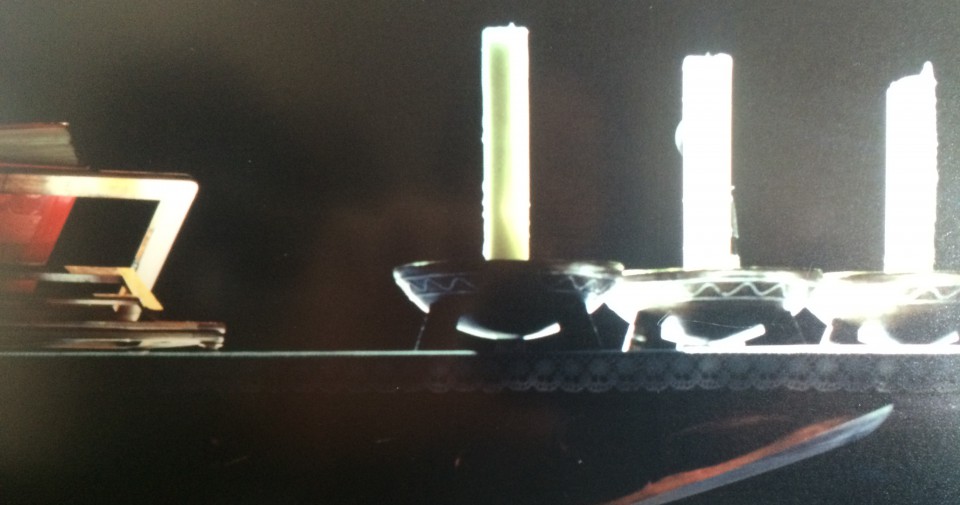
advent wreath 3The week before the first Sunday of Advent I ventured into a local craft store in search of Advent candles.  After inquiry, a sales associate led me to the candles.  We passed one, then two, then three, four and five full aisles of Christmas decorations.  Arriving at the last row she pointed to a small stack of Advent candles on the bottom corner of a shelf.  Quite sad in comparison.  I cannot help but reflect on the symbolism.  As I write this reflection there has been yet another mass shooting in our country.  I do not make this jump from searching for Advent candles to a mass shooting in order to be flippant or sensational, I share it because I believe Advent offers needed lessons for our world today but honestly I fear these lessons may fall on deaf ears because they will require work, sacrifice and even risk on our part.

One of the virtues that Romano Guardini explores in his book Learning the Virtues that Lead You to God is the virtue of patience.  In the course of his reflection he offers these words:

Therefore patience, which always begins again, is a prerequisite if something is to be done.  In “The Imitation of Christ” we find the phrase “Semper incipe!” … At first sight, it is a paradox, for a beginning is a beginning and then we go on.  But that is true only in mechanical matters.  In actual life, beginning is an element that must operate constantly.  Nothing goes on if it does not at the same time begin. 

So he who wishes to advance must always begin again.  He must constantly immerse himself in the inner source of life and arise therefrom in new freedom, in initiative – the power of beginning – in order to make real what he has purposed: prudence, temperance, self-control, or whatever it may be that is to be accomplished.  

Patience with oneself – not carelessness or weakness, of course, but the sense of reality – is the foundation of all progress.  

The wisdom that Guardini offers here is a wisdom found at the heart of the season of Advent.  In Advent, we as Church, “begin again”.  We return to the beginning and we join with the saints of this season (Ss. John the Baptist, Elizabeth, Zechariah, Joseph and Mary) in awaiting the coming of the Messiah.

Advent calls us to honestly acknowledge the darkness and brokenness of our world and our lives not in order to shut down in despair but in order to open a window of hope.  If approached correctly and not rushed through, the season of Advent offers profound lessons to help us learn patience with ourselves and our world.  We recognize that there is something fundamentally broken within ourselves and the human condition that is just not possible for us to heal and fix.  It is too mysterious, too deep and too painful.  Further, we recognize how all of creation stands in need.  We come to learn that the ultimate answer cannot be found in us.  Yet, we also recognize that there is a deep yearning for wholeness within and, if we sit with it long enough, we recognize that this yearning itself has been planted within us by God.  It is part of our makeup, part of the essence of who we are and Scripture tells us that God is a God who does not disappoint.  God will answer our need.  God will answer the deepest need of our world with the coming of Christ in glory in the fullness of all history.  God has answered the hope of the ages with the incarnation of the Son!

“Semper incipe!” is a spiritual truth and we learn it from the Advent saints themselves.  Zechariah and Elizabeth began again when they were reminded that nothing is impossible for God.  Joseph began again when he was reminded that God will act as God so chooses and our job is to trust.  John the Baptist began again when he went into the wilderness to meet the Lord just as the people of Israel had encountered God during their forty years of wandering in the desert.  Mary began again in her profound “Yes” to God – the heart of Israel’s history and hope.

We live in a dark time.  There is much violence, isolation, pain and fear in our world today.  In such times patience is called for all the more.  We must overcome the temptation to rush to judgment, to rush to condemnation, to rush to separation, to rush to retribution.  Patience rightly lived is a needed antidote rather than a weakness.  If we are to move beyond the darkness of these times we can neither naively try to wish it away nor pretend the darkness does not exist, rather we need to be honest about the state of things and then get to work!  And as Guardini rightly notes, patience is the foundation of all true progress.  The saints of Advent were anything but naïve.  They knew the brokenness of their world and their own need and they clearly show the willingness to begin again.

This particular Advent, this season when we as Church return to the beginning, should be different.  This celebration of Advent which marks the beginning of the Jubilee Year of Mercy ought to initiate a transformation in us as Church that will affect our world.  In this will Advent truly be authentic.  No longer can Advent just be my or our personal preparation for the celebration of Christmas, rather Advent must light hope and mercy for our world.  We need to live the anticipation of this Advent not for ourselves but truly for all of our sisters and brothers – especially those who are suffering and forgotten.

Our world is in a dark place.  There is work that needs to be done.  Before we rush to the work, we should return to the beginning and immerse ourselves in that inner source of life which is our faith in the work of God himself.  Patience is the foundation of all true progress.

I would suggest that in a particular way this Advent we stand with the saints of this season and we learn from them how to return to the beginning.  This lesson is too important; too critical to the times we now live in, to bypass.

When all is said and done we may very well recognize that human history was carried neither by the proud nor the arrogant nor the centers of our world’s powers but rather by the patient – the ones who learned how to continually return to the beginning in order to arise in new freedom and new awareness.
The coming of the Son of Man. We are not Afraid. (Thoughts on the Sunday readings: 33rd Sunday in Ordinary Time – B.)

15 Sunday Nov 2015

Posted by mcummins2172 in Christ, homily, hope

≈ 1 Comment

Tags

apocalypse, hope, Second Coming, Son of Man, terrorist attacks in Paris

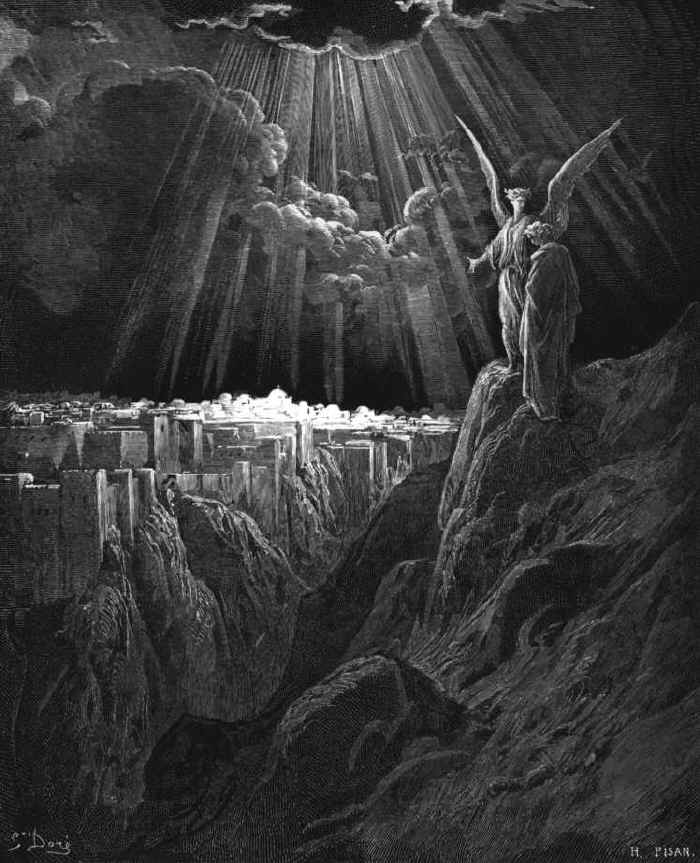
new_jerusalem1One of my professors in seminary would often remark that the events of the last days as portrayed in the Scriptures should be read like the labor pangs of birth rather than cataclysmic destruction.  In fact, the birth analogy is more in keeping with the fuller sense of Scripture than any “cataclysmic, world destroyed in a ravaging ball of fire, Hollywood movie” version.

The texts of Scripture do not confirm a sort of “theory of catastrophes,” according to which there must first be a complete destruction of the world after which God can finally turn everything to good.  No, God does not arrive at the end, when all is lost.  He does not disown his own creation.  In the book of Revelation we read, “You created all things, and by your will they existed and were created” (4:11). We must also remember that at the very beginning of Scripture, after God has made everything, God looks upon creation and proclaims it to be good. God does not disown his creation.

The “upheaval” expressed throughout the New Testament is that when the Son of Man comes, he comes not in the weariness of our habits nor does he insert himself passively into the natural course of things.  When Christ comes, he brings a radical change to the lives of men and women and it is always a change that brings the fullness of life.

Notice that in this Sunday’s gospel passage (Mk. 13:24-32) after our Lord speaks of the coming of the Son of Man with “great power” he goes on to state: Learn a lesson from the fig tree.  When its branch becomes tender and sprouts leaves, you know that summer is near.  In the same way, when you see these things happening, know that he is near, at the gates. 

Our Lord does enter into our lives and the life of our world with “great power” but the upheaval he brings is an invitation to turn away from sin and the works of sin and to turn toward the fullness of life.

As Christians we are to live in this world not bound by the deadening works of sin and pride but rather in the upheaval and pangs of birth of the establishment of the Kingdom of God.  Because every day and in every situation Christ is near, at the gates.  The Book of Revelation gives us an image of this hope toward which we yearn and work.  Then I saw a new heaven and a new earth … And I saw the holy city, the new Jerusalem, coming down out of heaven from God, prepared as a bride adorned for her husband (Rev. 21:1-2).

The great “Day of the Lord” is not yet to happen. It has already happened!  God has entered into creation and history in the person of Christ, eternity has entered into time, and now this upheaval comes to every generation and even each day!  We are caught up in the great work of God where all peoples and nations will be gathered together into the new Jerusalem!

The “end of the world” must come every day.  Every day, we must put an end to both the small or big pieces of the world’s evil and malevolence … Scripture invites us to keep the future, toward which we are led, in front of our eyes: the end of the world is not a catastrophe, but will in fact establish the holy city that comes down from heaven.  It is a city that is a concrete reality, not an abstract one, gathering all the people around their Lord.  This is the goal (and, in a sense also, the end) of history.  But his holy city must begin in our daily life now so that it may grow and transform the lives of men and women into God’s likeness. 

Our thoughts and prayers this weekend turn to Paris and the victims of Friday’s terrorist attacks. One of the stated goals of ISIS is not just to bring about a caliphate (a Muslim state) but the apocalypse as they view it. They wish to bring about the apocalypse through acts of violence. Theirs is a sick and twisted ideology. Already the people of Paris are responding to these violent attacks by standing up and saying “We are not afraid.” This is a classic Christian response. We are not afraid because the coming day of the Lord is not a day of destruction but a day of life. The coming Day of the Lord will be when all injustice will be righted, every tear will be wiped away and life will reign! We are not afraid because God has entered into human history and has overcome violence and emptied the tomb of its power!

We are not afraid because Christ is Lord!

(Quotes taken from The Word of God Every Day by Vincenzo Paglia.)

Thoughts on the Sunday readings: the concreteness of the Ascension

17 Sunday May 2015

Posted by mcummins2172 in faith, homily, hope, service

≈ Leave a comment

Tags

Ascension, discipleship, homily, hope, life in Christ

Ascension3Today’s gospel (Mk. 16:15-20) has the risen Lord sending his disciples into the whole world in order to proclaim the gospel to every creature.  This very same mission continues today.  Christianity cannot stay within, locked behind closed doors!  But, before we run out to the world, we need to know for whom we are running and whose message it is exactly that we are proclaiming.  I once heard a seasoned Catholic blogger give some sound advice to some young seminarians eager to evangelize the internet for Christ.  She cautioned that before you start saying things about faith and Christ make sure you actually have something to say.  The only way to speak authentically about Christ is to encounter Christ.  Another way of getting at this is by asking the question actually whose disciples are we?

We are not disciples for ourselves even if we might claim the name Christian.  Taking only the teachings of our Lord that we like and find agreeable and then trying to manage and live our lives on our own – agreeing with Jesus but not really feeling a need for him, too closely, in our lives.

We are disciples because God has first loved us – he has called us and saved us in love.  He sends us into the world in order to proclaim the good news in love and peace.  In many ways the gospel is a weak strength – the gospel needs us to proclaim it, if not love begins to disappear and peace begins to lose to violence and hatred.  But for any of this to happen we must live continually in relationship with Christ, remembering that we are his disciples and not disciples for ourselves.

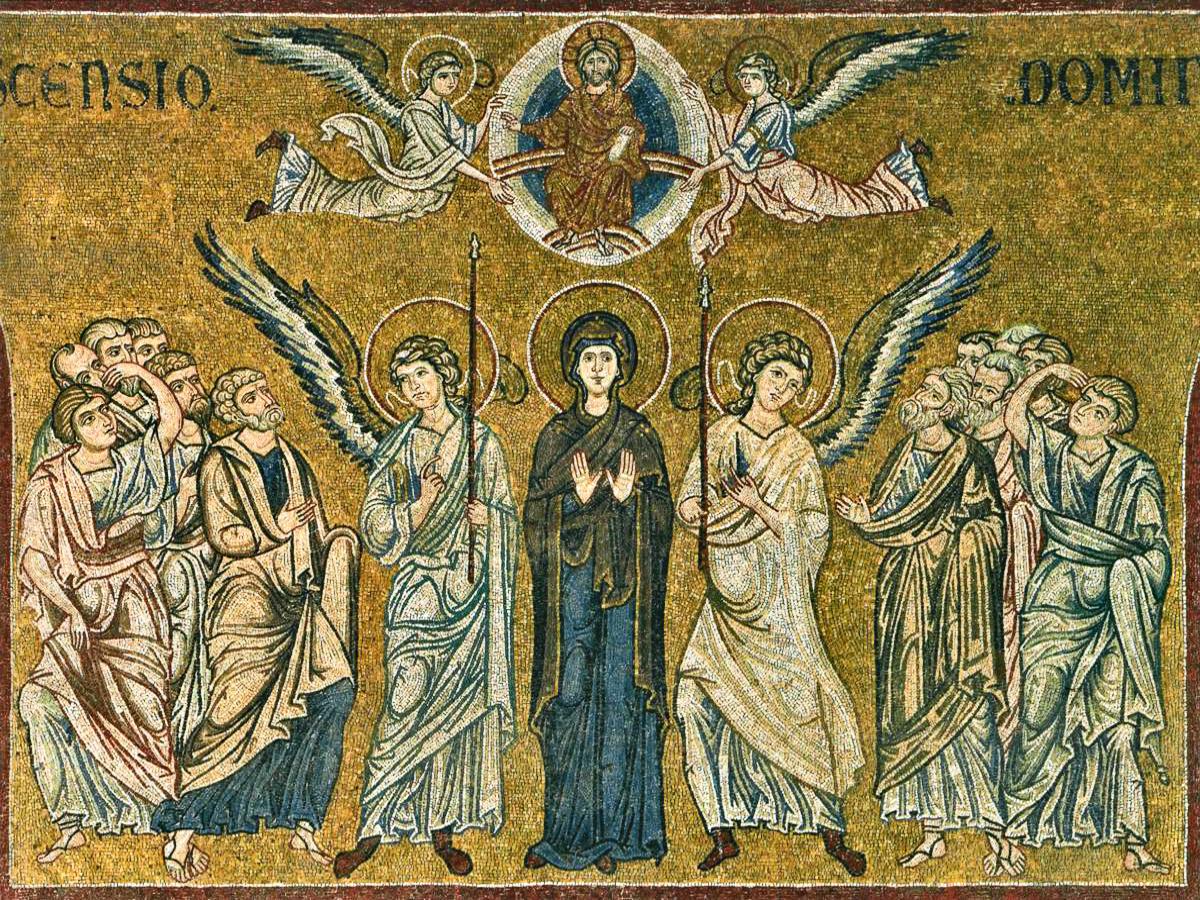
Despite the seemingly, other-worldly nature of today’s feast (What does it mean that Jesus ascends to the Father?), the Feast of the Ascension is a very concrete reality.   It is so because of the simple fact that the hope we celebrate today is not founded in some abstract or utopian principle or ideal of a better tomorrow but in the very resurrected body of Christ.  Christ is indeed risen which means he is risen body and soul, flesh and blood.  Anything less would not be fully and authentically human.  Christ ascends to the Father not just in spirit or thought but in the very concrete reality of his full humanity.  Throughout this Easter season we have heard Christ, time and time again, assuring his disciples that he is indeed present in “flesh and bone”.  This means fully present not just up to the moment of the ascension but in the ascension itself and now at the Father’s right hand.  From the day of the ascension heaven “began to populate itself with the earth, or, in the language of Revelation, a new heaven and earth began.”

In the ascension we truly realize that we are not orphans.  We are not left to the cold and cruel winds of chance, fate and odds or a history without direction.  Direction has been set.  The resurrected Christ now sits at the Father’s right hand!  This, and nothing less, is our goal.  It is what we are meant for and what we are called to by God’s grace.

It is truly concrete and it is achieved and experienced concretely.

In the gospel Jesus tells us that he is “the way” and the way, it turns out, is walked concretely.  The ascension is experienced again not in some abstract manner but in how we concretely treat and love the smallest and poorest brothers and sisters in our midst. When we love concretely we experience the ascension and we are brought toward the fullness of the future that God has prepared for us in Christ.

Let me share an example.  When I was chaplain at the Catholic Center at ETSU our Sant’Egidio group decided to take sandwich bags once a week to the John Sevier Center.  (The John Sevier Center is a low-income housing unit in downtown Johnson City.)  We did not go there as experts in anything.  We knew we could not solve the residents’ problems and struggles.  We just went and we were faithful in going and in this simple act of being present a human space was created both for the residents and for us.  We became friends.  By this we were brought a little bit further toward the fullness that awaits us all.  In this human space miracles happen and signs are given – demons of isolation, fear, hatred and resignation are cast out and life is gained.  I have seen it for myself time and time again.  Now, our Sant’Egidio group here at St. Dominic’s has begun visiting Holston Manor nursing home and it is beginning to happen again – a human space is being created.

Christ bestows his love upon us.  We are disciples for him and we are meant to communicate his love.  Love that is not communicated soon withers and dies.

Love is lived not abstractly but concretely and it is in the concrete act that we are brought toward the fullness that awaits us all.

Easter Sunday – Mary, Peter and John ran!

05 Sunday Apr 2015

Posted by mcummins2172 in discipleship, Easter, hope, joy, life in Christ, resurrection

≈ Leave a comment

Tags

Christ is risen, Easter, hope, new life, resurrection

peter_and_john_running-dan-burr-mindreChildren like to run.  Have you ever noticed this?  Watch children at play – pure energy!  In children we see the body just needing to move – not weighed down, not encumbered by age or past hurts – pure life and pure joy!  Children run and in this running we find a witness to life and to joy!

The gospel (Jn. 20:1-9) today tells us that Mary of Magdala ran to the disciples once she saw that the stone had been removed from the tomb’s entrance.  The gospel then goes on to tell us that Peter and John ran to the tomb to investigate.  When you ask children at play, “Why do you run?” they probably will not be able to give an answer.  Maybe at best they will say, “Because we can!” or “We just want to!”  The running is just a witness to live within them.  Why did Mary run?  Why did Peter and John run?  Was it a conscious decision on their part or rather, like children, did the energy of a new life impel them?  I think it was the latter.  An unimaginable energy, an unheard of joy – the tomb was empty!  Death has been conquered!  They ran simply because they had to!

For too long history has wept before the tombs of our world.  How countless the number of men and women who have died by violence, hatred, war, famine, isolation and abandonment!  Even today it continues.  Before the tombs of our world our hearts are left heavy and we feel abandoned.  Before the tomb there is no joy, no desire to run because there seems to be no future – no hope.

Hope impelled Mary and the two disciples to run.  They ran because hope was born again in their hearts!  Not a hope born of this world that ends with the tomb but a hope born of heaven that empties the tomb from within!  In the resurrection of Christ the tomb is emptied from within!  Christ has entered even death itself – abandonment from God – and Christ has overcome death from within.  Death, sin and evil are swallowed up!  The tomb is emptied from within.  Death is robbed of its power!

The tombs of our world remain.  Sadly, too many people still weep before the tombs of violence, war, abandonment and isolation but the finality of the tomb has been broken.  Its power vanquished!

Where is the glory of the resurrection?  It is in the gospel that says there is a different way to live other than the logic of the tomb – a way that says “no” to violence, “no” to abandonment and to war, hatred and isolation.  The glory of the resurrection is found in the heart of the Christian who says “yes” to this different way of living – “yes” to friendship, “yes” to forgiveness and reconciliation, “yes” to peace and “yes” to the belief that death is not the final word!

And when we live this different way?  We run, we run so fast!  We run with Mary and Peter and John!  We run a new way with a new hope born of heaven!  Life itself impels us to run!

Christ is risen!  He is risen indeed!

Newer posts →
Follow The Alternate Path on WordPress.com

Enter your email address to follow this blog and receive notifications of new posts by email.

Previous Posts

  • December 2025
  • November 2025
  • August 2025
  • April 2025
  • February 2025
  • January 2025
  • December 2024
  • August 2024
  • July 2024
  • June 2024
  • May 2024
  • April 2024
  • March 2024
  • February 2024
  • January 2024
  • December 2023
  • November 2023
  • October 2023
  • August 2023
  • July 2023
  • May 2023
  • February 2023
  • January 2023
  • December 2022
  • August 2022
  • July 2022
  • April 2022
  • January 2022
  • December 2021
  • September 2021
  • August 2021
  • July 2021
  • May 2021
  • April 2021
  • January 2021
  • December 2020
  • November 2020
  • October 2020
  • August 2020
  • July 2020
  • May 2020
  • April 2020
  • March 2020
  • February 2020
  • December 2019
  • October 2019
  • September 2019
  • August 2019
  • July 2019
  • May 2019
  • April 2019
  • March 2019
  • February 2019
  • December 2018
  • November 2018
  • October 2018
  • August 2018
  • July 2018
  • June 2018
  • April 2018
  • March 2018
  • February 2018
  • January 2018
  • December 2017
  • November 2017
  • September 2017
  • August 2017
  • July 2017
  • June 2017
  • May 2017
  • April 2017
  • March 2017
  • February 2017
  • January 2017
  • December 2016
  • November 2016
  • October 2016
  • September 2016
  • August 2016
  • July 2016
  • June 2016
  • May 2016
  • April 2016
  • March 2016
  • February 2016
  • January 2016
  • December 2015
  • November 2015
  • October 2015
  • September 2015
  • August 2015
  • June 2015
  • May 2015
  • April 2015
  • March 2015
  • February 2015
  • January 2015
  • December 2014
  • November 2014
  • October 2014
  • September 2014
  • August 2014
  • July 2014
  • June 2014
  • May 2014
  • April 2014
  • March 2014
  • February 2014
  • January 2014
  • December 2013
  • November 2013
  • October 2013
  • September 2013
  • August 2013
  • July 2013
  • June 2013
  • May 2013
  • April 2013
  • March 2013
  • February 2013
  • January 2013
  • December 2012
  • November 2012
  • October 2012
  • September 2012
  • August 2012
  • July 2012
  • June 2012
  • May 2012
  • April 2012
  • March 2012
  • February 2012
  • January 2012
  • December 2011
  • November 2011
  • October 2011
  • September 2011
  • August 2011
  • July 2011
  • June 2011
  • May 2011
  • April 2011
  • March 2011
  • February 2011
  • January 2011
  • December 2010
  • November 2010
  • October 2010
  • September 2010
  • August 2010
  • July 2010
  • September 2008
  • August 2008
  • April 2008
  • March 2008
  • February 2008
  • January 2008
  • December 2007
  • November 2007
  • October 2007
  • September 2007

Popular Posts

  • thealternatepath.org/wp-c…

Blog at WordPress.com.

  • Subscribe Subscribed
    • The Alternate Path
    • Join 156 other subscribers
    • Already have a WordPress.com account? Log in now.
    • The Alternate Path
    • Subscribe Subscribed
    • Sign up
    • Log in
    • Report this content
    • View site in Reader
    • Manage subscriptions
    • Collapse this bar
 

Loading Comments...