
Tags
Catholic Church, Christianity, Encounter with Christ, Eucharist, faith, sacraments, The living bread
 Mary Lou was a woman I came to know in a previous assignment. She has since passed away. May she rest in peace. Mary Lou was one of those people who had the gift and (I think) the discipline of hospitality. Whether she was receiving one guest for a simple visit or a party of fifteen for a dinner, she knew how to welcome people, put them at ease and (in a good sense, never overbearing) see that their needs were met. I think that she saw hospitality as a holy act – a way of discovering and acknowledging the good in the other person. When you left Mary Lou’s house you were nourished on a multitude of levels.
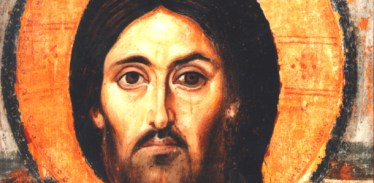
In today’s first reading we are told that Wisdom has built her house and set her table for the banquet. Wisdom invites us in that we might be nourished, that we might learn and that we might forsake foolishness and all that leads away from true life. The revelation of the Gospel is that not only has God set the banquet but that God himself, Christ our Lord, is the banquet! Jesus says, “I am the living bread that came down from heaven; whoever eats this bread will live forever; and the bread that I will give is my flesh for the life of the world.” When questioned on this our Lord does not back off but rather doubles down and says, “Amen, amen, I say to you, unless you eat the flesh of the Son of Man and drink his blood, you do not have life within you.” God has set his banquet where he, himself, is the food that nourishes and strengthens!
Like all of us I have been greatly saddened and appalled by the clergy abuse report that was released this past week in Pennsylvania. I will not go into the details here. It can be found throughout the news in all sorts of outlets. I will say that Bishop Stika has written a good pastoral letter for our diocese responding to the report and copies of this letter have been placed in the bulletin and I encourage all of us to take his words to heart. What I have found myself reflecting upon though is how this abuse and its coverup (whether it occurred within the past ten years or decades ago) occurred at the hands of men who were within (at least on the surface of things) the banquet itself. These were men who were celebrating the sacraments and leading church communities. This is partly why I think the horror and shock is so profound.
We know that the efficacy of the sacraments is not affected by the sanctity or lack of sanctity of the minister. St. Augustine helped the Church to figure this out. God’s grace provides despite the limits of sin. But neither is the grace offered through the sacraments magic! The banquet has been set, all are invited, Christ has made himself the bread of life but our hearts, our wills must be open and willing to receive and be transformed by what is offered! The guest of the banquet has a role to play. The guest of the banquet must be willing to receive and be transformed by the hospitality that is offered in the banquet. Woe to the guest (even the guest afforded a role in the banquet) who remains closed and unwilling to be transformed by the life that is offered in the banquet.
St. Paul writes, “Watch carefully how you live, not as foolish persons but as wise, making the most of the opportunity because the days are evil. Therefore, do not continue in ignorance, but try to understand what is the will of the Lord.” Every sacrament is an opportunity to encounter Christ – to be healed, to be converted, to be challenged, even to be reprimanded and called to repentance if needed. Every sacrament and every instance of prayer is an opportunity to grow in a deeper understanding of the will of the Lord. It is not enough to just go through the motions or to multiply more motions. This is not the wisdom of the banquet. The wisdom of the banquet is found in one name – “Jesus”. Every sacrament, every moment and every day of the disciple, must be a moment of encounter with Jesus where we realize the new life that is found in him alone and where we honestly recognize that the only thing we truly have to offer in return is our poverty, our weakness, our sinfulness and, ultimately, our trust and love.
If the clergy involved in these scandals had learned this the Church would be in a different place today. Sadly, they did not. Sadly, many people do not. Their sin does not have to be ours.
Jesus, you are the living bread!
 (This homily is geared toward our parish “Growing in Faith Day”. It focuses on the gifts of community, faith and the Eucharist.)
 On this Sunday we are given an invitation. After the feeding of the multitude and our Lord withdrawing for some solitude we are told that the crowds in today’s gospel (Jn. 6:24-35) come in search of Jesus but their intent is not the most sincere and our Lord is aware of this. “Amen, amen, I say to you, you are looking for me not because you saw signs but because you ate the loaves and were filled.”
 For a couple of weeks now I have been leading a weekly discussion group on Pope Francis’ recent Apostolic Exhortation “Rejoice and Be Glad”. In this exhortation, the Holy Father is encouraging every member of the Church to recognize and embrace his or her own unique call to holiness. The exhortation is a wonderful document and, I believe, it shows forth Pope Francis’ training as a retreat director steeped in the Ignatian practice of discernment.
 Living in our social media age has led me to ask the following questions in light of today’s gospel (Mk. 6:1-6). “If Jesus were alive today would he be on Facebook?” “If he were on Facebook, what would he post?” “How would we react to his posts? Would we like them, would we unlike them, would we unfollow him, would we perhaps even defriend him?”
 I recently read a daily reflection that made the following point: “Just as nature abhors a vacuum, Jesus abhors vagueness.” In one sense it is easy to speak in generalities and vagueness in regards to faith and God. “Yes, I love God. I love all people. I want to help and serve everyone. I want peace for the whole world.” It is easy to say these things in the general sense but how do we live in the particular moment? Can I show love to the person I don’t like or understand? Can I be patient in a chaotic moment of family life? Can I take time to pray even though the demands of the day seem unceasing? Can I choose hope even in a time of pain and loss? Can I seek justice in moments of injustice? Can I turn the other cheek even when I am wronged? It is not in speaking nice generalities but rather in the choices of particular moments that the Kingdom of God is found.
 The movie “Romero” tells the story of the events leading up to the assassination and martyrdom of Archbishop Oscar Romero of El Salvador. (Archbishop Romero will be canonized a saint this coming fall.) Romero served as archbishop during a painful time of violence and unrest in his country. During this conflict, the archbishop made the choice to stand beside the poor and for this he was killed.
 It is said that a tree is known by its fruit and in the first reading from the Acts of the Apostles we can see that the tree of the resurrection is already bearing amazing fruit! And, here specifically, in the life of Peter.
 Nicodemus is an interesting figure in the gospel. He is a devout man and someone who is intrigued by Jesus. Nicodemus believes the Jesus is a teacher of God and that the signs which Jesus does prove that God is with him yet Nicodemus wants to fit Jesus into his own paradigm, into his own narrative about how God should act. Before the passage we just heard we are told that Nicodemus comes to Jesus, “by night”. Nicodemus is attracted to Jesus but he is still in the darkness of his own presumptions. How often we are like Nicodemus. How often we know people like Nicodemus.
 On my recent vacation in the Canadian Rocky Mountains I learned about the chinook wind. The chinook wind is a rapid climate phenomenon produced by specific atmospheric conditions interacting with the stark geography of the high mountains. If all the proper conditions line up correctly a chinook wind is produced which is a steady stream of warm air that flows down from the mountain tops into the valley below on the eastern side of the Canadian Rockies. This wind has been known to sometimes melt thirty inches of snow in the course of a single day! The largest temperature shift produced by a chinook wind was recorded in the seventies when the wind moved the temperature from forty degrees below zero to forty-five degrees above zero in a twenty-four hour period. In the frigid cold of a Canadian winter the chinook wind is a promise of spring and an end to winter.
