• About The Alternate Path

The Alternate Path

~ Thoughts on Walking the Path of Christian Discipleship

The Alternate Path

Tag Archives: Advent

An Advent reflection on the names “Jesus” and “Emmanuel”

06 Saturday Dec 2025

Posted by mcummins2172 in Uncategorized

≈ Leave a comment

Tags

Advent, Bible, Catholic Church, Christian life, Christianity, discipleship, Emmanuel, faith, God, Jesus, Matthew 1:18-25

Image may be subject to copyright.

In the first chapter of Matthew’s Gospel an angel of the Lord comes to Joseph in a dream after Joseph had decided to “dismiss” Mary quietly.  The angel has a mission, to convince this good and righteous man to take Mary, pregnant with child, as his wife because the child is conceived of the Holy Spirit.  The angel instructs Joseph to name the child Jesus, a name which means, “God saves”.  The child will save his people from their sins.  The angel then quotes the prophet Isaiah as witness, “Look, the virgin shall conceive and bear a son, and they shall name him Emmanuel”, which means, “God is with us.” 

The angel succeeds in his mission.

The names carry depth and weight, a significance that both answers the yearning of Joseph’s heart (the honest heart of a good and righteous man) and gives courage to do the right thing. 

The name “Jesus” means, “God saves” and specifically he saves, “people from their sins”.  The messiah is long expected and yearned for and many people in Israel were looking for his coming but most thought in earthly terms – the messiah would be an earthly king ruling by might and power.  The messiah would defeat all of Israel’s enemies and would establish the kingdom in peace and security.  But God is about something so much more than all of humanity could imagine.  God’s Anointed One would not merely be an earthly king but, rather the eternal king, priest and prophet who would overcome the great wound of sin itself, that which fundamentally separates us from God.  Jesus will save the people from their sins and will heal the great separation. 

Joseph and Mary, two faith-filled Jews, were the first to hear the great promise of the gospel.  How it must have called forth wonder and inflamed their hearts with joy! 

How does God save?  “Emmanuel,” which means, “God is with us.”  This is the incarnation; God saves by being with us.  As we are lost, as we are separated from God, God comes to us.  God enters into the darkness caused by our sin.  Jesus is born that we would live.  God saves us by being with us.

Here is an invitation to prayer in preparation for the celebration of Christmas and in preparation for our Lord’s return in glory.  Reflect on the name “Jesus”.  What are the sins I cling to?  What are the sins I need to be saved from?  There are no pedestals here.  How do I need Jesus as Lord and Savior?  Reflect on the name “Emmanuel”.  How is God with me, right now, in the season of life I find myself in.  Can I recognize and find comfort and encouragement in God’s abiding presence?  Can I welcome God into where I am now and indeed trust that God wants relationship with me? 

A final thought to this exercise of the holding together of the names in which we realize that God saves us by being with us.  From the angel’s proclamation to Joseph in the first chapter of Matthew’s gospel, we look to the end of the Book of Revelation.  By doing this we find that the image of the heavenly Jerusalem fulfills the proclamation of the angel.  In Revelations 21:1-4 we read,

Then I saw a new heaven and a new earth; for the first heaven and the first earth had passed away, and the sea was no more.  And I saw the holy city, the new Jerusalem, coming down out of heaven from God, prepared as a bride adorned for her husband.  And I heard a loud voice from the throne saying, “See, the home of God is among mortals.  He will dwell with them; they will be his peoples, and God himself will be with them; he will wipe every tear from their eyes.  Death will be no more; mourning and crying and pain will be no more, for the first things have passed away.”

God himself will be with them…  Death will be no more…

“Jesus” – God saves.  “Emmanuel” – God is with us. 

God saves us by being with us. 

Come, Lord Jesus! 

Where Hope is Born: Second Sunday of Advent – C

08 Sunday Dec 2024

Posted by mcummins2172 in Uncategorized

≈ Leave a comment

Tags

Advent, Catholic Church, Christianity, discipleship, faith, God, hope, Jesus, John the Baptist, Prophet Baruch, Second Sunday of Advent C

Image may be subject to copyright.

This Sunday is the only time that we hear from the prophet Baruch in the three-year cycle of Sunday readings.  Baruch was thought to have been the scribe of the prophet Jeremiah, and his writing is a reflection on the history of the people of Israel and the experience of the Babylonian exile.  For Baruch history and the hopes and belief of Israel are intertwined.  The same is true for us Christians.

We have the hope of salvation and the hope of the fullness of the Kingdom of God.  In Advent we await the coming of the one whose life, death and resurrection opens the way for us to return home to the Father.  This is the hope that has been planted within our hearts but this hope grows within our daily context and within in our daily journey of faith and not despite it.  Luke is quite specific in his gospel (Lk. 3:1-6). In the fifteenth year of the reign of Tiberius Caesar, when Pontius Pilate was governor of Judea and Herod was tetrach of Galilee, Philip tetrarch of the region of Ituraea and Trachonitis, and Lysanius was tetrarch of Abilene, during the high priesthood of Annas and Caiaphas…”  This was a hard time for Israel – the country was brutally occupied.  Caesar was a foreign emperor; Pilate was his governor.  The tetrarchs were seen as collaborators.  And precisely into this the word of God came to John the son of Zechariah. 

We look at our world today – the war in Ukraine and the Holy Land, the polarization in our own country, the social confusions, the natural disasters and it is precisely into this that the word of God comes to us and it is in this reality and not despite it that hope is born and strengthened by this hope we move forward.  Hope is born in the reality of our world and it is also born in the reality of our lives.  

Baruch gives a powerful image of God commanding that the mountains be made low and the age-old depths and gorges be made into level ground so that his people can joyfully return to Jerusalem.  The mountains and the gorges are the obstacles preventing the people from returning.  What are the mountains, the age-old depths, the obstacles in our lives that stand in the way of our returning to the Father?  The addictions we have cultivated, the pride we nurse, the sin we allow, the resentments we hold on to, the prejudice we turn a blind eye to, the list can go on.  These are the mountains and the gorges we have thrown up between us and God.  And into this the word of God comes undeterred.

How is God laying low the mountains and filling in the gorges of our lives?  By Jesus who is the way and by the outpouring of his grace and the salvation he won for us.  How do we prepare the way of the Lord these days of Advent, how do we find hope?  We receive the sacraments, we confess our faults, we live Christian charity, we pray and work for peace, we forgive and we ask for forgiveness not despite the reality of our life right now but within it. 

And in this, hope is born.  Paul witnesses to this truth in his letter to the Philippians, I am confident of this, that the one who began a good work in you will continue to complete it until the day of Christ Jesus.  

Home, Hope, Redemption and Light: First Sunday of Advent, Year C

01 Sunday Dec 2024

Posted by mcummins2172 in Uncategorized

≈ Leave a comment

Tags

Advent, Catholic Church, Christian life, Christianity, Christmas, discipleship, faith, First Sunday of Advent, hope, Jesus

Image may be subject to copyright

Recently, a priest friend of mine shared with me some themes that he found present in this First Sunday of Advent’s prayers and readings, themes that are worthy of our carrying and reflecting upon these next four weeks.  I would like to share some of the themes but add my own take upon them.  The themes are: home, hope, redemption and light. 

Home.  This last liturgical year I made the Nineteenth Annotation retreat and in the fourteenth week of the retreat I had a truly profound prayer experience – Jesus invited me to the Father’s house.  In my mind, the Father’s house was a small cabin in the woods.  It was a winter night, there was snow on the ground and it was cold but there was warmth, light and laughter coming from the cabin.  Jesus welcomed me and the Father was there – not seen – but a deep abiding presence.  In my heart I heard the Father say, “Welcome, Michael, you are always welcome here.”  Part of the expectation of Advent – as we await the coming of the Messiah – is that we have a home.  Each one of us has a home.  Our home is in the fullness of the Kingdom with the Father, the Son and the Spirit and we are always welcome there. 

Hope.  In today’s gospel (Lk. 21:25-28, 34-36), Jesus calls us to be vigilant but the vigilance of the Christian is not a vigilance founded in fear but rather a vigilance rooted in hope.  Notice the distinction that Jesus makes in the gospel.  “There will be signs,” says Jesus and “nations will be in dismay” and “people will die of fright” but then Jesus tells his disciples that when these signs occur, “stand erect and raise your heads because your redemption is at hand.”  Christians live in hope and not fear.  We stand erect and we raise our heads because we know that Jesus is Lord.  The cry of Advent, “Maranatha!” (Come, Lord Jesus!) is never a cry of fear but rather a bold proclamation of hope.  Every Advent calls the Church to hope. 

Redemption.  Jesus calls us to raise our heads because our “redemption is at hand”.  “Redemption” is a powerful and heavy word and we often think of it in final terms but in our Lord’s words we also see that redemption takes root in our lives and begins to grow and have effects today.  In redemption, we learn and we find the strength to begin to let go of those things, those decisions, attitudes and anxieties that make us “drowsy” from carousing and drunkenness.  In redemption, we learn to let go of actions and mindsets that block life in order to choose that which leads to true life.  Redemption is more than just a final goal for the Christian.  Redemption is a growing and living seed planted in the heart of every disciple by Jesus himself.

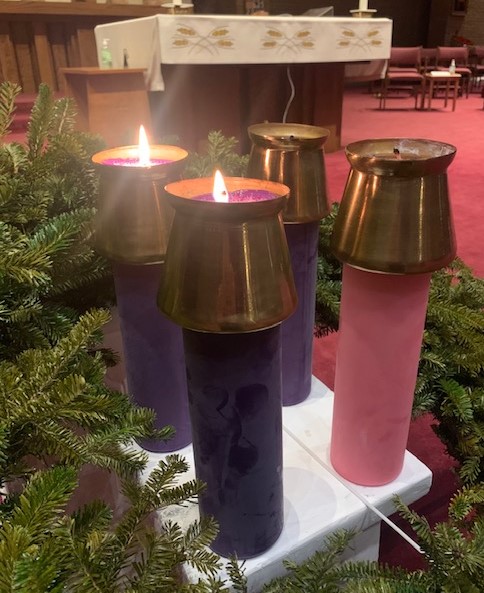
Light.  This Sunday, we light the first Advent candle and we will light the other candles over the next three weeks.  The light grows with each candle even as the days become shorter and the darkness of winter lengthens.  The light dispels the darkness and we await the coming of the light of the world and this light transforms our hearts even as we await it.  Dr. Martin Luther King Jr. reminded us that darkness cannot drive out darkness, only light can do that.  Hate cannot drive out hate, only love can do that.  We await the coming of the light and we let that light find a home in our hearts.

Home.  Hope.  Redemption.  Light. 

Come, Lord Jesus!     

The Feast of the Epiphany – awe, sacrifice and wisdom

07 Sunday Jan 2024

Posted by mcummins2172 in Uncategorized

≈ Leave a comment

Tags

Adoration of the Magi, Advent, Christianity, Christmas, Epiphany, magi, Three Kings, worship

Image may be subject to
copyright

The other day I was listening to the “Voices of Greater Yellowstone” podcast.  The current episode is an interview with the wildlife photographer Ronan Donovan and his sharing about the use of images to tell stories.  At one point in the interview the subject of awe was discussed and the photographer, sharing from his experience of travelling to some of the remotest regions of the world and having amazing encounters with wildlife, shared that he believes awe (this is my paraphrase) is connected to those moments when we forget self and are caught up into something so much more bigger than us.  That sense of awe and wonder is connected to those moments in life. 

The three magi were caught up in awe.  They saw the star, they interpreted that something much bigger than themselves and their particular tribe, culture and nation was at work.  After all, they journeyed to a foreign land to give homage to a newborn foreign king.

Awe allowed the magi to do two important things that are relevant for all believers in every age.  Awe allowed the magi to choose sacrifice over comfort and to choose wisdom over knowledge.  

It had to have been a sacrifice for the magi to depart their native land in order to undertake a journey of unknown length following a star in hopes of finding a newborn king.  Such a journey requires sacrifice and probably even brought some ridicule.  In contrast, the priests and scribes of Herod’s court, the very ones to whom the Messiah is promised, would not even set out to the nearby Bethlehem.  It seems that for them the comfort of the court was much more important than the sacrifice of the journey.  Allowing their hearts to be captured by awe, the magi chose sacrifice and this is to their everlasting credit.

The chief priests and scribes had knowledge.  When asked, they were able to point to the passage that the newborn king was to be born in Bethlehem but knowledge does not equal wisdom.  In the first chapter of the Book of Wisdom we read, For the holy spirit of (wisdom) flees deceit and withdraws from senseless counsels and when injustice occurs it is rebuked.  Wisdom is tied to integrity of life.  Knowledge is not.  One can be knowledgeable about something – even the things of faith – without integrity of life but one cannot possess wisdom without integrity. The magi left the deceit and senseless counsels of Herod’s court and did not return there.  They went home a different way.  The magi chose integrity of life and by this they welcomed wisdom. 

Awe – those moments when we forget self and are caught up into something so much bigger than ourselves.  Awe allows for the saving choices of sacrifice and wisdom.  Like the magi, we also are invited to be overjoyed at seeing the star and to set out on the journey of encountering the newborn king. The end of the Christmas season is really just the beginning of the awe-filled journey of coming to know Christ more truly, love him more dearly and follow him more closely. 

The Active Waiting of Advent

06 Monday Dec 2021

Posted by mcummins2172 in Uncategorized

≈ Leave a comment

Tags

Active Waiting, Advent, hope, Theological virtues

Near the end of his little book, “Obedience” Cardinal Cantalamessa reflects on an expression found throughout Scripture that is very dear to God.  “Here I am.”  These words are dear to God because they are an expression of an obedience rooted in love (imagine a parent walking into a home and calling out to his or her child, “Where are you?” and the child, playing in the back room, simply responding “Here I am”).  It is a simple automatic connection of love, relationship and obedience and it is through all of this that God is able to do great things. 

To continue Cardinal Cantalamessa’s thought – Abraham responded, “Here I am” and God made him the father of faith and brought forth from him innumerable descendants – as many as the stars in the sky.  Moses said, “Here I am” and through him God was able to set his people free and lead them to the promised land.  The young Samuel did not fully understand at first but after being instructed by the elder Eli answered, “Here I am” and God made of him a great prophet who would anoint David as king.  Isaiah said, “Here I am” and through his writings we are given the beautiful imagery of the coming Messiah as the one who would bring forth God’s reign and also be the suffering servant.  We are told that the word of God came to John the Baptist in the desert and his, “Here I am” was his willingness to go forth and proclaim the coming of God’s Kingdom even to the point of giving his life.  Mary, the mother of our Lord, said, “Here I am” when she responded to Gabriel’s message by saying, “Behold, I am the handmaid of the Lord.  May it be done to me according to your word.”  Jesus’ whole life, every aspect of his being, was, “Here I am” to the Father’s will.  He took this loving response to the call of the Father to the level of the infinite and through that he won salvation for all. 

The life of every Christian should be lived as an expression of these simple words, “Here I am”. 

We talk about the season of Advent being both a time of waiting and of hope.  How are the two connected?  Here is a thought. 

The waiting of Advent is not a passive thing.  As Christians we are not just sitting, twiddling our thumbs waiting on the Master’s return.  The waiting of Advent is an active waiting. 

It is said that a large part of success in life is the willingness to just show up.  It may sound simple but it is a key ingredient in success and accomplishment.  Being willing to “show up” is saying, “Here I am” to God and to neighbor.  We show up to God when we value our relationship with Him – when we take the time to pray, when we give priority and value to worship and adoration of God.  We show up when we strive to both learn and live by God’s teachings for us through Scripture and Tradition.  We show up when we are obedient to God’s will for us.  We are that child in the back room playing and we should easily and automatically in love respond, “Here I am” when our loving Father calls out for us. 

We respond, “Here I am” to our neighbor when we also show up for them.  We show up when we strive to be fully present to the other person – spouse, child, parent, neighbor, stranger.  We show up to our neighbor when we desire and choose to live the particular vocation God has called each one of us to.  We show up when we live our commitments and responsibilities in life.  It is the mature thing to do and there is no substitute. 

This willingness to just show up, to say, “Here I am” is the active waiting of Advent and it is connected to hope. 

Hope is a theological virtue in our Christian understanding.  Part of being a theological virtue means that the source of this virtue is God.  We – on our own – cannot make hope, we cannot contrive it.  Hope is a gift from God that is only received by living in right relationship with God.  We cannot make hope but we can live our lives in such a manner as to be open to receive this most precious of gifts.  We can make the choice to live in a way that opens our hearts to this gift, that will allow this gift to take root in our lives and to bear fruit and then, our lives, can be a witness of hope in our world. 

The active waiting of Advent is living is such a manner as to receive hope.  Responding, “Here I am” is allowing hope to take root within us.  Just showing up is the willingness to live in hope. 

The waiting of Advent is active, in fact, it is probably the most active thing we could ever do.  It is the willingness to say, “Here I am”.  It is the desire to just show up. 

Short and Long-Term Urges and Walking on the Moon

21 Sunday Jul 2019

Posted by mcummins2172 in homily, Uncategorized

≈ Leave a comment

Tags

Abraham and three angels, Advent, Bible, Christianity, discipleship, Martha and Mary, Walking on the moon

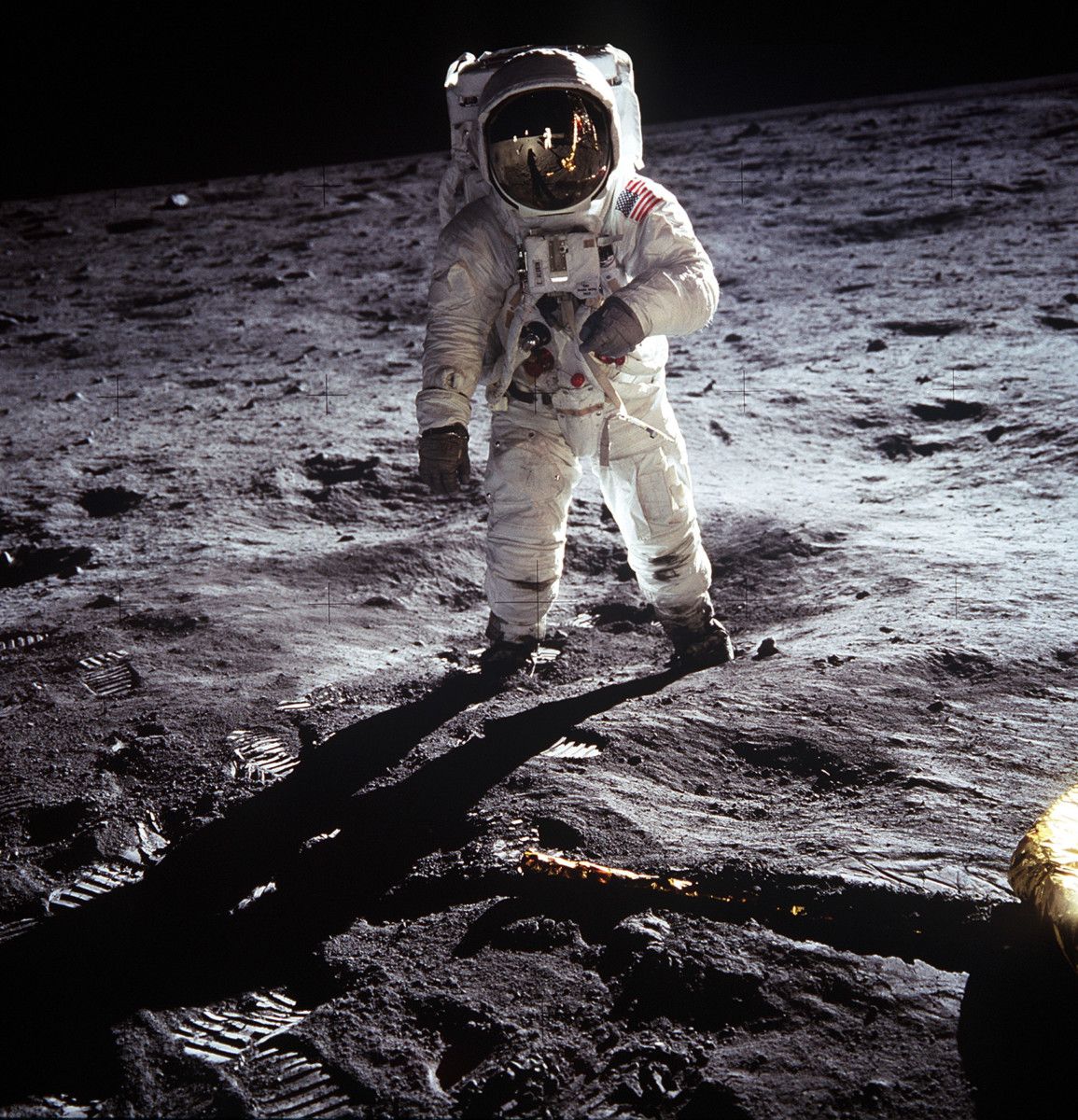
the_day_we_walked_on_the_moon_09Our nation has been reflecting on the 50th anniversary of the Apollo moon landing. Where were you when man first stepped on the moon? I was one-year-old. I don’t remember much about it. It is fitting and right to have this reflection. It was and remains one of our nation’s greatest accomplishments and not just for what was achieved but how it was achieved. A goal was set and as a nation we rallied around that goal and we devoted the resources, the time, the energy, the skill needed to achieve that goal. In a sense, it was not just one man who took that first step on the moon but a whole nation. It was a great moment and will hopefully be one of continuing moments in humanity’s outreach into space.

Br. Guy Consolmagno is the director of the Vatican Observatory. I just read an interview with him about the significance of the moon landing and in the interview he reflects on how the moon landing offers concrete lessons for people of faith. One lesson is “hope”. That even as we face what seems to be impossible problems we can work together. Another lesson is how God is creator of all – not just the earth and all of its wonders but all the universes and galaxies with all of their untold wonders. All of creation proclaims the glory of God! Finally, the moon landing speaks of a compatibility and not an opposition between science and religion – both (when truly and authentically lived) enhance and support one another.

In reflecting on these lessons, Br. Consolmagno shares something he once heard from a person who works with the poor, “a short-term urge leads to addiction, but a long-term urge leads to purpose.” This is played out, I think, in today’s readings.

One thing to note in the encounter between Abraham and the three men is that there is really nothing mystical or exceptional about it. It was a hot day and three men are walking by. It would have been very easy (and understandable) to just let them continue on and not expend the energy needed to welcome and host them. A short term urge. But Abraham made a choice – a choice not guided by the short term urge (of laziness, basically) but rather the long term commitment of hospitality and going out of one’s way to welcome the other. In this choice Abraham and Sarah were blessed with the promise of a child, and from that child – a nation. A long-term urge leads to purpose.

In the gospel Martha welcomes Jesus into her home and she quickly sets about the work of serving and then complains when her sister Mary does not do the same. (It is interesting how the gospel here points out how even the work of hospitality – for which Abraham and Sarah were blessed – can be twisted to be more about a fix for the short term urge.) Martha’s outer busy-ness and complaining is a reflection of the anxiety and the worry she carries within. Anxieties and worries and our choice for them can become addictive realities in our hearts. Mary chooses the better part. She also had worries and anxieties but she set those short-term urges aside in favor of the long-term urge of just sitting at our Lord’s feet and listening. Mary was blessed by this choice.

Much in our world and society is focused toward the short-term and even attempts to train us for the short-term alone. This is a reflection of our fallen state and our fallen world. But today’s readings along with our nation’s reflecting on the 50th anniversary of the Apollo moon landing offer a different perspective and a different way to live faith and even life itself.

“…a short-term urge leads to addiction, but a long-term urge leads to purpose.” The blessing that Abraham and Sarah knew, the blessing that Mary knew can also be known by us. We just need to make the choice.

One piece of the puzzle is enough

22 Saturday Dec 2018

Posted by mcummins2172 in Advent, Uncategorized

≈ 2 Comments

Tags

4th Sunday of Advent, Advent, Christianity, faith

Christmas puzzle (2)I go to the YMCA to exercise and for anyone who has been there you know that once you enter the building and head down the main hall there is a lounge area on the left and on a table in this room there is always a puzzle being worked on. I have begun the practice of spending three to five minutes at this puzzle after I exercise and before I leave. My goal is to try to get at least one piece of the puzzle in place. (The last time I was there I got three pieces in … I was quite proud of myself!) I could easily spend hours at this table because I like puzzles but I am learning that there is something good about limiting myself to just one or a few pieces at a time and also seeing how the puzzle comes together as other people also work on it.
If you look at the Scripture readings over these weeks of Advent it is like God putting the pieces of the puzzle together right in front of our eyes – the hopes of Israel, the promise of the prophets, Gabriel appears to Zechariah to announce that he and Elizabeth will have a son, Zechariah doubts and is left mute till the birth of John, Gabriel appears to Mary, Mary believes and she conceives by the Holy Spirit, the angel appears to Joseph in a dream to assuage all of his fears and uncertainties, wise men from the East begin their trek towards Bethlehem. John the Baptist appears on the scene. Piece by piece the puzzle is put together.

But it is one piece at a time. If you look at the passage where Gabriel appears to Zechariah in the temple, the angel announces that Zechariah and Elizabeth will have a son in their old age and that the son will help turn Israel back to God. Gabriel sort of hints at the coming of a Messiah but he does not say it out right. The angel gives Zechariah one piece of the puzzle. That is enough. Gabriel appears to Mary and announces that she will bear a child who will be the son of the Most High and who will reign forever but he does not say how our Lord will accomplish this and how everything will play out. He gives one piece of the puzzle. That is enough. An angel appears to Joseph in a dream to tell him not to fear to take Mary as his wife, that the child is of God and will save the people from their sins. Again, nothing about how this will be accomplished, just one piece of the puzzle. It is enough.

In today’s gospel with Mary visiting Elizabeth we see Luke doing something he likes to do throughout his writings – he brings two people together who each have had an experience of God, who each have a piece of the puzzle. The two come together, they each share their story – their piece – and by so doing, they are brought to a greater understanding and awareness. And in this particular encounter there is an even deeper encounter – the infant in Elizabeth’s womb who will be the great prophet leaps in the presence of the Word made flesh in the womb of Mary and shares his prophetic spirit with his mother who then proclaims, “Blessed are you among women, and blessed is the fruit of your womb. And how does this happen to me, that the mother of my Lord should come to me?”

So often in regards to faith and in regards to live in general we want no loose ends, we want to have it all figured out but this is like trying to grab a sip of water from a fire hose! It doesn’t work that way. One lesson of Advent, one lesson learned from the people of the Advent story – welcome the one piece of the puzzle that God has given us in this moment of our journey and be content with that. Sit with it, appreciate it, wonder over it, learn the lesson it offers, share it and the truth it offers with others and together learn to trust in our own hearts and with one another that God is at work bringing it all together in his way.

One piece of the puzzle. It is enough.

What are the animals in your stable?

09 Sunday Dec 2018

Posted by mcummins2172 in Advent, Uncategorized

≈ 1 Comment

Tags

Advent, Christian life, Christianity, Christmas manger, discipleship, second sunday of Advent

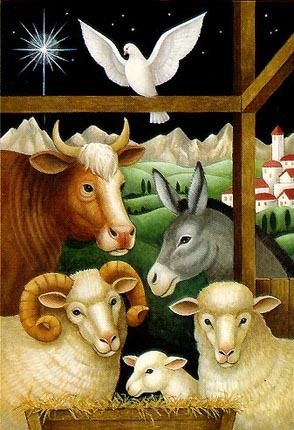
animals in the mangerYou may have noticed that Seth who oversees our parish maintenance has placed the animals in the stable scene outside in front of our church. I appreciated this as the day after he put the figures out I came across this quote from the author Evelyn Underhill,

“Human nature is like a stable inhabited by the ox of passion and the ass of prejudice; animals which take up a lot of room and which I suppose most of us feed on the quiet. And it is there between them, pushing them out, that Christ must be born and in their very manger he must be laid – and they will be the first to fall on their knees before him. Sometimes Christians seem far nearer to those animals than to Christ in his simple poverty, self-abandoned to God.”

The stable scene and the quote prompt a good examination in preparation for the coming Christmas celebration. What are the animals inhabiting the stable of my heart? Truth be told, any person who would say, “I have no animals. My stable is completely clean,” either does not know his or her own heart, is a fool or a liar or maybe a combination of all three. Honestly, what are the animals in the stable of our hearts?

We can even get quite creative in this examination. The ox of passion might be the passion of lust but it also might be the passion of anger, control or narcissism. The ass of prejudice might be prejudice against the one who is different, the stranger or the person I have already judged in my own heart. But there can be other animals. The strutting rooster of pride and arrogance, the fat, squawking hen of gossip, the goat of resentment, the pig of sloth, the farm rat of jealousy… What are the animals in our stables? A good way to prepare for Christmas is to honestly and creatively look within and not be afraid to acknowledge and name those animals that we find within our stables. A spiritual truth – when we can creatively and even mockingly name the animals that mill about in our heart’s stable, they actually begin to lose their power – for example, when we know our pride is at work we can chuckle to ourselves, “there goes that strutting rooster again!”

The quote from Underhill goes further though and brings out another deep dynamic in the Christian mystery when she writes that it is precisely within the stable, between all the animals that reside there, that Christ must be born. It is not we who first make our stables nice, neat and clean in order to then welcome the Christ child; it is the Christ child who first chooses to be born within the crowded mess of both our world’s and hearts’ stables and by his presence brings the light and healing that we yearn for. The Nativity stable continually instructs us to avoid the danger – even heresy (Pelagianism) – of believing that it is we who first cleanse our stables by our own efforts in order to then win and warrant the coming of our savior, the gift of grace. It does not work that way. God first arrives – even into the mess and pressing crowd of our little stables – and this is what brings life and the healing.

Both prophets in today’s readings proclaim this to us. The prophet Baruch proclaims the glory of Jerusalem but specifies that it is a glory that comes from God. “Jerusalem, take off your robe of mourning and misery; put on the splendor of glory from God forever: wrapped in the cloak of justice from God…” The prophet invites Israel to live and rejoice in this gift from God! Even John the Baptist – who is that voice crying out in the desert, who is that one who is sent to prepare the way of the Lord – proclaims that it is the “salvation of God” that all flesh will see. God arrives first. “And it is there between them, pushing them out, that Christ must be born and in their very manger he must be laid…”

Soon Mary and Joseph, the angels and the shepherds and eventually the three kings will also arrive at the stable but before all of that it is worthwhile to just sit and acknowledge the animals in our stables. It is worthwhile to honestly admit their presence and to know that Christ is not put off by them – that he will be born within their midst, that he will be laid in their manger and that the animals – by his presence, healing and grace – will then become the very first to kneel down in adoration.

Rejoice! God’s freedom is not our freedom!

16 Saturday Dec 2017

Posted by mcummins2172 in homily, Uncategorized

≈ Leave a comment

Tags

Advent, Christianity, faith, Rejoice, Third Sunday of Advent

Third Sunday of AdventScripture tells us that God’s ways are not our ways and neither is God’s freedom our freedom.

We look at the world and we see the injustice, the wrongs committed, human dignity is denied, nations threaten other nations, fear is pervasive and confusion seems to abound. We profess that God will certainly answer all of this but, so often, we then just assume that God will answer it as we would – through a show of power, force and dominance!

We are not alone in this, it has been the human fallback since the beginning – a sad result of our fall from the Garden of Eden. The people of Israel also held this. Their land was occupied by the world’s superpower, their kingdom was destroyed, their culture and religion was at odds with all of their neighbors yet, the idea of a messiah began to grow in the heart and hope of Israel, but they easily assumed that it would be a strongarm messiah who would vanquish the Romans, overcome all foes and restore Israel as the nation above all nations!

How little we understand the freedom of God.

God would send the messiah but simply and quietly – not leading an army but rather feeding the poor, healing the sick and preaching the Kingdom. The political oppression of Israel and the tumult among the nations was just the backdrop to the true story of God’s messiah and the oppression he came to confront and overcome – the oppression of sin and evil rooted deep in the human heart.

John the Baptist understood something of the freedom of God, so when he was questioned about his identity and the hope of the messiah, he was able to respond, “…there is one among you whom you do not recognize, the one who is coming after me, whose sandal strap I am not worthy to untie.” The messiah is not recognized because God’s freedom is not understood. God does not need the force of the world’s power nor is God bound by the terms of the world in accomplishing his will. God’s word is enough. God’s Spirit has been given.

The single most important event in human history (outside of creation itself) is accomplished by Jesus in his death and resurrection in a small part of a vast empire and the powers of the world barely noticed it. God’s freedom is shown in this! Now, in Christ – as adopted sons and daughters – we also have been given this freedom and this hope.

Here is a simple question to reflect upon that can lead us, I believe, into a little deeper awareness of the freedom of God and now our freedom as his children. The question often asked at this time of year is “How am I, how are we, going to celebrate Christmas?” But here is a different question, “How am I, how are we, going to give Christmas?” Christmas is the celebration of God’s light and God’s freedom breaking into our world! How can I give that light? How can I live that freedom? It is an appropriate question to reflect upon on this third Sunday of Advent when we rejoice in the coming of Christ! Christ came that we might have life and that we might live the life we receive for others! Christ invites us into the very freedom of God.

How am I, how are we, going to give Christmas and learn (in a deeper way) the freedom of God?

“Be watchful!”

02 Saturday Dec 2017

Posted by mcummins2172 in homily, Uncategorized

≈ Leave a comment

Tags

Advent, Christianity, faith, First Sunday of Advent

Icon of ChristA few weeks ago we had the reading of the parable of talents in Matthew’s gospel. Three servants are given different amounts of treasure to invest for their master while he is away – one is given five talents, the second is given two and the third is given one talent. On the master’s return we learn that the first two servants doubled what was entrusted to them (and were therefore rewarded generously by their master) while the third servant buried the talent in the earth that he had been given. He neither lost nor gained anything for the master and was therefore chastised for his laziness and was punished by being cast into “the darkness outside.”

I refer to this because I think we can learn something from this parable about what our Lord means when he says, “Be watchful!” in today’s gospel.  The action of the third servant – in contrast to the first two servants – was the opposite of being watchful.  The burying of the talent entrusted to him was, in essence, an act of ignoring the master. 

It is safe to assume that the third servant, after tucking away his talent, went about the business of his day and what he wanted to accomplish – not really thinking about the master until the day he showed up again. The first two servants, working to increase the talents given them, were active and they were continually thinking about and focused on the master’s return. They were not going about their own plans but were planning and working for their master even as he was away. Their doubling what had been entrusted to them demonstrates this attitude.  The first two servants were watchful where the third was not.  The first two disciples were mindful of the master. 

The watchfulness that our Lord calls us to is not a watching in order to be entertained or amused or even scandalized by the ever-present corruption of sin and evil that we find in life.  All of this is a passive watching.  The watching that our Lord calls us to is an active engagement – just like the first two servants.  This is where we find ourselves, these are times and situations we find ourselves in – now, what are we going to do about it?  How will we live our lives today in a way that increases what the master has entrusted to us?  The first two servants worked hard – anticipating the return of the master.  They did not just sit passively bemoaning the state of things. 

By working hard, the first two servants demonstrate both their obedience to and even their love for the master.  The third servant might have spoken quite eloquently about how he had hidden the talent away in order to present it safely back to the master upon his return but, in reality, his heart was not connected to the master.  The third servant was more focused on what he wanted to do and what he wanted to accomplish with his time.  The first two servants show their love for the master by their willingness to work hard, get messy in the process and even risk what had been entrusted to them in order to bear fruit. 

The watchfulness our Lord calls us to is a watchfulness found in a life being lived in faith, in hope and love and in service to one another.  The prophet Isaiah (from the first reading) knew this type of watchfulness when he wrote, “Would that you might meet us doing right, that we were mindful of you in our ways!”  “Be watchful!” says our Lord – live in such a way that your life anticipates and yearns for the return of the Master!     


← Older posts
Follow The Alternate Path on WordPress.com

Enter your email address to follow this blog and receive notifications of new posts by email.

Previous Posts

  • December 2025
  • November 2025
  • August 2025
  • April 2025
  • February 2025
  • January 2025
  • December 2024
  • August 2024
  • July 2024
  • June 2024
  • May 2024
  • April 2024
  • March 2024
  • February 2024
  • January 2024
  • December 2023
  • November 2023
  • October 2023
  • August 2023
  • July 2023
  • May 2023
  • February 2023
  • January 2023
  • December 2022
  • August 2022
  • July 2022
  • April 2022
  • January 2022
  • December 2021
  • September 2021
  • August 2021
  • July 2021
  • May 2021
  • April 2021
  • January 2021
  • December 2020
  • November 2020
  • October 2020
  • August 2020
  • July 2020
  • May 2020
  • April 2020
  • March 2020
  • February 2020
  • December 2019
  • October 2019
  • September 2019
  • August 2019
  • July 2019
  • May 2019
  • April 2019
  • March 2019
  • February 2019
  • December 2018
  • November 2018
  • October 2018
  • August 2018
  • July 2018
  • June 2018
  • April 2018
  • March 2018
  • February 2018
  • January 2018
  • December 2017
  • November 2017
  • September 2017
  • August 2017
  • July 2017
  • June 2017
  • May 2017
  • April 2017
  • March 2017
  • February 2017
  • January 2017
  • December 2016
  • November 2016
  • October 2016
  • September 2016
  • August 2016
  • July 2016
  • June 2016
  • May 2016
  • April 2016
  • March 2016
  • February 2016
  • January 2016
  • December 2015
  • November 2015
  • October 2015
  • September 2015
  • August 2015
  • June 2015
  • May 2015
  • April 2015
  • March 2015
  • February 2015
  • January 2015
  • December 2014
  • November 2014
  • October 2014
  • September 2014
  • August 2014
  • July 2014
  • June 2014
  • May 2014
  • April 2014
  • March 2014
  • February 2014
  • January 2014
  • December 2013
  • November 2013
  • October 2013
  • September 2013
  • August 2013
  • July 2013
  • June 2013
  • May 2013
  • April 2013
  • March 2013
  • February 2013
  • January 2013
  • December 2012
  • November 2012
  • October 2012
  • September 2012
  • August 2012
  • July 2012
  • June 2012
  • May 2012
  • April 2012
  • March 2012
  • February 2012
  • January 2012
  • December 2011
  • November 2011
  • October 2011
  • September 2011
  • August 2011
  • July 2011
  • June 2011
  • May 2011
  • April 2011
  • March 2011
  • February 2011
  • January 2011
  • December 2010
  • November 2010
  • October 2010
  • September 2010
  • August 2010
  • July 2010
  • September 2008
  • August 2008
  • April 2008
  • March 2008
  • February 2008
  • January 2008
  • December 2007
  • November 2007
  • October 2007
  • September 2007

Popular Posts

  • thealternatepath.org/wp-c…
  • thealternatepath.org/wp-c…

Blog at WordPress.com.

  • Subscribe Subscribed
    • The Alternate Path
    • Join 156 other subscribers
    • Already have a WordPress.com account? Log in now.
    • The Alternate Path
    • Subscribe Subscribed
    • Sign up
    • Log in
    • Report this content
    • View site in Reader
    • Manage subscriptions
    • Collapse this bar
 

Loading Comments...