• About The Alternate Path

The Alternate Path

~ Thoughts on Walking the Path of Christian Discipleship

The Alternate Path

Tag Archives: Christianity

“Father, I thank you for hearing me.”

02 Sunday Apr 2017

Posted by mcummins2172 in homily, Uncategorized

≈ Leave a comment

Tags

Catholic Church, Catholic faith, Christianity, faith, God the Father, Jesus, raising of Lazarus

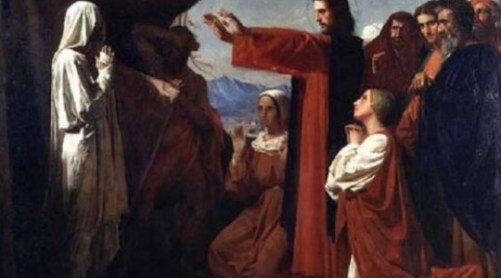
Jesus-Raises-Lazarus-from-the-Dead-540x300There is almost an ordinariness to the way our Lord goes about his mission of proclaiming and living God’s Kingdom.  Even his miracles and the raising of his friend Lazarus are not exceptions.  Our Lord takes his time in getting to the scene of Lazarus’ illness and death.  He takes time in speaking with both Martha and Mary.  Arriving at the tomb he asks that the stone be rolled back.  He addresses the Father and then, with a loud voice, cries, “Lazarus, come out!”  The once-dead man walks out. 

There are no flashes of light or rolling thunder.  Our Lord does not need to make strange incantations or weave any sort of spell.  He does not even seem to have to fast in preparation for such an extraordinary thing.  There is no burning of incense or sacrifices offered.  Jesus simply gives honor to the Father, calls Lazarus forth and his friend is restored to life.  

This is not a feat of our Lord’s own will at work.  Jesus is not a comic book superhero saving the world through his own strength and determination nor is he a wizard overcoming by his own intellect and perseverance (a.k.a., “will to power”).  Scripture tells us that Christ let go of his own glory and power and took on the form of a slave.  The salvation won through Christ is through the “letting-go” of the divinity which allows the humanity to live in full relationship of love and trust with the Father.  Jesus tells us that he can do nothing apart from the Father.  Jesus does not heal, or feed the multitude, or cast out demons or walk on water or raise the dead through his own, independent and isolated exercise of will but through his relationship with the Father.  Therefore he does not need the trappings of the superhero or of esoteric magic.  It is all through relationship and relationship is often one of the most ordinary of things. 

St. Paul in his letter to the Romans reminds us that we also have been invited into this relationship.  “But you are not in the flesh; on the contrary, you are in the spirit, if only the Spirit of God dwells in you.  Whoever does not have the Spirit of Christ does not belong to him.  But if Christ is in you, although the body is dead because of sin, the spirit is alive because of righteousness.  If the Spirit of the One who raised Jesus from the dead dwells in you, the One who raised Christ from the dead will give life to your mortal bodies also, through his Spirit dwelling in you.”  (Rom. 8:8-11) 

How often and how easily we overlook the grace we have been given, that is indeed active within us!  We easily we get lost in the noise and distractions of our world.  The Spirit of the One who raised Christ from the dead has been given us and dwells within us – giving life and transforming us.  God does not need the trappings of the extraordinary to accomplish his purpose.  The sacraments are a prime example of this.  Water, bread, wine, oil, the words of the priest, the love of a couple – yet underneath the ordinary divine grace, relationship and life is found and given.  

We should not disdain the ordinary and the grace and new life found there.  Just as Christ emptied himself of glory and held to his relationship with the Father so should we.  Life is not found in our control, our ego, our own little “wills to power”, living within our own little bubbles.  Life, salvation, healing, grace is found through relationship – recognizing God’s presence given and within and seeking to live always in the amazing ordinariness of that relationship. 

“Father, I thank you for hearing me.  I know that you always hear me; but because of the crowd here I have said this, that they may believe that you sent me.”


Learning to worship God alone

04 Saturday Mar 2017

Posted by mcummins2172 in Uncategorized

≈ Leave a comment

Tags

Christ in the desert, Christianity, first Sunday of Lent, Love of Christ, prayer, temptation of Christ

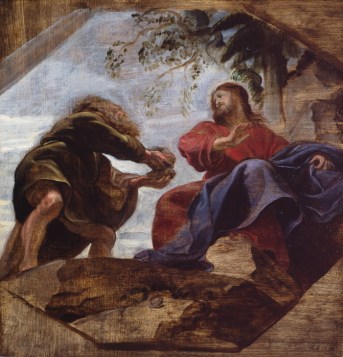
tempationsIn Adam and Eve, the devil trips humanity up not just through the temptation to exalt ourselves by eating of the tree of the knowledge of good and evil (the sin of pride) but also through the temptation to reduce God to our limits.  The serpent plants the seed for this second sin in his reply to Eve, You certainly will not die!  No, God knows well that the moment you eat of it your eyes will be opened and you will be like gods who know what is good and what is evil.

The devil introduces a doubt about God and God’s goodness.  There is some reason God does not want them to eat of this tree…  There is something God is holding back…  There is something that even God is fearful of…

If God is fearful then God is not God because there is then something beyond God which causes fear within God.  Scriptures tells us that God is love (1 Jn. 4:16) and also that perfect love casts out all fear (1 Jn. 4:18).  In God there is no fear, only love.  God is not bound by our limits.

During his trial in the desert, our Lord overcomes the temptations of the devil and the doubts the serpent seeks to plant by holding to the truth of a God beyond our limits.  When the devil took our Lord to the parapet of the temple and seeks to plant doubt by saying, If you are the Son of God, throw yourself down and then even quotes scripture; our Lord quotes scripture back, You shall not put the Lord, your God, to the test. 

We do not put God to the test in the way that we can test one another by trying each other’s patience and resolve.  God cannot be tested this way.  We put God to the test when we seek to bind God by our limits.  When, in this sense, we put God to the test we, in fact, show our limits, we do nothing to God.  God remains God whether we fully understand Him or not.  Christ will not put God to the test.  He will not limit God but will live rather in full trust of the love of the Father and full obedience to the Father’s will.

In my experience as a confessor as well as through my own stumblings in life, I have learned that one of the most corrosive aspects of sin in our lives is the seed of doubt in the goodness and true nature of God that can be planted by the evil one in our hearts.  God is like us.  God is fearful.  God needs to control.  God is jealous as we are often jealous.  God is a God of wrath.  God is somehow opposed to my freedom and fulfillment.  God is angry with me.  God is somehow “put off” by my weakness and failures.  Ultimately, God is not truly love…

The season of Lent and its disciplines offers us a time of both repentance and renewal.  As we begin this season I think it would be most beneficial to begin where our Lord begins – by not limiting God to our limits, by not putting God to the test.  To trust that God is love and that perfect love has no fear.

At the last temptation our Lord is taken to a high mountain and promised all the kingdoms of the world if he would but serve the devil.  Our Lord responds, Get away Satan!  It is written: “The Lord, your God, shall you worship and him alone shall you serve.”  Only God shall we worship and serve.  Lent is an invitation to follow our Lord and let go of any god we might be carrying around in our wounded hearts made in our limits in favor of the true God we are called to worship.

God is love and in love there is no fear.

The Law of Generosity: Be holy as God is holy.

18 Saturday Feb 2017

Posted by mcummins2172 in homily, Uncategorized

≈ 1 Comment

Tags

Christianity, faith, forgiveness, generosity, law of reciprocity, mercy, revenge

Jesus - way, truth, lifeThe “eye for an eye” teaching that our Lord refers to in today’s gospel (Mt. 5:38-48) was actually an attempt to restrict violence in a time when revenge was indiscriminate and excessive.

In the revenge culture of the time not only was it the perpetrator of a violent act who became a possible target for reprisal but any member of the same family, clan, ethnic group or even someone “thought” to be responsible or connected.  The culture of revenge was excessive.  An “eye for an eye” therefore was an attempt to limit the continuous cycle of revenge and violence.  With this understanding it would almost be better to read the injunction as “one eye for one eye and no more”.

For our Lord though it was not enough.  His desire is not just to limit the cycles and structures of violence but to actually heal the human heart from which all evil desires spring.  Evil and violence can never overcome evil and violence, even when co-opted for a good.  Dr. Martin Luther King Jr. had an astute awareness of this truth.  In his writings and speeches we certainly find the call to end the massive injustices that the African-American community faced but we also find Dr. King reflecting on how the path of non-violence was also meant as a means to help heal those white brothers and sisters whose hearts were hardened by racism and prejudice.

God says to Moses, Be holy, for I, the Lord, your God, am holy.  You shall not bear hatred for your brother or sister in your heart.  Though you may have to reprove your fellow citizen, do not incur sin because of him.  Take no revenge and cherish no grudge against any of your people.  You shall love your neighbor as yourself.  (Lv. 19:1-2, 17-18)

In contrast to the law of co-opted violence, our Lord calls us to the law of abundant generosity – to be holy as God is holy, who makes the sun to rise on the bad as well as the good.  God is love; he is abundant in his mercy.  Our Lord is not naïve; he knows the full weight of evil and violence.  On the cross, Jesus took on the full weight of sin and its structures.

In the law of abundant generosity, Jesus is calling us to a pragmatism of generosity.  Evil and violence cannot heal the human heart (even when co-opted in an attempt for the good).  Evil and violence cannot end the cycles of revenge and violence … only love can.  When someone strikes you on one cheek, turn the other one.  When someone wants your tunic, give your cloak as well.  When someone presses you into service for one mile, go for two.  Our Lord proposes to us the pragmatism of generosity.  It is through this pragmatism that is found true healing for hearts that are wounded and hardened.

There is a story told of a painter who arrived one day in a small town and set himself up in the town square offering portrait paintings. For a few days he sat in the square with no one purchasing a portrait.  On the fourth day the artist approached the town drunk (whom he had noticed earlier) and said, “Listen, come and let me paint your portrait.  I need to keep my skills up and at the end you will have a free portrait.”  The man agreed.  He sat in the portrait chair and straightened himself up as best he could.  The painter looked at him silently, reflected for a few moments, smiled and began to paint.  The painting continued for a few days but the painter would never allow the man to view the painting while it was in progress.  Finally, the portrait was completed.  The painter handed the portrait to the man and the man’s mouth fell open.  Pictured in the painting was not a town drunk but an accomplished man – there was a gleam in his eyes, he held a steady gaze.  Instead of scruffy clothes and a disheveled appearance, the man was clean shaven and wore a nice suit.  “What is this?” demanded the man, “You have not painted me.”  “You are right,” replied the painter calmly, “I have not painted you as you now are but as the man whom you might become.”

The pragmatism of generosity sees and responds to the other person in terms of who he or she is meant to be.  Jesus calls us to live this law of generosity – to be holy as God is holy.

The choices we make and their consequences.

11 Saturday Feb 2017

Posted by mcummins2172 in homily, Uncategorized

≈ 2 Comments

Tags

Choices and consequences, Christian life, Christianity, discipleship, faith, Mt. 5:17-37, prayer, Sirach 15:15-20, value of prayer

sermon02The first reading from the Book of Sirach (Sir. 15:15-20) begins with a very direct statement,

If you choose you can keep the commandments, they will save you; if you trust in God, you too shall live; he has set before you fire and water to whichever you choose, stretch forth your hand.  Before man are life and death, good and evil, whichever he chooses shall be given him.  

We all have been given the ability and the freedom to exercise our will.  We can each one of us make choices and all choices have consequences.  We are all free to make choices but no one is free to deny the consequences of his or her choices.  How we choose to exercise our will can lead to either more life or can lead to death (in a variety of forms).

Earlier this week the priests of our diocese gathered for our annual study days and at one point the presenter talked a little about the physiological effects of prayer.  He shared that there are studies which indicate that the discipline of prayer is a factor in the development of the areas of our brain connected with attention, focus and compassion.  Prayer (a spiritual discipline) can positively affect our minds, our biology.  This makes sense for Christians because we hold mind, body and spirit together.  It is all connected.  The choice to pray and to enter into the things of faith, which is an exercise of the will, is a choice that leads to more life. 

Interestingly, the presenter also shared that there are studies coming out indicating that there is another choice we can make that negatively impacts the biology of the brain and that is the choice for porn.  Studies are demonstrating that persons who fall into this habit experience an over-development of the lowest level of brain functioning (the reptilian area of the brain) and less development of the areas connected with attention, focus and compassion. 

All choices have consequences – some lead to life and some lead to death.

Our God is a God of life and not death. 

Our Lord goes deep in today’s gospel.  (Mt. 5:17-37)  He is not content to remain on the surface but wants to go to the heart where healing is needed.  Christ is the fulfillment of the law and the prophets and he wants us to know that in our keeping of the commandments is found life.  So Christ calls us to look within – to look at the anger, the greed, the judgmentalism, the pride, the lust that can dwell there – and to begin making choices (by his grace) beyond those sad realities and temptations.  Choices made for sin all leave us locked within our small selves.  God does not want this for us.  God wants us to be turned outward – towards Him and towards our brothers and sisters.  Here is where life is found. 

One final thought.  It begins today – by the choices we make now.  Some of you know that I am not the most consistent in my jogging routine (more than partly due to my own choices, some poor) but I have been around enough joggers to know that you don’t just get up one morning and say, “Today, I will run a marathon.”  It doesn’t work that way.  To run a marathon you prepare months in advance and during those months you make daily choices – some choices are not “fun” and some are downright painful.  The choice to watch what you eat, the choice to plan and chart miles, the choice to run even when you don’t want to, the choice to not do other things when you need to get your running hours in, etc…  The race does not begin the day of the marathon; it begins the months before and it continues with all those daily choices.

We will all face “marathons” in life – times of struggle that will try and test us.  To begin trying to make the choices for life when the struggle is upon us is often just too late.  The choices for God and His commandments that we make today and parents, the choices you help your children to make today, are the choices that will see us through the marathon when it comes. 

Each one of us is free to make our choices but no one is free to deny the consequences of the choices we make. 

Before man are life and death, good and evil…

But whoever obeys and teaches these commandments will be called greatest in the kingdom of heaven.   

Salt and Light: the straightforward nature of discipleship

04 Saturday Feb 2017

Posted by mcummins2172 in homily, Uncategorized

≈ Leave a comment

Tags

Christianity, discipleship, Executive Order banning refugees, faith, salt and light, Syrian refugees

christ-and-disciplesIn Matthew 5:13-16, our Lord gives us two very distinctive images of what it means to live the life of discipleship – salt and light.  We can say that part of the distinctiveness of these images is that both express a sense of “straightforwardness”.

The taste of salt is immediately known.  It is not a flavor that hides under other flavors.  When salt is added the effect on the taste of something is unmistakable.  The same can be said for light.  It also is immediate in its effect.  Either it is there or it is not.  When light shines in a dark space it is known.  Both salt and light are straightforward in their nature.

St. Augustine, in a commentary on Psalm 112 (the psalm which we hear this Sunday) reflects on the similar straightforward nature of discipleship.  Augustine contrasts the straightforwardness of the disciple with the persons who stumble in their envy of the sinner or who feel that their good deeds perish and are of no worth unless they receive some perishable reward in return – such as the acknowledgement and flattery of others.  But the disciple who is straightforward is the one who does the good simply because it is the right thing to do – whether noticed or appreciated by others or not.  The disciple, “neither seeks the approval of other people nor covets earthly riches…” 

Augustine goes on to note that Psalm 112 proclaims that “glory and wealth are in the house of the just one…”  This “house” of the just one is in fact his or her heart and it is there that the just person dwells in a richer style than anything that the world can afford.  The “glory and wealth” of the just one is his or her righteousness before God.  This is a “house” that no thief can break into and a “wealth” that can never be stolen.

In his words to his disciples our Lord is very specific.  “You are the salt of the earth … You are the light of the world …” This straightforward nature of discipleship is already within – it has been placed there by God’s grace in baptism.  We are sons and daughters of God!  This truth does not have to be earned or gained.  It is already present in the very makeup of who we are in Christ!  

We, on our part, have to trust, believe and live it out.  We must overcome the temptation to limit ourselves by the narrow horizons that we (through the voices of our world and our own painful experiences) set.  “Salt losing its taste…” and “light being hidden under a bushel basket…” is, in fact, our giving into our limited horizons and not living according to the fullness of God’s horizon.  It is our being overcome by fear.  As a wise man has noted, our playing small does not serve the will of God! 

This straightforward nature of discipleship has been witnessed these past couple of weeks by our U.S. Bishops’ response to the refugee ban recently issued. Here is a little bit of their letter, 

“We must screen vigilantly for infiltrators who would do us harm, but we must always be equally vigilant in the welcome of friends … Our desire is not to enter the political arena, but rather to proclaim Christ alive in the world today.  In the very moment a family abandons their home under the threat of death, Jesus is present.  And He says to each of us, ‘whatever you did for one of these least brothers of mine, you did for me.’” (MT. 25:40)

It is straightforward.  It is challenging.  It is the Gospel.  

We are the salt of the earth … we are the light of the world … in all things we are called to strive to live according to the horizon that God has set for us. 

Come, let us adore him.

08 Sunday Jan 2017

Posted by mcummins2172 in homily, Uncategorized

≈ Leave a comment

Tags

Adoration of the Magi, Christian faith, Christian life, Christianity, Christmas, Epiphany, faith

adoration-of-the-magiDuring the weeks of Advent we hoped for and awaited the coming of the Messiah.  On Christmas we rejoiced in the birth of our savior.  Now, on Epiphany we travel with the wise men from the East in order to “do him homage”, in order to adore Christ. 

Adoration is the proper attitude of today’s feast.  Just as the wise men reveal that the gospel message is meant to go out to all nations and peoples; it also reveals that all peoples and nations are meant to travel to Bethlehem and adore the Christ-child, and do him homage. 

But what does it mean to “adore” and how do we know that we are doing it properly?  Just as the three gifts offered by the wise men reveal truths about Christ so they also reveal truths about our adoration.

Gold is a proper gift to offer a king.  By offering gold the wise men were acknowledging the infant Jesus as the “newborn king of the Jews”.  Gold symbolizes the kingship of Christ.  Gold is our best that we offer to God in gratitude.  God loves us and God wants us to know and experience the joys and beauty of life.  In moments of joy and beauty, if we can just turn to God and say “thank you” then we are adoring, we are offering gold to God.  We ought to thank God for all the blessings, beauty and joys of life.  Gratitude is the gold we have to offer. 

Frankincense accompanies worship and sacrifice.  It is the stuff of priests.  Christ is the High Priest who offers himself as the sinless lamb for us.  The gift of frankincense given at the birth of Christ is a foreshadowing of his great sacrifice and offering of himself on the cross.  We offer frankincense when we offer prayers and a desire to live in relationship with God.  This is part of the great mystery of our faith.  God wants relationship and friendship with us, God seeks us out.  When we are willing to live in relationship with God, when we make the time to pray and just be with God then we are offering frankincense for ourselves and for our world. 

Myrrh is used to anoint bodies at burial.  Myrrh given at the birth of our Lord points toward the death Christ would suffer for us.  When we are willing to die to self for Christ, when we offer up our pains, sufferings, and even little annoyances of life we are, in essence, bringing myrrh to our Lord.  This also is adoration – to bring God our pains, sorrows, dying to self and the injustices we bear in life. 

Today, we come to adore.  Epiphany teaches us how to adore our Lord and Savior – to bring our joys and gratitudes–this is gold; to bring our prayers and desire to live in relationship with God – this is frankincense and to bring our sorrows, dying to self and the injustices we bear in life – this is myrrh. 

Today, we adore.    

An invitation from Pope Francis: a Sunday given over entirely to the word of God

28 Wednesday Dec 2016

Posted by mcummins2172 in Pope Francis, Uncategorized

≈ Leave a comment

Tags

Bible, Catholic Church, Catholic faith, Christianity, Misericordia et Misera, Pope Francis, Sacred Scripture

Pope Francis raises Book of Gospels as he celebrates Easter Vigil in St. Peter's Basilica at VaticanBoth of my parents were converts.  My father grew up in the Presbyterian Church and my mother grew up as a Southern Baptist.  There is a story told in my family that once, not long after my father’s conversion, my two great aunts from Mississippi (both spinsters and staunch Presbyterians to boot) visited my grandfather.  Noticing some dust on the cover of the family bible, one great aunt is said to have remarked, “I guess if this Bible cover was not so dusty Jack would never have converted.”  I am not sure how my grandfather and grandmother replied although I would wager that a bit of a chill went through the room.

I, for one, am very grateful for my parents’ conversions and acknowledging that my views would differ from my great aunt’s in this regard (i.e. seeing my father’s conversion to Catholicism as a fulfilling of his faith journey and not a loss); I do believe her remark about the family Bible carries an intuition of truth.  There is a power and a grace to be found in Sacred Scripture.  The Bible is God’s holy word and within it we encounter our risen Lord.

In his Apostolic Letter, Misericordia et Misera given at the conclusion of the Jubilee Year of Mercy, Pope Francis brings to summation the Holy Year and puts forward his hope that the work of mercy will continue and be ever-strengthened in the Church.

(The Holy Year) must continue to be celebrated and lived out in our communities. Mercy cannot become a mere parenthesis in the life of the Church; it constitutes her very existence, through which the profound truths of the Gospel are made manifest and tangible. Everything is revealed in mercy; everything is resolved in the merciful love of the Father. (MM, 1)

The Holy Father reflects on how best to continue the work of mercy and he puts forward some specific thoughts for discernment by the Church – mercy should be celebrated and at the heart of every Eucharistic celebration and every homily, every encounter involving the sacrament of anointing should be guided by mercy and certainly mercy should be found in abundance within the sacrament of reconciliation.  Here the Holy Father grants the authority for every priest to forgive the sin of a procured abortion.  This permission given even gained the attention of the secular media for at least a day or two.

What did not garner as much attention though is an invitation that the Holy Father extended to the Church in his apostolic letter.  It is an invitation worthy of consideration and it is why I began this article by sharing the story of my two great aunts.  The Holy Father invites the Church to consider a Sunday, “given over entirely to the word of God”.

Why not just mandate such a thing?  Certainly the pope has the authority.  Here, I believe, Pope Francis is demonstrating a pastor’s wisdom.  Some things within the Church – especially those liturgical and devotional – are best established and encouraged from the foundation up rather than the top-down.  Pope Francis is inviting the Church into a dialogue regarding this possibility and he is giving his permission as the successor of Peter for this dialogue, this possibility, to occur and to even grow organically from within the life of the Church.  He is encouraging an idea to grow.

It is an idea already present within the full life of our faith and specifically rooted and expressed for our time in the document Dei Verbum of the Second Vatican Council.  Here are three quotes from the final chapter of that document which demonstrate this.  “It follows that all the preaching of the Church, as indeed the entire Christian religion, should be nourished and ruled by sacred Scripture.” (DV, 21)  “Access to sacred Scripture ought to be open wide to the Christian faithful.” (DV, 22)  “Just as from constant attendance at the Eucharistic mystery the life of the Church draws increase, so a new impulse of spiritual life may be expected from increased veneration of the Word of God, which ‘stands forever’.” (DV, 26)

Below are the two paragraphs of Misericordia et Misera specifically devoted to this invitation.  The first paragraph can be viewed as a summation of Vatican II’s Dei Verbum, the second is the invitation given by the Holy Father to the Church universal.

The Bible is the great story of the marvels of God’s mercy. Every one of its pages is steeped in the love of the Father who from the moment of creation wished to impress the signs of his love on the universe. Through the words of the prophets and the wisdom writings, the Holy Spirit shaped the history of Israel as a recognition of God’s tenderness and closeness, despite the people’s infidelity. Jesus’ life and preaching decisively marked the history of the Christian community, which has viewed its mission in terms of Christ’s command to be a permanent instrument of his mercy and forgiveness (cf. Jn 20:23). Through Sacred Scripture, kept alive by the faith of the Church, the Lord continues to speak to his Bride, showing her the path she must take to enable the Gospel of salvation to reach everyone. I greatly desire that God’s word be increasingly celebrated, known and disseminated, so that the mystery of love streaming from this font of mercy may be ever better understood. As the Apostle tells us clearly: “All Scripture is inspired by God and profitable for teaching, for reproof, for correction, and for training in righteousness” (2 Tim 3:16).

It would be beneficial if every Christian community, on one Sunday of the liturgical year, could renew its efforts to make the Sacred Scriptures better known and more widely diffused. It would be a Sunday given over entirely to the word of God, so as to appreciate the inexhaustible riches contained in that constant dialogue between the Lord and his people. Creative initiatives can help make this an opportunity for the faithful to become living vessels for the transmission of God’s word. Initiatives of this sort would certainly include the practice of lectio divina , so that the prayerful reading of the sacred text will help support and strengthen the spiritual life. Such a reading, centered on themes relating to mercy, will enable a personal experience of the great fruitfulness of the biblical text – read in the light of the Church’s spiritual tradition – and thus give rise to concrete gestures and works of charity.(MM, #7)

Could this be the beginnings of a liturgical feast for the Bible?  What would it look like?  I am not sure and I do not know if even the Holy Father knows but he is inviting the Church to the possibility and even encouraging a faith-filled creativity.  As both a Christian disciple and a pastor of a parish in the belt buckle of the Bible Belt – where there is such a strong emphasis on Scripture in the surrounding churches – I find this invitation of Pope Francis to creatively dream of such a day to be both exciting and necessary!  One of the great gifts of the Second Vatican Council was in reminding us that the Bible belongs to every member of the Church, that it should be picked up and read and that within Sacred Scripture we encounter Christ.  The Bible is much more than just proof texts for the sacraments and devotions.  A day given over entirely to the Bible would not lessen our sacramental identity as Catholics but would rather root our identity deeper in an awareness that we are a people of both Word and Sacrament!

A day devoted to the Bible would also be a strength and support for the ongoing work of mercy.  “I greatly desire that God’s word be increasingly celebrated, known and disseminated, so that the mystery of love streaming from this font of mercy may be ever better understood,” writes the Holy Father.  God’s word is a “font of mercy” which opens our minds in greater awareness, our imaginations in new possibilities and our hearts in greater charity.  Or, as expressed in Dei Verbum, “This nourishment (of Scripture) enlightens the mind, strengthens the will and fires the hearts of men with the love of God.” (DV, 23) 

Pope Francis, through his life as a Jesuit and priest is someone steeped in the Ignatian spiritual tradition of entering Scripture.  The Holy Father speaks from experience when he refers to Scripture as a “font of mercy” and he is here inviting the whole church to continually turn to this font.

It is a simple and beautiful invitation that the Holy Father puts forward in his letter – a day given over entirely to the Word of God – and within this invitation is found the possibility of innumerable graces and blessings.  I am praying how the parish I serve might answer this invitation of our Holy Father.  I would encourage all members of the Church to take to heart this simple and beautiful invitation of our Holy Father.
Christmas, 2016

25 Sunday Dec 2016

Posted by mcummins2172 in homily, Uncategorized

≈ 2 Comments

Tags

Christian faith, Christian life, Christianity, Christmas, faith, humility, Roman Catholic

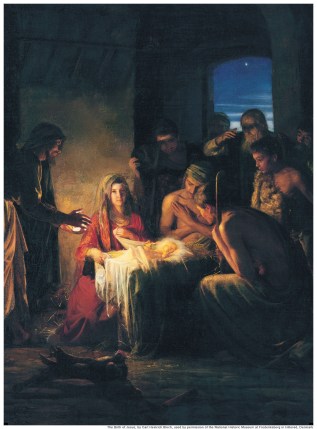
birth-of-jesusCaesar demanded a census and the whole world was in motion and turmoil.  People and families around the empire travelling to their own town.  The emperor had spoken and therefore it had to be! 

Joseph and Mary – humble, poor, obedient to authority – travel to Bethlehem, even with Mary near child-birth.  They register for the census but the gospel does not specify one thing; did they register before the birth of Christ or after?  Did their census notation say, “one Jewish couple expecting a child” or “one Jewish couple with newborn male”?  I tend to believe that Joseph and Mary registered with the census before the birth of Jesus because it would be consistent with God’s way of working throughout scripture.

Let the powers of the world flex their muscle and show all their strength.  Peoples need to travel, life needs to be interrupted, Caesar Augustus wants a census!  God laughs.  God comes silently and humbly amidst all the turmoil of the time.  God even uses the great emperor’s project to accomplish His plan.  Who today remembers the census that Caesar ordered?  Yet all time and history celebrates the birth of the son of Mary.  Christ coming after the census is fulfilled demonstrates who is really the Lord of history.

Caesar in the exercise of his power and might through the census was trying to grasp and claim the entire empire.  “These … all these lands and peoples … are mine!” is what Caesar was saying through his census.  Christ being born after the census shows that he does not belong to the power of Caesar nor to any worldly-power yesterday or today.  Jesus will not go down in history as a small notation in a Roman emperor’s census, rather he will be revealed as the very one who ushers in God’s Kingdom to which all the kingdoms and powers of the world must submit. 

The Word of God enters the world unexpectedly.  Information is power.  A census – a measurement of peoples – gives information and therefore it gives the emperor great power and control.  Yet right beyond the boundary of Caesar’s knowledge occurs the greatest event in all of human history and Caesar misses it.  Caesar has no knowledge of it.  The first ones who do come to know of it?  Not Caesar but rather the lowly shepherds – the poor and the insignificant ones in the eyes of the world.  It is to them that the angel appears and tells of this new thing that God has done!  “Do not be afraid; for behold, I proclaim to you good news of great joy that will be for all people … a savior has been born for you who is Christ and Lord.”  (Lk. 2:10-11)  It is not abstract and isolated ideologies and theologies cut off from everyday reality that grasp the ever-new work of God, rather it is simple people of faith – the poor and the humble.

The lessons of Christmas are so profound and so necessary.  Despite the turmoil of any age and the raw exercising of power, God is at work accomplishing his plan.  This babe born in Bethlehem is the one to whom all knees must bend and all hearts must bow and when we can do that, then peace and joy will be found!  In Christ, knowledge comes humbly – knowledge for the pains of our world and the pains of our hearts.  Abstract and isolated ideologies quickly become cold, hard and dictatorial.  This is not God’s way.  God reveals himself to the poor and the humble and God chooses to abide with them. 

Lord Jesus, we welcome you.  Heal our world.  Soften our hearts.  Help us to know the newness of your peace.  You are Wonder-Counselor, God-Hero, Father-Forever and Prince of Peace.  Lord Jesus, you choose to be born in your time and in your way.  May we be humble and poor enough to recognize you when you come to us.

Thank you Jesus for loving us.           

The danger of narrowcasting in the Church, shared again.

06 Tuesday Dec 2016

Posted by mcummins2172 in Media, Uncategorized

≈ 1 Comment

Tags

Christianity, Church, Dialogue, family, Media, narrowcasting, social media

studio-broadcasting-camps-2(In light of the recent news events demonstrating the danger of false stories, I am reposting this article originally written in 2014.  We need to be discerning and prudent in all things media-related.)

There has been a trend developing in our national news media and you have probably noticed it. It is the move from “broad-casting” to “narrow-casting”. Charles Seife, in his book, Virtual Unreality: Just Because the Internet Told You So, How Do You Know It’s True?, lays it out quite clearly.

“Back when the Big Three ruled the airwaves, the nightly news had to perform a delicate balancing act. A news program had to try to appeal to the entire television audience – it had to be, quite literally, a broad cast – if it was to compete with the other two networks that were taking the same strategy. This meant that the networks couldn’t become too partisan or take an extreme position on anything, for fear of alienating its potential audience…

Then cable and the internet increased our choices. The Big Three kept trying to capture as big a slice of America as possible by staying centrist, but a couple of upstarts – particularly Fox News and MSNBC – realized that there was another possible strategy. Instead of trying to go after the entire American population with a broadly targeted program that appealed to everyone, you could go with a narrowly targeted program that appealed to only a subgroup of the population. Throw in your lot with, say, die-hard Republicans and give them coverage that makes them happy; you alienate Democrats and won’t get them as viewers, but you can more than make up for that loss by gaining a devoted Republican fan base … MSNBC did exactly the reverse …”

“So, what’s the big deal?” one might wonder. Let the conservatives have their Fox News and the liberals their MSNBC then everyone gets what they want. As Charles Seife argues in his book though we need challenges to our assumptions in order for our ideas and understanding to grow and evolve. True information can only be gained through this sometimes difficult but essential process. If all we get when we switch on the news is a presentation that is catered to our particular slant on the world then we get stuck in our own assumptions and we even become more radicalized. We do not get true information. Another quote from Seife’s book,

“With news and data that is tailored to our prejudices, we deprive ourselves of true information. We wind up wallowing in our own false ideas, reflected back to us by the media. The news is ceasing to be a window unto the world; it is becoming a mirror that allows us to gaze only upon our own beliefs.

Couple this dynamic with the microsociety-building power of the hyper-interconnected internet and you’ve got two major forces that are radicalizing us. Not only does the media fail to challenge our preconceptions – instead reinforcing them as media outlets try to cater to smaller audiences – but we all are able to find small groups of people who share and fortify the beliefs we have, no matter how quirky or outright wrong they might be. Ironically, all this interconnection is isolating us…”

Lack of true information, radicalization and isolation – this is a disturbing and dangerous mix that, I would argue, we are witnessing the affects of throughout our world today. That is a larger discussion but my purpose for this reflection is to wonder how much this trend of “narrow-casting” has moved into the life of the Church. I would point to the wide-ranging reactions to the recent preparatory meeting of the upcoming Synod on the Family in Rome as a prime example. The way I read them, reactions posted in journals, on the internet and the blogosphere were often extreme and catered to a particular slant. There was a lot (and continues to be a lot) of noise regarding the preparatory meeting in these pieces but not much true information … at least from my reading.

Call me crazy but I have a hunch that Pope Francis knows what he is doing and that the Holy Spirit is in the midst of the Church. Maybe our United States “American” (I say this because this is the only cultural context I can speak to) tendency to interpret an event (i.e. the Synod on the Family) only by catering to a particular viewpoint is more of a reflection of a deficiency in our culture than a reflection of what actually transpired in Rome? Maybe we have become more conditioned by narrow-casting than we realize?

Pope Francis is not a product of United States “American” culture. I do not think that he has been conditioned by narrow-casting. I think he asked the participants at the meeting in Rome to speak boldly from their hearts because he knows what Charles Seife knows. True information is only gained through the difficult process of having assumptions challenged – if the assumptions are true then they will only grow stronger through this process, if not then they will fall by the wayside. Pope Francis values true discussion because he values true information. Isn’t true information what we want any leader (particular the Pope) to have?

Catholic means “universal”. I do not believe that there is space for narrow-casting in the Church. In fact, I wonder if it might even be a sin against the unity of the Church. Seife lays out the fruits of narrow-casting: lack of true information, radicalization and isolation. All of these harm the Body of Christ.

Come, Holy Spirit and enkindle within us the fire of your love and strengthen your Church that she might be a humble and authentic witness of the gospel!

“Arrival” and catching the language of God.

03 Saturday Dec 2016

Posted by mcummins2172 in Uncategorized

≈ 2 Comments

Tags

Arrival, Christian life, Christianity, faith, Jesus, Kingdom of God

arrivalThis last week I saw the movie “Arrival”.  I found the movie to be very thought-provoking.  I do not want to ruin the movie for anyone so I will not delve too deeply into the story but the heart of the movie is about language, thought and even time.  The movie asks a simple question; “If aliens arrived on earth how would we communicate?”  Especially if the aliens were so different physiologically from us and did not communicate by sound as we do.  The movie centers on a  translator and her work to overcome this barrier.  At one point in the movie there is a discussion about how learning another language might actually effect and even change a person’s way of thinking.  Learning a new language helps us to think differently and to see the world differently.  

In biblical thought, a prophet is not a fortune-teller or someone who can somehow magically tell what is going to happen in the future.  Rather, a biblical prophet is someone who lives a deep relationship with God and who is able to read the signs of the times from that perspective.  To make use of the discussion in the movie – a prophet is someone who has caught a bit of the language of God and is able therefore to think differently and to see the world differently.  A prophet is someone who begins to see as God sees and to dream as God dreams.  

In today’s gospel (Mt. 3:1-12) we are given the figure of John the Baptist.  The man whom Christ himself called the greatest of prophets.  John is this uniquely charismatic figure drawing huge crowds from all over Jerusalem, Judea and the whole region around the Jordan.  He proclaims the coming Kingdom of God and he calls his listeners to repentance.  Almost as if to provide a contrast, the gospel brings the Pharisees and Sadducees into the picture.  They approach the baptism of John not as a true spirit of repentance but because it looks good before the crowd who they knew held John in high regard.  John’s eyes were on the promise of eternity and the mercy of God because he had caught the language of God while the eyes of these religious authorities were only on what looked good in the moment and what would seem pleasing to others.  John’s eyes were on the ever new possibility of the Kingdom of God precisely because he had caught the language of God. 

We could say that John already saw and set his life by the vision offered by the prophet Isaiah in the first reading (Is. 11:1-10).  John saw that day when the one would come on whom the spirit of the Lord would rest and who would judge rightly and who would strike the ruthless and bring forth justice and through whom the wolf and the lamb would be guest of one another.  In the Jordan River, John would baptize the one who is himself the incarnate Word of the Father. 

In Christ, the language of God is fully revealed and spoken and it overcomes all the sad divisions of our world.  Isaiah’s poetic use of imagery is all about the divisions and fears and animosities of life being overcome – “the cow and the bear shall be neighbors … the baby shall play by the cobras den …” – all this shall occur through Christ. 

And it continues through his body, the Church.  In Christ the role of the prophet is not ended, it is multiplied infinitely!  Through our baptisms we are all called to be prophets!  In the Eucharistic Prayer entitled, “Jesus, the Way to the Father” we find these words, “Grant that all the faithful of the Church, looking into the signs of the times by the light of faith, may constantly devote themselves to the service of the Gospel.” 

To be a prophet is not to somehow magically see into the future but to live in deep relationship with God and to read the signs of the times from that perspective.  The prophet learns the language of God fully revealed in Christ.  The prophet allows that language to change his or her own pattern of thought and the prophet lives by the ever new possibility of God’s Kingdom which says that all the sad divisions of our world and our individual lives can be healed and can be overcome.  

To learn a language changes the way we think.  The prophets caught the language of God, John learned it and even baptized the Word incarnate and, now, the Word is given and spoken to us. 

We can live differently.  We can live through the very Word given to us as God intends.

← Older posts
Newer posts →
Follow The Alternate Path on WordPress.com

Enter your email address to follow this blog and receive notifications of new posts by email.

Previous Posts

  • December 2025
  • November 2025
  • August 2025
  • April 2025
  • February 2025
  • January 2025
  • December 2024
  • August 2024
  • July 2024
  • June 2024
  • May 2024
  • April 2024
  • March 2024
  • February 2024
  • January 2024
  • December 2023
  • November 2023
  • October 2023
  • August 2023
  • July 2023
  • May 2023
  • February 2023
  • January 2023
  • December 2022
  • August 2022
  • July 2022
  • April 2022
  • January 2022
  • December 2021
  • September 2021
  • August 2021
  • July 2021
  • May 2021
  • April 2021
  • January 2021
  • December 2020
  • November 2020
  • October 2020
  • August 2020
  • July 2020
  • May 2020
  • April 2020
  • March 2020
  • February 2020
  • December 2019
  • October 2019
  • September 2019
  • August 2019
  • July 2019
  • May 2019
  • April 2019
  • March 2019
  • February 2019
  • December 2018
  • November 2018
  • October 2018
  • August 2018
  • July 2018
  • June 2018
  • April 2018
  • March 2018
  • February 2018
  • January 2018
  • December 2017
  • November 2017
  • September 2017
  • August 2017
  • July 2017
  • June 2017
  • May 2017
  • April 2017
  • March 2017
  • February 2017
  • January 2017
  • December 2016
  • November 2016
  • October 2016
  • September 2016
  • August 2016
  • July 2016
  • June 2016
  • May 2016
  • April 2016
  • March 2016
  • February 2016
  • January 2016
  • December 2015
  • November 2015
  • October 2015
  • September 2015
  • August 2015
  • June 2015
  • May 2015
  • April 2015
  • March 2015
  • February 2015
  • January 2015
  • December 2014
  • November 2014
  • October 2014
  • September 2014
  • August 2014
  • July 2014
  • June 2014
  • May 2014
  • April 2014
  • March 2014
  • February 2014
  • January 2014
  • December 2013
  • November 2013
  • October 2013
  • September 2013
  • August 2013
  • July 2013
  • June 2013
  • May 2013
  • April 2013
  • March 2013
  • February 2013
  • January 2013
  • December 2012
  • November 2012
  • October 2012
  • September 2012
  • August 2012
  • July 2012
  • June 2012
  • May 2012
  • April 2012
  • March 2012
  • February 2012
  • January 2012
  • December 2011
  • November 2011
  • October 2011
  • September 2011
  • August 2011
  • July 2011
  • June 2011
  • May 2011
  • April 2011
  • March 2011
  • February 2011
  • January 2011
  • December 2010
  • November 2010
  • October 2010
  • September 2010
  • August 2010
  • July 2010
  • September 2008
  • August 2008
  • April 2008
  • March 2008
  • February 2008
  • January 2008
  • December 2007
  • November 2007
  • October 2007
  • September 2007

Popular Posts

  • thealternatepath.org/wp-c…
  • thealternatepath.org/wp-c…
  • lh3.googleusercontent.com…
  • thealternatepath.org/wp-c…
  • thealternatepath.org/wp-c…
  • thealternatepath.org/wp-c…
  • thealternatepath.org/wp-c…
  • thealternatepath.org/wp-c…

Blog at WordPress.com.

  • Subscribe Subscribed
    • The Alternate Path
    • Join 156 other subscribers
    • Already have a WordPress.com account? Log in now.
    • The Alternate Path
    • Subscribe Subscribed
    • Sign up
    • Log in
    • Report this content
    • View site in Reader
    • Manage subscriptions
    • Collapse this bar
 

Loading Comments...