
Any interest in wolves will eventually lead a person to Yellowstone National Park and the work of reintroducing wolves into the ecosystem there. It is in this context, that one will hear the term, “trophic cascade”. The term is used to describe an “ecological phenomenon triggered by the addition or removal of top predators which then brings about changes in the relative populations of predator and prey in an area. A trophic cascade often results in dramatic changes in an ecosystem.” (Stephen Carpenter) In the case of Yellowstone, it was the healing of the ecosystem.
When wolves were extirpated from the park in 1926, their natural prey, the elk, increased to unmanageable numbers. There was overgrazing by the elk and the whole ecosystem suffered. Since being returned, the wolves have helped to reduce the number of elk to a number that the ecosystem can actually support. The wolves changed the grazing patterns of the elk so that valleys and riverbanks (where elk are more vulnerable) are no long overgrazed. The wolves have even strengthened the elk in that the wolves cull out the sick and weak elk, thus helping to reduce the risk of spread of disease in a herd. All of these factors have allowed areas that were overgrazed to rebound allowing plant life to again flourish naturally which, in turn, attracts more and varied fauna back into the ecosystem.
All of this cascade of effects from one change.
Here is the connection to the readings. James, in the excerpt from his letter that we just read (James 3:16-4:3), lays out the human condition under sin quite clearly. We are a mix of pride, jealousy, selfishness and envy. We are at war within ourselves and this violence seeps out in many ways. Yet, even in the midst of all of this, we yearn for that “wisdom from above” which is peaceable, pure, gentle, full of mercy and good works. We yearn for this because we know in our deepest core that we are meant for it. We are made and meant for that authenticity of self and life.
In the gospel (Mark 9:30-37) we see this played out in real time. The disciples are confused about what Jesus is telling them and they have fear within them about asking. When the group arrives at the house, we come to learn that they were arguing about who was the greatest disciple among them. The disciples themselves have been caught up in that whole mix of pride, jealousy, selfishness and envy that James laid out in his letter!
Jesus knows full well the human condition. He sees the sad circumstance of the mix of who we are under sin but he also knows the truth of who we are meant to be as children of God. What does he do in the face of all of this? He makes one change. He brings in a child and says, “Whoever receives one child such as this in my name, receives me; and whoever receives me, receives not me but the One who sent me.”
In this one act, Jesus shifts the attention of the disciples away from themselves and towards another. Now, instead of being caught up in the whole mix of pride, jealousy, selfishness and envy; focus is on the other and welcoming the other. Pride is forgotten, jealousy gives way, selfishness and envy are put aside. The shift in focus allows for a whole cascade of effects.
It can all be very daunting when we are honest and recognize the truth of the mix that we are – a good chunk of it which is not so great. Rather than demanding wholesale change which is beyond any of our abilities, the lesson given here by Jesus is to make one change. Do one thing in our lives for the Kingdom. Shift the focus. Welcome one person in the name of Christ. From the one change in our lives for the reign of God there will then come a cascade of effects.
Do one thing.
“…the fruit of righteousness is sown in peace for those who cultivate peace.”

 We all know of Paul’s encounter with the risen Lord on the road to Damascus and how that encounter radically changed his life. The man who was so zealous in his persecution of the early church became the apostle proclaiming Christ to the Gentiles. But do we truly realize how much that conversion cost Paul himself? The second reading for today (Romans 9:1-5 – one of Paul’s later writings) gives us, I believe, a glimpse into the lifelong deep pain that Paul endured. “…I have great sorrow and constant anguish in my heart. For I could wish that I myself were accursed and cut off from Christ for the sake of my own people, my kindred according to the flesh.” Paul carries both the pain of seeing so many of his people – the Jewish people – not wanting to recognize Jesus as the Messiah and he also carries the pain of himself (by his conversion) being cut off from the very people he loves and so identifies with! The man carried heartbreak just as he proclaimed Christ as Savior to the world.
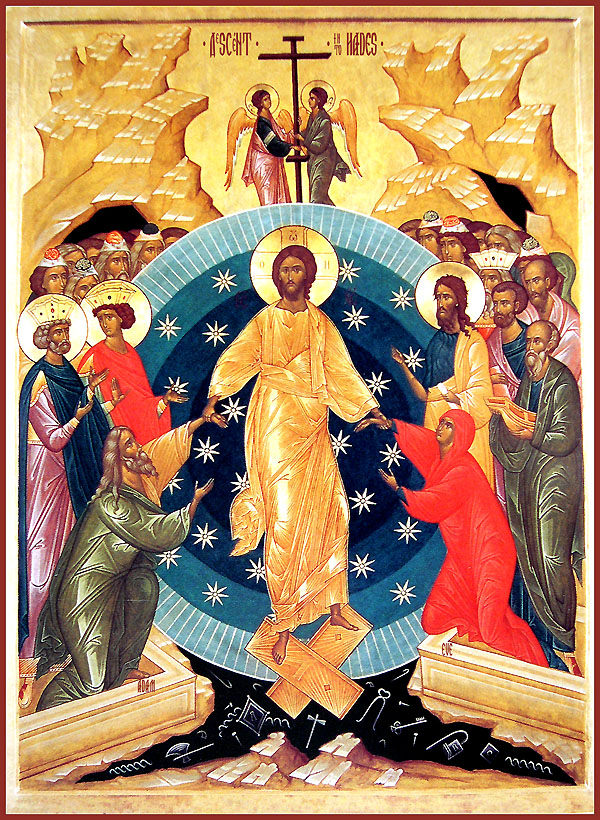 “…as the first day of the week was dawning, Mary Magdalene and the other Mary came to see the tomb.” Each of the four gospels, in its account of the resurrection of Jesus, specifically states the time. It was dawn, it was early in the morning, the day was just breaking.
 In today’s gospel there is a development in the thought of the man born blind and in his proclamation of who Jesus is. It is important to note that just as the questioning the man faces increases, just as his social supports fall away and just as the pressure on him gets heavier – the man’s knowledge of who Jesus is and his proclamation of who Jesus is increases.
 There is a salvific equation at work in the readings for this first Sunday of Lent and it is important to recognize as we begin this Lenten season and our journey to Easter. The equation is this: we sinned by trying to grasp the glory of God and God saves us by letting go of His glory and becoming a servant.
 I have been reading a book by Liz Forkin Bohannon entitled “Beginner’s Pluck” – not “luck” but “pluck” with a “p”. The author has some good insights and she is not afraid to take on some sacred cows in our times and culture. One of these sacred cows is the myth of “finding your passion” in life and she addresses this in a chapter aptly entitled, “Stop Trying to ‘Find Your Passion’”.
 The Alternate Path