• About The Alternate Path

The Alternate Path

~ Thoughts on Walking the Path of Christian Discipleship

The Alternate Path

Tag Archives: Christmas

Epiphany – the invitation to love

05 Sunday Jan 2025

Posted by mcummins2172 in Uncategorized

≈ Leave a comment

Tags

Cardinal Cantalamessa, Catholic Church, Christian life, Christianity, Christmas, Epiphany, Jesus, magi, The Feast of the Epiphany

Scholars suggest that the Magi mentioned in today’s gospel (Mt. 2:1-12) probably journeyed from the area around Babylon.  If that were the case, the Magi who came to give homage to the newborn king of the Jews travelled around 900 miles.  The distance from Jerusalem to Bethlehem is around 7 miles yet Herod, the chief priests and the scribes – even when being able to point to the prophecy in Scripture – could not bring themselves to leave the comfort of the court in order to also give homage.  Why the difference between the Magi willing to travel over 900 miles and the local authorities not willing to travel 7 miles?

The difference is love.  Even before seeing the newborn king, the Magi were caught up in love of the newborn king.  This was more than a journey to prove some abstract theory of star alignment.  The abstract does not give the resolve needed to endure the hardship of a 900-mile journey.  Only love gives such resolve.  Unlike Herod and his officials imprisoned in their fear and complacency, the Magi were caught up in the love of a God that they could not see but would soon behold in the smallness of a manger. 

Epiphany gives each of us the same invitation to come and adore Jesus.  Epiphany invites us to love Jesus.  In his book, “Jesus Christ, the Holy One of God” Cardinal Cantalamessa asks the fundamental question, “Why should we love Jesus?” and in response he offers six reasons.  Each worthy of note. 

The first reason, Jesus has asked us to.  At the end of John’s gospel, the risen Lord asks Peter the same question three times, “Simon, son of John, do you love me?”  It will be the same question asked of each of us when we each stand before Jesus and it will not be enough to say, “Lord, I belonged to the church.  I went to Mass.”  No, the question will be direct and focused there will not be others.  Jesus will look at each of us and ask, “Do you love me?”  We will be judged on this love.  Jesus asks us to love him, pure and simple. 

The second reason is that Jesus has loved us first.  This truth needs to sink into every aspect of our lives and every corner of our heart.  We are loved infinitely by Jesus.  It is that love of Christ that impels us. 

Third, we ought to love Jesus because he deserves to be loved and is loveable in himself.  Everything that is good, everything that is true, everything that is beautiful is fulfilled in Jesus of Nazareth.  Within our very being has been planted, by God himself, the yearning to love and know the good.  This is Jesus and he alone answers this deepest yearning of the human heart. 

We ought to love Jesus because only those who love him can know him.  Everyone – believer, atheist, non-believer, non-Christian, secular agnostic – seems to have an opinion about Jesus and many are quite sure in their opinion but opinion does not equal knowing.  Only when we love Jesus do we begin to know Jesus.  Love and true knowledge demand this risk.  Opinions are just puffs of wind. 

Fifth, we ought to love Jesus because everyone who loves him is loved by the Father.  Jesus says this again and again throughout the gospels.  We need to take him at his word. 

Finally, we ought to love Jesus because only by loving him (continually striving to live in relationship with him) is it possible to live his words and put his commandments into practice.  Are we finding the living of the faith difficult?  Before we beat ourselves up for a perceived lack of will and determination on our part, it would be more beneficial to ask, “Am I talking to Jesus?  Am I praying?  Am I welcoming Jesus into my life?”  The Christian life has never been meant to be a solo mission.  We know the Kingdom by walking with Jesus and welcoming Jesus to walk with us. 

The difference between the Magi and the officials is love.  Epiphany invites us to love Jesus, to adore like the Magi and in that adoration, Epiphany gifts us with the ability to persevere – just like the Magi – in the journey of our lives. 

Christmas and the Creche

24 Tuesday Dec 2024

Posted by mcummins2172 in Uncategorized

≈ Leave a comment

Tags

Bible, Christian life, Christianity, Christmas, Christmas homily, Christmas manger, Creche, faith, Infant Jesus, Jesus

Image may be subject to copyright.

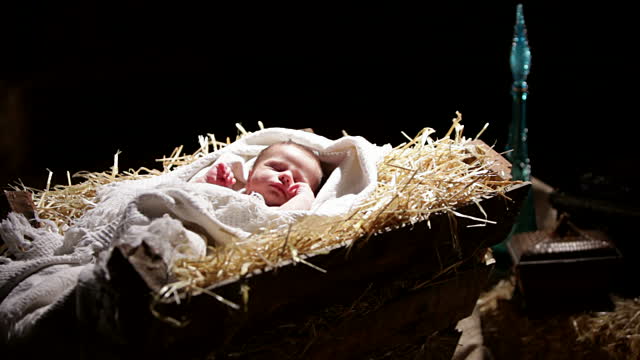
A few years ago, Pope Francis wrote an Apostolic Letter on the Creche, the tradition of displaying the manger scene during the days of Christmas.  The Holy Father praised this beautiful custom and he encouraged all Christians to reflect on the manger scene because the creche and all of its figures and symbols have something to teach us about the wonder of the incarnation as well as the life of faith.  There is healing grace and instruction to be found in the manger scene. 

The simplicity and humility of the scene itself instructs.  God chose to enter into his creation in a simple and unassuming way.  God comes as a newborn infant in a scene marked more by poverty and simplicity than by power and comfort.  God so often prefers to come to us in such simple ways, so simple that we often do not even recognize it or might even take it for granted.  The beauty of a particular day, an act of kindness or honest human care and companionship, the simplicity of bread and wine that truly becomes the body and blood or our Lord.  Contemplating on the manger scenes helps to attune our hearts to how God enters our lives. 

Sometimes the manger is set amidst ruins.  There was an ancient story of a pagan Temple of Peace in Rome.  It was prophesied that the temple would collapse when a virgin gave birth.  On the night of the incarnation, the temple in Rome crumbled.  The “peace” that the temple proclaimed was not the peace of God’s Kingdom but rather the peace of the Roman empire – a “peace” built on conquest and oppression.  The birth of the true Prince of Peace continually overcomes this false peace built by all the Caesars throughout history. 

The shepherds in the field were the first to hear the good news of the birth of Christ.  They are the lowly ones of society – the poor and the forgotten by the world but not by God whose heart overflows in mercy.  On the Feast of the Epiphany, the three magi arrive to adore the newborn king, their journeys were long and often our journeys to Christ and the journeys of those we love are long and laborious.  The magi teach us the value of perseverance and hope. 

Mary and Joseph – their faces are turned in adoration of the Christ child but their hands always welcome each of us to also adore and behold in wonder.  They even invite us to cradle the newborn infant in our own arms.  At the heart of the whole scene is the newborn Jesus.  It is only when the baby is placed in the manger that the whole scene comes alive.  The apostle John reminds us that in Jesus, “life was made manifest,” (1 Jn. 1:2).  Beneath his weakness and frailty, is the power to transform and make all things new.  He is the word made flesh. 

I want to share three images from the creche that have spoken to me this Christmas.  The first is straw.  Being “laid in a manger” implies being among the animals of the field which implies straw and hay.  There is a Ukranian custom of putting straw on the floor of one’s house and hay under the dining room table cloth on Christmas in order to draw us into the scene itself.  The manger is the feeding trough, this newborn child is to be nourishment (the bread of life) for the whole world.  Blessed are we if we learn to receive this bread. 

The second image are the swaddling clothes – the tight bands put around newborn infants.  Jesus is wrapped in swaddling clothes at the beginning of his life with us and he is wrapped in burial cloth at the end of his life with us, his mission completed.  At the heart of each moment is God’s never-ending love.  Love born into the midst of our sin and error and love willing to take on the weight of our sin and die that we might have life. 

The final image is the quiet and darkness of the night itself.  Sometimes the darkness of night can be a fearful thing but I do not think so for this night.  A clear night opens us to the wonder of the stars and vastness of all creation.  A quiet night also brings peace to our souls.  The nativity was in a rural setting.  It was not in the noise of a city’s night but rather in the quiet and peace of the countryside marked only by the occasional sound of the field animals.  There is a peace that can only be gained when we welcome Jesus into our lives, when we make of our hearts a manger for the Christ child. 

May we learn the wonder of the creche.  May we welcome the Christ child this Christmas. 

Peace.  

Home, Hope, Redemption and Light: First Sunday of Advent, Year C

01 Sunday Dec 2024

Posted by mcummins2172 in Uncategorized

≈ Leave a comment

Tags

Advent, Catholic Church, Christian life, Christianity, Christmas, discipleship, faith, First Sunday of Advent, hope, Jesus

Image may be subject to copyright

Recently, a priest friend of mine shared with me some themes that he found present in this First Sunday of Advent’s prayers and readings, themes that are worthy of our carrying and reflecting upon these next four weeks.  I would like to share some of the themes but add my own take upon them.  The themes are: home, hope, redemption and light. 

Home.  This last liturgical year I made the Nineteenth Annotation retreat and in the fourteenth week of the retreat I had a truly profound prayer experience – Jesus invited me to the Father’s house.  In my mind, the Father’s house was a small cabin in the woods.  It was a winter night, there was snow on the ground and it was cold but there was warmth, light and laughter coming from the cabin.  Jesus welcomed me and the Father was there – not seen – but a deep abiding presence.  In my heart I heard the Father say, “Welcome, Michael, you are always welcome here.”  Part of the expectation of Advent – as we await the coming of the Messiah – is that we have a home.  Each one of us has a home.  Our home is in the fullness of the Kingdom with the Father, the Son and the Spirit and we are always welcome there. 

Hope.  In today’s gospel (Lk. 21:25-28, 34-36), Jesus calls us to be vigilant but the vigilance of the Christian is not a vigilance founded in fear but rather a vigilance rooted in hope.  Notice the distinction that Jesus makes in the gospel.  “There will be signs,” says Jesus and “nations will be in dismay” and “people will die of fright” but then Jesus tells his disciples that when these signs occur, “stand erect and raise your heads because your redemption is at hand.”  Christians live in hope and not fear.  We stand erect and we raise our heads because we know that Jesus is Lord.  The cry of Advent, “Maranatha!” (Come, Lord Jesus!) is never a cry of fear but rather a bold proclamation of hope.  Every Advent calls the Church to hope. 

Redemption.  Jesus calls us to raise our heads because our “redemption is at hand”.  “Redemption” is a powerful and heavy word and we often think of it in final terms but in our Lord’s words we also see that redemption takes root in our lives and begins to grow and have effects today.  In redemption, we learn and we find the strength to begin to let go of those things, those decisions, attitudes and anxieties that make us “drowsy” from carousing and drunkenness.  In redemption, we learn to let go of actions and mindsets that block life in order to choose that which leads to true life.  Redemption is more than just a final goal for the Christian.  Redemption is a growing and living seed planted in the heart of every disciple by Jesus himself.

Light.  This Sunday, we light the first Advent candle and we will light the other candles over the next three weeks.  The light grows with each candle even as the days become shorter and the darkness of winter lengthens.  The light dispels the darkness and we await the coming of the light of the world and this light transforms our hearts even as we await it.  Dr. Martin Luther King Jr. reminded us that darkness cannot drive out darkness, only light can do that.  Hate cannot drive out hate, only love can do that.  We await the coming of the light and we let that light find a home in our hearts.

Home.  Hope.  Redemption.  Light. 

Come, Lord Jesus!     

The Feast of the Epiphany – awe, sacrifice and wisdom

07 Sunday Jan 2024

Posted by mcummins2172 in Uncategorized

≈ Leave a comment

Tags

Adoration of the Magi, Advent, Christianity, Christmas, Epiphany, magi, Three Kings, worship

Image may be subject to
copyright

The other day I was listening to the “Voices of Greater Yellowstone” podcast.  The current episode is an interview with the wildlife photographer Ronan Donovan and his sharing about the use of images to tell stories.  At one point in the interview the subject of awe was discussed and the photographer, sharing from his experience of travelling to some of the remotest regions of the world and having amazing encounters with wildlife, shared that he believes awe (this is my paraphrase) is connected to those moments when we forget self and are caught up into something so much more bigger than us.  That sense of awe and wonder is connected to those moments in life. 

The three magi were caught up in awe.  They saw the star, they interpreted that something much bigger than themselves and their particular tribe, culture and nation was at work.  After all, they journeyed to a foreign land to give homage to a newborn foreign king.

Awe allowed the magi to do two important things that are relevant for all believers in every age.  Awe allowed the magi to choose sacrifice over comfort and to choose wisdom over knowledge.  

It had to have been a sacrifice for the magi to depart their native land in order to undertake a journey of unknown length following a star in hopes of finding a newborn king.  Such a journey requires sacrifice and probably even brought some ridicule.  In contrast, the priests and scribes of Herod’s court, the very ones to whom the Messiah is promised, would not even set out to the nearby Bethlehem.  It seems that for them the comfort of the court was much more important than the sacrifice of the journey.  Allowing their hearts to be captured by awe, the magi chose sacrifice and this is to their everlasting credit.

The chief priests and scribes had knowledge.  When asked, they were able to point to the passage that the newborn king was to be born in Bethlehem but knowledge does not equal wisdom.  In the first chapter of the Book of Wisdom we read, For the holy spirit of (wisdom) flees deceit and withdraws from senseless counsels and when injustice occurs it is rebuked.  Wisdom is tied to integrity of life.  Knowledge is not.  One can be knowledgeable about something – even the things of faith – without integrity of life but one cannot possess wisdom without integrity. The magi left the deceit and senseless counsels of Herod’s court and did not return there.  They went home a different way.  The magi chose integrity of life and by this they welcomed wisdom. 

Awe – those moments when we forget self and are caught up into something so much bigger than ourselves.  Awe allows for the saving choices of sacrifice and wisdom.  Like the magi, we also are invited to be overjoyed at seeing the star and to set out on the journey of encountering the newborn king. The end of the Christmas season is really just the beginning of the awe-filled journey of coming to know Christ more truly, love him more dearly and follow him more closely. 

The smallness of the manger – a reflection for Christmas

28 Wednesday Dec 2022

Posted by mcummins2172 in Uncategorized

≈ Leave a comment

Tags

Chrismas Manger, Christmas, Infant Jesus, Nativity of Christ, smallness of the manger

Photo may be subject to copyright

It is a small entrance into the world for God – the Creator and Ruler of all – yet that is how God chose to come to us.  Luke highlights this small entry of God in his gospel by placing it in the context and movement of the time.  The emperor Augustus had commanded a census of the whole world – nations and peoples were on the move – and in the midst of all of that movement of humanity was one couple (the young wife expecting her child) on the edge of the large empire who had to leave the space of home, family and friends and enter the much smaller space of being strangers in an unknown place.  All that they could find for shelter was a manger – not even a room in the Inn.  It was within this smallest of spaces that God chose to enter into the world and creation. 

“Is God so mighty that he can make himself small?  Is God so mighty the he can love us and really enter into our lives?” Pope Benedict XVI asked these questions in a reflection on St. Nicholas found in the small book, “Seek That Which is Above”.  Can God enter into our smallness?  The answer is “yes”.  The answer was given by the birth of Christ – a helpless infant born in a small stable, unnoticed by the powers of the world and first witnessed by a few shepherds.  Love that is true cannot remain distant.  Love has to draw near and for God to draw near to us then God has to become small and vulnerable.  The smallness of the manger reveals God’s power. 

But the manger does not just reflect on God – the manger, the incarnation, also reflects on us.  The Church, from our earliest days, has understood this.  “For if God is too far away from us to love us effectively, then human love in only an empty promise.  If God cannot love, then how can man be expected to do so?” (Pope Benedict XVI, “Seek That Which is Above”).  The manger teaches us that God can and does love, where love is to be found, how we can love in turn and, by so doing, how we can be truly human ourselves. 

Love – most authentically, most purely – if found and given in the small, isn’t it?

The warmth of a smile, the laughter of friends, the comfort of a hug, the help of a stranger, the kiss of a beloved, the tiny grasp of a newborn’s hand… 

Love is found, love is given in the small.  And it is in the small – where love is given – that time and eternity touch.  Is God so mighty that he can make himself small?  Is God so mighty that he can love us, even in our smallness?  The smallness of the manger says “yes” and the answer given reflects both on us and on God. 

During these days of Christmas, the infant Christ looks on us with a singular question in his eyes, “Can you come to the manger?  Are you strong enough to set aside the ego, the pride, the resentments, any sense of superiority, the hurt and the fear often carried in life that hinders and weighs down in order to enter the small and to love, just simply love and be loved? If you can you will find life and healing, because there in the small,” says the infant Christ, “you will find me.” 

It is in the smallness of the manger that God’s power is revealed and that we learn to live full and true human lives.  You could say that we also are born in the smallness of the manger … if we are willing to go there. 

It is a small entrance into the world for God – born a helpless infant and laid in a manger.  God dwells in the small where love is found. 

Come, let us adore him.

08 Sunday Jan 2017

Posted by mcummins2172 in homily, Uncategorized

≈ Leave a comment

Tags

Adoration of the Magi, Christian faith, Christian life, Christianity, Christmas, Epiphany, faith

adoration-of-the-magiDuring the weeks of Advent we hoped for and awaited the coming of the Messiah.  On Christmas we rejoiced in the birth of our savior.  Now, on Epiphany we travel with the wise men from the East in order to “do him homage”, in order to adore Christ. 
Adoration is the proper attitude of today’s feast.  Just as the wise men reveal that the gospel message is meant to go out to all nations and peoples; it also reveals that all peoples and nations are meant to travel to Bethlehem and adore the Christ-child, and do him homage. 

But what does it mean to “adore” and how do we know that we are doing it properly?  Just as the three gifts offered by the wise men reveal truths about Christ so they also reveal truths about our adoration.

Gold is a proper gift to offer a king.  By offering gold the wise men were acknowledging the infant Jesus as the “newborn king of the Jews”.  Gold symbolizes the kingship of Christ.  Gold is our best that we offer to God in gratitude.  God loves us and God wants us to know and experience the joys and beauty of life.  In moments of joy and beauty, if we can just turn to God and say “thank you” then we are adoring, we are offering gold to God.  We ought to thank God for all the blessings, beauty and joys of life.  Gratitude is the gold we have to offer. 

Frankincense accompanies worship and sacrifice.  It is the stuff of priests.  Christ is the High Priest who offers himself as the sinless lamb for us.  The gift of frankincense given at the birth of Christ is a foreshadowing of his great sacrifice and offering of himself on the cross.  We offer frankincense when we offer prayers and a desire to live in relationship with God.  This is part of the great mystery of our faith.  God wants relationship and friendship with us, God seeks us out.  When we are willing to live in relationship with God, when we make the time to pray and just be with God then we are offering frankincense for ourselves and for our world. 

Myrrh is used to anoint bodies at burial.  Myrrh given at the birth of our Lord points toward the death Christ would suffer for us.  When we are willing to die to self for Christ, when we offer up our pains, sufferings, and even little annoyances of life we are, in essence, bringing myrrh to our Lord.  This also is adoration – to bring God our pains, sorrows, dying to self and the injustices we bear in life. 

Today, we come to adore.  Epiphany teaches us how to adore our Lord and Savior – to bring our joys and gratitudes–this is gold; to bring our prayers and desire to live in relationship with God – this is frankincense and to bring our sorrows, dying to self and the injustices we bear in life – this is myrrh. 

Today, we adore.    

Christmas, 2016

25 Sunday Dec 2016

Posted by mcummins2172 in homily, Uncategorized

≈ 2 Comments

Tags

Christian faith, Christian life, Christianity, Christmas, faith, humility, Roman Catholic

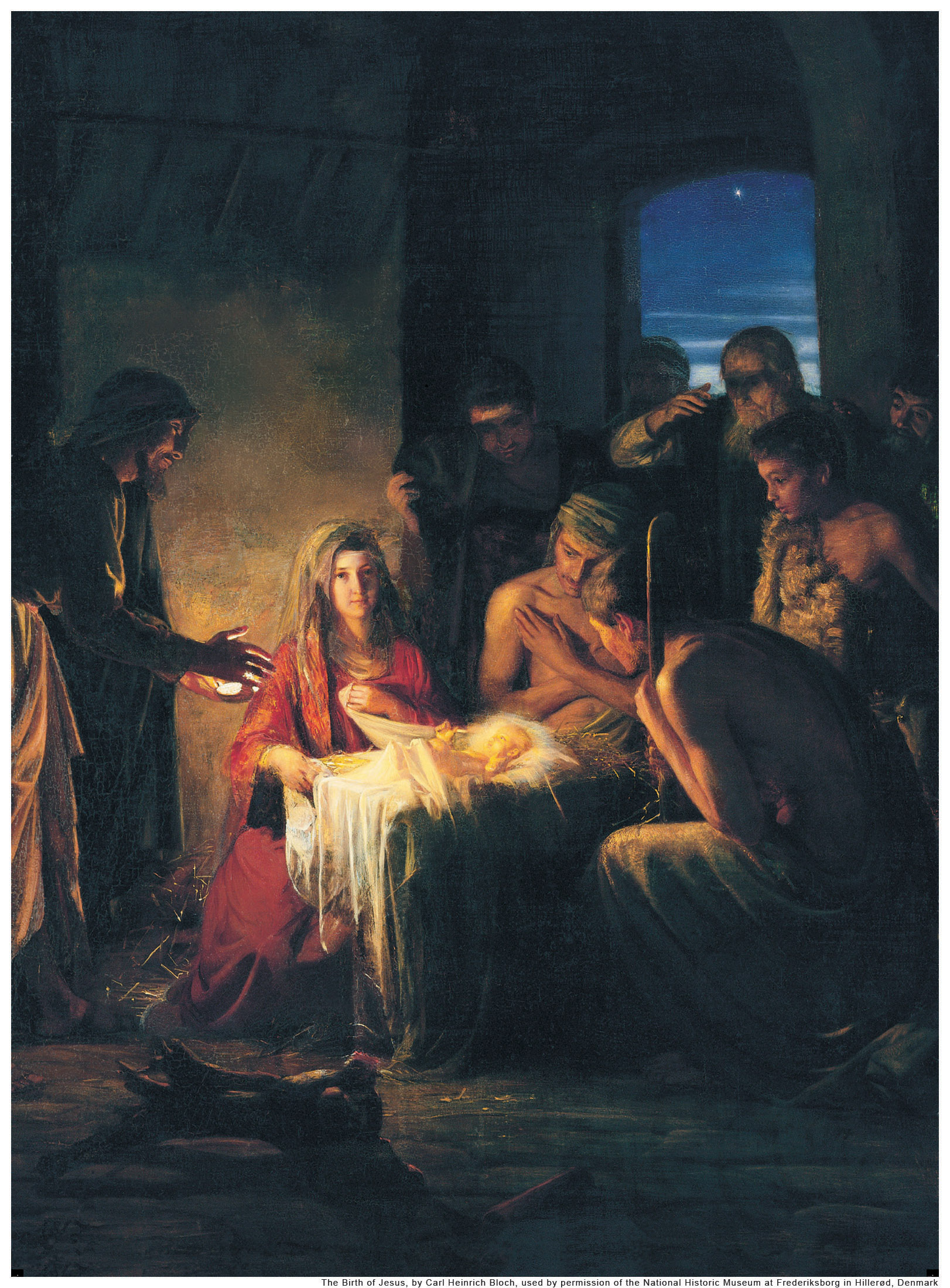
birth-of-jesusCaesar demanded a census and the whole world was in motion and turmoil.  People and families around the empire travelling to their own town.  The emperor had spoken and therefore it had to be! 

Joseph and Mary – humble, poor, obedient to authority – travel to Bethlehem, even with Mary near child-birth.  They register for the census but the gospel does not specify one thing; did they register before the birth of Christ or after?  Did their census notation say, “one Jewish couple expecting a child” or “one Jewish couple with newborn male”?  I tend to believe that Joseph and Mary registered with the census before the birth of Jesus because it would be consistent with God’s way of working throughout scripture.

Let the powers of the world flex their muscle and show all their strength.  Peoples need to travel, life needs to be interrupted, Caesar Augustus wants a census!  God laughs.  God comes silently and humbly amidst all the turmoil of the time.  God even uses the great emperor’s project to accomplish His plan.  Who today remembers the census that Caesar ordered?  Yet all time and history celebrates the birth of the son of Mary.  Christ coming after the census is fulfilled demonstrates who is really the Lord of history.

Caesar in the exercise of his power and might through the census was trying to grasp and claim the entire empire.  “These … all these lands and peoples … are mine!” is what Caesar was saying through his census.  Christ being born after the census shows that he does not belong to the power of Caesar nor to any worldly-power yesterday or today.  Jesus will not go down in history as a small notation in a Roman emperor’s census, rather he will be revealed as the very one who ushers in God’s Kingdom to which all the kingdoms and powers of the world must submit. 

The Word of God enters the world unexpectedly.  Information is power.  A census – a measurement of peoples – gives information and therefore it gives the emperor great power and control.  Yet right beyond the boundary of Caesar’s knowledge occurs the greatest event in all of human history and Caesar misses it.  Caesar has no knowledge of it.  The first ones who do come to know of it?  Not Caesar but rather the lowly shepherds – the poor and the insignificant ones in the eyes of the world.  It is to them that the angel appears and tells of this new thing that God has done!  “Do not be afraid; for behold, I proclaim to you good news of great joy that will be for all people … a savior has been born for you who is Christ and Lord.”  (Lk. 2:10-11)  It is not abstract and isolated ideologies and theologies cut off from everyday reality that grasp the ever-new work of God, rather it is simple people of faith – the poor and the humble.

The lessons of Christmas are so profound and so necessary.  Despite the turmoil of any age and the raw exercising of power, God is at work accomplishing his plan.  This babe born in Bethlehem is the one to whom all knees must bend and all hearts must bow and when we can do that, then peace and joy will be found!  In Christ, knowledge comes humbly – knowledge for the pains of our world and the pains of our hearts.  Abstract and isolated ideologies quickly become cold, hard and dictatorial.  This is not God’s way.  God reveals himself to the poor and the humble and God chooses to abide with them. 

Lord Jesus, we welcome you.  Heal our world.  Soften our hearts.  Help us to know the newness of your peace.  You are Wonder-Counselor, God-Hero, Father-Forever and Prince of Peace.  Lord Jesus, you choose to be born in your time and in your way.  May we be humble and poor enough to recognize you when you come to us.

Thank you Jesus for loving us.           

Follow The Alternate Path on WordPress.com

Enter your email address to follow this blog and receive notifications of new posts by email.

Previous Posts

  • December 2025
  • November 2025
  • August 2025
  • April 2025
  • February 2025
  • January 2025
  • December 2024
  • August 2024
  • July 2024
  • June 2024
  • May 2024
  • April 2024
  • March 2024
  • February 2024
  • January 2024
  • December 2023
  • November 2023
  • October 2023
  • August 2023
  • July 2023
  • May 2023
  • February 2023
  • January 2023
  • December 2022
  • August 2022
  • July 2022
  • April 2022
  • January 2022
  • December 2021
  • September 2021
  • August 2021
  • July 2021
  • May 2021
  • April 2021
  • January 2021
  • December 2020
  • November 2020
  • October 2020
  • August 2020
  • July 2020
  • May 2020
  • April 2020
  • March 2020
  • February 2020
  • December 2019
  • October 2019
  • September 2019
  • August 2019
  • July 2019
  • May 2019
  • April 2019
  • March 2019
  • February 2019
  • December 2018
  • November 2018
  • October 2018
  • August 2018
  • July 2018
  • June 2018
  • April 2018
  • March 2018
  • February 2018
  • January 2018
  • December 2017
  • November 2017
  • September 2017
  • August 2017
  • July 2017
  • June 2017
  • May 2017
  • April 2017
  • March 2017
  • February 2017
  • January 2017
  • December 2016
  • November 2016
  • October 2016
  • September 2016
  • August 2016
  • July 2016
  • June 2016
  • May 2016
  • April 2016
  • March 2016
  • February 2016
  • January 2016
  • December 2015
  • November 2015
  • October 2015
  • September 2015
  • August 2015
  • June 2015
  • May 2015
  • April 2015
  • March 2015
  • February 2015
  • January 2015
  • December 2014
  • November 2014
  • October 2014
  • September 2014
  • August 2014
  • July 2014
  • June 2014
  • May 2014
  • April 2014
  • March 2014
  • February 2014
  • January 2014
  • December 2013
  • November 2013
  • October 2013
  • September 2013
  • August 2013
  • July 2013
  • June 2013
  • May 2013
  • April 2013
  • March 2013
  • February 2013
  • January 2013
  • December 2012
  • November 2012
  • October 2012
  • September 2012
  • August 2012
  • July 2012
  • June 2012
  • May 2012
  • April 2012
  • March 2012
  • February 2012
  • January 2012
  • December 2011
  • November 2011
  • October 2011
  • September 2011
  • August 2011
  • July 2011
  • June 2011
  • May 2011
  • April 2011
  • March 2011
  • February 2011
  • January 2011
  • December 2010
  • November 2010
  • October 2010
  • September 2010
  • August 2010
  • July 2010
  • September 2008
  • August 2008
  • April 2008
  • March 2008
  • February 2008
  • January 2008
  • December 2007
  • November 2007
  • October 2007
  • September 2007

Popular Posts

  • thealternatepath.org/wp-c…
  • thealternatepath.org/wp-c…
  • thealternatepath.org/wp-c…

Blog at WordPress.com.

  • Subscribe Subscribed
    • The Alternate Path
    • Join 156 other subscribers
    • Already have a WordPress.com account? Log in now.
    • The Alternate Path
    • Subscribe Subscribed
    • Sign up
    • Log in
    • Report this content
    • View site in Reader
    • Manage subscriptions
    • Collapse this bar
 

Loading Comments...