• About The Alternate Path

The Alternate Path

~ Thoughts on Walking the Path of Christian Discipleship

The Alternate Path

Tag Archives: faith

Christ, the living bread.

18 Saturday Aug 2018

Posted by mcummins2172 in homily, Uncategorized

≈ Leave a comment

Tags

Catholic Church, Christianity, Encounter with Christ, Eucharist, faith, sacraments, The living bread

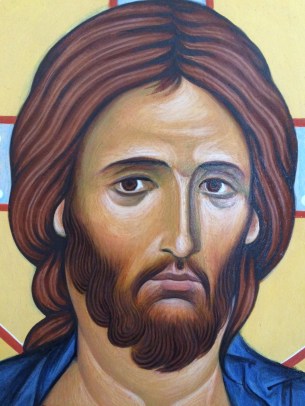
face_of_jesus_610x300Mary Lou was a woman I came to know in a previous assignment. She has since passed away. May she rest in peace. Mary Lou was one of those people who had the gift and (I think) the discipline of hospitality. Whether she was receiving one guest for a simple visit or a party of fifteen for a dinner, she knew how to welcome people, put them at ease and (in a good sense, never overbearing) see that their needs were met. I think that she saw hospitality as a holy act – a way of discovering and acknowledging the good in the other person. When you left Mary Lou’s house you were nourished on a multitude of levels.

In today’s first reading we are told that Wisdom has built her house and set her table for the banquet. Wisdom invites us in that we might be nourished, that we might learn and that we might forsake foolishness and all that leads away from true life. The revelation of the Gospel is that not only has God set the banquet but that God himself, Christ our Lord, is the banquet! Jesus says, “I am the living bread that came down from heaven; whoever eats this bread will live forever; and the bread that I will give is my flesh for the life of the world.” When questioned on this our Lord does not back off but rather doubles down and says, “Amen, amen, I say to you, unless you eat the flesh of the Son of Man and drink his blood, you do not have life within you.” God has set his banquet where he, himself, is the food that nourishes and strengthens!

Like all of us I have been greatly saddened and appalled by the clergy abuse report that was released this past week in Pennsylvania. I will not go into the details here. It can be found throughout the news in all sorts of outlets. I will say that Bishop Stika has written a good pastoral letter for our diocese responding to the report and copies of this letter have been placed in the bulletin and I encourage all of us to take his words to heart. What I have found myself reflecting upon though is how this abuse and its coverup (whether it occurred within the past ten years or decades ago) occurred at the hands of men who were within (at least on the surface of things) the banquet itself. These were men who were celebrating the sacraments and leading church communities. This is partly why I think the horror and shock is so profound.

We know that the efficacy of the sacraments is not affected by the sanctity or lack of sanctity of the minister. St. Augustine helped the Church to figure this out. God’s grace provides despite the limits of sin. But neither is the grace offered through the sacraments magic! The banquet has been set, all are invited, Christ has made himself the bread of life but our hearts, our wills must be open and willing to receive and be transformed by what is offered! The guest of the banquet has a role to play. The guest of the banquet must be willing to receive and be transformed by the hospitality that is offered in the banquet. Woe to the guest (even the guest afforded a role in the banquet) who remains closed and unwilling to be transformed by the life that is offered in the banquet.

St. Paul writes, “Watch carefully how you live, not as foolish persons but as wise, making the most of the opportunity because the days are evil. Therefore, do not continue in ignorance, but try to understand what is the will of the Lord.” Every sacrament is an opportunity to encounter Christ – to be healed, to be converted, to be challenged, even to be reprimanded and called to repentance if needed. Every sacrament and every instance of prayer is an opportunity to grow in a deeper understanding of the will of the Lord. It is not enough to just go through the motions or to multiply more motions. This is not the wisdom of the banquet. The wisdom of the banquet is found in one name – “Jesus”. Every sacrament, every moment and every day of the disciple, must be a moment of encounter with Jesus where we realize the new life that is found in him alone and where we honestly recognize that the only thing we truly have to offer in return is our poverty, our weakness, our sinfulness and, ultimately, our trust and love.

If the clergy involved in these scandals had learned this the Church would be in a different place today. Sadly, they did not. Sadly, many people do not. Their sin does not have to be ours.

Jesus, you are the living bread!

Growing in Faith

12 Sunday Aug 2018

Posted by mcummins2172 in homily, Uncategorized

≈ 1 Comment

Tags

Catholic Church, Christianity, discipleship, faith

safe_image(This homily is geared toward our parish “Growing in Faith Day”.  It focuses on the gifts of community, faith and the Eucharist.)

I have recently had two events occur that have allowed a reset in my life. The first was a gift I received for volunteering at Bays Mountain Park. It is a large insulated cup that allows me to now drink water throughout the day rather than automatically turning to soda. The second was a simple suggestion I received from my doctor to try to avoid “white” foods (i.e. potatoes, white bread, white rice, pasta).

These two things may not sound like much but I have been trying to live by them for a couple of weeks now and I can tell that they are having an effect. My energy level is more consistent throughout the day where it was not before, I’m sleeping better and I even think that some weight is starting to come off. I can now pull my belt in another notch!

Sometimes we need resets in life and they do not even have to be big in order to create lasting and beneficial effects and often even a mundane change can have spiritual impact. Now that I am sleeping better and have more consistent energy throughout the day, I am finding that I am actually attentive and praying during my morning holy hour rather than snoozing! This basic and often overlooked connection of the physical and spiritual it witnessed to in today’s first reading when the angel gives the very practical instruction to the prophet Elijah to “get up and eat” in order to have strength for the journey!

Resets are needed in the journey of life – individually and also in the life of community. Today is a bit of a reset for St. Dominic Church. It is not that the parish is not being community nor that faith and worship is lacking but (as with all things in life) we can get running and busy and without even thinking about it not realize that we are not really acting to full healthy capacity and are rather running on fumes. Here is another health tidbit – the second most traded commodity in our world today is coffee and therefore caffeine. What does that say about our world and our lives? Before my reset I was drinking caffeine pretty much all day long but caffeine is a diuretic – it allows a form of energy but it dehydrates at the same time. Sometimes our souls and our faith life can get dehydrated even as we honestly strive to live the life of faith.

Today, the Day of the Bible scheduled for November 3rd and 4th (Fr. James McIlhone will be with us and will talk about the parables in Luke’s gospel) and the other “Growing in Faith Days” we have set for spring are days for our parish as a whole to hear the instruction of the angel to get up, to eat, and to drink in order to be strengthened for the journey. Today we are being nourished in three ways and by three gifts.

Our society is biased toward the individual but here is a truth that we need to be reminded of – the individual needs community. We are nourished by community in a multitude of ways and on a multitude of levels – many of which we are not always even aware of. Yes, community takes work and it requires commitment but the community of faith which is the Church gives back more than it ever requires. It has been noted that Christianity cannot be a spectator sport but neither is it a solo act. We live the journey together. A person cannot be Christian without Church. As we come together today as community in Christ we are nourished.

There is no graduating from learning about and growing in our faith. There is always more to learn, to comprehend and to understand. No caring parent would want a child to stop learning with the conclusion of high school yet so often we are content to think that faith formation ends with the eighteenth birthday! Ridiculous! We are meant to be transformed, “from glory to glory”. Today is an invitation to take another step in understanding our faith and being further transformed in our relationship with Christ, our Lord and Savior. In this we are fed and our deep thirst is met.

“I am the bread of life,” says our Lord, “I am the living bread that came down from heaven; whoever eats this bread will live forever; and the bread that I will give is my flesh for the life of the world.” The Eucharist is the Body and Blood of Christ and as we receive the Body and Blood of Christ we, ourselves, are transformed! In the gospel we are told that the people “murmured” about Jesus among themselves. On our own we cannot get there. All we can do is murmur. We need Christ – his grace and his body and blood given in the Eucharist – to make the journey and to ourselves be transformed. Only in the gift of Christ can we move from murmuring into proclaiming by our words and our very lives the Kingdom of God! Every time we gather for Mass the only bread “that comes down from heaven” is offered. May we never fail to receive and be nourished.

May God bless our St. Dominic community and may we listen to the instruction offered by the angel to get up, to eat, to drink and to be once again nourished for the journey!

The invitation to a mature faith

05 Sunday Aug 2018

Posted by mcummins2172 in homily, Uncategorized

≈ 1 Comment

Tags

Christianity, discipleship, faith, prosperity gospel, The gospel of prosperity

jesus-bread-of-life_960pOn this Sunday we are given an invitation. After the feeding of the multitude and our Lord withdrawing for some solitude we are told that the crowds in today’s gospel (Jn. 6:24-35) come in search of Jesus but their intent is not the most sincere and our Lord is aware of this. “Amen, amen, I say to you, you are looking for me not because you saw signs but because you ate the loaves and were filled.”

We can live a form of “faith” that holds as its main goal and purpose the desire to be filled. This approach to faith can take many forms. The most blatant is the prosperity gospel that reduces Christianity to a commercial exchange between the human and the divine and God to a beneficent loan agent. “If you have faith, if you live a good life, then God will reward you materially,” is the mantra of the prosperity gospel. Another mantra is that you can have your best life now. This take on faith is very popular for many people and one can see why – it promises a comfortable materialistic approach to the rewards of faith while ignoring the inconvenience of the cross. The problem is that it is not Christian.

There is a commonality that runs through all these forms of faith based in the desire to be filled. Despite often loud cries to the contrary which proclaim Jesus as Lord, these approaches actually have the person as the center of existence and Jesus as just the means to the end of my material well-being, my emotional well-being, my personal sanctity and my eternal glory. The focus is not so much on Jesus as it is on me.
The gospel invitation which we are given today is to move beyond a narrow faith which seeks to be filled in order to find true faith and true relationship with Christ. After chiding the crowds for the real reason why they sought him out Jesus goes on to say, “Do not work for food that perishes but for the food that endures for eternal life, which the Son of Man will give you.” When the crowds ask for this real food, this true bread, our Lord says, “I am the bread of life; whoever comes to me will never hunger, and whoever believes in me will never thirst.”

True faith is not found in using Jesus as a means to personal satisfaction but in seeking a living relationship with Christ and in committing one’s life to do the very real work of acknowledging him as Lord. Yes, there is an aspect of “work” to faith. Faith requires decision, commitment, toil, choices, and abandonment and sometimes even going against the stream, risking to be unpopular and even be persecuted for what one holds to be true. This is the work of faith – we see it in the lives of those first disciples and the same invitation is given to us today.

In contradiction to faith which seeks to be filled it is worthwhile to conclude with a prayer which expresses the work of true and mature faith. This is the Suscipe of St. Ignatius of Loyola. Notice that where the faith of the crowd can only ask what it can get from Christ; this faith asks for the grace to give more for Christ.

Take, Lord, and receive all my liberty,
my memory, my understanding,
and my entire will,
all I love and call my own.
You have given it all to me.
To you, Lord, I return it.
Everything is yours; do with it what you will.
Give me only your love and grace,
that is enough for me.

Paying attention to details

14 Saturday Jul 2018

Posted by mcummins2172 in homily, Uncategorized

≈ 1 Comment

Tags

"Rejoice and Be Glad", Christianity, discipleship, faith, Media, Pope Francis

The widow's miteFor a couple of weeks now I have been leading a weekly discussion group on Pope Francis’ recent Apostolic Exhortation “Rejoice and Be Glad”. In this exhortation, the Holy Father is encouraging every member of the Church to recognize and embrace his or her own unique call to holiness. The exhortation is a wonderful document and, I believe, it shows forth Pope Francis’ training as a retreat director steeped in the Ignatian practice of discernment.

I wish to share one insight worthy of reflection (there are many) that the pope shares in the course of this document. He writes,

“Let us not forget that Jesus asked his disciples to pay attention to details.
The little detail that wine was running out at a party.
The little detail that one sheep was missing.
The little detail of noticing the widow who offered her two small coins.
The little detail of having spare oil for the lamps, should the bridegroom delay.
The little detail of asking the disciples how many loaves of bread they had.
The little detail of having a fire burning and fish cooking as he waited for the disciples at daybreak.
A community that cherishes the little details of love, whose members care for one another and create an open and evangelizing environment, is a place where the risen Lord is present, sanctifying it in accordance with the Father’s plan.”

In today’s gospel (Mk. 6:7-13), our Lord sends his disciples out on mission and he gives them instructions on what to take and what not to take and he tells them how they are to act when they arrive at a certain place. With the insight of Pope Francis, I believe it is safe to say that our Lord also expected his disciples to pay attention to details as they went forth on their mission. They were to see the ones that society chose not to see – the poor, the sick, the elderly, the refugee and the migrant. They were to notice the small acts of faith and devotion offered by people every day that humanize life and make it beautiful. They were to be attentive to the small mustard seed moments of possibility to serve another person and to share the good news. “Let us not forget that Jesus asked his disciples to pay attention to details.”

We must also allow ourselves to be trained by our Lord in this attention to detail – both individually and as a community. It is part of what it means to be a disciple of Christ. The disciple of Christ is one who has learned to value the details in the lives of people and in daily moments. And this learning comes straight from the Master himself and is taught throughout the gospels.

The disciple of Christ cannot write any person or any group of people off in generalities because Christ never did. Christ truly encountered every person he came in contact with – whether that be Roman soldier, public sinner, religious authority, simple fisherman or tax collector. Jesus encountered them all.

The disciple of Christ must be attentive to the possibility of every moment because Jesus himself was. Whether tired, as our Lord was as he sat by the well when the Samaritan woman came to draw water or pressed on all sides as he journeyed to the house of Jairus when the woman reached out and touched his cloak – every moment carries with it the possibility of the Kingdom of God.

The disciple of Christ must be concerned not just with who is present in community but also with who is not present and therefore must be willing to “go out” of what is known and what is comfortable and seek out the one who is lost and who is hurting and welcome that one – whether the action is understood by others or not.

The disciple of Christ must be attentive to the things that bring healing and wholeness to hearts that are wounded and broken and must learn the discipline of putting aside those things that block the possibility of healing.

The disciple of Christ must learn to be attentive just as Christ was attentive.

Here is a quote by Fred Rogers (aka “Mr. Rogers”) who, himself was a minister and disciple of Christ, “I believe that appreciation is a holy thing – that when we look for what’s best in a person we happen to be with at the moment, we’re doing what God does all the time. So in loving and appreciating our neighbor we’re participating in something sacred.”

“Let us not forget that Jesus asked his disciples to pay attention to details.”

Jesus, Facebook and true encounter

07 Saturday Jul 2018

Posted by mcummins2172 in homily, Uncategorized

≈ Leave a comment

Tags

Christian community, Christian life, Christianity, discipleship, Facebook, faith, Jesus, Media

jesus-friend-requestLiving in our social media age has led me to ask the following questions in light of today’s gospel (Mk. 6:1-6). “If Jesus were alive today would he be on Facebook?” “If he were on Facebook, what would he post?” “How would we react to his posts? Would we like them, would we unlike them, would we unfollow him, would we perhaps even defriend him?”

I just returned to Facebook after a short break and I took the break not because I think Facebook is evil and trying to control our thoughts – advertisers have been attempting this since the dawn of trade – and not because I don’t want to see people’s pets or what my friends had for dinner – I’ve posted both of these myself. (It’s interesting, I will post what I think is a thoughtful reflection and maybe get a few likes. I post a picture of my dogs and I get hundreds of likes! What’s up with that?!)

I took a break from Facebook because I was tired of the demonizing of the “other” (whoever that might be on whatever issue) that I often see, especially around political and social issues. The negativity is toxic and it does wound one’s soul I believe. I reckon the effect of viewing a steady stream of negative posts and memes on our psyche to being similar to being force fed an unceasing diet of bags of potato chips. It does nothing but leave a person’s soul and intellect bloated, obese and capable of only belching noxious gases in return.

I tend to believe that our Lord would not be on Facebook and not because he does not want to know what we had for dinner or our pet’s latest escapade but because we see throughout the Gospels how he values true encounter and true relationship. Although social media has positives – keeping people connected and sharing information to some degree – it is neither true encounter nor does it give space for real dialogue or for real friendship.

We are told in today’s Gospel that the people in our Lord’s “native place” – the ones who knew him and his family – took offense at our Lord when he returned and taught in the synagogue. “Where did this man get all this? What kind of wisdom has been given him? What mighty deeds are wrought by his hands?” These people preferred to stick with their “perception” of Jesus rather than take the risk of true encounter and true relationship with him in that moment which, by its very nature, challenges and changes people.

For this reason, Jesus was not able to “perform any mighty deeds there”. The gospel even says that our Lord, “was amazed at their lack of faith.” Our Lord was amazed and the people missed that opportunity for new life! No mighty deeds were performed there.

Avoiding Jesus, which can even occur within a life of attending Mass devotedly yet choosing to remain with our limited perception of who we think Jesus is rather than risking a true encounter with him, has effects. The opportunity of new life is missed and we, like the people in Jesus’ “native place”, are less because of it. Our Lord departs that place.

Our Lord desires true encounter and true relationship! He invites each of us to encounter him. Yes, it will challenge and change us … and it will give life.

Turn the screen off.

Take a walk outside.

Just have a face-to-face conversation with another human being.

Christ in the particular

30 Saturday Jun 2018

Posted by mcummins2172 in homily, Uncategorized

≈ Leave a comment

Tags

Christianity, Daughter of Jairus, faith, healing, Jesus, Jesus raising the dead

Daughter of JairusI recently read a daily reflection that made the following point: “Just as nature abhors a vacuum, Jesus abhors vagueness.” In one sense it is easy to speak in generalities and vagueness in regards to faith and God. “Yes, I love God. I love all people. I want to help and serve everyone. I want peace for the whole world.” It is easy to say these things in the general sense but how do we live in the particular moment? Can I show love to the person I don’t like or understand? Can I be patient in a chaotic moment of family life? Can I take time to pray even though the demands of the day seem unceasing? Can I choose hope even in a time of pain and loss? Can I seek justice in moments of injustice? Can I turn the other cheek even when I am wronged? It is not in speaking nice generalities but rather in the choices of particular moments that the Kingdom of God is found.

One of the teachings of the gospel for today is that our Lord does not disdain the particular. In fact, he chooses to enter into the particular moment as a privileged place of encounter. The gospel gives us two particular moments where Christ is present in his healing grace – the woman with the bleeding disorder and the young girl. We are told that the woman had the disorder for twelve years and that the girl was “a child of twelve”. The use of “twelve” links the older woman and the young girl. For a woman to have a bleeding disorder in Hebraic culture meant that she was perpetually unclean and that she could not have children which would be seen as a great dishonor. The young girl dies at the age of betrothal and near the time she can have a child. Both are tragic and particular circumstances where life is painfully denied. Into both of these particular tragedies Christ enters in and he brings light and healing!

Christ says to Jairus, “Do not be afraid: just have faith.” Christ says the same to us and we must take these words to heart, especially in those moments of struggle and tragedy in life. “Do not be afraid…” Christ is neither separated from pain nor struggle. Christ does not disdain the particular. Christ is even in those moments of pain and he is there with life, healing, peace and hope.

The Book of Wisdom tells us “God did not make death, nor does he rejoice in the destruction of the living … God formed man to be imperishable; the image of his own nature he made him. But by the envy of the devil, death entered the world…” In the miracles presented in the gospels – the healing of the sick, the casting out of demons, the walking on water in the midst of a storm and the raising of the dead – we are taught that Christ as Lord has overcome all the forces of chaos and evil that would wound and kill body and spirit. We are also shown that God does not fear these moments and is willing to be present within these particularly tragic moments of human life offering his life, healing and grace.

We are not abandoned. Christ is with us. When the storms of life threaten to drown us, Christ is there. When the divisions caused by evil wear us down and threaten to overcome us, Christ is there. When illness and pain break us down, Christ is there. When death shatters us, Christ is there. Our God has overcome all these forces of evil and death. He does not fear them nor does he disdain the particular moment we find ourselves in. Christ is there for us in his life, his healing and his grace and he says to us, “Do not be afraid; just have faith.”

Archbishop Oscar Romero and the Feast of the Most Holy Body and Blood of Christ

02 Saturday Jun 2018

Posted by mcummins2172 in homily, Uncategorized

≈ Leave a comment

Tags

Archbishop Oscar Romero, Body and Blood of Christ, Body of Christ, Christianity, Corpus Christi, Eucharist, faith, Feast of the Most Holy Body and Blood of Christ

SALVADORAN ARCHBISHOP OSCAR ROMEROThe movie “Romero” tells the story of the events leading up to the assassination and martyrdom of Archbishop Oscar Romero of El Salvador. (Archbishop Romero will be canonized a saint this coming fall.) Romero served as archbishop during a painful time of violence and unrest in his country. During this conflict, the archbishop made the choice to stand beside the poor and for this he was killed.

There is a powerful scene in the movie where the archbishop arrives at a church in his diocese which had been taking over by the government military. The soldiers had desecrated the church and were using it as sleeping quarters. The church tabernacle has been opened and the vessels stolen and the consecrated hosts had been spilled out on the floor. The archbishop, who was not a confrontational man, had come to collect the consecrated hosts. Entering the church he was blocked by an officer who yelled at him to exit immediately. As he retreated back to his car the archbishop was met by a crowd of people (his flock from that parish) who had gathered outside the church.

The movie presents an unspoken moment when the archbishop and these people – the poor, the elderly, youth, men and women – simply stare at one another. Nothing is said. These people are the body of Christ and their silent presence is what gives the archbishop the courage he needs to walk back into the church, past the officer and up to the ransacked tabernacle. Dropping on his knees, the archbishop gently begins to pick up each consecrated hosts. The officer grabs a machine gun, aims at the altar area above the archbishop and shoots up the back wall, yelling at Romero to stop and leave! The archbishop hunkers down on the floor underneath the gunfire. Once the shooting has stopped, he silently begins to pick up the hosts again. Eventually, Romero gets all the hosts just as soldiers pick him up and force him from the church.

It was his love of the Body of Christ both in the consecrated hosts and in the people of the Church that gave Romero the courage he needed in that moment. Just as the archbishop gently picked up each host scattered on the floor that day did he also seek to gently and truly heal the suffering of his people as well as the wounds of his society at that time.

Today, we as church, reflect on this great truth which Jesus leaves us when he says, “This is my body.” and “This is my blood.” The bread and wine – through the working of grace – truly becomes the very body and blood of Christ. Romero knew this in his heart and his action of gathering those hosts even under gunfire witnesses to his understanding of this great and holy mystery that we celebrate and receive every time we gather for Mass.

The unspoken encounter between the archbishop and the people gathered outside their church also gives witness to Romero’s understanding that the Eucharist taken and received transforms the people into the Church, the Body of Christ. We can say at this moment within the film the true “church” was actually the people gathered outside. In retrieving the consecrated hosts, Romero is returning the Eucharist back to the Church, to the people who are the beloved of God. This is the work of a true priest.

Every time that we gather for Mass, we gather with our Lord and his disciples in that upper room and in wonder we hear anew those words spoken by our Lord, “This is my body.” “This is my blood.” In wonder we take, we receive and we ourselves are transformed into the Body of Christ.

As we gather with the Lord and his disciples we also gather in wonder with all the holy men and women of the centuries who have cherished and received these words and this truth given by our Lord. Among this throng of witnesses with whom we stand is the soon-to-be canonized Archbishop Oscar Romero. May we learn from him and come to know as he knew – this is the Body and Blood of Christ and through our partaking of it we are transformed into the Body of Christ.

The “author of life”

14 Saturday Apr 2018

Posted by mcummins2172 in homily, Uncategorized

≈ 1 Comment

Tags

author of life, Christianity, discipleship, faith, resurrection, St. Peter

St. PeterIt is said that a tree is known by its fruit and in the first reading from the Acts of the Apostles we can see that the tree of the resurrection is already bearing amazing fruit! And, here specifically, in the life of Peter.

Peter is boldly addressing the people of Israel. That same man who, not that long ago, denied knowing Jesus, who had run away, who had hidden behind locked doors is now proclaiming Christ publically. Peter has received courage through the resurrection but there is an element to this courage that is important to note. Peter receives the courage of love.

Again, not that long ago, Peter had drawn a sword in defense of Jesus and had struck and wounded another person. But today he is not proclaiming the sword or judgment or retribution. He is proclaiming Christ boldly to all the people of Israel and even those directly responsible for the death of Christ. He is saying that yes, they denied the “Holy and Righteous One” and rather asked for a murderer to be set free but he is also proclaiming that forgiveness and mercy is possible in Christ. To the very ones who killed his lord and master, Peter is offering life and hope in Jesus! He even goes on to say that they acted in ignorance and that by their action God has brought to fulfillment what had been proclaimed beforehand about how his salvation was to be brought into the world.

Peter receives courage through the resurrection of Christ but he also receives a healing of his own heart which allows him to receive and live the courage of love. Peter, when he reminds the people that they asked for the release of a murderer contrasts that with their action of putting the “author of life” to death. It is a specific title and one not used by Peter anywhere else in the Gospels.

Jesus is the “author of life” and in Jesus there is no place for hate, for violence or for retribution. There is only life … only life. To welcome Christ as the author of life means to allow Christ to remove all that is false within our hearts – the desire for hate, and for violence and for retribution. Peter knew the risen Lord and Christ removed these false and evil desires from the heart of Peter. Three times on the shore of the Sea of Tiberias, the risen Lord – the author of life – asks Peter, “Simon, son of John, do you love me?” Three times Peter says “yes”.

It is not just courage that Peter receives in the resurrection of Jesus; it is the courage of love and it comes from knowing and being known by – and loved by – the author of life.

The same courage of love is offered to us and it comes from knowing and allowing ourselves to be known and loved by the author of life.

Christ “lifted up” (4th Sunday of Lent – B)

10 Saturday Mar 2018

Posted by mcummins2172 in homily, Uncategorized

≈ Leave a comment

Tags

Christ lifted up, Christianity, faith, Fourth Sunday of Lent, Jesus, Lent, Nicodemus

christ-on-the-cross-sketch-eug-ne-delacroixNicodemus is an interesting figure in the gospel. He is a devout man and someone who is intrigued by Jesus. Nicodemus believes the Jesus is a teacher of God and that the signs which Jesus does prove that God is with him yet Nicodemus wants to fit Jesus into his own paradigm, into his own narrative about how God should act. Before the passage we just heard we are told that Nicodemus comes to Jesus, “by night”. Nicodemus is attracted to Jesus but he is still in the darkness of his own presumptions. How often we are like Nicodemus. How often we know people like Nicodemus.

The dialogue that Jesus has with Nicodemus is a continual invitation (using a play on words) by Jesus to Nicodemus to take that necessary step in faith into the fullness of life – the Kingdom of God – that Jesus alone is the way into. It is an invitation to step away from our limited certainties of how things are and will always be (including God) into God’s own free action of love.

One such invitation (and play on words) is found in the term “lifted up”. “Jesus said to Nicodemus, ‘Just as Moses lifted up the serpent in the desert, so must the Son of Man be lifted up, so that everyone who believes in him may have eternal life.” The Greek word for “lifted up” is a word that has a double meaning. First, it does mean a physically “lifting up”. Just as Moses hoisted the image of a serpent as the means for the healing of the people so will Jesus be physically hoisted upon the wood of the cross for the healing of the world. The Christian God is a God of paradox – and eternal and immutable God who was born, who suffered and who died. If we are to be Christian then we must enter into this paradox and learn what it both teaches about God and also about ourselves and where true life is found and lived.

The Greek word for “lifted up” also means “exaltation”. For the Christian to be authentic in his or her life that means that Christ/God must be exalted. Simply put, Christ/God must be the center of the Christian’s life and anything or anyone else that would vie with God for this center must be put in their proper place.

Our lives must be centered on God. If this is done then everything we do and all we are derive from God. We will be moral, honest and honorable. We will seek to tell the truth and not distort the news. We will not spread falsehoods. We will not gossip. We will pursue righteousness, devotion, love, faith, patience and gentleness. God must be exalted in the life of every Christian and this means that God alone is the center.

We can all be like Nicodemus. Attracted to the light of Christ yet still clinging to the darkness of our own presumptions. Jesus’ invitation to Nicodemus is his invitation to us. Take that step in faith – the mystery of a God who suffered and was lifted up on a cross and a God who must be exalted in our lives.

Chinook Winds and Christ

10 Saturday Feb 2018

Posted by mcummins2172 in homily, Uncategorized

≈ Leave a comment

Tags

Christ, Christianity, discipleship, faith, gospel, Jesus

chinook windsOn my recent vacation in the Canadian Rocky Mountains I learned about the chinook wind. The chinook wind is a rapid climate phenomenon produced by specific atmospheric conditions interacting with the stark geography of the high mountains. If all the proper conditions line up correctly a chinook wind is produced which is a steady stream of warm air that flows down from the mountain tops into the valley below on the eastern side of the Canadian Rockies. This wind has been known to sometimes melt thirty inches of snow in the course of a single day! The largest temperature shift produced by a chinook wind was recorded in the seventies when the wind moved the temperature from forty degrees below zero to forty-five degrees above zero in a twenty-four hour period. In the frigid cold of a Canadian winter the chinook wind is a promise of spring and an end to winter.

The beginning of Mark’s gospel can almost be read as the movement and power of a chinook wind! Jesus appears on the scene, he is baptized by John in the Jordan, he overcomes the temptations in the desert and he begins his ministry by calling his first disciples. He casts out demons, he cures many people of their illnesses and in today’s gospel we have our Lord healing a leper. “If you wish,” says the leper, “you can make me clean.” All of this within the very first chapter of Mark’s gospel!

Mark wants us to know that in Christ the grace, life and salvation of God has poured forth into our world and into our hearts – so long frozen and locked in sin and death! Something utterly new and unique is occurring within this man called Jesus! Jesus teaches, he heals, he casts out demons, he calls people with his own authority and he neither acts nor speaks like the scribes and the Pharisees.

It is interesting and telling that it is the people in need – the leper, the person who is ill, the one possessed by a demon, the poor, the flock without the shepherd – who first recognize this and realize that something new is occurring. The leper kneels before Jesus and says, “If you wish, you can make me clean.” Those persons caught up in their own power and need to control – be that political, religious or social – do not recognize (throughout the gospel story) Christ both for who he, himself, is and for the grace and salvation he brings. They are locked within themselves. The people who are in need, the people who recognize their poverty are the ones who are open to the great wind of mercy, life and hope that Christ brings and who receive that life!

Christ brings life and healing but we, on our part, must recognize that we need life, that we are mortally wounded and that, without Christ, we are lost! We must be honest enough to continually admit our need, our frailty and our weakness. This is not just a recognition for the beginning of our faith journey but rather an honest assessment needed for every day of our faith journey! Christ does not come just to encourage or to applaud our efforts. Christ comes to give us life and salvation and without him we are both lost and we are dead!

Today’s gospel passage ends by saying that Jesus remained outside in the deserted places, yet “people kept coming to him from everywhere.” They recognized and they knew that something utterly unique was occurring in this man named Jesus – the very pouring forth of the mercy and life of God into our world! May we also recognize this.

← Older posts
Newer posts →
Follow The Alternate Path on WordPress.com

Enter your email address to follow this blog and receive notifications of new posts by email.

Previous Posts

  • May 2026
  • April 2026
  • March 2026
  • December 2025
  • November 2025
  • August 2025
  • April 2025
  • February 2025
  • January 2025
  • December 2024
  • August 2024
  • July 2024
  • June 2024
  • May 2024
  • April 2024
  • March 2024
  • February 2024
  • January 2024
  • December 2023
  • November 2023
  • October 2023
  • August 2023
  • July 2023
  • May 2023
  • February 2023
  • January 2023
  • December 2022
  • August 2022
  • July 2022
  • April 2022
  • January 2022
  • December 2021
  • September 2021
  • August 2021
  • July 2021
  • May 2021
  • April 2021
  • January 2021
  • December 2020
  • November 2020
  • October 2020
  • August 2020
  • July 2020
  • May 2020
  • April 2020
  • March 2020
  • February 2020
  • December 2019
  • October 2019
  • September 2019
  • August 2019
  • July 2019
  • May 2019
  • April 2019
  • March 2019
  • February 2019
  • December 2018
  • November 2018
  • October 2018
  • August 2018
  • July 2018
  • June 2018
  • April 2018
  • March 2018
  • February 2018
  • January 2018
  • December 2017
  • November 2017
  • September 2017
  • August 2017
  • July 2017
  • June 2017
  • May 2017
  • April 2017
  • March 2017
  • February 2017
  • January 2017
  • December 2016
  • November 2016
  • October 2016
  • September 2016
  • August 2016
  • July 2016
  • June 2016
  • May 2016
  • April 2016
  • March 2016
  • February 2016
  • January 2016
  • December 2015
  • November 2015
  • October 2015
  • September 2015
  • August 2015
  • June 2015
  • May 2015
  • April 2015
  • March 2015
  • February 2015
  • January 2015
  • December 2014
  • November 2014
  • October 2014
  • September 2014
  • August 2014
  • July 2014
  • June 2014
  • May 2014
  • April 2014
  • March 2014
  • February 2014
  • January 2014
  • December 2013
  • November 2013
  • October 2013
  • September 2013
  • August 2013
  • July 2013
  • June 2013
  • May 2013
  • April 2013
  • March 2013
  • February 2013
  • January 2013
  • December 2012
  • November 2012
  • October 2012
  • September 2012
  • August 2012
  • July 2012
  • June 2012
  • May 2012
  • April 2012
  • March 2012
  • February 2012
  • January 2012
  • December 2011
  • November 2011
  • October 2011
  • September 2011
  • August 2011
  • July 2011
  • June 2011
  • May 2011
  • April 2011
  • March 2011
  • February 2011
  • January 2011
  • December 2010
  • November 2010
  • October 2010
  • September 2010
  • August 2010
  • July 2010
  • September 2008
  • August 2008
  • April 2008
  • March 2008
  • February 2008
  • January 2008
  • December 2007
  • November 2007
  • October 2007
  • September 2007

Popular Posts

  • thealternatepath.org/wp-c…
  • thealternatepath.org/wp-c…
  • thealternatepath.org/wp-c…

Blog at WordPress.com.

  • Subscribe Subscribed
    • The Alternate Path
    • Join 155 other subscribers
    • Already have a WordPress.com account? Log in now.
    • The Alternate Path
    • Subscribe Subscribed
    • Sign up
    • Log in
    • Report this content
    • View site in Reader
    • Manage subscriptions
    • Collapse this bar

Loading Comments...