
Tags
Christian life, Christianity, discipleship, friendship with Christ, life in Christ, Sixth Sunday of Easter

A rendering of Rublev’s icon of the Trinity – a reflection on communion and friendship
When and where does friendship begin? It is a question worthy of reflection. When we look at the friendships within our lives, where and when did they start? Did our friendships begin all at once in an instant or did they gradually develop and grow over time, even to the point where we might not exactly remember when a friendship began? I think that the latter of these two is the more common nature of true friendship. Friendship grows over time and it grows through daily means.
As Christians we believe in the friendship of God. This is an aspect of the uniqueness of Christianity. But it is a friendship not because we have loved God first but because God has chosen to love us. The readings for this sixth Sunday of Easter can be read in the terms of friendship (Acts 15:1-2, 22-29, Rev. 21:10-14, 22-23 and Jn. 14:23-29).
In today’s gospel we find our Lord saying, “Whoever loves me will keep my word, and my Father will love him, and we will come to him and make our dwelling with him…” In his book, The Priority of Christ, Bishop Robert Barron takes some necessary time and effort to explore what the doctrine of Christ as fully human and fully God has to say about the very nature of God. Bishop Barron begins by exploring the very common fallacy of viewing God as just the “biggest” of beings. He points out that if this were the case then God would still just be a being among other beings (albeit the biggest) and therefore if God is just another being then God’s will necessarily inhibits and limits my will, my freedom and my very being. Nothing is further from the truth and this is demonstrated in the reality of Christ being both fully God and fully human, because in Christ we find humanity fully realized and not inhibited in any way in the presence of full divinity. God is not the biggest being among other beings who will necessarily limit my freedom by his presence; God is “otherly other” – to quote one early Church Father. God operates in a way that we cannot fully grasp because we are limited beings. God does not need to compete with us.
“Whoever loves me will keep my word, and my Father will love him, and we will come to him and make our dwelling with him…” Christ is offering the terms of a friendship that is truly non-competitive in nature. This is the amazing promise of Christ. To the one who strives to keep the word of Christ; God will come and make his dwelling with him or her. “Dwelling” is a neat word here. It is not heavy. It does not oppress. It is a place of life and home. The presence of God does not limit nor oppress because God is otherly other. God can be fully present to us in our lives in a non-competitive manner and in a way that truly fulfills us. Keeping God’s word leads to this true life.
Our Lord continues this invitation to a non-competitive friendship with the promise of the coming of the Holy Spirit. “I have told you this while I am with you. The Advocate, the Holy Spirit, whom the Father will send in my name, will teach you everything and remind you of all that I told you. Peace I leave with you; my peace I give to you.” Christ can promise and give a peace that moves beyond all the limits of this world precisely because Christ in the fullness of his divinity and humanity is otherly other. Christ can enter into your life and my life in a way that brings fulfillment. God as Father, Son and Holy Spirit does not come to limit life but to give the abundance of life and peace.
In today’s second reading from the Book of Revelation we are given the image of the new and heavenly Jerusalem. It has been noted that in the development of Sacred Scripture there can be seen a progression in regards to the awareness of the presence of God. First, God is present for his people in the meeting tent. Second, God is present in the temple then God is present in Jerusalem. In the New Testament, God is fully revealed within the person of Jesus who is both the new temple and the new covenant and Christ seeks to be welcomed within the human heart, “…and we will come to him and make our dwelling with him…”.
John writes of his vision, “I saw no temple in the city for its temple is the Lord God almighty and the Lamb. The city had no need of sun or moon to shine on it, for the glory of God gave it light, and its lamp was the Lamb.” There is no need of temple or church in the heavenly Jerusalem because the presence of God is fully realized and welcomed within each human heart. This welcoming in friendship begins today and it is found in the daily invitation to encounter our Lord as he makes himself present to us.
In the first reading from Acts we find the early Church deliberating about its mission to the Gentiles – how this is to occur and even “if” it should occur. This is no small thing. In fact, it is at the heart of the mission of the Church and it, in many ways, is a question about friendship. Can the friendship with God that we now know through Christ be extended and should it be extended to the whole world? The Church, guided by the Spirit, comes to the decision that yes, friendship should be extended and friendship is always possible. This mission continues today and it is primarily an invitation to friendship. The love that we have heard and seen and touched is a love that, by its very nature, must be extended to others. As Church, we proclaim that friendship is always possible and we make this proclamation despite the messages that seek to isolate and divide people from one another.
“Whoever loves me will keep my word, and my Father will love him, and we will come to him and make our dwelling with him…”
 One take away that I have gained from Amoris Laetitia is to pay attention to the little things because they do matter. Like many people, I am seeking to follow the Holy Father’s recommendation and read the exhortation a little at a time in order to reflect as I go. I am doing my best to obey the pope in this regard and I have found that the document does lend itself to this style of reflective reading.
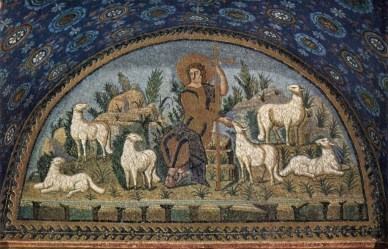 The context of today’s gospel (Jn. 10:27-30) is the feast of the Dedication in Jerusalem. Jesus is in the Temple when he is approached by some Jews who begin to question him, asking if he is the Christ. The feast of the Dedication marked an historical moment in the history of Israel when the Jewish people were able to overcome their Greek oppressors and re-dedicate the Temple by destroying and removing a pagan altar that had been placed there. The context is important because it demonstrates the importance of the Temple in the culture and psyche of the Jewish people. The Temple was the meeting place between God and his people. The Temple was the visible sign for the Jewish people of their belonging to God. This sense of “belonging” is of importance.
 No analogy is perfect but I would like to offer one in regards to Pope Francis’ latest apostolic exhortation, the context of marriage in our world today and what the Holy Father is calling the Church to through his words.
 It is interesting to note what strikes us and what we notice when we journey yet again through a liturgical season through which we have already traversed each year of our lives. My experience has taught me that each year is different and that there are new challenges and new insights gained. This liturgical season of Easter is no different.
 There are many images of ordained priesthood that operate in our Church today – the priest as sacramental minister, the priest as co-worker with the bishop, the priest as pastor, the priest as leader of the worshipping community. These are some of the more “official” images of priesthood but there are others, I have come to realize, that can often operate in the hearts and minds of both priests and laity alike. The priest as administrator and builder operating the parish with efficient ease! The priest as superhero stomping out evil with his superpowers. (I have seen many a vocation poster/image along this line and I have to admit I find it rather silly to say the least.) The priest as shaman battling dark forces behind the scenes by the use of ancient languages and rituals. The priest as philosopher or wisdom figure enlightening the masses with his erudite thought. Are there times when a priest does have to head a building project and administrate a parish? Yes, certainly. There are also times when a priest has to wade through the darkness of sin and evil in life and I hope that at least every now and then the priest does offer something worthwhile for people to consider. All this is to say that there are many images surrounding the priest – some official and some not-so-official yet held in different hearts.
 A friend of mine in the Community of Sant’Egidio has asked me to reflect upon this past Holy Week and Easter Sunday in the parish and how the community accompanied the parish in its celebration.
 The Alternate Path