Tags
Christianity, discipleship, Executive Order banning refugees, faith, salt and light, Syrian refugees
 In Matthew 5:13-16, our Lord gives us two very distinctive images of what it means to live the life of discipleship – salt and light. We can say that part of the distinctiveness of these images is that both express a sense of “straightforwardness”.
The taste of salt is immediately known. It is not a flavor that hides under other flavors. When salt is added the effect on the taste of something is unmistakable. The same can be said for light. It also is immediate in its effect. Either it is there or it is not. When light shines in a dark space it is known. Both salt and light are straightforward in their nature.
St. Augustine, in a commentary on Psalm 112 (the psalm which we hear this Sunday) reflects on the similar straightforward nature of discipleship. Augustine contrasts the straightforwardness of the disciple with the persons who stumble in their envy of the sinner or who feel that their good deeds perish and are of no worth unless they receive some perishable reward in return – such as the acknowledgement and flattery of others. But the disciple who is straightforward is the one who does the good simply because it is the right thing to do – whether noticed or appreciated by others or not. The disciple, “neither seeks the approval of other people nor covets earthly riches…”
Augustine goes on to note that Psalm 112 proclaims that “glory and wealth are in the house of the just one…” This “house” of the just one is in fact his or her heart and it is there that the just person dwells in a richer style than anything that the world can afford. The “glory and wealth” of the just one is his or her righteousness before God. This is a “house” that no thief can break into and a “wealth” that can never be stolen.
In his words to his disciples our Lord is very specific. “You are the salt of the earth … You are the light of the world …” This straightforward nature of discipleship is already within – it has been placed there by God’s grace in baptism. We are sons and daughters of God! This truth does not have to be earned or gained. It is already present in the very makeup of who we are in Christ!
We, on our part, have to trust, believe and live it out. We must overcome the temptation to limit ourselves by the narrow horizons that we (through the voices of our world and our own painful experiences) set. “Salt losing its taste…” and “light being hidden under a bushel basket…” is, in fact, our giving into our limited horizons and not living according to the fullness of God’s horizon. It is our being overcome by fear. As a wise man has noted, our playing small does not serve the will of God!
This straightforward nature of discipleship has been witnessed these past couple of weeks by our U.S. Bishops’ response to the refugee ban recently issued. Here is a little bit of their letter,
“We must screen vigilantly for infiltrators who would do us harm, but we must always be equally vigilant in the welcome of friends … Our desire is not to enter the political arena, but rather to proclaim Christ alive in the world today. In the very moment a family abandons their home under the threat of death, Jesus is present. And He says to each of us, ‘whatever you did for one of these least brothers of mine, you did for me.’” (MT. 25:40)
It is straightforward. It is challenging. It is the Gospel.
We are the salt of the earth … we are the light of the world … in all things we are called to strive to live according to the horizon that God has set for us.
 During the weeks of Advent we hoped for and awaited the coming of the Messiah.
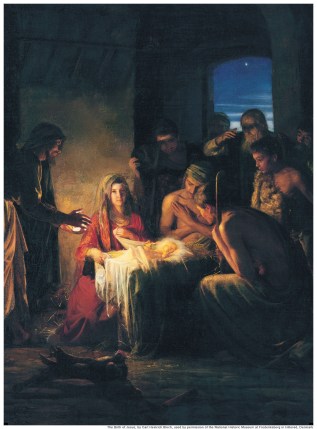 Caesar demanded a census and the whole world was in motion and turmoil.
 The movie “Hacksaw Ridge” is a powerful and true story about a man holding firm to his convictions in the face of strong opposition.
 This past week I was able to visit with a parishioner who, as a hobby, makes wine.
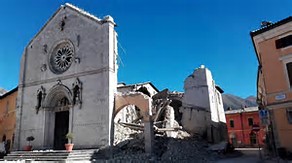 Scholars suggest that by the time Luke composed his gospel the temple had already been destroyed. This grand edifice, seemingly unmovable, adorned with costly stones that people were admiring in this passage was, by the time of Luke setting quill to parchment, just a heap of ruins. It demonstrates how quickly things can change and also how little we really know about what will happen tomorrow. We like to think we are in charge … but we are not.
 Here are a few lines from the song “Awake My Soul” by Mumford and Sons.
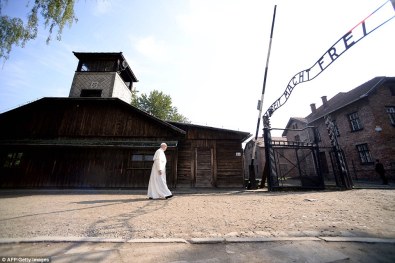 You may be aware that World Youth Day is occurring in Krakow, Poland. World Youth Day is a gathering of the Church’s youth and young adults for days of catechesis, worship and prayer. The event culminates on Sunday with a Papal Mass. Pope Francis is in Krakow with the world’s young people. I have been viewing different images via social media from the gathering but what has struck me most is a six minute video of Pope Francis visiting the concentration camp at Auschwitz and taking some private moments of prayer in the cell which housed St. Maximillian Kolbe before his death. St. Maximillian Kolbe was a Catholic priest who volunteered his own life in order to let another prisoner live who was a husband and father. The video, which is all in silence, is almost surreal. (I have posted the video on our parish Facebook page.)
 Pope Francis arrives simply at the cell as is his wont. He first peers into the darkened cell then steps in. A chair is brought in and the Holy Father sits and we are given this amazing image of the successor to St. Peter clad in white sitting in a darkened cell with his head bowed in prayer in this place of unimaginable horror.
 The Alternate Path