

• About The Alternate Path

The Alternate Path

~ Thoughts on Walking the Path of Christian Discipleship

The Alternate Path

Tag Archives: Christian life

Charlottesville and the Call to be Community in Christ

17 Thursday Aug 2017

Posted by mcummins2172 in peace, Uncategorized

≈ Leave a comment

Tags

bigotry, Charlottesville, Christian life, Christianity, faith, prejudice, racism, social justice, White supremacy

Charlottesville, VAIn light of the violent and tragic events that have occurred in Charlottesville, VA a dear friend asked me what can one person do “on a regular basis to fight racism and some of what’s going on in this country/world?” It is sad and frightening what is going on in our country and what we see happening in our world. We must reaffirm that there is no place for bigotry, prejudice and violence in our country, our world and in our hearts as Christians and, I think, we must do this as we also reaffirm and in many ways, rediscover, the value and unique power of Christian community.

In Matthew 18:15-20 our Lord gives his disciples some instructions on the reality and role of Christian community. “If your brother sins against you,” our Lord says, then go and tell him the fault, if he fails to listen then take one or two others along with you and if he still refuses to listen then tell the Church and if he fails to listen even to the Church, “then treat him as you would a Gentile or tax collector.” It is worthy to note that Jesus often entered into relationship with the Gentile and tax collector throughout his ministry and that he sought their healing and salvation. Jesus then gives to the community the authority to bind and loose. “Amen, I say to you, whatever you bind on earth shall be bound in heaven, and whatever you loose on earth shall be loosed in heaven.” Our Lord then doubles down on the unique power and authority of the church community. “Again, amen, I say to you, if two of you agree on earth about anything for which they are to pray, it shall be granted to them by my heavenly Father. For where two or three are gathered in my name, there am I in the midst of them.”

The power of the Christian Church, the power of our Christian faith, is a weak power. We do not have the force of arms or military or police might, neither do we have economic or even (in our increasingly secular age) social might. What we do have is the presence of Christ in our midst and the gift of the Holy Spirit. This alone is that power that can bind and loose and that can open and call forth the grace of heaven through prayer.

Like many people, I viewed the Vice media video that recorded and interviewed the white supremacists during these horrendous days in Charlottesville. I was truly shocked by the vitriol, hatred and anger expressed by these people and I was also extremely saddened for them because I saw people locked in fear and hate. Theirs is a pseudo-community. Despite the bravado and the appeals to white unity there is no community there. They are people locked in a sad echo chamber stoked by the negative isolation of social media, resentment, fear and ignorance. They are imprisoned in their hate.

To this pseudo-community we are called to be community in Christ – the only true community that can both bind and loose and here is found our unique weak strength. Because Christ is with us and the Holy Spirit has been given us we can both bind and loose. Through the living of Christian community, we can work to truly bind those forces in society and the human heart that seek to separate and isolate each one of us in resentment and fear. Through the living of Christian community, we can even help to loose those brothers and sisters who have become bound by resentment and fear. This has been my prayer and my hope since I have viewed those sad images coming out of Charlottesville. Pseudo-community only leads to a sad mockery and false caricature of human dignity. All the pseudo-communities of our time must be met by the true community of the disciples gathered in prayer, truth and the mercy and the grace known in Christ.

There are many sad and broken things that lie at the root of the violence and hatred given expression in Charlottesville the past few days. One of these, I believe, is a crisis of true community in our society. People are isolated, people are lost, there is pain, uncertainty and fear and in such circumstances the false appeal of pseudo-community can be strong and alluring. This is all the more reason for us to strive in humility, love and grace to be Church – the community where Christ is present and where the Holy Spirit is given and the only true community that has the power to bind and to loose.

The choices we make and their consequences.

11 Saturday Feb 2017

Posted by mcummins2172 in homily, Uncategorized

≈ 2 Comments

Tags

Choices and consequences, Christian life, Christianity, discipleship, faith, Mt. 5:17-37, prayer, Sirach 15:15-20, value of prayer

sermon02The first reading from the Book of Sirach (Sir. 15:15-20) begins with a very direct statement,

If you choose you can keep the commandments, they will save you; if you trust in God, you too shall live; he has set before you fire and water to whichever you choose, stretch forth your hand.  Before man are life and death, good and evil, whichever he chooses shall be given him.  

We all have been given the ability and the freedom to exercise our will.  We can each one of us make choices and all choices have consequences.  We are all free to make choices but no one is free to deny the consequences of his or her choices.  How we choose to exercise our will can lead to either more life or can lead to death (in a variety of forms).

Earlier this week the priests of our diocese gathered for our annual study days and at one point the presenter talked a little about the physiological effects of prayer.  He shared that there are studies which indicate that the discipline of prayer is a factor in the development of the areas of our brain connected with attention, focus and compassion.  Prayer (a spiritual discipline) can positively affect our minds, our biology.  This makes sense for Christians because we hold mind, body and spirit together.  It is all connected.  The choice to pray and to enter into the things of faith, which is an exercise of the will, is a choice that leads to more life. 

Interestingly, the presenter also shared that there are studies coming out indicating that there is another choice we can make that negatively impacts the biology of the brain and that is the choice for porn.  Studies are demonstrating that persons who fall into this habit experience an over-development of the lowest level of brain functioning (the reptilian area of the brain) and less development of the areas connected with attention, focus and compassion. 

All choices have consequences – some lead to life and some lead to death.

Our God is a God of life and not death. 

Our Lord goes deep in today’s gospel.  (Mt. 5:17-37)  He is not content to remain on the surface but wants to go to the heart where healing is needed.  Christ is the fulfillment of the law and the prophets and he wants us to know that in our keeping of the commandments is found life.  So Christ calls us to look within – to look at the anger, the greed, the judgmentalism, the pride, the lust that can dwell there – and to begin making choices (by his grace) beyond those sad realities and temptations.  Choices made for sin all leave us locked within our small selves.  God does not want this for us.  God wants us to be turned outward – towards Him and towards our brothers and sisters.  Here is where life is found. 

One final thought.  It begins today – by the choices we make now.  Some of you know that I am not the most consistent in my jogging routine (more than partly due to my own choices, some poor) but I have been around enough joggers to know that you don’t just get up one morning and say, “Today, I will run a marathon.”  It doesn’t work that way.  To run a marathon you prepare months in advance and during those months you make daily choices – some choices are not “fun” and some are downright painful.  The choice to watch what you eat, the choice to plan and chart miles, the choice to run even when you don’t want to, the choice to not do other things when you need to get your running hours in, etc…  The race does not begin the day of the marathon; it begins the months before and it continues with all those daily choices.

We will all face “marathons” in life – times of struggle that will try and test us.  To begin trying to make the choices for life when the struggle is upon us is often just too late.  The choices for God and His commandments that we make today and parents, the choices you help your children to make today, are the choices that will see us through the marathon when it comes. 

Each one of us is free to make our choices but no one is free to deny the consequences of the choices we make. 

Before man are life and death, good and evil…

But whoever obeys and teaches these commandments will be called greatest in the kingdom of heaven.   

Come, let us adore him.

08 Sunday Jan 2017

Posted by mcummins2172 in homily, Uncategorized

≈ Leave a comment

Tags

Adoration of the Magi, Christian faith, Christian life, Christianity, Christmas, Epiphany, faith

adoration-of-the-magiDuring the weeks of Advent we hoped for and awaited the coming of the Messiah.  On Christmas we rejoiced in the birth of our savior.  Now, on Epiphany we travel with the wise men from the East in order to “do him homage”, in order to adore Christ. 
Adoration is the proper attitude of today’s feast.  Just as the wise men reveal that the gospel message is meant to go out to all nations and peoples; it also reveals that all peoples and nations are meant to travel to Bethlehem and adore the Christ-child, and do him homage. 

But what does it mean to “adore” and how do we know that we are doing it properly?  Just as the three gifts offered by the wise men reveal truths about Christ so they also reveal truths about our adoration.

Gold is a proper gift to offer a king.  By offering gold the wise men were acknowledging the infant Jesus as the “newborn king of the Jews”.  Gold symbolizes the kingship of Christ.  Gold is our best that we offer to God in gratitude.  God loves us and God wants us to know and experience the joys and beauty of life.  In moments of joy and beauty, if we can just turn to God and say “thank you” then we are adoring, we are offering gold to God.  We ought to thank God for all the blessings, beauty and joys of life.  Gratitude is the gold we have to offer. 

Frankincense accompanies worship and sacrifice.  It is the stuff of priests.  Christ is the High Priest who offers himself as the sinless lamb for us.  The gift of frankincense given at the birth of Christ is a foreshadowing of his great sacrifice and offering of himself on the cross.  We offer frankincense when we offer prayers and a desire to live in relationship with God.  This is part of the great mystery of our faith.  God wants relationship and friendship with us, God seeks us out.  When we are willing to live in relationship with God, when we make the time to pray and just be with God then we are offering frankincense for ourselves and for our world. 

Myrrh is used to anoint bodies at burial.  Myrrh given at the birth of our Lord points toward the death Christ would suffer for us.  When we are willing to die to self for Christ, when we offer up our pains, sufferings, and even little annoyances of life we are, in essence, bringing myrrh to our Lord.  This also is adoration – to bring God our pains, sorrows, dying to self and the injustices we bear in life. 

Today, we come to adore.  Epiphany teaches us how to adore our Lord and Savior – to bring our joys and gratitudes–this is gold; to bring our prayers and desire to live in relationship with God – this is frankincense and to bring our sorrows, dying to self and the injustices we bear in life – this is myrrh. 

Today, we adore.    

Christmas, 2016

25 Sunday Dec 2016

Posted by mcummins2172 in homily, Uncategorized

≈ 2 Comments

Tags

Christian faith, Christian life, Christianity, Christmas, faith, humility, Roman Catholic

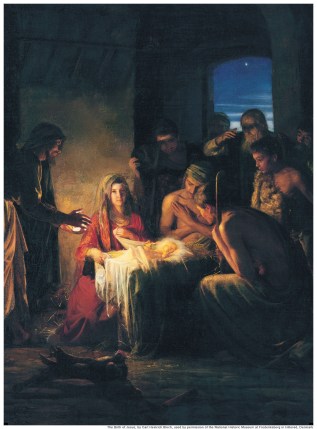
birth-of-jesusCaesar demanded a census and the whole world was in motion and turmoil.  People and families around the empire travelling to their own town.  The emperor had spoken and therefore it had to be! 

Joseph and Mary – humble, poor, obedient to authority – travel to Bethlehem, even with Mary near child-birth.  They register for the census but the gospel does not specify one thing; did they register before the birth of Christ or after?  Did their census notation say, “one Jewish couple expecting a child” or “one Jewish couple with newborn male”?  I tend to believe that Joseph and Mary registered with the census before the birth of Jesus because it would be consistent with God’s way of working throughout scripture.

Let the powers of the world flex their muscle and show all their strength.  Peoples need to travel, life needs to be interrupted, Caesar Augustus wants a census!  God laughs.  God comes silently and humbly amidst all the turmoil of the time.  God even uses the great emperor’s project to accomplish His plan.  Who today remembers the census that Caesar ordered?  Yet all time and history celebrates the birth of the son of Mary.  Christ coming after the census is fulfilled demonstrates who is really the Lord of history.

Caesar in the exercise of his power and might through the census was trying to grasp and claim the entire empire.  “These … all these lands and peoples … are mine!” is what Caesar was saying through his census.  Christ being born after the census shows that he does not belong to the power of Caesar nor to any worldly-power yesterday or today.  Jesus will not go down in history as a small notation in a Roman emperor’s census, rather he will be revealed as the very one who ushers in God’s Kingdom to which all the kingdoms and powers of the world must submit. 

The Word of God enters the world unexpectedly.  Information is power.  A census – a measurement of peoples – gives information and therefore it gives the emperor great power and control.  Yet right beyond the boundary of Caesar’s knowledge occurs the greatest event in all of human history and Caesar misses it.  Caesar has no knowledge of it.  The first ones who do come to know of it?  Not Caesar but rather the lowly shepherds – the poor and the insignificant ones in the eyes of the world.  It is to them that the angel appears and tells of this new thing that God has done!  “Do not be afraid; for behold, I proclaim to you good news of great joy that will be for all people … a savior has been born for you who is Christ and Lord.”  (Lk. 2:10-11)  It is not abstract and isolated ideologies and theologies cut off from everyday reality that grasp the ever-new work of God, rather it is simple people of faith – the poor and the humble.

The lessons of Christmas are so profound and so necessary.  Despite the turmoil of any age and the raw exercising of power, God is at work accomplishing his plan.  This babe born in Bethlehem is the one to whom all knees must bend and all hearts must bow and when we can do that, then peace and joy will be found!  In Christ, knowledge comes humbly – knowledge for the pains of our world and the pains of our hearts.  Abstract and isolated ideologies quickly become cold, hard and dictatorial.  This is not God’s way.  God reveals himself to the poor and the humble and God chooses to abide with them. 

Lord Jesus, we welcome you.  Heal our world.  Soften our hearts.  Help us to know the newness of your peace.  You are Wonder-Counselor, God-Hero, Father-Forever and Prince of Peace.  Lord Jesus, you choose to be born in your time and in your way.  May we be humble and poor enough to recognize you when you come to us.

Thank you Jesus for loving us.           

“Arrival” and catching the language of God.

03 Saturday Dec 2016

Posted by mcummins2172 in Uncategorized

≈ 2 Comments

Tags

Arrival, Christian life, Christianity, faith, Jesus, Kingdom of God

arrivalThis last week I saw the movie “Arrival”.  I found the movie to be very thought-provoking.  I do not want to ruin the movie for anyone so I will not delve too deeply into the story but the heart of the movie is about language, thought and even time.  The movie asks a simple question; “If aliens arrived on earth how would we communicate?”  Especially if the aliens were so different physiologically from us and did not communicate by sound as we do.  The movie centers on a  translator and her work to overcome this barrier.  At one point in the movie there is a discussion about how learning another language might actually effect and even change a person’s way of thinking.  Learning a new language helps us to think differently and to see the world differently.  
In biblical thought, a prophet is not a fortune-teller or someone who can somehow magically tell what is going to happen in the future.  Rather, a biblical prophet is someone who lives a deep relationship with God and who is able to read the signs of the times from that perspective.  To make use of the discussion in the movie – a prophet is someone who has caught a bit of the language of God and is able therefore to think differently and to see the world differently.  A prophet is someone who begins to see as God sees and to dream as God dreams.  

In today’s gospel (Mt. 3:1-12) we are given the figure of John the Baptist.  The man whom Christ himself called the greatest of prophets.  John is this uniquely charismatic figure drawing huge crowds from all over Jerusalem, Judea and the whole region around the Jordan.  He proclaims the coming Kingdom of God and he calls his listeners to repentance.  Almost as if to provide a contrast, the gospel brings the Pharisees and Sadducees into the picture.  They approach the baptism of John not as a true spirit of repentance but because it looks good before the crowd who they knew held John in high regard.  John’s eyes were on the promise of eternity and the mercy of God because he had caught the language of God while the eyes of these religious authorities were only on what looked good in the moment and what would seem pleasing to others.  John’s eyes were on the ever new possibility of the Kingdom of God precisely because he had caught the language of God. 

We could say that John already saw and set his life by the vision offered by the prophet Isaiah in the first reading (Is. 11:1-10).  John saw that day when the one would come on whom the spirit of the Lord would rest and who would judge rightly and who would strike the ruthless and bring forth justice and through whom the wolf and the lamb would be guest of one another.  In the Jordan River, John would baptize the one who is himself the incarnate Word of the Father. 

In Christ, the language of God is fully revealed and spoken and it overcomes all the sad divisions of our world.  Isaiah’s poetic use of imagery is all about the divisions and fears and animosities of life being overcome – “the cow and the bear shall be neighbors … the baby shall play by the cobras den …” – all this shall occur through Christ. 

And it continues through his body, the Church.  In Christ the role of the prophet is not ended, it is multiplied infinitely!  Through our baptisms we are all called to be prophets!  In the Eucharistic Prayer entitled, “Jesus, the Way to the Father” we find these words, “Grant that all the faithful of the Church, looking into the signs of the times by the light of faith, may constantly devote themselves to the service of the Gospel.” 

To be a prophet is not to somehow magically see into the future but to live in deep relationship with God and to read the signs of the times from that perspective.  The prophet learns the language of God fully revealed in Christ.  The prophet allows that language to change his or her own pattern of thought and the prophet lives by the ever new possibility of God’s Kingdom which says that all the sad divisions of our world and our individual lives can be healed and can be overcome.  

To learn a language changes the way we think.  The prophets caught the language of God, John learned it and even baptized the Word incarnate and, now, the Word is given and spoken to us. 

We can live differently.  We can live through the very Word given to us as God intends.

That which endures

12 Saturday Nov 2016

Posted by mcummins2172 in homily, Uncategorized

≈ Leave a comment

Tags

Catholic Church, Christian life, Christianity, discipleship, faith, hope, Jesus

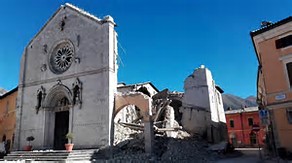
church-destroyed-by-earthquakeScholars suggest that by the time Luke composed his gospel the temple had already been destroyed.  This grand edifice, seemingly unmovable, adorned with costly stones that people were admiring in this passage was, by the time of Luke setting quill to parchment, just a heap of ruins.  It demonstrates how quickly things can change and also how little we really know about what will happen tomorrow.  We like to think we are in charge … but we are not.

Using the temple’s destruction and our Lord’s prophesying of that even as a springboard; today’s gospel (Lk. 21:5-19) invites us to go deep in the spiritual life.

There are levels to the spiritual life.  Saints and mystics throughout the Church’s history testify to this.  The first level and most basic is a level often caught up with outer things.  The grandeur of a temple, the use of precious stones, only a certain style of music or liturgy in worship, only this type of devotional practice or prayer.  Is there a value to the beauty of a church or worship or prayer?  Certainly, that is not being denied but all of these exist in order to usher one into an encounter with the Divine.  If they themselves become the focus then something is off-kilter.  As a friend of mine once said, there is always the temptation to major in the minors.

We have all heard of the recent earthquakes that have hit Italy.  In one of these earthquakes a beautiful church connected to St. Benedict completed collapsed.  A picture I saw just had the front façade standing with all else behind it flattened out.  Miraculously no person was killed when this happened.  What I found inspiring was that as soon as the monks and nuns of the community whose church has been destroyed determined that everyone in their community was accounted for they went out into the larger area and began to minister to others in need – helping physically to dig people out of the rubble and also bringing the sacraments to people.  They did this because they were rooted in something deeper than a building (an external).

The deeper reality our Lord is inviting each of us to in the journey of faith is relationship with him.  There will be false predictions that the end is upon us, nation will rise against nation, and there will be earthquakes, famines, plagues and signs in the sky.  These are all shifts in the greater turning of human history but there will also be personal shifts and turmoil.  People will be led before kings, governors and all the different powers of the world and our lives.  Families will be split and there will not be understanding.  Christians will be hated.  Yet in the midst of all this foretold turmoil of the history of our world and our own personal histories, our Lord – the one who foretold the destruction of the temple – says this, “Remember, you are not to prepare your defense beforehand, for I myself shall give you a wisdom in speaking that all your adversaries will be powerless to resist or refute.”  

“…for I myself shall give you a wisdom in speaking…”  The truth implied here in the midst of all the turmoils that this life brings is a living relationship with Christ.  Remaining on the level of the external spiritually – while not really knowing the Lord or allowing him to know us – will not cut it when life gets tumultuous.  In all seasons of life the Christian must root him or herself in relationship with Christ.  Only in this relationship can be found the wisdom and perseverance that we need in life.

Our Lord listened as people who had no idea of what tomorrow would bring spoke admiringly of the temple.  He asked them to move beyond the external to that which truly lasts.  He asks us to do the same – to trust in him and to find life.

A God and a community who seek out

10 Saturday Sep 2016

Posted by mcummins2172 in Uncategorized

≈ 1 Comment

Tags

Christian life, Christianity, discipleship, faith, hope, Jesus, mercy, The Good Shepherd, Year of Mercy

good-shepherdOne of the truths revealed in today’s gospel (Lk. 15:1-10) is that our God is not a God content to let people remain anonymous.  The shepherd goes out in search of the lost sheep because that one sheep truly matters to him.  The woman turns the house over searching for the lost coin because that coin is of real concern to her.  We are of concern to God.  We are not alone in a vast universe governed by random chance.  We do not have a God who does not care.  God is willing to seek each one of us out, willing to even enter the darkness of sin and death, to find us and then rejoice in the finding!

But this truth also applies to us who are called to be God’s people in our world.  The Christian community is not meant to be an anonymous collection of individuals made up of people without names and without love – separate and alone.  Because we have been loved by God and sought out by God we must, in turn, strive to love as God loves and seek out as God seeks out.  The community Jesus calls us to is not one of anonymous and separate persons but of brothers and sisters who know each other by name.  Friendship and care must be at the heart of the Christian community but it needs to be noted that this friendship is not of our own doing or crafting.  The friendship of the Christian community flows out of Jesus’ own call to his disciples and obedience to his Word.  The origin of friendship in the Christian community is in God himself.  This is a great mystery and it is a mystery we are called to live and it is a mystery we proclaim in front of a world that seems so intent on reducing the full dignity of the human person to just a caricature of the anonymous individual.

Every person has a name.  Every person has a worth.  Every person is valued and sought out by God.  No one is left behind.  We need to live this friendship of Christ as Church and, by so doing, witness to our world.  For a Christian community to have the most beautiful sanctuary or the most active list of ministries without this friendship that seeks out is (to paraphrase St. Paul and our Lord himself) to be just a noisy gong, a clashing cymbal and even a whitewashed tomb.  No life is ultimately produced.

The identity of the Church is not found by remaining within but is realized in mission.  It has been this way from the very beginning with the outpouring of the Holy Spirit and the call to proclaim the good news to the ends of the world!  We each have a name given by God and a task given by God, we only become who we are meant to be as we live the task we have been given.  The Christian community only becomes who she is meant to be when she lives the friendship she has been given by Christ.

This friendship begins within the Christian community herself and then it goes out into the world.  We must seek out one another.  We must be of concern to one another.  In order to be true to the gift that we were given (meaning being sought out by God himself), we cannot remain content in just being a collection of anonymous individuals.  When we meet one another in the friendship of Christ we learn we can even look out on the multitudes of our world and see not just anonymous individuals who threaten my space and my freedom but brothers and sisters and the multitudes of people who are alone and suffering learn that they are in fact not alone and that there is a God and a people who seek to care and who seek to know their name.

Let us invite one another to wisdom. St. Teresa of Calcutta, pray for us!

04 Sunday Sep 2016

Posted by mcummins2172 in homily, Uncategorized

≈ Leave a comment

Tags

Christ, Christian life, Christianity, discipleship, faith, hope, Kingdom of God, Mother Teresa, Sisters of Charity, St. Teresa of Calcutta

Mother Teresa

St. Teresa of Calcutta

In the first reading (Wisdom 9:13-18b) we are told that wisdom is a gift given from on high.  It is not something we acquire by our own effort and ingenuity but it is a gift from God.  Or who ever knew your counsel, except you had given wisdom and sent your Holy Spirit from on high?  And thus were the paths of those on earth made straight.  Wisdom is the fruit of relationship with God and, as we learned in last Sunday’s gospel, it both comes and is received on our part through the actions of humility and living a generosity toward those who cannot repay us.

But we can invite one another to wisdom.  This is a truth found in today’s second reading (Philemon 9-10, 12-17).  The Letter to Philemon is a short letter written by Paul to Philemon, a member of the Christian community, on behalf of Onesimus – a runaway slave of Philemon’s whom Paul had befriended and converted while they were held together in prison.  According to the law of the day, Philemon had the right to punish Onesimus severely, even having him put to death, but Paul writes and asks Philemon not only to be lenient and receive Onesimus back but to even receive him back as now a brother in Christ.

Paul is inviting (not forcing) Philemon to a new awareness.  He is inviting him to wisdom in Christ.  Things had now changed.  Elsewhere Paul will write …in Christ there is neither slave nor free…  Paul is aware of this new reality, he does not wish to force it on Philemon for that would not be true to the gospel but he does want to invite Philemon to this new awareness.  Paul is also crafty about this invitation though.  He knows that when his letter arrives it will not be read privately by Philemon first; rather it will be read before the whole gathered community with Philemon present.  All eyes will certainly be on Philemon but also, if the members of the community are honest, all eyes will need to be on each of their own hearts as the letter invites all who listen to it to wisdom and a greater awareness even to our own day.  Can we receive the other person as brother and sister in Christ?

Christ continually invites us into the wisdom of the Kingdom of God.  It is a wisdom that asks us to be willing to continually step away from the rigid and constricting thought of “this is the way things are, this is the way things will always be” toward the ever new possibility of the Kingdom.  If anyone comes to me without hating his father and mother, wife and children, brothers and sisters, and even his own life, he cannot be my disciple.  Christ continually invites us to calculate and set our lives by the ever new possibility of the Kingdom of God!  Just like the person building a tower calculates out resources or the king calculates out the cost of a battle we must calculate and set our lives not by our own small and often meager possessions of thought but by the sheer gratuity of God’s Kingdom!  Christ invites us set our lives by this wisdom!

Today, the Church gives us a wonderful witness of a person who set and calculated her life by the sheer gratuity of God’s Kingdom in St. Teresa of Calcutta.  Where the world saw a simple little woman, God saw a great disciple to our age.  Where the world saw lives with no value, St. Teresa saw children of God.  Where the world saw hopelessness, St. Teresa found beauty.  Where the world saw wealth, St. Teresa saw poverty.  Where the world gave up, St. Teresa persevered.

St. Teresa allowed herself to be invited into the wisdom of the Kingdom of God – even in the darkness of it all.  Now, like Paul himself, St. Teresa invites us into the ever new possibility of the wisdom of Christ and the Kingdom of God.

“If you can’t feed a hundred people then feed just one.”

“Do not wait for leaders; do it alone, person to person.”

“If you judge people, you have no time to love them.”

St. Teresa of Calcutta, pray for us!   

Why Young Adults need the Catholic Church

30 Tuesday Aug 2016

Posted by mcummins2172 in Uncategorized, young people

≈ Leave a comment

Tags

Catholic Church, Catholic faith, Christian life, Christianity, discipleship, faith, Roman Catholic, Young Adult Ministry, younger generation and faith

young adult praying in churchWhy do some young adults wander away from the Church?  There are no easy answers to this.  At least, I have not found one in my own experience of ministry.  I have seen some young people fully immersed in the Church in high school and college who then just stop coming one day.  I have seen other young people who had wandered off come back with a great fervor almost bordering on zealotry.  A good number of young people I have known wander in and out with some choosing to stay loosely connected on the periphery of the Church.

Certainly each person’s journey of faith is unique.  There are movements in the heart that only God can see and everything occurs in God’s time.  We all know that there are scandals within the Church that wound hearts and discredit the gospel and the community.  There are voices against the Church and Christianity in our world and caricatures of religion too easily tossed about in society.  There is a diffused mistrust of all institutions.  There are also people not willing to change their view of the Church just as they, themselves, insist the Church must change (usually to their liking).  Finally, there are some people who are just lazy spiritually.

With all this in mind, I am firmly convinced that young adults need the Church.  No one may be able to adequately answer the big concerns noted above.  Still, I want to offer a few thoughts about why young adults need the Church.  Here are the thoughts in the form of a letter.

Dear young adults,

Do you know that you need more than just your peers?  I never really became a fan of the TV show “Friends”.  I do remember watching it and being entertained although I didn’t always agree with the moral choices portrayed in the show.  I remember that the whole universe portrayed in that show was that of a group of peers.  Every now and then a person from another generation (younger or older) would pop in and out of the show but they seemed to be just a distraction.  Everything centered on that particular group of peers and their enclosed world.  I have seen this same theme continue in newer generations of shows.  I am sorry, but that is not life.  Sadly, though, I think society and, surprisingly, the Church have followed suit.  There are retreat programs and youth ministry initiatives intentionally and exclusively structured around peer-given talks and peer-led discussions.  There are youth only liturgies.  I would wager that the same trend can be seen in education, athletics and all forms of engagement with our youth.  Is there a certain value and place for this?  Yes, but there are unintended consequences.  Dear young adults, I apologize.  You have been done a disservice.  Although no one intended it, you have been taught to only value peer input and peer relationship.  The voices of other generations – the insight, knowledge and wisdom of older generations that can help guide in life and help navigate its struggles as well as the hopes and dreams of younger generations – have been blocked from your awareness.  With this block there can also be a forgetfulness of how God has been faithful and active in all generations and how God continues to be faithful and active.

In my ministry with young adults I often felt frustrated by this block.  Over time, I learned to not get upset or frustrated by this.  They were just doing what they had been taught.  I was not a peer and therefore my voice and consideration would sometimes just bounce off their perspective somewhere into the ether.  But as I shared above, a world comprised only of peers with a particular generational perspective is not real life.  One of the things truly wonderful about Sunday worship is seeing generations coming together in Church – young and old and even in-between.  Young adults, I have to say that you are noticeably absent from these gatherings.   You are missing out.  You need more than your peers and the Christian community needs you.

Another thought for you.  You need a deeper narrative than just the secular one.  There are narratives that people set their lives by but not all narratives are equal nor are all equally true.  I learned an important lesson in my seminary training.  The gospel narrative is the rule by which all other narratives should be measured and judged.  Some might see this as Christian condescension, but I am not convinced that is true.  Think about it.  Catholicism has a proven track record.  Empires, movements, theories of thought have come and gone.  Christianity has remained and has grown consistently and organically even through persecution and even despite the sinful actions of some of its adherents.  Secularization, at its best, has real value.  It has fostered religious freedom, protection from oppression, and respect due the dignity of persons.  But the secular world has its own narrative with a down side.  A closed-end secularity pushes the sacred to the periphery.  And that truly diminishes life.  Here, I would caution that certain forms of “generic Christianity” will not suffice because they are neither able to see beyond nor challenge the limits of the secular narrative.  Certain popular forms of contemporary Christian expression found often in non-denominational, evangelical and mega-church communities are, in fact, closely linked to the secular narrative and a step away from the Christian sense of the sacred.  For example, I would point to the emphasis by some on material concern and comfort as found canonized by the gospel of prosperity preached in many places.

There is a deeper and fuller reality to life, existence and creation itself than just the measure of the secular.  There is a transcendent, spiritual and sacramental dimension to life.  We can embrace the benefits of secularity, while not letting ourselves be bound by the limits of its narrative.  The Catholic Church with its tradition, theology and worship provides for this broader perspective on reality.

Dear young adults, here’s something that you won’t hear about very often, if ever.  You need an awareness of redemptive suffering.  The Catholic Church is at home with the crucifix not because we believe that the resurrection should be downplayed and that Christ is still on the cross.  No, we are convinced that by his suffering on the cross our Lord has brought a redemptive dimension to all suffering.  He has brought life out of death.  On the cross and in the tomb, God entered into the furthest edges of human suffering and death.  The crucifix reminds us of the cost of salvation that has been won through the love and obedience of Christ.  This is a great mystery.  There is suffering in life and sooner or later for all of us.  We see suffering throughout our world.  The crucifix and its bold display of redemptive suffering protects us against the temptations of choosing to ignore suffering in our world, getting lost ourselves in the darkness of suffering and giving in to victimhood in the face of suffering.  Suffering, in Christ, can be redemptive.

Let me say a word about something that many people are skittish about – commitment.  You need commitment and not just new experiences.  When I was in campus and vocation ministry my schedule and responsibilities allowed and even required of me quite a bit of travel.  Now that I am in a parish my travelling has been greatly reduced due to the commitment of being a pastor.  This is not a bad thing.  There are seasons to life and there are seasons to ministry.  My faith life and my life in general is now being nourished more by the commitment of being a pastor than by a string of new experiences offered through travel and life situation.  Commitments in life offer nourishment too!  Our world does not emphasize this but it is true.  Young adults do not get lost in the siren call of chasing new experience after new experience through life!  Sooner or later, you will wear yourself out and, frankly, not have much depth.  Commitments in life are what lead to the depth of personhood, awareness and insight.  Do not be afraid to commit in faith and in love to Christ, his Church and another person if you are so called.  Be willing to go deep!

You also need a real community that will not fit neatly into your box, one that is not perfect, that disagrees and that argues.  I have known young people to leave the Church either because it is not “perfect” or because it does not fit into their own framework.  Frankly, I think that this is not a sign of good, adult judgment.  On college campuses, people are talking about “trigger notices” and “safe zones” around discussions that students might find threatening or challenging.  Social media and our current structure of news outlets may allow us to exist and interact in a universe occupied solely by like-minded people (this is one of the dangers of our contemporary information age) but the real world does not.  It is okay to argue and it is okay to debate and it is wonderful to be in a Church that has this and the Catholic Church has it in spades!  Many social commentators have noted that argument and disagreement are turn offs to young adults who like to avoid such things at all costs (again this is an unintended consequence of how the generation was raised) but life and insight is gained through respectful disagreement, discussion and debate.  We believe that the Holy Spirit leads the Church and this is testified especially through moments of disagreement, discussion, prayer and debate.

You need holiness that sanctifies.  One of my favorite professors in seminary likened the Catholic understanding of grace to a house that is being renovated from the inside out.  Grace, in our Catholic understanding, does not just cover over our sinfulness but rather goes to the heart of who we are in order to heal the wound of sin from within on out.  We are fully healed and fully restored through a lifetime of the working of grace and our cooperation with it.  The ones who witness this most fully are the saints.  Young adults, life can be different!  We can know a holiness that heals, restores and is authentic!  We are not meant to be defined by our sins, our stumblings and our weaknesses.  We are all called to be saints!  It is not just a nice thought but an eschatological truth.  We are called to sanctification through and through and we should not settle for anything less.

Hopefully, these thoughts will prove to be helpful.  Every generation has its blessings and every generation has its struggles.

Dear young adults, you need the Church … and the Church needs you.  From a priest who has truly been blessed by his interaction with so many young adults and who cares deeply about you, may God bless you and may God guide you.


A lesson from St. John Paul II: Acknowledge the Good

23 Tuesday Aug 2016

Posted by mcummins2172 in St. John Paul II, Uncategorized

≈ Leave a comment

Tags

Christian life, Christianity, discipleship, faith, hope, St. John Paul II, World Youth Day

John-Paul-II-MarriageIt is not just what we say but it is also how we say it that is important.  This is one of the many lessons I have learned from St. John Paul II.  Like so many others I have found great insight and wisdom in the writings of Pope John Paul II.  I first began to read the writings of this holy man during my time of seminary studies and his writings continue to inspire and challenge me to this day.  John Paul II certainly pointed out and challenged the errors and falsehoods of his time but he never fell into nor immersed himself in negativity and I believe that this is an important point.  St. John Paul II was always willing to point out the good in culture and in the world.  He did this time and again in his writings just as much as he challenged falsehoods.  This ability to recognize the good gives his writings and teachings an authenticity that others are often not able to achieve. 

It also witnesses, I believe, to an enormous depth of spiritual awareness.  St. John Paul II knew the horror of evil and sin.  He witnessed it first hand in many ways throughout the twentieth century – from the brutality of Nazism and a Europe at war to the life-denying oppression of communism to the crassness of an over-arching materialism.  The Polish pontiff knew the face of evil but he knew something else even more.  He knew Jesus as Lord and Savior, risen from the dead, he knew (despite all the trials of the world) that God reigned in heaven and that God is bringing about his Kingdom and that the Holy Spirit leads us into new life.  Because of this, St. John Paul II could rejoice just as much in the good and triumph of his age as he could challenge its falsehoods and evils.  He did not allow the evil to eclipse the reality of the good that he recognized as he pondered in his heart and because of this he was a witness to hope in his time and will always remain so.

Christians of today ought to learn this great lesson that St. John Paul II has to teach us.  Yes, there is great evil, error and sin in our world.  Our Lord does not want us to be naïve to this.  We must name evil for what it is when we see it but we must not allow ourselves to fall into negativity in so doing.  We must avoid the temptation of becoming prophets of doom in our day and time.  The world is deeply wounded and scarred by sin but the world is God’s creation and Scripture tells us that God loves what he has created.  We ought to never despise which God looks upon with love. 

Yes, there is a litany of horror in history but there is also a litany of the good.  Here are some aspects of the litany of the good more recent to our day.  An end to colonialism and the subjugation of native peoples, women gaining the right to vote and the ability to speak and achieve for themselves in society, the abolishment of widespread slavery and segregation, amazing developments in technology and understanding in all areas of science and medicine and the wonder that these advancements call forth, ecumenical advancements among Christians and greater understanding and respect among the world’s religions, greater (but not complete) healthcare access for people all around the world, a deeper and growing awareness of the beauty of creation and our call to be good stewards of the world entrusted to us and how everything is so interconnected, a greater awareness and respect for the dignity of every man, woman and child regardless of race, color, gender, language, sexual orientation, economic status and religion, a growing awareness of the dignity of all human life from the womb to a natural death and the list can go on…

Are there betrayals of each aspect of the above list?  Yes, people are still brutally denied their dignity in a variety of forms, science and medicine are often un-ethically manipulated in many ways, life is denied.  There remains war and violence.  But can it not be recognized that progress has been made and continues to be made in all of these areas and is there anything wrong in this recognition?  From my reading of St. John Paul II (limited as it is), I believe that he was very comfortable in recognizing and celebrating the achievement of the good.  He never allowed himself to get mired in negativity and the temptation of being a prophet of doom even as he certainly knew the struggles ahead. 

St. John Paul II was the originator of World Youth Day – a wonderful world-wide gathering of young adults which the Church just celebrated this year in John Paul’s native Poland.  I wonder if he saw this gathering of the world’s young people as a regular inoculation (if you would) for the Church against the ever present danger and virus of negativism.  Negativism tramples down life and dreams, especially those of the young.  In some regards, saying “the world is falling apart and all is bad” while not recognizing the good which is happening is a back-handed way of saying to our young people, “you and your hopes and dreams and possibility don’t really matter.”  This is not true.  Just because the world as I may see it seems to be changing that does not mean that the “World” (capital “W”) is falling apart and frankly maybe my “world” does need to fall apart so that God can bring about more fully his vision for the World.  It is possible that my “world” was not really that great for all people.  Maybe our job is to trust in God rather than sit in judgment of history and do what we can today to love God and to love neighbor. 

There is evil and there is great sin in our world.  We must not be naïve and we must pray for discerning minds and hearts and boldness of speech and action and we must also guard against becoming immersed in negativism.  At heart, a Christian cannot be a prophet of doom – God’s amazing grace will not allow it.  The first verse and refrain of the hymn “How Can I Keep From Singing” captures this truth.  My life flows on in endless song; above earth’s lamentation.  I hear the real though far-off hymn that hails a new creation.  No storm can shake my inmost calm, while to that rock I’m clinging.  Since Love is Lord of heaven and earth, how can I keep from singing? 

Our God is a God of the living and not the dead.  To honor life and the good wherever it is found is to honor God.  St. John Paul II knew this. 

St. John Paul II, pray for us!  Help us to learn not just what to say but also how to say it to a world so desperately in need yet also so loved by God.               

← Older posts
Newer posts →
Follow The Alternate Path on WordPress.com

Enter your email address to follow this blog and receive notifications of new posts by email.

Previous Posts

  • May 2026
  • April 2026
  • March 2026
  • December 2025
  • November 2025
  • August 2025
  • April 2025
  • February 2025
  • January 2025
  • December 2024
  • August 2024
  • July 2024
  • June 2024
  • May 2024
  • April 2024
  • March 2024
  • February 2024
  • January 2024
  • December 2023
  • November 2023
  • October 2023
  • August 2023
  • July 2023
  • May 2023
  • February 2023
  • January 2023
  • December 2022
  • August 2022
  • July 2022
  • April 2022
  • January 2022
  • December 2021
  • September 2021
  • August 2021
  • July 2021
  • May 2021
  • April 2021
  • January 2021
  • December 2020
  • November 2020
  • October 2020
  • August 2020
  • July 2020
  • May 2020
  • April 2020
  • March 2020
  • February 2020
  • December 2019
  • October 2019
  • September 2019
  • August 2019
  • July 2019
  • May 2019
  • April 2019
  • March 2019
  • February 2019
  • December 2018
  • November 2018
  • October 2018
  • August 2018
  • July 2018
  • June 2018
  • April 2018
  • March 2018
  • February 2018
  • January 2018
  • December 2017
  • November 2017
  • September 2017
  • August 2017
  • July 2017
  • June 2017
  • May 2017
  • April 2017
  • March 2017
  • February 2017
  • January 2017
  • December 2016
  • November 2016
  • October 2016
  • September 2016
  • August 2016
  • July 2016
  • June 2016
  • May 2016
  • April 2016
  • March 2016
  • February 2016
  • January 2016
  • December 2015
  • November 2015
  • October 2015
  • September 2015
  • August 2015
  • June 2015
  • May 2015
  • April 2015
  • March 2015
  • February 2015
  • January 2015
  • December 2014
  • November 2014
  • October 2014
  • September 2014
  • August 2014
  • July 2014
  • June 2014
  • May 2014
  • April 2014
  • March 2014
  • February 2014
  • January 2014
  • December 2013
  • November 2013
  • October 2013
  • September 2013
  • August 2013
  • July 2013
  • June 2013
  • May 2013
  • April 2013
  • March 2013
  • February 2013
  • January 2013
  • December 2012
  • November 2012
  • October 2012
  • September 2012
  • August 2012
  • July 2012
  • June 2012
  • May 2012
  • April 2012
  • March 2012
  • February 2012
  • January 2012
  • December 2011
  • November 2011
  • October 2011
  • September 2011
  • August 2011
  • July 2011
  • June 2011
  • May 2011
  • April 2011
  • March 2011
  • February 2011
  • January 2011
  • December 2010
  • November 2010
  • October 2010
  • September 2010
  • August 2010
  • July 2010
  • September 2008
  • August 2008
  • April 2008
  • March 2008
  • February 2008
  • January 2008
  • December 2007
  • November 2007
  • October 2007
  • September 2007

Popular Posts

  • thealternatepath.org/wp-c…
  • thealternatepath.org/wp-c…
  • thealternatepath.org/wp-c…
  • thealternatepath.org/wp-c…

Blog at WordPress.com.

  • Subscribe Subscribed
    • The Alternate Path
    • Join 157 other subscribers
    • Already have a WordPress.com account? Log in now.
    • The Alternate Path
    • Subscribe Subscribed
    • Sign up
    • Log in
    • Report this content
    • View site in Reader
    • Manage subscriptions
    • Collapse this bar

Loading Comments...