• About The Alternate Path

The Alternate Path

~ Thoughts on Walking the Path of Christian Discipleship

The Alternate Path

Tag Archives: Christianity

An Incarnational Faith

10 Sunday Feb 2019

Posted by mcummins2172 in homily, Uncategorized

≈ Leave a comment

Tags

Christianity, discipleship, faith, Incarnational faith, Jesus, Media

hands of Christ“What does discipleship look like?’’ This was a question we were asked again and again in theology studies. What does it look like? How do disciples act in the world? How does one show that he or she is a follower of Christ?

We can always look to the communion of saints and learn from them to some degree but not completely because we live in our own specific time and specific context and every life is different. What does discipleship look like in our world today?

I believe that one of the besetting sins of our day is a desire to escape the human condition and we see this manifested in so many ways. The recent horrific legislation passed in New York and Virginia – which basically gives a wink and nod to infanticide – is a bitter refusal of the reality of the gift of life. The abuse of drugs and opioids so prevalent in our society has at heart a desire to escape our human condition – its limits and its sufferings. The tendency to live more in the virtual reality of our iPhone than in the reality of our life seems a very common mode of escape.  The confusion regarding gender identity that contains within it a denial of the role that our physical body itself plays in our identity. It is as if the body and the material does not really matter…

This desire to escape the human condition has even entered our Christian understanding. I will confess a pet peeve that I have and it regards a comment often said at the death of a loved one. I understand that the intent of the comment is to comfort and I have even said it myself but it is incorrect. Sometimes, in order to comfort, people might say upon a person’s death, “heaven now has a new angel.” No, heaven does not have a new angel. Angels are a different class of being. Angels are pure spirit. We do not become angels upon our deaths. How do we know this? Because Christ did not come back as an angel upon his resurrection! His was a resurrected body and he specifically points this out in his resurrection appearances. “See my hands and my feet, that it is I myself; handle me, and see; for a spirit has not flesh and bones as you see that I have.” (Lk. 24: 39) Our true identity is not solely spirit. Our true identity as human creatures is body, mind and spirit. This is the fullness of who we are and it is this fullness that will be raised on the great day of resurrection! We proclaim this every Sunday when we proclaim the creed. This temptation to over spiritualize our human nature finds root in numerous spiritualities and approaches to faith that denigrate the body and the material in favor of a view of the spiritual that does not seriously take account of the incarnation – that God became flesh and himself entered into the human condition.

In a world and a time so intent on trying to escape the human condition in so many ways what does discipleship look like? How are we to live as Christians? It is incarnational. It accepts the human condition and it recognizes that it is within our very human condition with all of its limits that we find a privileged place of encounter with Christ our Lord who is the Word made flesh.

Having a faith that is incarnational is neither a turning away from the path of discipleship nor a failure to strive after that which is better, but rather the opposite. It is learning to be amazed, just as Peter was, with how Christ is able to encounter us within the very limits of our human condition. “Depart from me, Lord, for I am a sinful man.” But Christ does not depart. He remains and it is in that ongoing encounter with Christ within the limits of his human condition that Peter is healed and is even made a fisher of men but Peter never escapes his human condition. He does not need to because Christ – the Lord of Life – is there. The disciple must always be where the Master is.

What does discipleship look like today? It must be unabashedly incarnational – not wanting to escape the human condition but willing to encounter Christ within the very limits of our human condition.

Earlier this week a priest at our diocesan priest study days in Gatlinburg shared what I thought was a powerful image of a faith that is incarnational. If you have ever been to Notre Dame Church in Greeneville, TN you know that the church sits at the top of a rise and that to get to the church you must ascend a pretty long driveway. A member of that church community had been trying for quite some time to get pregnant. She finally was able to get pregnant and one day in her gratitude to God for her pregnancy she dropped down on her knees at the bottom of the drive and crawled all the way up the drive on her knees and into the church to the altar as a show of gratitude for the blessing God had given her. That is an incarnational faith. That is what discipleship looks like.

One piece of the puzzle is enough

22 Saturday Dec 2018

Posted by mcummins2172 in Advent, Uncategorized

≈ 2 Comments

Tags

4th Sunday of Advent, Advent, Christianity, faith

Christmas puzzle (2)I go to the YMCA to exercise and for anyone who has been there you know that once you enter the building and head down the main hall there is a lounge area on the left and on a table in this room there is always a puzzle being worked on. I have begun the practice of spending three to five minutes at this puzzle after I exercise and before I leave. My goal is to try to get at least one piece of the puzzle in place. (The last time I was there I got three pieces in … I was quite proud of myself!) I could easily spend hours at this table because I like puzzles but I am learning that there is something good about limiting myself to just one or a few pieces at a time and also seeing how the puzzle comes together as other people also work on it.
If you look at the Scripture readings over these weeks of Advent it is like God putting the pieces of the puzzle together right in front of our eyes – the hopes of Israel, the promise of the prophets, Gabriel appears to Zechariah to announce that he and Elizabeth will have a son, Zechariah doubts and is left mute till the birth of John, Gabriel appears to Mary, Mary believes and she conceives by the Holy Spirit, the angel appears to Joseph in a dream to assuage all of his fears and uncertainties, wise men from the East begin their trek towards Bethlehem. John the Baptist appears on the scene. Piece by piece the puzzle is put together.

But it is one piece at a time. If you look at the passage where Gabriel appears to Zechariah in the temple, the angel announces that Zechariah and Elizabeth will have a son in their old age and that the son will help turn Israel back to God. Gabriel sort of hints at the coming of a Messiah but he does not say it out right. The angel gives Zechariah one piece of the puzzle. That is enough. Gabriel appears to Mary and announces that she will bear a child who will be the son of the Most High and who will reign forever but he does not say how our Lord will accomplish this and how everything will play out. He gives one piece of the puzzle. That is enough. An angel appears to Joseph in a dream to tell him not to fear to take Mary as his wife, that the child is of God and will save the people from their sins. Again, nothing about how this will be accomplished, just one piece of the puzzle. It is enough.

In today’s gospel with Mary visiting Elizabeth we see Luke doing something he likes to do throughout his writings – he brings two people together who each have had an experience of God, who each have a piece of the puzzle. The two come together, they each share their story – their piece – and by so doing, they are brought to a greater understanding and awareness. And in this particular encounter there is an even deeper encounter – the infant in Elizabeth’s womb who will be the great prophet leaps in the presence of the Word made flesh in the womb of Mary and shares his prophetic spirit with his mother who then proclaims, “Blessed are you among women, and blessed is the fruit of your womb. And how does this happen to me, that the mother of my Lord should come to me?”

So often in regards to faith and in regards to live in general we want no loose ends, we want to have it all figured out but this is like trying to grab a sip of water from a fire hose! It doesn’t work that way. One lesson of Advent, one lesson learned from the people of the Advent story – welcome the one piece of the puzzle that God has given us in this moment of our journey and be content with that. Sit with it, appreciate it, wonder over it, learn the lesson it offers, share it and the truth it offers with others and together learn to trust in our own hearts and with one another that God is at work bringing it all together in his way.

One piece of the puzzle. It is enough.

What are the animals in your stable?

09 Sunday Dec 2018

Posted by mcummins2172 in Advent, Uncategorized

≈ 1 Comment

Tags

Advent, Christian life, Christianity, Christmas manger, discipleship, second sunday of Advent

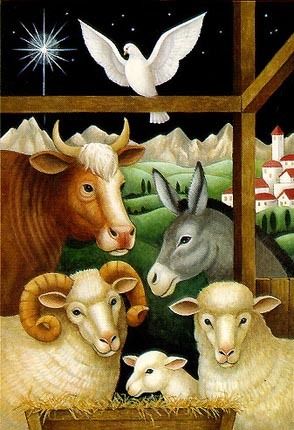
animals in the mangerYou may have noticed that Seth who oversees our parish maintenance has placed the animals in the stable scene outside in front of our church. I appreciated this as the day after he put the figures out I came across this quote from the author Evelyn Underhill,

“Human nature is like a stable inhabited by the ox of passion and the ass of prejudice; animals which take up a lot of room and which I suppose most of us feed on the quiet. And it is there between them, pushing them out, that Christ must be born and in their very manger he must be laid – and they will be the first to fall on their knees before him. Sometimes Christians seem far nearer to those animals than to Christ in his simple poverty, self-abandoned to God.”

The stable scene and the quote prompt a good examination in preparation for the coming Christmas celebration. What are the animals inhabiting the stable of my heart? Truth be told, any person who would say, “I have no animals. My stable is completely clean,” either does not know his or her own heart, is a fool or a liar or maybe a combination of all three. Honestly, what are the animals in the stable of our hearts?

We can even get quite creative in this examination. The ox of passion might be the passion of lust but it also might be the passion of anger, control or narcissism. The ass of prejudice might be prejudice against the one who is different, the stranger or the person I have already judged in my own heart. But there can be other animals. The strutting rooster of pride and arrogance, the fat, squawking hen of gossip, the goat of resentment, the pig of sloth, the farm rat of jealousy… What are the animals in our stables? A good way to prepare for Christmas is to honestly and creatively look within and not be afraid to acknowledge and name those animals that we find within our stables. A spiritual truth – when we can creatively and even mockingly name the animals that mill about in our heart’s stable, they actually begin to lose their power – for example, when we know our pride is at work we can chuckle to ourselves, “there goes that strutting rooster again!”

The quote from Underhill goes further though and brings out another deep dynamic in the Christian mystery when she writes that it is precisely within the stable, between all the animals that reside there, that Christ must be born. It is not we who first make our stables nice, neat and clean in order to then welcome the Christ child; it is the Christ child who first chooses to be born within the crowded mess of both our world’s and hearts’ stables and by his presence brings the light and healing that we yearn for. The Nativity stable continually instructs us to avoid the danger – even heresy (Pelagianism) – of believing that it is we who first cleanse our stables by our own efforts in order to then win and warrant the coming of our savior, the gift of grace. It does not work that way. God first arrives – even into the mess and pressing crowd of our little stables – and this is what brings life and the healing.

Both prophets in today’s readings proclaim this to us. The prophet Baruch proclaims the glory of Jerusalem but specifies that it is a glory that comes from God. “Jerusalem, take off your robe of mourning and misery; put on the splendor of glory from God forever: wrapped in the cloak of justice from God…” The prophet invites Israel to live and rejoice in this gift from God! Even John the Baptist – who is that voice crying out in the desert, who is that one who is sent to prepare the way of the Lord – proclaims that it is the “salvation of God” that all flesh will see. God arrives first. “And it is there between them, pushing them out, that Christ must be born and in their very manger he must be laid…”

Soon Mary and Joseph, the angels and the shepherds and eventually the three kings will also arrive at the stable but before all of that it is worthwhile to just sit and acknowledge the animals in our stables. It is worthwhile to honestly admit their presence and to know that Christ is not put off by them – that he will be born within their midst, that he will be laid in their manger and that the animals – by his presence, healing and grace – will then become the very first to kneel down in adoration.

The poor widow’s offering: Heart speaking to Heart

10 Saturday Nov 2018

Posted by mcummins2172 in homily, Uncategorized

≈ 1 Comment

Tags

Christian life, Christianity, discipleship, faith, Heart speaks to Heart, poor widow's mite

the-poor-widows-offeringAs some of you know I recently went to Yellowstone National Park and led a retreat there. Before and after the retreat I had free days so I took advantage of those days and went on some hikes. The first day going in I stopped at the ranger station just to check on things and make sure there were no concerns about the trails I was considering. The ranger suggested that I download the Yellowstone Park app as it would be a help to me. I took his advice and downloaded the app. It was a great help. What they have done at Yellowstone (and I am not sure if this is at other parks or not) is that they have mapped out every trail in the park on this app. Not only that, but when you go out on the trail you take your phone with you, switch it to airplane mode so that it is not continually searching for coverage and draining your battery and with GPS the phone shows you via a little dot on the screen exactly where you are at on the trail. One phone in the vast expanse of Yellowstone communicating with some satellite in the sky telling you exactly where you are at and which way to turn when the trail splits. I just find that level of technology, connection and focus amazing!
Our Lord, in today’s gospel, has a level of focus that is also amazing. He is watching a crowd giving their contribution to the temple treasury. To his disciples he singles out one poor widow in the midst of that whole crowd. She gave not out of her surplus but, even in her poverty, she gave out of her livelihood. Her act was an act of faith and of trust. In essence it was a movement of love from her heart to the heart of God and we have a God who notices such movements – even the smallest of movements. Bl. John Henry Newman said that true evangelization, true sharing of the good news occurs when “heart speaks to heart”. There was such a communication going on here In this moment, the heart of that woman – by trusting and giving out of her livelihood – was speaking, was calling out in love to the heart of God. And the heart of God, in Christ, saw her, and heard her and blessed her for it!

Our Lord had just condemned the scribes and their need to go around in long robes, who recite lengthy prayers and who accept seats of honor in banquets in order to be noticed, but, who themselves, never notice the widows. I am sure that there were scribes in this crowd along with all the people giving out of their surplus. Just another day at the temple treasury. The people in the crowd themselves probably never noticed the poor widow. Some of them may have even viewed her as a nuisance – a nobody getting in the way of their holy and respectable duty. But, Jesus does not notice any of them because even with their long robes, their lengthy prayers and their large sums of money their hearts were not open. There is no heart speaking to heart because on their side the heart is mute and has nothing to say, despite all the show. Jesus, takes no notice of them.

Jesus sees the widow; his heart hears her. In contrast to the scribes, our Lord invites us to learn and live the simple and honest faith of the poor widow. No crowds, no distance, no outward appearances or show distract the heart of God. The heart of God is focused on the human heart that calls out to him in honesty, in love and in faith. Heart speaks to heart – this is where God will meet us. God is found and God is encountered in the sincerity of belief, the sincerity of a heart that is open, honest and trusting. In this regard our Lord confirms that the poor widow was, in fact, the richest contributor within that crowd of people that day because her heart was open. “Amen, I say to you, the poor widow put in more than all the other contributors to the treasury. For they have all contributed from their surplus wealth, but she, from her poverty, has contributed all she had, her whole livelihood.”

“Heart speaks to heart,” true evangelization, true sharing of the good news occurs when one heart opens to another.

In this witness of the poor widow and our Lord’s noticing of her even as she seems hidden amidst the crowd of people, we also learn that God’s heart is open and searching – searching for the human heart that is open and calling upon him in humility, faith, trust and love.

“But from the beginning…” Christ remembers.

05 Friday Oct 2018

Posted by mcummins2172 in homily; mercy, Uncategorized

≈ Leave a comment

Tags

Christianity, divorce, faith, family, mercy

Christ iconA joke – an elderly couple were visiting the county fair. While wandering around they noticed that helicopter rides were being offered for fifty dollars. The wife turned to the husband and excitedly said, “Let’s go on a helicopter ride!” The old man just shook his head and replied, “Honey, that’s a lot of money. Fifty dollars is fifty dollars.” and they walked off. The next year the same couple was back at the fair and again helicopter rides were being offered for fifty dollars. The woman wanted to go for a ride but again her husband just shook his head and said, “Sorry, fifty dollars is fifty dollars.” The woman sighed and the old couple walked off. The next year, they were again back at the fair and again helicopter rides were being offered. Again the wife asked her husband to go up on a ride but again the man answered “Fifty dollars is fifty dollars.” This time though the pilot was nearby and overheard their conversation. He stopped the couple and said, “Listen, I will make you a deal. I will take you up and give you the best and most thrilling helicopter ride of your lives and if I hear not a single thing from you – no words, no laughing, no exclamations – your ride will be free!” The old man – always quick to get something for nothing – immediately said yes and up the three went in the helicopter! The pilot was true to his word – it was the best and most thrilling helicopter ride! The day was beautiful and you could see for miles! The pilot, to add a little excitement (and try to get some sound out of the two) even steeply banked the helicopter one way and then the other way throughout the ride. The pilot was amazed though because throughout the whole ride he heard not one sound from the elderly couple. Finally, after landing he turned around and realized that the old man was not in the helicopter. “Where is your husband?” he asked the woman. “Oh, he fell out about thirty minutes ago.” Shocked, the pilot asked, “Why didn’t you say something?!”. “Well,” she said, “fifty dollars is fifty dollars!”

Relationships are a mystery are they not? When we step back to think about it though, we quickly realize how so much of our lives – our time, our attention, our energy, our focus – is caught up in relationship! Whether it be the relationship of friendship, of family, of work, of church, of our relationship with God or (as today’s readings highlight) the very ancient and unique relationship of husband and wife. So much of all that we are about and are is caught up in this mystery of relationship. The readings for today cast some light on this deep, abiding and sometimes conflicted mystery.

The first truth shared is that we are made for relationship. God himself says, “It is not good for the man to be alone. I will make a suitable partner for him.” God – who himself is a trinity of relationships – has built within us the need for relationship. And it is a need critical for our own flourishing! We are in essence hardwired for relationship and we only become who we are meant to be through relationship. The vocation of marriage witnesses this in an utterly unique and potentially holy way. Husbands and wives are meant to help one another grow in holiness – which means comfort, support but also challenge when needed. The “two becoming one flesh” is a great mystery that God himself has written into creation that should not be passed over lightly.

The second truth is that this need and drive for relationship has – along with everything else – been wounded and warped by sin. This is a sad reality and how much pain it causes in our world and in every individual life. Angry words, sad, poor and hurtful choices, violence in all sorts of ways even over generations and whole nations wound and leave scars that last a lifetime or more. No form of relationship (including marriage) is immune from these dangers and this hurt.

I speak from my experience and what I witnessed in the lives of my parents. When I was in fourth grade my parents divorced. My father was an alcoholic who tried but was never able to overcome his disease. My senior year of high school he drank himself to death. My mother was faced with a very tough choice on how to raise her boys in the best possible way within a bad situation. They divorced. It hurts when the very real wounds of sin break a relationship. It is almost natural – a “sad natural” – that a hardness of heart sets in when there has been pain.

The third truth – and this is the saving message – is that there is one who has come and who remembers (because he was there) the truth of relationship before the hardness of heart. “Jesus told them, … ‘But from the beginning of creation, God made them male and female. For this reason, a man shall leave his father and mother and be joined to his wife, and the two shall become one flesh.’” This one who has come is neither afraid nor scandalized by suffering. The Letter to the Hebrews reminds us that, in fact, he has been made perfect through suffering. He is neither afraid nor scandalized by suffering and he is willing to walk each one of us back to the truth and the wholeness and the authenticity found in the beginning of God’s creation.

The fourth, and final truth for today – wherever you are in life allow Christ to walk you back to that wholeness and authenticity of relationship we were made for by God before the hardness of heart. If you are in marriage – allow Christ to continually walk you and your spouse back to that wholeness of relationship which existed prior to the hardness of heart. Every day! Every day, allow Christ to walk you back. Every day do the work that is needed! Do not take anything or anyone for granted. If you are in the brokenness of divorce realize, please realize that Christ is not put off, he is not scandalized. He is the one made perfect through suffering. He meets you there in the suffering – he heals what needs to be healed, he strengthens what needs to be strengthened. Allow him to walk you back to the wholeness and authenticity that God wants for you before the hardness of heart. Allow him to walk with you.

Christ remembers, he remembers before the hardness of heart.

Christ, help us to remember.

Christ, walk each one of us back to the life that was before the hardness of heart. Walk each one of us into the fullness of your Father’s Kingdom.

I am not the victim here. A reflection.

19 Sunday Aug 2018

Posted by mcummins2172 in priesthood, Uncategorized

≈ 6 Comments

Tags

Catholic Church, Christianity, Pennsylvania Clergy Abuse report, priesthood, Scandal

christ-on-the-cross-sketch-eug-ne-delacroixI have been ordained for twenty-three years now and my entire priesthood has been lived under the shadow of the clergy abuse scandal. It began when I was in seminary in Chicago. I remember spending the days in prayer, class and formation for priesthood and then watching the six o’clock evening news as the latest wave of the scandal broke. Talk about a disconnect! But seminaries (by their nature) exist in a bubble. After ordination there was the news from Boston and other parts of the country but that was “out there” – still somewhat removed. It all came crashing home when the bishop who ordained me was accused of abuse and admitted to this abuse. He spent the remainder of his days praying and working in the laundry room of a monastery. A priest from my diocese (former pastor to the parish to which I now serve) was arrested and is currently in prison for abusing a child. A priest classmate was removed from ministry for inappropriate contact with a minor. And now it is all stirred up again with the recent report from Pennsylvania. My whole priesthood and the priesthood of now at least a couple of generations of priests has been lived under the shadow of this scandal.
Yet, the people of God continue to amaze. Even through all of this they have remained committed to the Church and to their priests. Even now they are rallying in support of their priests and bishops and they recognize that not all should be tainted by the sinful actions of a few. This is heartwarming and appreciated but I do feel a need to say and clarify something.

I am not the victim here. No priest, no bishop is the victim here. I appreciate the kind words and thoughts and expressions of concern but we must commit ourselves to remembering and remaining focused on who the true victims are.

The victim is the man who has not been able to enter into authentic relationships throughout his life because he was wounded by a trusted priest as a young boy. The victim is the person who died of a drug overdose trying to numb the pain of sexual abuse. The victims are the parents who did their best to raise concerns but watched as abuser priests were moved from one assignment to another. These are the victims and we must not let our focus shift from them and we must stand with them.

I hate that we are back in this again. I hate that this ugliness steals so much attention and energy from the true work of the Church. I know that there will be consequences to this and that these consequences will be painful and that these consequences will affect and handicap the ministry of the Church. It all sickens me. Priests will be viewed with suspicion once again. There will be rude comments and jokes and possibly worse but we must be clear – no priest is the victim here and we should avoid the temptation to fall into that role.

The healing that is needed can only come if we remain focused on who the true victims are – those men and women who suffered at the hands of abusing priests and bishops within the Church who valued damage control over the pain of the people entrusted to their care. Any temptation to paint the priest, the bishop or the institutional Church as the victim in this must stop. It goes nowhere and it does nothing good. It is, in fact, a form of narcissism that only further victimizes the very men and women who have already endured so much pain.

When the news broke about the bishop that ordained me I was chaplain at one of the high schools in my diocese. I remember so much prayer and concern offered for the bishop (even over the school intercom) yet hardly anything being offered for the victim. Maybe it is human nature. The bishop was known and was loved by so many people and he did good things as our founding bishop and the victim … well, he was not known – just a name from a different state. But the victim was more than just a name. He was a person who had been hurt and who only wanted what we all want – an authentic and human life.

If there is one thing that these years of priesthood under the scandal of the clergy abuse crisis has taught me is that I am neither the victim in this situation nor the perpetrator of these heinous acts. There is a freedom found in this recognition. I am simply a priest ordained at this time and in this context of church and my duty is to strive to be the best priest that I can be.

Please, if you truly love your Church and want to support your priests, do not turn any of us into the victim in this moment of pain and do not allow us to make ourselves the victim. Shifting focus away from the true victims does no good. It is tempting but it is not right nor is it ultimately just. Sometimes the most caring thing to say to another disciple is that, yes, there are crosses to be carried in life. Is it fair? No, but this is the cross we are given at this time. Only when we let go of the temptation to view ourselves as victims or allow others to paint us at the victim can we as priests, bishops and Church honestly stand with the ones who are the real victims and together find the truth of God’s Kingdom in this whole sad, ugly and sinful affair.

I am not the victim here.

Christ, the living bread.

18 Saturday Aug 2018

Posted by mcummins2172 in homily, Uncategorized

≈ Leave a comment

Tags

Catholic Church, Christianity, Encounter with Christ, Eucharist, faith, sacraments, The living bread

face_of_jesus_610x300Mary Lou was a woman I came to know in a previous assignment. She has since passed away. May she rest in peace. Mary Lou was one of those people who had the gift and (I think) the discipline of hospitality. Whether she was receiving one guest for a simple visit or a party of fifteen for a dinner, she knew how to welcome people, put them at ease and (in a good sense, never overbearing) see that their needs were met. I think that she saw hospitality as a holy act – a way of discovering and acknowledging the good in the other person. When you left Mary Lou’s house you were nourished on a multitude of levels.

In today’s first reading we are told that Wisdom has built her house and set her table for the banquet. Wisdom invites us in that we might be nourished, that we might learn and that we might forsake foolishness and all that leads away from true life. The revelation of the Gospel is that not only has God set the banquet but that God himself, Christ our Lord, is the banquet! Jesus says, “I am the living bread that came down from heaven; whoever eats this bread will live forever; and the bread that I will give is my flesh for the life of the world.” When questioned on this our Lord does not back off but rather doubles down and says, “Amen, amen, I say to you, unless you eat the flesh of the Son of Man and drink his blood, you do not have life within you.” God has set his banquet where he, himself, is the food that nourishes and strengthens!

Like all of us I have been greatly saddened and appalled by the clergy abuse report that was released this past week in Pennsylvania. I will not go into the details here. It can be found throughout the news in all sorts of outlets. I will say that Bishop Stika has written a good pastoral letter for our diocese responding to the report and copies of this letter have been placed in the bulletin and I encourage all of us to take his words to heart. What I have found myself reflecting upon though is how this abuse and its coverup (whether it occurred within the past ten years or decades ago) occurred at the hands of men who were within (at least on the surface of things) the banquet itself. These were men who were celebrating the sacraments and leading church communities. This is partly why I think the horror and shock is so profound.

We know that the efficacy of the sacraments is not affected by the sanctity or lack of sanctity of the minister. St. Augustine helped the Church to figure this out. God’s grace provides despite the limits of sin. But neither is the grace offered through the sacraments magic! The banquet has been set, all are invited, Christ has made himself the bread of life but our hearts, our wills must be open and willing to receive and be transformed by what is offered! The guest of the banquet has a role to play. The guest of the banquet must be willing to receive and be transformed by the hospitality that is offered in the banquet. Woe to the guest (even the guest afforded a role in the banquet) who remains closed and unwilling to be transformed by the life that is offered in the banquet.

St. Paul writes, “Watch carefully how you live, not as foolish persons but as wise, making the most of the opportunity because the days are evil. Therefore, do not continue in ignorance, but try to understand what is the will of the Lord.” Every sacrament is an opportunity to encounter Christ – to be healed, to be converted, to be challenged, even to be reprimanded and called to repentance if needed. Every sacrament and every instance of prayer is an opportunity to grow in a deeper understanding of the will of the Lord. It is not enough to just go through the motions or to multiply more motions. This is not the wisdom of the banquet. The wisdom of the banquet is found in one name – “Jesus”. Every sacrament, every moment and every day of the disciple, must be a moment of encounter with Jesus where we realize the new life that is found in him alone and where we honestly recognize that the only thing we truly have to offer in return is our poverty, our weakness, our sinfulness and, ultimately, our trust and love.

If the clergy involved in these scandals had learned this the Church would be in a different place today. Sadly, they did not. Sadly, many people do not. Their sin does not have to be ours.

Jesus, you are the living bread!

Growing in Faith

12 Sunday Aug 2018

Posted by mcummins2172 in homily, Uncategorized

≈ 1 Comment

Tags

Catholic Church, Christianity, discipleship, faith

safe_image(This homily is geared toward our parish “Growing in Faith Day”.  It focuses on the gifts of community, faith and the Eucharist.)

I have recently had two events occur that have allowed a reset in my life. The first was a gift I received for volunteering at Bays Mountain Park. It is a large insulated cup that allows me to now drink water throughout the day rather than automatically turning to soda. The second was a simple suggestion I received from my doctor to try to avoid “white” foods (i.e. potatoes, white bread, white rice, pasta).

These two things may not sound like much but I have been trying to live by them for a couple of weeks now and I can tell that they are having an effect. My energy level is more consistent throughout the day where it was not before, I’m sleeping better and I even think that some weight is starting to come off. I can now pull my belt in another notch!

Sometimes we need resets in life and they do not even have to be big in order to create lasting and beneficial effects and often even a mundane change can have spiritual impact. Now that I am sleeping better and have more consistent energy throughout the day, I am finding that I am actually attentive and praying during my morning holy hour rather than snoozing! This basic and often overlooked connection of the physical and spiritual it witnessed to in today’s first reading when the angel gives the very practical instruction to the prophet Elijah to “get up and eat” in order to have strength for the journey!

Resets are needed in the journey of life – individually and also in the life of community. Today is a bit of a reset for St. Dominic Church. It is not that the parish is not being community nor that faith and worship is lacking but (as with all things in life) we can get running and busy and without even thinking about it not realize that we are not really acting to full healthy capacity and are rather running on fumes. Here is another health tidbit – the second most traded commodity in our world today is coffee and therefore caffeine. What does that say about our world and our lives? Before my reset I was drinking caffeine pretty much all day long but caffeine is a diuretic – it allows a form of energy but it dehydrates at the same time. Sometimes our souls and our faith life can get dehydrated even as we honestly strive to live the life of faith.

Today, the Day of the Bible scheduled for November 3rd and 4th (Fr. James McIlhone will be with us and will talk about the parables in Luke’s gospel) and the other “Growing in Faith Days” we have set for spring are days for our parish as a whole to hear the instruction of the angel to get up, to eat, and to drink in order to be strengthened for the journey. Today we are being nourished in three ways and by three gifts.

Our society is biased toward the individual but here is a truth that we need to be reminded of – the individual needs community. We are nourished by community in a multitude of ways and on a multitude of levels – many of which we are not always even aware of. Yes, community takes work and it requires commitment but the community of faith which is the Church gives back more than it ever requires. It has been noted that Christianity cannot be a spectator sport but neither is it a solo act. We live the journey together. A person cannot be Christian without Church. As we come together today as community in Christ we are nourished.

There is no graduating from learning about and growing in our faith. There is always more to learn, to comprehend and to understand. No caring parent would want a child to stop learning with the conclusion of high school yet so often we are content to think that faith formation ends with the eighteenth birthday! Ridiculous! We are meant to be transformed, “from glory to glory”. Today is an invitation to take another step in understanding our faith and being further transformed in our relationship with Christ, our Lord and Savior. In this we are fed and our deep thirst is met.

“I am the bread of life,” says our Lord, “I am the living bread that came down from heaven; whoever eats this bread will live forever; and the bread that I will give is my flesh for the life of the world.” The Eucharist is the Body and Blood of Christ and as we receive the Body and Blood of Christ we, ourselves, are transformed! In the gospel we are told that the people “murmured” about Jesus among themselves. On our own we cannot get there. All we can do is murmur. We need Christ – his grace and his body and blood given in the Eucharist – to make the journey and to ourselves be transformed. Only in the gift of Christ can we move from murmuring into proclaiming by our words and our very lives the Kingdom of God! Every time we gather for Mass the only bread “that comes down from heaven” is offered. May we never fail to receive and be nourished.

May God bless our St. Dominic community and may we listen to the instruction offered by the angel to get up, to eat, to drink and to be once again nourished for the journey!

The invitation to a mature faith

05 Sunday Aug 2018

Posted by mcummins2172 in homily, Uncategorized

≈ 1 Comment

Tags

Christianity, discipleship, faith, prosperity gospel, The gospel of prosperity

jesus-bread-of-life_960pOn this Sunday we are given an invitation. After the feeding of the multitude and our Lord withdrawing for some solitude we are told that the crowds in today’s gospel (Jn. 6:24-35) come in search of Jesus but their intent is not the most sincere and our Lord is aware of this. “Amen, amen, I say to you, you are looking for me not because you saw signs but because you ate the loaves and were filled.”

We can live a form of “faith” that holds as its main goal and purpose the desire to be filled. This approach to faith can take many forms. The most blatant is the prosperity gospel that reduces Christianity to a commercial exchange between the human and the divine and God to a beneficent loan agent. “If you have faith, if you live a good life, then God will reward you materially,” is the mantra of the prosperity gospel. Another mantra is that you can have your best life now. This take on faith is very popular for many people and one can see why – it promises a comfortable materialistic approach to the rewards of faith while ignoring the inconvenience of the cross. The problem is that it is not Christian.

There is a commonality that runs through all these forms of faith based in the desire to be filled. Despite often loud cries to the contrary which proclaim Jesus as Lord, these approaches actually have the person as the center of existence and Jesus as just the means to the end of my material well-being, my emotional well-being, my personal sanctity and my eternal glory. The focus is not so much on Jesus as it is on me.
The gospel invitation which we are given today is to move beyond a narrow faith which seeks to be filled in order to find true faith and true relationship with Christ. After chiding the crowds for the real reason why they sought him out Jesus goes on to say, “Do not work for food that perishes but for the food that endures for eternal life, which the Son of Man will give you.” When the crowds ask for this real food, this true bread, our Lord says, “I am the bread of life; whoever comes to me will never hunger, and whoever believes in me will never thirst.”

True faith is not found in using Jesus as a means to personal satisfaction but in seeking a living relationship with Christ and in committing one’s life to do the very real work of acknowledging him as Lord. Yes, there is an aspect of “work” to faith. Faith requires decision, commitment, toil, choices, and abandonment and sometimes even going against the stream, risking to be unpopular and even be persecuted for what one holds to be true. This is the work of faith – we see it in the lives of those first disciples and the same invitation is given to us today.

In contradiction to faith which seeks to be filled it is worthwhile to conclude with a prayer which expresses the work of true and mature faith. This is the Suscipe of St. Ignatius of Loyola. Notice that where the faith of the crowd can only ask what it can get from Christ; this faith asks for the grace to give more for Christ.

Take, Lord, and receive all my liberty,
my memory, my understanding,
and my entire will,
all I love and call my own.
You have given it all to me.
To you, Lord, I return it.
Everything is yours; do with it what you will.
Give me only your love and grace,
that is enough for me.

Paying attention to details

14 Saturday Jul 2018

Posted by mcummins2172 in homily, Uncategorized

≈ 1 Comment

Tags

"Rejoice and Be Glad", Christianity, discipleship, faith, Media, Pope Francis

The widow's miteFor a couple of weeks now I have been leading a weekly discussion group on Pope Francis’ recent Apostolic Exhortation “Rejoice and Be Glad”. In this exhortation, the Holy Father is encouraging every member of the Church to recognize and embrace his or her own unique call to holiness. The exhortation is a wonderful document and, I believe, it shows forth Pope Francis’ training as a retreat director steeped in the Ignatian practice of discernment.

I wish to share one insight worthy of reflection (there are many) that the pope shares in the course of this document. He writes,

“Let us not forget that Jesus asked his disciples to pay attention to details.
The little detail that wine was running out at a party.
The little detail that one sheep was missing.
The little detail of noticing the widow who offered her two small coins.
The little detail of having spare oil for the lamps, should the bridegroom delay.
The little detail of asking the disciples how many loaves of bread they had.
The little detail of having a fire burning and fish cooking as he waited for the disciples at daybreak.
A community that cherishes the little details of love, whose members care for one another and create an open and evangelizing environment, is a place where the risen Lord is present, sanctifying it in accordance with the Father’s plan.”

In today’s gospel (Mk. 6:7-13), our Lord sends his disciples out on mission and he gives them instructions on what to take and what not to take and he tells them how they are to act when they arrive at a certain place. With the insight of Pope Francis, I believe it is safe to say that our Lord also expected his disciples to pay attention to details as they went forth on their mission. They were to see the ones that society chose not to see – the poor, the sick, the elderly, the refugee and the migrant. They were to notice the small acts of faith and devotion offered by people every day that humanize life and make it beautiful. They were to be attentive to the small mustard seed moments of possibility to serve another person and to share the good news. “Let us not forget that Jesus asked his disciples to pay attention to details.”

We must also allow ourselves to be trained by our Lord in this attention to detail – both individually and as a community. It is part of what it means to be a disciple of Christ. The disciple of Christ is one who has learned to value the details in the lives of people and in daily moments. And this learning comes straight from the Master himself and is taught throughout the gospels.

The disciple of Christ cannot write any person or any group of people off in generalities because Christ never did. Christ truly encountered every person he came in contact with – whether that be Roman soldier, public sinner, religious authority, simple fisherman or tax collector. Jesus encountered them all.

The disciple of Christ must be attentive to the possibility of every moment because Jesus himself was. Whether tired, as our Lord was as he sat by the well when the Samaritan woman came to draw water or pressed on all sides as he journeyed to the house of Jairus when the woman reached out and touched his cloak – every moment carries with it the possibility of the Kingdom of God.

The disciple of Christ must be concerned not just with who is present in community but also with who is not present and therefore must be willing to “go out” of what is known and what is comfortable and seek out the one who is lost and who is hurting and welcome that one – whether the action is understood by others or not.

The disciple of Christ must be attentive to the things that bring healing and wholeness to hearts that are wounded and broken and must learn the discipline of putting aside those things that block the possibility of healing.

The disciple of Christ must learn to be attentive just as Christ was attentive.

Here is a quote by Fred Rogers (aka “Mr. Rogers”) who, himself was a minister and disciple of Christ, “I believe that appreciation is a holy thing – that when we look for what’s best in a person we happen to be with at the moment, we’re doing what God does all the time. So in loving and appreciating our neighbor we’re participating in something sacred.”

“Let us not forget that Jesus asked his disciples to pay attention to details.”

← Older posts
Newer posts →
Follow The Alternate Path on WordPress.com

Enter your email address to follow this blog and receive notifications of new posts by email.

Previous Posts

  • December 2025
  • November 2025
  • August 2025
  • April 2025
  • February 2025
  • January 2025
  • December 2024
  • August 2024
  • July 2024
  • June 2024
  • May 2024
  • April 2024
  • March 2024
  • February 2024
  • January 2024
  • December 2023
  • November 2023
  • October 2023
  • August 2023
  • July 2023
  • May 2023
  • February 2023
  • January 2023
  • December 2022
  • August 2022
  • July 2022
  • April 2022
  • January 2022
  • December 2021
  • September 2021
  • August 2021
  • July 2021
  • May 2021
  • April 2021
  • January 2021
  • December 2020
  • November 2020
  • October 2020
  • August 2020
  • July 2020
  • May 2020
  • April 2020
  • March 2020
  • February 2020
  • December 2019
  • October 2019
  • September 2019
  • August 2019
  • July 2019
  • May 2019
  • April 2019
  • March 2019
  • February 2019
  • December 2018
  • November 2018
  • October 2018
  • August 2018
  • July 2018
  • June 2018
  • April 2018
  • March 2018
  • February 2018
  • January 2018
  • December 2017
  • November 2017
  • September 2017
  • August 2017
  • July 2017
  • June 2017
  • May 2017
  • April 2017
  • March 2017
  • February 2017
  • January 2017
  • December 2016
  • November 2016
  • October 2016
  • September 2016
  • August 2016
  • July 2016
  • June 2016
  • May 2016
  • April 2016
  • March 2016
  • February 2016
  • January 2016
  • December 2015
  • November 2015
  • October 2015
  • September 2015
  • August 2015
  • June 2015
  • May 2015
  • April 2015
  • March 2015
  • February 2015
  • January 2015
  • December 2014
  • November 2014
  • October 2014
  • September 2014
  • August 2014
  • July 2014
  • June 2014
  • May 2014
  • April 2014
  • March 2014
  • February 2014
  • January 2014
  • December 2013
  • November 2013
  • October 2013
  • September 2013
  • August 2013
  • July 2013
  • June 2013
  • May 2013
  • April 2013
  • March 2013
  • February 2013
  • January 2013
  • December 2012
  • November 2012
  • October 2012
  • September 2012
  • August 2012
  • July 2012
  • June 2012
  • May 2012
  • April 2012
  • March 2012
  • February 2012
  • January 2012
  • December 2011
  • November 2011
  • October 2011
  • September 2011
  • August 2011
  • July 2011
  • June 2011
  • May 2011
  • April 2011
  • March 2011
  • February 2011
  • January 2011
  • December 2010
  • November 2010
  • October 2010
  • September 2010
  • August 2010
  • July 2010
  • September 2008
  • August 2008
  • April 2008
  • March 2008
  • February 2008
  • January 2008
  • December 2007
  • November 2007
  • October 2007
  • September 2007

Popular Posts

  • thealternatepath.org/wp-c…
  • thealternatepath.org/wp-c…
  • lh3.googleusercontent.com…
  • thealternatepath.org/wp-c…
  • thealternatepath.org/wp-c…
  • thealternatepath.org/wp-c…
  • thealternatepath.org/wp-c…
  • thealternatepath.org/wp-c…

Blog at WordPress.com.

  • Subscribe Subscribed
    • The Alternate Path
    • Join 156 other subscribers
    • Already have a WordPress.com account? Log in now.
    • The Alternate Path
    • Subscribe Subscribed
    • Sign up
    • Log in
    • Report this content
    • View site in Reader
    • Manage subscriptions
    • Collapse this bar
 

Loading Comments...