 In looking at my Facebook feed this weekend I have been reminded that we are in the midst of graduation season. Picture after picture of smiling graduates, at all levels, all across the country… We certainly celebrate with graduates and congratulate them on what they have achieved. But it is worthwhile to also note that behind every graduate stands dedicated teachers – men and women who often selflessly work for the good of their students.
I have recognized that one of the greatest gifts I have known in my life is that I have had exceptional teachers. I have been blessed with men and women who have challenged and inspired me from elementary school all the way through my study of theology. I owe to them so much – more than I can ever repay. They guided my learning and also taught me how to keep learning.
But here is the catch – a teacher (even the very best teacher) can only instruct if the student is willing to listen. The student has a role to play. The student must understand that he or she has a lack, that he or she does not have full knowledge, that he or she has something to learn and maybe even does not know what he or she does not know. A student has to be open and willing to receive. A student needs to be humble.
If today’s gospel (Jn. 14:15-16, 23b-25) sounds familiar it is because part of it was proclaimed last Sunday. Last Sunday I choose to focus on the Father and Son coming to dwell with the believer in friendship. This Sunday, being Pentecost, it is appropriate I believe to focus on these words offered by our Lord, “I have told you this while I am with you. The Advocate, the Holy Spirit that the Father will send in my name, he will teach you everything and remind you of all that I told you.”
One of the roles of the Holy Spirit is to teach but a teacher (even the very best) can only instruct if the student is willing to listen, if the student recognizes that he or she has a lack and if the student is humble and willing to receive. On Pentecost we proclaim and celebrate the coming of the Holy Spirit upon the disciples but the coming of the Spirit did not end there. If this celebration is to be authentic then we, on our part, must be willing to ask the question, “Am I willing to listen and then receive the gift of the Spirit and the Spirit’s instruction for me?” I have to be humble enough to acknowledge my need and my lack and then I have to be faith-filled enough to accept what the Holy Spirit has to give.
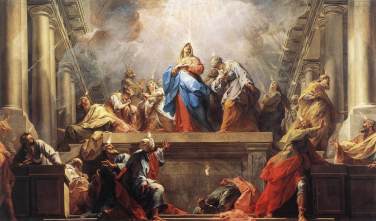
That day of Pentecost the gathering of disciples was so little, so small in such a big world. The Holy Spirit comes upon them like a strong driving wind and they begin to proclaim the good news! Acts lists a multitude of nations and peoples present and then we are told that each nation and grouping heard the disciples proclaiming in their own tongue. To this small, little gathering of disciples God gives nothing less than the whole world! We have a part to play on Pentecost. We have to be faith-filled enough to accept what the Holy Spirit has to give us!
Lord, may we not be so stingy and little of heart as to begrudge your call. Playing small is not part of Pentecost. It is a false humility.
Pentecost is considered the birthday of the Church and on this birthday we find two things – the outpouring of the Holy Spirit and the small gathering of disciples in prayer, listening and fully aware of their need. How do we learn how to listen? In any age the skill of listening is needed but I believe now, even more, this skill is needed in our lives and in our world. How do we learn how to listen?
Here is one simple thought. Scripture testifies that there is only one person who was present at the birth of Christ, who was present at the crucifixion and who was present at Pentecost. One person – Mary, the mother of our Lord. To learn how to listen and then have the faith to say “yes” go to Mary. Seek her out in Scripture, seek her out in prayer. Ask her to pray for you and to pray with you. She will teach if we are willing to listen.
A teacher can only instruct if the student is willing to listen. We have a part to play on Pentecost. We need to listen and we need to have the faith to say “yes” to the Holy Spirit.

 One take away that I have gained from Amoris Laetitia is to pay attention to the little things because they do matter. Like many people, I am seeking to follow the Holy Father’s recommendation and read the exhortation a little at a time in order to reflect as I go. I am doing my best to obey the pope in this regard and I have found that the document does lend itself to this style of reflective reading.
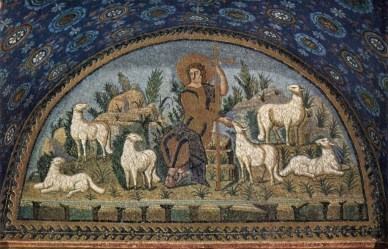 The context of today’s gospel (Jn. 10:27-30) is the feast of the Dedication in Jerusalem. Jesus is in the Temple when he is approached by some Jews who begin to question him, asking if he is the Christ. The feast of the Dedication marked an historical moment in the history of Israel when the Jewish people were able to overcome their Greek oppressors and re-dedicate the Temple by destroying and removing a pagan altar that had been placed there. The context is important because it demonstrates the importance of the Temple in the culture and psyche of the Jewish people. The Temple was the meeting place between God and his people. The Temple was the visible sign for the Jewish people of their belonging to God. This sense of “belonging” is of importance.
 It is interesting to note what strikes us and what we notice when we journey yet again through a liturgical season through which we have already traversed each year of our lives. My experience has taught me that each year is different and that there are new challenges and new insights gained. This liturgical season of Easter is no different.
 There are many images of ordained priesthood that operate in our Church today – the priest as sacramental minister, the priest as co-worker with the bishop, the priest as pastor, the priest as leader of the worshipping community. These are some of the more “official” images of priesthood but there are others, I have come to realize, that can often operate in the hearts and minds of both priests and laity alike. The priest as administrator and builder operating the parish with efficient ease! The priest as superhero stomping out evil with his superpowers. (I have seen many a vocation poster/image along this line and I have to admit I find it rather silly to say the least.) The priest as shaman battling dark forces behind the scenes by the use of ancient languages and rituals. The priest as philosopher or wisdom figure enlightening the masses with his erudite thought. Are there times when a priest does have to head a building project and administrate a parish? Yes, certainly. There are also times when a priest has to wade through the darkness of sin and evil in life and I hope that at least every now and then the priest does offer something worthwhile for people to consider. All this is to say that there are many images surrounding the priest – some official and some not-so-official yet held in different hearts.
 A friend of mine in the Community of Sant’Egidio has asked me to reflect upon this past Holy Week and Easter Sunday in the parish and how the community accompanied the parish in its celebration.
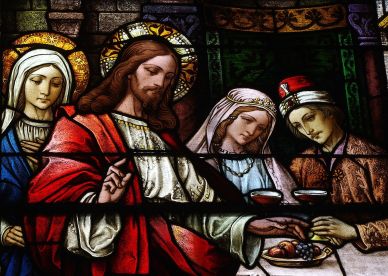 There is much worthy of reflecting upon in today’s gospel (Jn. 2:1-11) which gives the account of our Lord’s first public miracle – the turning of water into wine and the wedding in Cana. We can see in the image of the couple running out of wine on their wedding day a symbol of the ending of the Old Covenant and the freshness of the New Covenant beginning with our Lord turning water into wine. We can see in Mary’s noticing of the wine running short a concern for the young (and probably poor) couple who will soon be greatly embarrassed by not being able to provide for their guests. The first step of true mercy is noticing needs and not being indifferent toward others in their plight. This is a good witness Mary gives us during this Year of Mercy.
 The Alternate Path