• About The Alternate Path

The Alternate Path

~ Thoughts on Walking the Path of Christian Discipleship

The Alternate Path

Tag Archives: discipleship

Thoughts on the Sunday readings: Politicians, Jesus and Zen Foxes

12 Saturday Sep 2015

Posted by mcummins2172 in faith, homily, trust

≈ Leave a comment

Tags

Christian life, discipleship, faith, Jesus, trust

Jesus - way, truth, lifeSo … we are into the presidential primary election season. Already the news is happily swamped with politicians posturing themselves. We, for our part, keep watching and asking ourselves, “Who is the one that seems to have that presidential timber and swagger?” In light of the political climate we find ourselves in as well as this Sunday’s gospel reading, a question to be entertained is, “If Jesus were running for my party’s nomination, would I vote for him?”

Truth be told, I do not think Jesus would receive many votes in either political party but I also do not think Jesus would really care! Throughout the gospel our Lord does the one thing that a politician would never do because the politician knows it to be political suicide: Jesus never confuses the illusion of control with true leadership and true personhood. Therefore, he never needs to pretend control. Our Lord is free of this temptation.

In today’s gospel (Mk. 8:27-35) we are told that Jesus is walking with his disciples and he asks them, “Who do people say that I am?” This question, itself, sets Jesus apart from the career politician. The politician says, “Let me tell you who I am. These are my skills… This is what I have achieved…” Jesus doesn’t do that, rather he asks, “Who do people say I am … who do you say I am?” Jesus knows full well who he is and what his purpose is but he does not impose himself. Rather, he waits. He allows the Father to work in the hearts of his followers and he allows his disciples to come to him. He allows them to come to the realization of who he is. Jesus does not force his disciples’ recognition. He needs neither to control nor manipulate the situation.

Then and only then, he begins to teach them that the Son of Man must suffer, be rejected, be killed and then rise. Imagine this as a political platform! We cannot and this is why Peter’s reaction is so perfect because it is our honest, human, knee-jerk reaction! “No, Lord, this cannot be! You do not need to suffer! You do not need to be rejected! You can control the situation! You are the Christ!”

But leadership and control are not necessarily synonymous. Our Lord wants to show us a different way of both authentic leadership and personhood. “Get behind me, Satan. You are thinking not as God does, but as human beings do … whoever wishes to save his life will lose it, but whoever loses his life for my sake and that of the gospel will save it.”

Our Lord is showing us a way of living which can forego the illusion of control. Isn’t it interesting to note how so many times after our Lord performs a miracle he is quick to say to the person healed, “Your faith has made you well.”? He does not need to grasp that credit. In the fourth chapter of John’s gospel, our Lord says, “My food is to do the will of the one who sent me, and to complete his work.” (Jn. 4:34) Not my program, not my agenda, not my control but rather my Father’s will. Every moment of our Lord’s life was focused upon and directed in trust toward the Father’s will.

This letting go of the illusion of control is not a passive resignation akin to despair. It is far from that. Rather, it is the most active of stances in our world. It is learning to seek and make the choice for God’s will in all things and all situations. There is nothing passive about that. This is the one choice which can truly transform lives and the world itself!

One of my favorite social media sites is entitled ”Bored Panda Animals”. It is a site that hosts often stunning photography. Just this last week the site highlighted a photographer who captures images of foxes in the wild. These pictures are beautiful and they depict these animals completely relaxed, eyes closed, enjoying the breeze, Zen-like in their posture. The site also interviewed the photographer who shared how she is able to capture the photos of these wild animals so relaxed. “There’s a contradiction going on when it comes to capturing Zen foxes: the harder you try, the more you’ll move away from your goal. If you are too eager, an animal will sense that eagerness and will remain alert. I learned to do as foxes do, just being there and see what might happen.”

Let go of the illusion of control. It is not real. Learn to trust in the will of the Father.

Allow God to be God and trust.

“…whoever loses his life for my sake and that of the gospel will save it.”
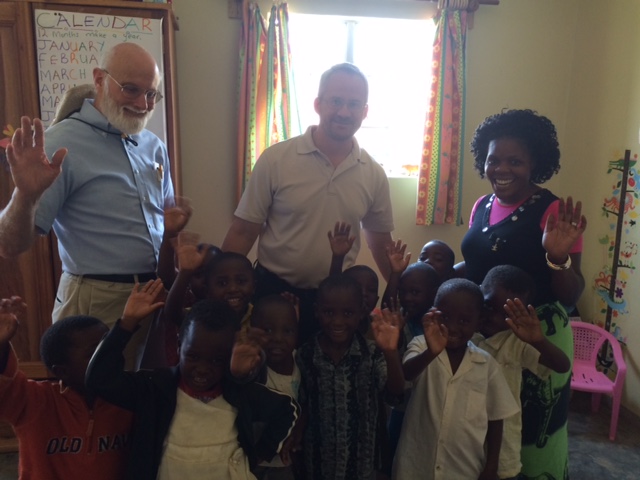
“Welcome!” A lesson learned in Malawi.

28 Friday Aug 2015

Posted by mcummins2172 in Christian living, Malawi, sister parish

≈ Leave a comment

Tags

Christian life, Christianity, discipleship, Malawi, welcome

welcome“Welcome visitor! Welcome visitor! Welcome visitor!” The voices of the three year old children rang out as I stepped into their little class room at the St. John Paul II Children Nutrition Center outside of Blantyre, Malawi. The Center provides a nutritious lunch for children ages three to fourteen every day of the year. On average, the Center feeds at least six hundred children per day. The Center is run by the Community of Sant’Egidio and there is no charge for the families whose children receive a daily meal. This is just one of the many good works that I have witnessed this week in Malawi.

I and Deacon Frank Fischer are visiting St. Vincent de Paul Church in Blantyre. For both of us this is our first visit to Malawi and to Africa. We are being hosted by Fr. Ernest and Fr. Frank – the parish priests of St. Vincent’s.

St. Dominic Church in Kingsport, TN and St. Vincent Church in Blantyre, Malawi are beginning a new sister parish relationship and I am confident that the friendship will be a blessing to both communities! Malawi is a very poor country and certainly the generosity of St. Dominic Church financially can help St. Vincent Church tremendously but a sister parish is much more than just another monthly collection. It is an opportunity to enter into friendship and to be reminded that we are, in fact, connected one to another. In front of the messages of our world that often seek to divide and isolate; our Christian faith reminds us that we are all part of the family of God. When my brother and sister in Malawi hurts then I hurt. When my brother and sister grows stronger then I grow stronger. This is the same also on the Malawian side of the equation – our health is their health. Friendship in Christ is a grace that exceeds all worldly limits and allows for unforeseen blessings!

I know that a blessing I have already received in these days is a deeper awareness of welcome. “Welcome,” I have learned is a favorite word of Malawians. If there is one word I have heard over and over these past few days it is “welcome”. I have heard it not just from those three year olds but from all ages and all people and I have heard it in a variety of contexts.

I have learned that “welcome” should be more than just a quick and perfunctory greeting and to limit it to such a thing is to stunt its potential and possibility. In Malawi, I get the sense that when “welcome” is said it comes from a deep place of the heart. “Welcome” should be an opening of the heart. “I welcome you into my life and my day. I welcome you as a potential friend. I welcome you as a gift that God has provided for me in his providence. Because you are a gift, I take the time and I give the attention that warrants such a great gift.” “Welcome” can be, in fact, a way of living and a way of encountering other people, encountering the world in which we live and even encountering God, himself.

In the Letter of James we find these words: Humbly welcome the word that has been planted in you and is able to save your souls. (James 1:21) Scripture reminds us that to live in welcome is indeed an attitude, a way of being, an approach to life and a spiritual discipline. When I live in welcome I choose to live in hope and in trust. I choose to believe that friendship can last a lifetime and that great and unforeseen blessings can come from friendship!

Our world is often rushed, exasperated, tired and cynical. We don’t have to live this way. We can learn the lessons of welcome and new life and new possibilities can be discovered!

As Deacon Frank and I have visited St. Vincent’s these few days we have been welcomed into the heart of this community. We have also, in the name of St. Dominic parish, offered welcome to our brothers and sisters in the parish of St. Vincent de Paul.

Welcome! We look forward to this friendship! We recognize one another as a gift given from the very providence of God!

The Eucharist, the “guest room” and twenty years of priesthood

07 Sunday Jun 2015

Posted by mcummins2172 in Body and Blood of Christ, Corpus Christi, Eucharist, homily

≈ Leave a comment

Tags

Body and Blood of Christ, Christ, Corpus Christi, discipleship, Eucharist

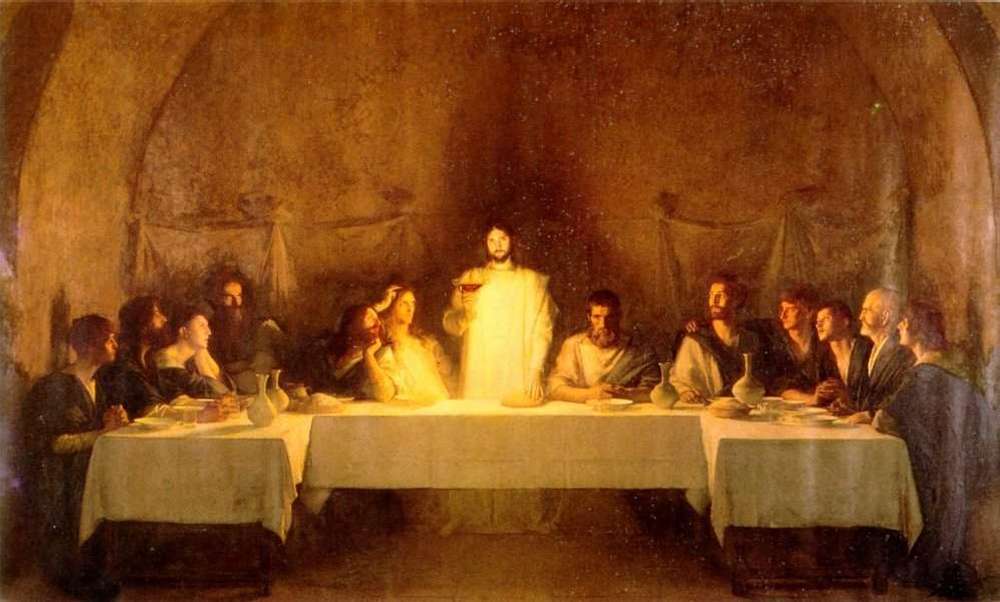
The_Last_SupperThe teacher says, “Where is my guest room where I may eat the Passover with my disciples?”

With this question in this kind of clandestine encounter in Mark’s gospel the stage is set for the Last Supper where the Lord enters into his sacrifice for us and where he gives us his very body and blood that we might have life.  It is worthy, I think, to reflect on this question of our Lord, “Where is my guest room?” because it is a question that our Lord continues to ask now throughout history and in each of our lives.  Where, amidst all the distractions of life, might I meet you?  Where might I encounter you?  Where might I be welcomed by you?  Where might I bring you life and share with you my very body and blood?

One way to begin to understand the great mystery we celebrate today as Church – the mystery of the Most Holy Body and Blood of Christ – is to reflect on the different contexts, the different “guest rooms” through which we ourselves have been privileged to encounter and experience that mystery.

On June 3rd I celebrated my twentieth anniversary of ordination.  As a priest – not by merit but by call – one is privileged to serve at the altar and in this “guest room” of our Lord.  Whenever we gather for Mass we are gathered at that Last Supper of our Lord with his disciples.  It is an amazing thing really yet so common that it can be taken for granted.  Praying over the gospel this past week has led me to reflect on all the “guest rooms” that I have been privileged to enter into these past twenty years where our Lord encounters his people in the gift of the Eucharist.

The chapels at the two seminaries I attended – daily encounters along with friends wrestling with the same questions of call and vocation.  The warehouse church of All Saints Church in Knoxville which had no air-conditioning; where you had to turn off the industrial fans in order to hear the readings and the homily.  The chapel at Knoxville Catholic High School celebrating Mass with classes and different sports teams before a game.  The old A-frame church of St. Mary’s in Athens which shook whenever a truck drove by and then the new church that we built with devotion and sacrifice.  The little chapel of the ETSU Catholic Center tucked away in a neighborhood by the university where we would celebrate Mass, move the chairs around and then sit down for dinner together.  The chapel at UTC where we did the same thing … college ministry revolves around food!  The auditorium at Notre Dame High School, up on a stage trying to help high school students encounter Christ as both Lord and friend.  Now here, in this beautiful church and community of St. Dominic’s – at the church and at the school.

But there have been other “guest rooms” I have been privileged to enter these twenty years – the chapel where Bl. Oscar Romero was shoot and killed, the Basilica of Santa Maria in Trastavere, Rome for the celebration of Pentecost when at the main altar my friend, Fr. Marco Gnavi, tapped me on the shoulder pointing upwards where I looked to see rose petals being dropped from the top of the church’s dome for the feast, the Shrine of Our Lady of Guadalupe, the chapel of an orphanage in El Salvador, an outdoor altar in Assisi, Italy where St. Francis often prayed, at a poor senior center on the outskirts of Rome, on the boat of some friends, at national youth gatherings of twenty-five thousand people and in innumerable small gatherings of two or three, in nursing homes in South Bend, IN and New York City.  In my mother’s room at the Assisted Care facility where she lived her last years with just she and I sitting at a table.

It is worthwhile to reflect on the “guest rooms” we have been privileged to enter in our own individual journeys of discipleship.  On this feast when we reflect on this great mystery of the Eucharist, I encourage us to take the time to do this.  We each have them – our home churches, places of retreat, churches we have stumbled upon while on a trip or vacation, churches we have entered for funerals, baptisms or weddings.  For each of these places and each of these moments sharing in the Body and Blood of our Lord we should give thanks because they are indeed holy places and moments filled with beauty and life – places and moments where we have encountered the Lord and where he has fed, nourished and strengthened us with his Body and Blood and with his Word.  The very contexts of encounter, the “guest rooms” where we have met and received our Lord in the Eucharist themselves lead us into a greater understanding of this most sacred and holy of mysteries.

I think it safe to say that the true “guest room” our Lord most earnestly seeks to be welcomed into and dwell within is each person’s heart.  God wants nothing other than what is best for us.  God wants relationship with us and to give us his very life!  If priests are able to help facilitate this encounter, even in the smallest way, then we are indeed among the most blessed of people – given a richness that the world can never afford.

I give thanks to God for these twenty years and for the “guest rooms” that the Lord has allowed me to enter to encounter Him and to serve his people.

Thoughts on the Sunday readings: the concreteness of the Ascension

17 Sunday May 2015

Posted by mcummins2172 in faith, homily, hope, service

≈ Leave a comment

Tags

Ascension, discipleship, homily, hope, life in Christ

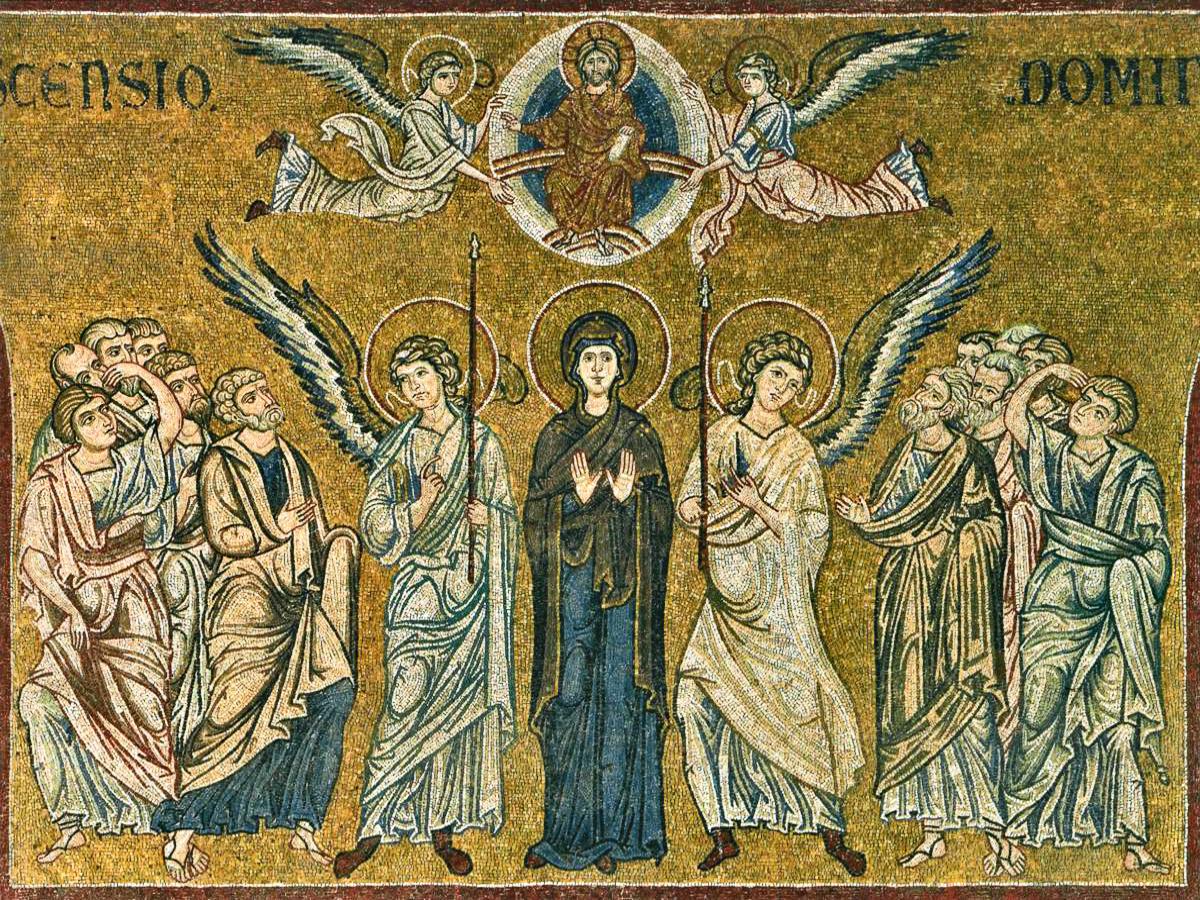
Ascension3Today’s gospel (Mk. 16:15-20) has the risen Lord sending his disciples into the whole world in order to proclaim the gospel to every creature.  This very same mission continues today.  Christianity cannot stay within, locked behind closed doors!  But, before we run out to the world, we need to know for whom we are running and whose message it is exactly that we are proclaiming.  I once heard a seasoned Catholic blogger give some sound advice to some young seminarians eager to evangelize the internet for Christ.  She cautioned that before you start saying things about faith and Christ make sure you actually have something to say.  The only way to speak authentically about Christ is to encounter Christ.  Another way of getting at this is by asking the question actually whose disciples are we?

We are not disciples for ourselves even if we might claim the name Christian.  Taking only the teachings of our Lord that we like and find agreeable and then trying to manage and live our lives on our own – agreeing with Jesus but not really feeling a need for him, too closely, in our lives.

We are disciples because God has first loved us – he has called us and saved us in love.  He sends us into the world in order to proclaim the good news in love and peace.  In many ways the gospel is a weak strength – the gospel needs us to proclaim it, if not love begins to disappear and peace begins to lose to violence and hatred.  But for any of this to happen we must live continually in relationship with Christ, remembering that we are his disciples and not disciples for ourselves.

Despite the seemingly, other-worldly nature of today’s feast (What does it mean that Jesus ascends to the Father?), the Feast of the Ascension is a very concrete reality.   It is so because of the simple fact that the hope we celebrate today is not founded in some abstract or utopian principle or ideal of a better tomorrow but in the very resurrected body of Christ.  Christ is indeed risen which means he is risen body and soul, flesh and blood.  Anything less would not be fully and authentically human.  Christ ascends to the Father not just in spirit or thought but in the very concrete reality of his full humanity.  Throughout this Easter season we have heard Christ, time and time again, assuring his disciples that he is indeed present in “flesh and bone”.  This means fully present not just up to the moment of the ascension but in the ascension itself and now at the Father’s right hand.  From the day of the ascension heaven “began to populate itself with the earth, or, in the language of Revelation, a new heaven and earth began.”

In the ascension we truly realize that we are not orphans.  We are not left to the cold and cruel winds of chance, fate and odds or a history without direction.  Direction has been set.  The resurrected Christ now sits at the Father’s right hand!  This, and nothing less, is our goal.  It is what we are meant for and what we are called to by God’s grace.

It is truly concrete and it is achieved and experienced concretely.

In the gospel Jesus tells us that he is “the way” and the way, it turns out, is walked concretely.  The ascension is experienced again not in some abstract manner but in how we concretely treat and love the smallest and poorest brothers and sisters in our midst. When we love concretely we experience the ascension and we are brought toward the fullness of the future that God has prepared for us in Christ.

Let me share an example.  When I was chaplain at the Catholic Center at ETSU our Sant’Egidio group decided to take sandwich bags once a week to the John Sevier Center.  (The John Sevier Center is a low-income housing unit in downtown Johnson City.)  We did not go there as experts in anything.  We knew we could not solve the residents’ problems and struggles.  We just went and we were faithful in going and in this simple act of being present a human space was created both for the residents and for us.  We became friends.  By this we were brought a little bit further toward the fullness that awaits us all.  In this human space miracles happen and signs are given – demons of isolation, fear, hatred and resignation are cast out and life is gained.  I have seen it for myself time and time again.  Now, our Sant’Egidio group here at St. Dominic’s has begun visiting Holston Manor nursing home and it is beginning to happen again – a human space is being created.

Christ bestows his love upon us.  We are disciples for him and we are meant to communicate his love.  Love that is not communicated soon withers and dies.

Love is lived not abstractly but concretely and it is in the concrete act that we are brought toward the fullness that awaits us all.

Thoughts on the Sunday readings: “Remain” (5th Sunday of Easter – B)

02 Saturday May 2015

Posted by mcummins2172 in discipleship, homily, life in Christ, vine and branches

≈ Leave a comment

Tags

Christ, discipleship, homily, I am the vine you are the branches, martyrs

Vine1Like me, this past week, you may have been saddened by the rioting occurring in Baltimore.  Now that it has been determined that there is need for a criminal investigation we pray for justice and peace in that city.  In the midst of the rioting though, I was personally moved by the report of the gathering of clergy of many different denominations also marching through the streets calling for peace.  These clergy have chosen to remain.  You may also remember not long ago reports of Orthodox priests literally placing themselves between the warring factions in the Ukraine also praying for peace.  These priests chose to remain.  Recently, there were doctors and nurses who chose not to leave the different regions of Africa that were struck by Ebola rather they stayed to help the ill.  They chose to remain.  Every day, unnoticed and unreported, men and women help the elderly, the homeless, the addicted, the imprisoned and the ill.  These men and women choose to remain.

In today’s gospel (Jn. 15:1-8) our Lord specifically uses this word “remain” over and over again.  Remain in me, as I remain in you. Just as a branch cannot bear fruit on its own unless it remains on the vine, so neither can you unless you remain in me … Whoever remains in me and I in him will bear much fruit … If you remain in me and my words remain in you, ask for whatever you want and it will be done for you.

True strength is found not in violence, or insults, or in making a scene or calling attention to oneself but rather in the choice to remain.  The choice to persevere.  The choice to trust.  The choice not to live a distracted and self-focused life.  The choice to trust in the good of the other person.  The choice to bear patiently the injustices of our world and even wrongs endured.

No Christian is nor can ever be an isolated island.  The Christian life, by its very nature, must be rooted in the very life of Christ.  For us, Christ is not just a nice idea or ideal or great teacher; for the disciple Christ is Lord and our very lives must be rooted in his.  We must remain in Christ.  The Christian can be thrown into different raging fires of our world and not be burned, not wither precisely because the Christian is rooted in Christ who has overcome the world.  This has been seen throughout history and it continues to be seen in our world today.

A prized part of this “remaining” in Christ is found in the power of his words.  Our Lord says specifically to his disciples, You are already pruned because of the word that I spoke to you.  Later he says, If you remain in me and my words remain in you, ask for whatever you want and it will be done for you.  God’s word prunes but it prunes for life – it cuts off that which corrupts and that which stunts life.  When we begin to live God’s word then we remain in Christ.  St. John knew this and it is what he shares in his letter (1 Jn. 3:18-24), Those who keep his commandments remain in him, and he in them… 

Every day we need to pick up and read God’s word!  Every day we need to let these words sink into our hearts and every day we need to strive to live these words!

Christ never says that his disciples will not experience the fires and troubles of this world.  What he does say is that the one who remains in him will not wither, will not burn even in the midst of the fires of our world precisely because he or she is rooted in the very one who has overcome this world!  The Coptic Christians martyred by ISIS died saying the name of Jesus.  They did not wither in this fire of brutality, they remained in Christ, they endured and witnessed the hope we have in Christ and from their witness new life will emerge.  This has been seen throughout history and we see it in our world today.  We are today, and have always been, a church of martyrs.

Christ is Lord!  We remain in him.

Thoughts on the Sunday readings: “Something happened” (Third Sunday of Easter – B)

19 Sunday Apr 2015

Posted by mcummins2172 in discipleship, Easter, life in Christ, resurrection

≈ Leave a comment

Tags

Christ is risen, discipleship, faith, freedom, resurrection

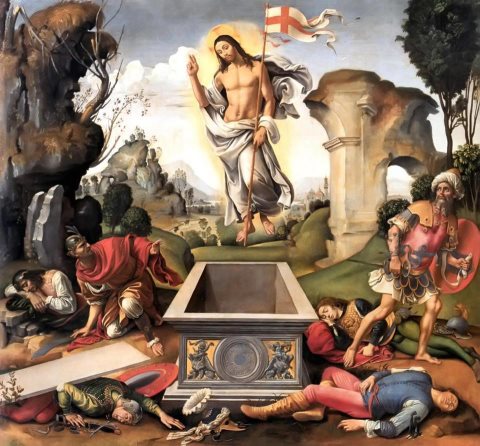
resurrectionWhen I was a college student at East Tennessee State University and just starting to come back to Church, I took a college class on the history of Christianity.  When we arrived at the subject of the resurrection I remember our professor stating (much to the chagrin of some of the students) that the secular academic discipline of history could not make a conclusive statement either for or against the resurrection.  But what the discipline of history could say is that “something happened” that enabled those first disciples to move from remaining behind locked doors in fear as we find in today’s gospel (Lk. 24:35-48); “But they were startled and terrified and thought that they were seeing a ghost.” to boldly proclaiming Christ as Messiah in the public square as we find Peter doing in today’s first reading (Acts 3:13-15, 17-19); “You denied the Holy and Righteous One and asked that a murderer be released to you … Repent, therefore, and be converted…” 

That class (and I would say specifically that statement “something happened”) was one of the key components that led to my returning to the Church and the active practice of the faith.  What was it that enabled Peter (the one who had denied knowing Jesus) and those first disciples (the ones who had run away) the ability to move from fear to being bold and public proclaimers of Christ and the resurrection?  Was it a hoax they cooked up in their minds to steal the body away and see how long they could ride the “Jesus as Messiah” train?  Hoaxes do not last so long (two thousand plus years) nor show such continued vitality and chronic vigor.  Was it that the “spirit” of Jesus had risen – his vision of the world and living together in harmony – while his body remained dead in the tomb?  But who willingly chooses martyrdom for an idea or the “spirit” of someone’s thought (as we see throughout history beginning with those first fearful disciples)?

In today’s gospel we are given some specifics about the resurrection that are worthy of note.  Jesus again appears to his disciples.  Again he greets them with, “Peace be with you.”  Knowing their fear and their uncertainty he then goes on to say,

“Why are you troubled?  And why do questions arise in your hearts?  Look at my hands and my feet, that it is I myself.  Touch me and see, because a ghost does not have flesh and bones that you can see I have.”  And as he said this, he showed them his hands and his feet.  While they were still incredulous for joy and were amazed, he asked them, “Have you anything here to eat?”  They gave him a piece of baked fish; he took it and ate it in front of them.” 

Neither hoaxes nor ideas ask for a piece of fish to eat.

There are many ways to run from the scandal of the resurrection.  All sorts of people throughout history have proven to be quite adept at it.  One such way (often touted as being an “enlightened” approach) is to see the resurrection as a nice idea – Jesus’ spirit continuing to live on.  But today’s gospel is quite clear.  Jesus is not a ghost, not a vague idea.  Jesus is risen – body and soul!  He is the firstborn from the dead.  Jesus is risen and he has not risen in vain.

If we are to be Christian then we must be willing to encounter the fullness of the resurrection.  We must be willing to encounter that “something that happened” as my professor said so many years ago and in that encounter we must be willing to make a fundamental faith statement, “I believe”.   Only this will move us from fear to peace.

There is a saying that contends that you must have “skin in the game” in order to be truly committed to something.  When the Word became incarnate, when Christ suffered his passion and crucifixion, when the resurrected Christ shows his wounds which he still bears in glory, then God shows that he has “skin in the game” for our salvation.  If we want to know the peace and life of the gospel then we also must be willing to have “skin in the game”.  By our lives, our words, our choices and our actions we must profess, “I believe”.  Nothing less will do.

This encounter and the peace and courage it alone brings, continues today.  We can look at the successors to Peter himself as witnesses of this to our world.  These men do not have any military or economic might yet they continually stand before the powers of our world with nothing other than the word of the gospel.  Think of St. John Paul II confronting communism.  I remember when Pope Emeritus Benedict travelled to Mexico and Cuba during his pontificate.  In the face of the chaotic violence of the drug trade engulfing Mexico the eighty-five year old pontiff proclaimed firmly and resolutely that drug trafficking is a sin and it is wrong.  Then going on to Cuba at a Mass where the very Cuban government sat in the front rows, again this elderly soft-spoken man called for greater freedom.  Think of Pope Francis calling the Mafia out and all worldly powers that would de-humanize the person made in God’s image.  What enables these men to do this?  These men have encountered Christ risen and alive – not an idea of Christ, not just the spirit of Christ – but Jesus Christ himself and, from that encounter, each one has made his faith statement and has moved from fear to a bold peace.

This peace is there for us also if we also are willing to encounter Christ risen and if we are willing to profess him as Lord!

Being Radical: Choosing to Live within the Context of Creation

04 Tuesday Mar 2014

Posted by mcummins2172 in creation, Gnosticism, humility, incarnation

≈ 1 Comment

Tags

Christianity, creation, discipleship, gender identity, sacraments, Sacred Scripture

026 (3).JPGIt is said that old heresies never die; they just keep coming back in different forms.  There is truth to this and I find it revealed in the pervasive spirit of Gnosticism present in our culture and time – specifically, Gnosticism’s denial of nature and creation.  Historically, Gnosticism was a blending of aspects of Christianity, philosophy, and Eastern mystery religions that challenged the orthodox faith in its first centuries.  Gnosticism highlighted secret knowledge as key to salvation as well as denigrating what it saw as the shackle or prison of creation and the physical body.  The early Church had to answer the distortions of Gnosticism and it did so by maintaining the continuity of the same God revealed in the Old and New Testaments and holding to the profound truth of the incarnation.
Now, jump ahead to America in 2014.  It seems a contradiction and an irony that in a time that prides itself on being increasingly “ecologically conscious” we find the re-emergence of the gnostic temptation of denigrating and fleeing creation but this, I would propose, is exactly what is happening.  We find this temptation to flee the “confines” of creation all around us; i.e. trends in body modification from covering the body in tattoos to the extremes of plastic surgery and body building (as noted by Jared Zimmerer in his post “Desire and the Human Form”for Word on Fire), the now felt need for a plethora of distinctions in gender identification (apparently the biological stamp of “male” and “female” no longer suffices and gender can be determined distinct from biology and creation), the temptation to play God and use advances in technology and scientific understanding to craft babies to our liking, the stubborn refusal to admit that climate is changing and that humanity has a role to play in this (here I would refer readers to the encyclical “Caritatis in Veritate” by Pope Benedict as well as his Message for the Celebration of the World Day of Peace – January 1,2010).  What is common in all of these (and many more) seeming disparate social trends?  I would argue that one element held in common is the gnostic trend to seek to flee the confines of creation.
In this context what then is the Christian to do?  Be radical; make the choice to live within the reality of nature.  Here is a point to reflect upon: for those who participate and pray the Liturgy of the Hours, look through your Breviary and notice how many of the opening songs of morning and evening prayer refer to creation and grace … and the two are not opposed!  This is the genius of Christianity on display and the prayer of the Church is teaching us an essential truth!  Grace does not abolish creation nor does it overcome it; grace sustains creation, peacefully enters within creation, heals creation and works with creation.  Creation is not to be fled from but rather embraced because within the very “confines” of creation, God’s grace is at work and to be found!  Any attempt to flee creation is based on error and confusion.
Here are some thoughts (not a definitive and exhaustive list) on what it means to be radical and actually seek to live within the reality of creation.
Accept yourself for who you are and others for who they are.  Throughout Scripture we are reminded again and again that God is the creator and that God loves his creation.  That includes you, me and every other person.  Yes, there is the reality of sin and our need for a savior but the savior has come and his healing grace is offered.  Allow God’s gentle grace to work in your life.  Part of living with this gentle grace, I believe, is to not give in to the common temptation to affix a label to oneself or others.  The human person is an ever-dynamic mystery; labels cut off mystery.  Be willing to live in this mystery and trust that God is at work.
Celebrate the sacraments.  Sacraments reveal in an utterly unique way the reality of grace working through creation and not opposed to creation.  Learn the wisdom of the sacraments not in an attempt to “figure it out” but rather to live in the mystery and through them to be brought to deeper understanding.
Develop a mature understanding of Scripture, especially the Gospels.  Gone are the days when Christians could get by on leaving the Scriptures to the “professionals”.  A part of every day should be spent with the Scriptures, particularly the Gospels.  Notice how creation plays a major part throughout the Gospel story, i.e. Jesus walking on water, the star of Bethlehem, Jesus teaching on the lilies of the field, Jesus and the disciples walking on the road, the bread and wine used for the last supper – the list could go on and on.
Fast.  Hunger has a way of clarifying priorities and through fasting we are quickly reminded that we are embodied beings.
Develop healthy friendships.  True and healthy friendships, though often rare, are a gift from God.  Friendship helps to anchor us in ourselves and in our world.
Turn off the TV and social media.  Entertainment and social media certainly have their place and can be beneficial tools in helping to enlighten and educate the human spirit but my experience has shown when not used in a measured and balanced way they quickly lead to isolation, superficial relationships and a chronic cynicism and jeering attitude which stunt maturity and are besetting sins of our time.
Enjoy nature.  Creation gives glory to the Creator.  Creation also teaches, gives insight and enables us to gain perspective.
Practice humility and through this practice realize that we are part of something much bigger than ourselves.
Not long ago I was out for a walk in the mountains, coming over a rise I was met by a herd of at least eight deer peacefully and calmly grazing in a field and drinking water from a stream.  They noticed me but rather than seeming startled and bounding away they calmly moved off into the woods.  It was a beautiful sight and a gift.  Like the deer that yearns for running streams so my soul thirsts for you my God.
Creation is not to be fled from.  Be radical!  Choose to live within the context of creation!
Newer posts →
Follow The Alternate Path on WordPress.com

Enter your email address to follow this blog and receive notifications of new posts by email.

Previous Posts

  • December 2025
  • November 2025
  • August 2025
  • April 2025
  • February 2025
  • January 2025
  • December 2024
  • August 2024
  • July 2024
  • June 2024
  • May 2024
  • April 2024
  • March 2024
  • February 2024
  • January 2024
  • December 2023
  • November 2023
  • October 2023
  • August 2023
  • July 2023
  • May 2023
  • February 2023
  • January 2023
  • December 2022
  • August 2022
  • July 2022
  • April 2022
  • January 2022
  • December 2021
  • September 2021
  • August 2021
  • July 2021
  • May 2021
  • April 2021
  • January 2021
  • December 2020
  • November 2020
  • October 2020
  • August 2020
  • July 2020
  • May 2020
  • April 2020
  • March 2020
  • February 2020
  • December 2019
  • October 2019
  • September 2019
  • August 2019
  • July 2019
  • May 2019
  • April 2019
  • March 2019
  • February 2019
  • December 2018
  • November 2018
  • October 2018
  • August 2018
  • July 2018
  • June 2018
  • April 2018
  • March 2018
  • February 2018
  • January 2018
  • December 2017
  • November 2017
  • September 2017
  • August 2017
  • July 2017
  • June 2017
  • May 2017
  • April 2017
  • March 2017
  • February 2017
  • January 2017
  • December 2016
  • November 2016
  • October 2016
  • September 2016
  • August 2016
  • July 2016
  • June 2016
  • May 2016
  • April 2016
  • March 2016
  • February 2016
  • January 2016
  • December 2015
  • November 2015
  • October 2015
  • September 2015
  • August 2015
  • June 2015
  • May 2015
  • April 2015
  • March 2015
  • February 2015
  • January 2015
  • December 2014
  • November 2014
  • October 2014
  • September 2014
  • August 2014
  • July 2014
  • June 2014
  • May 2014
  • April 2014
  • March 2014
  • February 2014
  • January 2014
  • December 2013
  • November 2013
  • October 2013
  • September 2013
  • August 2013
  • July 2013
  • June 2013
  • May 2013
  • April 2013
  • March 2013
  • February 2013
  • January 2013
  • December 2012
  • November 2012
  • October 2012
  • September 2012
  • August 2012
  • July 2012
  • June 2012
  • May 2012
  • April 2012
  • March 2012
  • February 2012
  • January 2012
  • December 2011
  • November 2011
  • October 2011
  • September 2011
  • August 2011
  • July 2011
  • June 2011
  • May 2011
  • April 2011
  • March 2011
  • February 2011
  • January 2011
  • December 2010
  • November 2010
  • October 2010
  • September 2010
  • August 2010
  • July 2010
  • September 2008
  • August 2008
  • April 2008
  • March 2008
  • February 2008
  • January 2008
  • December 2007
  • November 2007
  • October 2007
  • September 2007

Popular Posts

  • thealternatepath.org/wp-c…

Blog at WordPress.com.

  • Subscribe Subscribed
    • The Alternate Path
    • Join 156 other subscribers
    • Already have a WordPress.com account? Log in now.
    • The Alternate Path
    • Subscribe Subscribed
    • Sign up
    • Log in
    • Report this content
    • View site in Reader
    • Manage subscriptions
    • Collapse this bar
 

Loading Comments...