• About The Alternate Path

The Alternate Path

~ Thoughts on Walking the Path of Christian Discipleship

The Alternate Path

Tag Archives: faith

How to handle Calumny

11 Monday Mar 2024

Posted by mcummins2172 in Uncategorized

≈ 2 Comments

Tags

Bible, Calumny, catholic, Christian life, Christianity, Eighth Commandment, faith, Jesus, prayer
This image may be subject to copyright.

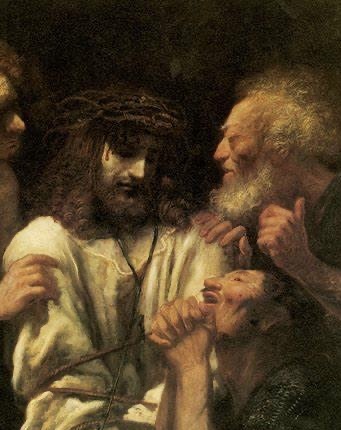
In his recent homily (found on Word on Fire) for the third Sunday of Lent, Bishop Robert Barron offers succinct reflections on each of the Ten Commandments.  He rightly (I believe) connects the breaking of the Eighth Commandment, “You shall not bear false witness against your neighbor” with the sin of calumny.  Calumny, the willful spreading of false statements about another person in order to damage their reputation, is rife within our society and given safe haven, it seems, especially on social media.  Bishop Barron, both in his insight as a theologian and pioneer in ministry via social media, is in a unique vantage point to note this besetting sin of our age and to call it out.  Which he does. 

The point of reflection for this post is how are we to handle calumny when it comes our way?  Which, more than likely, it will at some point or even points within our lives.  I offer four thoughts for consideration. 

First, be grateful.  Yes, it’s a paradox but we have a God who delights in paradox and frankly, life if full of paradoxes.  The silver lining in the dark cloud of calumny is that you quickly learn who your true friends are.  “A faithful friend is a sturdy shelter: he that has found one has found a treasure” (Sirach 6:14).  Isn’t it best to know where the sturdy shelter is during a time of turmoil than be left out in the cold by false friends who turn away from you just because of something they have heard or something that they suppose to be true about you which is not?  Calumny can actually clear the weeds of false friendship out of one’s life which makes the true, faithful friend all the more apparent and valued.  Being receptive to the lies of calumny also demonstrates a profound lack of intelligence.  Judging another person because of what others say before even knowing the person oneself or even choosing to believe lies about another person rather than one’s own experience of the person is intellectual sloth, plain and simple.  Who wants a stupid friend?  There is a silver lining. 

Second, be civil.  If calumny is a besetting sin of our time, if there are victims of calumny then that means there are perpetrators of calumny.  I call them “wormtongues” after the pathetic character in J.R.R. Tolkien’s “Lord of the Rings”.  (Grima Wormtongue is the court official who whispered lies into the ears of King Theoden in order to steal away life and keep the king paralyzed in doubt.)  Wormtongues lack true moral authority and courage (think of internet trolls) and they think that the way to build themselves up is to tear other persons down.  Don’t sink to the level or actions of wormtongues.  Don’t be naïve to them or their machinations, know them for who they are, but be civil in the face of their incivility.  Choosing to respond civilly even in the face of hostility and lies is an act of moral courage and strength.  Be civil. 

Be faithful.  Here we encounter a deep mystery of our faith.  Not only do we have a God who is Truth and who calls us to live in truth in our relationships and to not bear false witness but we have a God who also fully endured the scourge of calumny himself.  Jesus, throughout his ministry, had to endure the whispers of lies and doubts about who he was and his true motives.  “He casts out demons by the ruler of the demons.” (Mt. 9:34) This whispering became a consistent and hellish roar directed straight at our Lord throughout his passion from the agony in the garden and the running away of the disciples to the mocking of the soldiers during the scourging to the crowd calling for his death to insults even as he hung on the cross, “Come down from the cross, if you are the Son of God!” (Mt. 27:40).  Jesus knows full well the pain of calumny. 

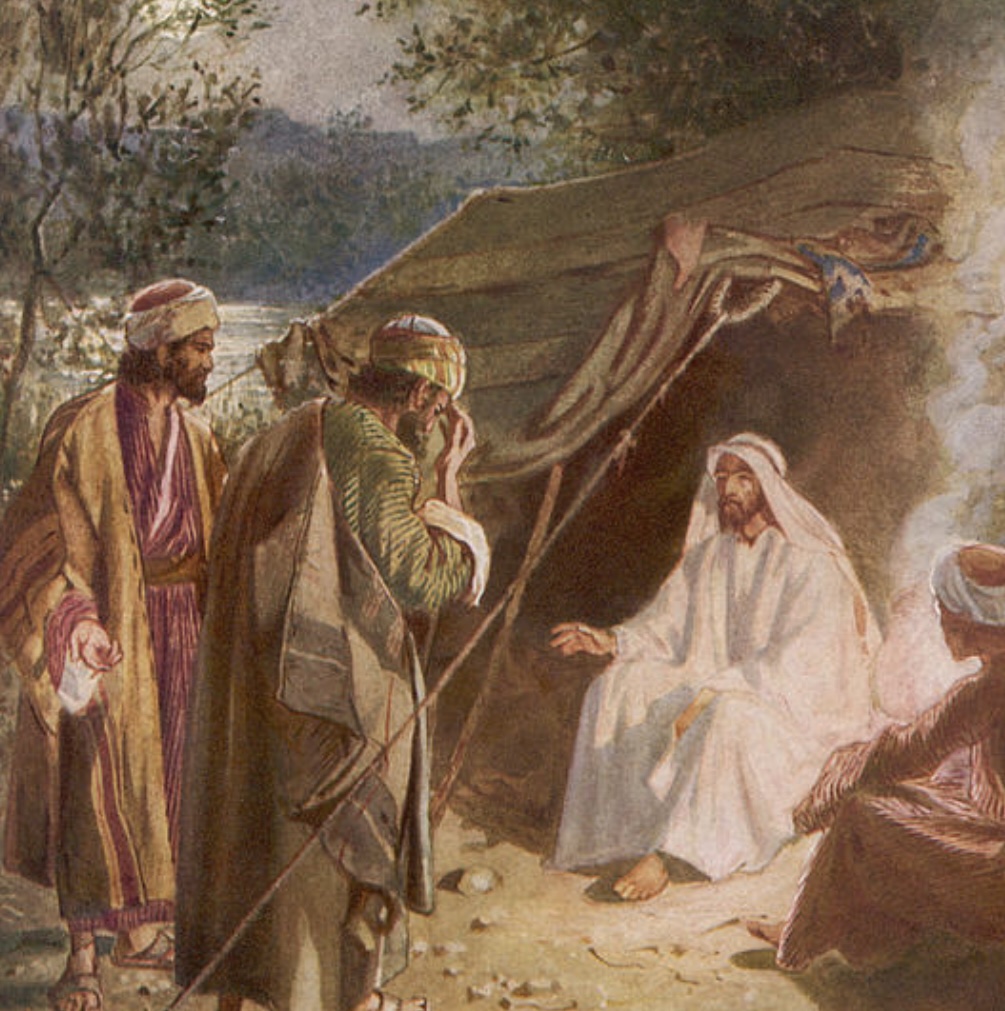
Here is a spiritual exercise for those times when one is experiencing the pain of calumny: pray over a Gospel passage where Jesus is enduring the pain of calumny, place yourself in the scene and just be there as faithful friend for our Lord.  We cannot take the pain away, but Jesus so values our presence and our friendship.  Just be there in that moment as friend for Jesus.  Graces will come from that prayer. 

Finally, be open to leaving by knowing your fixed point.  Throughout his ministry, Jesus moved from town to town, sometimes because he knew that forces were aligning against him and lies were being told but that his hour had not yet come.   Throughout all this movement, Jesus always remained rooted in his relationship with the Father.  His relationship with the Father was his fixed point.  When we know our fixed point everything else becomes secondary.  As Christians, our fixed point is that each of us is a beloved child of God with a dignity and worth.  If this is not being respected, if lies are being told, then we have the freedom to move on from a particular group and its relationships, from a specific social setting and even from a certain location.  Knowing our fixed point brings a freedom that the sin of calumny cannot overcome. 

Calumny is a sin and it is a besetting sin of our time.  It is a sin that will probably come our way in one form or another but it can be endured with dignity and grace and we can know that our Lord, who himself endured the pain of calumny, walks with us in friendship and that this too shall pass.    

Finally, if you are a wormtongue, if you are a perpetrator of calumny, stop it.  You are breaking the Eighth Commandment which is a sin before God for which you will be held accountable.  You are tearing your brother and sister down; you are helping to tear our society apart and you are demeaning yourself in the process and that is pathetic.  Don’t be a wormtongue.  There is no dignity in being a wormtongue.    
First Sunday of Lent B – “Jesus, the New Adam”

18 Sunday Feb 2024

Posted by mcummins2172 in Uncategorized

≈ Leave a comment

Tags

Bible, Christian life, Christianity, discipleship, faith, first Sunday of Lent, free will, Jesus, Jesus and the temptations, Jesus in the desert, satan, temptation

Image may be subject to copyright.

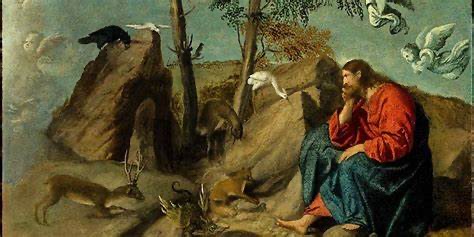
In their presentation of the temptation of Jesus, Luke and Matthew lean on the imagery of Israel’s experience of the forty years in the desert.  Luke and Matthew present Jesus as the new Israel, the Israel who remains faithful to God’s covenant.  Mark – on the other hand – in his two short verses (Mk. 1:12-14) draws on a different source.  Mark goes to the very beginning of creation and draws on the imagery of Jesus as the new Adam.  Jesus, we are told, is “among wild beasts” not in fear and trepidation but rather walking freely in their midst and company just as Adam and Eve had walked freely before the Fall.  “Angels ministered to Jesus,” just as God walked in the cool of the evening in the garden and spoke freely with Adam and Eve.

Within the first chapter of his gospel, Mark is teaching that Jesus is the new Adam who restores that original unity and harmony to all creation that sin had fractured and broken.  Where Adam and Eve had succumbed to the temptation of Satan in the beauty of the garden; Jesus triumphs over Satan’s temptations in the barrenness of the desert. 

This is why Satan and all the demons take fright, tremble and beg not to be cast out before the power and authority of Jesus throughout the remainder of the gospels up until Satan attempts his great counterattack in the passion of our Lord but it is in that final move that Satan is dealt his defeat and our Lord’s full triumph is realized.    

In the desert (in these two short verses in Mark’s gospel) Jesus frees himself from Satan in order to then begin the work of freeing all of humankind.  Jesus had to face Satan before he could begin his public ministry.  This is why Scriptures says that the Holy Spirit “drove” Jesus into the desert.  It is in the desert, faced with the temptations, that Jesus overcomes sin.  It is in the desert that Jesus chooses his relationship with the Father above all else.  It is within the arena of human free will that Jesus meets and conquers Satan in the desert.  Adam and Eve misused their freedom.  They chose to disobey; sin was released and the human will was corrupted.  Jesus obeys.  Jesus says a free “yes” to the will of the Father.  It is in Jesus that a human will expands to fully welcome the entire will of the Father (paraphrased from The Holy Spirit in the Life of Jesus by Cardinal Raniero Cantalamessa).  The domination of Satan over human will is destroyed.

What does this mean for us on this first Sunday of Lent in 2024?  It means that sin is not inevitable.  It means that our will is not the plaything of the devil.  It means that now in Jesus, we too can say “yes” to God.  It means that we also can welcome the will of God into our wills.  It means that we too can begin, even now, to know that authenticity and integrity of life that God intends for his creation rather than living just by the brokenness and pain of sin. 

What does it mean?  It means everything. 

Jesus is the new Adam.  Jesus is the one who restores unity and authenticity to all of creation and to each of our lives.  This first Sunday of Lent invites us to welcome Jesus and learn from him how to also say “yes” to the will of the Father.    

Holiness is not stingy. Holiness gives and welcomes. A homily for the second Sunday of Ordinary Time – B

13 Saturday Jan 2024

Posted by mcummins2172 in Uncategorized

≈ Leave a comment

Tags

Bible, Christian life, Christianity, disciple, discipleship, faith, gospel, Jesus, john, Second Sunday in Ordinary Time, vocations to priesthood and religious life

“Andrew taking Simon to meet Jesus” by Mary Evans. Image may be subject to copyright. 

Holiness and the life of grace are not stingy.  Holiness gives and it welcomes. This is my personal learning from the Advent and Christmas seasons. 

When I placed myself in prayer in the manger scene, Joseph and Mary did not just allow me to gaze upon the child, they welcomed me to hold the babe in my own arms.  They did not hesitate in inviting me to hold the child.  When I watched as Simeon and Anna rejoiced in encountering the newborn Messiah in the Temple, they both welcomed me into that joy and hope fulfilled.  When I prayed over Matthew’s account of the three magi journeying to find the newborn king, I found myself eagerly welcomed by the three wise men to journey with them. 

Holiness and the life of grace are not stingy.  Holiness and the life of grace welcomes, invites and encourages.  It does not seek to keep for itself. We find this is today’s gospel ((Jn. 1:35-42) also.  John the Baptist, the one who was declared the greatest of those born of women by our Lord, eagerly points out Jesus as the Lamb of God to his own disciples, not a bit concerned if that means he and his own proclamation would be lessened.  “Behold, the Lamb of God!”  John’s two disciples begin to follow Jesus and John does not begrudge this.  

The holiness of Jesus also gives and welcomes – and this is the deep truth of today’s gospel.  Jesus asks John’s disciples, “What are you looking for?”  “Rabbi,” they answer, “where are you staying?”  Jesus says, “Come, and you will see.”  We are told that they stay with him that day and then they too rush out to invite others.  “We have found the Messiah!” 

“Where are you staying?”  “Come, and you will see.”  It was more than an invitation to a specific physical place.  Elsewhere in the gospel, Jesus says that the Son of Man has no place to lay his head.  The invitation of “come and see” is an invitation by our Lord into that deepest place where he truly resides.  It is an invitation into his very relationship with the Father.  It is an invitation freely given and those two disciples, even in their imperfections and lack of understanding, are both freely welcomed.  It is precisely this new experience of being welcomed into the Son’s relationship to the Father that impels those two disciples to then immediately go forth themselves and invite others to know what they have found.    

Holiness is not stingy. Holiness does not begrudge. It does not try to keep all for itself. Today’s gospel invites us to that same honesty of heart that the two disciples of John had.  “Rabbi, where are you staying?”  Today’s gospel invites us to the same courage and faith that the two disciples had when Jesus responds, “Come, and you will see.” The gospel invites us to also go to that place where our Lord abides in his relationship with the Father and to know that we – even in our imperfections – are indeed welcome. 

Andrew first went and found his brother Simon and brings him to where Jesus is staying.  Jesus looks at him and says, “You are Simon the Son of John: you will be called Cephas (Peter)”,

Life changes when we go to where Jesus resides.  Life changes when we come to know that we also are welcomed into the Son’s relationship with the Father. 

A Reflection on Mary

08 Friday Dec 2023

Posted by mcummins2172 in Uncategorized

≈ Leave a comment

Tags

Christianity, discipleship, faith, Virgin Mary

In my office hangs a painting by the artist Janet McKenzie.  The painting is entitled, “Mother and Child” but knowing the artist’s tradition of depicting the Holy Family via marginalized peoples and groups, I easily see within the painting a depiction of Mary and the young Jesus. 

Here is what I see in the painting. 

The young Jesus’ eyes are turned downward towards a flower he holds in his hands.  He does not look forward.  His time of mission has not yet arrived.  He is now in the quiet time of growing and learning the hope and faith of the people of Israel and his mother and foster-father are the ones chosen to teach and guide him.  His time of mission will come – as he contemplates the flower he holds – but for now he is in the care and love of his earthly parents. 

He is partially wrapped in the cloak of his mother.  There is a protective tenderness seen here.  It is a worthy prayer to ask Mary to be always kept within the mantle of her protection.  Mary is the new Eve who crushes the head of the serpent.  In tender love she protects all those who turn to her.

In her eyes and straight posture is found strength, resolve and freedom.  Mary is not bent in on herself in sin.  She stands fully before God in her dignity and worth as the handmaid of the Lord.  Her steady gaze invites the viewer into the same trust in God and freedom that she knows.  True freedom is found and fulfilled in saying “yes” to the will of God.

I do not know the full intent of the artist in placing the young Jesus as she does before Mary but I see within the placement of the two a reflection of the strength of a mother bison protecting her calf.  This is said to give full honor.  The strength of the bison is a powerful and noble thing.  Mary’s strength of love for her son is an unmovable and unstoppable force. 

The white of her cloak echoes the stars in the cloak of our Lady of Guadalupe. 

Behind the two figures are seen colors and animals important and sacred to the Native American peoples revealing that Mary is mother to all tribes and nations just as her son is Lord and Savior to all peoples.    

I pray before this image.  In it I find comfort and resolve and I hear the invitation to freedom found in saying “yes” to God’s will.          

Magic is an Illusion. Faith is real. Jesus and the Canaanite Woman.

19 Saturday Aug 2023

Posted by mcummins2172 in Uncategorized

≈ 1 Comment

Tags

Christian life, Christianity, faith, Jesus, Jesus and the Canaanite Woman, Mt. 15:21-28

Image may be subject to copyright

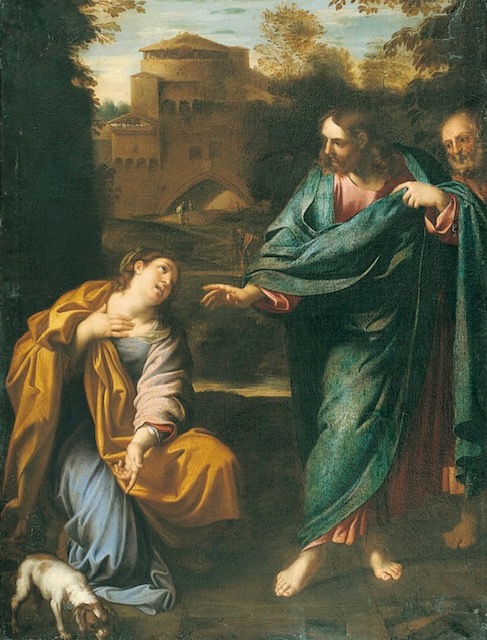
In the time of Jesus, as there are now, there were faith-healers and people who claimed to have power over demons who could be hired and, for the right amount of money, would pretend to heal someone or cast out demons.  These people were charlatans, but people would pay the money in a desperate attempt to bring healing to a loved one.  These supposed “healers” took advantage of people in their suffering and what they offered was not real faith but rather magic – the illusion of healing that was not real.    

Our Lord knew of these faith-healers and how they operated.  He also saw how they took advantage of people.  The Canaanite woman also knew of these faith-healers and the promises they made.  It is possible that she had already paid faith-healers in attempts to bring healing to her daughter but all to no success. 

This context helps to explain this interaction of Jesus with the Canaanite woman. 

This woman, who has heard of the man Jesus and who initially sees him as just another faith-healer, calls out on behalf of her daughter and, more than likely, she is willing to pay the cost that Jesus will demand.  The disciples, as observant Jews could not abide faith-healers, they know that Jesus was not a faith-healer and they do not want to be associated with faith-healers so they ask Jesus to send the woman away because she, “keeps calling after us”. 

Jesus knows that he is not a charlatan and he knows that this woman is looking to hire him and that she wants a magical healing for her daughter and so he says, “I was sent only to the lost sheep of the house of Israel.”  Jesus has a mission from the Father and he is not for hire for magical healings. 

But then something happens.  The scripture says that the woman, “came to Jesus and did him homage”.  The word “homage” is important here.  “Homage” implies faith, it implies kneeling in wonder and need before the divine mystery.  The woman does not come to Jesus to offer what she will pay him as one would when bargaining with a faith-healer, rather she gives him not money but “homage”. 

What changed for the woman?  Was it her desperation for her daughter, was it an intuition in her soul that something was different about this man named Jesus, was it the movement of the Holy Spirit in the woman’s heart?  Something changed and Jesus sees it. 

Jesus then tests it to make certain.  “It is not right to take the food of the children and throw it to the dogs.”  Now, in this new moment, the woman responds, “Please, Lord, for even the dogs eat the scraps that fall from the table of their masters.”  The woman shows her faith.    

Satisfied and probably with an abundance of joy in his divine heart, Jesus answers, “O woman, great is your faith!  Let it be done for you as you wish!”

Jesus is not a faith-healer for hire.  Jesus does not deal in the illusion of magic.  Jesus comes looking for faith in our hearts and it is in faith that our Lord meets us and brings the healing that only he can give. 

Magic is an illusion.  Faith is real and it is only in faith that Jesus encounters us. 

Two Images and One Truth: Tenderness

15 Tuesday Aug 2023

Posted by mcummins2172 in Uncategorized

≈ Leave a comment

Tags

Catholic Church, Christian life, Christianity, faith, Feast of the Assumption of Mary, Jesus, tenderness

The statue of the Madonna and Child is from my home growing up.  It belonged to my parents and sat in our living room on a table that served, for all intents and purposes although we never named it, as our home altar.  On the table was found this statue, our family Bible, various little statues and holy cards and baptismal candles.  Every day growing up I would see this statue – usually just passing by on my way to whatever I was up to but the statue was always there and remains with me to this day.

I have always appreciated the tenderness expressed by the statue.  Mary cradles her infant son and holds him close to her breast.  Her head leans in towards him and his towards her.  There is a familiarity and an intimacy and she presents her child to the world.  Here is the Son of God born of a humble woman in a small part of vast empire.  He will save us from our sins, 

The holy card is from the Basilica of Santa Maria in Trastevere in Rome.  The basilica is one of the oldest churches in Rome and the first to be dedicated to Mary.  The card depicts an image from the mosaic of the Dormition of Mary.  The dormition of Mary is the Eastern Church’s celebration of the great mystery of the Virgin Mary being taken body and soul into the fullness of the Kingdom of God.  In the West, we focus on the Assumption of Mary and our images depict that.  In the Eastern Church the focus is on the Dormition – or Mary’s falling asleep to then be taken up into the Kingdom – and their images depict this.  It is the same mystery we celebrate.  Immaculate Mary, mother of the Incarnate Word, is brought into the fullness of God’s Kingdom.  Where she has been brought, we have the hope to also follow.    

In the icon of the Dormition of Mary it is common to see Mary asleep in her passing surrounded by the twelve apostles and in the icon is also represented the risen Christ tenderly holding the soul of his mother.  The iconographic tradition is to depict the soul – an immaterial reality – as a person wrapped almost like a child in swaddling clothes.  The son holds the mother in anticipation of uniting soul and body in the glory of the resurrection. 

There is a tenderness here too.  The Son, in love, holds the mother again in an expression of familiarity and intimacy.  Mary is wrapped in white which is an expression of the glory of the resurrection where all sin, death and darkness is overcome!  Christ holds Mary out also as a sign of hope for all the world.  Mary is the first to be brought into the glory of Christ’s resurrection.  A hope that every Christian now carries through baptism. 

One truth of these images and of today’s Feast of the Assumption is the tenderness of God as well as the value of tenderness in the Christian life.  God welcomed the tender love of a humble woman and, in return, Christ tenderly welcomes his mother home. 

We often underrate the importance of tenderness in life, I believe.  But tenderness, as depicted, stands at the heart of the relation of Christ to his mother and, it seems, also at the heart of our Lord’s relationship to every believer.  We have a tender God, a tender Savior.  This is important because tenderness gives birth to hope and hope produces perseverance.  We all need tenderness on the journey of faith.  Tenderness keeps us moving forward toward the fullness of the Kingdom of God that awaits us and that also beckons us.

Two images – a statue and a holy card – showing the truth of tenderness and giving a hope that endures. 

Holy Mary, tender mother of our Savior, pray for us!       

Peter’s Prayer: a reflection on Mt. 14:22-33

13 Sunday Aug 2023

Posted by mcummins2172 in Uncategorized

≈ 1 Comment

Tags

Christian life, Christianity, discipleship, faith, hope, Jesus, Mt. 14:22-33

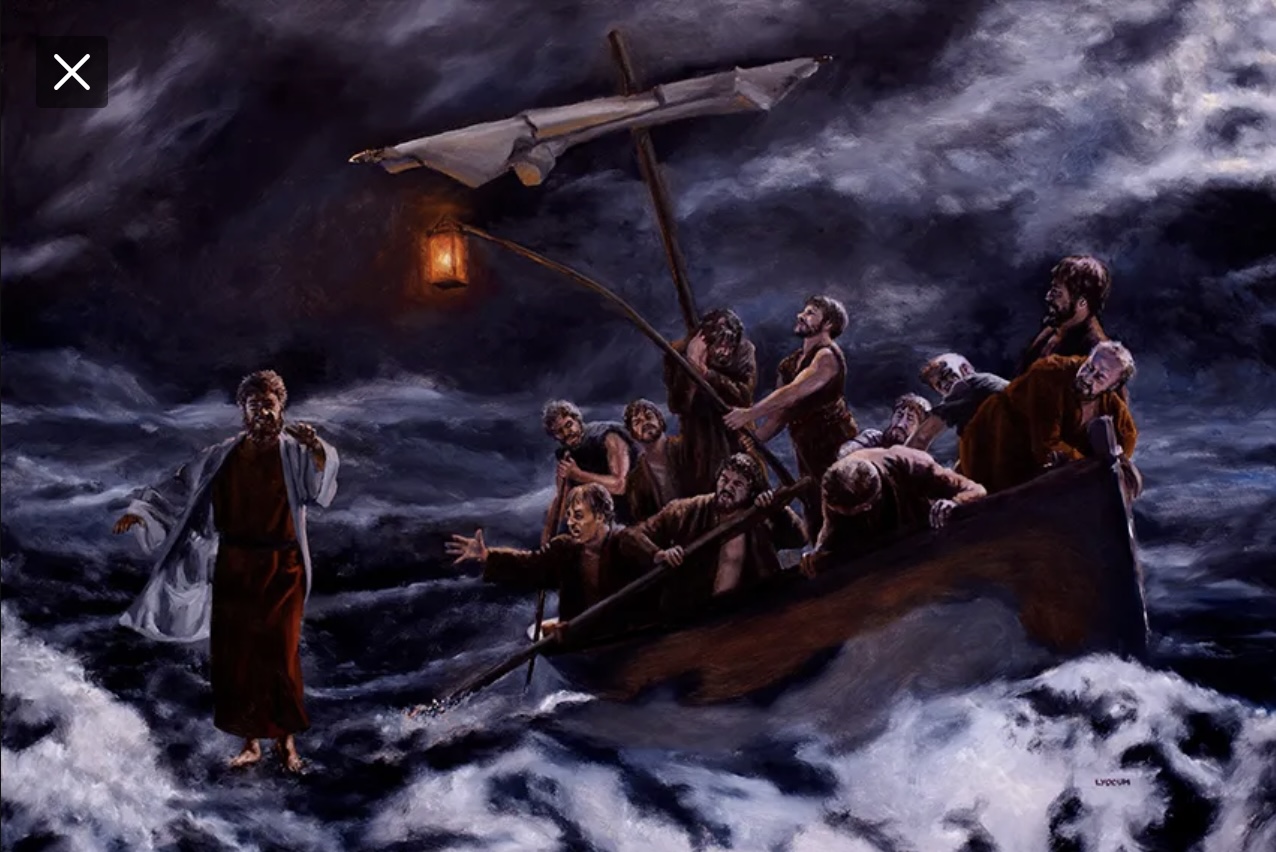
“Peter walking on the Water” by Lester Yokum. Image may be subject to copyright.

My friends, there is a simple truth found in today’s gospel that is worthy of our reflection. 

We are told that the disciples are in the boat in the middle of the night and are being tossed about by the waves of the sea.  The disciples are caught in fear and dread.  Our Lord comes towards them walking on the water.  Jesus calls to them and tells them to not be afraid and in response Peter cries, “Lord, if it is you, command me to come to you on the water.”

“Command me.” 

Peter does not say, “Lord, calm the sea.”.  Peter does not say, “Lord, take away this storm.”  Nor does Peter remain in the little safety of the boat, waiting for the Lord to arrive.  Peter says, “command me to come to you on the water.”  Peter (in his cry to the Lord, in his prayer) is asking for the grace to look beyond the crashing waves, to move beyond the limits of his own fear and to have the faith to walk towards Jesus on the water. 

This is the truth – there will be storms in life, there will be struggles and pain and doubt.  We will know fear and uncertainty.  The waves of life can be strong, high and crushing and it might even seem like everything is going to be lost.  The temptation in such moments is to pray to God to take away the storm, to calm the waters and to right whatever is the wrong that we are facing.  But is that the right prayer? 

The prayer that Peter made was not to take away the storm but to have the faith to walk through the storm, the faith to keep his eyes on Jesus even in the midst of the storm.  The gospel gives no indication that the sea calmed while Peter walked on the water.  The waves still crashed but Peter did walk on the water and when his faith faltered, Jesus was there to lift him up and save him. 

My friends, the right prayer may not always be “Lord, take this storm away.  Take away this struggle. Take away my fear.”  The right prayer may be, “Lord, give me the faith to walk through this storm trusting that you walk with me and that you are with me to protect me.” 

“Lord, if it is you, command me to come to you on the water.”    

My conscience bears me witness.

09 Sunday Aug 2020

Posted by mcummins2172 in homily, Uncategorized

≈ Leave a comment

Tags

Christianity, conscience, faith, Jesus, perseverance

st-paul-in-prison-rembrandt-1627-fe2971c3We all know of Paul’s encounter with the risen Lord on the road to Damascus and how that encounter radically changed his life.  The man who was so zealous in his persecution of the early church became the apostle proclaiming Christ to the Gentiles.  But do we truly realize how much that conversion cost Paul himself?  The second reading for today (Romans 9:1-5 – one of Paul’s later writings) gives us, I believe, a glimpse into the lifelong deep pain that Paul endured.  “…I have great sorrow and constant anguish in my heart.  For I could wish that I myself were accursed and cut off from Christ for the sake of my own people, my kindred according to the flesh.”  Paul carries both the pain of seeing so many of his people – the Jewish people – not wanting to recognize Jesus as the Messiah and he also carries the pain of himself (by his conversion) being cut off from the very people he loves and so identifies with!  The man carried heartbreak just as he proclaimed Christ as Savior to the world.

What gave Paul the strength and the endurance to do this?  I think the answer is given in the first part of the reading.  “I speak the truth in Christ, I do not lie; my conscience joins with the Holy Spirit in bearing me witness…”  A conscience that is grounded in Christ gives a strength of endurance that no worldly pain or struggle can overcome.  Paul witnesses to this.

Do we recognize the strength, endurance and hope that can only come from a conscience that is grounded in God?  In the first reading (1 Kings 19:9a, 11-13a), God reveals himself to Elijah not in the heavy wind, the earthquake or the roaring fire but in the “tiny whispering sound.”  It is in that tiny sound that God reveals himself and that the prophet covers his face in reverence and awe.  The tiny whispering sound of a conscience grounded in Christ is a holy reality that must be held in reverence and awe.  The prophets and saints teach this.  Throughout history the might and roar of all forms of oppression have themselves been shattered on the quiet strength and endurance of consciences grounded in Christ.  The saints witness this time and time again.

In the storms of life when all seems uncertain and nothing appears stable, it is Christ who is shown to be the true still point and even the roar and tumult of the storm cannot overcome the conscience that is fixed on him.  Peter walked on water, even as the storm thrashed around him and the boat with those within was tossed about, as long as he kept his eyes fixed on Christ.  (Mt. 14:22-33)

The readings are clear – do not dismiss the strength, the endurance, the hope that is found in the conscience grounded in Christ.

“I speak the truth in Christ, I do not lie; my conscience joins with the Holy Spirit in bearing me witness…”

Coming to Faith: the man born blind

21 Saturday Mar 2020

Posted by mcummins2172 in homily, Uncategorized

≈ Leave a comment

Tags

4th Sunday of Lent, Christianity, faith, Jesus, man born blind

man born blind 2In today’s gospel there is a development in the thought of the man born blind and in his proclamation of who Jesus is. It is important to note that just as the questioning the man faces increases, just as his social supports fall away and just as the pressure on him gets heavier – the man’s knowledge of who Jesus is and his proclamation of who Jesus is increases.

When his neighbors asked who had healed him, the man born blind responded that it was the “man called Jesus” who had healed him. The man did not even know where Jesus was.

Brought before the Pharisees and facing both their authority and the debate among themselves regarding the righteousness of Jesus, the man born blind says, “He is a prophet.”

The Pharisees in their authority summon the man’s parents and question them. In their fear, the parents back off by saying, “Ask him, he is of age; he can speak for himself.” Now imagine that. The man’s own parents back away. The man is totally on his own before the powerful.

This time the Pharisees have no debate among themselves. They have convinced themselves that Jesus is a sinner and they want to force this man to admit it also. They ridicule the man. They seek to strip away any dignity he has. But in the face of this the man goes even further in his proclamation. “It is unheard of that anyone ever opened the eyes of a person born blind. If this man were not from God, he would not be able to do anything.” Jesus “is from God” the man boldly proclaims and we are told that the Pharisees “threw him out”. That is more than just getting tossed from the meeting. That is ostracization. The man is ostracized both by his refusal to denounce Jesus as a sinner and his boldness in proclaiming Jesus to be from God!

But it does not end there. Jesus seeks the man out and in their encounter Jesus asks the man if he believes him to be the Son of Man – a term used for the expected Messiah. The man makes his fullest profession of faith when he says, “I do believe, Lord,” and he worshipped him.” The man proclaims Jesus as Lord and he worships him. Only God is to be worshipped and by this act the man proclaims Jesus to be God.

There are many truths to this gospel passage but I believe a truly important truth for our day and time, as the world is facing what we are facing, is this: Jesus is always more than the pains, struggles and persecutions that we might have to endure. Jesus is more than the suspicions of the neighbors. Jesus is more than the pressure and ridicule of the powerful of this world. Jesus is more than the falling away of our support systems. Jesus is always more because Jesus is God!

And not only is Jesus more than all of this, Jesus is willing to seek us out, to find us. Jesus reveals that God is God for us! The God who is always more than what life can throw at us is also the God who loves us and who seeks us out.

This is our hope and it is the hope that endures.

En el evangelio de hoy hay un desarrollo en el pensamiento del hombre ciego de nacimiento y en su proclamación de quién es Jesús. Es importante señalar que a medida que aumenta el cuestionamiento que enfrenta el hombre, así como sus apoyos sociales se desvanecen y cuando la presión sobre él aumenta, el conocimiento del hombre de quién es Jesús y su proclamación de quién es Jesús aumenta.

Cuando sus vecinos preguntaron quién lo había sanado, el ciego respondió que fue el “hombre llamado Jesús” quien lo había sanado. El hombre ni siquiera sabía dónde estaba Jesús.

Fue llevado ante los fariseos y enfrentando tanto su autoridad como el debate entre ellos acerca de la justicia de Jesús, el ciego dice: “Él es un profeta”.

Los fariseos en su autoridad llamaron a los padres del hombre y los interrogaron. En su miedo, los padres retroceden diciendo: “Pregúntenle a él, ya es mayor de edad; él puede hablar por sí mismo “. Ahora imaginense eso. Los propios padres del hombre retroceden. El hombre está totalmente solo ante los poderosos.

Esta vez los fariseos no debaten entre ellos. Se han convencido de que Jesús es un pecador y quieren obligar a este hombre a admitirlo también. Se burlan del hombre. Buscan quitarle toda la dignidad que tenga. Pero ante esto, el hombre va aún más lejos en su proclamación. “Jamás se había oído decir que alguien abriera los ojos a un ciego de nacimiento. Si este no viniera de Dios, no tendría ningún poder “. Jesús “es de Dios”, el hombre proclama audazmente y se nos dice que los fariseos “lo echaron fuera”. Eso es más que simplemente ser expulsado de la reunión. Eso es ostracismo, aislamiento o exclusión ¡El hombre está condenado al aislamiento, tanto por su negativa a denunciar a Jesús como pecador, como por su valentía al proclamar que Jesús es de Dios!

Pero no termina ahí. Jesús busca al hombre y, en su encuentro, Jesús le pregunta al hombre si cree que él es el Hijo del Hombre, un término usado para el Mesías esperado. El hombre hace su más completa profesión de fe cuando dice: “Sí creo, Señor”, y lo adora “. El hombre proclama a Jesús como Señor y lo adora. Solo Dios debe ser adorado y por este acto el hombre proclama que Jesús es Dios.

Hay muchas verdades en este pasaje del evangelio, pero creo que una verdad realmente importante para nuestro día y tiempo, ya que el mundo enfrenta lo que estamos enfrentando, es esto: Jesús siempre es más que los dolores, las luchas y las persecuciones que podríamos tener que soportar. Jesús es más que las sospechas de los vecinos. Jesús es más que la presión y el ridículo de los poderosos de este mundo. Jesús es más que la caída de nuestros sistemas de apoyo. ¡Jesús siempre es más porque Jesús es Dios!

Y no solo es Jesús más que todo esto, Jesús está dispuesto a buscarnos, a encontrarnos. ¡Jesús revela que Dios es Dios para nosotros! El Dios que siempre es más de lo que la vida puede arrojarnos es también el Dios que nos ama y que nos busca.

Esta es nuestra esperanza y es la esperanza que perdura.

Joseph’s choice.

21 Saturday Dec 2019

Posted by mcummins2172 in homily, Uncategorized

≈ Leave a comment

Tags

Christianity, faith, Fourth Sunday of Advent, free will, St. Joseph, volition

let mum restIt was more than just the dream for Joseph that led him to take the young, pregnant Mary into his home – even as he knew that his decision would not be understood by his neighbors and that he would be mocked and ridiculed for welcoming Mary. No person wants to be seen as a fool. Yes, the angel appeared in a dream and certainly there must have been the glory and power of God revealed but God never overwhelms our volition. God never manipulates. God always invites our free choice and our free response.

The other part to Joseph’s decision was Joseph himself. This is witnessed by the two descriptions of the man found in the Gospel reading for this fourth Sunday of Advent; “…Joseph her husband, since he was a righteous man…” and the title given by the angel in his greeting, “Joseph, Son of David…” Scholars say that the title offered by the angel is Matthew’s way of linking Jesus to the lineage of David but it is also safe to say that the greeting offered is a reflection on Joseph himself as being an observant Jew of his time, as being a righteous man who demonstrated by his life and his choices his belief in God.

Joseph, who says no words in all of Scripture, teaches us that God does not and will not overwhelm our volition nor does faith occur in a vacuum. What led up to Joseph’s ability to both hear and trust in the dream and then to take Mary “into his home” was a lifetime of making the choice for God and responding to God’s initiative and grace in faith and trust.

We often willfully forget that we have a part to play in the equation of faith. So often we say, “Why is God silent? Why is God not speaking in our world or in our lives?” Well, maybe God is speaking but it is we who have stopped our ears and it is we who have hardened our hearts by the choices we have made and continue to make. Choices have consequences.

I think it safe to say that every choice Joseph made for God (no matter how big or small, seen or unseen, applauded or not) in his journey of faith both led up to and prepared him for the moment we hear today in the gospel. All those choices gave Joseph the strength of character to trust in the message of the angel and to take Mary “into his home”.

We hear of the Star of Bethlehem that led the wise men to the place of the birth of the savior. Joseph had his own “north star” that guided him throughout the journey of his life. It was his faith and his decision to live according to his faith. Without a word spoken, Joseph teaches us what it means to be righteous in the eyes of God and what it means to be a child of David – it means trusting in God and then acting on that trust.

Faith does not occur in a vacuum.

God does not overwhelm our volition and God does not manipulate.

Our choices do have consequences.

We can make the choice to soften our hearts and open our ears and to listen to what God has to offer.

Joseph teaches us this.

← Older posts
Newer posts →
Follow The Alternate Path on WordPress.com

Enter your email address to follow this blog and receive notifications of new posts by email.

Previous Posts

  • December 2025
  • November 2025
  • August 2025
  • April 2025
  • February 2025
  • January 2025
  • December 2024
  • August 2024
  • July 2024
  • June 2024
  • May 2024
  • April 2024
  • March 2024
  • February 2024
  • January 2024
  • December 2023
  • November 2023
  • October 2023
  • August 2023
  • July 2023
  • May 2023
  • February 2023
  • January 2023
  • December 2022
  • August 2022
  • July 2022
  • April 2022
  • January 2022
  • December 2021
  • September 2021
  • August 2021
  • July 2021
  • May 2021
  • April 2021
  • January 2021
  • December 2020
  • November 2020
  • October 2020
  • August 2020
  • July 2020
  • May 2020
  • April 2020
  • March 2020
  • February 2020
  • December 2019
  • October 2019
  • September 2019
  • August 2019
  • July 2019
  • May 2019
  • April 2019
  • March 2019
  • February 2019
  • December 2018
  • November 2018
  • October 2018
  • August 2018
  • July 2018
  • June 2018
  • April 2018
  • March 2018
  • February 2018
  • January 2018
  • December 2017
  • November 2017
  • September 2017
  • August 2017
  • July 2017
  • June 2017
  • May 2017
  • April 2017
  • March 2017
  • February 2017
  • January 2017
  • December 2016
  • November 2016
  • October 2016
  • September 2016
  • August 2016
  • July 2016
  • June 2016
  • May 2016
  • April 2016
  • March 2016
  • February 2016
  • January 2016
  • December 2015
  • November 2015
  • October 2015
  • September 2015
  • August 2015
  • June 2015
  • May 2015
  • April 2015
  • March 2015
  • February 2015
  • January 2015
  • December 2014
  • November 2014
  • October 2014
  • September 2014
  • August 2014
  • July 2014
  • June 2014
  • May 2014
  • April 2014
  • March 2014
  • February 2014
  • January 2014
  • December 2013
  • November 2013
  • October 2013
  • September 2013
  • August 2013
  • July 2013
  • June 2013
  • May 2013
  • April 2013
  • March 2013
  • February 2013
  • January 2013
  • December 2012
  • November 2012
  • October 2012
  • September 2012
  • August 2012
  • July 2012
  • June 2012
  • May 2012
  • April 2012
  • March 2012
  • February 2012
  • January 2012
  • December 2011
  • November 2011
  • October 2011
  • September 2011
  • August 2011
  • July 2011
  • June 2011
  • May 2011
  • April 2011
  • March 2011
  • February 2011
  • January 2011
  • December 2010
  • November 2010
  • October 2010
  • September 2010
  • August 2010
  • July 2010
  • September 2008
  • August 2008
  • April 2008
  • March 2008
  • February 2008
  • January 2008
  • December 2007
  • November 2007
  • October 2007
  • September 2007

Popular Posts

  • thealternatepath.org/wp-c…
  • thealternatepath.org/wp-c…
  • thealternatepath.org/wp-c…
  • thealternatepath.org/wp-c…
  • thealternatepath.org/wp-c…

Blog at WordPress.com.

  • Subscribe Subscribed
    • The Alternate Path
    • Join 156 other subscribers
    • Already have a WordPress.com account? Log in now.
    • The Alternate Path
    • Subscribe Subscribed
    • Sign up
    • Log in
    • Report this content
    • View site in Reader
    • Manage subscriptions
    • Collapse this bar
 

Loading Comments...