• About The Alternate Path

The Alternate Path

~ Thoughts on Walking the Path of Christian Discipleship

The Alternate Path

Tag Archives: faith

Let us invite one another to wisdom. St. Teresa of Calcutta, pray for us!

04 Sunday Sep 2016

Posted by mcummins2172 in homily, Uncategorized

≈ Leave a comment

Tags

Christ, Christian life, Christianity, discipleship, faith, hope, Kingdom of God, Mother Teresa, Sisters of Charity, St. Teresa of Calcutta

Mother Teresa

St. Teresa of Calcutta

In the first reading (Wisdom 9:13-18b) we are told that wisdom is a gift given from on high.  It is not something we acquire by our own effort and ingenuity but it is a gift from God.  Or who ever knew your counsel, except you had given wisdom and sent your Holy Spirit from on high?  And thus were the paths of those on earth made straight.  Wisdom is the fruit of relationship with God and, as we learned in last Sunday’s gospel, it both comes and is received on our part through the actions of humility and living a generosity toward those who cannot repay us.

But we can invite one another to wisdom.  This is a truth found in today’s second reading (Philemon 9-10, 12-17).  The Letter to Philemon is a short letter written by Paul to Philemon, a member of the Christian community, on behalf of Onesimus – a runaway slave of Philemon’s whom Paul had befriended and converted while they were held together in prison.  According to the law of the day, Philemon had the right to punish Onesimus severely, even having him put to death, but Paul writes and asks Philemon not only to be lenient and receive Onesimus back but to even receive him back as now a brother in Christ.

Paul is inviting (not forcing) Philemon to a new awareness.  He is inviting him to wisdom in Christ.  Things had now changed.  Elsewhere Paul will write …in Christ there is neither slave nor free…  Paul is aware of this new reality, he does not wish to force it on Philemon for that would not be true to the gospel but he does want to invite Philemon to this new awareness.  Paul is also crafty about this invitation though.  He knows that when his letter arrives it will not be read privately by Philemon first; rather it will be read before the whole gathered community with Philemon present.  All eyes will certainly be on Philemon but also, if the members of the community are honest, all eyes will need to be on each of their own hearts as the letter invites all who listen to it to wisdom and a greater awareness even to our own day.  Can we receive the other person as brother and sister in Christ?

Christ continually invites us into the wisdom of the Kingdom of God.  It is a wisdom that asks us to be willing to continually step away from the rigid and constricting thought of “this is the way things are, this is the way things will always be” toward the ever new possibility of the Kingdom.  If anyone comes to me without hating his father and mother, wife and children, brothers and sisters, and even his own life, he cannot be my disciple.  Christ continually invites us to calculate and set our lives by the ever new possibility of the Kingdom of God!  Just like the person building a tower calculates out resources or the king calculates out the cost of a battle we must calculate and set our lives not by our own small and often meager possessions of thought but by the sheer gratuity of God’s Kingdom!  Christ invites us set our lives by this wisdom!

Today, the Church gives us a wonderful witness of a person who set and calculated her life by the sheer gratuity of God’s Kingdom in St. Teresa of Calcutta.  Where the world saw a simple little woman, God saw a great disciple to our age.  Where the world saw lives with no value, St. Teresa saw children of God.  Where the world saw hopelessness, St. Teresa found beauty.  Where the world saw wealth, St. Teresa saw poverty.  Where the world gave up, St. Teresa persevered.

St. Teresa allowed herself to be invited into the wisdom of the Kingdom of God – even in the darkness of it all.  Now, like Paul himself, St. Teresa invites us into the ever new possibility of the wisdom of Christ and the Kingdom of God.

“If you can’t feed a hundred people then feed just one.”

“Do not wait for leaders; do it alone, person to person.”

“If you judge people, you have no time to love them.”

St. Teresa of Calcutta, pray for us!   

Why Young Adults need the Catholic Church

30 Tuesday Aug 2016

Posted by mcummins2172 in Uncategorized, young people

≈ Leave a comment

Tags

Catholic Church, Catholic faith, Christian life, Christianity, discipleship, faith, Roman Catholic, Young Adult Ministry, younger generation and faith

young adult praying in churchWhy do some young adults wander away from the Church?  There are no easy answers to this.  At least, I have not found one in my own experience of ministry.  I have seen some young people fully immersed in the Church in high school and college who then just stop coming one day.  I have seen other young people who had wandered off come back with a great fervor almost bordering on zealotry.  A good number of young people I have known wander in and out with some choosing to stay loosely connected on the periphery of the Church.

Certainly each person’s journey of faith is unique.  There are movements in the heart that only God can see and everything occurs in God’s time.  We all know that there are scandals within the Church that wound hearts and discredit the gospel and the community.  There are voices against the Church and Christianity in our world and caricatures of religion too easily tossed about in society.  There is a diffused mistrust of all institutions.  There are also people not willing to change their view of the Church just as they, themselves, insist the Church must change (usually to their liking).  Finally, there are some people who are just lazy spiritually.

With all this in mind, I am firmly convinced that young adults need the Church.  No one may be able to adequately answer the big concerns noted above.  Still, I want to offer a few thoughts about why young adults need the Church.  Here are the thoughts in the form of a letter.

Dear young adults,

Do you know that you need more than just your peers?  I never really became a fan of the TV show “Friends”.  I do remember watching it and being entertained although I didn’t always agree with the moral choices portrayed in the show.  I remember that the whole universe portrayed in that show was that of a group of peers.  Every now and then a person from another generation (younger or older) would pop in and out of the show but they seemed to be just a distraction.  Everything centered on that particular group of peers and their enclosed world.  I have seen this same theme continue in newer generations of shows.  I am sorry, but that is not life.  Sadly, though, I think society and, surprisingly, the Church have followed suit.  There are retreat programs and youth ministry initiatives intentionally and exclusively structured around peer-given talks and peer-led discussions.  There are youth only liturgies.  I would wager that the same trend can be seen in education, athletics and all forms of engagement with our youth.  Is there a certain value and place for this?  Yes, but there are unintended consequences.  Dear young adults, I apologize.  You have been done a disservice.  Although no one intended it, you have been taught to only value peer input and peer relationship.  The voices of other generations – the insight, knowledge and wisdom of older generations that can help guide in life and help navigate its struggles as well as the hopes and dreams of younger generations – have been blocked from your awareness.  With this block there can also be a forgetfulness of how God has been faithful and active in all generations and how God continues to be faithful and active.

In my ministry with young adults I often felt frustrated by this block.  Over time, I learned to not get upset or frustrated by this.  They were just doing what they had been taught.  I was not a peer and therefore my voice and consideration would sometimes just bounce off their perspective somewhere into the ether.  But as I shared above, a world comprised only of peers with a particular generational perspective is not real life.  One of the things truly wonderful about Sunday worship is seeing generations coming together in Church – young and old and even in-between.  Young adults, I have to say that you are noticeably absent from these gatherings.   You are missing out.  You need more than your peers and the Christian community needs you.

Another thought for you.  You need a deeper narrative than just the secular one.  There are narratives that people set their lives by but not all narratives are equal nor are all equally true.  I learned an important lesson in my seminary training.  The gospel narrative is the rule by which all other narratives should be measured and judged.  Some might see this as Christian condescension, but I am not convinced that is true.  Think about it.  Catholicism has a proven track record.  Empires, movements, theories of thought have come and gone.  Christianity has remained and has grown consistently and organically even through persecution and even despite the sinful actions of some of its adherents.  Secularization, at its best, has real value.  It has fostered religious freedom, protection from oppression, and respect due the dignity of persons.  But the secular world has its own narrative with a down side.  A closed-end secularity pushes the sacred to the periphery.  And that truly diminishes life.  Here, I would caution that certain forms of “generic Christianity” will not suffice because they are neither able to see beyond nor challenge the limits of the secular narrative.  Certain popular forms of contemporary Christian expression found often in non-denominational, evangelical and mega-church communities are, in fact, closely linked to the secular narrative and a step away from the Christian sense of the sacred.  For example, I would point to the emphasis by some on material concern and comfort as found canonized by the gospel of prosperity preached in many places.

There is a deeper and fuller reality to life, existence and creation itself than just the measure of the secular.  There is a transcendent, spiritual and sacramental dimension to life.  We can embrace the benefits of secularity, while not letting ourselves be bound by the limits of its narrative.  The Catholic Church with its tradition, theology and worship provides for this broader perspective on reality.

Dear young adults, here’s something that you won’t hear about very often, if ever.  You need an awareness of redemptive suffering.  The Catholic Church is at home with the crucifix not because we believe that the resurrection should be downplayed and that Christ is still on the cross.  No, we are convinced that by his suffering on the cross our Lord has brought a redemptive dimension to all suffering.  He has brought life out of death.  On the cross and in the tomb, God entered into the furthest edges of human suffering and death.  The crucifix reminds us of the cost of salvation that has been won through the love and obedience of Christ.  This is a great mystery.  There is suffering in life and sooner or later for all of us.  We see suffering throughout our world.  The crucifix and its bold display of redemptive suffering protects us against the temptations of choosing to ignore suffering in our world, getting lost ourselves in the darkness of suffering and giving in to victimhood in the face of suffering.  Suffering, in Christ, can be redemptive.

Let me say a word about something that many people are skittish about – commitment.  You need commitment and not just new experiences.  When I was in campus and vocation ministry my schedule and responsibilities allowed and even required of me quite a bit of travel.  Now that I am in a parish my travelling has been greatly reduced due to the commitment of being a pastor.  This is not a bad thing.  There are seasons to life and there are seasons to ministry.  My faith life and my life in general is now being nourished more by the commitment of being a pastor than by a string of new experiences offered through travel and life situation.  Commitments in life offer nourishment too!  Our world does not emphasize this but it is true.  Young adults do not get lost in the siren call of chasing new experience after new experience through life!  Sooner or later, you will wear yourself out and, frankly, not have much depth.  Commitments in life are what lead to the depth of personhood, awareness and insight.  Do not be afraid to commit in faith and in love to Christ, his Church and another person if you are so called.  Be willing to go deep!

You also need a real community that will not fit neatly into your box, one that is not perfect, that disagrees and that argues.  I have known young people to leave the Church either because it is not “perfect” or because it does not fit into their own framework.  Frankly, I think that this is not a sign of good, adult judgment.  On college campuses, people are talking about “trigger notices” and “safe zones” around discussions that students might find threatening or challenging.  Social media and our current structure of news outlets may allow us to exist and interact in a universe occupied solely by like-minded people (this is one of the dangers of our contemporary information age) but the real world does not.  It is okay to argue and it is okay to debate and it is wonderful to be in a Church that has this and the Catholic Church has it in spades!  Many social commentators have noted that argument and disagreement are turn offs to young adults who like to avoid such things at all costs (again this is an unintended consequence of how the generation was raised) but life and insight is gained through respectful disagreement, discussion and debate.  We believe that the Holy Spirit leads the Church and this is testified especially through moments of disagreement, discussion, prayer and debate.

You need holiness that sanctifies.  One of my favorite professors in seminary likened the Catholic understanding of grace to a house that is being renovated from the inside out.  Grace, in our Catholic understanding, does not just cover over our sinfulness but rather goes to the heart of who we are in order to heal the wound of sin from within on out.  We are fully healed and fully restored through a lifetime of the working of grace and our cooperation with it.  The ones who witness this most fully are the saints.  Young adults, life can be different!  We can know a holiness that heals, restores and is authentic!  We are not meant to be defined by our sins, our stumblings and our weaknesses.  We are all called to be saints!  It is not just a nice thought but an eschatological truth.  We are called to sanctification through and through and we should not settle for anything less.

Hopefully, these thoughts will prove to be helpful.  Every generation has its blessings and every generation has its struggles.

Dear young adults, you need the Church … and the Church needs you.  From a priest who has truly been blessed by his interaction with so many young adults and who cares deeply about you, may God bless you and may God guide you.
 

A lesson from St. John Paul II: Acknowledge the Good

23 Tuesday Aug 2016

Posted by mcummins2172 in St. John Paul II, Uncategorized

≈ Leave a comment

Tags

Christian life, Christianity, discipleship, faith, hope, St. John Paul II, World Youth Day

John-Paul-II-MarriageIt is not just what we say but it is also how we say it that is important.  This is one of the many lessons I have learned from St. John Paul II.  Like so many others I have found great insight and wisdom in the writings of Pope John Paul II.  I first began to read the writings of this holy man during my time of seminary studies and his writings continue to inspire and challenge me to this day.  John Paul II certainly pointed out and challenged the errors and falsehoods of his time but he never fell into nor immersed himself in negativity and I believe that this is an important point.  St. John Paul II was always willing to point out the good in culture and in the world.  He did this time and again in his writings just as much as he challenged falsehoods.  This ability to recognize the good gives his writings and teachings an authenticity that others are often not able to achieve. 

It also witnesses, I believe, to an enormous depth of spiritual awareness.  St. John Paul II knew the horror of evil and sin.  He witnessed it first hand in many ways throughout the twentieth century – from the brutality of Nazism and a Europe at war to the life-denying oppression of communism to the crassness of an over-arching materialism.  The Polish pontiff knew the face of evil but he knew something else even more.  He knew Jesus as Lord and Savior, risen from the dead, he knew (despite all the trials of the world) that God reigned in heaven and that God is bringing about his Kingdom and that the Holy Spirit leads us into new life.  Because of this, St. John Paul II could rejoice just as much in the good and triumph of his age as he could challenge its falsehoods and evils.  He did not allow the evil to eclipse the reality of the good that he recognized as he pondered in his heart and because of this he was a witness to hope in his time and will always remain so.

Christians of today ought to learn this great lesson that St. John Paul II has to teach us.  Yes, there is great evil, error and sin in our world.  Our Lord does not want us to be naïve to this.  We must name evil for what it is when we see it but we must not allow ourselves to fall into negativity in so doing.  We must avoid the temptation of becoming prophets of doom in our day and time.  The world is deeply wounded and scarred by sin but the world is God’s creation and Scripture tells us that God loves what he has created.  We ought to never despise which God looks upon with love. 

Yes, there is a litany of horror in history but there is also a litany of the good.  Here are some aspects of the litany of the good more recent to our day.  An end to colonialism and the subjugation of native peoples, women gaining the right to vote and the ability to speak and achieve for themselves in society, the abolishment of widespread slavery and segregation, amazing developments in technology and understanding in all areas of science and medicine and the wonder that these advancements call forth, ecumenical advancements among Christians and greater understanding and respect among the world’s religions, greater (but not complete) healthcare access for people all around the world, a deeper and growing awareness of the beauty of creation and our call to be good stewards of the world entrusted to us and how everything is so interconnected, a greater awareness and respect for the dignity of every man, woman and child regardless of race, color, gender, language, sexual orientation, economic status and religion, a growing awareness of the dignity of all human life from the womb to a natural death and the list can go on…

Are there betrayals of each aspect of the above list?  Yes, people are still brutally denied their dignity in a variety of forms, science and medicine are often un-ethically manipulated in many ways, life is denied.  There remains war and violence.  But can it not be recognized that progress has been made and continues to be made in all of these areas and is there anything wrong in this recognition?  From my reading of St. John Paul II (limited as it is), I believe that he was very comfortable in recognizing and celebrating the achievement of the good.  He never allowed himself to get mired in negativity and the temptation of being a prophet of doom even as he certainly knew the struggles ahead. 

St. John Paul II was the originator of World Youth Day – a wonderful world-wide gathering of young adults which the Church just celebrated this year in John Paul’s native Poland.  I wonder if he saw this gathering of the world’s young people as a regular inoculation (if you would) for the Church against the ever present danger and virus of negativism.  Negativism tramples down life and dreams, especially those of the young.  In some regards, saying “the world is falling apart and all is bad” while not recognizing the good which is happening is a back-handed way of saying to our young people, “you and your hopes and dreams and possibility don’t really matter.”  This is not true.  Just because the world as I may see it seems to be changing that does not mean that the “World” (capital “W”) is falling apart and frankly maybe my “world” does need to fall apart so that God can bring about more fully his vision for the World.  It is possible that my “world” was not really that great for all people.  Maybe our job is to trust in God rather than sit in judgment of history and do what we can today to love God and to love neighbor. 

There is evil and there is great sin in our world.  We must not be naïve and we must pray for discerning minds and hearts and boldness of speech and action and we must also guard against becoming immersed in negativism.  At heart, a Christian cannot be a prophet of doom – God’s amazing grace will not allow it.  The first verse and refrain of the hymn “How Can I Keep From Singing” captures this truth.  My life flows on in endless song; above earth’s lamentation.  I hear the real though far-off hymn that hails a new creation.  No storm can shake my inmost calm, while to that rock I’m clinging.  Since Love is Lord of heaven and earth, how can I keep from singing? 

Our God is a God of the living and not the dead.  To honor life and the good wherever it is found is to honor God.  St. John Paul II knew this. 

St. John Paul II, pray for us!  Help us to learn not just what to say but also how to say it to a world so desperately in need yet also so loved by God.               

Being the Body of Christ: Remembering Who We Are

20 Saturday Aug 2016

Posted by mcummins2172 in Catholic Church, Uncategorized

≈ Leave a comment

Tags

Body of Christ, Catholic faith, Christianity, Church, discipleship, faith

Jesus - way, truth, lifeIn the parish in which I currently serve there is a husband and wife who work in therapeutic massage and they share how the healing arts influence their view of theology and how faith, in turn, influences their work.  I have had some interesting discussions with them and a recent conversation has had me thinking in a new way about parish and even the Body of Christ.
After an injury, the couple notes, part of the healing process is helping the injured person to remember and reconnect with his or her body.  On the surface this sounds strange because one would think that if there is a part of the body in pain that it would be a primary focus.  Initially it is but if the pain persists then the person begins to compensate and “work around” the injured part.  A disconnect then occurs, sets in and can even become deeply ingrained.  If the healing process is to be effective, this disconnect must be addressed and overcome.  The injured person must be helped, encouraged and even challenged sometimes to reconnect and remember his or her body.  Once this occurs, then healing and full functioning can advance in earnest.

There are injuries and pains which occur through life which can lead a person to “forget” or disconnect in differing ways from his or her body.  Pains and injuries also occur within the Christian community (sometimes minor and annoying, sometimes large and scandalous).  Can these injuries lead us to disconnect maybe even subconsciously (even as we sincerely profess our love of Christ and his Church) and forget what it truly means to be the Body of Christ?  Is part of the healing process needed in our day to be found in assisting the Church community to remember and re-connect with what it really means to be the Body of Christ?

Before a parish being a series of activities, projects or meetings, before it being a collection of groups and guilds, before it being good and charitable work done in our world, before it being a collection of Masses and prayer offered in this or that liturgical style – a parish is part of the Body of Christ and a manifestation of that Body.  A parish may have a lot of things going on but does that necessarily mean it is fully connected to and remembering its core and essential reality – which is being part of the Body of Christ?

Pope Francis has spoken famously of wanting a Church that is a field hospital.  The world can certainly bang up a person.  The world can also certainly bang up the Church.  Can part of the healing offered through the field hospital be healing needed by the Church herself, assisting her in remembering and re-connecting with her own body which is, in fact, the Body of Christ?

Below are some questions (not exhaustive) that I think might help a community reflect on where it is in its own remembering of being part of the Body of Christ.  (I approach this reflection in terms of the parish because that is the context in which I am currently ministering and in which the majority of Catholics exercise their faith.  At first blush, I do think these thoughts could be applied to other forms of church community.)

Does the parish have room to breathe?  In the United States we live in an activity driven society.  There is always someplace to be and something that needs to get done!  These may be good and honest realities that need to be addressed but can a different rhythm to life be found and maintained?  Can a parish witness to this different rhythm to life or is it so chock-full of activities that a person’s breath is taken away by just looking at a calendar of events!  Activities and schedules are certainly good but a body needs room and space to breathe.  Can a parish be allowed this room and can parishioners be allowed, first and foremost, to just be and know one another as fellow disciples and friends in Christ before anything else?

Does the church have the ability to welcome?  If a person is in pain and disconnected from his or her body it is more difficult for that person to welcome and focus on the needs of another person.  Energy cannot be spared even if desired.  Welcoming the other person runs deep within our faith tradition (think of Abraham welcoming the three strangers) and welcoming another person in faith is a means to new life and new awareness but if energy cannot be spared then this wellspring is cut off.

Can a church maintain a sense of wonder and be able to abide in mystery?  We so often want black and white answers and we want everything figured out and settled but often life is not this way.  At least this side of heaven, we will never have the full picture nor full understanding.  Church ought to be the place that welcomes wonder and mystery over pat phrases and tidy answers but, once again, when there is pain energy and focus can be lacking and it is all the easier to sidestep mystery in favor of what is seen as tried, true and comfortable.

Physically, the pains and traumas of life can lead us to disconnect from our bodies and even “forget” our bodies even as we live within our own skin.  In this scenario, we might be able to get by but this is far from the full experience and joy of life.  When pain and trauma lead us to forget who we are and disconnect from the reality of being the Body of Christ, we – as Church – might also be able to “get by” in the world but this also is far from the fullness of life that God intends for his people and through his people (his Body) in witness for the world.

For just as the body is one and has many members, and all the members of the body, though many, are one body, so it is with Christ.  For by one Spirit we were all baptized into one body – Jew or Greeks, slaves or free – and all were made to drink of the one Spirit … Now you are the body of Christ and individually members of it.  (1 Cor. 12:12-13, 27)

A tremendous joy is to be found in re-connecting and simply remembering our body.  Yes, we are the Body of Christ!

For where your treasure is…

06 Saturday Aug 2016

Posted by mcummins2172 in homily, Uncategorized

≈ Leave a comment

Tags

Christian life, discipleship, faith, hope, Kingdom of God

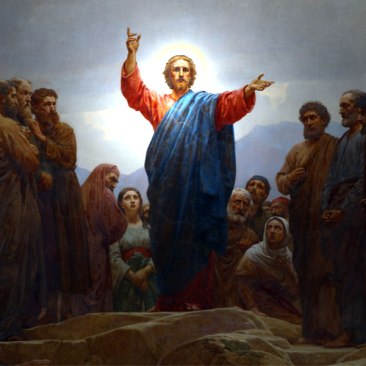
ProclamationoftheKingdomofGodHere are a few lines from the song “Awake My Soul” by Mumford and Sons.
How fickle my heart and how woozy my eyes I struggle to find any truth in your lies. And now my heart stumbles on things I don’t know. This weakness I feel I must finally show.  Lend me your hand and we’ll conquer them all But lend me your heart and I’ll just let you fall. Lend me your eyes I can change what you see. But your soul you must keep, totally free…

In these bodies we will live, in these bodies we will die. Where you invest your love, you invest your life …

Awake my soul, awake my soul Awake my soul!  For you were made to meet your maker. You were made to meet your maker!

In this Sunday’s gospel (Lk. 12:32-48) our Lord cautions his disciples to not have fear and to not set one’s life by the tempests of the world but rather by the expectation of God’s coming Kingdom.  “Set your heart in God’s Kingdom,” our Lord is saying.  “For where your treasure is, there also will your heart be.”  Our “treasure” – the hope we have as Christians – is not ultimately in this world and its struggles (although we are certainly called to live our faith and work to build up what is good and right) but in the Kingdom of God.

I think that Mumford and Sons, in their own way, are getting at this truth in their song.  “Where you invest your love, you invest your life … Awake my soul.  For you were made to meet your maker.”  Christian existence always stands within an expectation.  We are made for a purpose.  We are made to meet our maker and this expectation ought to guide our lives right here and right now.

When we have fear, we look past them to Christ.  When we experience discouragement, we find hope in God.  When trials come our way, we persevere in the promise of the Kingdom.  Our treasure has been set in heaven and so our hearts yearn for that.  But we live this concretely.  This, I think, is another truth brought out by the song.  “In these bodies we will live, in these bodies we will die.  Where you invest your love, you invest your life.”  Christian existence stands within an expectation yet it also is lived in the now concretely.

As Christians, we are meant to invest our lives.  Some have said that in the incarnation, God, in essence, put skin in the game.  The Son of the Father took flesh and suffered and died that we might have life and salvation.  God invested his life for us because that is where his love is.  We, too, must invest our lives.  The wounds of the world are our wounds, therefore we do not seek to flee these wounds, rather we try to bandage and heal them.

The parable of the Good Samaritan is powerful because the Samaritan chose to invest his life – he took the time that was necessary, he paid for the man’s lodging, he gave of himself – for the good of the stranger.  He was able to invest his life because his love was already there.  He saw the neighbor as brother and friend and not as stranger.

It is a bit of a paradox.  The Christian seeks to do the right thing because we are challenged to do the right thing but on a deeper level we strive to do what is right because our love is already there.  Soon to be canonized St. Teresa of Calcutta knew she was caring for Christ himself whenever she cared for the poor, sick, despised and ill.  Christ (our love) is in our brothers and our sisters.

Where you invest your love, you invest your life.

For where your treasure is, there also will your heart be.

Going to the Heart and Pope Francis at Auschwitz

30 Saturday Jul 2016

Posted by mcummins2172 in homily, Uncategorized

≈ Leave a comment

Tags

Auschwitz, Christ, Christian life, Christianity, discipleship, faith, hope, Pope Francis, St. Maximillian Kolbe, World Youth Day

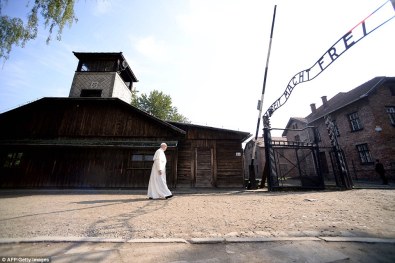
Pope Francis at auschwitz2You may be aware that World Youth Day is occurring in Krakow, Poland.  World Youth Day is a gathering of the Church’s youth and young adults for days of catechesis, worship and prayer.  The event culminates on Sunday with a Papal Mass.  Pope Francis is in Krakow with the world’s young people.  I have been viewing different images via social media from the gathering but what has struck me most is a six minute video of Pope Francis visiting the concentration camp at Auschwitz and taking some private moments of prayer in the cell which housed St. Maximillian Kolbe before his death.  St. Maximillian Kolbe was a Catholic priest who volunteered his own life in order to let another prisoner live who was a husband and father.  The video, which is all in silence, is almost surreal.  (I have posted the video on our parish Facebook page.)

pope francis at auschwitzPope Francis arrives simply at the cell as is his wont.  He first peers into the darkened cell then steps in.  A chair is brought in and the Holy Father sits and we are given this amazing image of the successor to St. Peter clad in white sitting in a darkened cell with his head bowed in prayer in this place of unimaginable horror.

In visiting this cell and the concentration camp, Pope Francis has once again gone to the wounded heart of our world.  He has visited this place before.  He went there when he first visited the small island of Lampedusa to pray for migrants who had died trying to cross the Mediterranean and he goes there whenever he visits with the poor and forgotten and those who live on the periphery of our world.  In all of his travels, Pope Francis is intent on going to the heart of our world.

He goes there because that is where our Lord went.  In today’s gospel (Lk. 12:13-21) a man approaches Jesus and asks him to arbitrate between he and his brother about an inheritance.  Our Lord brushes the request aside because he knows that is not the real heart of the matter.  The heart of the matter is the wound of greed and pride which lies within every human heart.  It is from this wound that unimaginable horrors can spring.  Our Lord will ultimately answer this wound as only he can – from the cross and the empty tomb.

“Take care to guard against all greed, for though one may be rich, one’s life does not consist of possessions.”  Life is not found nor is it gained through things.  Life is found and life is gained through relationships and friendship, especially those based in humility and honest care.

The first relationship is ours with God.  The man in the parable is thinking about many things and some of those may be very good such as providing for his family and loved ones but in the parable we see that he really gives no attention to God.  God says to the man, “You fool, your life will be demanded of you and to whom will go all these things (your worries, your plans) that you have prepared?”  God has no concern for our worries or our plans.  God only has concern for us.  God only wants relationship with us – not friendship with our plans or our imaginings.  Living in that honest relationship with God is where true life is found and gained.

The second relationship is ours with all of our brothers and sisters.  Pope Francis knows this.  Whenever he visits the wounded heart of our world he is visiting his brothers and sisters and there he encounters Christ.  It seems to me that outside of the Blessed Sacrament itself, the place where we most find and encounter our Lord is within our wounded brothers and sisters.  They are the presence of God to us and we, in our own woundedness, are the very same presence to them.  Do we live this truth in the way we interact with one another or will God also call us fools for missing what was right in front of us for so long?

Christ always goes to the true heart of the matter because that is where life is found.

He invites us to do the same.

Trinity Sunday: the way of love

21 Saturday May 2016

Posted by mcummins2172 in homily, Uncategorized

≈ Leave a comment

Tags

Christian life, Christianity, discipleship, faith, hope, Trinity, Trinity Sunday

Trinity-Rublev.jpg2Today we celebrate Trinity Sunday and as Church we reflect for a moment on the greatest of mysteries – God is a communion of persons – Father, Son and Holy Spirit. Here it is most helpful to remember the Christian understanding of mystery: mystery is not a puzzle to be figured out and then set aside but rather a reality to be lived and as we live the reality we, ourselves, are brought to deeper understanding.  On our own accord we cannot reason our way to the Trinity.  The Trinity is the ultimate truth both revealed and given and it is in living in this truth that we come to be grasped by it.  Our faith affirms that the best way to live within the truth of the Trinity (to be grasped and moved by the mystery) is the way of love.

In the first Letter of John we read that “God is love”. St. Augustine takes this biblical truth, enters within it and then concludes, “if God is love then God must be Trinity.”  The very dynamism and nature of love, he writes, “…presupposes one who loves, the one who is loved, and their love itself.”  Love links us into the reality of God and therefore the truest way to know God in the reality of Father, Son and Holy Spirit is to live authentic love.  As Christians it is not enough to just receive love and run the risk of getting trapped in a false sense of love which is only about self and ego, we must give love and give self if we are indeed to grow into the fullness of who we are meant to be and the fullness of understanding.

A lesson can be learned here from the two seas that are formed by the Jordan River; the Sea of Galilee and the Dead Sea. The Sea of Galilee receives the Jordan’s waters but then it lets it flow out again and the sea is full of life.  The Dead Sea receives the Jordan’s waters and keeps it, no streams flow out of it – it is in fact “dead” – no life in its waters or on its shores – a salty waste.  These two seas are a symbol to us.  Love has been given to us in our baptisms in the abundance of God’s generosity – God’s very triune life – but in order for it to fully bring life; this love must flow through us.  For Christians it is not enough to just receive love, we must give love.  It is in our triune DNA.  Further, this very giving of love is a pathway into knowledge of God.

God does the same for us. We ask God to give us a little love and God then asks us to first give Him and our neighbor all the little love we have.  Even if it just begins as the smallest of streams what little love we know must begin to flow out from us if our own hearts are to give life and know God.

The Christian knows, because of the Trinity, that true life and true joy is found not just in consuming and receiving but in the giving of self for other people. Authentic love that is freely given diminishes no one, rather it fulfills and brings life and understanding.  To give true love is a pathway into knowledge of God and the very mystery of the Trinity.

St. Augustine is correct. Because God is love it follows that God is Trinity.

The “Gathering In” of Holy Week

21 Monday Mar 2016

Posted by mcummins2172 in Holy Week, Uncategorized

≈ Leave a comment

Tags

Christ washing feet of disciples, Christian life, Christianity, faith, Holy Week, Love of Christ

Christ Washing Peter's Feet, Ford Madox BrownSo much of the Christian life seems to be about “going out”. We are called to go out to proclaim the good news.  We go out to share Christ’s love.  We go out to serve others.  This is good and authentic to our faith and it is the mandate that Christ has given us as Church to proclaim the good news to the ends of the earth.
That being said, it is interesting to note that Holy Week – the most sacred days of our year as Christians – is a time of “gathering in”. This is appropriate and right, I believe, because Jesus, himself, wants this time with his disciples.  More than just a remembering on our part; Jesus desires to spend these days with us.

In chapter thirteen of John’s Gospel we read the evangelist’s account of the Last Supper. John begins by setting the context as being the time of the celebration of Passover.  More so than the great Jewish feast; this is to be the time when our Lord will “pass over” death in order to return to the Father in triumph.  Certainly our Lord is preparing himself for the hour which has arrived but, important to note, he is also much concerned to prepare his disciples.  He knows that they will be tested over the next few days, he knows that one will betray him, that one will deny him and that they will flee and be afraid.  He also knows that eventually they will be sent out into the whole earth to proclaim the good news.  Jesus knows the weakness, limits and confusion of his disciples yet he loves them. Before the festival of the Passover, Jesus, knowing that his hour had come to pass from this world to the Father, having loved those who were his in the world, loved them to the end. (Jn. 13:1)

Scholars suggest that the Greek term “to the end” has two connotations. It can mean, “to the end of his life” and it can also mean, “to the very limit, the very maximum, of love”.  Christ loves his disciples, his “little ones” to the fullest extent and he greatly desires to spend this time with them.

There is a great tenderness of love that is being expressed in the account of the Last Supper. Jesus takes the role of the servant when he washes his disciples’ feet.  Peter knows that this is a fundamental break with the prevailing custom of the time.  It was the role of the servant, the slave to wash the feet of the guests not the role of the head of the household.  Yet, Jesus is the head of the household who is willing to serve and he tells his disciples that they must do the same.  They do not fully understand now but they will later.  More than just a nice symbol, token or remembrance, this call to serve and die to self is the royal road on which the disciple directly encounters our Lord.

I give you a new commandment: love one another; you must love one another just as I have loved you. It is by your love for one another, that everyone will recognize you as my disciples.  (Jn. 13:34-35) The love that we must have as Christians must be based in that very love that Christ has for us and it is in this love particularly that his little ones will be recognized as his disciples.

At this point Peter asks a question from which we all benefit; Simon Peter said, “Lord, where are your going?” Jesus replied, “Now you cannot follow me where I am going, but later you shall follow me.” Peter said to him, “Why can I not follow you now?  I will lay down my life for you.”  “Lay down your life for me?” answered Jesus.  “In all truth I tell you, before the cock crows you will have disowned me three times.” (Jn. 13:36-38)

“Now you cannot follow me where I am going, but later you shall follow me.” Yes, later Peter will follow our Lord to the sacrifice of his own life and beyond that to the glory of eternity with God but there is another, even more fundamental, following implied here. Peter must first learn the way of love that our Lord has initiated at the Last Supper.  Peter (the little one who balked at having his feet washed) is not yet ready to learn this true extent of love that the disciple of Christ is to be recognized by but he will be ready later.  And it is by the royal road of this love that Peter will later be able to then let go of his very self, even to the point of death.

We are all so much like Peter. We all think we have so much figured out yet, in truth, we all have so much to learn but Christ loves us to the end.

These days are more than just a remembrance. These days are more than something we do to acknowledge our faith.  Christ, our Lord, desires to spend these days with us.

Christ gathers us in and Christ loves us to the end.

The Transfiguration of our Lord: Extraordinary and Ordinary

20 Saturday Feb 2016

Posted by mcummins2172 in homily, Uncategorized

≈ 1 Comment

Tags

faith, hope, Lent, transfiguration, Transfiguration of Christ

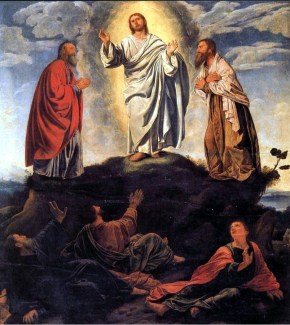
transfiguration of Jesus1

The Transfiguration of our Lord by Giovanni Girolamo Savoldo

We can say that Lent is an extraordinary time lived in an ordinary season. We fast, we pray, we do works of charity – all while we also go about the ordinary rhythm of our lives.  We still go to work, we still go to school, we visit with one another, we pay bills…  The ordinary rhythm of life continues on even while we make the extraordinary journey of Lent.

We have echoes of this “extraordinary in the ordinary” in our readings for this second Sunday of Lent. In the gospel (Lk. 9:28b-36) our Lord takes Peter, James and John up on the mountain to pray.  The three disciples experience the transfiguration of our Lord as he is in prayer to the Father.  They catch a glimpse of the truth of who Christ is and they are awestruck … but the world continues on.  The other nine disciples were probably about the duties of an ordinary day, for the people in the closest village it was just another day like any other.  The world did not stop even as this amazing event occurs.  Peter, understandably, wants to remain in this extraordinary experience but the gospel goes on to say that he “did not know what he was saying.” Our God does not disdain the ordinary.  For God the extraordinary and the ordinary are not opposed.

Just as Jesus took the three disciples up the mountain to pray, we are told that God “took Abram outside” to see and count the number of the stars (Gen. 15:5-12,17-18).  Our God values our company.  He does not like to walk alone.  Even with the surreal and mystical image of animals being sacrificed and Abram in a trance, God binds himself to an ordinary group of people, Abram’s descendants, in order to walk with them through the running of time and history and thereby bring them (and through them all of humanity) into the fullness of his Kingdom.  Christ himself values our ordinary company.  The gospels are consistent in this message.  Christ does not see himself as some tragic, solitary hero.  Christ binds himself to his ordinary, little group of followers even as he is fully aware of their weaknesses and their limits.

“Yes,” says the author of Philippians, “our citizenship is in heaven” and to this we direct our lives but we now live our lives here in this world so “stand firm in the Lord” (Phil. 3:17-4:1). Our actions here in our ordinary world and lives should reflect the extraordinary glory of our citizenship in heaven which is the hope we journey toward.

For God the extraordinary and the ordinary are not opposed. The same ought to be true for us.  We can be awakened, our eyes can be opened to see the extraordinary in the ordinary if we allow ourselves to be “taken up” by Christ.  Just as Christ took the three disciples up the mountain to pray, just as God took Abram outside to gaze at the heavens, we need to allow Christ to take us and pull us away from our own selfishness and draw us into his own life.  If we allow this to happen then we can participate in a greater reality, our eyes will be opened and we will begin to see as Christ sees.  We also can be transfigured.

It has been said that the transfiguration “means breaking boundaries. It means contemplating how good the Lord is, how wide his horizons are, and how deep the demands of his Gospel are.”  May each one of us be a little more transfigured during this extraordinary time lived in an ordinary season.

The witness of Eli: Mentoring Young People

24 Sunday Jan 2016

Posted by mcummins2172 in Uncategorized, young people

≈ 1 Comment

Tags

Eli and Samuel, faith, mentoring, Young Adult Ministry, younger generation and faith, Youth Ministry

hannah taking samuel to eli  222On January 31st, the Church will celebrate the Feast of St. John Bosco – a man who devoted his life to helping young people.  One of the greatest blessings of our Christian faith is the witness of men and women throughout history who let go of their own needs and worked tirelessly for the good of youth and those generations who were to come after them. The witness of these men and women should call us, as the Church, into a reflection on how best to minister to youth and young adults, especially in a time and culture that is “youth obsessed”.  We can readily see how this obsession plays itself out in all areas of society – the entertainment and news media industry, politics, sports, education, relationships – just to name a few.  A fair question is how might this “obsession with youth” bleed into and perhaps even negatively influence the Church’s own ministry to youth and young adults just as they are seeking to claim their own Christian faith and discipleship and how might we best avoid the danger of this obsession?

For full disclosure, I will begin by stating that one of the core convictions I gained in my ministry with youth and young adults is that young people do not benefit from older people trying to act or pretend young; rather young people benefit when their elders remember their own age and are authentic to who they, themselves, are.

To use an image from Scripture: in our world today, young Samuels need the guidance of older and wiser Elis.  For any person ministering to young people, 1 Samuel 2-3 is an important and essential point of reference.  There is much insight to be gained in continually returning to these chapters. Eli is one of the unsung heroes of Scripture.  For our purposes here, we will make use of the famous encounter between the young Samuel and the elder Eli as a way to explore some thoughts.

In the second chapter of 1 Samuel we are told that the Lord had withdrawn his favor from the house of the priest Eli due to the corrupt actions of his two sons, Hophni and Phinehas.  Yet the young Samuel “continued to grow both in stature and favor with the Lord and with men.” (1 Samuel 2:26)  In the third chapter we find the well-known scene of the young Samuel hearing the voice of the Lord, mistaking it for the voice of the old priest and going each time to the sleeping Eli until finally Eli catches on to what is happening and instructs the young man in how to respond.

Our focus here is more on Eli than Samuel.  There are four things that Eli does and personifies which are worthy of reflection and emulation.

  1. Eli has a relationship with the young Samuel while not pretending to be Samuel’s peer.
  2. Eli was a man of prayer who was able to eventually recognize what was occurring and then give good instruction to the young man.
  3. Eli put what was in Samuel’s best interest before his own.
  4. Eli trusted in God.

The fact that the young Samuel is comfortable in seeking out the elder Eli each time he hears the voice of the Lord testifies to an established relationship of trust between the two persons yet nowhere is there expressed any confusion between their differing roles.  Eli knows who he is and therefore he is comfortable in his own skin and he has no need to pretend to be something that he is not.  An approach to Christian faith and ministry that needs to abandon itself and our Christian heritage in order to chase after the world in the hopes of relevancy lacks maturity and therefore any real depth of insight to offer a young person who is searching.  It might be flashy in the moment but beyond that there is just really not that much there.

What enabled Eli to be comfortable in his own skin and act out of his own authenticity was that he was a man of prayer.  Like any true discipline, the fruit of prayer is only born after the establishment of a hard-fought for habit and practice.  Let’s be honest, the discipline of prayer is not easy. That which enabled Eli to finally recognize what was occurring with the young Samuel was a lifetime spent devoted to the often daily and mundane work of prayer.  An approach to Christian faith and prayer which seeks to manufacture “spiritual highs” at all times rather than developing the daily discipline of prayer is more about feeding addiction than honest Christian spirituality.  Such an approach is in fact a disservice.  The life of Christian faith grows gradually, often unnoticed and through daily habit.

Not only did Eli know what the Lord’s call meant for the young Samuel; he also knew what it meant for him and his family.  Frankly, God’s calling of Samuel meant the end of the road for Eli and his own sons.  It would not be out of place to believe that this recognition must have crossed Eli’s mind along with the temptation to intentionally misguide the youth in an attempt to watch out for his own sons.  Yet, Eli did no such thing.  Eli put Samuel’s best interest before his own and even that of his sons.  This will forever be in Eli’s favor.  To let go of self for the good of another person takes a mature and wise heart. Wisdom is sorely lacking in our world today and one way that this can sadly be seen is when members of an older generation cannot let go of their own interests, needs and particular viewpoints in deference to what is in the best interest of the younger generation.  When we let go of our own needs to help those who come after us then we make a choice for hope and a choice for the future.

I believe that one of the many contributing factors behind younger generations no longer defining themselves as religious is their own experience of their elders’ inability to put the needs of others before their own – the “elders” in this context being a generation of people who would more readily define themselves as “religious”.  When young people no longer define themselves as religious are they forsaking religion per se or are they reacting against impoverished examples of religion which they have seen?  True maturity is found in not always needing to put oneself first. True maturity is expressed in seeking the good of the other person.  It is this type of maturity that truly aids the next generation, as shown in this encounter between the elder Eli and the young Samuel.

What enables this letting go is a profound trust in God.  Eli had such a trust.  Following upon God’s revelation to Samuel; Eli requests that the young Samuel inform him of all that had been spoken by the Lord, holding nothing back.  Samuel shares all, including the ending of Eli’s house.  Eli responds, “It is the Lord, let him do what seems good to him.” (1 Samuel 3:18)  Eli’s trust in the Lord was perhaps one of his greatest gifts to the young Samuel.  A faith obsessed with pursuing youth and relevancy lacks this depth of trust because it is a depth that can only be achieved by negation and passing through the dark night of the senses.  At this point, everything Eli had been about was negated yet he is able to offer this profound statement of trust in the Lord.  In the end, the most important thing is that God’s will be done.

It does the Church no good to chase after the world.  Yes, we live in the world and there are truly positive things to be gained and we must seek to encounter and dialogue with the times we find ourselves in but it does no good if we are co-opted and lose our own soul in the process.  Eli has much to teach us about helping younger generations find and know God while, at the same time, remaining authentic to who we ourselves are.

← Older posts
Newer posts →
Follow The Alternate Path on WordPress.com

Enter your email address to follow this blog and receive notifications of new posts by email.

Previous Posts

  • December 2025
  • November 2025
  • August 2025
  • April 2025
  • February 2025
  • January 2025
  • December 2024
  • August 2024
  • July 2024
  • June 2024
  • May 2024
  • April 2024
  • March 2024
  • February 2024
  • January 2024
  • December 2023
  • November 2023
  • October 2023
  • August 2023
  • July 2023
  • May 2023
  • February 2023
  • January 2023
  • December 2022
  • August 2022
  • July 2022
  • April 2022
  • January 2022
  • December 2021
  • September 2021
  • August 2021
  • July 2021
  • May 2021
  • April 2021
  • January 2021
  • December 2020
  • November 2020
  • October 2020
  • August 2020
  • July 2020
  • May 2020
  • April 2020
  • March 2020
  • February 2020
  • December 2019
  • October 2019
  • September 2019
  • August 2019
  • July 2019
  • May 2019
  • April 2019
  • March 2019
  • February 2019
  • December 2018
  • November 2018
  • October 2018
  • August 2018
  • July 2018
  • June 2018
  • April 2018
  • March 2018
  • February 2018
  • January 2018
  • December 2017
  • November 2017
  • September 2017
  • August 2017
  • July 2017
  • June 2017
  • May 2017
  • April 2017
  • March 2017
  • February 2017
  • January 2017
  • December 2016
  • November 2016
  • October 2016
  • September 2016
  • August 2016
  • July 2016
  • June 2016
  • May 2016
  • April 2016
  • March 2016
  • February 2016
  • January 2016
  • December 2015
  • November 2015
  • October 2015
  • September 2015
  • August 2015
  • June 2015
  • May 2015
  • April 2015
  • March 2015
  • February 2015
  • January 2015
  • December 2014
  • November 2014
  • October 2014
  • September 2014
  • August 2014
  • July 2014
  • June 2014
  • May 2014
  • April 2014
  • March 2014
  • February 2014
  • January 2014
  • December 2013
  • November 2013
  • October 2013
  • September 2013
  • August 2013
  • July 2013
  • June 2013
  • May 2013
  • April 2013
  • March 2013
  • February 2013
  • January 2013
  • December 2012
  • November 2012
  • October 2012
  • September 2012
  • August 2012
  • July 2012
  • June 2012
  • May 2012
  • April 2012
  • March 2012
  • February 2012
  • January 2012
  • December 2011
  • November 2011
  • October 2011
  • September 2011
  • August 2011
  • July 2011
  • June 2011
  • May 2011
  • April 2011
  • March 2011
  • February 2011
  • January 2011
  • December 2010
  • November 2010
  • October 2010
  • September 2010
  • August 2010
  • July 2010
  • September 2008
  • August 2008
  • April 2008
  • March 2008
  • February 2008
  • January 2008
  • December 2007
  • November 2007
  • October 2007
  • September 2007

Popular Posts

  • thealternatepath.org/wp-c…
  • thealternatepath.org/wp-c…
  • thealternatepath.org/wp-c…
  • thealternatepath.org/wp-c…
  • thealternatepath.org/wp-c…

Blog at WordPress.com.

  • Subscribe Subscribed
    • The Alternate Path
    • Join 156 other subscribers
    • Already have a WordPress.com account? Log in now.
    • The Alternate Path
    • Subscribe Subscribed
    • Sign up
    • Log in
    • Report this content
    • View site in Reader
    • Manage subscriptions
    • Collapse this bar
 

Loading Comments...