• About The Alternate Path

The Alternate Path

~ Thoughts on Walking the Path of Christian Discipleship

The Alternate Path

Tag Archives: faith

The Wedding at Cana: Heart speaks to Heart

16 Saturday Jan 2016

Posted by mcummins2172 in homily, Uncategorized

≈ Leave a comment

Tags

disciple, discipleship, faith, Heart speaks to Heart, Wedding at Cana

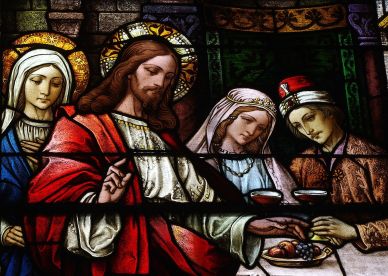
The-wedding-at-Cana.3There is much worthy of reflecting upon in today’s gospel (Jn. 2:1-11) which gives the account of our Lord’s first public miracle – the turning of water into wine and the wedding in Cana. We can see in the image of the couple running out of wine on their wedding day a symbol of the ending of the Old Covenant and the freshness of the New Covenant beginning with our Lord turning water into wine.  We can see in Mary’s noticing of the wine running short a concern for the young (and probably poor) couple who will soon be greatly embarrassed by not being able to provide for their guests.  The first step of true mercy is noticing needs and not being indifferent toward others in their plight.  This is a good witness Mary gives us during this Year of Mercy.
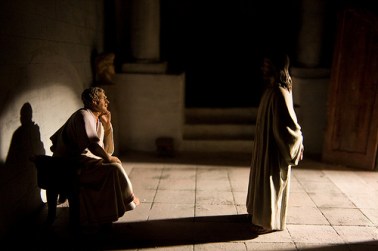
What I was struck by in praying over this gospel passage was the depth of the relationship (and this word is important) between Jesus and his mother.  Mary does not even need to ask.  She knows her son and even if she does not know fully how everything will play out she knows who he is and why he has come. “They have no wine,” is all that she needs to say.  Our Lord knows what she is implying, “Woman, how does your concern affect me? My hour has not yet come.”  Our Lord acknowledges the truth of Mary’s concern and for a brief instant we are invited into this amazing and profound exchange between the sacred heart of Christ and the immaculate heart of Mary.  Bl. John Henry Cardinal Newman had a phrase regarding the true place and moment of encounter and conversion in life: “Heart speaks to Heart”. “Fill the jars with water,” Mary responds.  Jesus, who is God made man, acquiesces; “Draw some out now and take it to the headwaiter.” The water is turned into wine which nourishes and refreshes!

Heart can only speak to heart in the willingness to enter into relationship. New life (and even miracles) can occur only when we let go of isolation and fear.

When St. Francis began the great spiritual journey of his life he made a simple prayer to God for an “honest faith”. Part of having an “honest faith” is to live a personal relationship with Christ.  We can relate to Christ in a multitude of ways but that does not make them fully honest and therefore life-giving.  I can see Christ as a great human being worthy of admiration or a wise teacher whose lessons are worthy of my attention and learning.  I can see Christ as the authentic human person.  I can see Christ as a means to my personal well-being.  There might be some truth to these viewpoints of Christ but they all fall short both of honest relationship and of who Christ is.

Christ is savior. This is the honest faith of the Christian and it is the most profound relationship any of us can have with Christ.  When we know Christ as savior then we know him as the one who saves us from sin and death and the one who calls us to follow him wholeheartedly.  Christ is savior and this is truth – pure and simple.

Faith can be life giving and even transformative only when it is lived in relationship with Christ. Ideas of Christ might be interesting and even satisfy for a time but it is only relationship with Christ that turns water into wine.  Mary witnesses this for us.  Heart speaks to heart.

We should all learn from St. Francis and pray for an “honest faith” – a faith willing to let heart speak to heart. Our hearts to the heart of our Savior and his sacred heart to our little hearts.

Gifts from my parents: a reflection in faith

06 Wednesday Jan 2016

Posted by mcummins2172 in Uncategorized

≈ 2 Comments

Tags

faith, family, The illative sense

What is it that leads people into the Catholic Church? I recently found myself reflecting on this question as I visited the gravesites of my parents, both of whom were converts.  I do not have a neat, black and white answer and I don’t remember my parents ever giving one either.  It is interesting how parents can remain a mystery to their children.  A mystery that only deepens after the parent dies and the children are left with jigsaw puzzle memories.

My parents lived their Catholic faith although I think both would admit their struggles. My father was an alcoholic – a disease which he would never overcome that took his life and his marriage.  My mother, for the good of her boys, finally separated from my father but such a disruption is never perfect nor good.  Faith-wise, my family was thrown into limbo for most of my childhood and teenage years.  At best we were twice a year Catholics, lost and confused – reeling from the effects of the modern, shattered family.

IMG_3887My father was brought up in a Presbyterian household although how staunch it was is open for debate. A story I once heard was of an exchange which occurred sometime after my father’s conversion when my two great aunts from Mississippi made a visit to my grandfather and grandmother.  Noticing a little dust on the family Bible one aunt is said to have remarked, “Maybe if that Bible was not dusty, Jack would never have converted.”  A number of years later my own aunt (my father’s sister) would tell these same two great-aunts, “Michael has decided to enter Catholic seminary and we are very proud.”  The southern equivalent of drawing a line in the sand!

My grandfather was a self-made and successful businessman who established a local business and, at some point, acquired a bottling company in Cuba. This was pre-Castro when Cuba was open and, apparently, quite the place to be.  Every now and then my father would share memories of being a young boy visiting Cuba and he would smile when he talked of visiting some Catholic churches and shrines in the country.  Even to the end of his life my father enjoyed spending whole evenings sitting and listening to records of Cuban music.  I cannot help but believe that the lived faith my father witnessed in Cuba as a young man lit a spark that eventually led him to embrace Catholicism.

IMG_3889My mother did not grow up in affluence as my father did. Her childhood was spent in a small town in North Carolina.  Nominally, I believe that she was raised Baptist but it seems that church was not a major factor in her younger years.  She did once tell me that for a while she worked at a local Methodist retreat center frequented by the young (and then single) Billy Graham.  “All the young ladies would swoon over him,” my mom once confided.  She never said if she was one of the ones swooning.  Right out of high school my mother left Brevard to work in book-keeping for a man who owned a number of hotels scattered around the southeast.  Mr. Faw was a good man.  He looked like Colonel Sanders, the founder of Kentucky Fried Chicken, and for the fun of it would sometimes dress like the fast food icon just to see people’s reaction.  Mrs. Faw was of Eastern European descent and she once gave my mother an eighteenth century lithograph of the Virgin Mary holding the infant Jesus.  My mother treasured this gift and today it hangs on my wall.

IMG_3888At one point (prior to marrying my father) my mother was sent to a hotel owned by Mr. Faw in Oak Ridge, TN. At that time it was the only hotel in the city and therefore the temporary residence of visiting scientists from all over the world who came to do work and research in the government-run laboratories.  My mother met a wide variety of people those years and at one point was approached by the FBI to help keep tabs on a visiting couple that the government thought had Russian connections.  For this effort my mother received a signed letter from J. Edgar Hoover thanking her for her service to her country.   One scientist my mother met and became a good friend of was a Franciscan nun from the Northeast.  She taught at a university and had come to Oak Ridge to do some research.  She and my mother remained friends for many years and I do believe that her friendship and that of Mr. and Mrs. Faw were what helped my mother in recognizing the beauty of the Catholic faith which, in turn, enabled her to make the choice to become Catholic.

When I was studying theology I took a class on the thought of Bl. John Henry Cardinal Newman. It was in that class that I first heard the term, “The Illative Sense”.  Fundamentally, the illative sense in regards to faith, is that capacity that the human person has to draw from a multitude of converging and intersecting common human experiences the belief and sure conviction that there is a transcendent dimension to reality and that there is a personal God who seeks encounter with us.  One experience alone is not enough but when the experiences add up we have the ability to connect the dots.  The illative sense is not so much an academic exercise (although that might be an essential component) as it is a fundamental living recognition of experience.  Things just kind of add up and it is in this “adding up” that a person is able to make the step in faith.

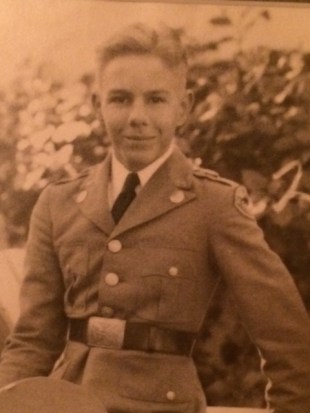
2014-06-14_22-38-52_408My father and mother each walked their own journey of life and of faith (like we all do) but through their journeys and their own reflecting on experiences (i.e. use of the illative sense) they both came to belief in God and in the Church. I do not know all the experiences that added up to their each making their choice for faith.  I never will and that is probably for the best.  There are some things rightly left between the soul and God alone.  These are and will remain the missing jigsaw pieces of their own journeys but I must admit that I do take great delight when I hear a story or memory shared that sheds a little more light on the journey each one had.  These insights bring me joy and, I believe, are gifts given to help us who remain to continue our own journeys of life and faith.

The Feast of the Epiphany: following bees and following the star

02 Saturday Jan 2016

Posted by mcummins2172 in Epiphany, Uncategorized

≈ 2 Comments

Tags

belief, Epiphany, faith, homily, hope, Star of Bethlehem

beeSome of the best advice I ever came across regarding homily preparation was in an essay written by Annie Dillard. In the essay Dillard made use of the imagery of following bees as a way of exploring the adventure of writing.  If you want to find a bee hive (and honey) then follow a bee.  If you lose sight of the first bee then wait and when you catch sight of another bee follow it.  By so doing you will eventually be led to the bee hive.  The same is true for writing.  When an idea or thought, no matter how strange or non-sensical it seems at the outset, pops in your head then follow it.  Let the thought lead you even if you do not know exactly where it is going.  It may take you to where you want to go.  If it takes you only so far then stay there and wait for the next thought.
When I begin to pray over the readings I try to pay attention to what “pops” for me. It might be an image or a phrase or a play of words.  Then I try to let that lead me.  It may take me all the way to where I want to go or it may not.  It may take me only so far.  It may take me to another thought (sometimes one which I was not even expecting) or a book I once read, or a movie scene or a song lyric or a memory.  There are many times that I sit down to write out a homily following that first “pop” that I really have no idea where I am ultimately going or I end up in a spot I did not think I would end up at.

Following bees takes patience, trust and faith. Following a star also takes patience, trust and faith.  But certainly there is a difference.  A bee is a small thing, easily overlooked and lost, and the star of Bethlehem must have shown bright for all to see.  The gospel (Mt. 2:1-12) tells us that the magi from the East recognized the star but it seems that all of Jerusalem was oblivious.  Herod, after all, had to ascertain from the magi the time of the star’s appearance.  Apparently, the star had not really made much of an impression upon Jerusalem.  Maybe the star of Bethlehem was not as bright and overpowering as we so often assume from Christmas imagery?  Maybe it takes more faith, more trust and more patience to follow a smaller star than a larger and brighter one?  Yet the magi followed.  They raised their eyes to the heavens and saw the star and they followed.

In the first reading (Is. 60:1-6) we hear the prophet Isaiah admonishing Jerusalem to rise up! Yes, darkness covers the earth and there are thick clouds that envelop the people but the light has come! “Raise your eyes and look about,” proclaims the prophet.  Yes the light has come but for our part we must raise our eyes.  We can almost say that Jerusalem was content to be oblivious and to be oblivious means to keep our eyes down and not even dream of raising them.  To be oblivious means to give in to the darkness of sin and violence and the thick clouds of resignation that tell us that this is just the way things have always been and will always be.

In the Epiphany we are no longer afforded the luxury of remaining oblivious. The light of God has appeared for all nations, for all peoples and for all times!  As Christians we must learn the discipline of the magi.  We must raise our eyes and look about!  We have to learn the faith, the trust and the patience needed to follow the star.  We have to be willing to let our faith lead us even when do not fully know where it is going.  We have to learn to follow even the smallest stars that point us toward God and his Kingdom.  And we have to resist, in every way, the voices of resignation – the thick clouds that can cover the earth and cover our hearts.

As Christians, we celebrate the Epiphany – the light of Christ has dawned for all peoples and nations. As Christians, we must be the Epiphany.  Our very lives must reveal the light of Christ in our world.  We begin to do this by making the choice to raise our eyes, to look about and to follow the star of God’s Kingdom.

Mary’s witness: Fourth Sunday of Advent (C)

19 Saturday Dec 2015

Posted by mcummins2172 in Uncategorized

≈ Leave a comment

Tags

Advent, Christian life, faith, God's promise, hope, Virgin Mary

maryTwo things struck me as I prayed over the gospel this past week. The first is when Luke tells us that Mary entered the house of Zechariah and greeted Elizabeth.  I found myself returning again and again to that scene in my imagination.  How joy-filled it must have been!  Mary stepping into this house which for too long had been barren of the sound of new life, the sound of children.  Elizabeth said that the child in her womb leapt for joy at the sound of Mary’s greeting – a confirmation of what the angel had promised Zechariah.  What was thought barren will now bring forth life and it will be a life that, in turn, will proclaim the coming of the Messiah!  For nothing is impossible to God.
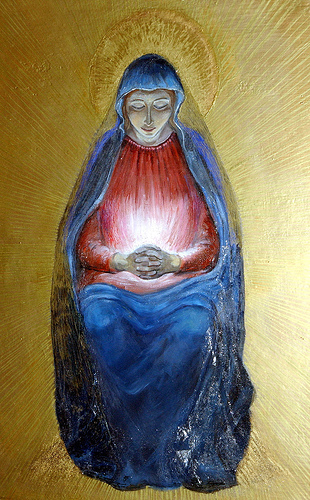
Mary comes to Zechariah and Elizabeth not as we are, weakened and wounded by sin, rather she comes as God would have us. On December 8th we affirmed that Mary is the Immaculate Conception.  In a great mystery she is preserved from sin.  In Mary we see not the exception but in fact the true norm – the human condition as God intends.  Mary reveals our true nature and dignity where sin obscures, denigrates and denies.  The very presence of Mary reveals that sin and evil are, in fact, the exception and will always be so.  Sin and evil have no true power.  Sin and evil can destroy and tear down life but they can never bring forth new life.  God alone is the author of life.

Mary is the true missionary of hope and Mary stands as the great witness to the impotence of evil.

The second thing that struck me is when Elizabeth proclaims Mary “blessed” because she believed that what the Lord had spoken to her would be fulfilled. Someone recently asked me if Mary could have said “no” to the angel Gabriel and refuse God’s request.  Mary certainly had free will in that moment and it was a free will untainted by original sin.  Mary chose to believe.  Despite all things to the contrary – the darkness and violence of the world, the confusion of what the angel’s words meant, the scandal that would be in the eyes and thoughts of people – Mary chose to believe that what God had spoken to her would be fulfilled.

This last Sunday of Advent, standing before the celebration of Christmas, Mary witnesses to us the true impotence of evil and that God alone is the author of life. Mary also witnesses to us the choice to believe that what God has promised God will fulfill.  We need to live the hope of this season and we need to learn from Mary how to be missionaries and witnesses of hope.

Recently Archbishop Joseph Kurtz (current president of the U.S. Conference of Bishops) shared the following words in a statement regarding the violent times we find ourselves in and how we are to respond as Christians.

We must not respond in fear. We are called to be heralds of hope and prophetic voices against senseless violence, a violence which can never be justified by invoking the name of God. Watching innocent lives taken and wondering whether the violence will reach our own families rightly stirs our deepest protective emotions. We must resist the hatred and suspicion that leads to policies of discrimination. Instead, we must channel our emotions of concern and protection, born in love, into a vibrant witness to the dignity of every person. We should employ immigration laws that are humane and keep us safe, but should never target specific classes of persons based on religion. When we fail to see the difference between our enemies and people of good will, we lose a part of who we are as people of faith. Policies of fear and inflammatory rhetoric will only offer extremists fertile soil and pave the way toward a divisive, fearful future. As Pope Francis reminded us in his speech to Congress: “The yardstick by which we measure others is the yardstick by which time will measure us.”  

When we recognize the impotence of evil, we stand with Mary. When we make the choice to not give in to fear and to believe that what God has promised God will fulfill then we stand with Mary.

Come, Lord Jesus!

The Humble and Patient King

21 Saturday Nov 2015

Posted by mcummins2172 in Christ, Christ the King, Christian living, Feast of Christ the King, holiness, homily, humility, Uncategorized

≈ 2 Comments

Tags

Christ, Christian life, faith, Feast of Christ the King, humility

jesus before pilateAt one point in his commentary on this Sunday’s Responsorial Psalm (Ps. 93), St. Augustine shares this observation: Humble people are like rock.  Rock is something you look down on, but it is solid.  What about the proud?  They are like smoke; they may be rising high, but they vanish as they rise. 

In the gospel for today’s Feast of Christ the King (Jn. 18:33b-37) we are given the humble and patient God.  Pilate (representative of all the powers of the world but powers that really have no authority of Jesus) questions Christ – a seemingly defeated and isolated man, abandoned by his friends and followers and mocked by his own people.

Pilate answered, “I am not a Jew, am I?  Your own nation and chief priests handed you over to me.  What have you done?”  Jesus answered, “My kingdom does not belong to this world.  If my kingdom did belong to this world, my attendants would be fighting to keep me from being handed over to the Jews.  But as it is, my kingdom is not here.”  So Pilate said to him, “Then you are a king?”  Jesus answered, “You say I am a king.  For this I was born and for this I came into the world, to testify to the truth.  Everyone who belongs to the truth listens to my voice.”  

Today, we as Church, proclaim Christ is King yet, like Pilate, our understanding and idea of this title is often limited.  It is interesting to note on this Feast of Christ the King that our Lord, himself, never took on the title of “king”.  Even on this most final and bitter of stages; when the fallen pride of our human condition would eagerly grasp onto a title of assertion to throw back into the face of the powers of this world (how often we see this exalted on our movie screens in the myth of redemptive violence) our Lord chooses a different path.  “You say I am king.  For this I was born and for this I came into the world, to testify to the truth.  Everyone who belongs to the truth listens to my voice.”

Our Lord rejects the title “king” and by so doing he forswears the fallen world and all it has to offer – self-indulgent pride, sad divisions and triumphalism and all forms of violence.  Our Lord chooses a different path – the path of humility.  “For this I was born and for this I came into the world, to testify to the truth.  Everyone who belongs to the truth listens to my voice.”  

Humility has more in common with truth than does pride and power.  In fact, humility is essential if there is to be any real understanding of truth.  If we would know the truth then any temptation to put ourselves and our way of thinking at the center of creation (and these temptations come in all shapes and sizes: blue and red state, enlightened secularist and righteous religious, male and female, rich and poor, all colors of skin and shades of culture) must be put aside.  Everyone (I repeat “everyone”), needs to accept the purifying light of humility because the only constant, the only necessary is God – all else is contingent upon God’s will.  We are not necessary.  The more we realize this then the more we open ourselves to those moments when we catch a glimmer that God is indeed the “rock”, the only solid basis of all creation.  We also catch a glimpse of the infinite patience of God who submitted Himself to our illusions and misguided hatred.  Gratitude grows in our hearts when we honestly acknowledge and reflect upon the humility and patience of God.

Ours is a different type of king.  All is grace.

Do you want joy and gratitude?  Then look to the one we proclaim “king” yet who never sought that title for himself.  “For this I was born and for this I came into the world, to testify to the truth.  Everyone who belongs to the truth listens to my voice.”  Cultivate humility.  Humility leads us to truth and truth brings gratitude.

Thoughts on the Sunday readings: Politicians, Jesus and Zen Foxes

12 Saturday Sep 2015

Posted by mcummins2172 in faith, homily, trust

≈ Leave a comment

Tags

Christian life, discipleship, faith, Jesus, trust

Jesus - way, truth, lifeSo … we are into the presidential primary election season. Already the news is happily swamped with politicians posturing themselves. We, for our part, keep watching and asking ourselves, “Who is the one that seems to have that presidential timber and swagger?” In light of the political climate we find ourselves in as well as this Sunday’s gospel reading, a question to be entertained is, “If Jesus were running for my party’s nomination, would I vote for him?”

Truth be told, I do not think Jesus would receive many votes in either political party but I also do not think Jesus would really care! Throughout the gospel our Lord does the one thing that a politician would never do because the politician knows it to be political suicide: Jesus never confuses the illusion of control with true leadership and true personhood. Therefore, he never needs to pretend control. Our Lord is free of this temptation.

In today’s gospel (Mk. 8:27-35) we are told that Jesus is walking with his disciples and he asks them, “Who do people say that I am?” This question, itself, sets Jesus apart from the career politician. The politician says, “Let me tell you who I am. These are my skills… This is what I have achieved…” Jesus doesn’t do that, rather he asks, “Who do people say I am … who do you say I am?” Jesus knows full well who he is and what his purpose is but he does not impose himself. Rather, he waits. He allows the Father to work in the hearts of his followers and he allows his disciples to come to him. He allows them to come to the realization of who he is. Jesus does not force his disciples’ recognition. He needs neither to control nor manipulate the situation.

Then and only then, he begins to teach them that the Son of Man must suffer, be rejected, be killed and then rise. Imagine this as a political platform! We cannot and this is why Peter’s reaction is so perfect because it is our honest, human, knee-jerk reaction! “No, Lord, this cannot be! You do not need to suffer! You do not need to be rejected! You can control the situation! You are the Christ!”

But leadership and control are not necessarily synonymous. Our Lord wants to show us a different way of both authentic leadership and personhood. “Get behind me, Satan. You are thinking not as God does, but as human beings do … whoever wishes to save his life will lose it, but whoever loses his life for my sake and that of the gospel will save it.”

Our Lord is showing us a way of living which can forego the illusion of control. Isn’t it interesting to note how so many times after our Lord performs a miracle he is quick to say to the person healed, “Your faith has made you well.”? He does not need to grasp that credit. In the fourth chapter of John’s gospel, our Lord says, “My food is to do the will of the one who sent me, and to complete his work.” (Jn. 4:34) Not my program, not my agenda, not my control but rather my Father’s will. Every moment of our Lord’s life was focused upon and directed in trust toward the Father’s will.

This letting go of the illusion of control is not a passive resignation akin to despair. It is far from that. Rather, it is the most active of stances in our world. It is learning to seek and make the choice for God’s will in all things and all situations. There is nothing passive about that. This is the one choice which can truly transform lives and the world itself!

One of my favorite social media sites is entitled ”Bored Panda Animals”. It is a site that hosts often stunning photography. Just this last week the site highlighted a photographer who captures images of foxes in the wild. These pictures are beautiful and they depict these animals completely relaxed, eyes closed, enjoying the breeze, Zen-like in their posture. The site also interviewed the photographer who shared how she is able to capture the photos of these wild animals so relaxed. “There’s a contradiction going on when it comes to capturing Zen foxes: the harder you try, the more you’ll move away from your goal. If you are too eager, an animal will sense that eagerness and will remain alert. I learned to do as foxes do, just being there and see what might happen.”

Let go of the illusion of control. It is not real. Learn to trust in the will of the Father.

Allow God to be God and trust.

“…whoever loses his life for my sake and that of the gospel will save it.”

Thoughts on the Sunday readings: Pentecost

24 Sunday May 2015

Posted by mcummins2172 in Catholic Church, Church, Holy Spirit, homily, Pentecost

≈ Leave a comment

Tags

Church, faith, Holy Spirit, Pentecost

PentecostHave you ever held an acorn in your hand?  In that seed all the potentiality of a towering oak tree is present.  Have you ever held a newborn infant?  In that newly born child is all the potentiality of an adult human being whose very life will affect countless other people and maybe even the course of human history itself.  It has been said that growth is the only sure indicator of life but growth has to begin somewhere, from some kernel of life.

In today’s reading from the Acts of the Apostles (Acts 2:1-11) we hear that the disciples and some women were gathered together when the Holy Spirit came upon them in the sound of a strong driving wind and in the appearance of tongues of fire – this smallest of groups.  They began to speak in different languages so that the people outside heard them speaking in their own language.

An unknown African writer of the sixth century offers these thoughts in regards to this miraculous event:

The disciples spoke in the language of every nation. At Pentecost God chose this means to indicate the presence of the Holy Spirit: whoever had received the Spirit spoke in every kind of tongue. We must realize, dear brothers, that this is the same Holy Spirit by whom love is poured out in our hearts. It was love that was to bring the Church of God together all over the world. And as individual men who received the Holy Spirit in those days could speak in all kinds of tongues, so today the Church, united by the Holy Spirit, speaks in the language of every people.

On that first Pentecost we find all the potentiality present of what the Church was and still is to become. We find the kernel of the beginning of the Church Universal – a Church present in every land, every culture, every class and ministering in every human condition.

The author knows that it is the love “poured out” out into hearts that allows for and sustains this life and growth. This love is nothing other than the presence of the Holy Spirit. This is not the “love” so often touted in our world today – a love that is often really just a reflection of our own ego. The love that is the Holy Spirit does not originate from us and our concerns rather it is “poured out” upon us. It is the love of the Father and Son which is given on Pentecost and which continues to enliven the Church throughout history.

Paul reminds us that no one can say “Jesus is Lord” except in the Holy Spirit. It is only the Spirit who enables us to turn those mere words into a true profession of faith, rooted in lives which are continually being transformed and transfigured by the light of Christ.

In some sense looking back is also worth noting. For the most part, I do not today look anything like I did when I was first born. I’ve gotten taller, I weigh more, I grew hair and I have begun to lose hair, I have learned much more but, even though I may look very different from that newborn infant born forty-seven years ago, I am still the same person just more fully so. The Catholic Church today may not look exactly like that first gathering of disciples on Pentecost – there is two thousand years of history, institutions and roles have developed and continue to do so – but it is the same church just more fully so. The Holy Spirit enables this growth in truth.

Our Lord told us that the Spirit will guide us into all truth. We know this. We have been living it now for two thousand years as Church and continue to do so even today. The love which enables all this to happen does not originate from us. It is poured out upon us. It is the love of the Father and the Son, the very Holy Spirit of God.

Holy Spirit, continue to come upon us, continue to guide us into all truth, into who we are meant to be as your Church!

Thoughts on the Sunday readings: “Something happened” (Third Sunday of Easter – B)

19 Sunday Apr 2015

Posted by mcummins2172 in discipleship, Easter, life in Christ, resurrection

≈ Leave a comment

Tags

Christ is risen, discipleship, faith, freedom, resurrection

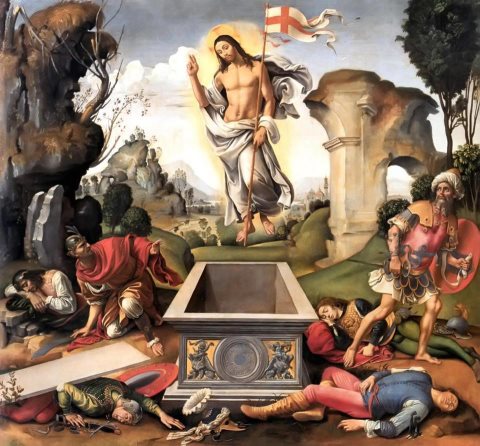
resurrectionWhen I was a college student at East Tennessee State University and just starting to come back to Church, I took a college class on the history of Christianity.  When we arrived at the subject of the resurrection I remember our professor stating (much to the chagrin of some of the students) that the secular academic discipline of history could not make a conclusive statement either for or against the resurrection.  But what the discipline of history could say is that “something happened” that enabled those first disciples to move from remaining behind locked doors in fear as we find in today’s gospel (Lk. 24:35-48); “But they were startled and terrified and thought that they were seeing a ghost.” to boldly proclaiming Christ as Messiah in the public square as we find Peter doing in today’s first reading (Acts 3:13-15, 17-19); “You denied the Holy and Righteous One and asked that a murderer be released to you … Repent, therefore, and be converted…” 

That class (and I would say specifically that statement “something happened”) was one of the key components that led to my returning to the Church and the active practice of the faith.  What was it that enabled Peter (the one who had denied knowing Jesus) and those first disciples (the ones who had run away) the ability to move from fear to being bold and public proclaimers of Christ and the resurrection?  Was it a hoax they cooked up in their minds to steal the body away and see how long they could ride the “Jesus as Messiah” train?  Hoaxes do not last so long (two thousand plus years) nor show such continued vitality and chronic vigor.  Was it that the “spirit” of Jesus had risen – his vision of the world and living together in harmony – while his body remained dead in the tomb?  But who willingly chooses martyrdom for an idea or the “spirit” of someone’s thought (as we see throughout history beginning with those first fearful disciples)?

In today’s gospel we are given some specifics about the resurrection that are worthy of note.  Jesus again appears to his disciples.  Again he greets them with, “Peace be with you.”  Knowing their fear and their uncertainty he then goes on to say,

“Why are you troubled?  And why do questions arise in your hearts?  Look at my hands and my feet, that it is I myself.  Touch me and see, because a ghost does not have flesh and bones that you can see I have.”  And as he said this, he showed them his hands and his feet.  While they were still incredulous for joy and were amazed, he asked them, “Have you anything here to eat?”  They gave him a piece of baked fish; he took it and ate it in front of them.” 

Neither hoaxes nor ideas ask for a piece of fish to eat.

There are many ways to run from the scandal of the resurrection.  All sorts of people throughout history have proven to be quite adept at it.  One such way (often touted as being an “enlightened” approach) is to see the resurrection as a nice idea – Jesus’ spirit continuing to live on.  But today’s gospel is quite clear.  Jesus is not a ghost, not a vague idea.  Jesus is risen – body and soul!  He is the firstborn from the dead.  Jesus is risen and he has not risen in vain.

If we are to be Christian then we must be willing to encounter the fullness of the resurrection.  We must be willing to encounter that “something that happened” as my professor said so many years ago and in that encounter we must be willing to make a fundamental faith statement, “I believe”.   Only this will move us from fear to peace.

There is a saying that contends that you must have “skin in the game” in order to be truly committed to something.  When the Word became incarnate, when Christ suffered his passion and crucifixion, when the resurrected Christ shows his wounds which he still bears in glory, then God shows that he has “skin in the game” for our salvation.  If we want to know the peace and life of the gospel then we also must be willing to have “skin in the game”.  By our lives, our words, our choices and our actions we must profess, “I believe”.  Nothing less will do.

This encounter and the peace and courage it alone brings, continues today.  We can look at the successors to Peter himself as witnesses of this to our world.  These men do not have any military or economic might yet they continually stand before the powers of our world with nothing other than the word of the gospel.  Think of St. John Paul II confronting communism.  I remember when Pope Emeritus Benedict travelled to Mexico and Cuba during his pontificate.  In the face of the chaotic violence of the drug trade engulfing Mexico the eighty-five year old pontiff proclaimed firmly and resolutely that drug trafficking is a sin and it is wrong.  Then going on to Cuba at a Mass where the very Cuban government sat in the front rows, again this elderly soft-spoken man called for greater freedom.  Think of Pope Francis calling the Mafia out and all worldly powers that would de-humanize the person made in God’s image.  What enables these men to do this?  These men have encountered Christ risen and alive – not an idea of Christ, not just the spirit of Christ – but Jesus Christ himself and, from that encounter, each one has made his faith statement and has moved from fear to a bold peace.

This peace is there for us also if we also are willing to encounter Christ risen and if we are willing to profess him as Lord!

Thoughts on the Sunday readings: “We would like to see Jesus.” (5th Sunday of Lent – B)

21 Saturday Mar 2015

Posted by mcummins2172 in Christ, faith, law of love, law of reciprocity, life in Christ, sad logic of sin and death, sad logic of violence

≈ Leave a comment

Tags

Christ, dying to self, faith, law of love, law of reciprocity, sad logic of sin and death, sad logic of violence, seeing Christ

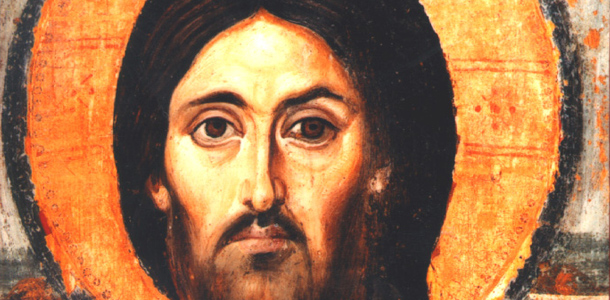
face_of_jesus_610x300“We would like to see Jesus.”  This is the request of some Greeks from today’s gospel.  (Jn. 12:20-33)  “We would like to see” the one who teaches with authority.  “We would like to see” the one who is compassionate, who welcomes the sinner, who goes out to meet others, who weeps for his friend who has died.  “We would like to see” the one who has come not to judge but to save.  “We would like to see” this teacher who says that there is a different way to live.  “We would like to see” the one who says “no” to the logic of violence and isolation.  “We would like to see” the one who does not live according to the law of reciprocity but rather according to a different law – the law of love.

We all know the law of reciprocity.  It is so present, so seemingly uncontested, that we easily take it for granted that it is just the way things are.  The law of reciprocity says an eye for an eye and a tooth for a tooth!  If you do this to me then I can do that to you!  It is a law that perpetuates the cycle of violence.  It is a law of strict justice/retribution alone.  It is a law that leads one into viewing other people solely in terms of being competitors, even adversaries, rather than brothers and sisters.  Due to this, it is a law that isolates and breaks people, communities and nations into opposing camps.  It is also a law that ultimately binds and enslaves.  Jesus never lived according to the law of reciprocity, rather he lived according to the law of love and because of this Jesus is the freest person that has ever walked the face of the earth.

Behind this simple request of these Greeks is a profoundly fundamental yearning and recognition of the human heart – the desire to live differently, to escape the logic of violence and the tyranny of reciprocity.  We yearn for this.  On our own, we cannot achieve it.  “Sir, we would like to see Jesus.”  We need Jesus because he alone can forgive what needs to be forgiven within ourselves, because he alone can make new of what has been made old through sin.  Without Jesus we are left under the law of reciprocity – it is the best we can hope for.  With Jesus, we can learn and we can live the law of love and we can gain that freedom that Jesus himself knew.  We can be made free!

On the surface it seems that Jesus does not answer the request of the Greeks brought to him via Andrew and Philip.  Rather than saying, “Bring them here,” he goes off into a reflection on the Son of Man being glorified. But this reflection is his response!  “You want to see me?  You want to see the one who lives a different way, the one who does not live according to the logic of violence and the law of reciprocity?  You will see this and so much more!  Watch what happens on Golgotha, watch what happens within the tomb itself!  Watch what happens within “this hour”!

Then he give us God’s answer to that deepest disconnect of the human heart.  “You wish to see me because you also want to be free of the law of reciprocity, you also want to overcome the sad logic of violence and isolation.  You want to live differently.”  “Amen, amen, I say to you, unless a grain of wheat falls to the ground and dies, it remains just a grain of wheat; but if it dies, in produces much fruit.  Whoever loves his life loses it, and whoever hates his life in this world will preserve it for eternal life.”

Freedom, a different way to live other than the dictates of reciprocity, is found when a person lets go of self and lives for others … in Christ.  This last part is often overlooked.  Sadly, even by teachers of Christianity sometimes.  Jesus is not proposing a vague philosophy open to any person apart from him.  The request of the Greeks was, “We would like to see Jesus.”  Jesus – not his teachings, not his ideas but the person.  When we die to self and live for others within the reality of Christ’s own sacrifice then the logic of violence and isolation can be overcome.  Christ goes on to say, “Whoever serves me must follow me, and where I am, there also will my servant be.  The Father will honor whoever serves me.”  

Life can be lived in a different way.  The sad logic of violence and isolation is not inevitable.  The new law of love is possible!

“We would like to see Jesus.”

The danger of narrowcasting in the Church

13 Thursday Nov 2014

Posted by mcummins2172 in Catholic Church, dialogue, Media, Pope Francis

≈ Leave a comment

Tags

Christianity, Church, Dialogue, faith, narrowcasting, social media

studio-broadcasting-camps-2There has been a trend developing in our national news media and you have probably noticed it.  It is the move from “broad-casting” to “narrow-casting”.  Charles Seife, in his book, Virtual Unreality: Just Because the Internet Told You So, How Do You Know It’s True?, lays it out quite clearly.
Back when the Big Three ruled the airwaves, the nightly news had to perform a delicate balancing act.  A news program had to try to appeal to the entire television audience – it had to be, quite literally, a broad cast – if it was to compete with the other two networks that were taking the same strategy.  This meant that the networks couldn’t become too partisan or take an extreme position on anything, for fear of alienating its potential audience…
Then cable and the internet increased our choices.  The Big Three kept trying to capture as big a slice of America as possible by staying centrist, but a couple of upstarts – particularly Fox News and MSNBC – realized that there was another possible strategy.  Instead of trying to go after the entire American population with a broadly targeted program that appealed to everyone, you could go with a narrowly targeted program that appealed to only a subgroup of the population.  Throw in your lot with, say, die-hard Republicans and give them coverage that makes them happy; you alienate Democrats and won’t get them as viewers, but you can more than make up for that loss by gaining a devoted Republican fan base …  MSNBC did exactly the reverse … 
“So, what’s the big deal?” one might wonder.  Let the conservatives have their Fox News and the liberals their MSNBC then everyone gets what they want.  As Charles Seife argues in his book though we need challenges to our assumptions in order for our ideas and understanding to grow and evolve.  True information can only be gained through this sometimes difficult but essential process.  If all we get when we switch on the news is a presentation that is catered to our particular slant on the world then we get stuck in our own assumptions and we even become more radicalized.  We do not get true information.
With news and data that is tailored to our prejudices, we deprive ourselves of true information.  We wind up wallowing in our own false ideas, reflected back to us by the media.  The news is ceasing to be a window unto the world; it is becoming a mirror that allows us to gaze only upon our own beliefs. 
Couple this dynamic with the microsociety-building power of the hyper-interconnected internet and you’ve got two major forces that are radicalizing us.  Not only does the media fail to challenge our preconceptions – instead reinforcing them as media outlets try to cater to smaller audiences – but we all are able to find small groups of people who share and fortify the beliefs we have, no matter how quirky or outright wrong they might be.  Ironically, all this interconnection is isolating us… 
Lack of true information, radicalization and isolation – this is a disturbing and dangerous mix that, I would argue, we are witnessing the affects of throughout our world today.  That is a larger discussion but my purpose for this reflection is to wonder how much this trend of “narrow-casting” has moved into the life of the Church.  I would point to the wide-ranging reactions to the recent preparatory meeting of the upcoming Synod on the Family in Rome as a prime example.  The way I read them, reactions posted in journals, on the internet and the blogosphere were often extreme and catered to a particular slant.  There was a lot (and continues to be a lot) of noise regarding the preparatory meeting in these pieces but not much true information … at least from my reading.
Call me crazy but I have a hunch that Pope Francis knows what he is doing and that the Holy Spirit is in the midst of the Church.  Maybe our United States “American” (I say this because this is the only cultural context I can speak to) tendency to interpret an event (i.e. the Synod on the Family) only by catering to a particular viewpoint is more of a reflection of a deficiency in our culture than a reflection of what actually transpired in Rome?  Maybe we have become more conditioned by narrow-casting than we realize?
Pope Francis is not a product of United States “American” culture.  I do not think that he has been conditioned by narrow-casting.  I think he asked the participants at the meeting in Rome to speak boldly from their hearts because he knows what Charles Seife knows.  True information is only gained through the difficult process of having assumptions challenged – if the assumptions are true then they will only grow stronger through this process, if not then they will fall by the wayside.  Pope Francis values true discussion because he values true information.  Isn’t true information what we want any leader (particular the Pope) to have?
Catholic means “universal”.  I do not believe that there is space for narrow-casting in the Church.  In fact, I wonder if it might even be a sin against the unity of the Church.  Seife lays out the fruits of narrow-casting: lack of true information, radicalization and isolation.  All of these harm the Body of Christ.
Come, Holy Spirit and enkindle within us the fire of your love and strengthen your Church that she might be a humble and authentic witness of the gospel!
Newer posts →
Follow The Alternate Path on WordPress.com

Enter your email address to follow this blog and receive notifications of new posts by email.

Previous Posts

  • December 2025
  • November 2025
  • August 2025
  • April 2025
  • February 2025
  • January 2025
  • December 2024
  • August 2024
  • July 2024
  • June 2024
  • May 2024
  • April 2024
  • March 2024
  • February 2024
  • January 2024
  • December 2023
  • November 2023
  • October 2023
  • August 2023
  • July 2023
  • May 2023
  • February 2023
  • January 2023
  • December 2022
  • August 2022
  • July 2022
  • April 2022
  • January 2022
  • December 2021
  • September 2021
  • August 2021
  • July 2021
  • May 2021
  • April 2021
  • January 2021
  • December 2020
  • November 2020
  • October 2020
  • August 2020
  • July 2020
  • May 2020
  • April 2020
  • March 2020
  • February 2020
  • December 2019
  • October 2019
  • September 2019
  • August 2019
  • July 2019
  • May 2019
  • April 2019
  • March 2019
  • February 2019
  • December 2018
  • November 2018
  • October 2018
  • August 2018
  • July 2018
  • June 2018
  • April 2018
  • March 2018
  • February 2018
  • January 2018
  • December 2017
  • November 2017
  • September 2017
  • August 2017
  • July 2017
  • June 2017
  • May 2017
  • April 2017
  • March 2017
  • February 2017
  • January 2017
  • December 2016
  • November 2016
  • October 2016
  • September 2016
  • August 2016
  • July 2016
  • June 2016
  • May 2016
  • April 2016
  • March 2016
  • February 2016
  • January 2016
  • December 2015
  • November 2015
  • October 2015
  • September 2015
  • August 2015
  • June 2015
  • May 2015
  • April 2015
  • March 2015
  • February 2015
  • January 2015
  • December 2014
  • November 2014
  • October 2014
  • September 2014
  • August 2014
  • July 2014
  • June 2014
  • May 2014
  • April 2014
  • March 2014
  • February 2014
  • January 2014
  • December 2013
  • November 2013
  • October 2013
  • September 2013
  • August 2013
  • July 2013
  • June 2013
  • May 2013
  • April 2013
  • March 2013
  • February 2013
  • January 2013
  • December 2012
  • November 2012
  • October 2012
  • September 2012
  • August 2012
  • July 2012
  • June 2012
  • May 2012
  • April 2012
  • March 2012
  • February 2012
  • January 2012
  • December 2011
  • November 2011
  • October 2011
  • September 2011
  • August 2011
  • July 2011
  • June 2011
  • May 2011
  • April 2011
  • March 2011
  • February 2011
  • January 2011
  • December 2010
  • November 2010
  • October 2010
  • September 2010
  • August 2010
  • July 2010
  • September 2008
  • August 2008
  • April 2008
  • March 2008
  • February 2008
  • January 2008
  • December 2007
  • November 2007
  • October 2007
  • September 2007

Popular Posts

  • thealternatepath.org/wp-c…
  • thealternatepath.org/wp-c…
  • thealternatepath.org/wp-c…
  • thealternatepath.org/wp-c…
  • thealternatepath.org/wp-c…

Blog at WordPress.com.

  • Subscribe Subscribed
    • The Alternate Path
    • Join 156 other subscribers
    • Already have a WordPress.com account? Log in now.
    • The Alternate Path
    • Subscribe Subscribed
    • Sign up
    • Log in
    • Report this content
    • View site in Reader
    • Manage subscriptions
    • Collapse this bar
 

Loading Comments...