• About The Alternate Path

The Alternate Path

~ Thoughts on Walking the Path of Christian Discipleship

The Alternate Path

Tag Archives: hope

Easter: Living forward into forever

19 Saturday Apr 2025

Posted by mcummins2172 in Uncategorized

≈ Leave a comment

Tags

Catholic Church, Christianity, discipleship, Easter, Easter homily, empty tomb, faith, hope, Jesus, resurrection, resurrection of Christ

Fr. Greg Boyle is a Jesuit priest and the founder of Homeboy Industries – the largest gang intervention ministry in the world.  I recently listened to an interview with Fr. Boyle and in the course of the interview he offered a wonderful insight; “None of us are going to live forever,” he said, “but, in Christ, we are invited to live in the forever.” 

This truth – Jesus is risen! – is the heart of Easter.  The invitation given to us to live in the forever – in baptism we have died with Christ in the hope of rising with him – comes from the heart of Easter.  And this invitation has already begun in our lives.  We are already living in the resurrection today.  We are already invited by the risen Jesus to live now in the forever. 

We need to be clear on what is meant by “resurrection”.  In the resurrection, Jesus “does not come back to life, to his old life, like Lazarus, to die all over again sometime later.  No, in the resurrection, Jesus comes forward to life in a new world, to new life according to the Spirit” (The Mystery of Easter by Raniero Cantalamessa, p. 41). 

The resurrection moves forward – the tomb is emptied – we live into the forever now. 

When sin is forgiven, we live into the forever.  When resentment is let go of in order to understand, we live into the forever.  When friendship is chosen rather than prejudice, we live into the forever.  When we choose to learn the ways of peace and forget the ways of violence, we live into the forever.  When we reach out in care and charity rather than falling back into fear, we live forward into the forever.  When we choose that which is true and good over fleeting illusion, we live forward into the forever.  When we choose to build community rather than to succumb to division, we live forward into the forever.  When we cultivate hope rather than despair, we live forward into the forever. 

That first Easter morning; the women, Peter and John all saw that the tomb was emptied.  The reactions were amazement, wonder and belief.  The tomb is emptied and left behind because Jesus in the resurrection is living forward into the forever. 

Easter – throughout history – has been celebrated in all situations: war, social upheaval, economic uncertainty, pandemics, when the Church is in peace and when the Church is being persecuted.  Easter continues because Easter is not bound by the tombs of this world.  Easter is celebrated today and it will be celebrated next year and all the years after that. 

The tomb is emptied and left behind by Jesus.

Jesus is risen and now, in Christ, we also live forward into forever. 

Jesus is risen!  He is risen, indeed! 

Where Hope is Born: Second Sunday of Advent – C

08 Sunday Dec 2024

Posted by mcummins2172 in Uncategorized

≈ Leave a comment

Tags

Advent, Catholic Church, Christianity, discipleship, faith, God, hope, Jesus, John the Baptist, Prophet Baruch, Second Sunday of Advent C

Image may be subject to copyright.

This Sunday is the only time that we hear from the prophet Baruch in the three-year cycle of Sunday readings.  Baruch was thought to have been the scribe of the prophet Jeremiah, and his writing is a reflection on the history of the people of Israel and the experience of the Babylonian exile.  For Baruch history and the hopes and belief of Israel are intertwined.  The same is true for us Christians.

We have the hope of salvation and the hope of the fullness of the Kingdom of God.  In Advent we await the coming of the one whose life, death and resurrection opens the way for us to return home to the Father.  This is the hope that has been planted within our hearts but this hope grows within our daily context and within in our daily journey of faith and not despite it.  Luke is quite specific in his gospel (Lk. 3:1-6). In the fifteenth year of the reign of Tiberius Caesar, when Pontius Pilate was governor of Judea and Herod was tetrach of Galilee, Philip tetrarch of the region of Ituraea and Trachonitis, and Lysanius was tetrarch of Abilene, during the high priesthood of Annas and Caiaphas…”  This was a hard time for Israel – the country was brutally occupied.  Caesar was a foreign emperor; Pilate was his governor.  The tetrarchs were seen as collaborators.  And precisely into this the word of God came to John the son of Zechariah. 

We look at our world today – the war in Ukraine and the Holy Land, the polarization in our own country, the social confusions, the natural disasters and it is precisely into this that the word of God comes to us and it is in this reality and not despite it that hope is born and strengthened by this hope we move forward.  Hope is born in the reality of our world and it is also born in the reality of our lives.  

Baruch gives a powerful image of God commanding that the mountains be made low and the age-old depths and gorges be made into level ground so that his people can joyfully return to Jerusalem.  The mountains and the gorges are the obstacles preventing the people from returning.  What are the mountains, the age-old depths, the obstacles in our lives that stand in the way of our returning to the Father?  The addictions we have cultivated, the pride we nurse, the sin we allow, the resentments we hold on to, the prejudice we turn a blind eye to, the list can go on.  These are the mountains and the gorges we have thrown up between us and God.  And into this the word of God comes undeterred.

How is God laying low the mountains and filling in the gorges of our lives?  By Jesus who is the way and by the outpouring of his grace and the salvation he won for us.  How do we prepare the way of the Lord these days of Advent, how do we find hope?  We receive the sacraments, we confess our faults, we live Christian charity, we pray and work for peace, we forgive and we ask for forgiveness not despite the reality of our life right now but within it. 

And in this, hope is born.  Paul witnesses to this truth in his letter to the Philippians, I am confident of this, that the one who began a good work in you will continue to complete it until the day of Christ Jesus.  

St. Juan Diego’s Tilma: a reflection for the Feast of Our Lady of Guadalupe

07 Saturday Dec 2024

Posted by mcummins2172 in Uncategorized

≈ 1 Comment

Tags

faith, Feast of Our Lady of Guadalupe, guadalupe, hope, Mary, Nuestra Senora de Guadalupe, Our Lady of Guadalupe, saints, St. Juan Diego, St. Juan Diego's Tilma, St. Mary, Virgin Mary

Image may be subject to copyright

Friends, a good artist will take care to choose the best canvas to paint on as well as the best paint to work with.  With this thought it is worthwhile to reflect on the “canvas” and the “paint” used in the miracle of Guadalupe. 

The canvas is the tilma – the cloak worn by the people of the time.  Also, it is the tilma of a poor man.  Juan Diego was a poor and common man but a man devoted to his Christian faith.  Juan Diego was probably never noticed by the powerful people of his time but he was noticed by the Virgin Mary.  Mary saw Juan Diego – the poor man in his simple tilma.  Mary always sees the poor and the common person who is often overlooked by the powers of the world. Mary sees because she herself lived a simple life in a small village in a forgotten part of a large empire.  She who was not noticed by the world was seen by God and to her the Holy Spirit came and through her the Word became Flesh.  Mary’s choice to make Juan Diego’s tilma her canvas shows how God chooses the lowly to proclaim his love to the world and how God himself and the saints choose to walk with those persons often forgotten and overlooked by the world. 

The paint is the flowers – the miracle of the flowers that are found in abundance and blossoming even in winter!  Juan Diego tells the virgin that the bishop wants a sign, Mary sends the poor man to gather the flowers.  The flowers growing in the dead of winter are pure gift.  The flowers are grace from heaven.  In many ways, flowers are given to us also during our journey as Christians – the grace of the sacraments – new birth in baptism, the very body and blood of our Lord in the Eucharist, the healing of reconciliation.  The flowers are the beauty of God’s love and mercy in our lives and salvation that Jesus won for us in his death and resurrection.  The flowers of prayer, devotion, living Christian charity towards others.  The flowers of the teaching of Jesus.  Just as she asked Juan Diego, Mary also asks us to gather these flowers that are pure gift and grace from God. 

As we gaze upon the beauty and the miracle of the image of our Lady of Guadalupe, we are left with some important questions. Do we know that we (each one of us) is seen and noticed by Mary, by God?  Can we gather the flowers of grace and gift that God sends to us into the tilma of our lives?  And what will be the image that is shown in the tilma of our life when we stand before God? 

Friends, each one of us is seen and loved by God and our Lady.  Each one of us is given an utterly unique tilma and each one of us is given beautiful flowers of grace in our life and each one of us is meant to make of the life we have been given a beautiful image that reflects the wonder of God. 

Our Lady of Guadalupe, pray for us.   

Home, Hope, Redemption and Light: First Sunday of Advent, Year C

01 Sunday Dec 2024

Posted by mcummins2172 in Uncategorized

≈ Leave a comment

Tags

Advent, Catholic Church, Christian life, Christianity, Christmas, discipleship, faith, First Sunday of Advent, hope, Jesus

Image may be subject to copyright

Recently, a priest friend of mine shared with me some themes that he found present in this First Sunday of Advent’s prayers and readings, themes that are worthy of our carrying and reflecting upon these next four weeks.  I would like to share some of the themes but add my own take upon them.  The themes are: home, hope, redemption and light. 

Home.  This last liturgical year I made the Nineteenth Annotation retreat and in the fourteenth week of the retreat I had a truly profound prayer experience – Jesus invited me to the Father’s house.  In my mind, the Father’s house was a small cabin in the woods.  It was a winter night, there was snow on the ground and it was cold but there was warmth, light and laughter coming from the cabin.  Jesus welcomed me and the Father was there – not seen – but a deep abiding presence.  In my heart I heard the Father say, “Welcome, Michael, you are always welcome here.”  Part of the expectation of Advent – as we await the coming of the Messiah – is that we have a home.  Each one of us has a home.  Our home is in the fullness of the Kingdom with the Father, the Son and the Spirit and we are always welcome there. 

Hope.  In today’s gospel (Lk. 21:25-28, 34-36), Jesus calls us to be vigilant but the vigilance of the Christian is not a vigilance founded in fear but rather a vigilance rooted in hope.  Notice the distinction that Jesus makes in the gospel.  “There will be signs,” says Jesus and “nations will be in dismay” and “people will die of fright” but then Jesus tells his disciples that when these signs occur, “stand erect and raise your heads because your redemption is at hand.”  Christians live in hope and not fear.  We stand erect and we raise our heads because we know that Jesus is Lord.  The cry of Advent, “Maranatha!” (Come, Lord Jesus!) is never a cry of fear but rather a bold proclamation of hope.  Every Advent calls the Church to hope. 

Redemption.  Jesus calls us to raise our heads because our “redemption is at hand”.  “Redemption” is a powerful and heavy word and we often think of it in final terms but in our Lord’s words we also see that redemption takes root in our lives and begins to grow and have effects today.  In redemption, we learn and we find the strength to begin to let go of those things, those decisions, attitudes and anxieties that make us “drowsy” from carousing and drunkenness.  In redemption, we learn to let go of actions and mindsets that block life in order to choose that which leads to true life.  Redemption is more than just a final goal for the Christian.  Redemption is a growing and living seed planted in the heart of every disciple by Jesus himself.

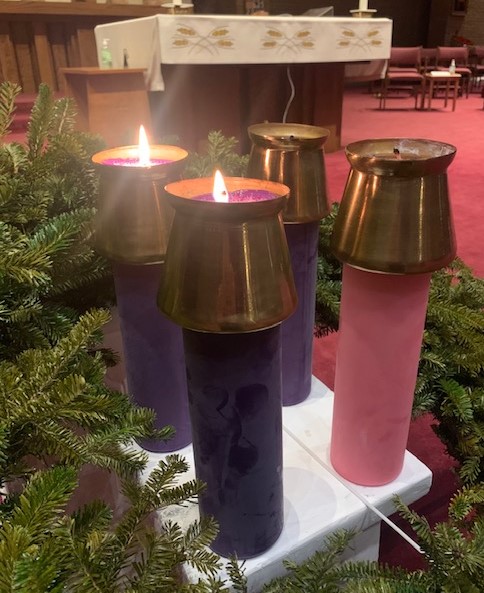
Light.  This Sunday, we light the first Advent candle and we will light the other candles over the next three weeks.  The light grows with each candle even as the days become shorter and the darkness of winter lengthens.  The light dispels the darkness and we await the coming of the light of the world and this light transforms our hearts even as we await it.  Dr. Martin Luther King Jr. reminded us that darkness cannot drive out darkness, only light can do that.  Hate cannot drive out hate, only love can do that.  We await the coming of the light and we let that light find a home in our hearts.

Home.  Hope.  Redemption.  Light. 

Come, Lord Jesus!     

Peter’s Prayer: a reflection on Mt. 14:22-33

13 Sunday Aug 2023

Posted by mcummins2172 in Uncategorized

≈ 1 Comment

Tags

Christian life, Christianity, discipleship, faith, hope, Jesus, Mt. 14:22-33

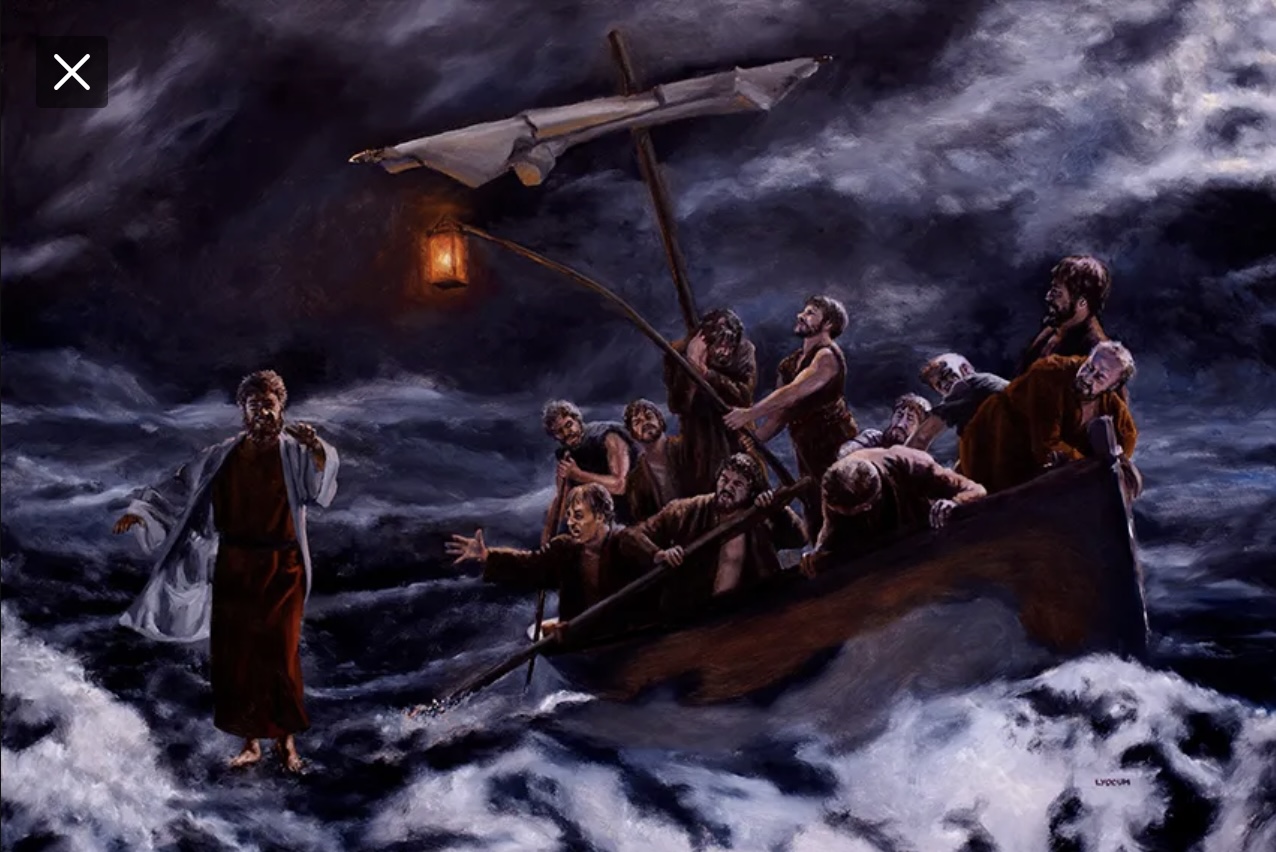
“Peter walking on the Water” by Lester Yokum. Image may be subject to copyright.

My friends, there is a simple truth found in today’s gospel that is worthy of our reflection. 

We are told that the disciples are in the boat in the middle of the night and are being tossed about by the waves of the sea.  The disciples are caught in fear and dread.  Our Lord comes towards them walking on the water.  Jesus calls to them and tells them to not be afraid and in response Peter cries, “Lord, if it is you, command me to come to you on the water.”

“Command me.” 

Peter does not say, “Lord, calm the sea.”.  Peter does not say, “Lord, take away this storm.”  Nor does Peter remain in the little safety of the boat, waiting for the Lord to arrive.  Peter says, “command me to come to you on the water.”  Peter (in his cry to the Lord, in his prayer) is asking for the grace to look beyond the crashing waves, to move beyond the limits of his own fear and to have the faith to walk towards Jesus on the water. 

This is the truth – there will be storms in life, there will be struggles and pain and doubt.  We will know fear and uncertainty.  The waves of life can be strong, high and crushing and it might even seem like everything is going to be lost.  The temptation in such moments is to pray to God to take away the storm, to calm the waters and to right whatever is the wrong that we are facing.  But is that the right prayer? 

The prayer that Peter made was not to take away the storm but to have the faith to walk through the storm, the faith to keep his eyes on Jesus even in the midst of the storm.  The gospel gives no indication that the sea calmed while Peter walked on the water.  The waves still crashed but Peter did walk on the water and when his faith faltered, Jesus was there to lift him up and save him. 

My friends, the right prayer may not always be “Lord, take this storm away.  Take away this struggle. Take away my fear.”  The right prayer may be, “Lord, give me the faith to walk through this storm trusting that you walk with me and that you are with me to protect me.” 

“Lord, if it is you, command me to come to you on the water.”    

The Active Waiting of Advent

06 Monday Dec 2021

Posted by mcummins2172 in Uncategorized

≈ Leave a comment

Tags

Active Waiting, Advent, hope, Theological virtues

Near the end of his little book, “Obedience” Cardinal Cantalamessa reflects on an expression found throughout Scripture that is very dear to God.  “Here I am.”  These words are dear to God because they are an expression of an obedience rooted in love (imagine a parent walking into a home and calling out to his or her child, “Where are you?” and the child, playing in the back room, simply responding “Here I am”).  It is a simple automatic connection of love, relationship and obedience and it is through all of this that God is able to do great things. 

To continue Cardinal Cantalamessa’s thought – Abraham responded, “Here I am” and God made him the father of faith and brought forth from him innumerable descendants – as many as the stars in the sky.  Moses said, “Here I am” and through him God was able to set his people free and lead them to the promised land.  The young Samuel did not fully understand at first but after being instructed by the elder Eli answered, “Here I am” and God made of him a great prophet who would anoint David as king.  Isaiah said, “Here I am” and through his writings we are given the beautiful imagery of the coming Messiah as the one who would bring forth God’s reign and also be the suffering servant.  We are told that the word of God came to John the Baptist in the desert and his, “Here I am” was his willingness to go forth and proclaim the coming of God’s Kingdom even to the point of giving his life.  Mary, the mother of our Lord, said, “Here I am” when she responded to Gabriel’s message by saying, “Behold, I am the handmaid of the Lord.  May it be done to me according to your word.”  Jesus’ whole life, every aspect of his being, was, “Here I am” to the Father’s will.  He took this loving response to the call of the Father to the level of the infinite and through that he won salvation for all. 

The life of every Christian should be lived as an expression of these simple words, “Here I am”. 

We talk about the season of Advent being both a time of waiting and of hope.  How are the two connected?  Here is a thought. 

The waiting of Advent is not a passive thing.  As Christians we are not just sitting, twiddling our thumbs waiting on the Master’s return.  The waiting of Advent is an active waiting. 

It is said that a large part of success in life is the willingness to just show up.  It may sound simple but it is a key ingredient in success and accomplishment.  Being willing to “show up” is saying, “Here I am” to God and to neighbor.  We show up to God when we value our relationship with Him – when we take the time to pray, when we give priority and value to worship and adoration of God.  We show up when we strive to both learn and live by God’s teachings for us through Scripture and Tradition.  We show up when we are obedient to God’s will for us.  We are that child in the back room playing and we should easily and automatically in love respond, “Here I am” when our loving Father calls out for us. 

We respond, “Here I am” to our neighbor when we also show up for them.  We show up when we strive to be fully present to the other person – spouse, child, parent, neighbor, stranger.  We show up to our neighbor when we desire and choose to live the particular vocation God has called each one of us to.  We show up when we live our commitments and responsibilities in life.  It is the mature thing to do and there is no substitute. 

This willingness to just show up, to say, “Here I am” is the active waiting of Advent and it is connected to hope. 

Hope is a theological virtue in our Christian understanding.  Part of being a theological virtue means that the source of this virtue is God.  We – on our own – cannot make hope, we cannot contrive it.  Hope is a gift from God that is only received by living in right relationship with God.  We cannot make hope but we can live our lives in such a manner as to be open to receive this most precious of gifts.  We can make the choice to live in a way that opens our hearts to this gift, that will allow this gift to take root in our lives and to bear fruit and then, our lives, can be a witness of hope in our world. 

The active waiting of Advent is living is such a manner as to receive hope.  Responding, “Here I am” is allowing hope to take root within us.  Just showing up is the willingness to live in hope. 

The waiting of Advent is active, in fact, it is probably the most active thing we could ever do.  It is the willingness to say, “Here I am”.  It is the desire to just show up. 

Epiphany – You shall be radiant at what you see

06 Saturday Jan 2018

Posted by mcummins2172 in homily, Uncategorized

≈ 1 Comment

Tags

Christian faith, Christianity, Epiphany, faith, hope

Flight~ Rose Datoc Dal

“Flight by Rose Datoc Dall

Have you ever noticed that there is a lot of walking and journeying in the Christmas story? We have the calm and silence of the manger scene but before, after and all around that is almost constant movement. The angel Gabriel is sent to announce God’s plan to Mary. Once Mary gives her “yes” we are told that she sets out “in haste” to visit her cousin Elizabeth. Joseph and the very pregnant Mary have to journey to Bethlehem to register for the census and because of Rome’s census the whole world seems to be in movement! Then, once the child arrives, the small family has to flee to Egypt for protection! The shepherds are told to leave their flocks in order to see this newborn child and the three magi arrive from the east searching for the newborn king of the Jews and once they encounter him they are told to return home by a different route. The only one who seems incapable of movement is King Herod sitting on his throne and grasping onto power in suspicion and fear.

Here is a quote by Christoph Friedrich Blumhardt, “Brothers and sisters, break free from whatever ruts you have settled into! Whoever does not want to be set free – well, suit yourself – but don’t say you are living in Christ’s spirit. You can continue in the old ways and be a part of Christianity, but not of God’s kingdom. You can live in Christianity but not in Christ; the gulf between the two is great. You can settle down and feather your nest and think, “Now I’ve got it made,” but you’ll never win eternity. That is something altogether different. The “city” we have now does not interest us; it cannot last. Instead, we seek the future city – the one God sets before our eyes – of which Christ is ruler.”

“Instead, we seek the future city – the one God sets before our eyes – of which Christ is ruler.” In the prophet Isaiah, we hear these words, “Rise up in splendor! Your light has come, the glory of the Lord shines upon you … Nations shall walk by your light, and kings by your shining radiance … (but then the prophet goes on to add) … Then you shall be radiant at what you see, your heart shall throb and overflow …” If there is a glory to the Christian it is not in our own merit nor is it in chasing after what the world holds and values – our radiance and our glory as Christians is found it what we see and what we seek – the future city, our true home, the Kingdom of God which God has set before our eyes.

So, the life of the Christian must then always be a life of movement and journeying by its very nature! The Christian is not allowed the luxury of “settling down” in this world with it’s limits. Herod was quite content to settle down in the limits of this world and he committed atrocities.

“Rise up in splendor!” the prophet proclaims to us. Rise up in the grace of Christ! Rise up in your worth as a child of God! Set your life by that worth and nothing else! Rise up in defending the dignity of all our brothers and sisters against the “Herods” of our time with all their sad thoughts and fearful plans! Live by what God has set before our eyes – the future city where Christ is ruler! Don’t just take the name “Christian” but live in the Kingdom, live in Christ!

Walk! Walk with the angel Gabriel and the shepherds and the magi! Walk with Isaiah and the prophets and the great company of saints! Walk with Joseph and Mary! Walk with our Lord himself! We are meant for the Kingdom of God and only there alone will our hearts find rest.

Rise up in splendor! You shall be radiant at what you see!

That which endures

12 Saturday Nov 2016

Posted by mcummins2172 in homily, Uncategorized

≈ Leave a comment

Tags

Catholic Church, Christian life, Christianity, discipleship, faith, hope, Jesus

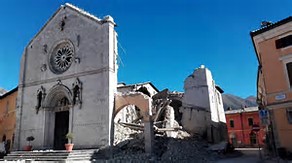
church-destroyed-by-earthquakeScholars suggest that by the time Luke composed his gospel the temple had already been destroyed.  This grand edifice, seemingly unmovable, adorned with costly stones that people were admiring in this passage was, by the time of Luke setting quill to parchment, just a heap of ruins.  It demonstrates how quickly things can change and also how little we really know about what will happen tomorrow.  We like to think we are in charge … but we are not.
Using the temple’s destruction and our Lord’s prophesying of that even as a springboard; today’s gospel (Lk. 21:5-19) invites us to go deep in the spiritual life.

There are levels to the spiritual life.  Saints and mystics throughout the Church’s history testify to this.  The first level and most basic is a level often caught up with outer things.  The grandeur of a temple, the use of precious stones, only a certain style of music or liturgy in worship, only this type of devotional practice or prayer.  Is there a value to the beauty of a church or worship or prayer?  Certainly, that is not being denied but all of these exist in order to usher one into an encounter with the Divine.  If they themselves become the focus then something is off-kilter.  As a friend of mine once said, there is always the temptation to major in the minors.

We have all heard of the recent earthquakes that have hit Italy.  In one of these earthquakes a beautiful church connected to St. Benedict completed collapsed.  A picture I saw just had the front façade standing with all else behind it flattened out.  Miraculously no person was killed when this happened.  What I found inspiring was that as soon as the monks and nuns of the community whose church has been destroyed determined that everyone in their community was accounted for they went out into the larger area and began to minister to others in need – helping physically to dig people out of the rubble and also bringing the sacraments to people.  They did this because they were rooted in something deeper than a building (an external).

The deeper reality our Lord is inviting each of us to in the journey of faith is relationship with him.  There will be false predictions that the end is upon us, nation will rise against nation, and there will be earthquakes, famines, plagues and signs in the sky.  These are all shifts in the greater turning of human history but there will also be personal shifts and turmoil.  People will be led before kings, governors and all the different powers of the world and our lives.  Families will be split and there will not be understanding.  Christians will be hated.  Yet in the midst of all this foretold turmoil of the history of our world and our own personal histories, our Lord – the one who foretold the destruction of the temple – says this, “Remember, you are not to prepare your defense beforehand, for I myself shall give you a wisdom in speaking that all your adversaries will be powerless to resist or refute.”  

“…for I myself shall give you a wisdom in speaking…”  The truth implied here in the midst of all the turmoils that this life brings is a living relationship with Christ.  Remaining on the level of the external spiritually – while not really knowing the Lord or allowing him to know us – will not cut it when life gets tumultuous.  In all seasons of life the Christian must root him or herself in relationship with Christ.  Only in this relationship can be found the wisdom and perseverance that we need in life.

Our Lord listened as people who had no idea of what tomorrow would bring spoke admiringly of the temple.  He asked them to move beyond the external to that which truly lasts.  He asks us to do the same – to trust in him and to find life.

A God and a community who seek out

10 Saturday Sep 2016

Posted by mcummins2172 in Uncategorized

≈ 1 Comment

Tags

Christian life, Christianity, discipleship, faith, hope, Jesus, mercy, The Good Shepherd, Year of Mercy

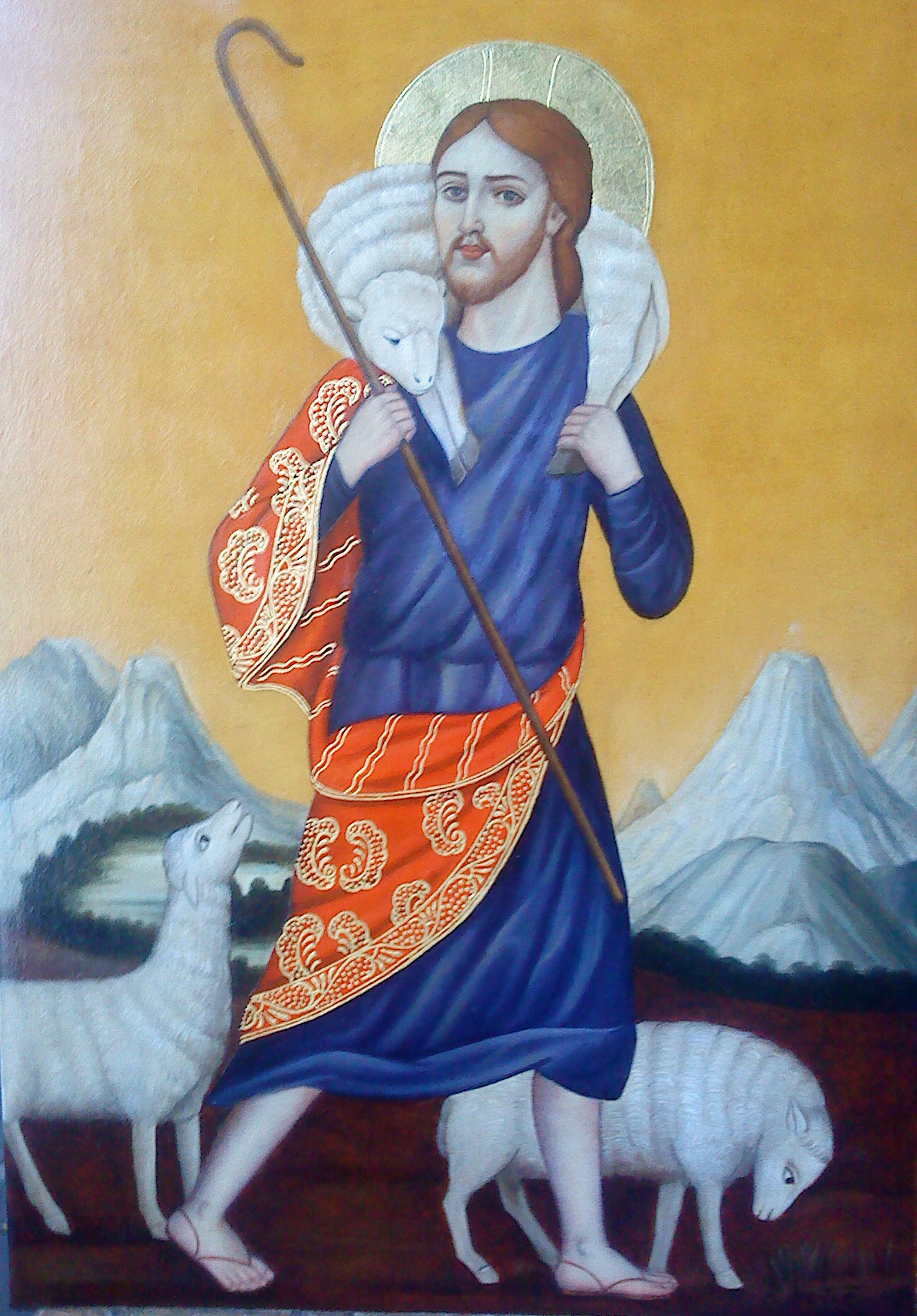
good-shepherdOne of the truths revealed in today’s gospel (Lk. 15:1-10) is that our God is not a God content to let people remain anonymous.  The shepherd goes out in search of the lost sheep because that one sheep truly matters to him.  The woman turns the house over searching for the lost coin because that coin is of real concern to her.  We are of concern to God.  We are not alone in a vast universe governed by random chance.  We do not have a God who does not care.  God is willing to seek each one of us out, willing to even enter the darkness of sin and death, to find us and then rejoice in the finding!
But this truth also applies to us who are called to be God’s people in our world.  The Christian community is not meant to be an anonymous collection of individuals made up of people without names and without love – separate and alone.  Because we have been loved by God and sought out by God we must, in turn, strive to love as God loves and seek out as God seeks out.  The community Jesus calls us to is not one of anonymous and separate persons but of brothers and sisters who know each other by name.  Friendship and care must be at the heart of the Christian community but it needs to be noted that this friendship is not of our own doing or crafting.  The friendship of the Christian community flows out of Jesus’ own call to his disciples and obedience to his Word.  The origin of friendship in the Christian community is in God himself.  This is a great mystery and it is a mystery we are called to live and it is a mystery we proclaim in front of a world that seems so intent on reducing the full dignity of the human person to just a caricature of the anonymous individual.

Every person has a name.  Every person has a worth.  Every person is valued and sought out by God.  No one is left behind.  We need to live this friendship of Christ as Church and, by so doing, witness to our world.  For a Christian community to have the most beautiful sanctuary or the most active list of ministries without this friendship that seeks out is (to paraphrase St. Paul and our Lord himself) to be just a noisy gong, a clashing cymbal and even a whitewashed tomb.  No life is ultimately produced.

The identity of the Church is not found by remaining within but is realized in mission.  It has been this way from the very beginning with the outpouring of the Holy Spirit and the call to proclaim the good news to the ends of the world!  We each have a name given by God and a task given by God, we only become who we are meant to be as we live the task we have been given.  The Christian community only becomes who she is meant to be when she lives the friendship she has been given by Christ.

This friendship begins within the Christian community herself and then it goes out into the world.  We must seek out one another.  We must be of concern to one another.  In order to be true to the gift that we were given (meaning being sought out by God himself), we cannot remain content in just being a collection of anonymous individuals.  When we meet one another in the friendship of Christ we learn we can even look out on the multitudes of our world and see not just anonymous individuals who threaten my space and my freedom but brothers and sisters and the multitudes of people who are alone and suffering learn that they are in fact not alone and that there is a God and a people who seek to care and who seek to know their name.

Let us invite one another to wisdom. St. Teresa of Calcutta, pray for us!

04 Sunday Sep 2016

Posted by mcummins2172 in homily, Uncategorized

≈ Leave a comment

Tags

Christ, Christian life, Christianity, discipleship, faith, hope, Kingdom of God, Mother Teresa, Sisters of Charity, St. Teresa of Calcutta

Mother Teresa

St. Teresa of Calcutta

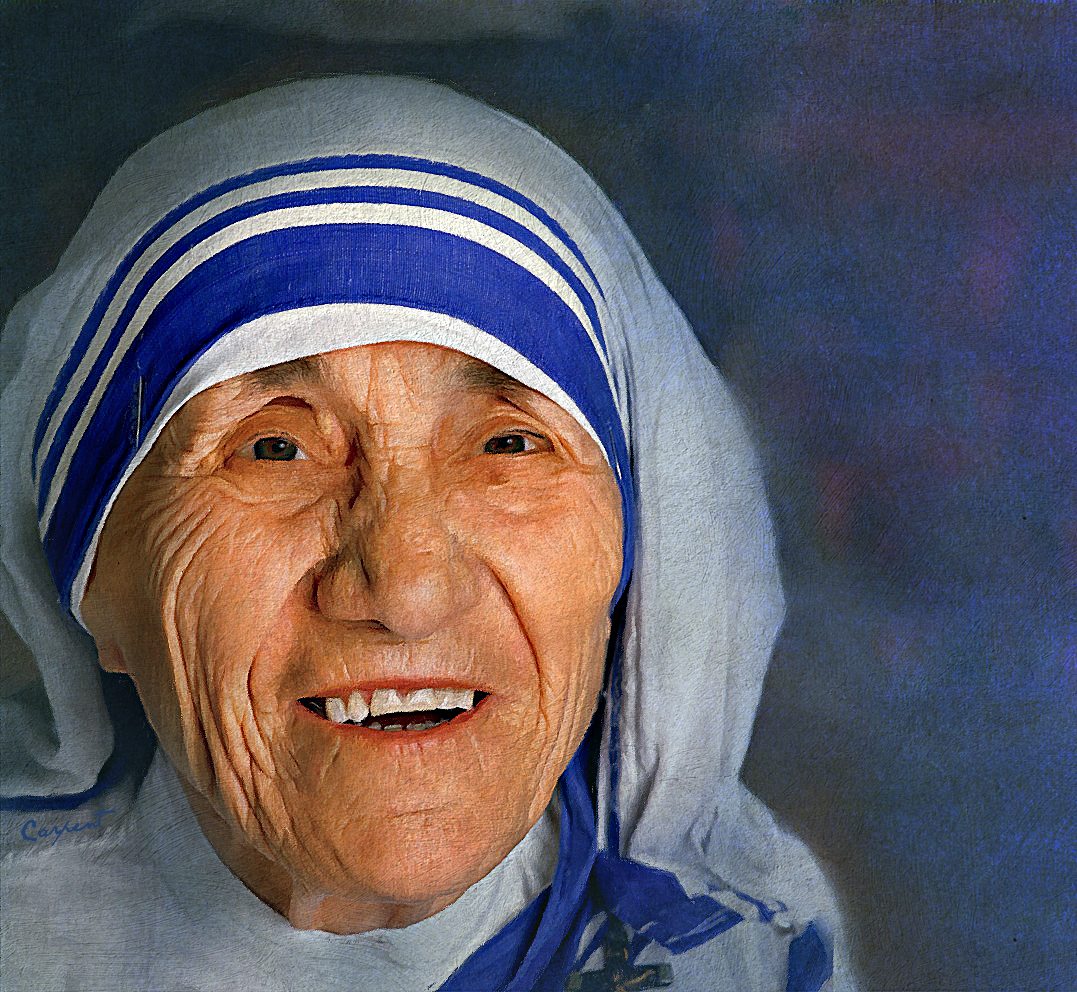
In the first reading (Wisdom 9:13-18b) we are told that wisdom is a gift given from on high.  It is not something we acquire by our own effort and ingenuity but it is a gift from God.  Or who ever knew your counsel, except you had given wisdom and sent your Holy Spirit from on high?  And thus were the paths of those on earth made straight.  Wisdom is the fruit of relationship with God and, as we learned in last Sunday’s gospel, it both comes and is received on our part through the actions of humility and living a generosity toward those who cannot repay us.

But we can invite one another to wisdom.  This is a truth found in today’s second reading (Philemon 9-10, 12-17).  The Letter to Philemon is a short letter written by Paul to Philemon, a member of the Christian community, on behalf of Onesimus – a runaway slave of Philemon’s whom Paul had befriended and converted while they were held together in prison.  According to the law of the day, Philemon had the right to punish Onesimus severely, even having him put to death, but Paul writes and asks Philemon not only to be lenient and receive Onesimus back but to even receive him back as now a brother in Christ.

Paul is inviting (not forcing) Philemon to a new awareness.  He is inviting him to wisdom in Christ.  Things had now changed.  Elsewhere Paul will write …in Christ there is neither slave nor free…  Paul is aware of this new reality, he does not wish to force it on Philemon for that would not be true to the gospel but he does want to invite Philemon to this new awareness.  Paul is also crafty about this invitation though.  He knows that when his letter arrives it will not be read privately by Philemon first; rather it will be read before the whole gathered community with Philemon present.  All eyes will certainly be on Philemon but also, if the members of the community are honest, all eyes will need to be on each of their own hearts as the letter invites all who listen to it to wisdom and a greater awareness even to our own day.  Can we receive the other person as brother and sister in Christ?

Christ continually invites us into the wisdom of the Kingdom of God.  It is a wisdom that asks us to be willing to continually step away from the rigid and constricting thought of “this is the way things are, this is the way things will always be” toward the ever new possibility of the Kingdom.  If anyone comes to me without hating his father and mother, wife and children, brothers and sisters, and even his own life, he cannot be my disciple.  Christ continually invites us to calculate and set our lives by the ever new possibility of the Kingdom of God!  Just like the person building a tower calculates out resources or the king calculates out the cost of a battle we must calculate and set our lives not by our own small and often meager possessions of thought but by the sheer gratuity of God’s Kingdom!  Christ invites us set our lives by this wisdom!

Today, the Church gives us a wonderful witness of a person who set and calculated her life by the sheer gratuity of God’s Kingdom in St. Teresa of Calcutta.  Where the world saw a simple little woman, God saw a great disciple to our age.  Where the world saw lives with no value, St. Teresa saw children of God.  Where the world saw hopelessness, St. Teresa found beauty.  Where the world saw wealth, St. Teresa saw poverty.  Where the world gave up, St. Teresa persevered.

St. Teresa allowed herself to be invited into the wisdom of the Kingdom of God – even in the darkness of it all.  Now, like Paul himself, St. Teresa invites us into the ever new possibility of the wisdom of Christ and the Kingdom of God.

“If you can’t feed a hundred people then feed just one.”

“Do not wait for leaders; do it alone, person to person.”

“If you judge people, you have no time to love them.”

St. Teresa of Calcutta, pray for us!   

← Older posts
Follow The Alternate Path on WordPress.com

Enter your email address to follow this blog and receive notifications of new posts by email.

Previous Posts

  • December 2025
  • November 2025
  • August 2025
  • April 2025
  • February 2025
  • January 2025
  • December 2024
  • August 2024
  • July 2024
  • June 2024
  • May 2024
  • April 2024
  • March 2024
  • February 2024
  • January 2024
  • December 2023
  • November 2023
  • October 2023
  • August 2023
  • July 2023
  • May 2023
  • February 2023
  • January 2023
  • December 2022
  • August 2022
  • July 2022
  • April 2022
  • January 2022
  • December 2021
  • September 2021
  • August 2021
  • July 2021
  • May 2021
  • April 2021
  • January 2021
  • December 2020
  • November 2020
  • October 2020
  • August 2020
  • July 2020
  • May 2020
  • April 2020
  • March 2020
  • February 2020
  • December 2019
  • October 2019
  • September 2019
  • August 2019
  • July 2019
  • May 2019
  • April 2019
  • March 2019
  • February 2019
  • December 2018
  • November 2018
  • October 2018
  • August 2018
  • July 2018
  • June 2018
  • April 2018
  • March 2018
  • February 2018
  • January 2018
  • December 2017
  • November 2017
  • September 2017
  • August 2017
  • July 2017
  • June 2017
  • May 2017
  • April 2017
  • March 2017
  • February 2017
  • January 2017
  • December 2016
  • November 2016
  • October 2016
  • September 2016
  • August 2016
  • July 2016
  • June 2016
  • May 2016
  • April 2016
  • March 2016
  • February 2016
  • January 2016
  • December 2015
  • November 2015
  • October 2015
  • September 2015
  • August 2015
  • June 2015
  • May 2015
  • April 2015
  • March 2015
  • February 2015
  • January 2015
  • December 2014
  • November 2014
  • October 2014
  • September 2014
  • August 2014
  • July 2014
  • June 2014
  • May 2014
  • April 2014
  • March 2014
  • February 2014
  • January 2014
  • December 2013
  • November 2013
  • October 2013
  • September 2013
  • August 2013
  • July 2013
  • June 2013
  • May 2013
  • April 2013
  • March 2013
  • February 2013
  • January 2013
  • December 2012
  • November 2012
  • October 2012
  • September 2012
  • August 2012
  • July 2012
  • June 2012
  • May 2012
  • April 2012
  • March 2012
  • February 2012
  • January 2012
  • December 2011
  • November 2011
  • October 2011
  • September 2011
  • August 2011
  • July 2011
  • June 2011
  • May 2011
  • April 2011
  • March 2011
  • February 2011
  • January 2011
  • December 2010
  • November 2010
  • October 2010
  • September 2010
  • August 2010
  • July 2010
  • September 2008
  • August 2008
  • April 2008
  • March 2008
  • February 2008
  • January 2008
  • December 2007
  • November 2007
  • October 2007
  • September 2007

Popular Posts

  • thealternatepath.org/wp-c…
  • thealternatepath.org/wp-c…
  • thealternatepath.org/wp-c…

Blog at WordPress.com.

  • Subscribe Subscribed
    • The Alternate Path
    • Join 156 other subscribers
    • Already have a WordPress.com account? Log in now.
    • The Alternate Path
    • Subscribe Subscribed
    • Sign up
    • Log in
    • Report this content
    • View site in Reader
    • Manage subscriptions
    • Collapse this bar
 

Loading Comments...