Tags
Christianity, Easter, Easter 2019, faith, Jesus, primerea, resurrection
 In a recent interview on the life of faith and discipleship, Pope Francis shared an expression often used in Argentina – the expression is “primerea”. “…the Lord ‘primerea,’ anticipates us, waits for us; we sin and He is waiting to forgive us. He is waiting to welcome us, to give us His love, and each time faith grows.”
The Holy Father shared the expression in response to a question where he was asked about whether he ever felt betrayed by God. “Never,” responded Pope Francis. “I was the one who betrayed Him. At times I even felt like God was turning away from me, just as I turned away from Him. At very dark moments you ask yourself, ‘Where are you, God?’ I always believed that I was looking for God, but really it was He who was looking for me. He always gets there first and waits for us.”
The Lord “primerea”.
On Easter morning, Mary of Magdala comes to the tomb … it is empty. Peter and John run to the tomb and all they find are the burial cloths. The tomb is empty. It is empty because the Lord primerea!
A closed tomb is the opposite of primerea – there is no life, life is ended. All that the closed tomb offers is loss, sadness and pain. Life, on the other hand, by its very nature moves forward! It cannot remain stagnant nor be held back – the stone is rolled away and the tomb is emptied because the Lord primerea!
The Lord leaves the tomb in order to anticipate us, in order to show and be the living mercy that forgives us now and ever again on our journey. Even though this Easter Sunday we mark and proclaim in faith that greatest of events which occurred centuries ago when our Lord was bodily raised triumphant from the dead, the truth of the resurrection – and what it means for all time and creation – does not remain in the past. The truth of the resurrection is found in our today and in our tomorrow because this is where the risen Lord awaits us. The Lord primerea!
As Pope Francis remarked, “(The Lord) always gets there first and waits for us.”
Life calls us forward and Jesus is life itself! “Where is the resurrection?” some might ask. Others might demand that we point it out in order to prove it to them! I can say that it is not to be found in the history book nor in a museum. It is found right now and it resides in tomorrow. This is why on Easter Sunday we have this strange little reading about yeast. It is a strange reading really, and why – of all days – do we have it on Easter Sunday? You would think that there would be a reading proclaiming a blare of trumpets and choirs of angels singing. But, no, on our holiest day the Church has chosen this reading. Why?
Old yeast has no life, it produces nothing. It is like the enclosed tomb. But a little yeast that is true leavens all the dough – this little yeast brings life and it brings newness! And it does it truthfully and without the need for fanfare. Christ has been sacrificed and Christ has been raised!
True life does not need spectacle in order to prove itself. The resurrection does not need to prove itself to us nor does the one who is raised need to. Life reveals itself by being life. The resurrection is shown within the hearts that have been enlivened by it, by the hearts that encounter Christ today and move toward tomorrow in hope because the risen Lord awaits them there.
The tomb is empty! The Lord is risen!
The Lord primerea!
 What was our Lord writing on the ground with his finger? No one really knows but it is an interesting addition that the gospel writer makes to this narrative and it does lead one to wonder. What was he tracing on the ground?
 “What does discipleship look like?’’ This was a question we were asked again and again in theology studies. What does it look like? How do disciples act in the world? How does one show that he or she is a follower of Christ?
 Living in our social media age has led me to ask the following questions in light of today’s gospel (Mk. 6:1-6). “If Jesus were alive today would he be on Facebook?” “If he were on Facebook, what would he post?” “How would we react to his posts? Would we like them, would we unlike them, would we unfollow him, would we perhaps even defriend him?”
 I recently read a daily reflection that made the following point: “Just as nature abhors a vacuum, Jesus abhors vagueness.” In one sense it is easy to speak in generalities and vagueness in regards to faith and God. “Yes, I love God. I love all people. I want to help and serve everyone. I want peace for the whole world.” It is easy to say these things in the general sense but how do we live in the particular moment? Can I show love to the person I don’t like or understand? Can I be patient in a chaotic moment of family life? Can I take time to pray even though the demands of the day seem unceasing? Can I choose hope even in a time of pain and loss? Can I seek justice in moments of injustice? Can I turn the other cheek even when I am wronged? It is not in speaking nice generalities but rather in the choices of particular moments that the Kingdom of God is found.
 Nicodemus is an interesting figure in the gospel. He is a devout man and someone who is intrigued by Jesus. Nicodemus believes the Jesus is a teacher of God and that the signs which Jesus does prove that God is with him yet Nicodemus wants to fit Jesus into his own paradigm, into his own narrative about how God should act. Before the passage we just heard we are told that Nicodemus comes to Jesus, “by night”. Nicodemus is attracted to Jesus but he is still in the darkness of his own presumptions. How often we are like Nicodemus. How often we know people like Nicodemus.
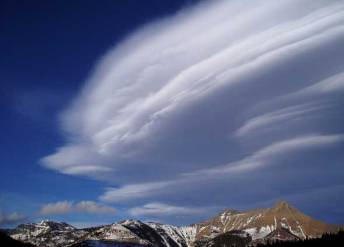 On my recent vacation in the Canadian Rocky Mountains I learned about the chinook wind. The chinook wind is a rapid climate phenomenon produced by specific atmospheric conditions interacting with the stark geography of the high mountains. If all the proper conditions line up correctly a chinook wind is produced which is a steady stream of warm air that flows down from the mountain tops into the valley below on the eastern side of the Canadian Rockies. This wind has been known to sometimes melt thirty inches of snow in the course of a single day! The largest temperature shift produced by a chinook wind was recorded in the seventies when the wind moved the temperature from forty degrees below zero to forty-five degrees above zero in a twenty-four hour period. In the frigid cold of a Canadian winter the chinook wind is a promise of spring and an end to winter.
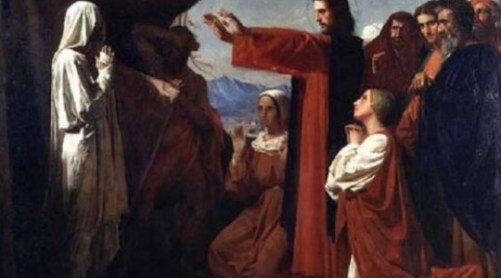 There is almost an ordinariness to the way our Lord goes about his mission of proclaiming and living God’s Kingdom.
 This last week I saw the movie “Arrival”.
