• About The Alternate Path

The Alternate Path

~ Thoughts on Walking the Path of Christian Discipleship

The Alternate Path

Tag Archives: Pope Francis

Going to the Heart and Pope Francis at Auschwitz

30 Saturday Jul 2016

Posted by mcummins2172 in homily, Uncategorized

≈ Leave a comment

Tags

Auschwitz, Christ, Christian life, Christianity, discipleship, faith, hope, Pope Francis, St. Maximillian Kolbe, World Youth Day

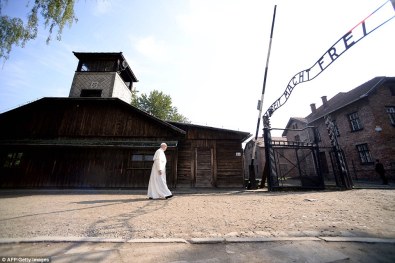
Pope Francis at auschwitz2You may be aware that World Youth Day is occurring in Krakow, Poland.  World Youth Day is a gathering of the Church’s youth and young adults for days of catechesis, worship and prayer.  The event culminates on Sunday with a Papal Mass.  Pope Francis is in Krakow with the world’s young people.  I have been viewing different images via social media from the gathering but what has struck me most is a six minute video of Pope Francis visiting the concentration camp at Auschwitz and taking some private moments of prayer in the cell which housed St. Maximillian Kolbe before his death.  St. Maximillian Kolbe was a Catholic priest who volunteered his own life in order to let another prisoner live who was a husband and father.  The video, which is all in silence, is almost surreal.  (I have posted the video on our parish Facebook page.)

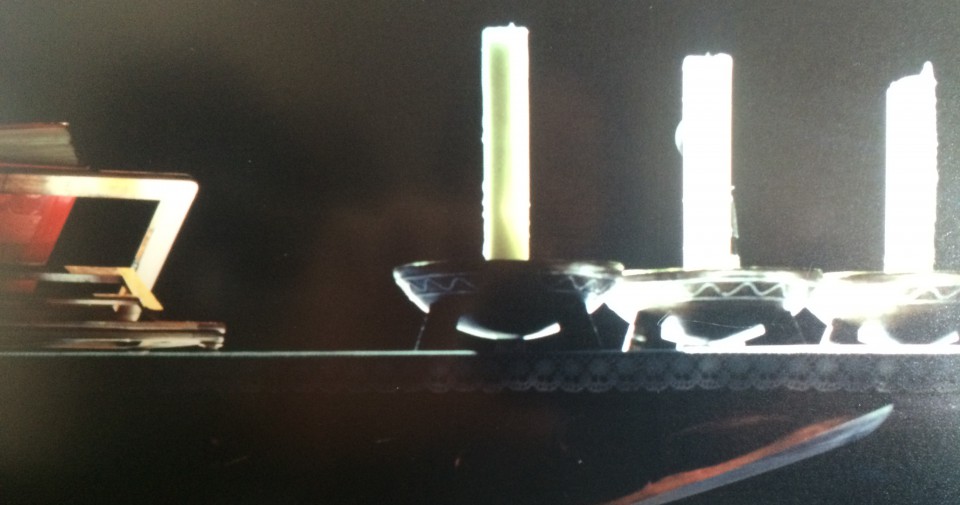
pope francis at auschwitzPope Francis arrives simply at the cell as is his wont.  He first peers into the darkened cell then steps in.  A chair is brought in and the Holy Father sits and we are given this amazing image of the successor to St. Peter clad in white sitting in a darkened cell with his head bowed in prayer in this place of unimaginable horror.

In visiting this cell and the concentration camp, Pope Francis has once again gone to the wounded heart of our world.  He has visited this place before.  He went there when he first visited the small island of Lampedusa to pray for migrants who had died trying to cross the Mediterranean and he goes there whenever he visits with the poor and forgotten and those who live on the periphery of our world.  In all of his travels, Pope Francis is intent on going to the heart of our world.

He goes there because that is where our Lord went.  In today’s gospel (Lk. 12:13-21) a man approaches Jesus and asks him to arbitrate between he and his brother about an inheritance.  Our Lord brushes the request aside because he knows that is not the real heart of the matter.  The heart of the matter is the wound of greed and pride which lies within every human heart.  It is from this wound that unimaginable horrors can spring.  Our Lord will ultimately answer this wound as only he can – from the cross and the empty tomb.

“Take care to guard against all greed, for though one may be rich, one’s life does not consist of possessions.”  Life is not found nor is it gained through things.  Life is found and life is gained through relationships and friendship, especially those based in humility and honest care.

The first relationship is ours with God.  The man in the parable is thinking about many things and some of those may be very good such as providing for his family and loved ones but in the parable we see that he really gives no attention to God.  God says to the man, “You fool, your life will be demanded of you and to whom will go all these things (your worries, your plans) that you have prepared?”  God has no concern for our worries or our plans.  God only has concern for us.  God only wants relationship with us – not friendship with our plans or our imaginings.  Living in that honest relationship with God is where true life is found and gained.

The second relationship is ours with all of our brothers and sisters.  Pope Francis knows this.  Whenever he visits the wounded heart of our world he is visiting his brothers and sisters and there he encounters Christ.  It seems to me that outside of the Blessed Sacrament itself, the place where we most find and encounter our Lord is within our wounded brothers and sisters.  They are the presence of God to us and we, in our own woundedness, are the very same presence to them.  Do we live this truth in the way we interact with one another or will God also call us fools for missing what was right in front of us for so long?

Christ always goes to the true heart of the matter because that is where life is found.

He invites us to do the same.

Little things matter: a thought on “Amoris Laetitia”

22 Friday Apr 2016

Posted by mcummins2172 in Amoris Laetitia, Uncategorized

≈ Leave a comment

Tags

Amoris Laetitia, Christian life, Christianity, discipleship, Pope Francis, Syrian refugees

big hand and little handOne take away that I have gained from Amoris Laetitia is to pay attention to the little things because they do matter.  Like many people, I am seeking to follow the Holy Father’s recommendation and read the exhortation a little at a time in order to reflect as I go.  I am doing my best to obey the pope in this regard and I have found that the document does lend itself to this style of reflective reading.

The exhortation is rich in scriptural and theological thought on love and marriage and there is much worthy of reflecting upon but one thing that I believe this pope is keenly aware of is that all that richness regarding love and marriage which our tradition affords has to be lived out in the daily and in the ordinary and that our daily choices do make a difference. Love and marriage do not exist locked away somewhere in a hermetically sealed vacuum but are made and grow (or sadly torn down) by the daily choices we make.  This is not to deny any of the teachings that the Church has but rather to both see and put them in context and to acknowledge that context does matter.

If God does not disdain the daily and ordinary (i.e. creation and the incarnation) then why should we? Pope Francis is aware of this and through his exhortation he is inviting the Church to this awareness.

One part of the exhortation that brings this awareness out for me can be found in chapters 127 and 128. It is shared below.  Notice how the Holy Father offers some astute theological and philosophical reasoning right alongside some very practical and daily observations and advice.  The two are not separate for Pope Francis.

…Loving another person involves the joy of contemplating and appreciating their innate beauty and sacredness, which is greater than my needs. This enables me to seek their good even when they cannot belong to me, or when they are no longer physically appealing but intrusive and annoying.  For “the love by which one person is pleasing to another depends on his or her giving something freely”.

The aesthetic experience of love is expressed in that “gaze” which contemplates other persons as ends in themselves, even if they are infirm, elderly or physically unattractive. A look of appreciation has enormous importance, and to begrudge it is usually hurtful.  How many things do spouses and children sometimes do in order to be noticed!  Much hurt and many problems result when we stop looking at one another.  This lies behind the complaints and grievances we often hear in families: “My husband does not look at me; he acts as if I were invisible”.  “Please look at me when I am talking to you!”  “My wife no longer looks at me, she only has eyes for our children.”  “In my own home nobody cares about me: they do not even see me; it is if I did not exist!”  Love opens our eyes and enables us to see, beyond all else, the great worth of a human being.  (AL, #127-128)

The innate dignity of the human person is affirmed along with the solid teaching that no human person should be treated as a means to an end. We can develop the ability to recognize this worth through the profound spiritual truth of making the free choice to love.  These are profound truths of our faith grounded both philosophically and theologically and the Holy Father immediately ties them in to our everyday lives when he then goes on to write: Much hurt and many problems result when we stop looking at one another. 

It is not enough to just contemplate the idea of love, we must be willing to live the choice to love and that choice is made in the very ordinary and daily context of our lives. In this regards it is the choice to simply gaze on the other person and simply make eye contact.  And it does make a difference.

Not that long ago I ran into a parishioner from a previous assignment and she shared with me that one of the things she appreciated about my ministry at her parish was that I actually made eye contact with her and other people when I distributed communion. This assignment was years ago and she still remembered the simple exchange of eye contact and not just hurriedly handing out the Eucharist as if in an assembly line!  The little things we do matter for people, more so than we may often realize.

Going further, I think that Pope Francis has recently given the whole world a lesson in this in his willingness to have the Vatican (assisted by the Community of Sant’Egidio) take in and provide shelter for twelve Syrian refugees. The Church and Popes have consistently taught both the dignity of the person and the dignity of refugees.  Pope Francis has continued this teaching and he has demonstrated his willingness to go beyond just a theoretical teaching and make the choice to love specifically in the context of our day by welcoming these refugees!  Before the whole world, the Pope is practicing what he is preaching.  By welcoming these refugees, the Holy Father is demonstrating that he has “made eye contact” as it were; he has gazed upon these men, women and children in their need and has recognized their innate dignity and worth and has made the choice to help them.

Choices made in the daily context of our situations do make a difference including the choice to gaze on the other person with love and respect.

In the gospel for this coming Sunday (Jn. 13:31-33a, 34-35) our Lord gives us the new commandment to love one another. It is important to note that this commandment is not given as a theoretical abstract but is given within a specific context: after our Lord humbles himself and washes the feet of his disciples at the Last Supper.  Throughout that sacred meal our Lord gazed upon his disciples with love (John tells us that he loved them to the end) and they humbly looked on as he (the teacher and master) washed their feet.  Love here is not an idea contemplated but a choice lived for the other.

Choices made in love do matter. They do make a difference.  Even the most daily and seemingly mundane of choices to love and show love matter and they connect us, as disciples, to our Lord himself.  Pope Francis knows this.  Hopefully we can learn from him.

“Amoris Laetitia” and the clearing of a brush pile: an analogy

14 Thursday Apr 2016

Posted by mcummins2172 in Amoris Laetitia, Uncategorized

≈ Leave a comment

Tags

Amoris Laetitia, Apostolic Exhortation, Christian life, Christian marriage, family, Pope Francis

amoris-laetitia-bannerNo analogy is perfect but I would like to offer one in regards to Pope Francis’ latest apostolic exhortation, the context of marriage in our world today and what the Holy Father is calling the Church to through his words.

A few years ago I purchased some land in the mountains of East Tennessee near the state line with North Carolina. The land is mostly wooded but there are two fields that sit along the road.  Once I acquired the land I bought the architectural plans of a small home design and I hired a local contractor to do the building.  In the process electricity had to be run to the site where the home would sit.  One day the electrical workers arrived and with an authority second only to God they immediately cut down a stand of towering pine trees in order to run the electrical lines.  The trees fell into one of the fields and there they lay … for a couple of years.

My original intent to cut the trees up quickly and be done with it did not materialize and by the time that I did get around to beginning the work an almost impenetrable stand of brush and thorns had grown up around the trees. It has been hard and tedious work.  Many times my hands, arms and face have been slashed with the thorn brambles that I am convinced are conscious and out to wreck vengeance upon me.  Each time that I am able to put in some work on this task I leave exhausted and worn out.  I have pretty much cut everything down to the massive trunks now and have many piles of wood and bramble to be burned as proof of my efforts but it has been a long haul and, even yet, not fully completed.

The analogy is this. Trees have fallen into the life-giving field of marriage and they have done damage and have lain there for quite some time and an almost impenetrable stand of brush and thorns have grown up.  Pope Francis, in his exhortation, is inviting the Church not just to wax philosophical or theological about marriage nor to bemoan the ruinous state of affairs and wag fingers but rather to get about the hard and tedious work of clearing away the trees, thorns and brambles and reclaiming the life-giving field of marriage.

This being said, there are some important nuances to be aware of.

The trees were cut down due to our activity and selfishness. Extreme individualism, a pace of life that is chaotic and stressful, a culture of greed that leaves many people and families impoverished, addictions that wreak havoc on families, a throw-away mentality even in regards to relationships, even a theologically abstract understanding of marriage – these are all means by which the trees have been cut down and have fallen, causing immense damage.

One temptation is to just let the trees lie where they are and let the brush and thorns continue growing and accept that this is just the way things are and how they are meant to be. But to do so would be to deny both the beauty of the field and its full possibility and how it, by its very nature, is meant to give life.

No one can think that the weakening of the family as the natural society founded on marriage will prove beneficial to society as a whole. The contrary is true: it poses a threat to the mature growth of individuals, the cultivation of community values and the moral progress of cities and countries.  There is a failure to realize that only the exclusive and indissoluble union between a man and a woman has a plenary role to play in society as a stable commitment that bears fruit in new life.  We need to acknowledge the great variety of family situations that can offer a certain stability, but de facto or same-sex unions, for example, may not simply be equated with marriage.  No union that is temporary or closed to the transmission of life can ensure the future of society.  (AL # 52)

If letting the trees lie and the brush and thorns grow and thinking all the while that it is the norm is a disservice to the field then just shaking our heads as Church and wagging our fingers at society is also a disservice that does no good. This is the second temptation we might have in reaction to the current state of affairs but nothing ultimately good, the Holy Father reminds us, comes out of simply throwing hard stones.  Contemplating the nature of marriage and family life certainly has importance and value but just sitting back and waxing on about an idealized form of marriage does not clear away the brush and thorns that have grown up.  Exalted language and thought alone can sometimes be used as a cover for the dual sins of sloth and tired resignation and a way to avoid the hard work that needs to be done.

What then are we to do as Church? In no uncertain terms, Pope Francis is calling us into the thicket in order to begin the hard and tedious work of clearing away the brush and thorn and regaining the field.  He is calling everyone in the Church to this work and he also knows that within the labor itself we will learn some things.

Yes, the thorns that have grown up can sting and cause pain but thorns also are a means to protect. There are human persons living within the reality and brokenness of marriage in our world today.  Human persons who are made in the image of God and who have been wounded by forces beyond their control.  These people need to be respected.  One way to respect them is to be willing to meet them where they are at and not just treat them as a theory, a statistic or that group “over there”.  This means going into the thicket and, yes, even being willing to suffer the stings and pain of the thorns that people often can carry in life as a means to protect.  Please note that this does not imply denying the reality of sin and the need to take responsibility for sinful choices and behavior.  It means trusting in the power of the gospel and being willing to carry the gospel into every situation.

Once we get into the thicket we will realize that there is life and beauty even within the thorns and brush. The human spirit is an amazing thing – even producing beauty and goodness amidst brokenness and confusion.  Is it the perfect beauty of the field?  No, but it is beauty nonetheless and there is really no reason why this should not be acknowledged.  Can there be beauty within a broken and separated family?  Yes.  Can there be honest care found in a committed same-sex relationship?  I think so.  Do these negate the beauty of marriage as God has intended it?  No, just as that beauty found in the very limited confines of the thicket does not deny the beauty or the life-giving nature of the field.  But, neither do these realities negate the Church’s duty and responsibility to proclaim and cultivate the true nature of marriage.

We need to walk carefully and be attentive to how we go about the work of clearing the field. All of the abstract principles and talk of marriage and family life are ultimately enfleshed within the lives of living persons – both the fullness of marriage in all of its possibility as well as the brokenness and woundedness which can occur.  Pope Francis is not downplaying the Church’s teaching on marriage in any way, rather he is saying we need to hold all teachings in relation to the lived reality in order to determine how best to proclaim the good news in the current situation.

It will no longer be enough to just clear away the trees, thorns and brush. We must always continually do the work of cultivating the field.  I do believe that the Church has taken this for granted for far too long and has even been neglectful.  In essence, we help people get married and then we often say, “You are on your own now.  Get in touch with us when you need a baptism.”  We can no longer do this.  The Church must continually be attentive to cultivating the field of marriage.  We must work at it and we must grow in a true theology of marriage and family life.  Our world demands it.

No analogy is perfect and I do not pretend that this one is. But after reading some of Amoris Laetitia the other day followed by a couple of hours work of clearing the field I realized that it is an analogy that works … at least for me.

An “exhortation” is the proper word. In his writing Pope Francis certainly reflects on the beauty of the sacrament of marriage and family but then he exhorts and calls us as Church to the hard, tedious and necessary work of clearing the field.

The Preacher as Servant of Dialogue

28 Saturday Feb 2015

Posted by mcummins2172 in dialogue, Joy of the Gospel, Pope Francis, preaching

≈ Leave a comment

Tags

Dialogue, Evangelii Gaudium, Pope Francis, Preaching, Servant

christ_preachingRecently, I re-read Pope Francis’ apostolic exhortation Evangelii Gaudium and I was brought to the realization that the Holy Father is proposing, in his section on preaching, the role of “servant to dialogue” as the primary role of the preacher.

Let us renew our confidence in preaching, based on the conviction that it is God who seeks to reach out to others through the preacher, and that he displays his power through human words. (EG, 136)

In the exhortation, Pope Francis begins by calling preachers of the Word to a sacred remembering of the power of preaching.  Throughout Scripture we find God choosing to work with human beings in all of their limits to proclaim his plan and his grace.  From Moses with his stutter through the Old Testament prophets and all their tribulations to John the Baptist to the apostles in their weaknesses and misunderstandings to the great missionary Paul, even though he persecuted the Church – the Word of God is proclaimed. The Word of God needs to be proclaimed in our day also!  People need to encounter the Word of God in all its richness and all of its challenging beauty and the preacher is entrusted with this sacred task!

I find it interesting then, that after making this bold and challenging proclamation, Pope Francis moves to the almost seemingly mundane character of dialogue and conversation as the foundation of preaching.

It is worth remembering that “the liturgical proclamation of the word of God, especially in the Eucharistic assembly, is not so much a time for meditation and catechesis as a dialogue between God and his people, a dialogue in which the great deeds of salvation are proclaimed and the demands of the covenant are continually restated”.   The homily has special importance due to its Eucharistic context: it surpasses all forms of catechesis as the supreme moment in the dialogue between God and his people which lead up to sacramental communion. The homily takes up once more the dialogue which the Lord has already established with his people. The preacher must know the heart of his community, in order to realize where its desire for God is alive and ardent, as well as where that dialogue, once loving, has been thwarted and is now barren. (EG, 137)

To help explore this move toward dialogue and conversation I would like to quote in length a section out of Fr. Robert Barron’s book, The Priority of Christ: Toward a Postliberal Catholicism.

At one point in his book, Fr. Barron reflects on intersubjectivity as a component of true knowledge.

For the Christian, authentic knowledge comes not through isolation or objectification but rather through something like love.  Therefore it should not be surprising that the fullness of knowing would occur through an intersubjective process, with knowers, as it were, participating in one another as each participates in the thing to be known.  If, as the Johannine prologue implies, the ground of being is a conversation between two divine speakers, it seems only reasonable that the search for intelligibility here below takes place in the context of steady and loving conversation.  

In a lyrical and compelling section of “Truth and Method,” Hans-Georg Gadamer reminds us that a healthy conversation is something like a game.  As two players surrender to the movement and rules of the game of tennis, they are carried away beyond themselves in such a way that the game is playing them much more than they are playing it.  In a similar way, when two or more interlocutors enter into the rhythm of an intellectual exchange, respectful of its rules and of one another, they are quite often carried beyond their individual concerns and questions and taken somewhere they had not anticipated, the conversation having played them.  The fundamental requirement for this sort of shared self-transcendence is a moral one: each conversationalist has to surrender her need to dominate the play for her purposes; each must efface herself, not only before the others but, more importantly, before the transcendent goal that they all seek.  To have a conversation is humbly to accept the possibility that one’s take on things might be challenged or corrected, that the other’s perspective might be more relatively right than one’s own.  

Holding these thoughts with those of Pope Francis we can see that preaching has as its true basis and foundation the very common and universal reality of honest conversation and dialogue more so than any latest and trendy fad, philosophy or method regarding public speaking and debate.  Rather than belittling the preaching task these depth explorations of conversation and dialogue show forth the true richness of understanding afforded this important and critical task!

The homily takes up once more the dialogue which the Lord has already established with his people. The preacher of the Word, along with the people of God, is himself caught up in this ongoing conversation between the Lord and his people yet he has a truly unique and important role to play.  The preacher must allow himself to be caught up in the game and therefore overcome the constant and often subtle temptation to dominate the play for his purposes.  This is a renunciation and an asceticism that every preacher must develop in his life.  If a homily is too self-referential then it has missed the mark and probably most of the people of God have already tuned out.  To make use of the above analogy – a person cannot play a good and rousing game of tennis if he is more concerned about how he looks rather than the game!  To preach is to enter into the great game of the dialogue between our risen Lord and his people!

The proper progress of the dialogue though is dependent upon respect of the rules given.  The homilist is to be the servant to dialogue.

The dialogue is Christ’s and not the preacher’s.  If preaching is to mean anything then somehow Christ must speak through the preacher’s words to the heart of those who are gathered.  This means that the preacher must learn how to get out of the way and not try to dominate the play for his own agenda or emotional needs.  Any person acquainted with the task of preaching will know that this is not as easy to do as one might think but it is essential.

For preaching to be effective, the preacher must be in dialogue with Christ and in dialogue with the community of the Church.  The preacher must know Christ and allow himself to be known by Christ fully.   The preacher must know the heart of his community, in order to realize where its desire for God is alive and ardent, as well as where that dialogue, once loving, has been thwarted and is now barren.  In order to know his community, the preacher must be with his community.  He must have the “smell of his sheep” on him as Pope Francis has famously said.  When the community is not known there is always the danger of preaching at people rather than assisting the great dialogue that the Lord has begun.  Would it not be an extremely sad thing for a preacher to come before the gates of heaven only to there be given the realization that his preaching was more of an interruption to our Lord’s great dialogue with his people rather than an assistance?

If authentic preaching has as part of its basis knowledge of the community then homily preparation is just as much about visiting the homebound, celebrating with families, serving the poor and weeping with those who mourn as it is about studying the Scriptures and reflecting on Biblical commentaries.  The preacher who shuts himself away in a rectory or a parish office is stunting his preaching potential and doing a great disservice to his community.  Christ dwells in the midst of his people, especially the poor.  Whenever and wherever Christ is encountered deeper understanding of Sacred Scripture is gained. In order to be a servant of dialogue, the preacher must go out into his community.

A little later in his Exhortation, Pope Francis offers these words that again situate the preaching task squarely in the life of the community with some profound implications: The Lord and his people speak to one another in a thousand ways directly, without intermediaries. But in the homily they want someone to serve as an instrument and to express their feelings in such a way that afterwards, each one may choose how he or she will continue the conversation. (EG, 143) Believe it or not, preacher, it is not your gifted eloquence, flourishing rhetoric or funny jokes that unite heaven and earth! Christ and his people are already united; they are already in dialogue in a thousand ways directly. Daily (in prayer, in struggle, in joy, in temptations, in uncertainty, in gratitude, in the depth of the human heart) Christ and his people are conversing, recognized or not on our part. The preacher does not have the task of scaling the heavens in order to unite heaven and earth (and honestly I don’t believe the people are looking for this). The preacher, as servant of dialogue, does have the task of being open to being led by the Spirit to speak the words that help the people catch a glimpse of how heaven and earth are already united and interacting in their lives! (The Holy Father offers three practical resources to aid in this: appeal to imagery, cultivate simplicity in ones words and be positive.) Upon catching this glimpse, the people will then continue the conversation with the Lord in their own way. As a servant of dialogue the homilist is to listen, to seek to be an instrument and then to let go … then repeat.      

Finally, the preacher himself must both allow the dialogue to carry him as well as call forth sacrifice in his life. As two players surrender to the movement and rules of the game of tennis, they are quite often carried beyond their individual concerns and questions and taken somewhere they had not anticipated, the conversation having played them.  In humble prayer, the preacher must first encounter the Word and let the Word speak to him, once something sparks then the preacher must let the Word carry him to where it wants him to go.  We need to trust that the Word of God is indeed active and alive and we need to trust that the Word will take us to what the community needs to hear.  Within this trust, the preacher must even sacrifice of bit of self for this to happen. To illustrate this dynamic of service to dialogue here are two images given by the author Annie Dillard in her book, The Writing Life:

To find a honey tree, first catch a bee. Catch a bee when its legs are heavy with pollen; then it is ready for home … Carry the bee to a nearby open spot – best an elevated one – release it, and watch where it goes. Keep your eyes on it as long as you can see it, and hie you to that last known place. Wait there until you see another bee; catch it, release it, and watch. Bee after bee will lead toward the honey tree, until you see the final bee enter the tree. Thoreau describes this process in his journals. So a book leads its writer.

You may wonder how you start, how you catch the first one. What do you use for bait?

You have no choice. One bad winter in the Arctic, and not too long ago, an Algonquin woman and her baby were left alone after everyone else in their winter camp had starved … The woman walked from the camp where everyone had died, and found at a lake a cache. The cache contained one small fishhook. It was simple to rig a line, but she had no bait, and no hope of bait. The baby cried. She took a knife and cut a strip from her own thigh. She fished with the worm of her own flesh and caught a jackfish; she fed the child and herself. Of course she saved the fish gut for bait. She lived alone at the lake, on fish, until spring, when she walked out again and found people…

Might it be possible that the New Evangelization is calling forth a new approach to preaching? I believe that Pope Francis is sharing some profound thoughts in this regard for our consideration – the preacher as servant to dialogue.
Newer posts →
Follow The Alternate Path on WordPress.com

Enter your email address to follow this blog and receive notifications of new posts by email.

Previous Posts

  • December 2025
  • November 2025
  • August 2025
  • April 2025
  • February 2025
  • January 2025
  • December 2024
  • August 2024
  • July 2024
  • June 2024
  • May 2024
  • April 2024
  • March 2024
  • February 2024
  • January 2024
  • December 2023
  • November 2023
  • October 2023
  • August 2023
  • July 2023
  • May 2023
  • February 2023
  • January 2023
  • December 2022
  • August 2022
  • July 2022
  • April 2022
  • January 2022
  • December 2021
  • September 2021
  • August 2021
  • July 2021
  • May 2021
  • April 2021
  • January 2021
  • December 2020
  • November 2020
  • October 2020
  • August 2020
  • July 2020
  • May 2020
  • April 2020
  • March 2020
  • February 2020
  • December 2019
  • October 2019
  • September 2019
  • August 2019
  • July 2019
  • May 2019
  • April 2019
  • March 2019
  • February 2019
  • December 2018
  • November 2018
  • October 2018
  • August 2018
  • July 2018
  • June 2018
  • April 2018
  • March 2018
  • February 2018
  • January 2018
  • December 2017
  • November 2017
  • September 2017
  • August 2017
  • July 2017
  • June 2017
  • May 2017
  • April 2017
  • March 2017
  • February 2017
  • January 2017
  • December 2016
  • November 2016
  • October 2016
  • September 2016
  • August 2016
  • July 2016
  • June 2016
  • May 2016
  • April 2016
  • March 2016
  • February 2016
  • January 2016
  • December 2015
  • November 2015
  • October 2015
  • September 2015
  • August 2015
  • June 2015
  • May 2015
  • April 2015
  • March 2015
  • February 2015
  • January 2015
  • December 2014
  • November 2014
  • October 2014
  • September 2014
  • August 2014
  • July 2014
  • June 2014
  • May 2014
  • April 2014
  • March 2014
  • February 2014
  • January 2014
  • December 2013
  • November 2013
  • October 2013
  • September 2013
  • August 2013
  • July 2013
  • June 2013
  • May 2013
  • April 2013
  • March 2013
  • February 2013
  • January 2013
  • December 2012
  • November 2012
  • October 2012
  • September 2012
  • August 2012
  • July 2012
  • June 2012
  • May 2012
  • April 2012
  • March 2012
  • February 2012
  • January 2012
  • December 2011
  • November 2011
  • October 2011
  • September 2011
  • August 2011
  • July 2011
  • June 2011
  • May 2011
  • April 2011
  • March 2011
  • February 2011
  • January 2011
  • December 2010
  • November 2010
  • October 2010
  • September 2010
  • August 2010
  • July 2010
  • September 2008
  • August 2008
  • April 2008
  • March 2008
  • February 2008
  • January 2008
  • December 2007
  • November 2007
  • October 2007
  • September 2007

Popular Posts

  • thealternatepath.org/wp-c…
  • thealternatepath.org/wp-c…
  • lh3.googleusercontent.com…
  • thealternatepath.org/wp-c…
  • thealternatepath.org/wp-c…
  • thealternatepath.org/wp-c…
  • thealternatepath.org/wp-c…
  • thealternatepath.org/wp-c…

Blog at WordPress.com.

  • Subscribe Subscribed
    • The Alternate Path
    • Join 156 other subscribers
    • Already have a WordPress.com account? Log in now.
    • The Alternate Path
    • Subscribe Subscribed
    • Sign up
    • Log in
    • Report this content
    • View site in Reader
    • Manage subscriptions
    • Collapse this bar
 

Loading Comments...