• About The Alternate Path

The Alternate Path

~ Thoughts on Walking the Path of Christian Discipleship

The Alternate Path

Author Archives: mcummins2172

Thoughts on the Sunday readings: “All things are possible for God.” (28th Sunday in Ordinary Time – B)

10 Saturday Oct 2015

Posted by mcummins2172 in homily

≈ Leave a comment

Tags

authenticity, Christ and the rich young man, Christian life, discipleship, grace, undivided heart

jm_200_NT2.pd-P20.tiff

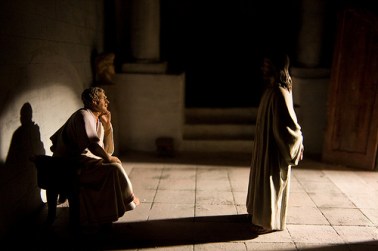
It is said that where a person’s heart is, there his or her will and actions will follow. We strive after that which we value. We set our lives by that which we love. The young man in today’s gospel (Mk. 10:17-30) is in many ways a good person. He is someone who is seeking to live his faith; he is striving to live his life by the commandments of God. He also recognizes or intuits that there is something unique about Jesus. This is why he runs up even kneels down and uses the title, “good teacher”. The young man’s heart is searching but, we come to realize, his heart is also divided.

Our Lord knows this. Our Lord knows the human condition weakened by sin. The gospel passage is not so much about material possessions as it is about the divided human heart and God’s consistent love.

Christ knows this young man. The gospel tells us that Jesus “looking at him, loved him…” Now, imagine being before Christ. Picture yourself being in the full and immediate gaze of Jesus. It is an amazing and humbling thing to stand before the presence of God. Christ knows us through and through. He knows us more than we know ourselves. Christ sees that this young man is seeking to live the commandments but he also recognizes that divisions remain within his heart. We follow our hearts! How can we follow that, which itself, is divided? The young man is divided by even seemingly good intentions. It makes sense to live the commandments. It is logical and philosophically consistent to seek to live the commandments and to do good towards others. We should treat others as we ourselves want to be treated. We can strive to do all things within ourselves and by our own abilities. Even in seeking to do these good things we can remained enclosed within ourselves.

But there is more! And Jesus wants to invite this young man into this “more” which is living not with a distracted and divided heart content within oneself but living fully and authentically in the mystery, living in relationship with Christ. Jesus wants the young man’s heart to be firmly rooted in friendship with God and an ongoing encounter with God. “You are lacking in one thing. Go, sell what you have, and give to the poor and you will have treasure in heaven; then come, follow me.”

Christ is inviting the young man (and us) to true richness – to live fully and authentically with an undivided heart not within an enclosed self but in friendship with God and others.

The young man goes away sad because, we are told, “…he had many possessions.” This is where we need to remember our Lord’s reaction to the young man; “Jesus, looking at him, loved him…” Our Lord’s love for the young man remains even as the young man is conflicted with a divided heart. Our Lord’s love for us remains even as we are conflicted with divided hearts!

On our own we cannot overcome the divisions and distractions in our hearts. Jesus himself tells us. “For human beings it is impossible, but not for God. All things are possible for God.”

The gospel does not tell us where the young man’s life took him but I have hope that eventually he came around to the recognition that it is not about the ability to live the commandments by one’s own effort but rather about receiving the love and friendship of God into one’s heart. I have hope because the gospel says that Jesus loved the young man and that love remained even as the young man went away sad in the moment. I have hope that the young man learned that for God “all things are possible”.

The same hope remains for us. Yes, we all too often, have divided hearts but Christ looks on us with love, Christ continually invites us into friendship and for God “all things are possible”.

Thoughts on the Sunday readings: Politicians, Jesus and Zen Foxes

12 Saturday Sep 2015

Posted by mcummins2172 in faith, homily, trust

≈ Leave a comment

Tags

Christian life, discipleship, faith, Jesus, trust

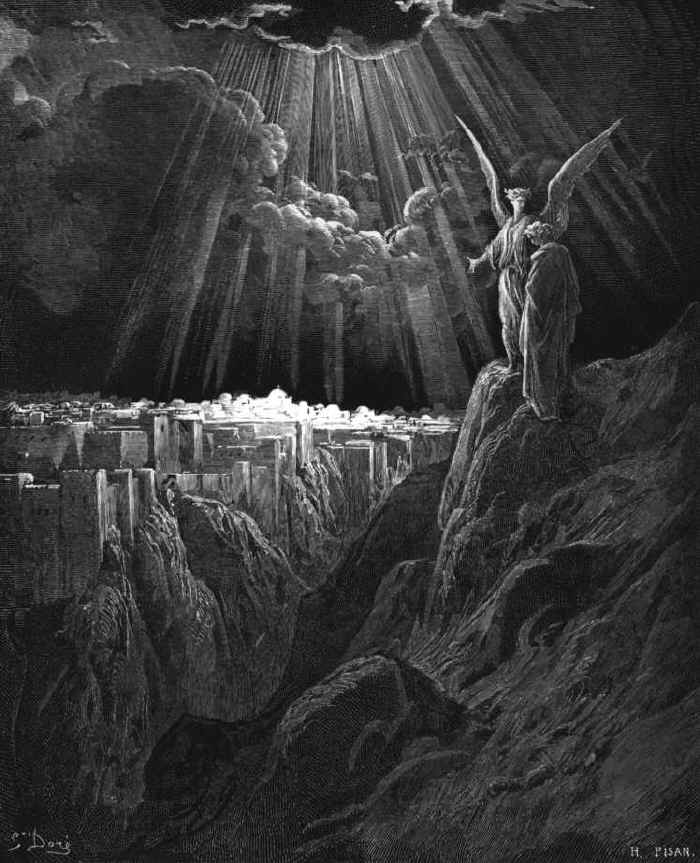
Jesus - way, truth, lifeSo … we are into the presidential primary election season. Already the news is happily swamped with politicians posturing themselves. We, for our part, keep watching and asking ourselves, “Who is the one that seems to have that presidential timber and swagger?” In light of the political climate we find ourselves in as well as this Sunday’s gospel reading, a question to be entertained is, “If Jesus were running for my party’s nomination, would I vote for him?”

Truth be told, I do not think Jesus would receive many votes in either political party but I also do not think Jesus would really care! Throughout the gospel our Lord does the one thing that a politician would never do because the politician knows it to be political suicide: Jesus never confuses the illusion of control with true leadership and true personhood. Therefore, he never needs to pretend control. Our Lord is free of this temptation.

In today’s gospel (Mk. 8:27-35) we are told that Jesus is walking with his disciples and he asks them, “Who do people say that I am?” This question, itself, sets Jesus apart from the career politician. The politician says, “Let me tell you who I am. These are my skills… This is what I have achieved…” Jesus doesn’t do that, rather he asks, “Who do people say I am … who do you say I am?” Jesus knows full well who he is and what his purpose is but he does not impose himself. Rather, he waits. He allows the Father to work in the hearts of his followers and he allows his disciples to come to him. He allows them to come to the realization of who he is. Jesus does not force his disciples’ recognition. He needs neither to control nor manipulate the situation.

Then and only then, he begins to teach them that the Son of Man must suffer, be rejected, be killed and then rise. Imagine this as a political platform! We cannot and this is why Peter’s reaction is so perfect because it is our honest, human, knee-jerk reaction! “No, Lord, this cannot be! You do not need to suffer! You do not need to be rejected! You can control the situation! You are the Christ!”

But leadership and control are not necessarily synonymous. Our Lord wants to show us a different way of both authentic leadership and personhood. “Get behind me, Satan. You are thinking not as God does, but as human beings do … whoever wishes to save his life will lose it, but whoever loses his life for my sake and that of the gospel will save it.”

Our Lord is showing us a way of living which can forego the illusion of control. Isn’t it interesting to note how so many times after our Lord performs a miracle he is quick to say to the person healed, “Your faith has made you well.”? He does not need to grasp that credit. In the fourth chapter of John’s gospel, our Lord says, “My food is to do the will of the one who sent me, and to complete his work.” (Jn. 4:34) Not my program, not my agenda, not my control but rather my Father’s will. Every moment of our Lord’s life was focused upon and directed in trust toward the Father’s will.

This letting go of the illusion of control is not a passive resignation akin to despair. It is far from that. Rather, it is the most active of stances in our world. It is learning to seek and make the choice for God’s will in all things and all situations. There is nothing passive about that. This is the one choice which can truly transform lives and the world itself!

One of my favorite social media sites is entitled ”Bored Panda Animals”. It is a site that hosts often stunning photography. Just this last week the site highlighted a photographer who captures images of foxes in the wild. These pictures are beautiful and they depict these animals completely relaxed, eyes closed, enjoying the breeze, Zen-like in their posture. The site also interviewed the photographer who shared how she is able to capture the photos of these wild animals so relaxed. “There’s a contradiction going on when it comes to capturing Zen foxes: the harder you try, the more you’ll move away from your goal. If you are too eager, an animal will sense that eagerness and will remain alert. I learned to do as foxes do, just being there and see what might happen.”

Let go of the illusion of control. It is not real. Learn to trust in the will of the Father.

Allow God to be God and trust.

“…whoever loses his life for my sake and that of the gospel will save it.”

Malawi and the Prosperity Gospel

04 Friday Sep 2015

Posted by mcummins2172 in Christian living, life in Christ, martyrs, prosperity gospel, st. lawrence

≈ Leave a comment

Tags

africa, Christian life, Christianity, Malawi, money and faith, prosperity gospel

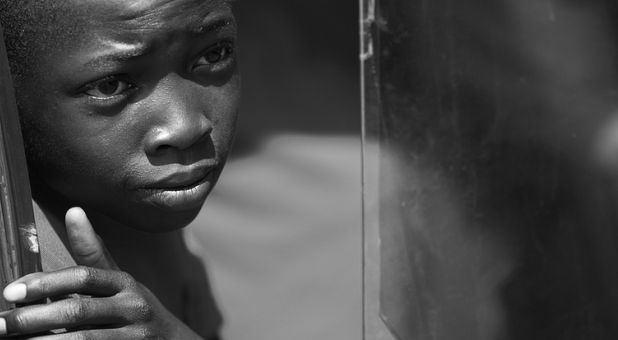
sad-African-childDuring my recent trip to visit our sister parish in Malawi I noticed that there are two groups very eager to make inroads into the country – the Chinese and Pentecostals. It is well known that the Chinese are searching the world for resources and this explains their presence in Malawi. The Pentecostals (sponsored by churches in the U.S.) are also very intent on Malawi and the gospel that they are proclaiming is the Prosperity Gospel. In a country that has a very young population burdened with chronic unemployment and underemployment, a proclamation of the gospel which stresses material blessings as reward for true faith is proving to be very tempting and appealing for many people.

In my reflection on this I was reminded of a post I wrote for the Feast of St. Lawrence in 2012. Below is the post and why the Christian martyrs are both a witness to the true gospel of Christ as well as standing in witness against the falsity of the prosperity gospel.

There is a malformation of the gospel occurring in our day and it is called the “Prosperity Gospel”.  The basic tenet of the Prosperity Gospel (from what I can tell) is that if you have faith then God will bless you abundantly (which means materially).  Faith leads to success in all of ones enterprises and endeavors and to comfort in ones life.  The Prosperity Gospel proclaims that you can indeed have your best life now!  This take on the Gospel is out there, it is prevalent and it has many adherents … the only problem is that it is not Christian.

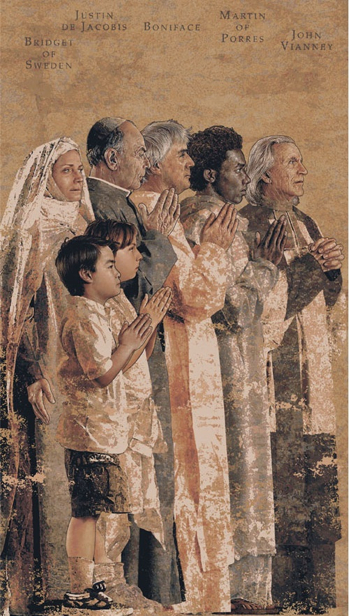
My question to those who proclaim the Prosperity Gospel is this: if faith equals success, material blessings and comfort then why did Peter and Paul die penniless, in chains and – according to all counts – unsuccessful?  Was their faith not strong enough?  Did they not really believe in Christ as Lord and Savior?  And what about all the other martyrs of our faith (Lawrence included)?

The Prosperity Gospel leaves no room for the martyrs because they stand in witness against its basic tenet.

St. Lawrence was a deacon of the early Roman Church.  He lived his faith in a time when the Church was being persecuted.  Lawrence was known for his love of the poor and his service to them.  He also oversaw the temporal goods of the Roman Church.  This was widely known and at one point the prefect of Rome brought in Lawrence and demanded that he hand over the wealth of the church.  Lawrence asked for a few days to gather the wealth.  After a few days Lawrence once again came before the prefect and presented to him the poor, the beggars, the sick, the elderly, the foreigners and said, “Here, this is the treasure of the church!”  Lawrence was martyred (tradition has it by being grilled alive, this is why he is often pictured with a grill).

Lawrence knew that the true prosperity of the gospel is not found in material blessings but in the abundance of love which God has shown for us and which we, in turn, are to show to one another.  We have been loved abundantly so we, in turn, must also love abundantly!  The treasure of the church continues to be the poor, the outcast, the sick, the foreigner, the elderly, and the one who is hurting because they are the beloved of God and Christ is with them.  They might not count much to our world but they are precious in God’s eyes!

The abundance of love is the true prosperity of the gospel.

St. Lawrence and all holy martyrs, pray for us!

“Welcome!” A lesson learned in Malawi.

28 Friday Aug 2015

Posted by mcummins2172 in Christian living, Malawi, sister parish

≈ Leave a comment

Tags

Christian life, Christianity, discipleship, Malawi, welcome

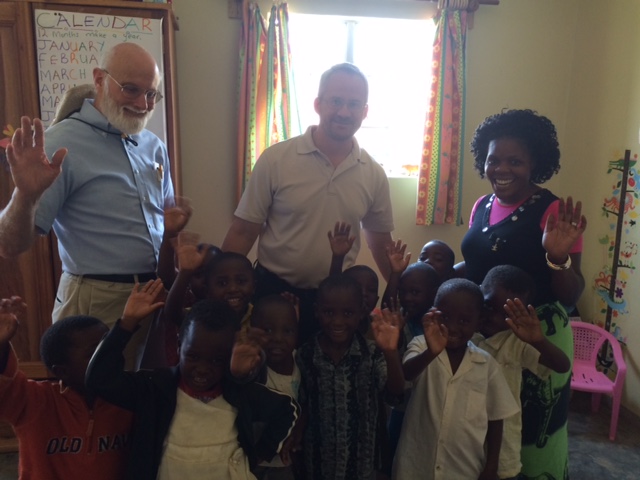
welcome“Welcome visitor! Welcome visitor! Welcome visitor!” The voices of the three year old children rang out as I stepped into their little class room at the St. John Paul II Children Nutrition Center outside of Blantyre, Malawi. The Center provides a nutritious lunch for children ages three to fourteen every day of the year. On average, the Center feeds at least six hundred children per day. The Center is run by the Community of Sant’Egidio and there is no charge for the families whose children receive a daily meal. This is just one of the many good works that I have witnessed this week in Malawi.

I and Deacon Frank Fischer are visiting St. Vincent de Paul Church in Blantyre. For both of us this is our first visit to Malawi and to Africa. We are being hosted by Fr. Ernest and Fr. Frank – the parish priests of St. Vincent’s.

St. Dominic Church in Kingsport, TN and St. Vincent Church in Blantyre, Malawi are beginning a new sister parish relationship and I am confident that the friendship will be a blessing to both communities! Malawi is a very poor country and certainly the generosity of St. Dominic Church financially can help St. Vincent Church tremendously but a sister parish is much more than just another monthly collection. It is an opportunity to enter into friendship and to be reminded that we are, in fact, connected one to another. In front of the messages of our world that often seek to divide and isolate; our Christian faith reminds us that we are all part of the family of God. When my brother and sister in Malawi hurts then I hurt. When my brother and sister grows stronger then I grow stronger. This is the same also on the Malawian side of the equation – our health is their health. Friendship in Christ is a grace that exceeds all worldly limits and allows for unforeseen blessings!

I know that a blessing I have already received in these days is a deeper awareness of welcome. “Welcome,” I have learned is a favorite word of Malawians. If there is one word I have heard over and over these past few days it is “welcome”. I have heard it not just from those three year olds but from all ages and all people and I have heard it in a variety of contexts.

I have learned that “welcome” should be more than just a quick and perfunctory greeting and to limit it to such a thing is to stunt its potential and possibility. In Malawi, I get the sense that when “welcome” is said it comes from a deep place of the heart. “Welcome” should be an opening of the heart. “I welcome you into my life and my day. I welcome you as a potential friend. I welcome you as a gift that God has provided for me in his providence. Because you are a gift, I take the time and I give the attention that warrants such a great gift.” “Welcome” can be, in fact, a way of living and a way of encountering other people, encountering the world in which we live and even encountering God, himself.

In the Letter of James we find these words: Humbly welcome the word that has been planted in you and is able to save your souls. (James 1:21) Scripture reminds us that to live in welcome is indeed an attitude, a way of being, an approach to life and a spiritual discipline. When I live in welcome I choose to live in hope and in trust. I choose to believe that friendship can last a lifetime and that great and unforeseen blessings can come from friendship!

Our world is often rushed, exasperated, tired and cynical. We don’t have to live this way. We can learn the lessons of welcome and new life and new possibilities can be discovered!

As Deacon Frank and I have visited St. Vincent’s these few days we have been welcomed into the heart of this community. We have also, in the name of St. Dominic parish, offered welcome to our brothers and sisters in the parish of St. Vincent de Paul.

Welcome! We look forward to this friendship! We recognize one another as a gift given from the very providence of God!

The Holy Face (Volto Santo) as spiritual remedy

21 Friday Aug 2015

Posted by mcummins2172 in Christ, Christian living, life, life in Christ, resurrection

≈ Leave a comment

Tags

Holy Face of Christ, life in Christ, resurrection, Volto Santo of Manoppello

The Volto Santo of Manoppello

The Volto Santo of Manoppello

What was that first moment of resurrection like for our Lord? What was that first sudden intake of breath like; which came from an up-to-then lifeless corpse – an intake of breath which cracked the silence of the enclosed tomb? Did our Lord gaze with wonder as he watched the return of color to his hands and feet and body (now marked with the signs of his crucifixion) as the pallor of death dissipated?

These thoughts have been in my prayer reflection now for a while and as they have remained I have discovered a needed remedy for my own spiritual well-being and, I think, for the well-being of our Church and world.

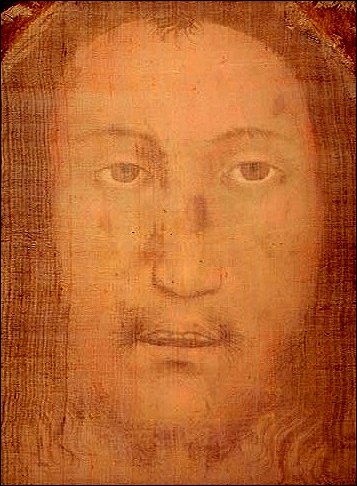
A little over a year ago, I had the opportunity to visit the Church of the Holy Face (Volto Santo) in Manoppello, Italy. This church houses what is claimed by some to be an image or imprint not made by human hands which captures the moment of our Lord’s resurrection. The image is found on a scarf size piece of very delicate and rare byssum fabric. One theory goes that the scarf was laid over the face of Jesus in an act of devotion as he was placed in the tomb and shrouded. The veil of Manoppello would then be akin to the Shroud of Turin in its witness and mystery. There is an ongoing debate about the authenticity of the veil and I do not wish to wade into those waters. I will leave that to those people with the appropriate academic and scientific credentials.

From an iconic point of view though what I do find intriguing about the image of the Volto Santo is that the eyes are opened and the lips are parted as if in an intake of breath. Is the image real? I do not know. Is the image a necessity for belief in the resurrection? No. Is the image worthy as an object of devotion? Personally, and here I stress “personally”, I say yes. Why? Because the Holy Face witnesses to the triumph of life over death and this is the needed spiritual remedy it offers.

We live in an age chasing after and fixated upon death. Despite all protestations to the contrary; the love of death is rampant in our day. Pope Francis has courageously noted that the economy has become the rule against which all human life and even creation itself is to be measured. To paraphrase the Holy Father; the market drops and the world is in a panic, people starve to death every day and no one notices. A world guided solely by the principles of the market is a world in love with death. Does the finance market have its place? Yes. Can the finance market achieve great good? Certainly. Should the finance market become the one rule over which all life is measured and judged? Definitely not. When it becomes the one measure we see the effects – baby’s body parts are sold to the highest bidder, euthanasia is promoted as efficient care, life becomes so stressed that social isolation increases and people (especially the elderly) are forgotten, the stranger, the person of different skin color and the immigrant are viewed solely in terms of threat, creation itself is disrespected and destroyed solely for profit and the list could continue.

Christians are not a people in love with death. We cannot be because we know that death has been conquered. There was that sudden intake of breath and the tomb has been emptied! But we are so surrounded by a culture in love with death, so inundated by it, that it is so easy to become cynical in order to just go along for the sake of going along. But we die when we do this and we are not true to what we know as Christians. Christ is risen! He is risen indeed! The one who once was dead now lives!

The Holy Face (the Volto Santo) reminds us. Contemplating upon the Holy Face and those first moments of the resurrection enkindles our spirits again in the face of our world and its vain and often death-seeking pursuits! The Holy Face seen as an image capturing the moment of resurrection offers a remedy of hope that our hearts and our world need. Again, is any particular image of the Holy Face necessary? No. Is remembering the resurrection and living our lives according to the resurrection necessary? Absolutely.

We are Christians. We do not proclaim nor pursue death. We proclaim life.

I have no flag to wave

28 Sunday Jun 2015

Posted by mcummins2172 in authenticy, image and likeness of God, personhood

≈ 7 Comments

Tags

american flag, authenticity, Christianity, confederate flag, empty tomb, freedom in Christ, gay pride flag, image and likeness of God, personhood

no flagThere are a number of flags being waved these days.  On the news and all over social media I have seen various flags being posted and waved – the Confederate battle flag, the gay pride rainbow flag and the American flag.  As I have watched this virtual parade of flags I have realized that I have no flag to wave.

I will not wave the Confederate battle flag.  Even though I live in a state that was part of the Confederate South (though East Tennessee was pro-Union I would note), I will not wave this flag.  I recognize what is good and true in the south and southern culture but for too many of my African-American brothers and sisters this flag is an all-too-painful symbol of oppression and slavery and I cannot abide that.  This flag holds none of my identity.  I will not wave this flag.

The gay pride rainbow flag?  No, I cannot wave this flag either.  I recognize that homosexuals also have experienced oppression and pain throughout history and I sadly recognize that Christianity has been warped to legitimate this oppression and hatred but this flag also holds none of my identity.  Despite the appeal to diversity, this flag equates for me the tendency to reduce the fullness of the human person to one single component – sexual orientation – and to state that this one component holds primacy and even dominance over all others.  I cannot accept this.  As a Christian I hold the deepest core identity of a person to not be orientation, gender, race, nationality, or economic class but rather the Imago Dei – the image of God in which every man and woman is made.  Although these components are important to a person’s identity and not to be dismissed, no one component should ever eclipse the Imago Dei.  Sadly, though, this happens far too often and we forget the full truth of who we are and we get lost.  I cannot applaud this when I see it happening.  It is, in essence, a form of tyranny.  I cannot wave this flag.

The American flag?  Sadly, I am beginning to wonder if I can wave this flag and I do not say this lightly.  Since my youngest days I have been taught that religious freedom was one of the foundational principles of which this nation was based.  Yet, I currently see a secularism developing and being triumphed in our society that makes no room for religious freedom and its expression outside of the privacy of the home.  It seems that just as the activities of the bedroom are being celebrated and paraded in the open public square; religion is being told that it must be content with remaining behind the locked doors of one’s home.  No, I claim my religion to be just as constitutive to my identity as any other qualifier out there.  Therefore, I cannot leave it behind when I walk out the front door each morning – to do so would be to live a schizophrenic life.  Does the secularism developing in our society have room for me or will I and my core beliefs be written off as either too antiquated or even bigoted?  The answer seems uncertain.  Will I be able to authentically wave the American flag or even be allowed to?  I am not sure and I say this even as I love this country and what is so good about it.

So, at this point, I have no flag to wave.  What I do have though, is the empty tomb of our resurrected Lord and here is where I will remain and here is where I will draw my strength, my inspiration, my resolve, my joy and my decision to love.  In a way I am grateful for this recent virtual parade of flags because it has reminded me that as a Christian there never really is any flag that we can ever truly wrap ourselves in – whether that be national, social or ideological.  Flags can quickly become idols and idols quickly turn into tyrants.  All that the Christian has is the empty tomb and in this is found our freedom which the world can neither comprehend nor contain.  The Christian, it has been said, is in the world but not of it.

The good people at Emanuel AME Church in Charleston have witnessed this freedom of the Christian to our entire nation.

I will not squander my freedom.  I have no flag to wave.  All I have is the empty tomb.  All we have, as Christians, is the empty tomb but here is found our freedom – a life that has overcome even death itself.

I will remain at the empty tomb.

The Eucharist, the “guest room” and twenty years of priesthood

07 Sunday Jun 2015

Posted by mcummins2172 in Body and Blood of Christ, Corpus Christi, Eucharist, homily

≈ Leave a comment

Tags

Body and Blood of Christ, Christ, Corpus Christi, discipleship, Eucharist

The_Last_SupperThe teacher says, “Where is my guest room where I may eat the Passover with my disciples?”

With this question in this kind of clandestine encounter in Mark’s gospel the stage is set for the Last Supper where the Lord enters into his sacrifice for us and where he gives us his very body and blood that we might have life.  It is worthy, I think, to reflect on this question of our Lord, “Where is my guest room?” because it is a question that our Lord continues to ask now throughout history and in each of our lives.  Where, amidst all the distractions of life, might I meet you?  Where might I encounter you?  Where might I be welcomed by you?  Where might I bring you life and share with you my very body and blood?

One way to begin to understand the great mystery we celebrate today as Church – the mystery of the Most Holy Body and Blood of Christ – is to reflect on the different contexts, the different “guest rooms” through which we ourselves have been privileged to encounter and experience that mystery.

On June 3rd I celebrated my twentieth anniversary of ordination.  As a priest – not by merit but by call – one is privileged to serve at the altar and in this “guest room” of our Lord.  Whenever we gather for Mass we are gathered at that Last Supper of our Lord with his disciples.  It is an amazing thing really yet so common that it can be taken for granted.  Praying over the gospel this past week has led me to reflect on all the “guest rooms” that I have been privileged to enter into these past twenty years where our Lord encounters his people in the gift of the Eucharist.

The chapels at the two seminaries I attended – daily encounters along with friends wrestling with the same questions of call and vocation.  The warehouse church of All Saints Church in Knoxville which had no air-conditioning; where you had to turn off the industrial fans in order to hear the readings and the homily.  The chapel at Knoxville Catholic High School celebrating Mass with classes and different sports teams before a game.  The old A-frame church of St. Mary’s in Athens which shook whenever a truck drove by and then the new church that we built with devotion and sacrifice.  The little chapel of the ETSU Catholic Center tucked away in a neighborhood by the university where we would celebrate Mass, move the chairs around and then sit down for dinner together.  The chapel at UTC where we did the same thing … college ministry revolves around food!  The auditorium at Notre Dame High School, up on a stage trying to help high school students encounter Christ as both Lord and friend.  Now here, in this beautiful church and community of St. Dominic’s – at the church and at the school.

But there have been other “guest rooms” I have been privileged to enter these twenty years – the chapel where Bl. Oscar Romero was shoot and killed, the Basilica of Santa Maria in Trastavere, Rome for the celebration of Pentecost when at the main altar my friend, Fr. Marco Gnavi, tapped me on the shoulder pointing upwards where I looked to see rose petals being dropped from the top of the church’s dome for the feast, the Shrine of Our Lady of Guadalupe, the chapel of an orphanage in El Salvador, an outdoor altar in Assisi, Italy where St. Francis often prayed, at a poor senior center on the outskirts of Rome, on the boat of some friends, at national youth gatherings of twenty-five thousand people and in innumerable small gatherings of two or three, in nursing homes in South Bend, IN and New York City.  In my mother’s room at the Assisted Care facility where she lived her last years with just she and I sitting at a table.

It is worthwhile to reflect on the “guest rooms” we have been privileged to enter in our own individual journeys of discipleship.  On this feast when we reflect on this great mystery of the Eucharist, I encourage us to take the time to do this.  We each have them – our home churches, places of retreat, churches we have stumbled upon while on a trip or vacation, churches we have entered for funerals, baptisms or weddings.  For each of these places and each of these moments sharing in the Body and Blood of our Lord we should give thanks because they are indeed holy places and moments filled with beauty and life – places and moments where we have encountered the Lord and where he has fed, nourished and strengthened us with his Body and Blood and with his Word.  The very contexts of encounter, the “guest rooms” where we have met and received our Lord in the Eucharist themselves lead us into a greater understanding of this most sacred and holy of mysteries.

I think it safe to say that the true “guest room” our Lord most earnestly seeks to be welcomed into and dwell within is each person’s heart.  God wants nothing other than what is best for us.  God wants relationship with us and to give us his very life!  If priests are able to help facilitate this encounter, even in the smallest way, then we are indeed among the most blessed of people – given a richness that the world can never afford.

I give thanks to God for these twenty years and for the “guest rooms” that the Lord has allowed me to enter to encounter Him and to serve his people.

Thoughts on the Sunday readings: Pentecost

24 Sunday May 2015

Posted by mcummins2172 in Catholic Church, Church, Holy Spirit, homily, Pentecost

≈ Leave a comment

Tags

Church, faith, Holy Spirit, Pentecost

PentecostHave you ever held an acorn in your hand?  In that seed all the potentiality of a towering oak tree is present.  Have you ever held a newborn infant?  In that newly born child is all the potentiality of an adult human being whose very life will affect countless other people and maybe even the course of human history itself.  It has been said that growth is the only sure indicator of life but growth has to begin somewhere, from some kernel of life.

In today’s reading from the Acts of the Apostles (Acts 2:1-11) we hear that the disciples and some women were gathered together when the Holy Spirit came upon them in the sound of a strong driving wind and in the appearance of tongues of fire – this smallest of groups.  They began to speak in different languages so that the people outside heard them speaking in their own language.

An unknown African writer of the sixth century offers these thoughts in regards to this miraculous event:

The disciples spoke in the language of every nation. At Pentecost God chose this means to indicate the presence of the Holy Spirit: whoever had received the Spirit spoke in every kind of tongue. We must realize, dear brothers, that this is the same Holy Spirit by whom love is poured out in our hearts. It was love that was to bring the Church of God together all over the world. And as individual men who received the Holy Spirit in those days could speak in all kinds of tongues, so today the Church, united by the Holy Spirit, speaks in the language of every people.

On that first Pentecost we find all the potentiality present of what the Church was and still is to become. We find the kernel of the beginning of the Church Universal – a Church present in every land, every culture, every class and ministering in every human condition.

The author knows that it is the love “poured out” out into hearts that allows for and sustains this life and growth. This love is nothing other than the presence of the Holy Spirit. This is not the “love” so often touted in our world today – a love that is often really just a reflection of our own ego. The love that is the Holy Spirit does not originate from us and our concerns rather it is “poured out” upon us. It is the love of the Father and Son which is given on Pentecost and which continues to enliven the Church throughout history.

Paul reminds us that no one can say “Jesus is Lord” except in the Holy Spirit. It is only the Spirit who enables us to turn those mere words into a true profession of faith, rooted in lives which are continually being transformed and transfigured by the light of Christ.

In some sense looking back is also worth noting. For the most part, I do not today look anything like I did when I was first born. I’ve gotten taller, I weigh more, I grew hair and I have begun to lose hair, I have learned much more but, even though I may look very different from that newborn infant born forty-seven years ago, I am still the same person just more fully so. The Catholic Church today may not look exactly like that first gathering of disciples on Pentecost – there is two thousand years of history, institutions and roles have developed and continue to do so – but it is the same church just more fully so. The Holy Spirit enables this growth in truth.

Our Lord told us that the Spirit will guide us into all truth. We know this. We have been living it now for two thousand years as Church and continue to do so even today. The love which enables all this to happen does not originate from us. It is poured out upon us. It is the love of the Father and the Son, the very Holy Spirit of God.

Holy Spirit, continue to come upon us, continue to guide us into all truth, into who we are meant to be as your Church!

Thoughts on the Sunday readings: the concreteness of the Ascension

17 Sunday May 2015

Posted by mcummins2172 in faith, homily, hope, service

≈ Leave a comment

Tags

Ascension, discipleship, homily, hope, life in Christ

Ascension3Today’s gospel (Mk. 16:15-20) has the risen Lord sending his disciples into the whole world in order to proclaim the gospel to every creature.  This very same mission continues today.  Christianity cannot stay within, locked behind closed doors!  But, before we run out to the world, we need to know for whom we are running and whose message it is exactly that we are proclaiming.  I once heard a seasoned Catholic blogger give some sound advice to some young seminarians eager to evangelize the internet for Christ.  She cautioned that before you start saying things about faith and Christ make sure you actually have something to say.  The only way to speak authentically about Christ is to encounter Christ.  Another way of getting at this is by asking the question actually whose disciples are we?

We are not disciples for ourselves even if we might claim the name Christian.  Taking only the teachings of our Lord that we like and find agreeable and then trying to manage and live our lives on our own – agreeing with Jesus but not really feeling a need for him, too closely, in our lives.

We are disciples because God has first loved us – he has called us and saved us in love.  He sends us into the world in order to proclaim the good news in love and peace.  In many ways the gospel is a weak strength – the gospel needs us to proclaim it, if not love begins to disappear and peace begins to lose to violence and hatred.  But for any of this to happen we must live continually in relationship with Christ, remembering that we are his disciples and not disciples for ourselves.

Despite the seemingly, other-worldly nature of today’s feast (What does it mean that Jesus ascends to the Father?), the Feast of the Ascension is a very concrete reality.   It is so because of the simple fact that the hope we celebrate today is not founded in some abstract or utopian principle or ideal of a better tomorrow but in the very resurrected body of Christ.  Christ is indeed risen which means he is risen body and soul, flesh and blood.  Anything less would not be fully and authentically human.  Christ ascends to the Father not just in spirit or thought but in the very concrete reality of his full humanity.  Throughout this Easter season we have heard Christ, time and time again, assuring his disciples that he is indeed present in “flesh and bone”.  This means fully present not just up to the moment of the ascension but in the ascension itself and now at the Father’s right hand.  From the day of the ascension heaven “began to populate itself with the earth, or, in the language of Revelation, a new heaven and earth began.”

In the ascension we truly realize that we are not orphans.  We are not left to the cold and cruel winds of chance, fate and odds or a history without direction.  Direction has been set.  The resurrected Christ now sits at the Father’s right hand!  This, and nothing less, is our goal.  It is what we are meant for and what we are called to by God’s grace.

It is truly concrete and it is achieved and experienced concretely.

In the gospel Jesus tells us that he is “the way” and the way, it turns out, is walked concretely.  The ascension is experienced again not in some abstract manner but in how we concretely treat and love the smallest and poorest brothers and sisters in our midst. When we love concretely we experience the ascension and we are brought toward the fullness of the future that God has prepared for us in Christ.

Let me share an example.  When I was chaplain at the Catholic Center at ETSU our Sant’Egidio group decided to take sandwich bags once a week to the John Sevier Center.  (The John Sevier Center is a low-income housing unit in downtown Johnson City.)  We did not go there as experts in anything.  We knew we could not solve the residents’ problems and struggles.  We just went and we were faithful in going and in this simple act of being present a human space was created both for the residents and for us.  We became friends.  By this we were brought a little bit further toward the fullness that awaits us all.  In this human space miracles happen and signs are given – demons of isolation, fear, hatred and resignation are cast out and life is gained.  I have seen it for myself time and time again.  Now, our Sant’Egidio group here at St. Dominic’s has begun visiting Holston Manor nursing home and it is beginning to happen again – a human space is being created.

Christ bestows his love upon us.  We are disciples for him and we are meant to communicate his love.  Love that is not communicated soon withers and dies.

Love is lived not abstractly but concretely and it is in the concrete act that we are brought toward the fullness that awaits us all.

The Recent Pew Survey, Individualism and Gratitude

14 Thursday May 2015

Posted by mcummins2172 in discipleship, faith, individualism, life in Christ, social factors, society

≈ Leave a comment

Tags

gratitude, individualism, life in Christ, younger generation and faith

individualismIn our society’s almost dictatorial focus on the individual have we forgotten how to receive and how to be grateful?

A realization that I have arrived at through my prayer with the Community of Sant’Egidio is that our Lord was neither as influenced by nor as burdened by individualism as we are.  It can easily be demonstrated that individualism is a cherished notion in the modern American cultural landscape if not, in fact, the highest virtue we subscribe to.  We exalt the positives of individualism (and they are there certainly) but do we also recognize as readily the negatives?  I would contend that one negative derived from an uncritical adoption of the tenets of individualism is being obliged throughout life to carry the weight of the presumption that if something does not originate from me exclusively then it is not really all that worthwhile.

I remember in a previous assignment as a college chaplain how I would visit the art museum on campus once a week where the work of art majors would be on exhibit.  For many of the students this showing was their senior thesis.  Much of the work of these students was engaging, creative and very thought-provoking.  But a good amount of it was not and one would leave the exhibit with the perception and hunch that the student was almost straining under the compulsion to have to present his or her own unique perception of reality, particular viewpoint or feelings to the world.  Frankly, in this forced condition, their viewpoint was not all that interesting and often it was clichéd and just plain boring.  At these moments I would exit the exhibit with the words of a wise, old Benedictine monk friend ringing in my ears, “Get over yourself!”

This weight can work in a subtle way but it is there – the weight to always have to be unique, always original and to have to prove it!  This is quite crushing and just not humanly possible.  Christ did not seem to be burdened by this though.  Our Lord demonstrates his freedom (as well as his oneness with the Father) when he responds to Philip’s request of showing the disciples the Father in the fourteenth chapter of John’s gospel,

He who has seen me has seen the Father; how can you say, ‘Show us the Father’?  Do you not believe that I am in the Father and the Father in me?  The words that I say to you I do not speak on my own authority; but the Father who dwells in me does his works.  Believe me that I am in the Father and the Father in me; or else believe me for the sake of the works themselves. (Jn. 14:9-11)

Our Lord is quite comfortable in sharing that what he has to give comes both from the Father and out of his relationship with the Father.  He does not seem constrained by the presumption that everything has to be a totally original and unique thought originating from within himself alone in order for it to be authentic and worthwhile.  This freedom that our Lord demonstrates is in fact shared with the Spirit also.

I have yet many things to say to you, but you cannot bear them now.  When the Spirit of truth comes, he will guide you into all the truth; for he will not speak on his own authority, but whatever he hears he will speak, and he will declare to you the things that are to come.  He will glorify me, for he will take what is mine and declare it to you.  All that the Father has is mine; therefore I said that he will take what is mine and declare it to you.  

These gospel passages lead the reader into the mystery of the Trinity but they also witness to the depth of freedom that our Lord enjoyed in his person with one such ingredient of this freedom being the ability to freely acknowledge what he has received from the Father.  Our Lord is the “free-est” person who ever walked the face of the earth – even being free of the negative weight of individualism.  Because of this our Lord could fully receive from the Father and he could fully live in gratitude.  We, on the other hand, not so much.

Recently, I have noticed a string of articles in response to a just released Pew survey on why younger people are no longer practicing their faith and leaving the Church.  I am not proposing this as the definitive answer but I do think a contributing factor in this trend is this negative weight of individualism and specifically how it limits our ability to recognize what we have received and to be grateful for that.  Many people will say that the Church needs to get better at reaching out to young people, preaching needs to be better and more engaging, we need to return to a sense of traditional Catholic identity or be more involved in pressing social issues that are of concern to younger generations … the list can go on and on.  I agree with these points and believe there is validity to them.  Yes, there is more that the Church needs to do and should do but I think there is another aspect to this equation and I offer this with the greatest pastoral sensitivity having worked many years with younger generations.  I think a number of younger people (as the wise monk would say) need to get over themselves and, frankly, just need to grow some backbone when it comes to their faith.

A number of times now in my ministry I have had the experience of a young couple approaching me for marriage preparation with one of the two being Catholic and the other one from a different Christian faith tradition only to hear them say that they plan to attend a different church once married, almost as if it is no big deal.  This then leads generally into a full discussion where I ask them if they are able to recognize how their faith tradition (Catholic or not) has helped to shape who they are.  What I have come to realize is that more often than not they do not recognize this.  This is quite damning but, I hold, not so much for the couple themselves (as I have come to see them more as victims in this equation, although some as willing victims) but rather the milieu in which they have grown up and live in.  We focus so much on the individual in our society that we fail to help people learn how to recognize what we have received and how we have been formed through outside influences including our faith.  We fail in helping one another realize that we are more than just ourselves.  I encourage the couple to realize that part of what they love and are attracted to in their fiancée is how his or her faith tradition has helped to shape who he or she is.  To summarily toss aside one’s faith tradition or ask the other person to do so or to plan to do so later as a married couple as if it does not really matter is a profound disservice and demonstrates a sad lack of awareness.

Many people suffer from this lack this awareness.  We focus so much on the individual and the illusion of how we are self-made that we forget how much we have, in fact, received, we forget how to receive and we lose the ability to be grateful.  It is a sad state of affairs really.

Yes, the Church needs to do its part but the young people also have a role to play.  They have choices to make.  I do not believe that the younger people choosing to leave the Church are necessarily innocents lacking responsibility in this whole regard.  Maybe their choice reflects how much they themselves have bought into the illusion of individualism where they cannot recognize nor be grateful for what they have received just as much as it might demonstrate certain lacks on the Church’s part.

In all times and seasons the Church must look to the Lord for wisdom, grace and insight.  The Lord’s willingness to acknowledge his reliance on the Father and the joy he found in that is a salvific corrective to the illusions of individualism with its crushing burdens.  Christ knew what he received from the Father, he knew how to receive and he knew how to be grateful.  Christ was neither as influenced by nor burdened by individualism as we are.

The words of my Benedictine monk friend are not meant to be hurtful and are actually quite pastoral if understood in a slightly different nuance, “For the sake of yourself, get over yourself and, yes, grow some backbone in regards to your faith!”

← Older posts
Newer posts →
Follow The Alternate Path on WordPress.com

Enter your email address to follow this blog and receive notifications of new posts by email.

Previous Posts

  • April 2026
  • March 2026
  • December 2025
  • November 2025
  • August 2025
  • April 2025
  • February 2025
  • January 2025
  • December 2024
  • August 2024
  • July 2024
  • June 2024
  • May 2024
  • April 2024
  • March 2024
  • February 2024
  • January 2024
  • December 2023
  • November 2023
  • October 2023
  • August 2023
  • July 2023
  • May 2023
  • February 2023
  • January 2023
  • December 2022
  • August 2022
  • July 2022
  • April 2022
  • January 2022
  • December 2021
  • September 2021
  • August 2021
  • July 2021
  • May 2021
  • April 2021
  • January 2021
  • December 2020
  • November 2020
  • October 2020
  • August 2020
  • July 2020
  • May 2020
  • April 2020
  • March 2020
  • February 2020
  • December 2019
  • October 2019
  • September 2019
  • August 2019
  • July 2019
  • May 2019
  • April 2019
  • March 2019
  • February 2019
  • December 2018
  • November 2018
  • October 2018
  • August 2018
  • July 2018
  • June 2018
  • April 2018
  • March 2018
  • February 2018
  • January 2018
  • December 2017
  • November 2017
  • September 2017
  • August 2017
  • July 2017
  • June 2017
  • May 2017
  • April 2017
  • March 2017
  • February 2017
  • January 2017
  • December 2016
  • November 2016
  • October 2016
  • September 2016
  • August 2016
  • July 2016
  • June 2016
  • May 2016
  • April 2016
  • March 2016
  • February 2016
  • January 2016
  • December 2015
  • November 2015
  • October 2015
  • September 2015
  • August 2015
  • June 2015
  • May 2015
  • April 2015
  • March 2015
  • February 2015
  • January 2015
  • December 2014
  • November 2014
  • October 2014
  • September 2014
  • August 2014
  • July 2014
  • June 2014
  • May 2014
  • April 2014
  • March 2014
  • February 2014
  • January 2014
  • December 2013
  • November 2013
  • October 2013
  • September 2013
  • August 2013
  • July 2013
  • June 2013
  • May 2013
  • April 2013
  • March 2013
  • February 2013
  • January 2013
  • December 2012
  • November 2012
  • October 2012
  • September 2012
  • August 2012
  • July 2012
  • June 2012
  • May 2012
  • April 2012
  • March 2012
  • February 2012
  • January 2012
  • December 2011
  • November 2011
  • October 2011
  • September 2011
  • August 2011
  • July 2011
  • June 2011
  • May 2011
  • April 2011
  • March 2011
  • February 2011
  • January 2011
  • December 2010
  • November 2010
  • October 2010
  • September 2010
  • August 2010
  • July 2010
  • September 2008
  • August 2008
  • April 2008
  • March 2008
  • February 2008
  • January 2008
  • December 2007
  • November 2007
  • October 2007
  • September 2007

Popular Posts

  • None

Blog at WordPress.com.

  • Subscribe Subscribed
    • The Alternate Path
    • Join 156 other subscribers
    • Already have a WordPress.com account? Log in now.
    • The Alternate Path
    • Subscribe Subscribed
    • Sign up
    • Log in
    • Report this content
    • View site in Reader
    • Manage subscriptions
    • Collapse this bar

Loading Comments...